
























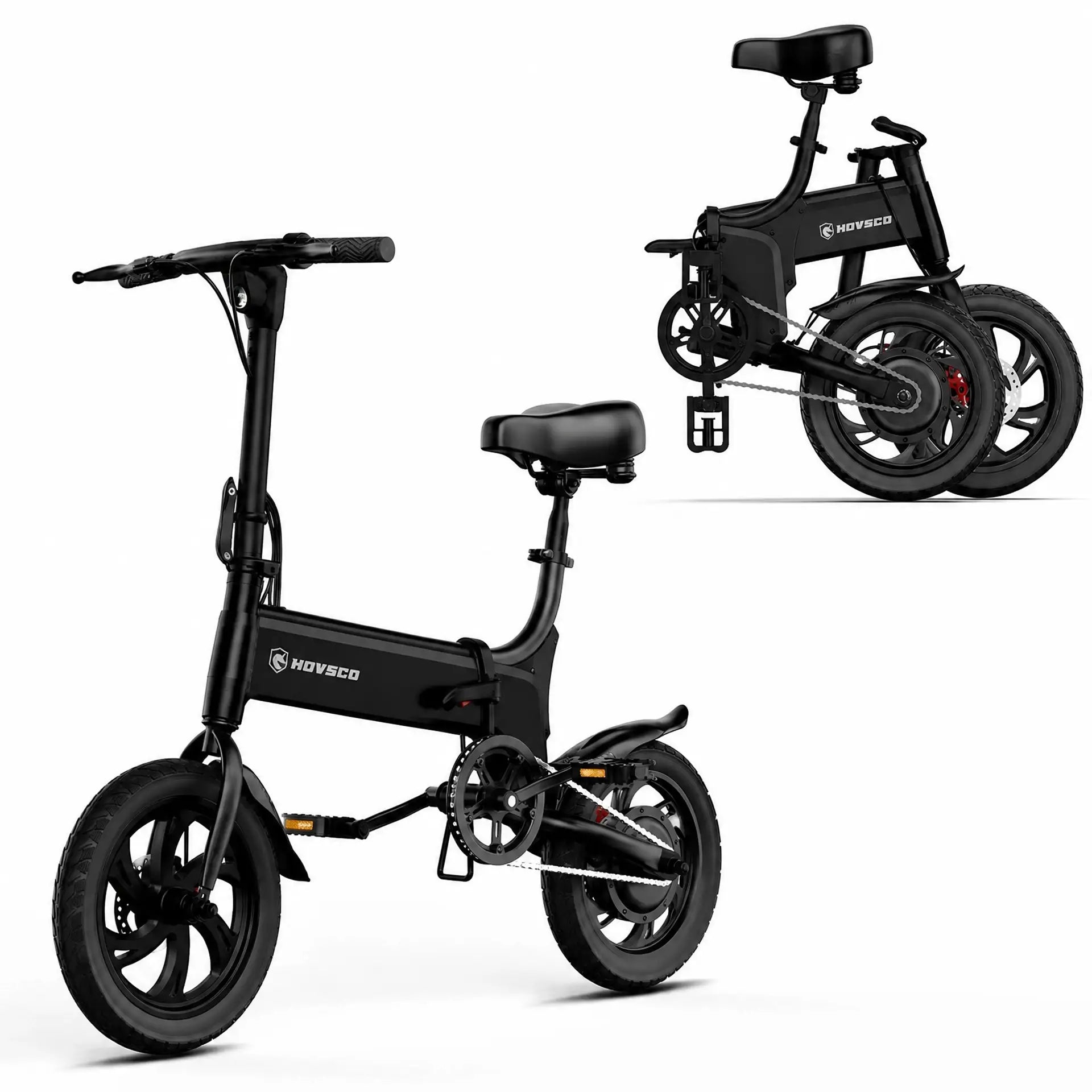
![[ New Arrival ] Porto Max Electric Scooter For Commute & Grocery Shopping - HOVSCO](http://www.hovsco.com/cdn/shop/files/PotroMax-3.jpg?v=1706927007&width=1200)
- by SteveJames
Are Electric Bikes a Good Choice for Seniors?
- by SteveJames
E-Bikes
Accessories
 Free Shipping
 15-Day Returns
 2-Year Warranty
Free Shipping
15-Day Returns
2-Year Warranty
2-Year Warranty
Free Shipping
15-Day Returns
2-Year Warranty
Electric bikes are a practical option for older riders because the motor removes the barriers that stop many adults from cycling: hills, headwinds, and long distances. The key is choosing a frame that is easy to mount, a weight that is manageable to walk and park, and an assist system that lets the rider choose the effort. Below we walk through the fit numbers, frame choices, and first-month plan that make that work. The beginner shortlist with published weights is in our best electric bikes for beginners guide, and the riding basics are in our how to ride an electric bike guide.
The appeal is rarely speed. Riders in their sixties and seventies describe the same three benefits: hills and headwinds stop being reasons to stay home, errands and social rides stay realistic, and the motor reduces joint strain on starts and climbs.
An e-bike also preserves the part of cycling people value most — the riding itself. Because the motor can carry some of the effort, a rider with less strength can still cover the same ground and stay active.
The social side matters too. A group ride that meets at a pace nobody can maintain on a conventional bike becomes accessible when everyone can choose their own assistance, and errands that once required a car stay within a comfortable radius. For many older riders, the bike is not a replacement for driving — it is a reason to be outdoors on their own schedule.
For older riders, three numbers matter more than motor power: standover height, minimum seat height, and reach. A low standover makes mounting and dismounting safe; a saddle that drops low enough lets both feet reach the ground at a stop; a reach that does not force a stretch keeps shoulders and hands comfortable.
HOVSCO publishes these figures on its product pages. The HovBeta lists a 10.63 in standover with a 32.37 in minimum seat height and a 4'11"–6'3" rider range; the HovRanger Step-Thru publishes a 5'1"–6'7" rider range. If a figure is not published, confirm it before buying.
These numbers become more important with age for a simple reason: the body is less forgiving of a reach or a leg lift it can no longer perform comfortably. A bike that was acceptable at fifty can feel wrong at seventy, so the fit should be judged against today's mobility, not last decade's. There is no such thing as a fit number that is too low.
A step-through frame removes the highest leg lift — the moment many older riders find hardest. Instead of swinging a leg over a tall top tube, the rider steps through and sits down, which also makes stops less stressful.
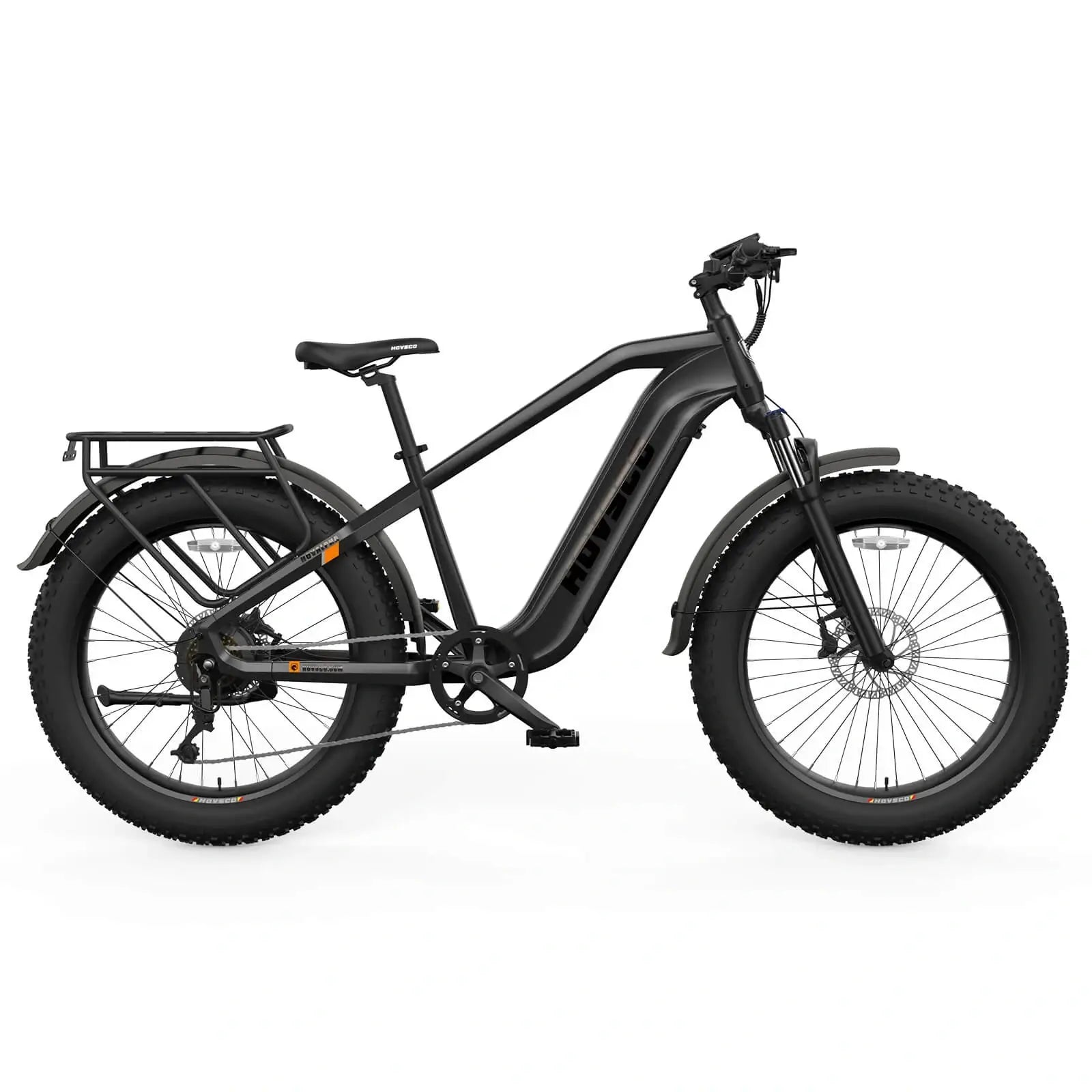
The HovRanger Step-Thru and HovBeta are both step-through designs, and the HovBeta adds a 10.63 in standover for easy entry. Even with a step-through frame, practice the mount and dismount at home a few times before the first real ride.
Practice the mount in a deliberate sequence: stand beside the bike, hold both brakes, step through, sit down, then place one foot on a pedal and push off. Reverse the sequence at every stop rather than hopping off. Done slowly, the whole motion takes less than ten seconds and removes the two moments when an older rider is most likely to feel unstable.
E-bikes are heavier than conventional bikes, and the weight is felt most when walking, parking, and balancing at a standstill. Published weights in the beginner collection range from the Sync Max at 42.3 lb net to the HovBeta and HovCart at 66.4 lb complete.
A slower learning curve is normal and not a bad sign. Start in an empty space, practice walking and parking with the power off, then add low-assist laps. If a model's weight makes walking it difficult, the model is wrong regardless of how well it rides.
Balance practice does not require riding. Stand beside the bike with both feet flat and rock it gently side to side, then lift each foot briefly while holding the brakes. These two exercises rebuild the feel of the bike's weight before you add motion, and they are exactly the drills that make the first powered laps feel stable.
Assistance should feel like a helpful push, not a launch. Start on the lowest level and raise it only for the specific challenge — a hill, a headwind, or the last kilometer home. Most riders settle into one or two levels for daily riding.
Torque-sensor models such as the HovRanger Step-Thru add power in proportion to your pedaling, which gives a more natural feel than a sudden surge. If the bike has a throttle, decide before the ride how you will use it; for many older riders, pedal assist is all they need.
A useful rule for the first month: if a hill feels too hard on the level you chose, raise one level rather than pedaling harder; if the bike feels twitchy or fast, drop a level rather than braking harder. Let the assist levels do the adjusting, and keep the riding effort steady. That keeps the heart rate predictable and the bike manageable.
Week one: fit and feel — mounting, walking, and low-assist laps in an empty space. Week two: short, flat routes with a known endpoint. Weeks three and four: the real route, one new challenge at a time — a hill, a turn, then a quiet intersection.
Plan rides for the time of day when you feel most alert, keep them short enough to end comfortably, and take breaks on longer outings. Consistency beats distance; three short rides a week build more confidence than one long ride.
Rest is part of the plan. A rest day between early rides is not lost progress; it is how the body adapts to a new activity. On the rides themselves, plan a bench or a café as a midpoint on the first routes — a planned break makes the return leg feel easy rather than endless.
Run through this checklist before committing to a model and before each early ride.
| Check | Why it matters |
|---|---|
| Low standover or step-through frame | Easier mounting and dismounting |
| Saddle drops low enough | Both feet reach the ground at stops |
| Reach without a stretch | Comfortable shoulders and hands |
| Weight you can walk and park | The bike is manageable off the motor |
| Low assist level for practice | Power stays predictable |
| Routes with a known endpoint | Every ride ends comfortably |
Add the general pre-ride inspection from our e-bike safety for beginners guide: tires, brakes, battery, lights, and quick releases.
The best first e-bike for a senior rider is the one whose fit numbers match the rider's height, whose weight the rider can walk, and whose controls feel simple. In the HOVSCO beginner collection, the HovRanger Step-Thru and HovBeta are the step-through candidates; the Sync Max is the lightest option at 42.3 lb net.
If possible, test the mount and a short ride before buying. A bike that feels stable and easy in a parking lot will feel even better on a real ride — and a bike that is hard to mount in a shop will not improve with mileage.
When testing, do the three motions you will repeat most: mount and dismount five times, walk the bike around a corner, and do one slow lap on the lowest assist. If all three feel comfortable, the bike fits the rider's actual needs. If any one feels wrong, that feeling will not fade with ownership.
" The seniors who succeed with e-bikes do three things: choose a frame they can mount easily, practice in an empty space, and start on the lowest assist. Age is not the variable — confidence is." — HOVSCO Engineering & Content Team
An e-bike can keep riding realistic for years, but only when the fit is right: a low standover, a saddle that lets both feet down, a weight you can walk, and assistance that starts gentle. Choose on those numbers, practice in an empty space, and let the route grow one challenge at a time.
1. What is the best e-bike for seniors?
The best choice is a step-through model with a low standover, a saddle that drops low enough, and a weight the rider can walk and park. In the HOVSCO beginner collection, the HovRanger Step-Thru and HovBeta are the step-through candidates.
2. Are e-bikes safe for older riders?
Yes, when fit and practice come first. Choose a frame that is easy to mount, start on low assist in an empty space, and follow the pre-ride inspection before every ride.
3. Should seniors use pedal assist or throttle?
Most seniors prefer pedal assist because it feels natural and keeps the rider in control of speed. A throttle can help with hills or tired legs later, but it is not a requirement.
4. What should seniors look for in a first e-bike?
Published fit data (standover, seat height, rider range), a manageable complete weight, a step-through frame, simple controls, and an assist system that starts gently.
5. Can seniors ride e-bikes with balance issues?
Many can, with the right fit and practice: a low standover for easy mounting, both feet flat at stops, low assist, and a slow progression in an empty space. Balance-related health concerns are a conversation for the rider's healthcare provider.
Share:
Sync Max vs HovRanger: Which HOVSCO E-Bike Is Lightest?
How Do You Commute With a Backpack Between Classes?