


![[ New Arrival ] Porto Max Electric Scooter For Commute & Grocery Shopping - HOVSCO](http://www.hovsco.com/cdn/shop/files/PotroMax-3.jpg?v=1706927007&width=1200)
- by SteveJames
What Are the Best Electric Bikes for Beginners?
- by SteveJames
E-Bikes
Accessories
 Free Shipping
 15-Day Returns
 2-Year Warranty
Free Shipping
15-Day Returns
2-Year Warranty
2-Year Warranty
Free Shipping
15-Day Returns
2-Year Warranty
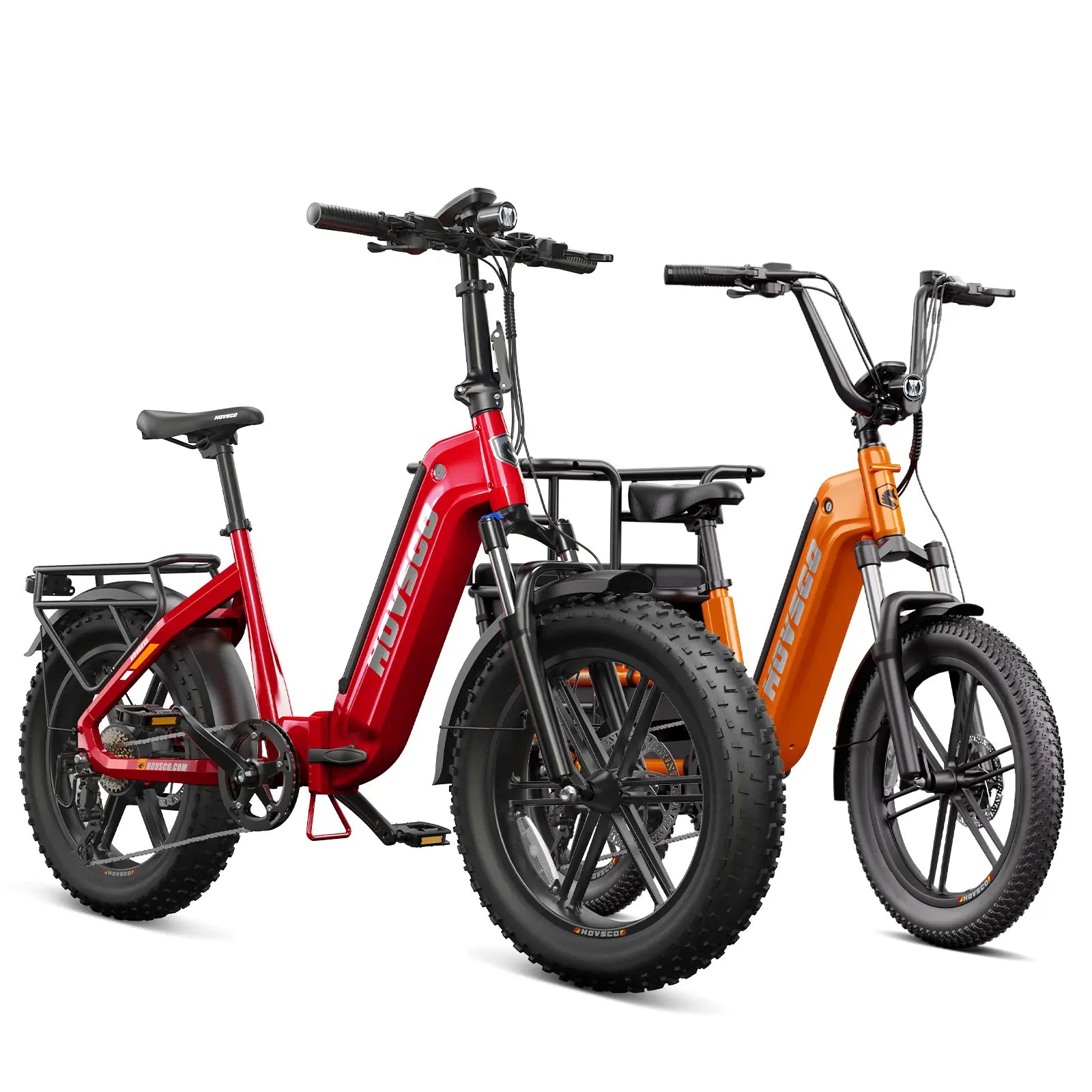
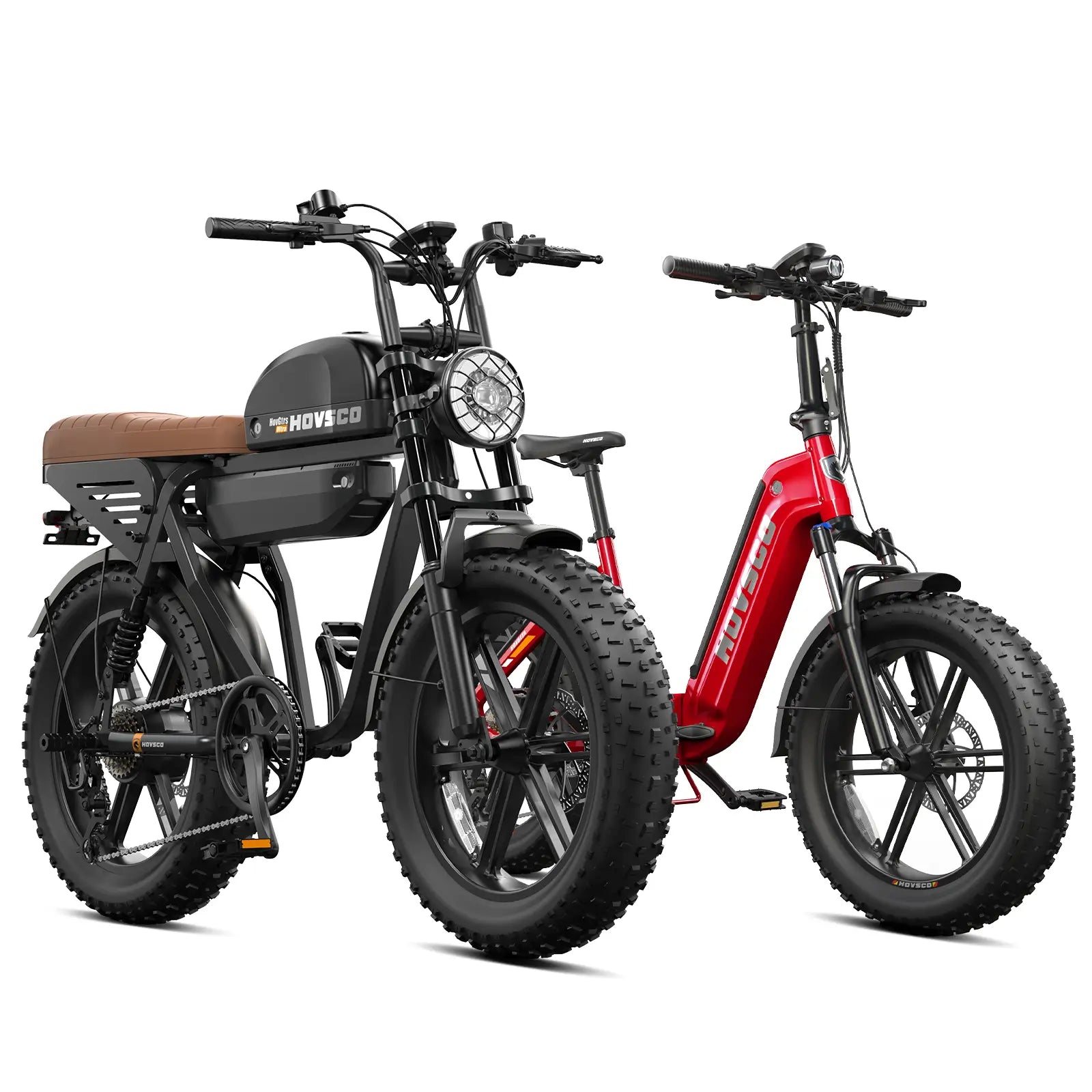
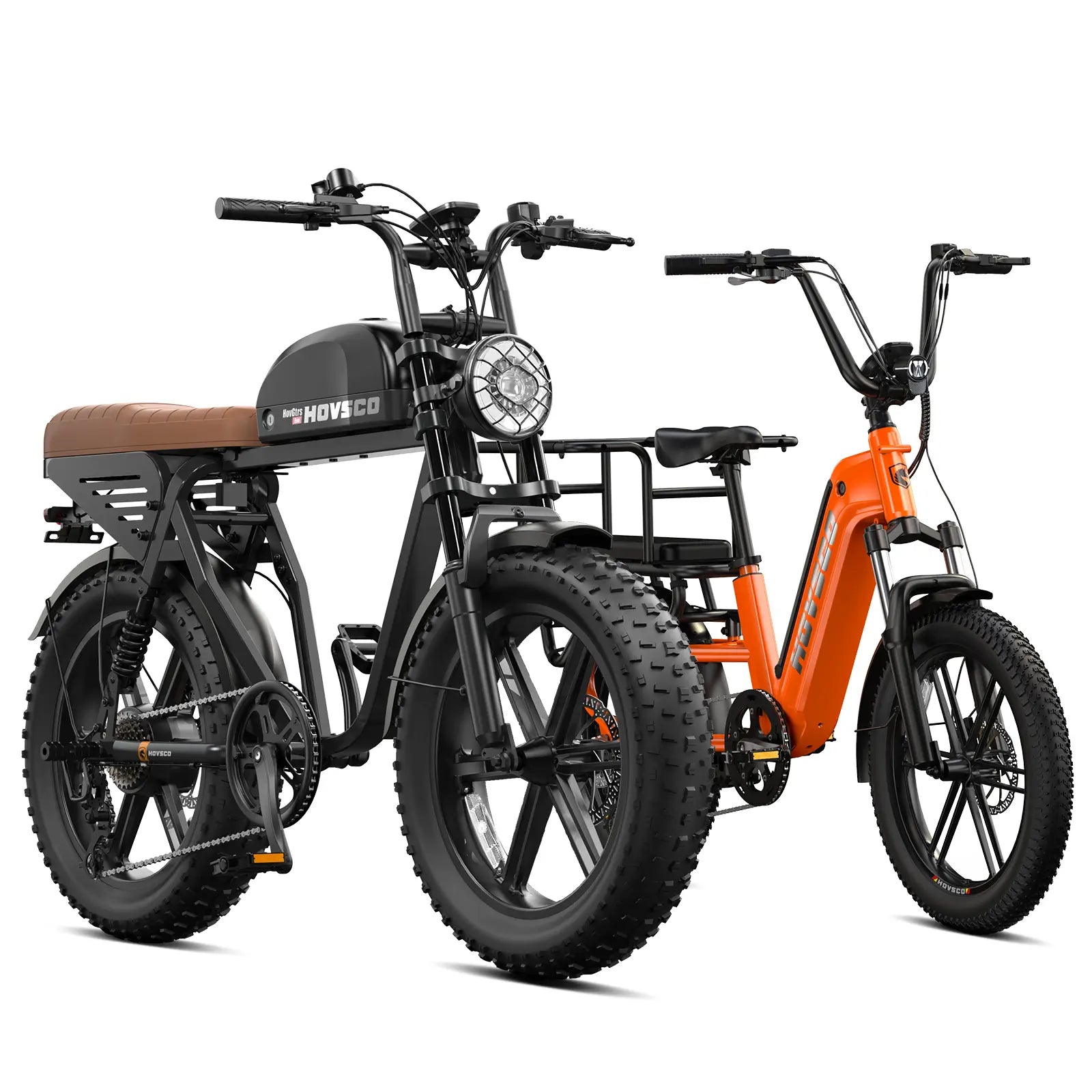
The best first e-bike is the one that matches your fit, storage, and first job — not the one with the biggest spec sheet. This 2026 shortlist keeps four HOVSCO models and only the fields a first-time buyer needs: published weight, frame format, and the learning context each one fits. The full head-to-head lives in our HOVSCO beginner lineup comparison, and the riding basics are covered in our how to ride an electric bike guide.
Every model below had to pass the same five filters: published fit data, a weight a new owner can manage, controls a beginner can learn quickly, a frame that supports easy mounting, and a learning context that matches a first job.
We excluded nothing on price alone — a capable first bike is the one you will actually ride. Figures were checked against HOVSCO's live product pages, and where a number is not published, the table says so instead of guessing.
Notice what is not on the list: peak motor power, maximum speed, and headline range. A beginner's first week is spent at low assist in parking lots and quiet streets, so a bike's usefulness in that week is decided by weight, frame, and controls — not by how fast it can go once unlocked.
| Criteria | What we looked for |
|---|---|
| Fit data | Published rider range, standover, and seat height |
| Weight | Manageable for walking, parking, and storage |
| Controls | Simple assist levels and a clear display |
| Mounting | Step-through or low standover for easy entry |
| First job | A commute, storage, comfort, or cargo context |
The four models below are the current HOVSCO beginner collection, with weights as published on the product pages.
| Model | Published weight | Format | Best for |
|---|---|---|---|
| HovRanger Step-Thru | 55.4 lb incl. battery | Full-size step-through | City practice, easy entry, all-round first bike |
| Sync Max | 42.3 lb net | 14" folding | Compact storage, lighter carrying, transit |
| HovBeta | 66.4 lb complete | 20" folding fat-tire | Stable low-speed feel; heavier to walk and park |
| HovCart | 66.4 lb incl. battery | Cargo platform | Cargo use — learned unloaded first |
The differences that matter for a first bike are frame format and weight, because they decide how easy the bike is to mount, walk, park, and store — all skills from the first-ride progression.
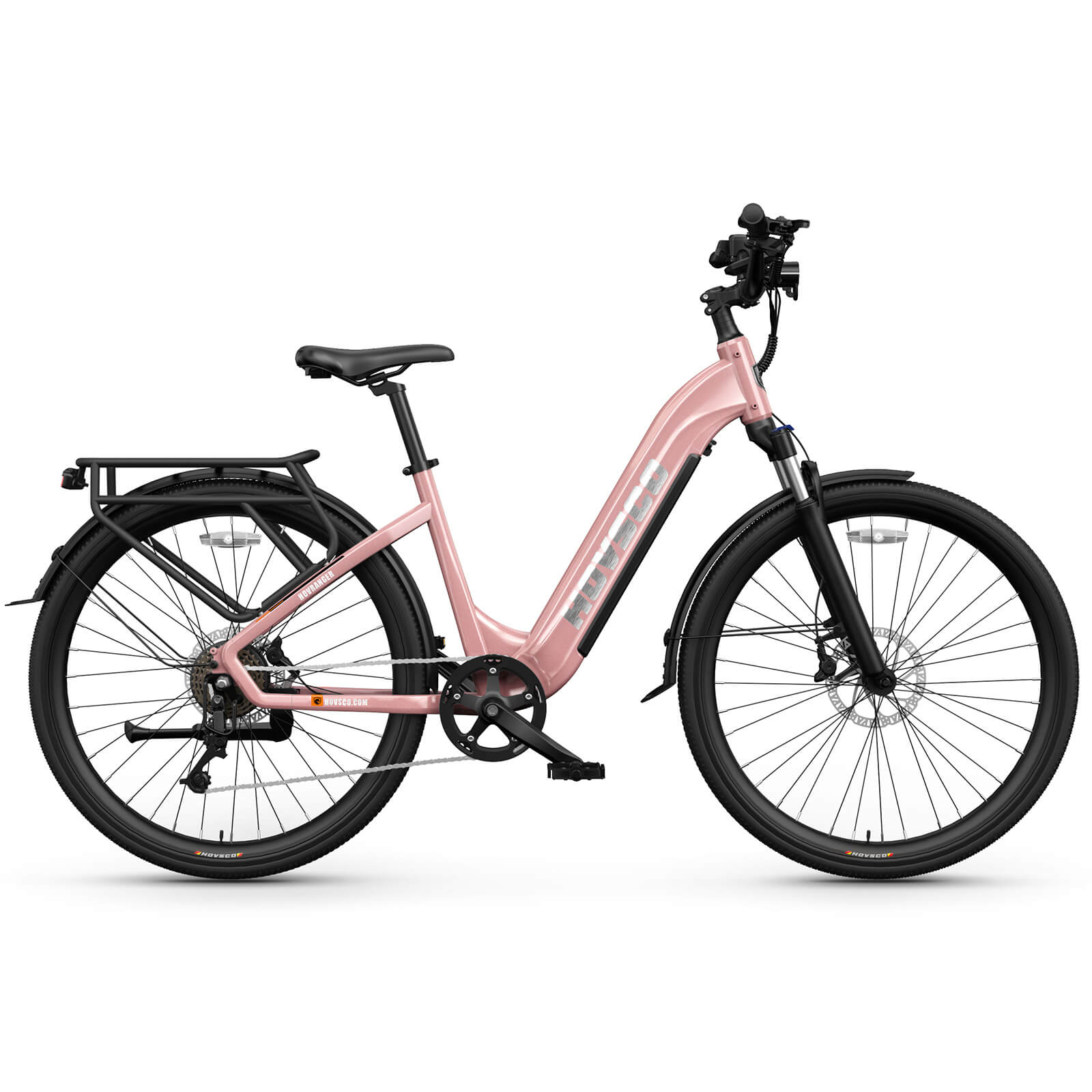
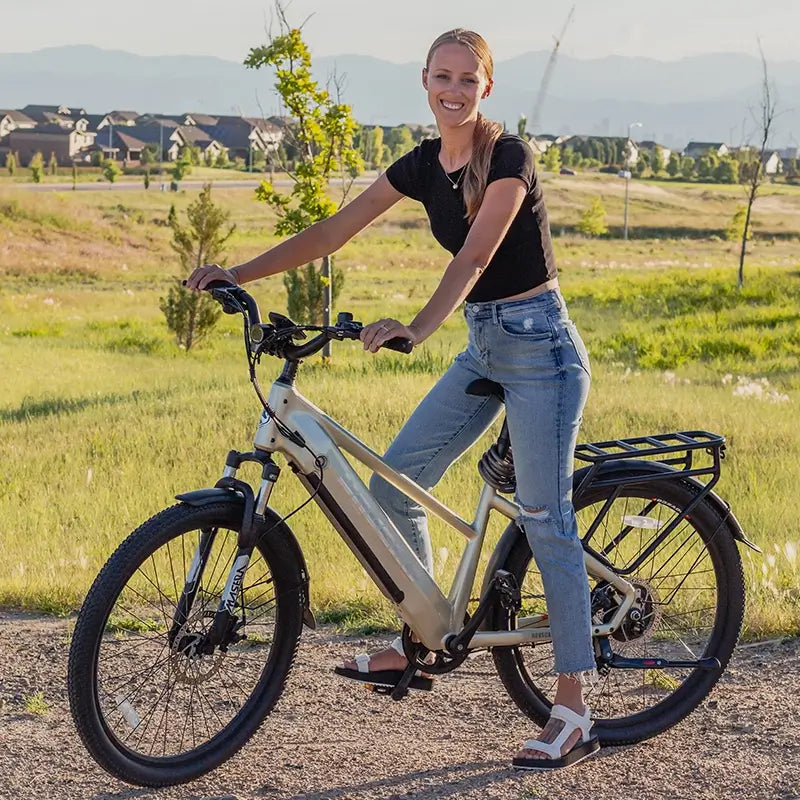
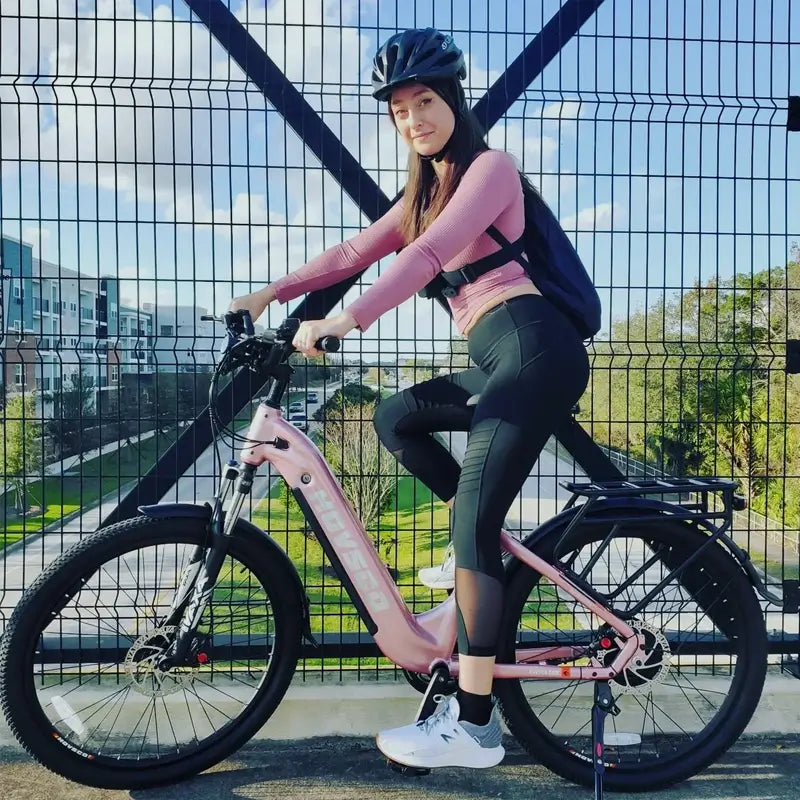
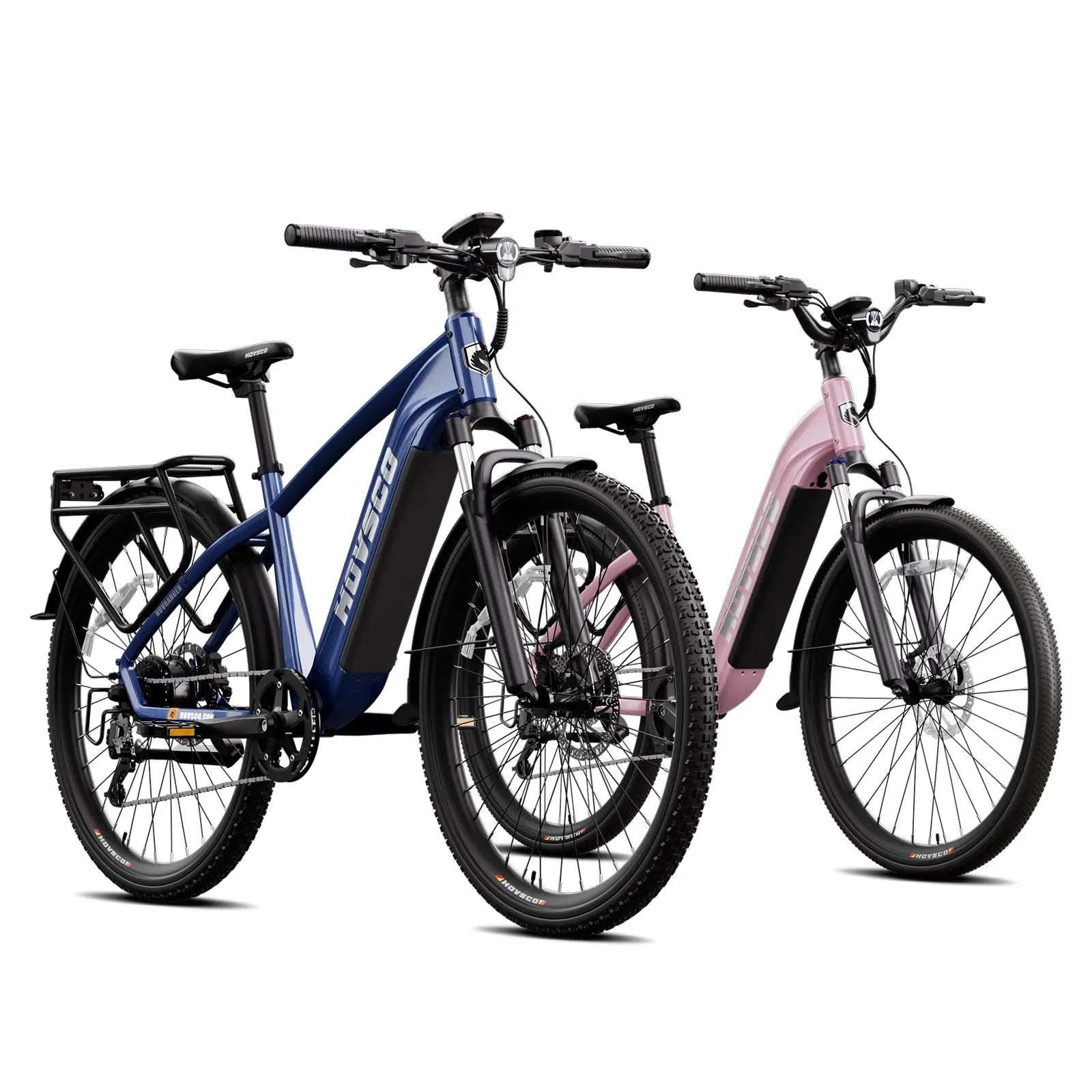
The HovRanger Step-Thru is the easiest recommendation for most new riders: a full-size step-through frame, 27.5-inch wheels, and a published weight of 55.4 lb including battery. Its 970W peak / 500W sustained motor and 40–60 mile range cover commuting and errands without forcing a compromise.
The frame is what beginners feel first. A step-through entry and a saddle that drops low enough make stops and mounts relaxed, and the published 5'1"–6'7" rider range covers most adults. If your first job is city riding with frequent stops, this is the model to start with. See the current specifications on the HovRanger Step-Thru product page.
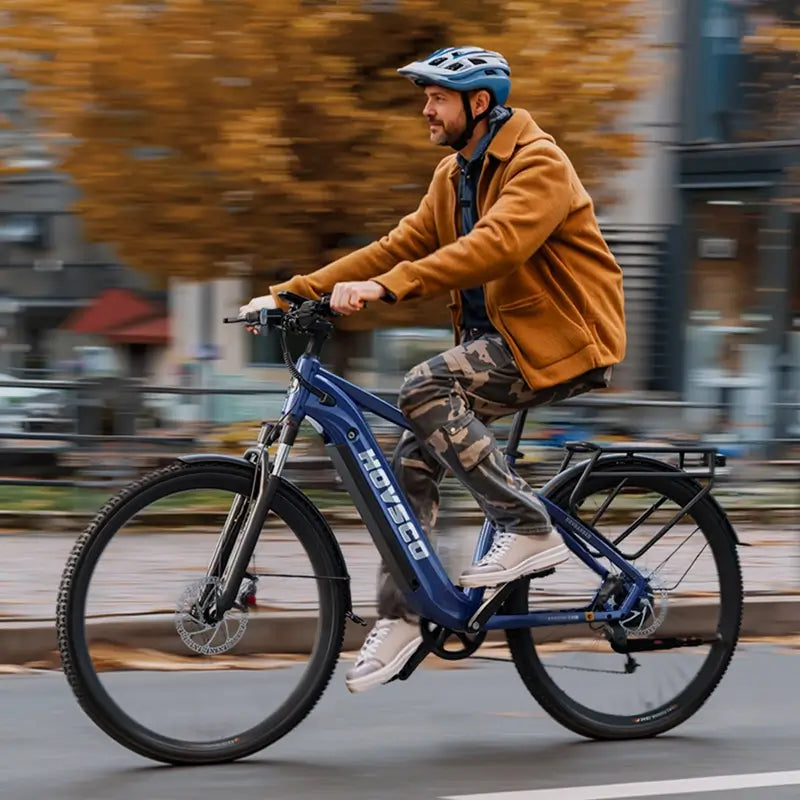
Full-size wheels are the quiet advantage here. A 27.5-inch wheel rolls over cracks and curb cuts more smoothly than a small wheel, which means less attention spent on the ground and more on traffic. For a rider whose first job is a city commute, that smoothness is worth more on paper than a few extra watts.
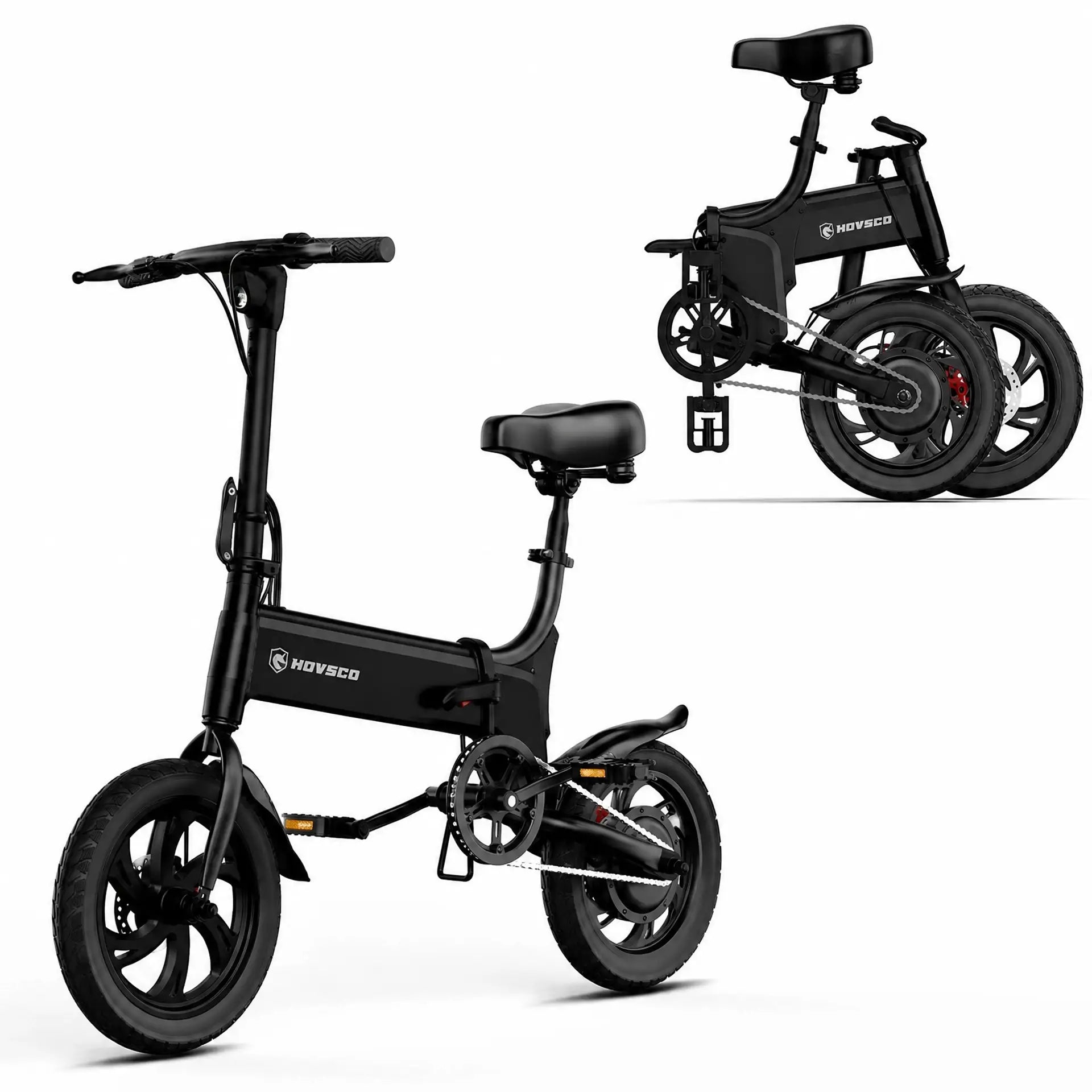
The Sync Max suits beginners with tight storage or a transit commute. At 42.3 lb net in a 14-inch folding format, it is the lightest model in the collection and the easiest to carry. The 450W motor tops out at 19 mph with up to 30 miles of range and a 260 lb payload.
The trade is steering feel: small wheels respond quickly and feel different from a full-size bike, so low-speed turns deserve extra practice. Folding solves a space problem, not a skill problem — confirm fit and practice steering regardless of the format.
The Sync Max earns its place when the alternative is no bike at all: a third-floor apartment, a train carriage, or a storage locker the size of a suitcase. If your doorways and stairs are the real constraint, a lighter folding bike that you will actually carry beats a heavier full-size bike that stays parked.
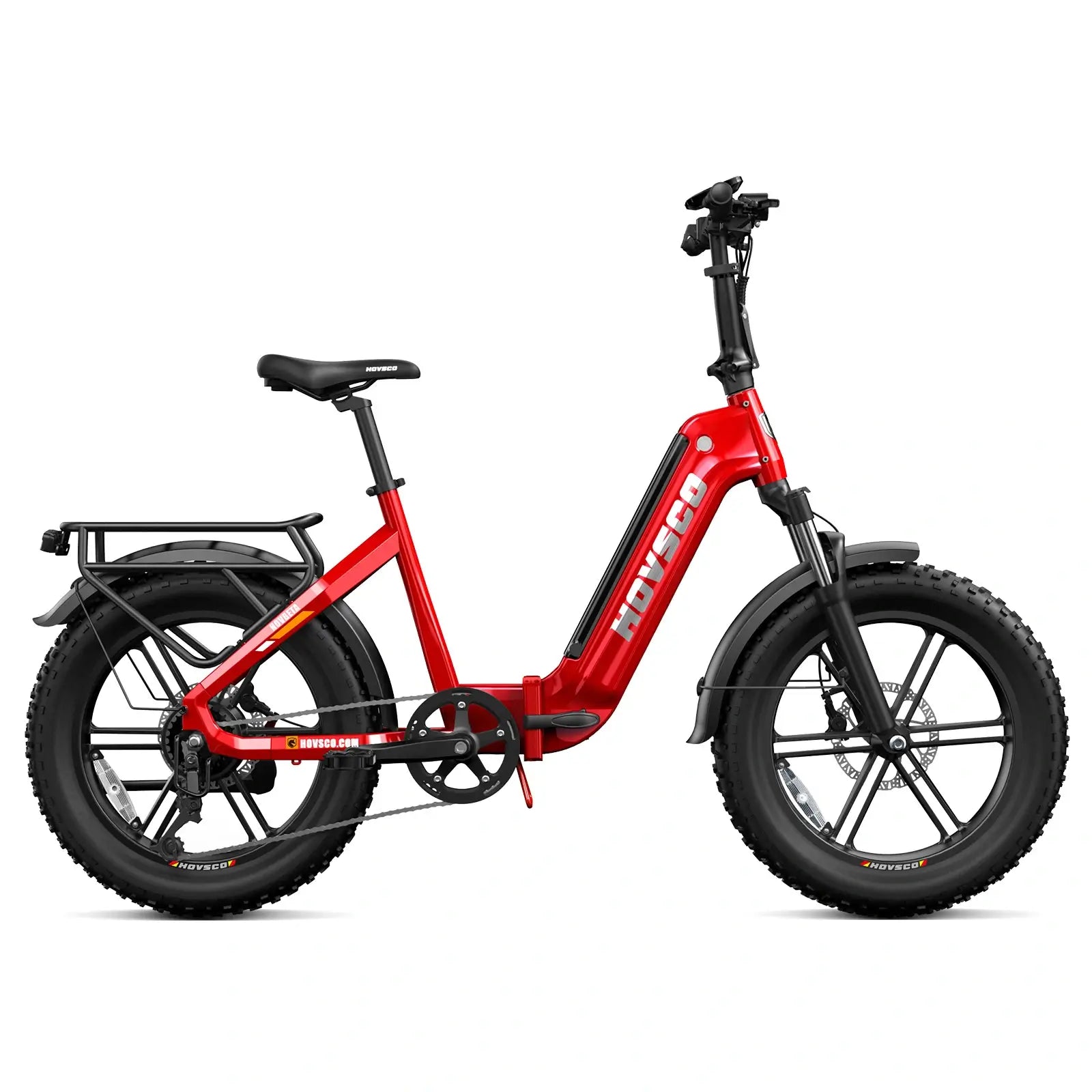
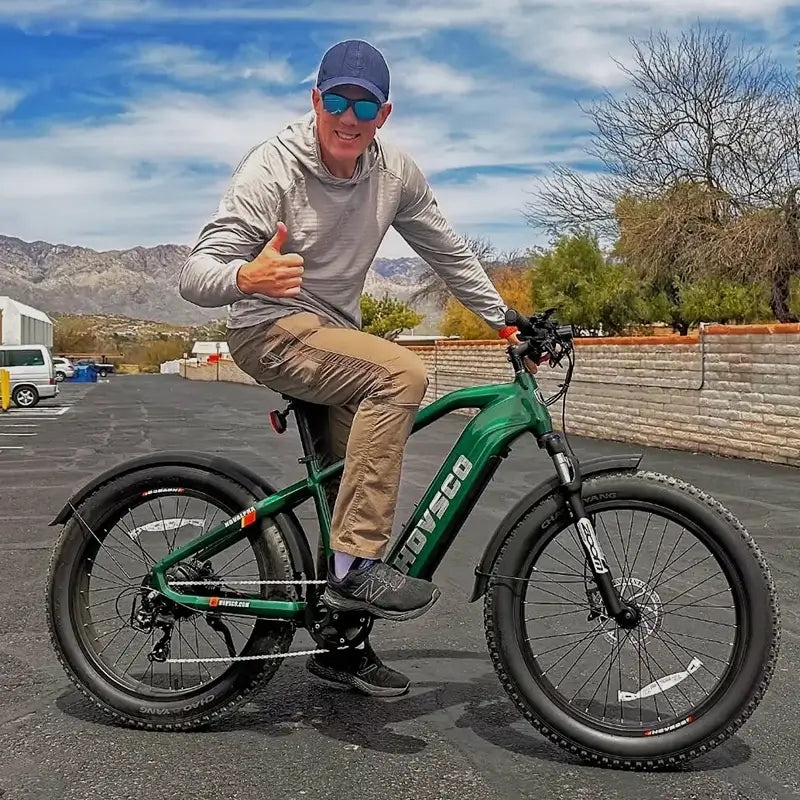
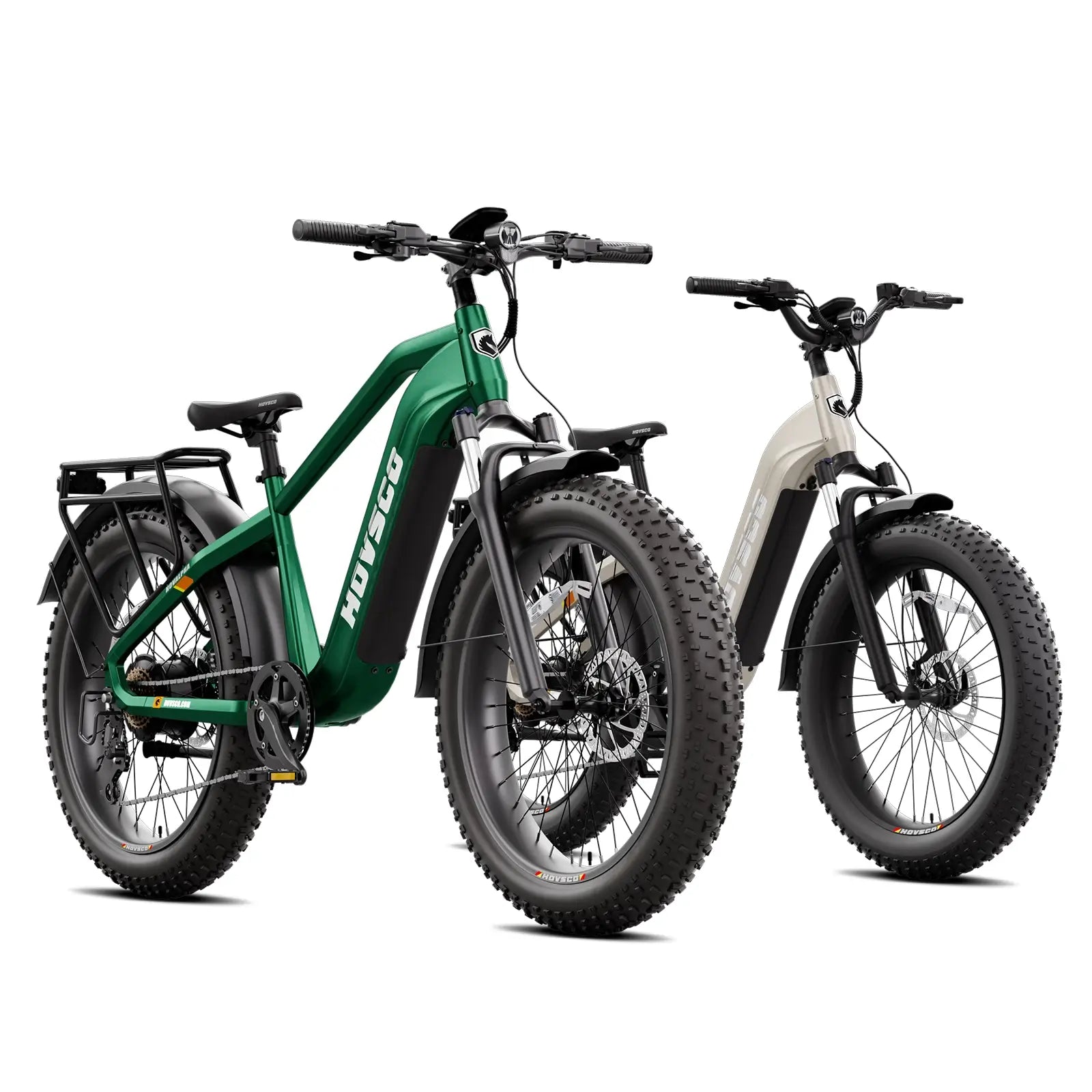
The HovBeta is a 20-inch folding fat-tire e-bike with a 10.63 in standover, a 32.37 in minimum seat height, and a published complete weight of 66.4 lb. Its 1300W motor and 28 mph top speed are more than a beginner needs; the selling point is the planted, stable low-speed feel.
Fat tires smooth rough pavement and feel confidence-inspiring at slow speeds, but the 66.4 lb complete weight is the real decision input: it is heavier to walk, park, and lift. Buy it for stability and storage if you can manage the weight, and practice walking and parking before your first ride.
The fit numbers explain why shorter riders often choose it: a 10.63 in standover and a 32.37 in minimum seat height let many riders under 5'3" mount and stop comfortably, with a published rider range of 4'11"–6'3". If a low standover is your priority and the weight is manageable, the HovBeta's stability is a genuine beginner advantage.
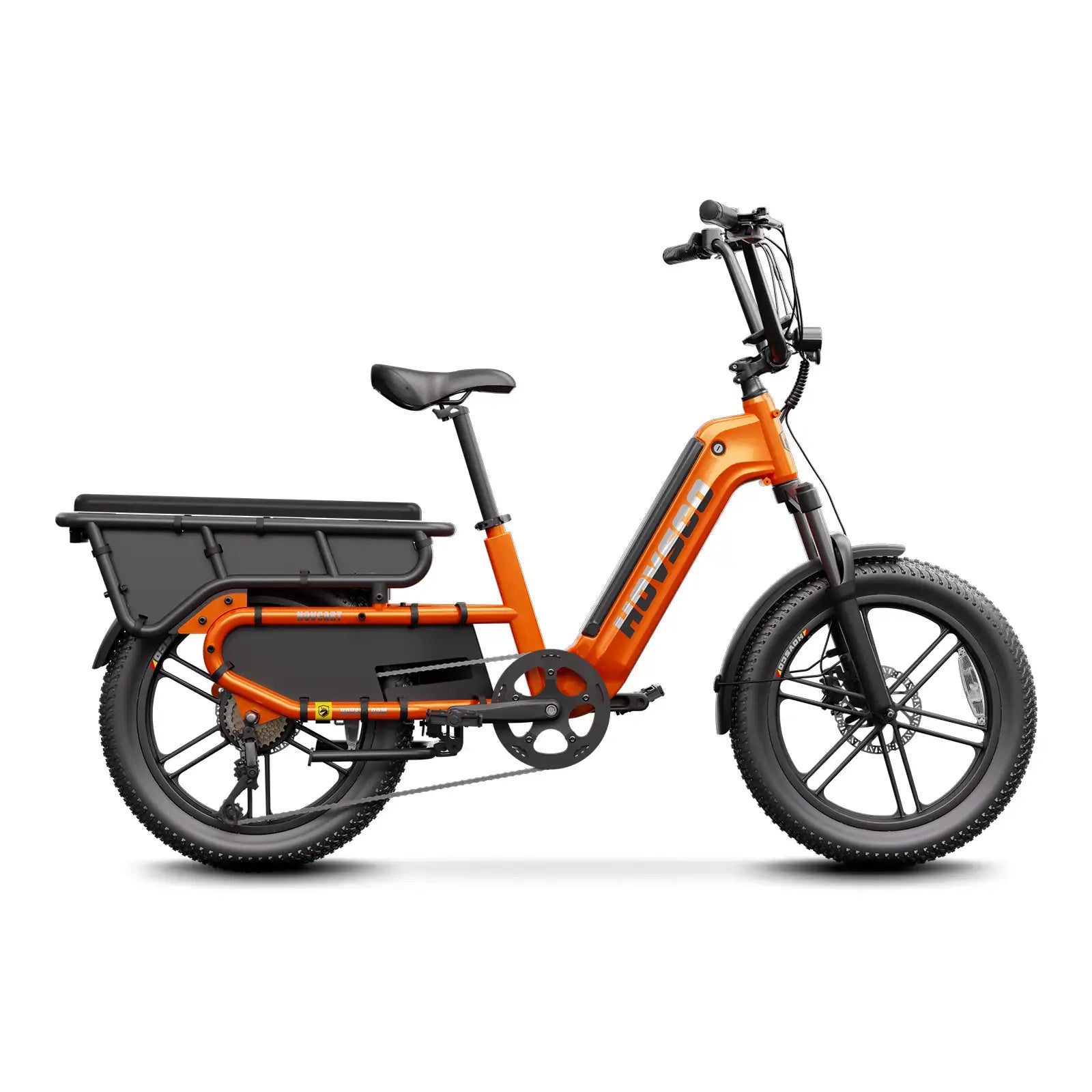
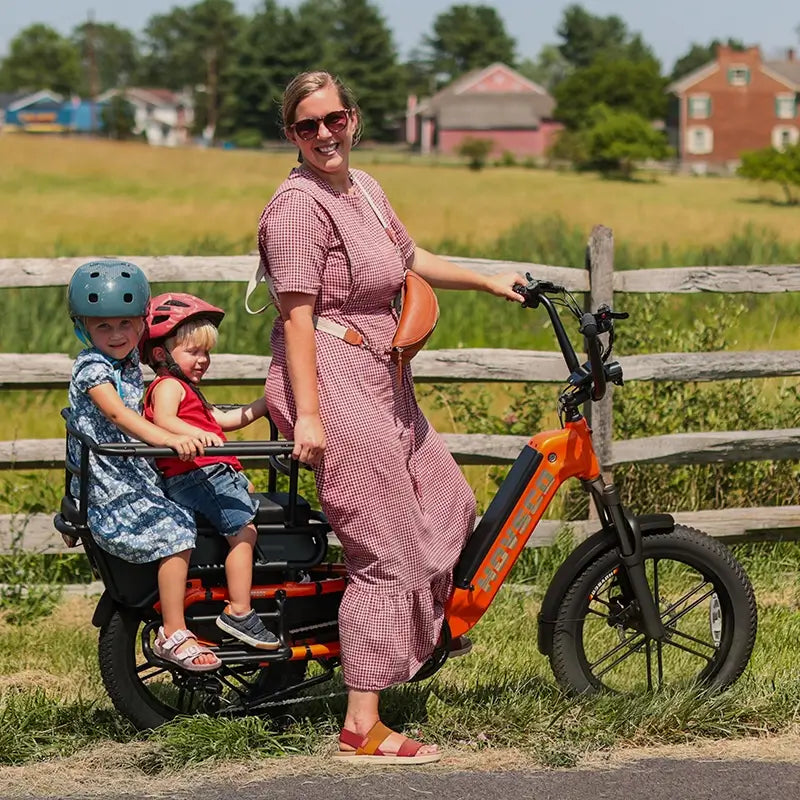
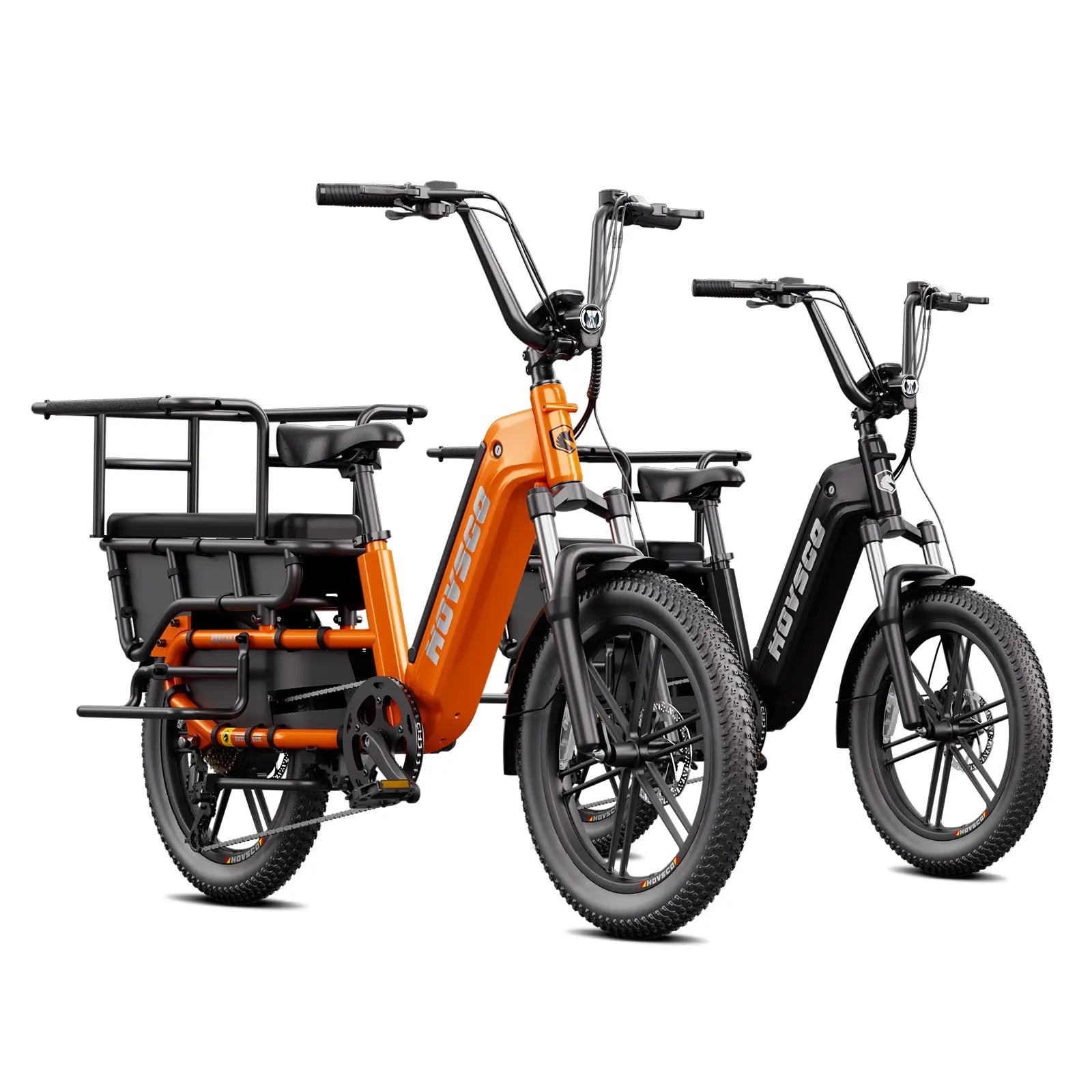
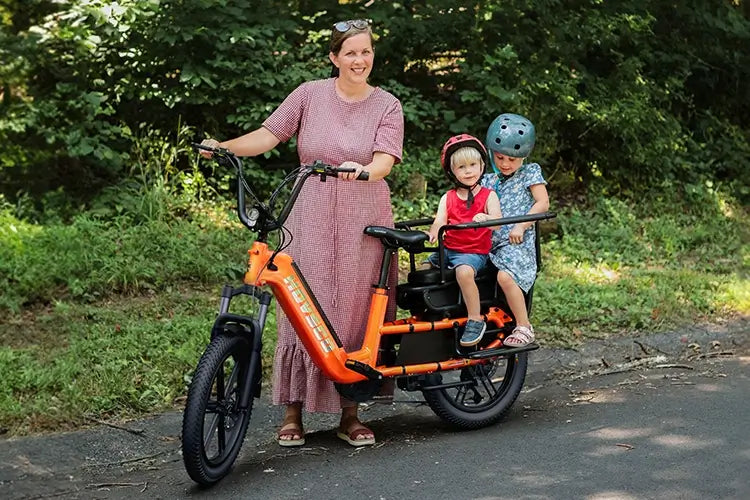
The HovCart is a cargo platform with a 450 lb payload, up to 60 miles of range, and a 66.4 lb complete weight including battery. It turns school runs and grocery trips into the bike's first job, and its 1300W peak / 750W sustained motor is built for loads.
The learning rule for cargo is strict: start unloaded and add approved cargo only after braking, turning, and balance are consistent. Cargo changes stopping distance and low-speed handling, so the HovCart is the right first bike only when the first job is genuinely cargo.
For households that will use it daily, the trade is clear: the HovCart replaces short car trips that a standard bike cannot cover. The payload figure is a capability ceiling, not a starting point — the first month should be ridden unloaded, then with light loads, then with the full family kit once braking feels the same every time.
Confirm the fit before the first powered ride, not after. Saddle height should let you stand over the frame with both feet down, the brake levers should be reachable without stretching, and on step-over frames the standover should clear the top tube with room to spare.
If a model's fit data is not published — as with some folding formats — check the live product page and, where possible, test the bike before buying. A bike that fits is a bike you will ride; one that does not is a project.
You can check two of the three numbers at home before visiting a shop: measure your inseam, and compare it with the published standover and minimum seat height of the model. A standover that clears your inseam by a couple of inches, and a minimum seat height at or below your comfort point, are the two numbers that prevent most fit surprises.
Match the shortlist to your first job before comparing anything else:
The best beginner e-bike is not the most powerful one; it is the one whose frame, weight, and storage match where and how you will ride. If two models fit, choose the lighter one for your first season.
" A beginner bike should make the first ride boring, in the best way. Low assist, stable handling, and a frame the rider can manage matter more than any spec sheet number." — HOVSCO Engineering & Content Team
The best first e-bike for 2026 depends on fit and storage more than power. HovRanger Step-Thru covers most city riders, Sync Max fits small spaces, HovBeta adds fat-tire stability, and HovCart brings cargo — each one only when the learning context matches.
What is the best electric bike for a beginner?
For most new riders, a full-size step-through like the HovRanger Step-Thru is the easiest starting point: easy mounting, a manageable 55.4 lb complete weight, and a 5'1"–6'7" rider range. The right pick still depends on your storage and first job.
Are e-bikes with more power better for beginners?
No. More power adds weight and can make the first rides harder to control. Beginners learn fastest on modest assistance and predictable handling; power is a preference you develop later.
Should a beginner buy a folding e-bike?
Only if storage or transit requires it. Folding solves a space problem, not a skill problem — small wheels respond differently to steering, so practice low-speed turns regardless of the format.
Are cargo e-bikes good for beginners?
They are good only when cargo is the real first job and you learn unloaded first. Cargo changes stopping distance and low-speed handling, so add loads gradually after the basics are consistent.
How much should a beginner spend on a first e-bike?
Spend on fit, weight, and support rather than peak power. A capable first bike with published fit data and a brand-backed warranty beats a cheaper model with unknown geometry.
Share:
What to Look For in a Lightweight Commuter E-Bike?
Sync Max vs HovBeta: Which Folding E-Bike Fits a Dorm Room?