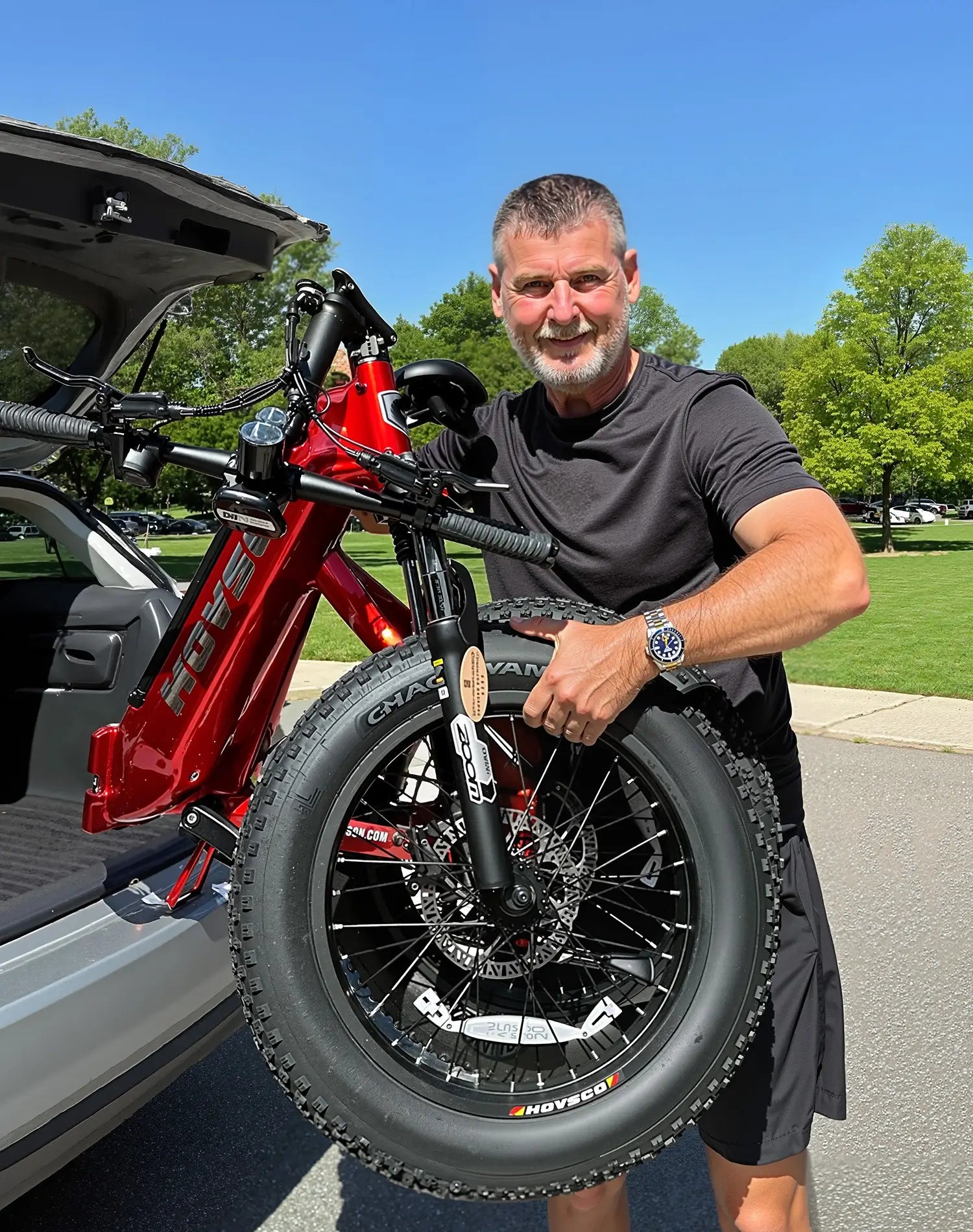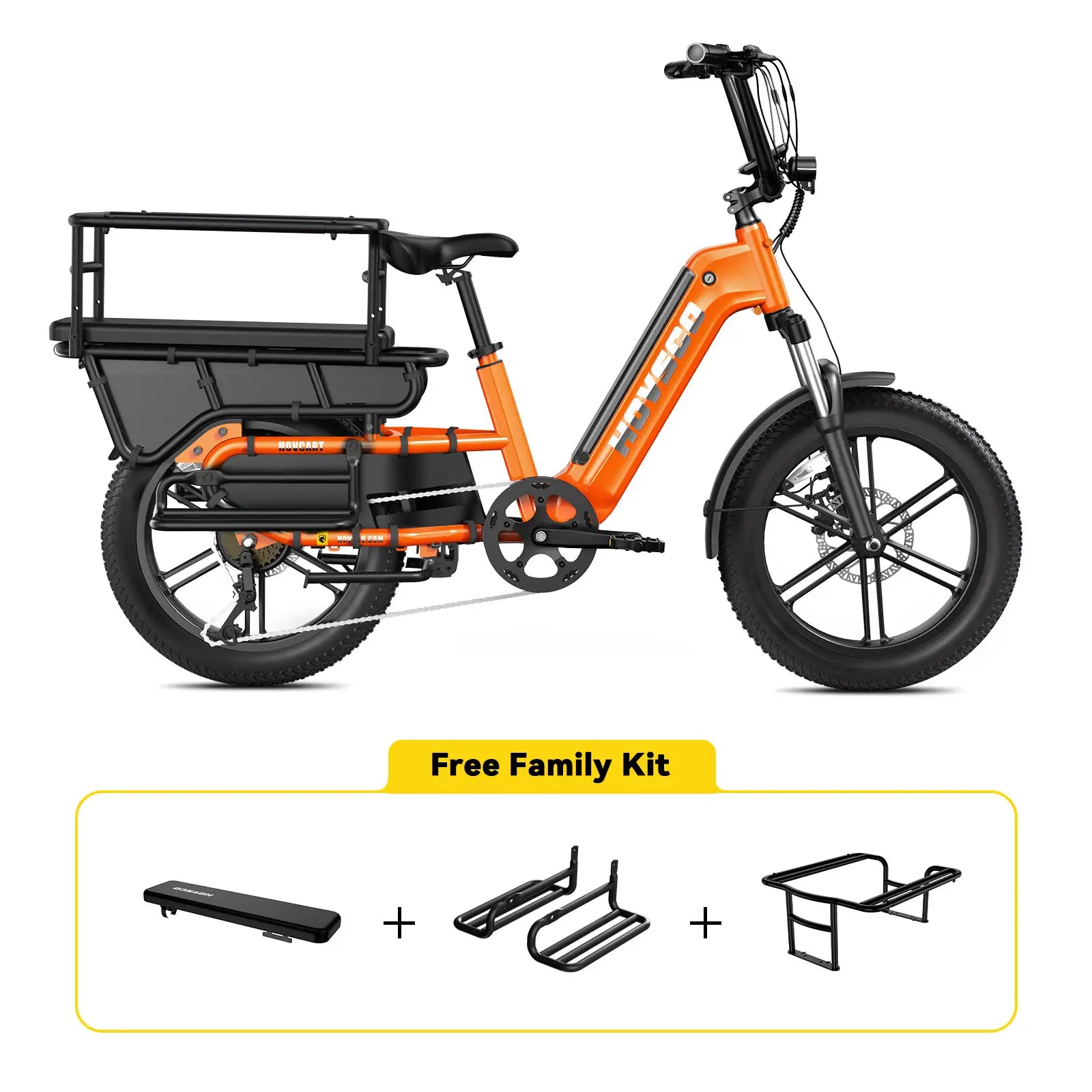
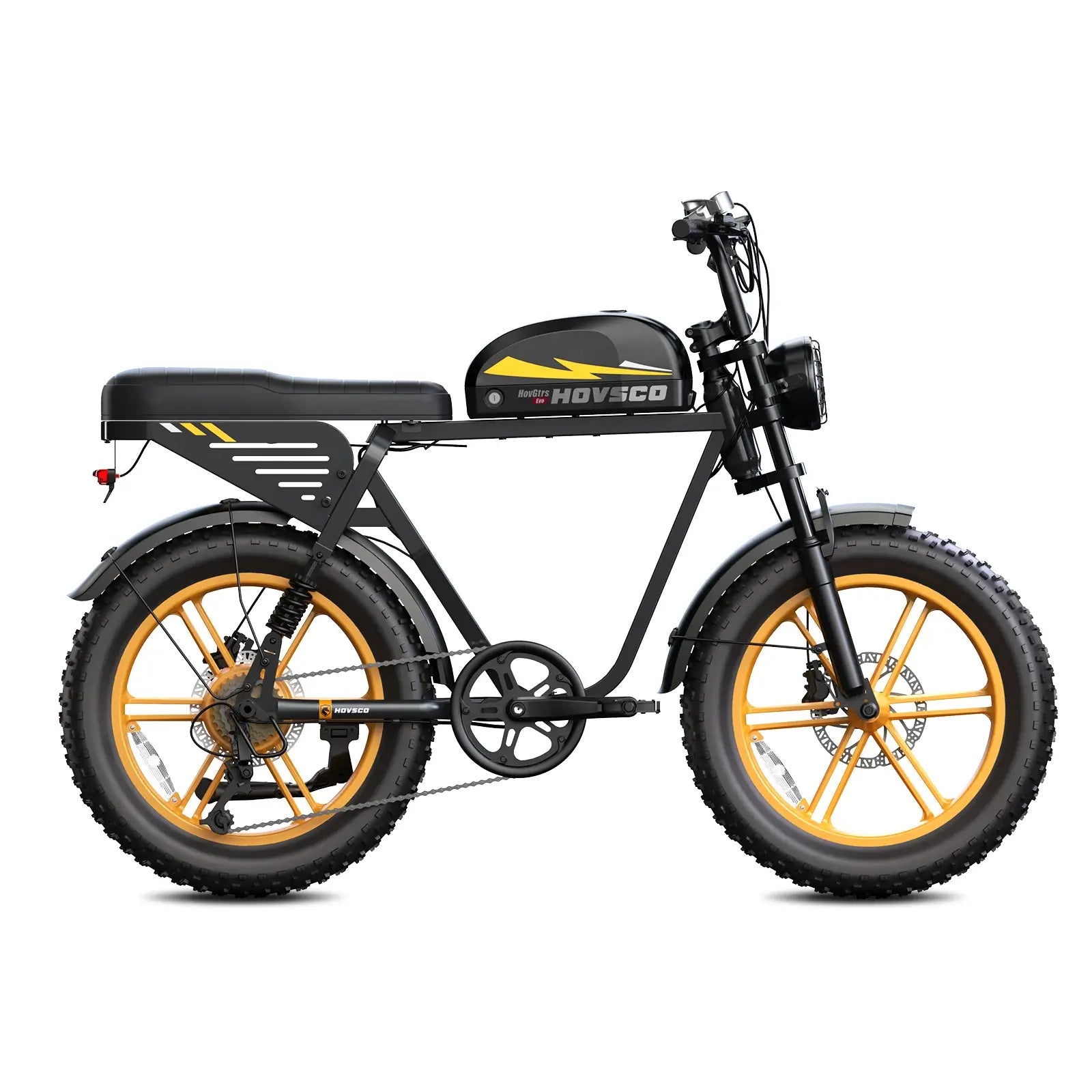
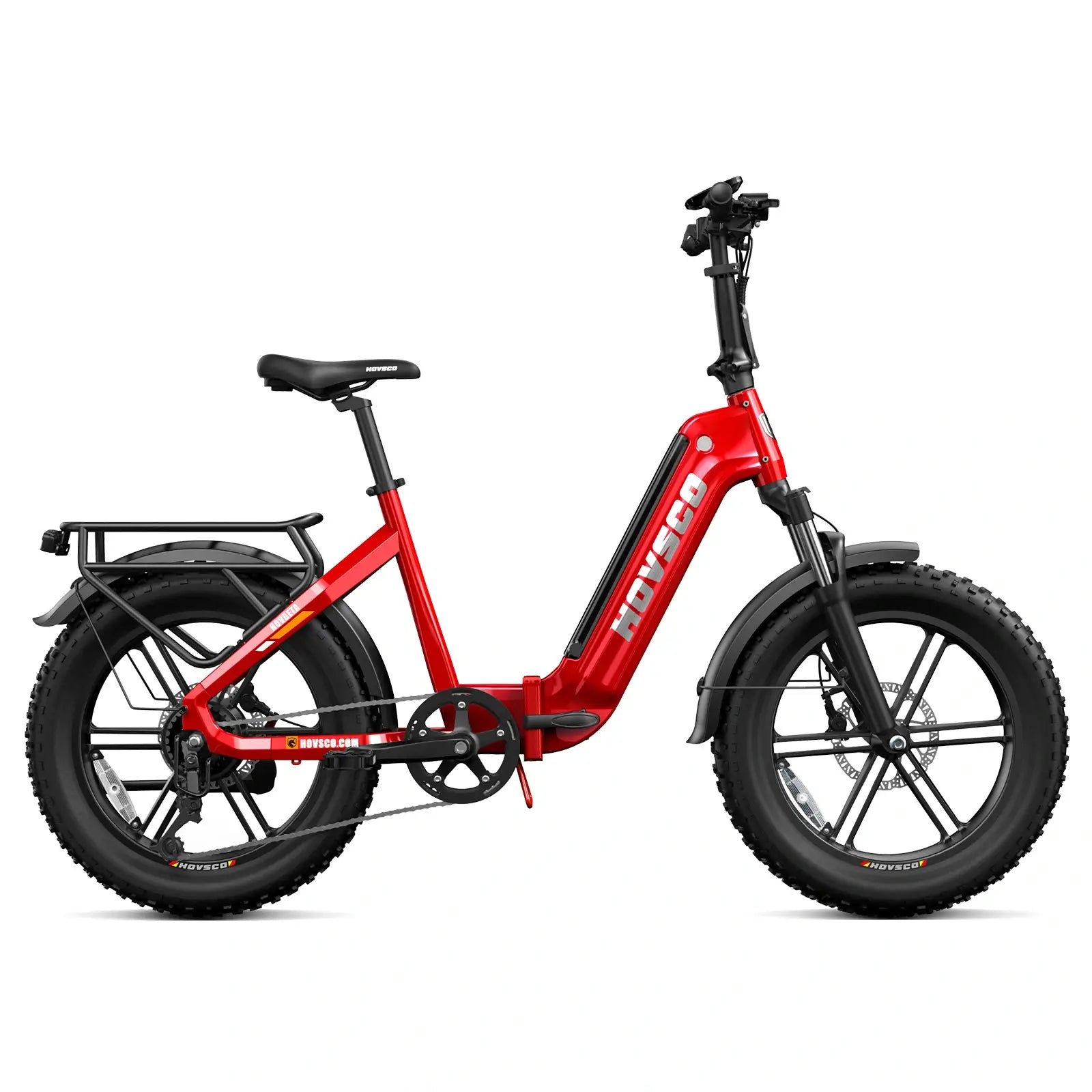
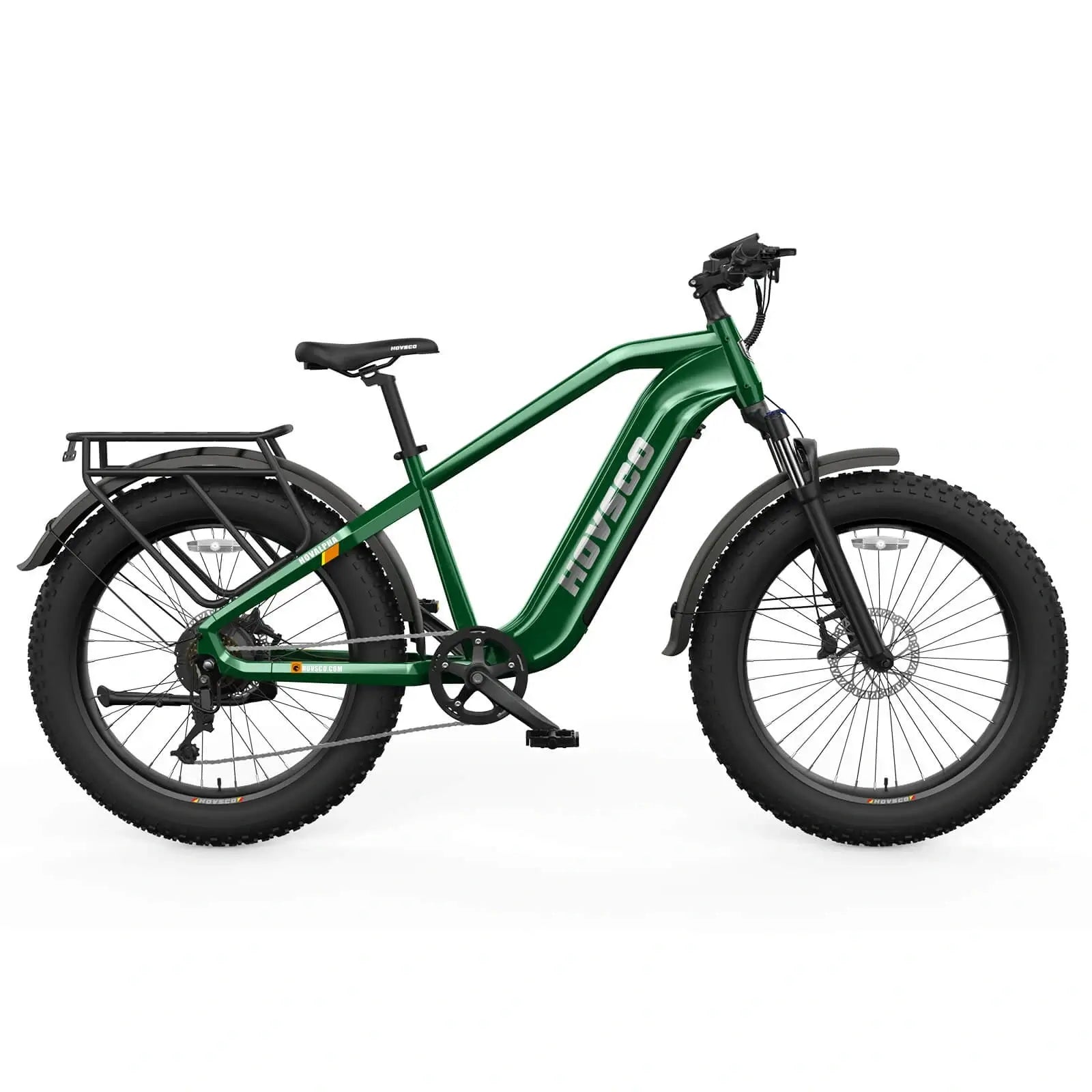
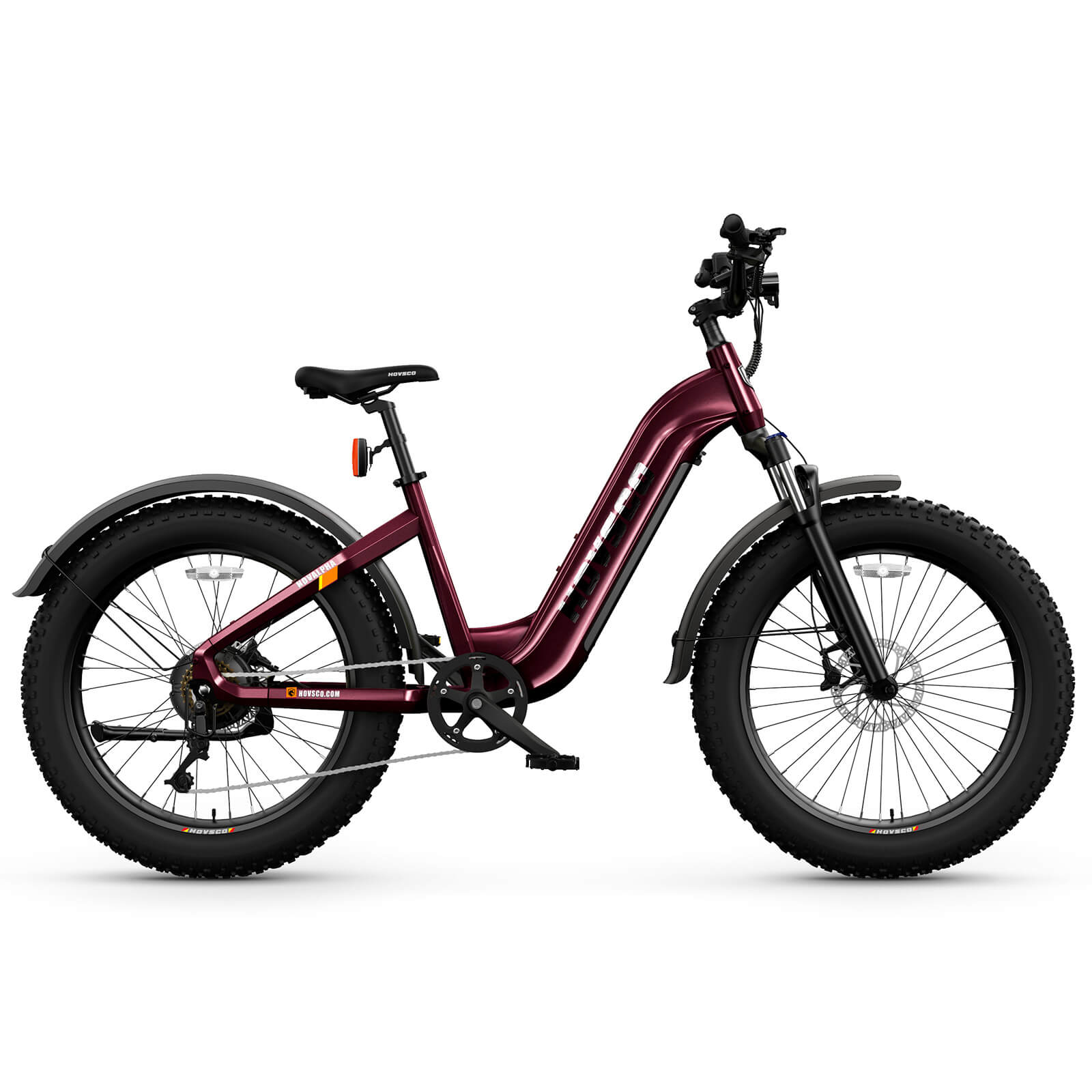
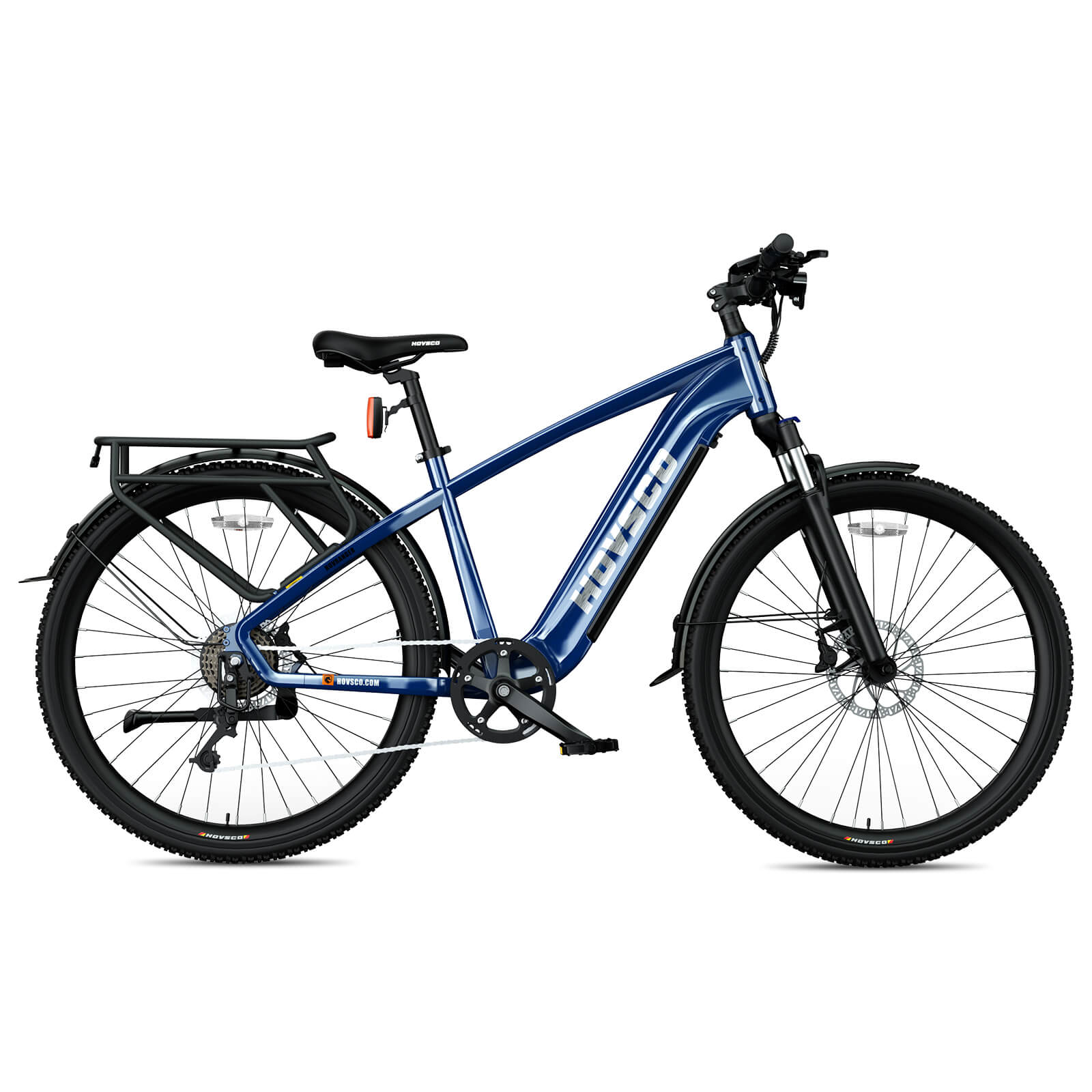
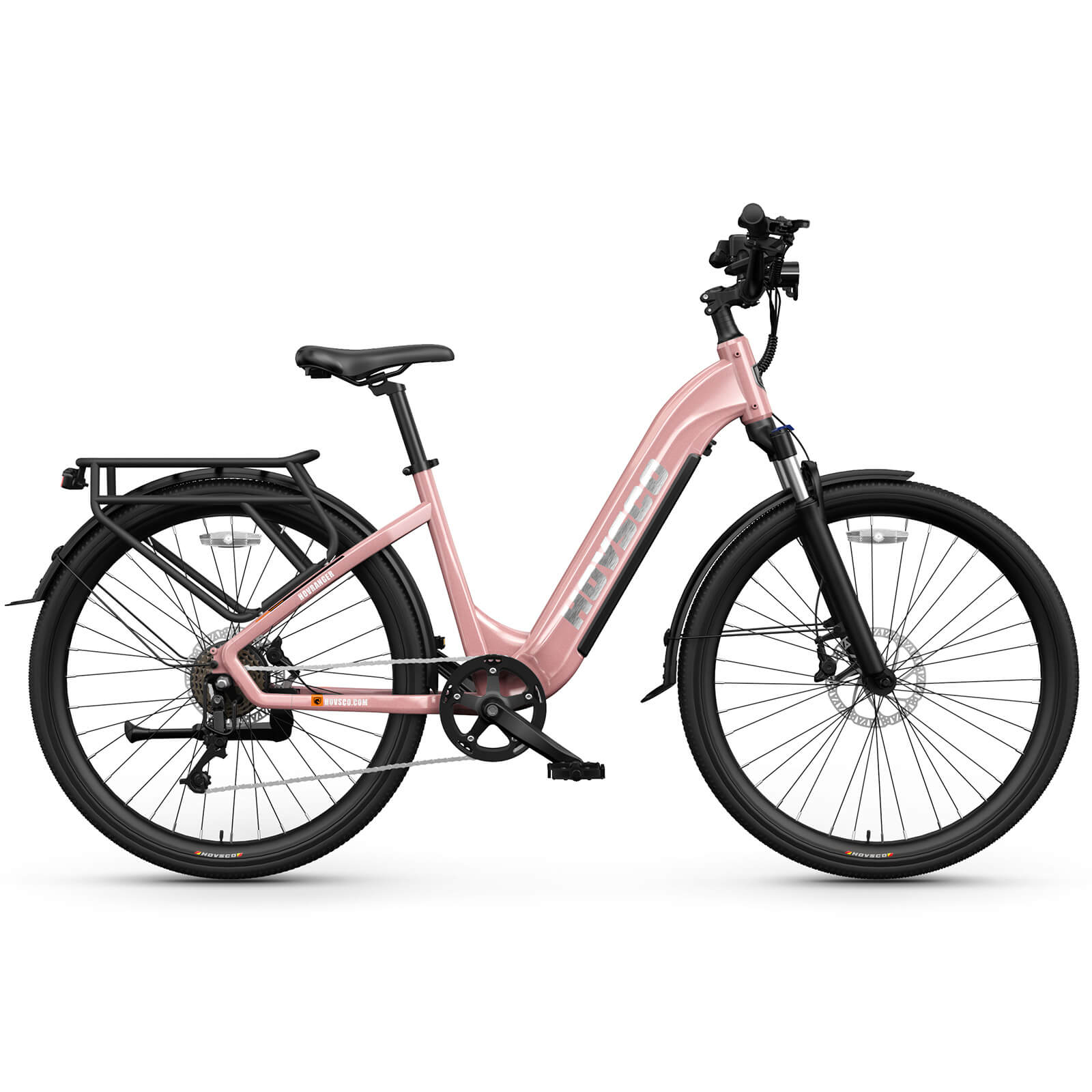



HovGtrs Evo
720Wh48V 15Ah
Published for up to 65 miles of pedal-assist range. Start here when the complete planned route fits comfortably inside a conservative battery reserve.
Choose Evo →E-Bikes
Accessories
 Free Shipping
 15-Day Returns
 2-Year Warranty
Free Shipping
15-Day Returns
2-Year Warranty
Choose the battery plan before the distance claim
Compare HovGtrs Evo, Pro and Ultra configurations by published battery capacity and pedal-assist range—then plan for rider load, speed, terrain, weather and a safe return reserve.

Published range is a reference, not a guaranteed result for every route or rider.
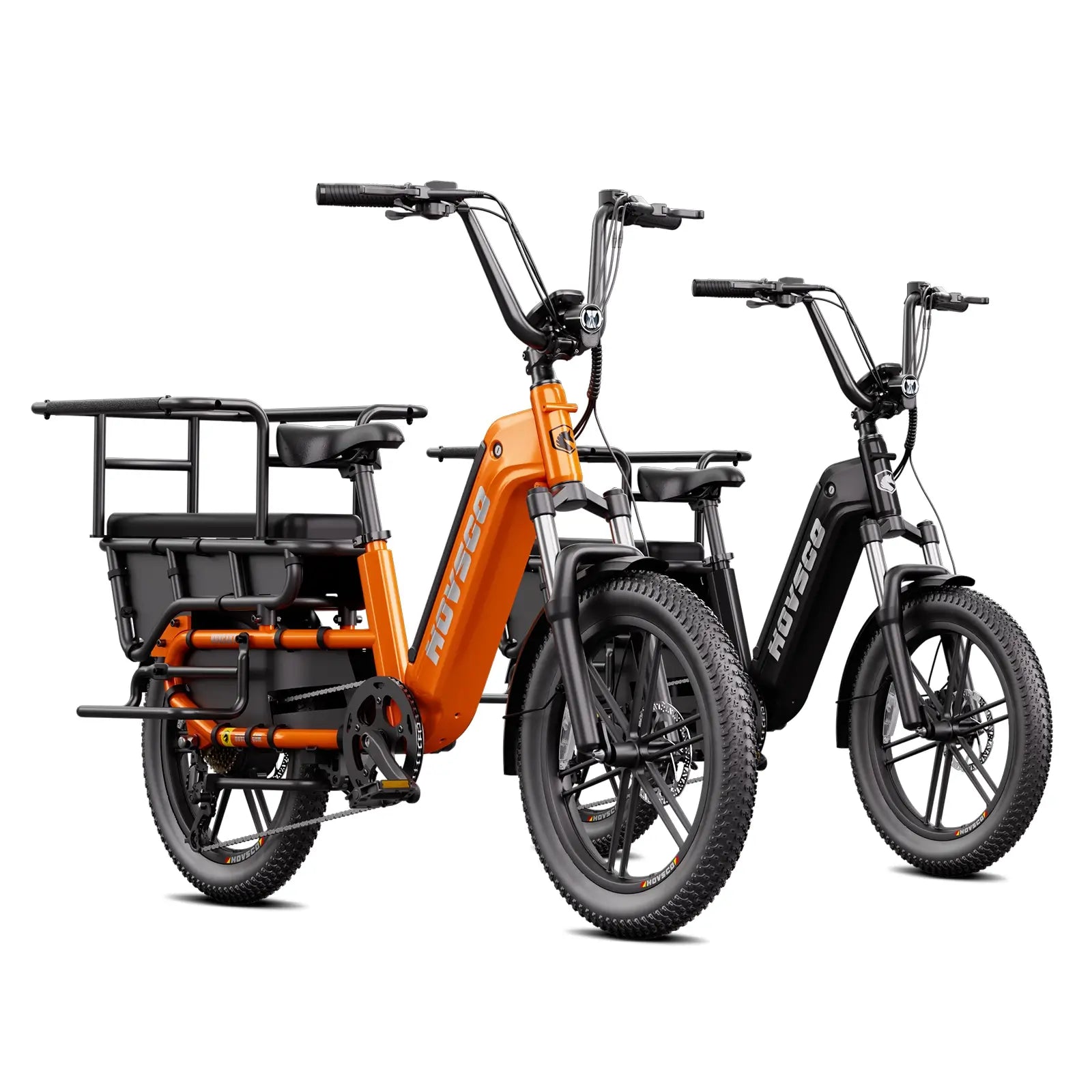
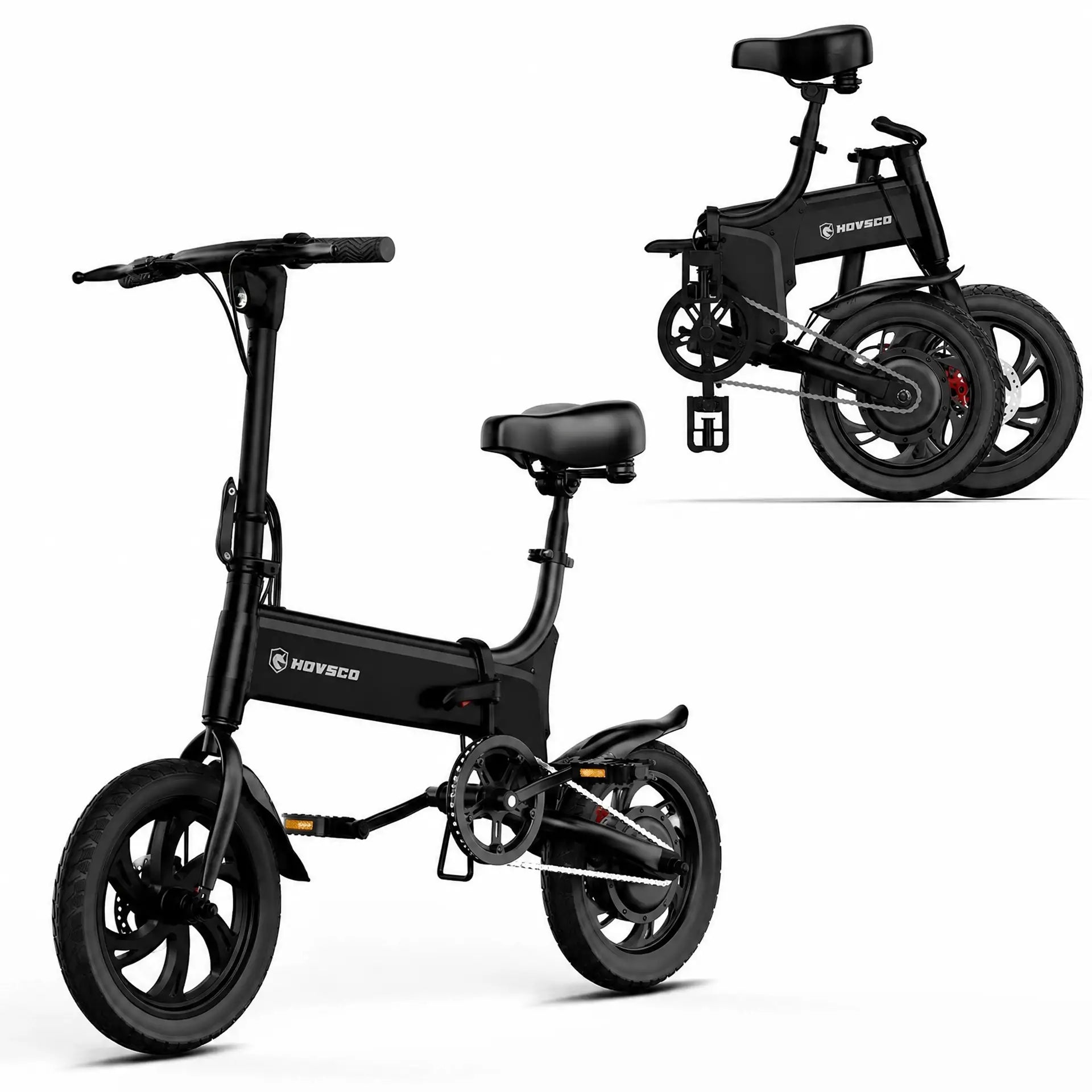
HOVSCO HovGtrs Moped-style E-Bike

MOTOR POWER

TOP SPEED

Payload Capacity

Range
HOVSCO HovGtrs Moped-style E-Bike
MOTOR POWER
TOP SPEED
Payload Capacity
Range
MOTOR POWER
TOP SPEED
Payload Capacity
Range
One HovGtrs platform, three range configurations
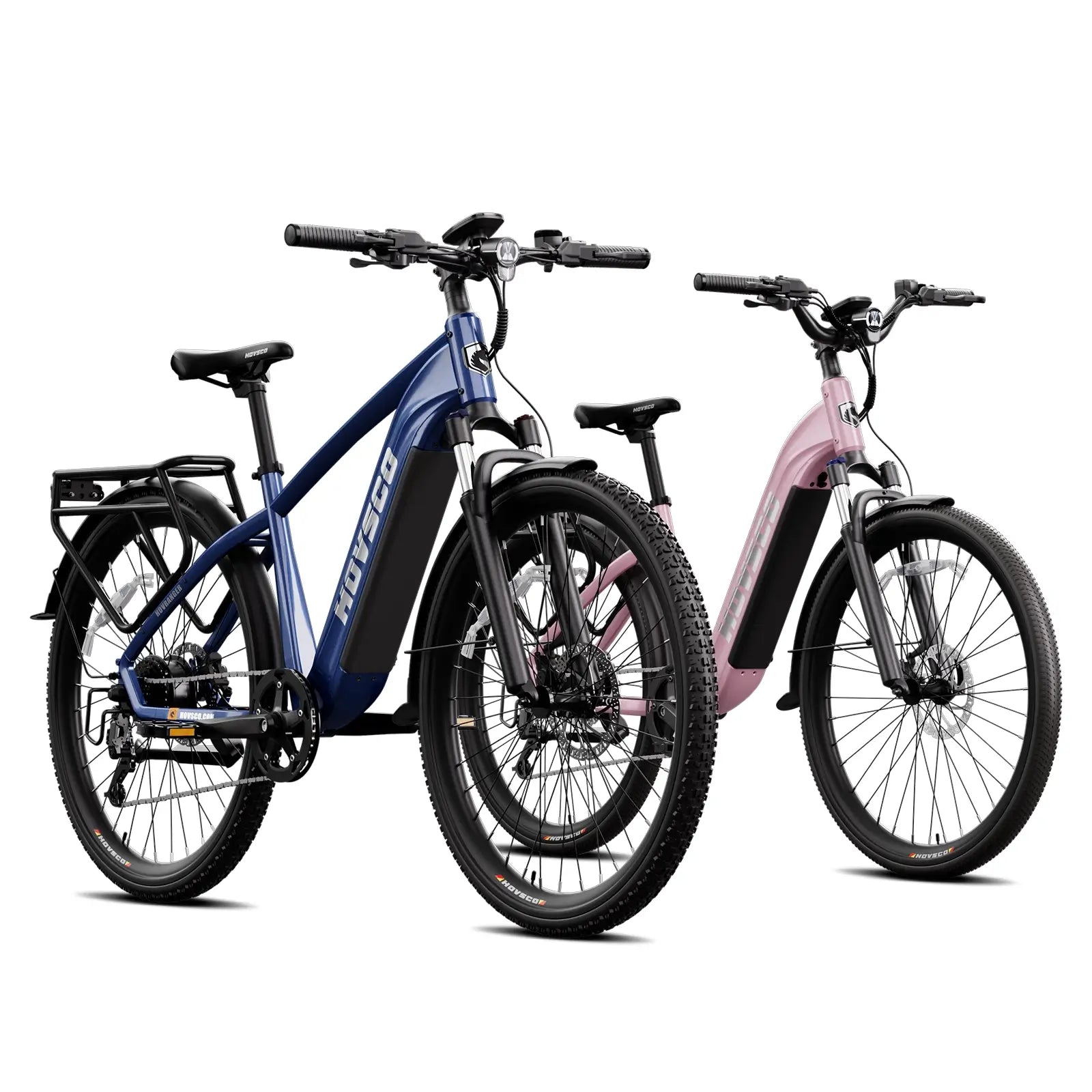
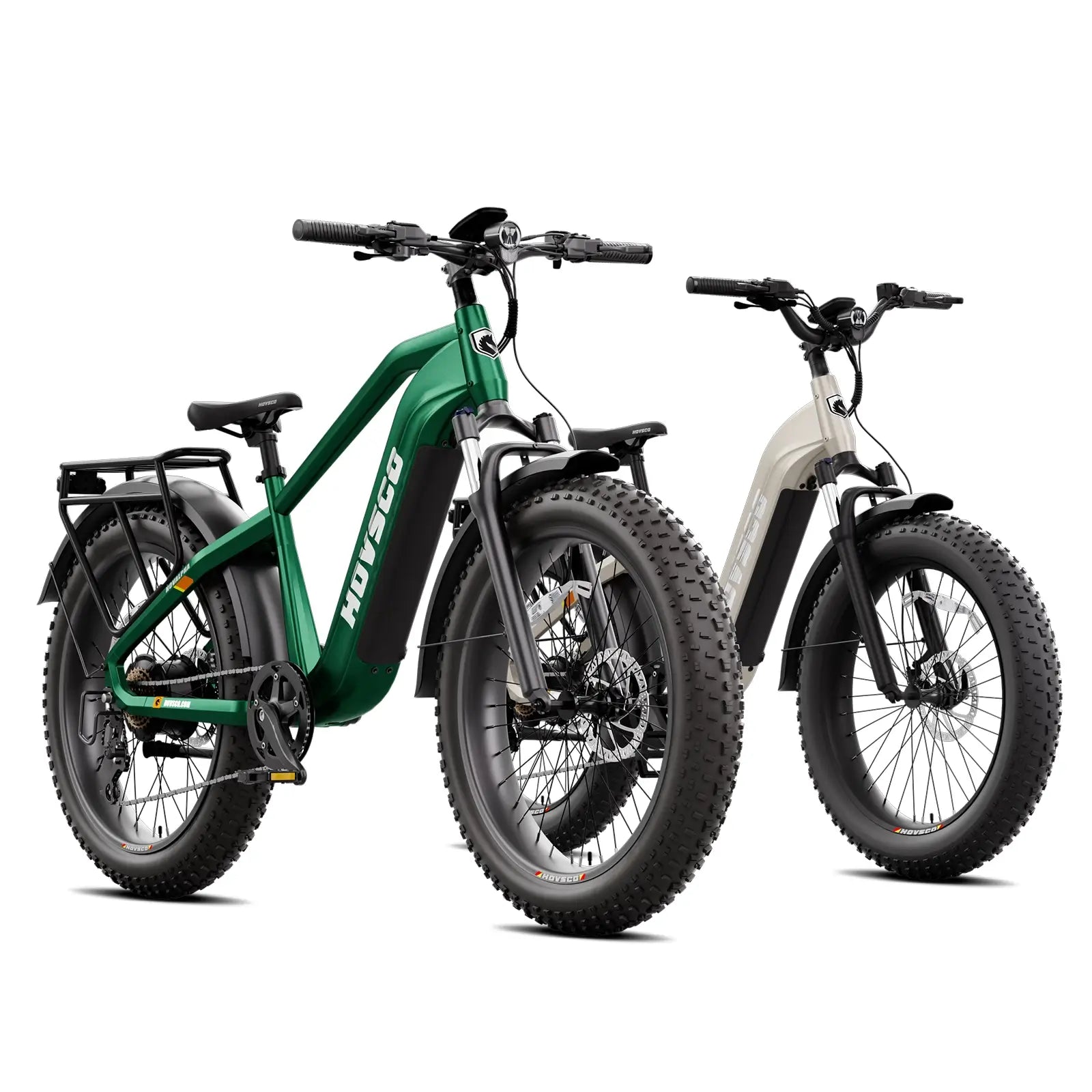
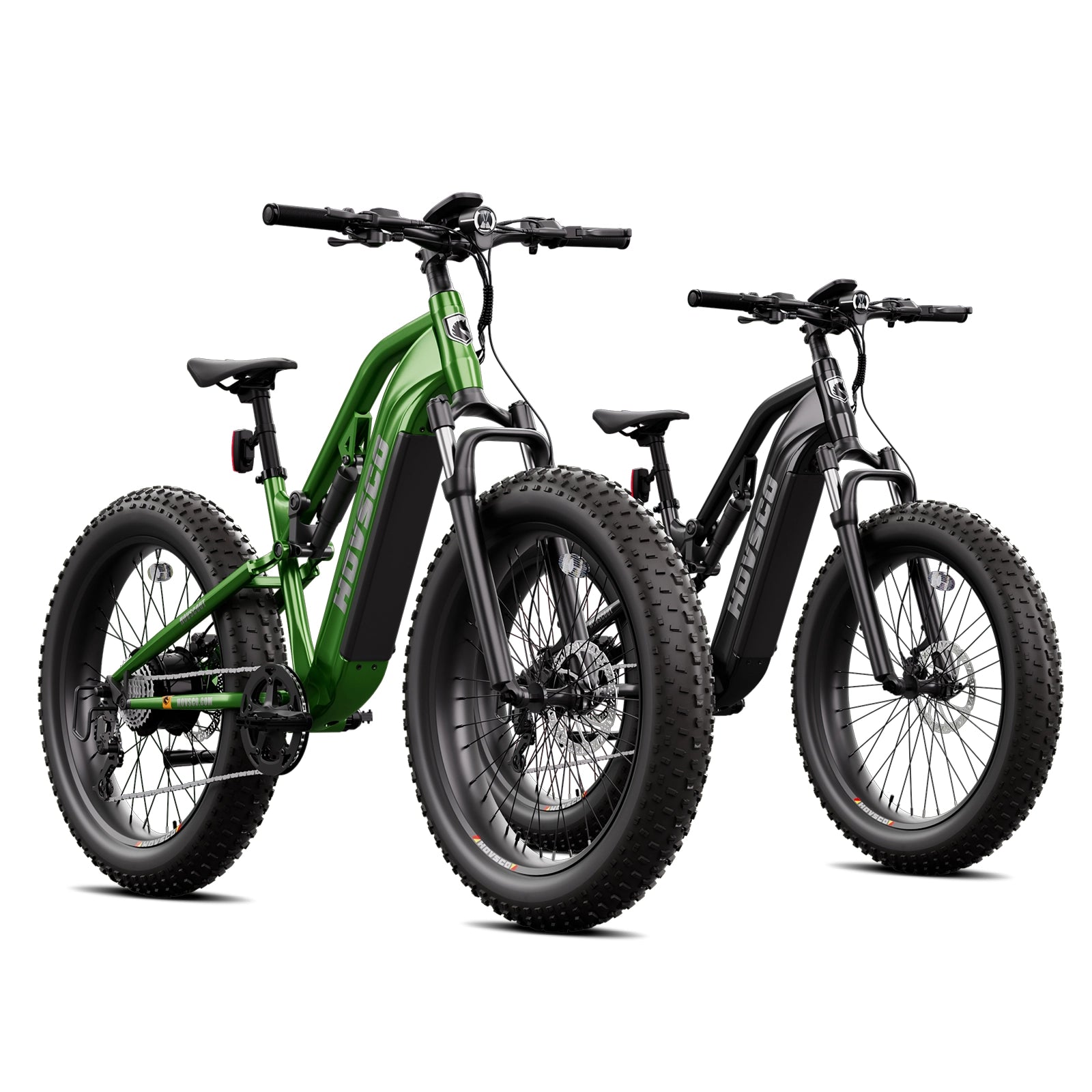
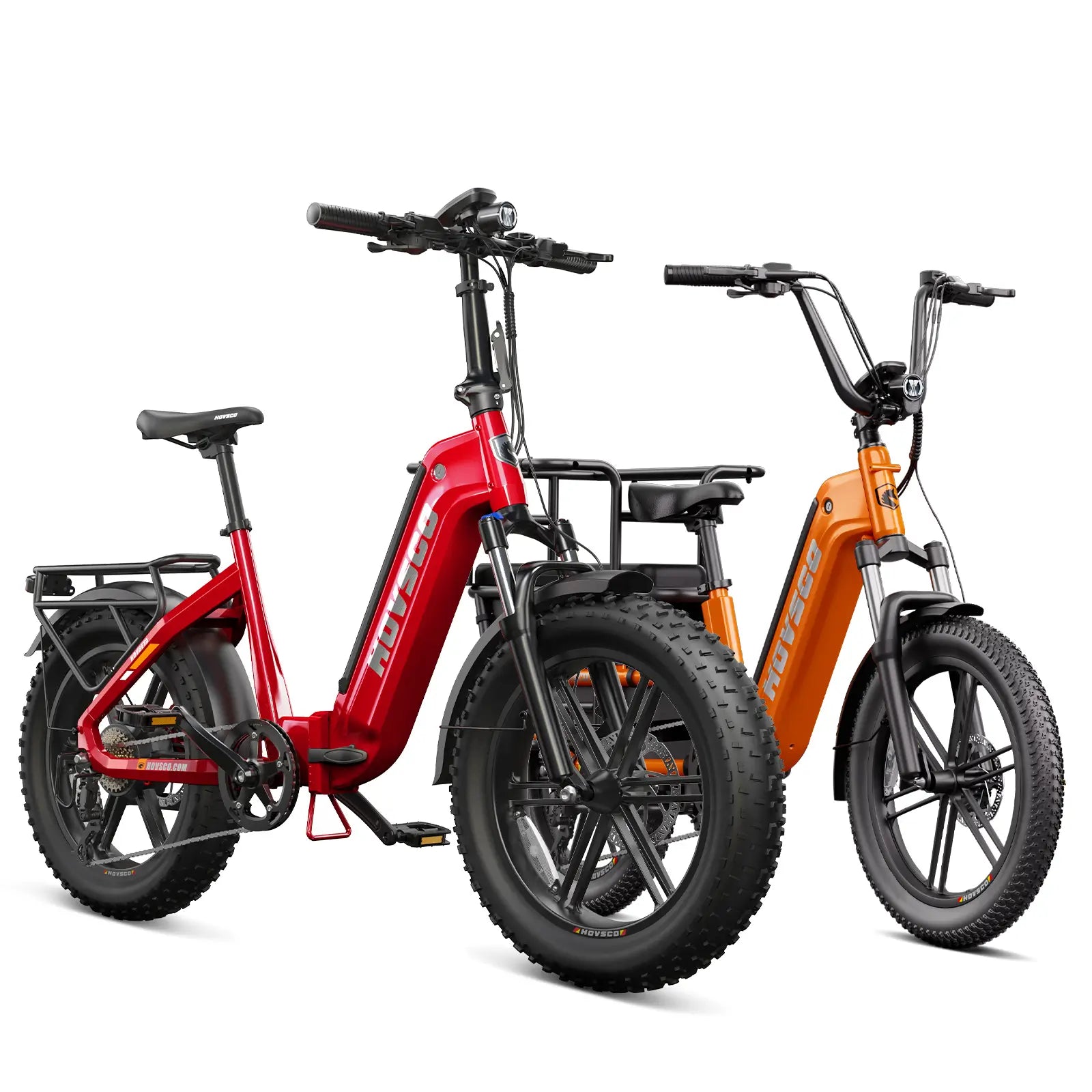
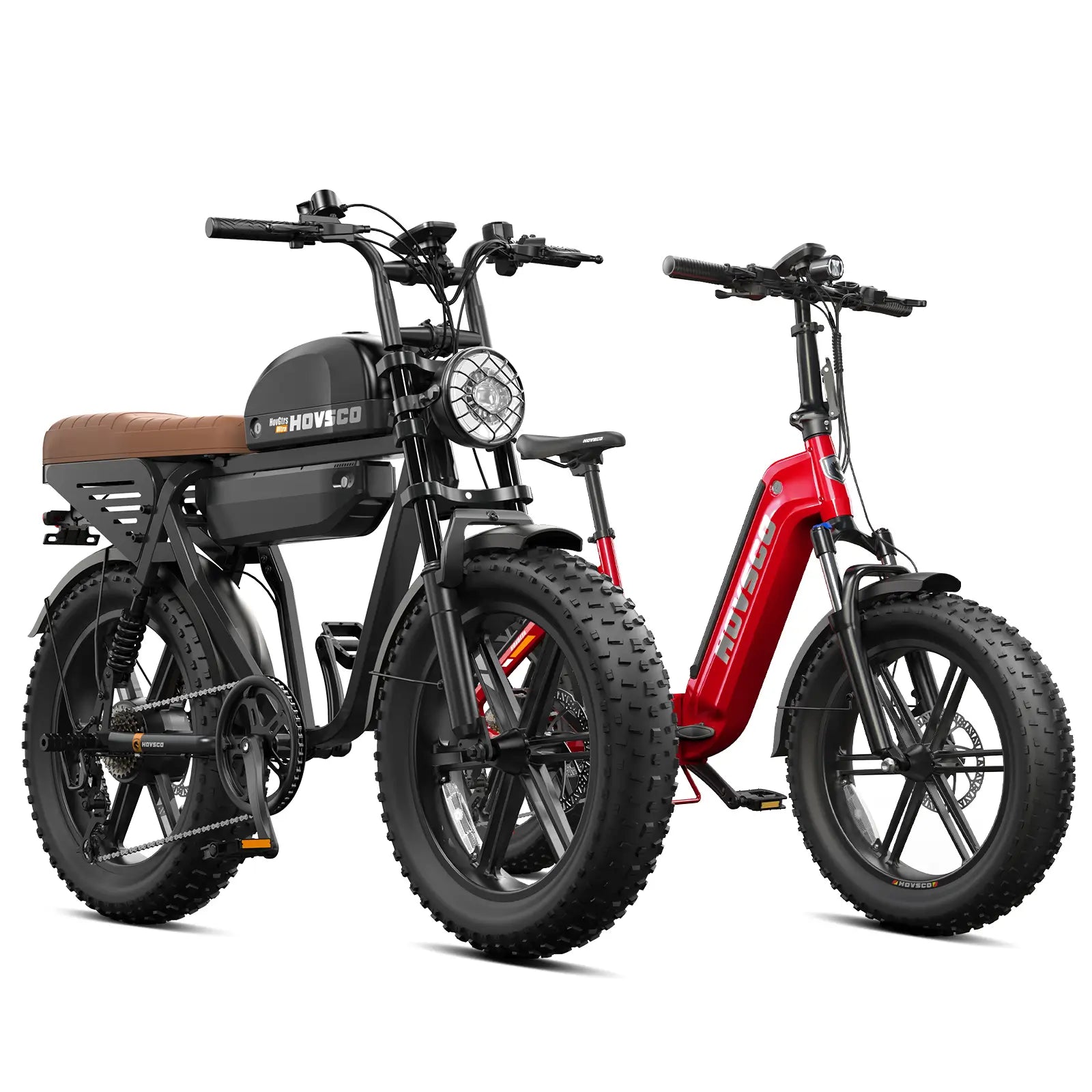
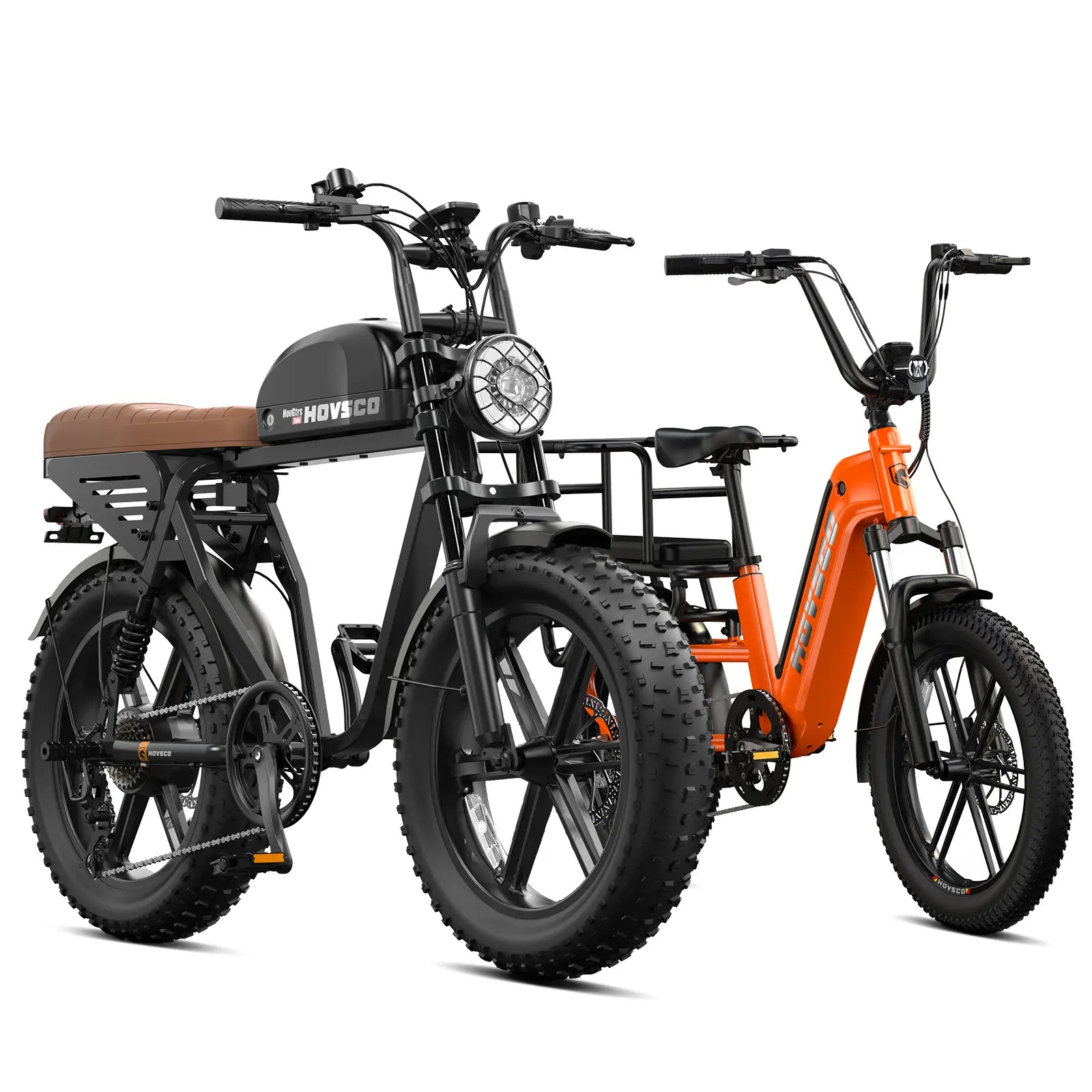
The current grid contains overlapping HovGtrs listings plus a two-bike bundle. Compare the actual Evo, Pro and Ultra battery plans rather than treating every product card as a different bicycle.
Published for up to 65 miles of pedal-assist range. Start here when the complete planned route fits comfortably inside a conservative battery reserve.
Choose Evo →Published for up to 100 miles of pedal-assist range. Compare added capacity against charging time, battery handling and the real distance you expect to ride.
Choose Pro →Published for up to 150 miles of pedal-assist range. Confirm the approved dual-battery operating and charging procedure before using the complete system.
Choose Ultra →Compare Evo, Pro and Ultra by watt-hours, real route demands and charging routine.
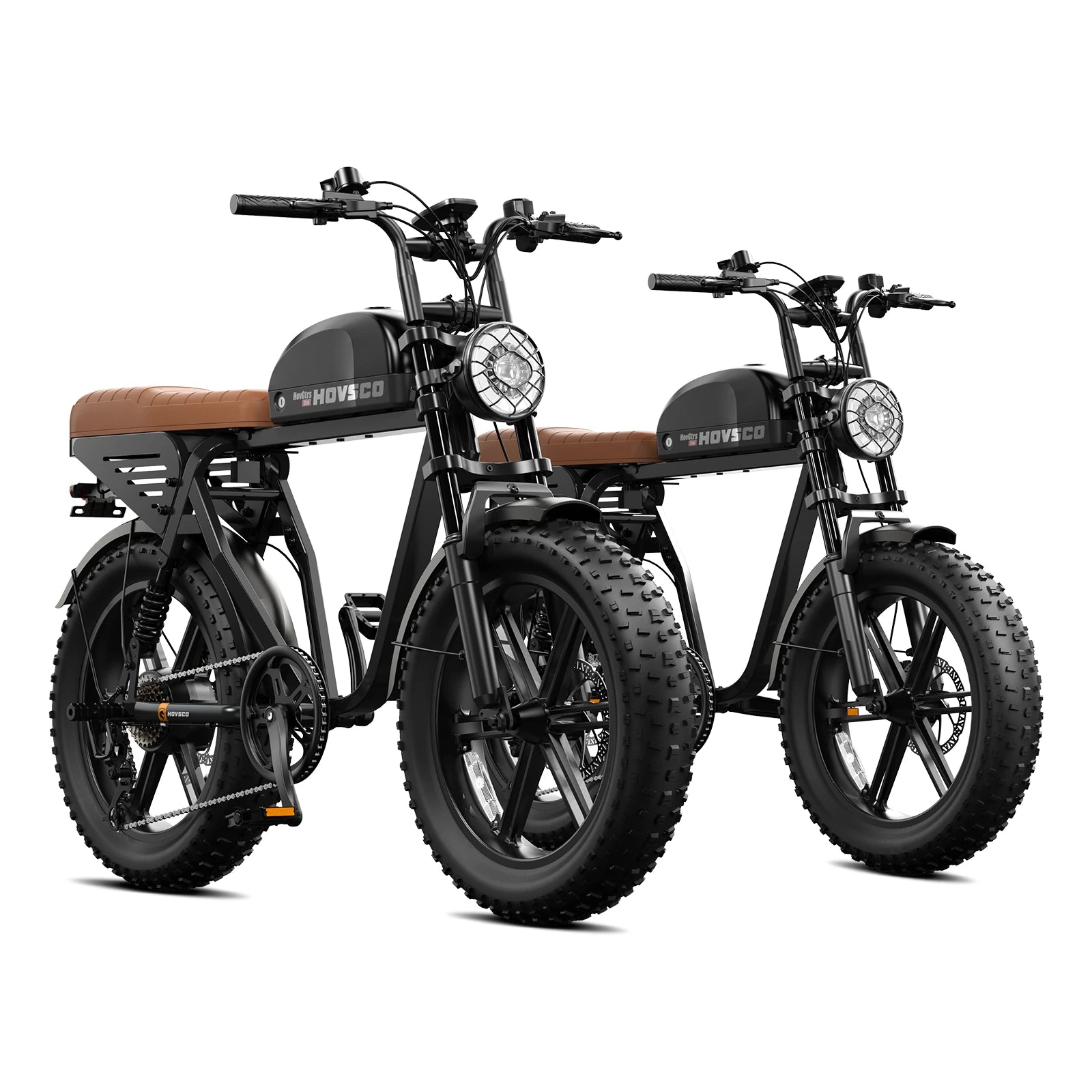
A long-range moped-style electric bike combines a motorcycle-inspired frame and seating layout with an electric bicycle drivetrain and a battery configuration designed for longer rides. The HovGtrs family currently offers three published pedal-assist range levels: Evo up to 65 miles, Pro up to 100 miles and Ultra up to 150 miles.
Those figures are comparison references, not guaranteed results. Assistance level, throttle use, speed, elevation, wind, temperature, tire pressure, rider and cargo weight, stops and battery condition can materially change the distance reached.
Battery watt-hours provide a more useful capacity comparison than amp-hours alone when voltage differs. In the current HovGtrs line, Evo uses a 48V 15Ah battery listed at 720Wh, while Pro uses a 48V 25Ah battery listed at 1200Wh. Ultra combines the 720Wh and 1200Wh packs for 1920Wh of listed capacity.
More watt-hours can support a longer route, but they do not convert into one fixed miles-per-watt-hour result. Real energy use rises when the motor works harder against high speed, steep grades, soft surfaces, headwinds or heavy loads.
Select the configuration in the live product options and confirm what is included before ordering. A product title or collection card alone does not establish the selected battery setup.
Build the route from total door-to-door distance, then add a reserve for detours, wind, hills, traffic stops and changing conditions. The farthest point should not consume the entire displayed estimate. If assistance or speed must be reduced to guarantee the return, that should be part of the original plan.
For a repeated ride, record start charge, route, assistance level, load, weather and remaining charge. Several real trips produce a more useful personal range estimate than one marketing maximum.
A moped-style frame can use a longer saddle and different handlebar relationship than a conventional adjustable bicycle. Confirm seat height, reach, foot position, control access and the ability to stabilize the complete bike at a stop. Do not assume the long saddle provides the same fit adjustment as a standard seatpost.
The current HovGtrs product specification lists a complete weight of approximately 77.1 lb and 20 × 4-inch tires. Evaluate walking, parking, tight turns, stairs and vehicle transport separately from riding range.
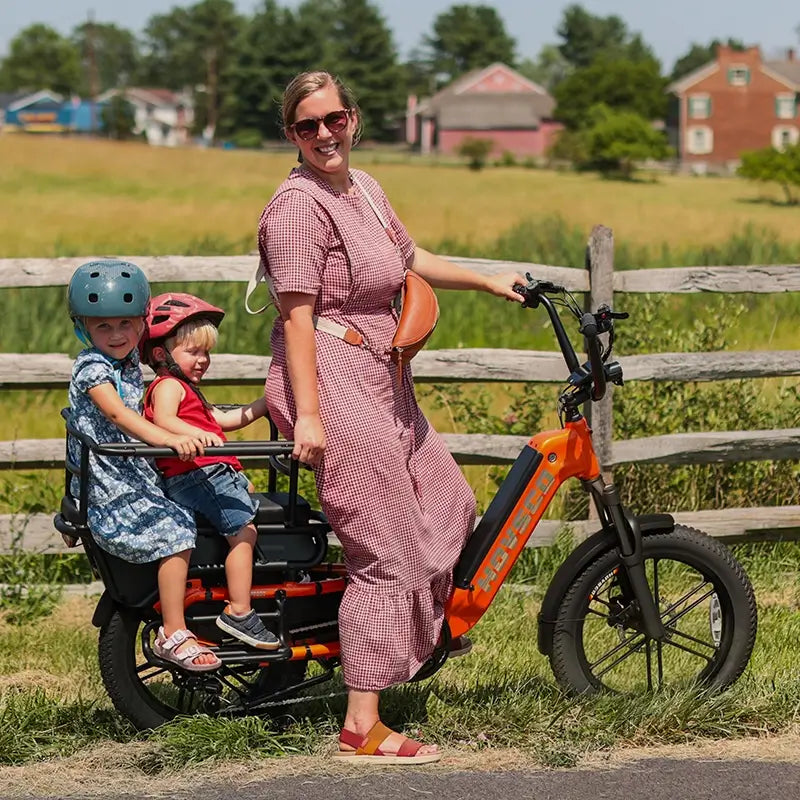
The current product specification lists a maximum payload of 450 lb, but that does not mean every rack, seat or passenger position can carry any portion of that amount. Total payload and accessory-specific limits are different constraints. Include rider, batteries, locks, bags and all cargo when calculating total load.
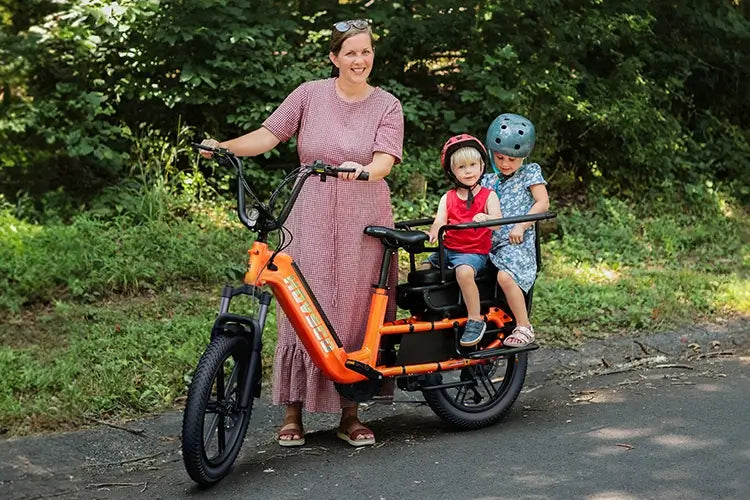
Do not carry a passenger unless the exact bike, seat, foot supports and local rules permit it. Passenger use is a separate safety and legality question from the maximum range claim.
An electric moped with dual batteries must use the exact packs, connections and charging procedure approved for that model and configuration. Voltage, enclosure, connector, communication and battery-management requirements matter even when two packs look similar.
Use only the supplied or manufacturer-approved chargers. Follow the current manual for whether packs are charged on or off the bike, together or separately, and how the system selects or combines them. Never improvise a parallel connection or universal charger.
Long range is useful only when the batteries can be safely recharged before the next ride. Confirm outlet access, charger output, pack temperature requirements and the time available. Stay present while charging, keep the area clear and dry, and do not charge while sleeping or when nobody is home.
For off-bike charging, pack removal and battery storage questions, use electric bikes with removable batteries. That page owns the removal and indoor-charging intent.
HOVSCO currently lists the HovGtrs as capable of higher unlocked speed, but operating rules vary by jurisdiction and riding location. Confirm the delivered configuration, local class definitions, equipment requirements and where the bike may legally be used before riding.
If throttle operation is the main purchase question, use throttle electric bikes. If speed classification is the deciding question, use Class 3 electric bikes. This page remains focused on range plus moped-style design.
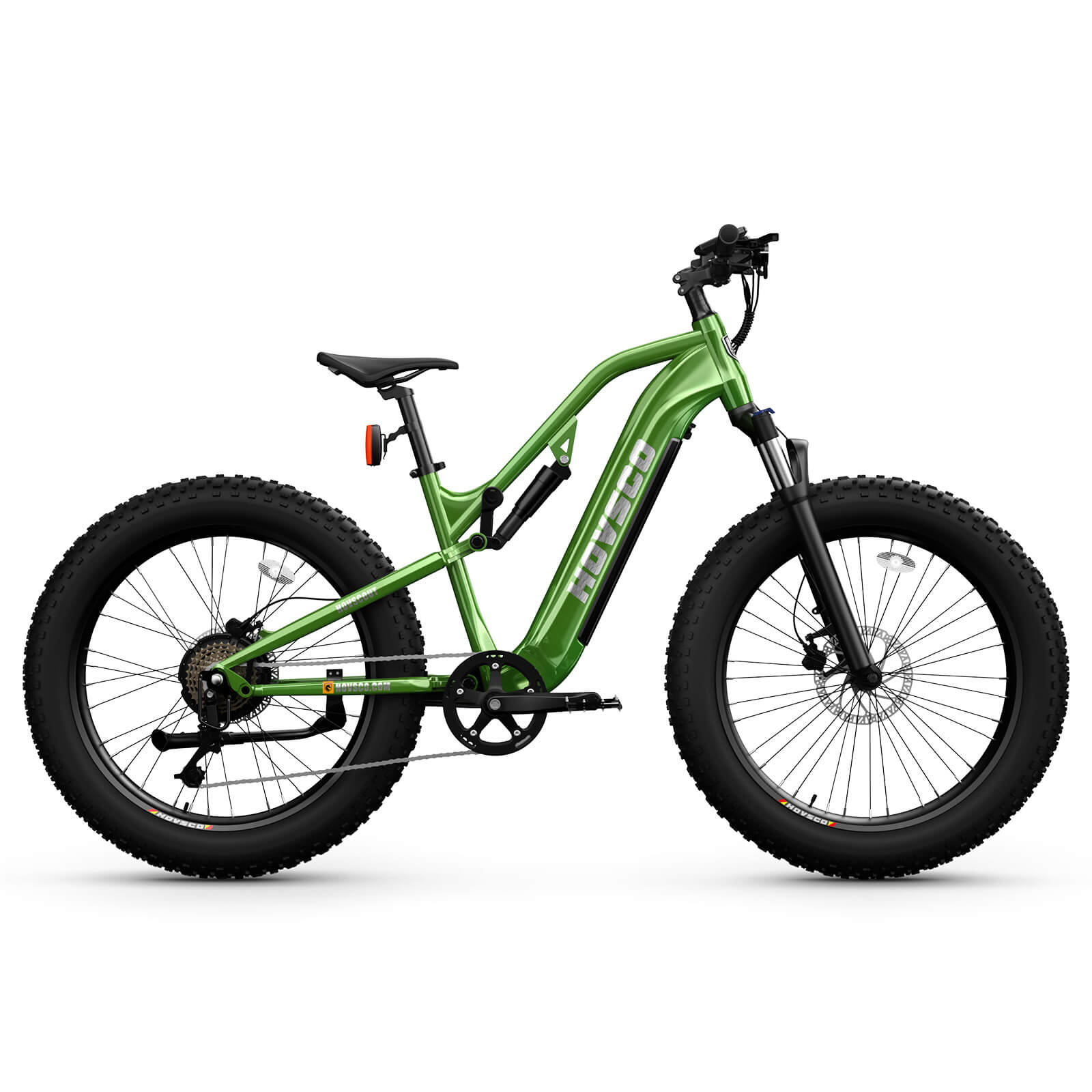
The current HovGtrs specification lists full suspension, 20 × 4-inch tires and hydraulic disc brakes with 180mm rotors. These components affect ride behavior, but they do not make every trail, road or weather condition appropriate. Tire traction, setup, maintenance, speed and rider technique still matter.
For suspension-first shopping, compare full-suspension e-bikes. For brake-system education, use electric bikes with hydraulic disc brakes.
The HovGtrs Series Bundle represents combinations of two bikes. It should be compared when a household or riding pair needs two HovGtrs configurations; it is not a single bicycle with twice the normal range. Read both selected styles carefully because bundle combinations can mix 65-, 100- and 150-mile configurations.
Range remains an individual-bike specification. Batteries from separate bikes should not be treated as a shared pool unless HOVSCO explicitly approves the exact use.
Range questions before choosing a configuration
Evo uses one 720Wh battery and is published for up to 65 miles; Pro uses one 1200Wh battery and is published for up to 100 miles; Ultra combines 720Wh and 1200Wh batteries and is published for up to 150 miles of pedal-assist range.
No. Assistance level, throttle use, speed, hills, wind, temperature, tire pressure, rider and cargo weight, stops and battery condition can change real-world range. Plan the complete round trip with a reserve.
No. The Series Bundle contains combinations of two HovGtrs bikes. Each selected bike keeps its own battery configuration and published range; the bundle is not a fourth single-bike range level.
Do not assume batteries or chargers are interchangeable. Use only packs, connections and chargers approved for the exact HovGtrs model and configuration, and follow the current manual for dual-battery operation and charging.
Choose from total round-trip distance, route difficulty, expected load, charging access and a conservative reserve. Evo, Pro and Ultra increase listed capacity, but the largest maximum is unnecessary when a smaller configuration safely covers the real route.
Review HOVSCO's shipping policy, assembly videos and manuals, limited warranty and return and refund policy. Check current battery coverage, eligibility, deadlines, fees and product-condition requirements.