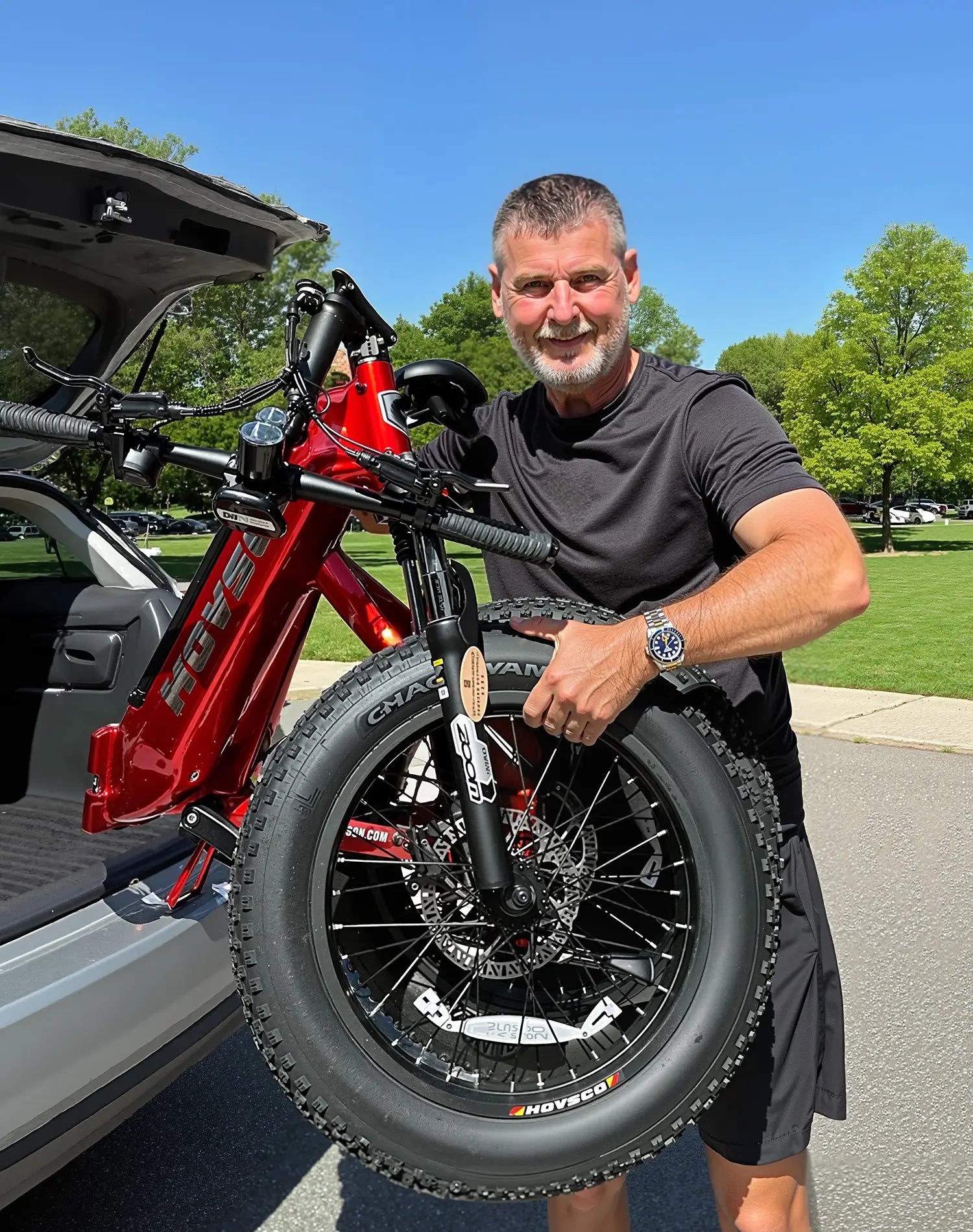
An electric bike with throttle can provide motor assistance through a handlebar control instead of waiting for pedal input. All seven bikes in this collection currently describe throttle-on-demand operation from a complete stop, but that shared feature does not make the bikes identical. Motor ratings, frames, range, weight, storage and configured speed differ, and throttle behavior can affect legal classification and route access.
What does a throttle do on an electric bike?
An e-bike throttle sends a rider command to the motor system through a handlebar control. Depending on the product and configuration, the bike may provide assistance without simultaneous pedaling. The current HOVSCO product specifications in this collection use the phrase “throttle on demand — throttle from a complete stop.” That description should be verified on the selected model page and manual before purchase.
A throttle can help initiate movement, reposition the bike under controlled conditions or provide an alternative input during a ride. It is not cruise control, a substitute for braking or permission to use the motor anywhere. The rider remains responsible for steering, speed choice, stopping distance, traffic awareness and compliance with the rules governing the exact facility.
Throttle control and pedal assist are different inputs
Pedal assist responds when the rider pedals, while a throttle responds to a separate control. Many bikes combine both, giving the rider a choice of input within the current configuration. An electric bike with pedal assist and throttle still requires the rider to understand when each system engages, how quickly assistance builds and when the motor stops helping.
Use pedal assist when a steady contribution from the rider fits the route and range plan. Use throttle only where permitted and with enough clearance for the expected response. Do not rest a hand or object against the control when mounting, walking, parking or loading the bike. Apply the brakes and switch the system off before handling the bike in a confined space.
“From a complete stop” requires deliberate practice
Throttle availability at zero speed can be convenient, but unintended input can move the bike before the rider is balanced. Practice in a flat, open area away from traffic, pedestrians and obstacles. Start with the lowest practical assistance, keep the front wheel straight, establish a stable riding position and learn the control's response before using it around intersections or tight spaces.
Extra load, a steep grade, loose ground or a turned handlebar can change the way the bike starts. Keep fingers ready for the brakes without squeezing and accelerating at the same time. When carrying cargo, confirm that bags, straps, gloves or accessories cannot contact the throttle or brake levers. Never use throttle movement to compensate for a load that exceeds the bike or accessory limits.
Thumb, twist and other throttle hardware must be verified
Searchers often use terms such as thumb throttle electric bike or twist-throttle e-bike, but the physical control may vary by model, production update or market. The current collection copy should not promise one hardware style for every bike unless the live product specification confirms it. Look at current handlebar images, the control diagram and the manual for the exact variant.
Check that the rider can reach the throttle and both brake levers without changing grip or straining the hand. Gloves, grip replacements, mirrors, phone mounts and other accessories must not interfere with movement or return action. If a control sticks, moves inconsistently or has been damaged, stop using the motor assistance and arrange service before riding again.
Throttle-equipped does not automatically mean Class 2
In the common U.S. three-class framework, Class 2 generally refers to a bicycle that can be propelled by its motor without pedaling and stops providing assistance at 20 mph. Exact definitions and equipment rules vary. A throttle-equipped product may not fit that class if its configured behavior, motor rating, labeling or throttle-assisted speed falls outside the applicable definition.
Class 3 is commonly pedal-assist-focused up to 28 mph, so adding or enabling a throttle can change how a jurisdiction treats a bike. Use the Class 3 electric bikes page for 28 mph class and access intent. This page owns the broader throttle electric bike shopping and control intent, without promising that every listed model belongs to one class everywhere.
Federal product rules and local riding rules are separate
Federal consumer-product requirements use their own electric-bicycle definition, while state and local law typically controls road-use classes, operator requirements and facility access. A collection label does not settle either question. Before riding, check the current product configuration, frame label and manual, then verify the rules for the state, city and land manager responsible for the route.
Roads, conventional bike lanes, protected lanes, sidewalks, multi-use paths and natural-surface trails can have different permissions. The answer can also change after crossing a boundary. Do not assume that an e-bike that moves without pedaling is allowed because pedal-assist bicycles are present. Follow posted signs and confirm throttle-specific restrictions when the rule is unclear.
Choose among the seven listed bikes by the riding job
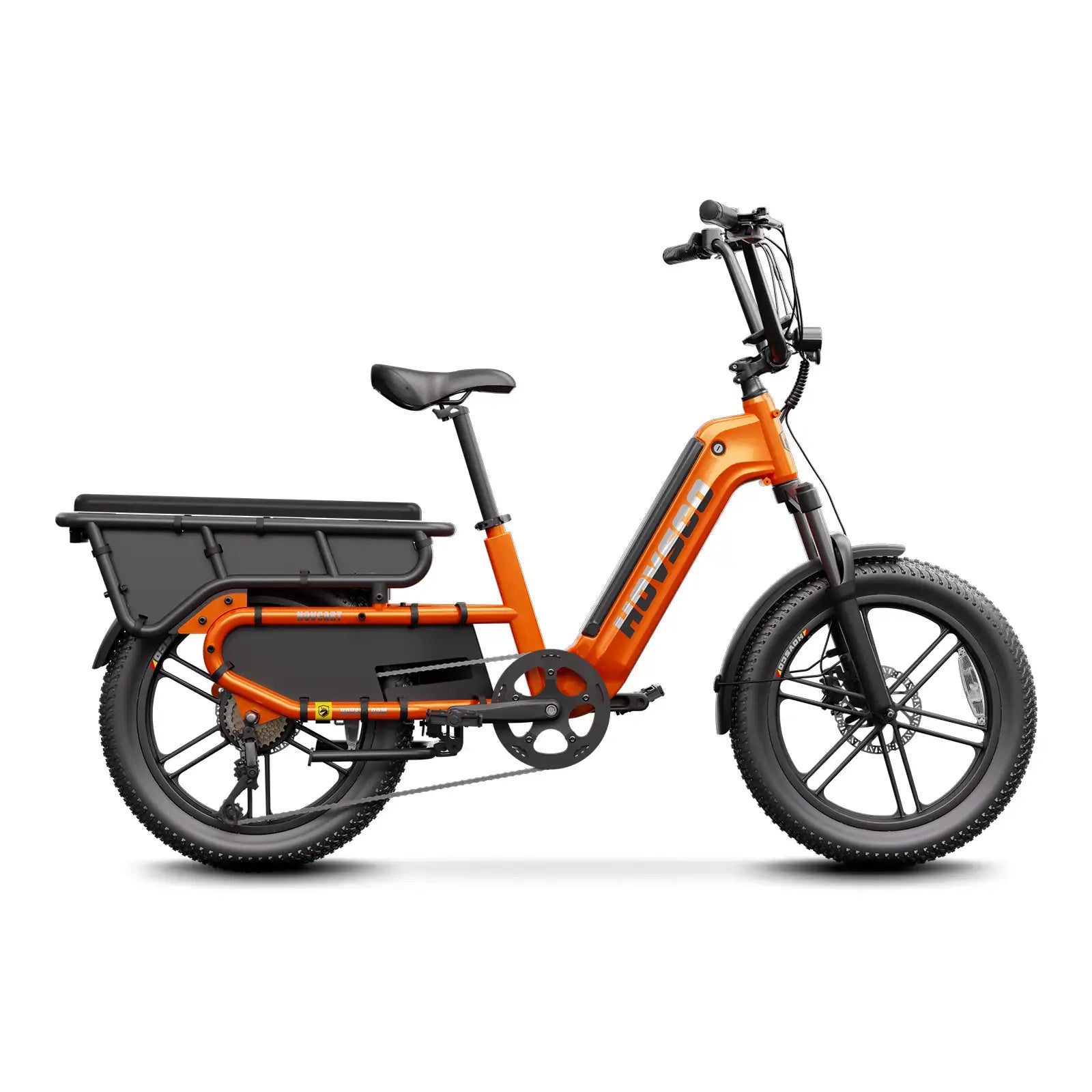
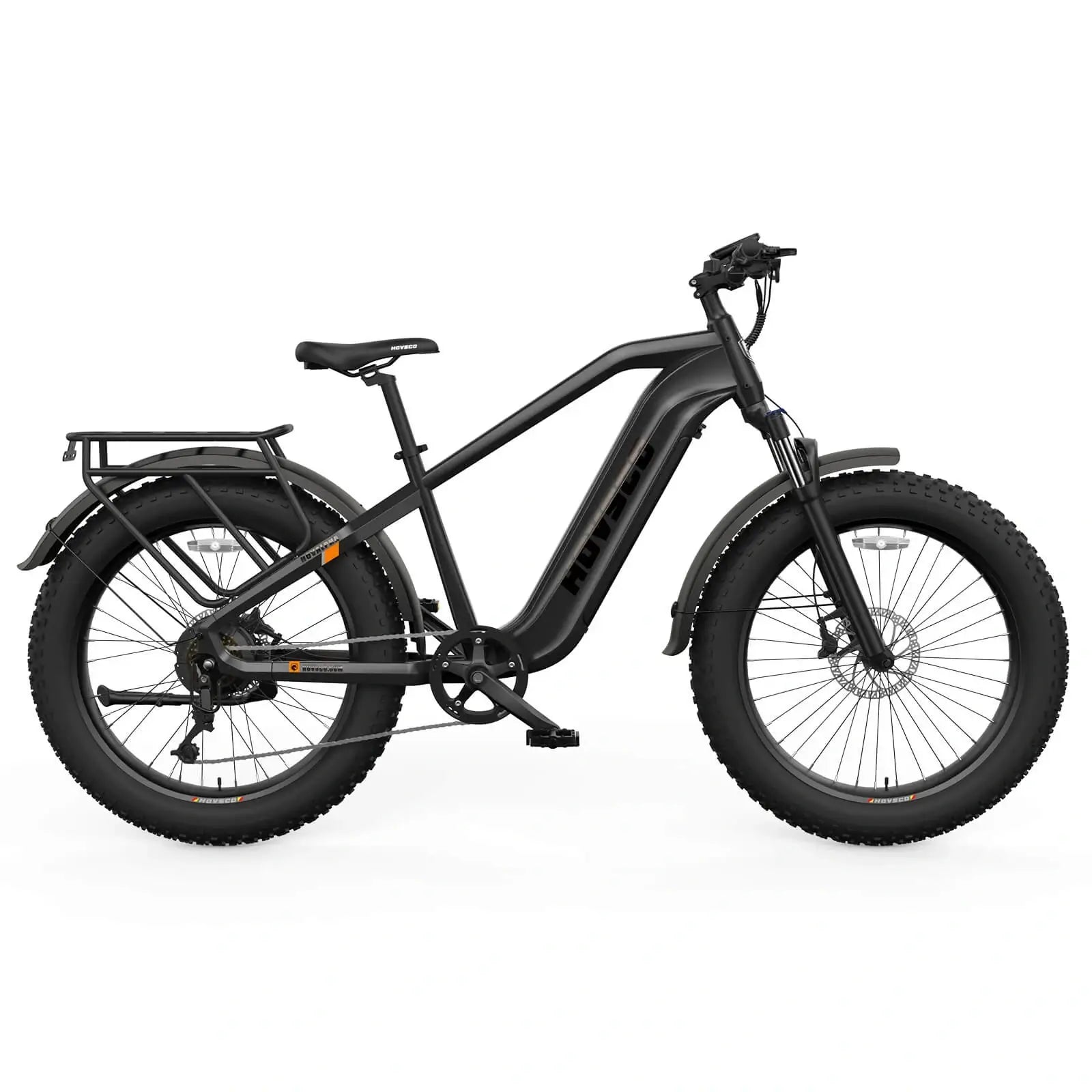
The collection contains two HovGtrs listings, two HovAlpha frames, two HovRanger frames and HovBeta. HovGtrs is the moped-style and battery-configuration comparison. HovAlpha is the longer-range step-over or step-through choice. HovRanger is the lighter city-oriented pair. HovBeta adds a folding frame for storage and transport planning.
Use the HOVSCO comparison tool to check current specifications side by side. Send commute-first intent to commuter electric bikes, folding intent to foldable electric bikes, and range-plus-tire intent to long-range fat-tire e-bikes. Those pages should rank for their own jobs; this page should remain centered on throttle control.
Throttle use can change real-world range
Published range is a comparison reference, not a guaranteed result. Repeated throttle acceleration, high speed, hills, heavy load, wind, temperature, tire pressure, surface and battery condition can all increase energy demand. A rider using gentle pedal assistance may travel farther than a rider relying heavily on throttle, even on the same bike and route.
HovGtrs currently publishes a 65-150 mile pedal-assist range across its battery configurations. HovAlpha lists a 60-80 mile average range, while HovRanger and HovBeta list 40-60 miles. Confirm the selected battery and test gradually. Plan the complete return trip with reserve instead of treating the highest published number as throttle-only range.
Speed, braking and surface conditions still control the ride
Throttle response does not guarantee traction or stopping room. Wet pavement, sand, leaves, gravel, paint, metal covers and loose shoulders can reduce grip. Apply power smoothly with the bike upright, especially while turning. Leave more following distance as speed, load or downhill grade increases, and slow before entering an uncertain surface.
Check brake condition and lever reach, tire pressure and wear, wheel security, steering, lights and reflectors before riding. Confirm that motor assistance stops as described when the throttle is released and when the brakes or system controls are used according to the manual. If behavior is delayed or inconsistent, stop riding and arrange inspection.
Use a throttle e-bike pre-purchase checklist
- Confirm the exact model, variant and current throttle description.
- Verify physical control type, reach, return action and interaction with the brake levers.
- Choose the frame by fit, mounting access, complete-bike weight and storage path.
- Compare battery and published range for the actual route and keep reserve.
- Check motor rating, configured assist and throttle-assisted speed without assuming a class.
- Review the label, manual and assembly information.
- Verify state, local and land-manager rules for every route segment.
If the product page and manual do not answer a configuration question, contact HOVSCO support before ordering or riding. Return to the unchanged product grid for current variants and availability.




























![[ New Arrival ] Porto Max Electric Scooter For Commute & Grocery Shopping - HOVSCO](http://www.hovsco.com/cdn/shop/files/PotroMax-3.jpg?v=1706927007&width=1200)