
























![[ New Arrival ] Porto Max Electric Scooter For Commute & Grocery Shopping - HOVSCO](http://www.hovsco.com/cdn/shop/files/PotroMax-3.jpg?v=1706927007&width=1200)
- by SteveJames
How to Choose Car-Replacement E-Bikes?
- by SteveJames
E-Bikes
Accessories
 Free Shipping
 15-Day Returns
 2-Year Warranty
Free Shipping
15-Day Returns
2-Year Warranty
2-Year Warranty
Free Shipping
15-Day Returns
2-Year Warranty
Choosing a car-replacement e-bike means matching your daily tasks—commuting, grocery runs, school drop-offs, parking constraints, and charging habits—to a bike built for those jobs. Prioritize cargo capacity, motor torque, real-world range, and storage footprint. For families, a cargo-focused model like HovCart handles multi-tasking; for city commuters, HovRanger or HovCity excel; for tight spaces, HovBeta’s compact design wins.
Replacing a second car isn’t about raw speed—it’s about task fit. You need a bike that reliably covers your typical trip distance, carries your usual load (kids, groceries, gear), parks where your car used to, and charges without hassle. In practice, that means evaluating payload rating, motor torque, battery capacity, accessory integration (racks, child seats), and folded/stored dimensions.
Commute distance: If your round trip is under 20 miles, most mid-drive or quality hub motors suffice; beyond that, prioritize larger batteries or dual-battery options.
Cargo profile: Groceries and a laptop differ from two kids plus a week’s shopping. Long-tail cargo frames and reinforced racks matter here.
Parking reality: Street parking, apartment stairwells, or elevator size dictate whether a standard long-tail works or a compact/folding design is mandatory.
Charging access: If you can’t plug in at home or work, range anxiety becomes real—plan for 1.5× your daily miles in usable capacity.
Torque vs. top speed: A 750W hub motor might hit 28 mph, but a 90–100 Nm mid-drive will feel stronger on hills with a full cargo load.
Battery placement: Frame-integrated batteries improve handling and theft resistance but complicate swaps; removable downtube packs ease charging indoors.
Wheel size trade-off: 20" wheels improve maneuverability and storage fit but can reduce rollover comfort on rough streets compared to 24–27.5".
Not all e-bikes are created equal for car replacement. Commuter hybrids prioritize efficiency and comfort; cargo bikes prioritize load capacity and stability; compact folders prioritize storage. The right choice depends on which tasks dominate your week.
Commuter-focused e-bikes
These are optimized for daily miles, upright ergonomics, and integrated lights/fenders. They’re ideal if your main use is getting to work reliably, with light cargo (backpack, panniers). Expect 25–35 mph assist, 400–600 Wh batteries, and rack mounts.
Cargo-focused e-bikes
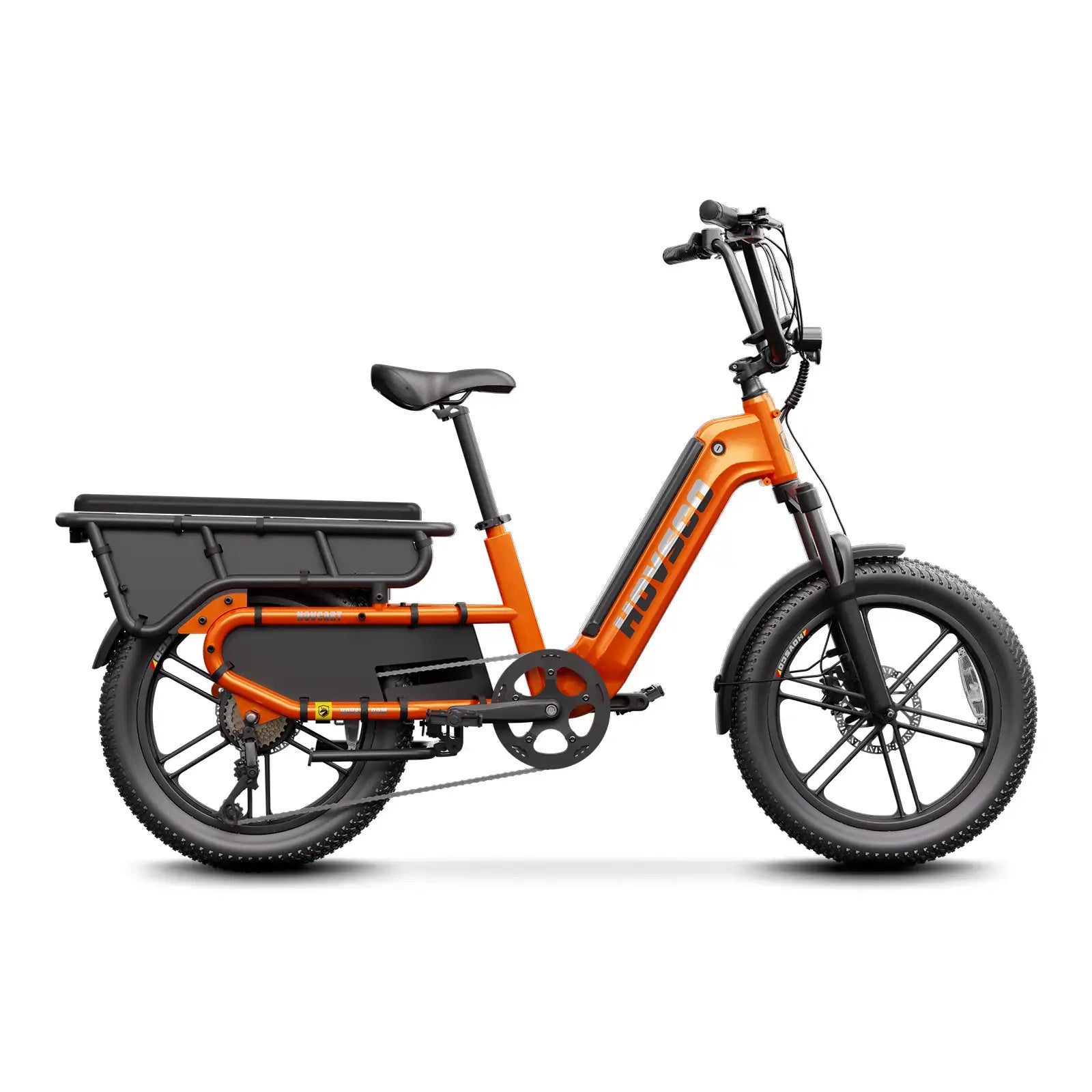
Built to replace car trips that involve passengers or bulky items. Long-tail designs offer 250–400 lb payloads, extended wheelbases for stability, and accessory ecosystems (child seats, cargo boxes). They’re heavier (70–90+ lb) but transform “impossible” car trips into routine rides.
Compact/urban e-bikes
For dense cities or small homes, compact frames and smaller wheels reduce storage footprint. They trade some cargo capacity and high-speed stability for maneuverability and elevator-friendly dimensions.
HOVSCO’s lineup maps cleanly to these roles: HovCart for family/cargo multi-tasking, HovRanger and HovCity for city commuting with different geometry preferences, and HovBeta for compact storage without sacrificing core utility. This segmentation avoids the common mistake of buying a “generalist” bike that underperforms on your dominant task.
If you’re replacing a second car, you likely juggle multiple roles: weekday commute, weekend market haul, school runs, and tight parking. HOVSCO’s approach assigns each role to a bike engineered for it, rather than forcing one frame to do everything poorly.
HovCart: the family and cargo workhorse
HovCart is designed for high-payload, multi-stop days. Think long-tail stability, reinforced rack points, and geometry that stays planted with kids or heavy bags. It’s the “minivan” of the e-bike garage—best when your week includes school routes, big grocery trips, or gear transport.
HovRanger and HovCity: urban commuting specialists
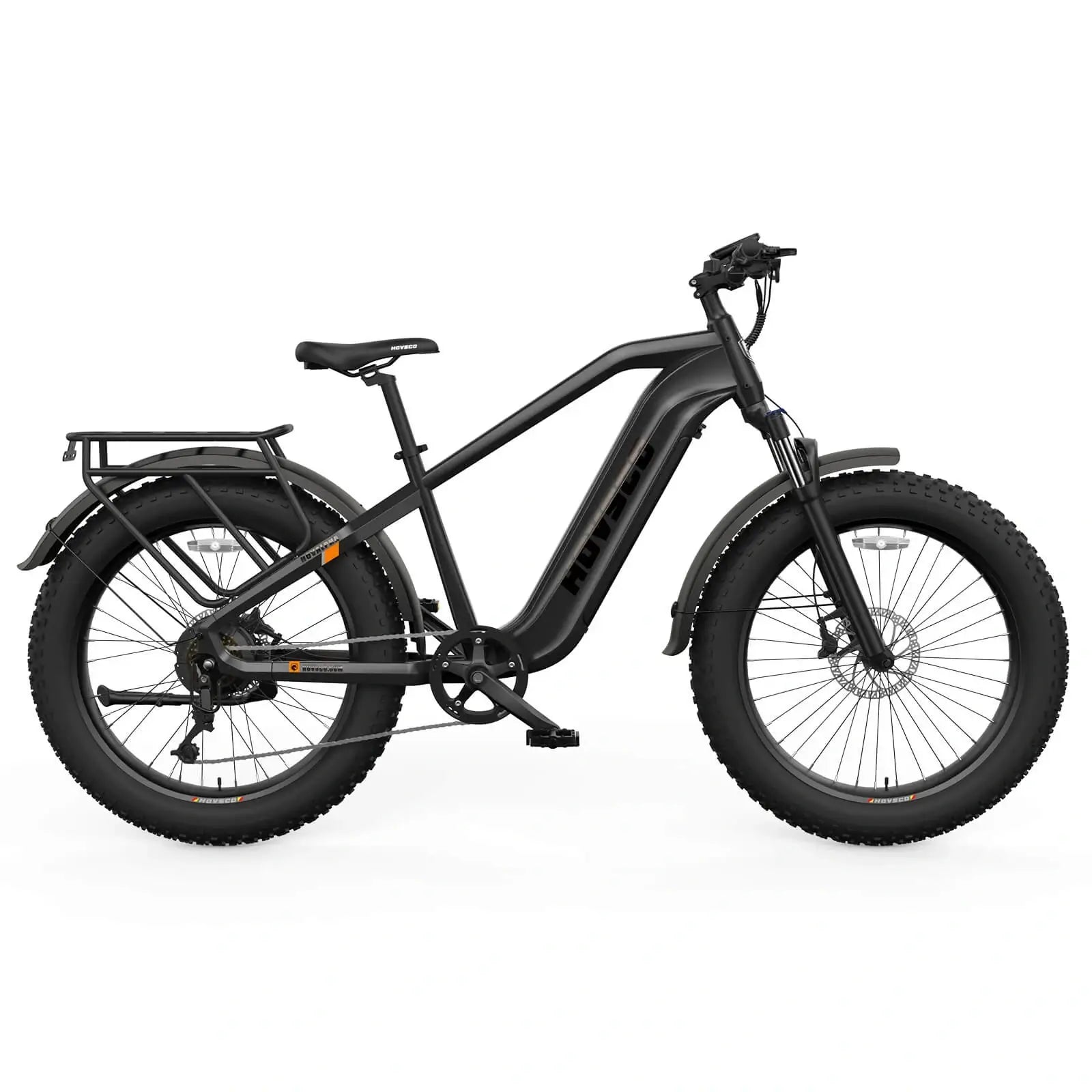
These two cover city commuting with different emphases. HovRanger leans toward mixed-path resilience (slightly more robust tires, relaxed geometry for longer sits), while HovCity prioritizes agile, stop-and-go urban flow (nimble handling, integrated urban accessories). Both aim to make daily commutes faster and cheaper than driving.
HovBeta: compact storage without compromise
HovBeta targets the “parking problem.” If your building has narrow elevators, limited indoor space, or you need to stash the bike under a desk, HovBeta’s compact footprint solves that. It still supports commuting and light cargo but optimizes for storage and maneuverability in tight environments.
Many buyers fixate on motor wattage (e.g., 500W vs. 750W), but for car-replacement duty, torque and battery placement shape real-world performance more. Torque determines how the bike feels under load; battery placement affects handling, safety, and charging logistics.
Torque: the “pulling power” metric
High torque (80–100+ Nm): Feels strong on hills, accelerates smoothly with cargo, and reduces strain on the drivetrain.
Low torque (<60 Nm): May feel peppy unloaded but can struggle or overheat on sustained climbs with weight.
Battery placement: handling and practicality
Frame-integrated: Lowers center of gravity, improves handling, and deters theft—but may require bringing the whole bike indoors to charge.
Removable downtube: Eases indoor charging and battery swaps but can raise the center of gravity slightly.
HOVSCO prioritizes torque-appropriate motors for cargo models and thoughtful battery placement for urban models. This ensures HovCart feels stable under load, while HovCity and HovRanger remain nimble in traffic. HovBeta balances compactness with accessible charging.
Parking and charging are the hidden make-or-break factors in replacing a car. A perfect bike fails if you can’t store it safely or charge it conveniently. Plan for both before you buy.
Parking realities
Street parking: Requires high-security locks and ideally a GPS tracker. Cargo bikes are bigger targets.
Apartment storage: Measure elevator doors, stairwell turns, and indoor storage nooks. Compact or folding designs may be mandatory.
Workplace charging: If you can plug in at work, you can halve the battery size you need at home.
Charging logistics
Indoor charging: Safest for battery longevity and theft prevention. Removable batteries simplify this.
Outdoor charging: Only if you have a secure, weather-protected outlet. Avoid leaving batteries on the bike unattended.
Practical tip
Map your weekly routes and note where you could charge (home, work, gym, café). If you can’t reliably plug in at least once per day, prioritize larger batteries or dual-battery options.
This is where strategy meets spec sheet. To choose well, start with your dominant use case, then filter by payload, range, and storage. Don’t chase the highest wattage; chase the best task fit.
Step-by-step selection
List your top 3 weekly tasks (e.g., 12-mile commute, two kid school runs, Saturday market).
Estimate max load (kids + gear + groceries). If >200 lb regularly, lean cargo.
Measure your storage (door widths, elevator dimensions). If tight, prioritize compact designs.
Check charging access (home/work). If limited, increase battery capacity or plan mid-day top-ups.
Match to model type: HovCart for heavy multi-tasking; HovRanger/HovCity for commuting; HovBeta for tight spaces.
Common pitfalls to avoid
Buying a lightweight commuter for heavy cargo duties.
Ignoring elevator/stairwell dimensions until delivery day.
Overestimating real-world range (use 60–70% of claimed range for planning).
Manufacturers quote best-case ranges (low assist, flat terrain, light rider). For car replacement, plan on 60–70% of claimed range under typical urban loads and hills. That buffer prevents mid-day anxiety and accounts for winter efficiency losses.
Claimed 40 miles → plan for 24–28 usable miles.
Claimed 60 miles → plan for 36–42 usable miles.
If your daily round trip is 20 miles, a 40-mile claimed bike is adequate; if it’s 30 miles, aim for 60+ claimed.
“In our testing, the biggest mistake we see is choosing a bike by top speed instead of task fit. A 28 mph commuter feels great unloaded, but stall torque and frame stability determine whether you’ll actually replace car trips with kids and groceries. That’s why we segment: HovCart for payload-heavy days, HovRanger and HovCity for efficient commuting, and HovBeta when storage is the bottleneck. If your bike can’t handle your worst typical day, it won’t replace your car.”
— HOVSCO Product Team
Before you buy, run this checklist to ensure your e-bike will truly replace car trips.
Payload: Can it carry your max typical load (kids + gear) without feeling twitchy?
Range: Does 60–70% of claimed range cover your longest regular day?
Brakes: Hydraulic discs for consistent stopping in rain and under load.
Storage: Will it fit your elevator, stairwell, or indoor space?
Charging: Do you have reliable access to an outlet at home or work?
Accessories: Are racks, child seats, and cargo boxes readily available?
Replacing a second car with an e-bike is less about horsepower and more about matching the bike to your actual week. Prioritize payload, real-world range, and storage fit. Use HovCart for family and cargo multi-tasking, HovRanger or HovCity for city commuting, and HovBeta when space is tight. With the right task-first choice, you’ll cut costs, reduce stress, and reclaim time—without sacrificing practicality.
How much does a good car-replacement e-bike cost?
Expect $1,500–$3,500 for capable commuter and cargo models. Cargo-specific frames with high payloads and accessory ecosystems trend toward the higher end.
Can an e-bike really replace my second car?
Yes, if your trips are under ~20 miles each way, you have secure storage/charging, and your cargo needs fit the bike’s payload. Many households successfully replace 50–80% of second-car trips this way.
What’s the safest braking system for loaded rides?
Hydraulic disc brakes. They provide consistent, modulated stopping power in wet conditions and under heavy loads, outperforming mechanical discs and rim brakes.
How do I prevent theft when parking on the street?
Use a high-security U-lock plus a secondary chain/cable, lock the frame and rear wheel to a fixed object, and consider a GPS tracker. Indoor storage is always safer.
Should I choose a mid-drive or hub motor for cargo?
For frequent heavy loads and hills, mid-drive motors (high torque) feel stronger and protect the drivetrain better. Hub motors are simpler and cheaper but can struggle on sustained climbs with weight.
Share:
Electric Bike Ergonomics: How Modern Design Makes Every Ride More Comfortable
E-Bike Range Anxiety Solutions: How HOVSCO Helps You Ride Further With Confidence