




























![[ New Arrival ] Porto Max Electric Scooter For Commute & Grocery Shopping - HOVSCO](http://www.hovsco.com/cdn/shop/files/PotroMax-3.jpg?v=1706927007&width=1200)
- by SteveJames
E-Bike Range Anxiety Solutions: How HOVSCO Helps You Ride Further With Confidence
- by SteveJames
E-Bikes
Accessories
 Free Shipping
 15-Day Returns
 2-Year Warranty
Free Shipping
15-Day Returns
2-Year Warranty
2-Year Warranty
Free Shipping
15-Day Returns
2-Year Warranty
E-bike range anxiety solutions for modern riders: learn what causes e-bike range anxiety, how to plan rides smarter, and how HOVSCO long‑range, cargo and foldable e-bikes help you go 40–80 miles per charge without worry.
Over the past three years, global e-bike sales have surged as commuters and families look for low-cost, low-emission transport, with market analysts projecting continued double‑digit growth through 2027. In parallel, battery technology has shifted toward 48V–52V packs delivering 500–1000Wh, supporting real‑world ranges of 40–80 miles per charge for many mid‑priced models. Despite these advances, range anxiety—fear of running out of power before reaching a charger—still stops many riders from fully using their bikes, especially on longer commutes or family trips.
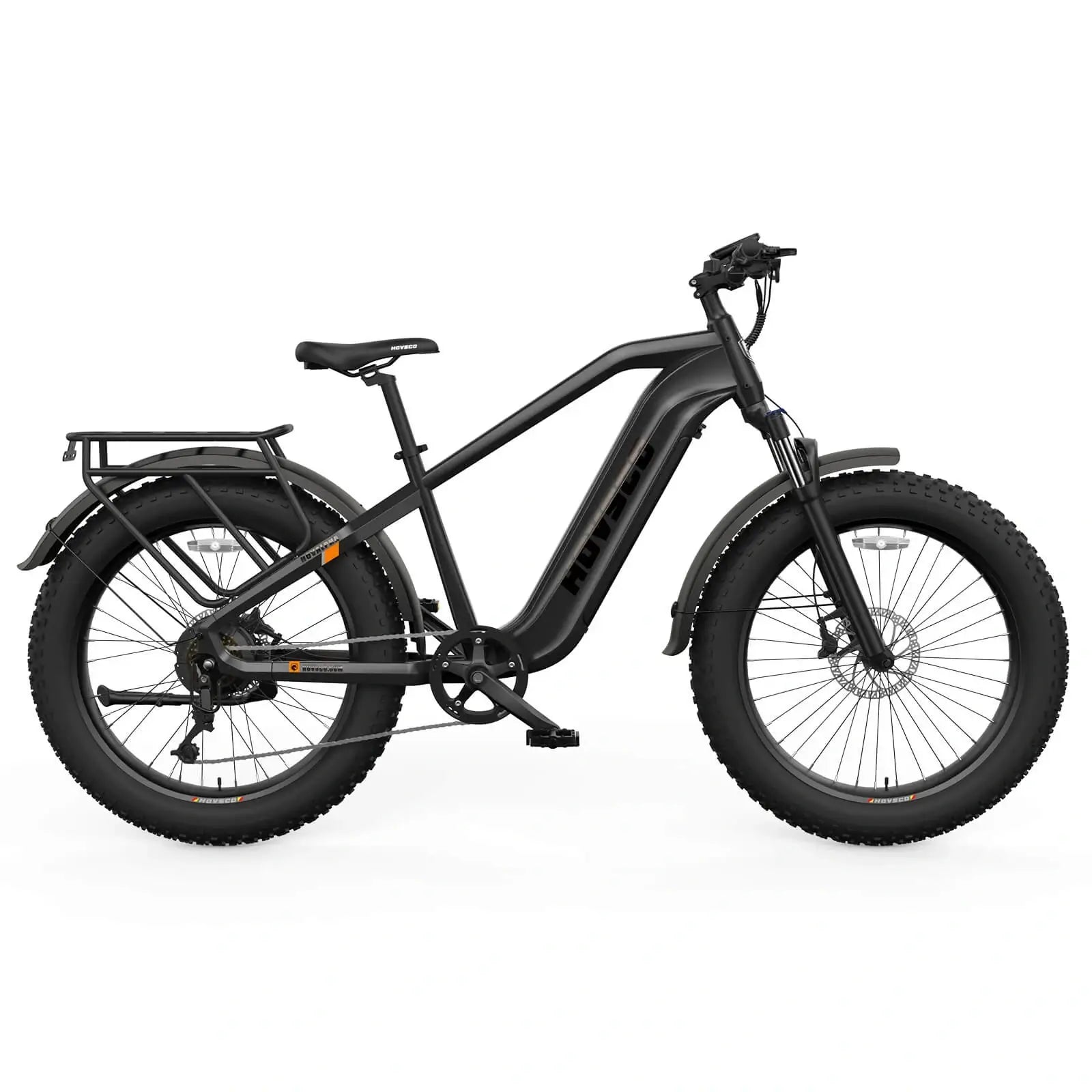
As a U.S.-based brand focused on cargo, fat‑tire and foldable utility e-bikes, HOVSCO designs models like the HovAlpha Long-Range E-Bike, HovCart Family E-Bike and HovBeta Foldable E-Bike around practical range, powerful motors and smart torque sensors to help riders cover 40–80 miles on a single charge while carrying kids, cargo or commuting gear.
E-bike range anxiety is the worry that your electric bike will run out of battery before you reach home or a charging point, even when the bike’s rated range is sufficient for your typical rides. It blends real constraints—battery capacity, terrain, rider weight—with perception, unfamiliarity and lack of planning, often making riders “under-ride” capable bikes or avoid new routes altogether.
Hidden commute distances and unknown numbers
Many riders never calculate their actual daily mileage. Studies and brand data show typical urban trips are well below 40 km (about 25 miles), comfortably inside the range of most modern e-bikes rated at 40–60 miles per charge. Without these numbers, every hill or detour can feel risky.
Battery myths vs modern packs
Older EV stories about sudden cut‑offs, long charge times or degraded batteries still shape expectations. In reality, mainstream e-bike batteries now use high‑density cells in 500–1000Wh packs, and many retain around 80% capacity even after 1,000 charge cycles when properly maintained. Yet riders often overestimate how quickly capacity will fade.
Terrain, load and assist mode confusion
Range estimates assume moderate assist, mixed terrain and typical payloads. When riders use max assist and throttle on steep hills with heavy cargo, consumption naturally spikes. Without a clear understanding of how assist levels, torque sensors and payload affect range, normal use can feel like “abuse,” fueling anxiety.
Lack of charging routines and route planning
Unlike cars, e-bikes are easy to charge at home or the office—but many riders don’t build the habit of topping up after rides or scouting potential plug‑in points. Route-planning tools and manufacturer guidance can largely eliminate surprise low‑battery situations, but underuse of these tools keeps range anxiety alive.
“In 2026, most mainstream e-bikes deliver 40–80 miles of real‑world range, yet riders routinely use less than half of that because fear, not physics, limits their routes.”
| Feature / Need | HOVSCO HovAlpha / HovCart / HovBeta | Typical city commuter e-bike | Budget folding e-bike |
| Rated range per charge | 40–80 miles depending on model | Often 25–45 miles | Often 20–35 miles |
| Battery capacity | 720–960Wh Samsung/LG packs | 400–600Wh mixed‑brand cells | 300–500Wh lower‑cost cells |
| Motor & torque | 750W sustained, up to 1300W peak with torque sensor | 250–500W, cadence only | 250–500W, basic assist |
| Payload / cargo capability | Up to 450 lbs, cargo and family setups | ~220–300 lbs, limited cargo | ~220–250 lbs, minimal cargo |
| App & ride data for planning | HOVSCO App with speed, trip, odometer and more | Basic display only | Minimal or no app integration |
Smart battery and long-range design
Models such as the HovAlpha use a 48V 20Ah (960Wh) Samsung/LG battery with an average 60–80 mile range, while the HovCart and HovBeta pair 48V 15Ah (720Wh) packs with 40–60 mile real‑world range. Riders get a generous margin above typical daily use, reducing stress about “running out.”
Torque sensors for efficient assist
Torque sensors in HOVSCO bikes adjust motor output based on rider effort, smoothing acceleration and improving energy efficiency. This provides intuitive pedal assist and extends range compared with simple cadence‑only systems at similar speeds.
Payload-ready frames for real life
With maximum payloads up to 450 lbs on many models, riders can carry kids, groceries or camping gear without pushing the system beyond its intended use. Range estimates account for realistic loads instead of idealized solo rides.
“Plan your loop, ride it until the battery is low, log your range, then repeat with a different mode—data is the fastest cure for range anxiety.”
“Most urban riders discover their daily route is well under 40 km once they map it, turning a ‘range problem’ into a simple charging routine.”
“Knowing your bike’s actual range, carrying a portable charger and using cycling navigation apps with waypoints dramatically reduces fear of getting stranded.”
Depending on your daily routine—whether you prioritize maximum distance, cargo capacity, or compact storage—different e-bike configurations can help tailor your buffer against range anxiety.
For extended, mixed-terrain touring or hilly commutes where you prefer fewer charges, riders often look at long-range options like the HovAlpha, which utilizes a high-capacity 960Wh pack. For family transport and heavier local errands, utility-focused designs such as the HovCart provide stable payload support for daily school runs. Meanwhile, city riders with limited storage who need multi-modal transit flexibility frequently lean toward compact folding platforms like the HovBeta to handle routine urban miles without midday top-ups.
Calculate your actual routes. Use a map app to measure daily commuting and weekend routes—and compare them to your e-bike’s rated 40–80 mile range. Most riders find their regular trips sit comfortably below these numbers.
Start with a controlled “range loop.” Choose a familiar loop near home, ride it in your usual assist mode until the battery reaches a safe low threshold (e.g., 20%), then log distance, elevation and remaining charge. Repeat in different modes to build your own range chart.
Match assist mode to terrain and payload. Use lower assist on flat segments, reserve higher levels and throttle for climbs or heavy cargo, and let torque sensors do their work. This extends practical range while preserving comfort and speed.
Adopt a charging routine. Treat your e-bike like a phone: plug in at home after rides or at the office if you use removable batteries. Starting most days near full eliminates mid‑week range worries, especially with larger 720–960Wh packs.
Plan charging fallbacks. Identify potential plug‑in spots—workplace outlets, friendly cafés or home en route—and carry the supplied charger on longer trips if needed. Knowing you have backup options reduces psychological stress.
Use ride data and apps. On HOVSCO models, check odometer, trip distance and battery via the LCD and HOVSCO App, then refine your personal range expectations. Combining manufacturer estimates with your own logs yields the most accurate, anxiety‑free planning.
Scenario 1: Daily city commute
Traditional approach: A rider drives a car 12 miles round‑trip, believing an e-bike can’t handle the distance plus occasional detours. Gas costs and parking stress remain high.
With HOVSCO: Switching to a HovBeta or HovRanger, rated at around 60 miles per charge, the rider logs a week of commutes and discovers battery use is modest, with plenty of reserve. A simple habit—charging twice per week—removes range anxiety while saving fuel and time.
Scenario 2: School runs and grocery trips
Traditional approach: Parents rely on an SUV for short, repetitive trips, worrying that an e-bike loaded with kids and cargo will drain the battery too quickly.
With HOVSCO: A family adopts the HovCart with its 720Wh battery, 60‑mile range and 450 lbs payload. Over a typical week of school runs and local errands, the bike easily covers multiple trips on a single charge,and hydraulic brakes reinforce trust.
Scenario 3: Weekend adventure rides
Traditional approach: Riders limit themselves to short loops or stay near home, fearing that trails, elevation and variable weather will exhaust their battery.
With HOVSCO: On a HovAlpha, a rider maps a 40‑mile mixed‑terrain loop and uses the torque sensor and assist levels strategically. After logging a few rides, they confirm the bike comfortably supports 60–80 mile outings, transforming “range anxiety” into route‑planning excitement.
Can a long-range HOVSCO e-bike really replace my car for local trips?
For many riders, yes. With rated ranges of 40–80 miles per charge and payloads up to 450 lbs, HOVSCO cargo and fat‑tire models are designed to handle daily school runs, commutes and grocery trips without frequent charging, especially when paired with a consistent home‑charging routine.
How much does rider weight and cargo affect e-bike range?
Heavier riders and loads increase energy use, particularly on hills, but HOVSCO frames and batteries are engineered with realistic payloads in mind. A HovCart or HovAlpha carrying kids or camping gear still delivers practical 40–60 mile real‑world ranges when assist levels are used thoughtfully.
Are torque sensors better than cadence sensors for managing range anxiety?
Torque sensors respond to how hard you pedal, providing smoother and more efficient assist that typically extends range versus cadence‑only systems at similar speeds. This makes battery behavior more predictable, reducing the “surprise” drain that contributes to anxiety.
What charging habits best prevent e-bike range anxiety?
Charging after rides or at the end of the day, avoiding frequent full drains, and storing the bike and battery in a cool, dry place help maintain capacity over time. With removable packs on HOVSCO bikes, it’s easy to bring the battery indoors and keep it ready, so you rarely start a ride on low charge.
How can I estimate my personal e-bike range more accurately than the spec sheet?
Use a simple test loop: ride a measured distance on your typical terrain and assist mode, track battery percentage before and after, and extrapolate based on that real‑world consumption. Repeat on a few routes and in different modes, then combine your results with HOVSCO’s 40–80 mile rating to set reliable expectations.
Modern e-bike technology has already solved much of the “physics” behind range anxiety, offering 40–80 mile real‑world ranges, efficient motors and robust batteries for everyday riders. The remaining gap is largely psychological—closing it requires better data, planning and trust in the equipment. By combining high‑capacity Samsung/LG batteries, torque sensors,HOVSCO positions its HovAlpha, HovCart and HovBeta models as tools not just for moving faster, but for riding further with genuine peace of mind.
Ready to turn range anxiety into range confidence? Explore HOVSCO’s long‑range, cargo and foldable e-bikes, log a few rides, and let real‑world data replace guesswork. With up to 80 miles per charge, 450 lbs payload capacity.HOVSCO offers a practical, budget‑friendly way to save on gas, simplify daily transport and enjoy riding again—without constantly watching the battery bar.
Share:
How to Choose Car-Replacement E-Bikes?
Eco-Friendly Family Travel: Make Local Adventures Lighter This