Explore how electric bike ergonomics—including ride posture, contact points, and frame design—affect comfort and health, and why modern micro-mobility solutions make everyday riding more accessible.
The rise of ergonomic electric bikes
Global demand for e-bikes is exploding, with the market estimated around 53–58 billion USD in the mid‑2020s and projected to keep growing steadily through 2032–2035 as commuters and families look for low‑stress, car‑free transport. At the same time, discomfort is still common: nearly half of cyclists report saddle pain, and more than 10–15% of the general population struggle with chronic low back pain. E-bike ergonomics—how the bike fits the human body—has become a key factor in making this booming mode of transport genuinely comfortable, accessible, and health-friendly for everyday riders.
The evolution of comfort-focused design
Modern utility, cruiser, and fat‑tire e-bikes are increasingly built around upright riding positions, ergonomic saddles, comfort grips, and adjustable components, combining powerful 750–1500W motors with frames designed to reduce strain on the back, wrists, and hips. Well-designed platforms pair high payloads and long range with comfort-focused contact points to keep riders supported over many miles.
What is electric bike ergonomics?
Electric bike ergonomics is the science of designing e‑bikes—frames, contact points, and controls—so the rider’s posture, reach, and weight distribution minimize pain, fatigue, and injury risk while maximizing control and enjoyment. Effective ergonomic design relies on upright positions, wide saddles, ergonomic grips, and stable frames that help riders of different sizes feel secure and relaxed, even when carrying cargo or riding long distances.
Why poor ergonomics hurt riders
Back and neck pain from aggressive positions
Many riders come from traditional road bikes with long, low reaches that force the torso to lean forward. Studies show that poorly set bars and saddles can drastically increase lower back pain—competitive cyclists face rates of chronic low back pain far higher than the general population. On e-bikes, this problem can be worse because riders stay seated longer at higher speeds, holding static postures that strain the neck and shoulders.
Saddle discomfort and numbness
Around half of cyclists report saddle discomfort, with buttock pain and numbness especially common. Narrow or overly firm saddles, poor saddle tilt, and incorrect height all contribute to pressure hotspots, chafing, and tingling in sensitive areas. E-bike riders who spend more time seated—thanks to motor assistance—need saddle designs and adjustments that spread weight across the sit bones instead of soft tissue.
Wrist, hand, and shoulder strain
Handlebars that are too low, too narrow, or too far away force riders to lock their elbows and drop their wrists, increasing pressure on nerves in the hands. Ergonomists highlight that bar width should roughly match shoulder width, with grips shaped to support the palms and reduce edge pressure on nerves. Without ergonomic grips and appropriate reach, riders often experience tingling, numb fingers, and shoulder tension on longer trips.
Fit problems for seniors and everyday commuters
For seniors or casual riders, high top tubes and long reaches can be real barriers. Research on inclusive e‑mobility notes that upright, step‑through designs and multiple wheels improve stability and make mounting and dismounting easier for people with balance or mobility limitations. Industry guides for senior e‑bikes emphasize step‑through frames, wide saddles, upright posture, and ergonomic contact points as essential comfort factors.
“Up to half of cyclists report saddle discomfort, and many riders experience chronic low back pain—most of it linked to poor bike fit and ergonomics.”
Ergonomic comparison: utility e-bikes vs other options
| Feature / Aspect |
Utility and comfort-focused e-bikes (such as HOVSCO models) |
Traditional non‑electric commuter bike |
Sporty e‑road bike |
| Riding position |
Upright to slightly relaxed, short reach, step‑through options |
Moderately leaned, longer reach, non‑step‑through frames |
Aggressive forward lean, long reach |
| Saddle & grips |
Quality ergonomic saddle, ergonomic comfort grips |
Standard narrow saddle, simple round grips |
Narrow performance saddle, minimal padding |
| Frame stability & payload |
Low center of gravity, 450 lbs payload, cargo-ready |
Standard frame, payload mostly limited to rider + small bags |
Lightweight frame, minimal cargo capacity |
| Adjustability for fit |
Adjustable seatpost and stem, wide height ranges |
Basic seatpost adjustment, limited cockpit tuning |
Performance-focused fit, less forgiving for casual riders |
| Comfort features |
Suspension forks, fat or wide tires, hydraulic disc brakes |
Rigid or basic suspension, narrower tires |
Stiff frames, narrow high-pressure tires |
| Ideal rider |
Families, seniors, daily commuters seeking comfort and stability |
Short urban commutes, budget-conscious riders |
Fitness riders prioritizing speed over comfort |
Key ergonomic principles in modern utility e-bikes
Ride position and frame geometry
Comfort-oriented cargo and fat‑tire models use relaxed geometry and, in some cases, step‑through frames to promote upright posture. This reduces spinal flexion and pressure on the neck and wrists, aligning with ergonomic guidance that favors more vertical positions for comfort and accessibility.
Contact points: saddle, grips, and handlebars
Quality builds specify ergonomic comfort grips and quality ergonomic saddles designed to support the sit bones and palm surfaces rather than soft tissue and nerves. Aluminum handlebars sized around 680 mm match typical shoulder widths, helping riders maintain neutral shoulder and wrist alignment.
Suspension, tires, and vibration control
Suspension forks with 45–80 mm travel and wide, e‑bike‑rated tires (20 x 3" and 26 x 4") absorb road shocks and vibrations that otherwise travel directly into the spine and hands. Industry comfort guides for seniors and leisure riders highlight cushier tires and shock absorption as key to reducing fatigue over rough surfaces.
Examples: how ergonomic e-bikes feel in practice
“After switching to an upright, step‑through e‑bike with a wide saddle and ergonomic grips, my daily commute went from back‑tightening to genuinely relaxing. I arrive at work without neck pain or numb hands.”
“On family cargo runs, a low center of gravity and supportive saddle mean I can carry kids and groceries without feeling like I’re wrestling the bike—everything stays stable, and my back doesn’t complain afterwards.”
“For older riders, combining a step‑through frame with an upright position and cushioned contact points is often the difference between cycling being possible and enjoyable versus painful and intimidating.”
Related recommendations and cross‑recommendations
-
For family and cargo comfort: the
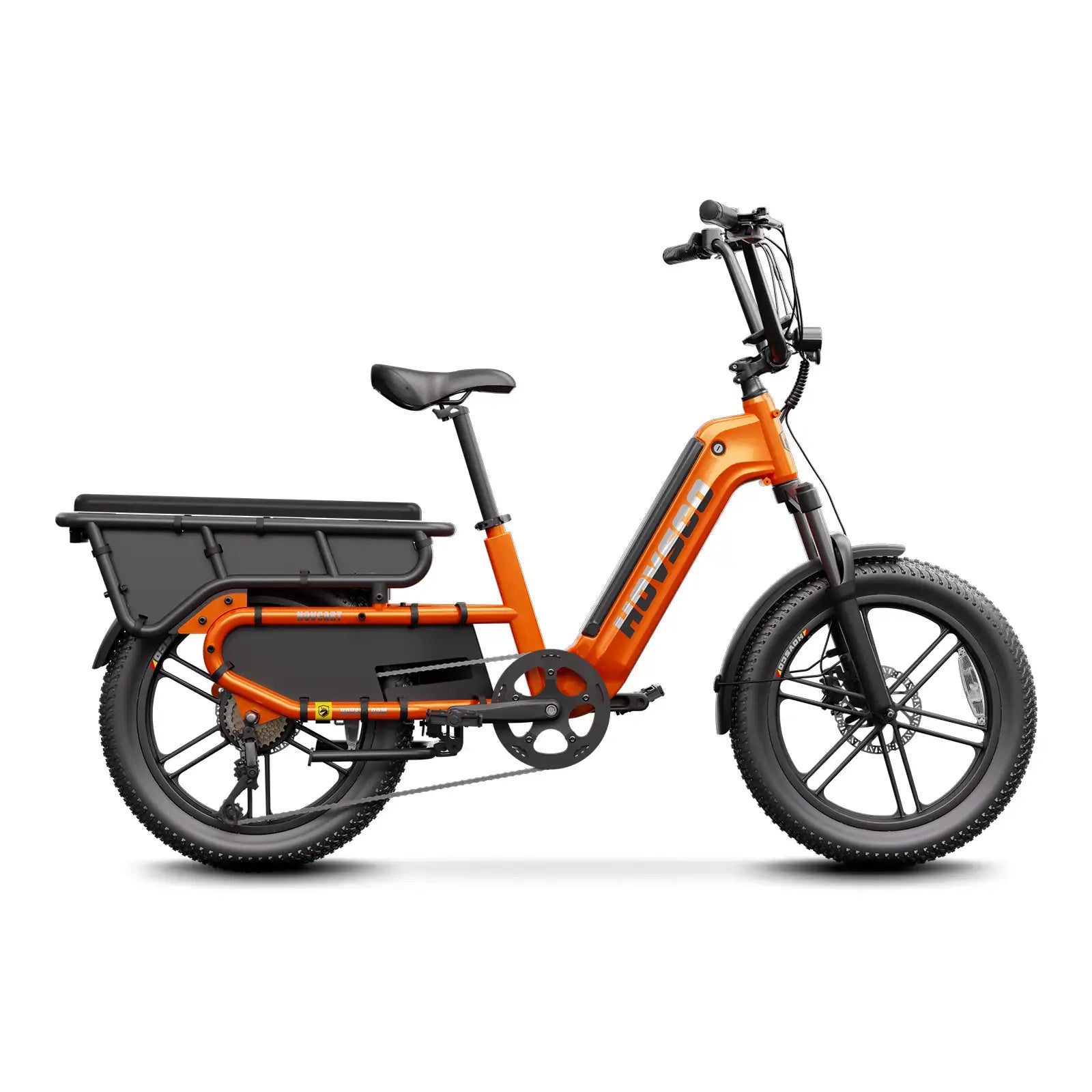
HovCart Family E-Bike offers a low center of gravity, 450 lbs payload, ergonomic grips and saddle, and a rear rack tailored to carrying children or heavy loads with stability.
-
For all‑terrain but still ergonomic riding: the
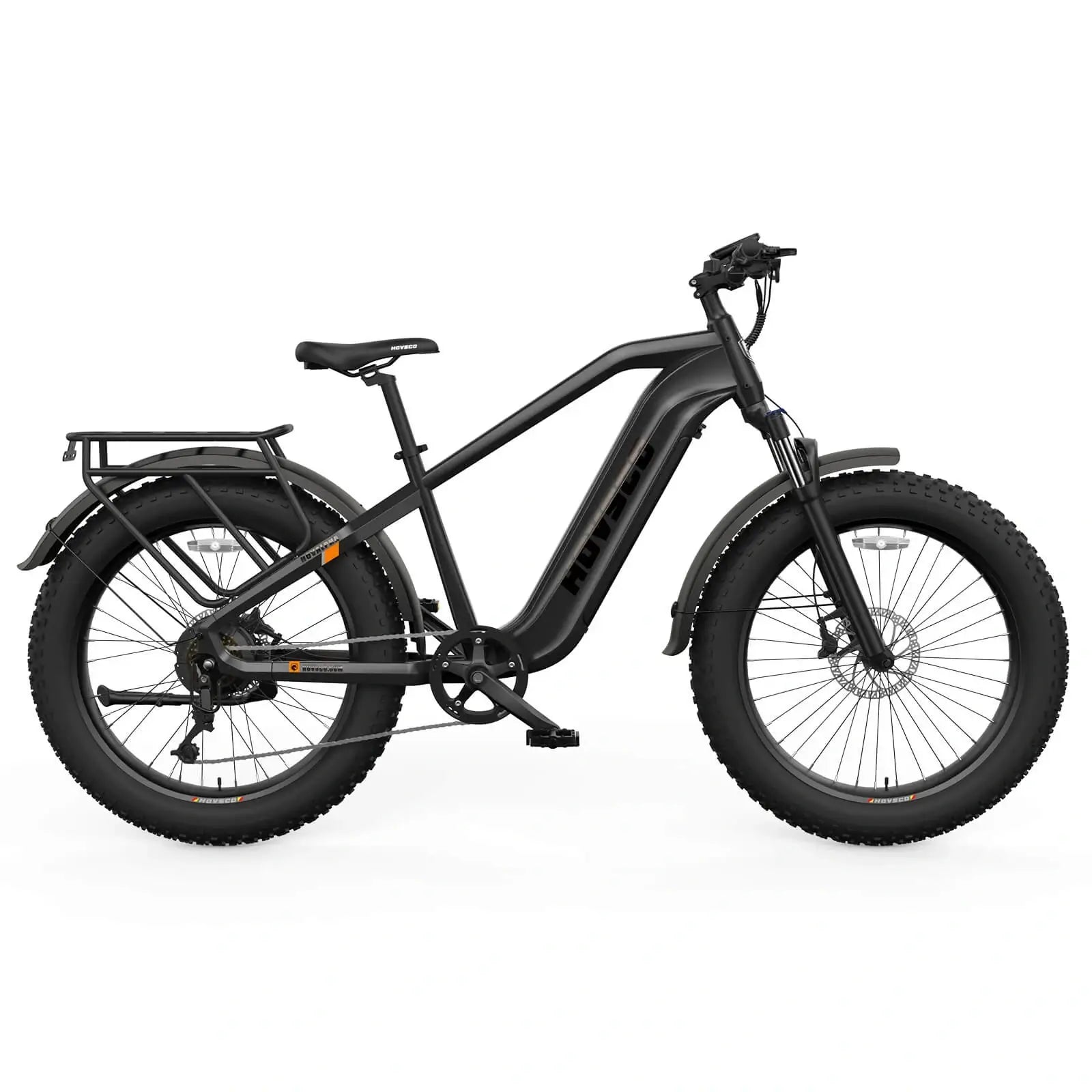
HovAlpha 26" Fat Tire Electric Bike adds 26 x 4" fat tires, suspension, and ergonomic contact points to smooth out snow, sand, and gravel while keeping the rider supported.
-
For city comfort and commuting: browsing the full
HOVSCO E-Bikes collection reveals commuter options like HovRanger and step‑through cruisers that offer upright positions, smart displays, and comfort-focused components.
For RV travel or mixed transport, foldable fat‑tire designs like HovBeta combine portability with wide tires and ergonomic saddles, which many guides highlight as ideal for flexible, comfort‑first adventures.
How-to: set up electric bike ergonomics in 6 steps
-
Dial in saddle height.
Start by placing your heel on the pedal at its lowest point; your leg should be straight. Then switch to your normal pedaling position (ball of foot over pedal spindle)—your knee should remain slightly bent, avoiding both overextension and compression that can aggravate knees and lower back.
-
Align saddle tilt and fore–aft.
Set the saddle horizontal to avoid sliding forward or backward and resulting pelvic misalignment. With the crank at 3 o’clock and your foot in riding position, your kneecap should sit roughly above the pedal spindle; adjust the saddle fore–aft so your knee isn’t far ahead or behind.
-
Set handlebar height and reach.
Adjust stem height and angle so bars sit level with or slightly above the saddle for upright posture, particularly on comfortable commuter and cargo frames. Your elbows should remain softly bent, with shoulders relaxed and wrists neutral—not sharply angled up or down.
-
Fine‑tune grips and hand position.
Use the full palm surface on ergonomic grips rather than pinching the bar with fingers; this spreads pressure and reduces nerve compression. On long rides, alternate slightly between hand positions and micro‑adjust grip angle to keep wrists aligned with forearms.
-
Balance suspension and tire pressure.
Adjust suspension fork settings within recommended ranges and set tire pressures low enough to absorb bumps but high enough to avoid pinch flats. Wider tires can safely run slightly lower pressures, which reduces vibration-induced fatigue.
-
Reassess fit after test rides.
Research on bike‑fitting shows that dynamic, ride‑based adjustments significantly reduce discomfort across multiple body regions. After a few real rides, note any hot spots (back, neck, hands, saddle area) and tweak saddle height, bar reach, or tilt in small increments until those sensations fade.
Use cases: scenarios where ergonomics matter most
Scenario 1: Daily commuter on mixed terrain
Traditional approach: A non‑electric commuter bike with a slightly aggressive position often leaves riders sweaty, with tight shoulders and a sore lower back after hills or rough paths.
With a comfort-focused setup: An upright city or fat‑tire e‑bike with ergonomic saddle and grips spreads load across the sit bones, uses torque‑sensor assistance for climbs, and reduces hand numbness and spinal strain, turning daily trips into low‑stress routines.
Scenario 2: Family school runs and errands
Traditional approach: A standard bike plus child seat and heavy backpacks can feel unstable, especially at low speeds or in traffic. Mounting and dismounting with children is awkward, and sudden stops strain the rider’s wrists and lower back.
With an optimized option: The
HovCart Family E-Bike uses a rear‑weighted frame, low center of gravity, hydraulic disc brakes, and a comfort rear rack seat to keep loads stable. Upright posture and ergonomic grips maintain rider control and reduce fatigue on repeated school and grocery runs.
Scenario 3: Senior rider returning to cycling
Traditional approach: A high‑top‑tube road or hybrid bike demands big leg swings and leans, making mounting risky and long rides painful for joints and back. Many older riders simply stop riding altogether.
With a modern solution: A step‑through, upright model with a wide saddle, curved handlebars, and ergonomic grips aligns with senior e‑bike recommendations—easy mounting, relaxed posture, and simple controls that reduce wrist, neck, and back strain while restoring confidence in cycling.
FAQ: electric bike ergonomics and comfort
Is an electric bike ergonomic by default, or does fit still matter?
Electric bikes reduce exertion and make hills easier, but they’re not automatically ergonomic. Fit still matters: wrong saddle height, poor grip shape, or an overly aggressive frame can cause the same back, neck, and wrist problems as non‑electric bikes. Upright geometries, ergonomic saddles, and grips help, but riders should still fine‑tune fit to their bodies.
What makes an electric cargo bike like HovCart more comfortable than a regular bike with racks?
Beyond motor power, HovCart’s low center of gravity, rear‑weighted frame, wide saddle, ergonomic grips, and hydraulic disc brakes are built around stability and comfort. Research on inclusive mobility suggests that such designs—upright posture and better balance—make carrying passengers and loads safer and less physically taxing than simply bolting racks onto a standard frame.
How important are wide saddles and ergonomic grips on e-bikes used by seniors?
Very important. Industry guides for senior e‑bikes highlight upright positions, wide cushioned saddles, and ergonomic grips as critical for reducing pressure on the spine, neck, and wrists. Since seniors often ride at moderate intensity but for meaningful durations, comfort at contact points determines whether cycling remains enjoyable and sustainable.
Can a fat-tire e-bike like HovAlpha really improve ergonomics, or is it just about traction?
Fat‑tire e-bikes are not only about traction; wide 4" tires and suspension forks help absorb bumps, reducing vibration and micro‑impacts that travel into the hands and spine. When combined with ergonomic saddles, grips, and upright positions, models like HovAlpha deliver both comfort and stability on sand, snow, gravel, and urban potholes.
How does bike‑fitting relate to electric bike ergonomics—do I still need a fit session?
Yes. Reviews of bike‑fitting show that individualized adjustments can significantly reduce discomfort and lower back pain by tuning saddle height, tilt, and cockpit reach. On e-bikes, especially those used daily, a simple fit session or careful self‑adjustment using well‑established ergonomics guidelines can dramatically improve comfort and long‑term health.
What ergonomic features should I look for when choosing an electric bike for commuting and family use?
Look for step‑through or low‑stand‑over frames, upright positions, wide ergonomic saddles, comfort grips, adjustable bars and seatposts, and strong brakes. Models that layer these features on top of high‑torque motors and long‑range batteries deliver both practical performance and everyday comfort.
Conclusion
As the global e‑bike market surges and more riders use electric bikes for commuting, errands, and recreation, ergonomics has become a core performance metric—every bit as important as motor power or battery range. Research and industry practice converge on a simple truth: upright positions, quality saddles, ergonomic grips, and properly tuned fit dramatically reduce pain and fatigue, making cycling sustainable for wider populations. By combining these ergonomic principles with powerful motors, long‑range batteries, and stable cargo‑ready frames, modern e-bike designs offer riders a path to car‑free transport that is not only efficient and fun, but genuinely comfortable over the long term.
CTA and HOVSCO one‑line brand intro
Ready to experience electric bike ergonomics in real life? Explore HOVSCO’s cargo, commuter, and fat‑tire e‑bikes today to find a model that fits your body, your routes, and your lifestyle—and turn every ride into a comfortable, confidence‑building journey. HOVSCO family‑ready electric bikes that blend strong performance with everyday comfort and stability for riders across ages and needs.
Sources




























![[ New Arrival ] Porto Max Electric Scooter For Commute & Grocery Shopping - HOVSCO](http://www.hovsco.com/cdn/shop/files/PotroMax-3.jpg?v=1706927007&width=1200)
 Free Shipping
 15-Day Returns
 2-Year Warranty
Share:
Suburban Commuting Trends: How E-Bikes Are Reshaping Daily Travel with HOVSCO
How to Choose Car-Replacement E-Bikes?