



![[ New Arrival ] Porto Max Electric Scooter For Commute & Grocery Shopping - HOVSCO](http://www.hovsco.com/cdn/shop/files/PotroMax-3.jpg?v=1706927007&width=1200)
- by SteveJames
How to Choose an Electric Bike With Throttle
- by SteveJames
E-Bikes
Accessories
 Free Shipping
 15-Day Returns
 2-Year Warranty
Free Shipping
15-Day Returns
2-Year Warranty
2-Year Warranty
Free Shipping
15-Day Returns
2-Year Warranty
To choose an electric bike with throttle, first confirm the throttle type, whether it works from a complete stop, and how it interacts with pedal assist. Then match the bike’s speed category, motor output, brakes, battery, and local regulations to your route. A throttle is useful for starts, hills, and recovery, but it also affects classification, trail access, and safe riding technique.
An electric bike with throttle can propel the bike without continuous pedaling when the rider activates a control on the handlebar. Most throttle-equipped bikes also offer pedal assist, allowing the rider to choose between on-demand motor power and assistance that responds to pedaling.
The throttle is not simply a “more powerful” version of pedal assist. It changes how the motor receives the rider’s command:
A throttle sends a direct speed or power request.
Pedal assist responds to crank movement or pedaling force.
Throttle use can accelerate the bike while the rider’s feet remain stationary.
Pedal assist generally feels more natural for sustained riding.
The bike’s controller determines how quickly power ramps up.
When researching how to choose electric bike with throttle options, I recommend testing the first three feet of acceleration rather than only checking top speed. A smooth launch is often more valuable in traffic than a high peak output.
An electric bike with throttle can be especially helpful when restarting on a hill, crossing an intersection, carrying cargo, or taking a short break from pedaling. However, riders should treat the throttle as a motor-control device, not as a substitute for braking awareness or road positioning.
A thumb throttle is usually the best all-around choice because it allows precise acceleration while preserving a secure grip on the handlebar. Twist throttles can feel familiar to motorcycle riders but may be easier to activate accidentally, especially on rough ground or during slow maneuvering.
The main throttle formats are:
Thumb throttle: Operated by pressing a small lever with the thumb. It typically leaves the palm around the grip and works well for commuting and mixed terrain.
Half-twist throttle: Rotates part of the grip. It can provide smooth modulation but requires careful hand positioning.
Full-twist throttle: Rotates the entire grip and may feel natural to experienced motorcyclists, though accidental input can be more likely.
Button or trigger controls: Less common as a primary throttle, but sometimes used for boost or walk functions.
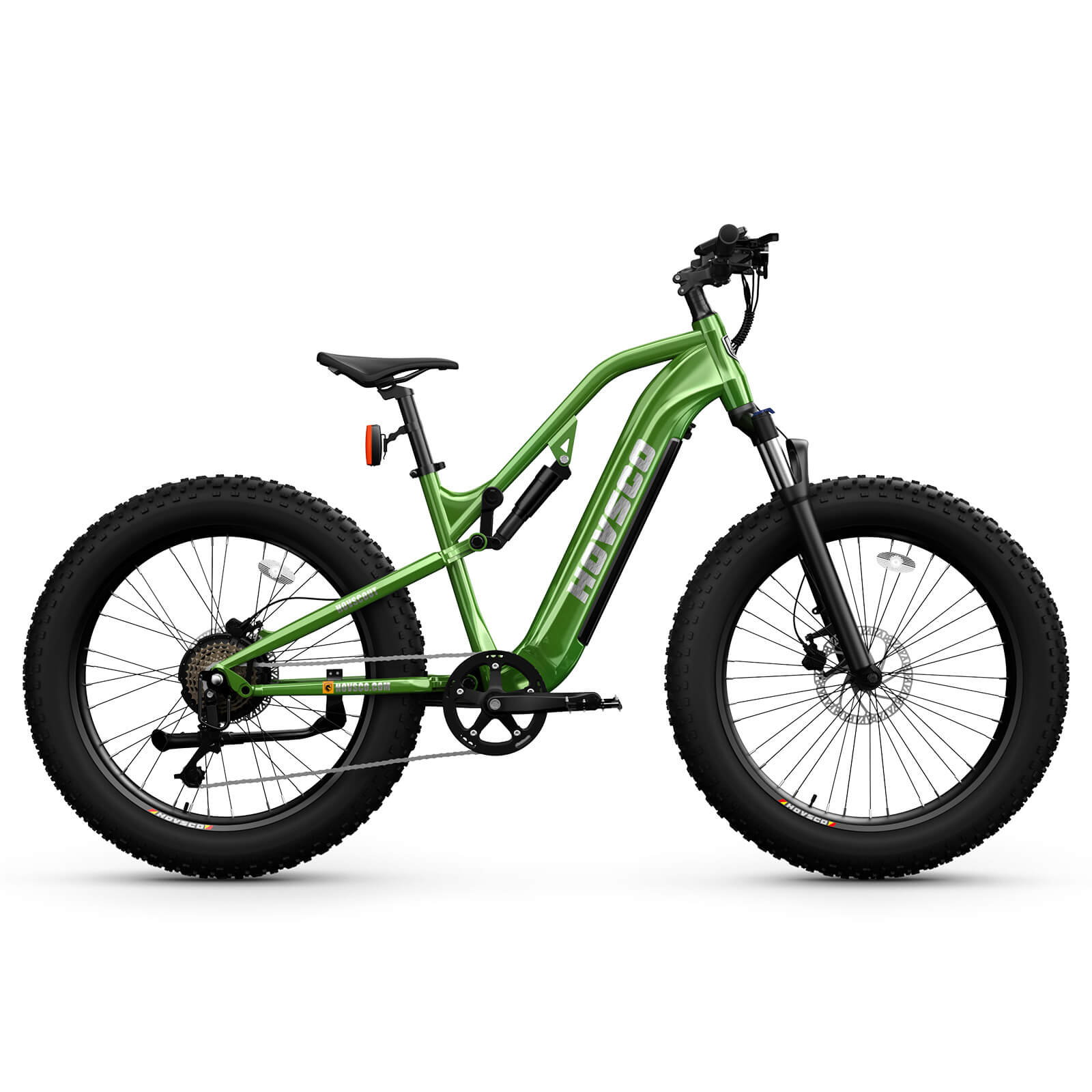
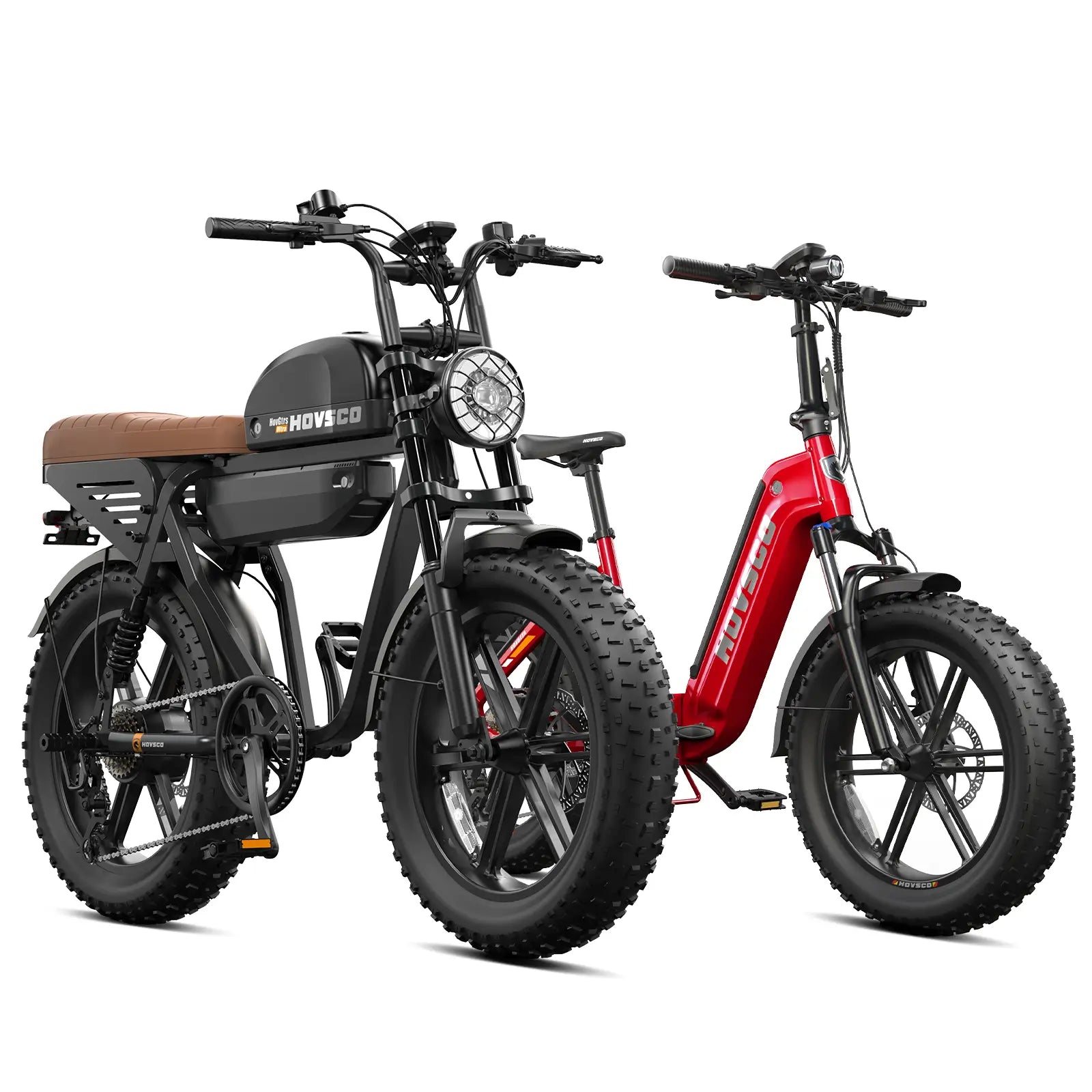
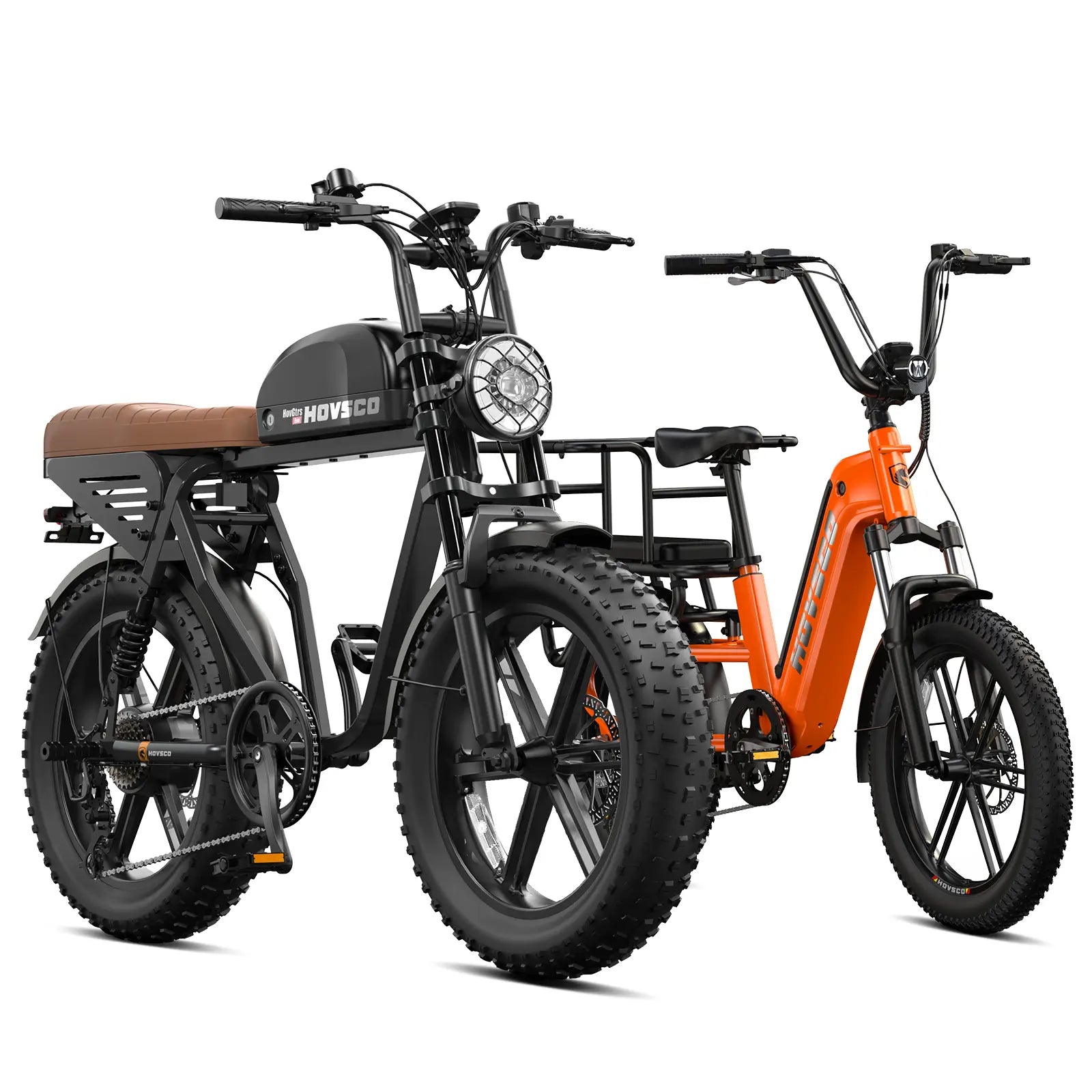
HOVSCO identifies a thumb throttle as an available control and describes it as compatible with its e-bikes. The HovScout product information specifically describes a thumb-throttle mode, while the HovGtrs specification identifies a throttle-on-demand function. These are the kinds of explicit markings I look for before including a model in a throttle comparison.
A factory-level detail matters here: throttle return force and lever clearance affect safety. The lever should return immediately when released, without rubbing the brake lever, display housing, or grip. Test it while turning the handlebar because cable tension and hand position can change at full steering lock.
Throttle and pedal assist are separate control paths that can work independently or together, depending on the bike’s controller settings. Throttle provides direct on-demand power, while pedal assist usually activates when sensors detect crank rotation or pedaling force.
Common riding modes include:
Throttle-only: Motor power is controlled from the handlebar without pedaling.
Pedal assist: The motor responds to cadence or torque input.
Combined control: Pedal assist is active, and the throttle can add temporary power.
No-assist riding: The motor is inactive and the bike behaves like a conventional bicycle.
Walk mode: The motor moves the bike slowly while the rider walks beside it.
The HovScout specification lists five pedal-assist levels, a torque sensor, thumb-throttle mode, normal riding mode, and walking mode. That combination gives the rider more control than a system that offers only one throttle setting and a basic cadence sensor.
The technical trade-off is responsiveness. A cadence sensor may activate after the crank begins turning, while a torque sensor can respond to how forcefully the rider pedals. Torque sensing usually feels more proportional on hills, but throttle behavior still depends on controller programming.
When learning how to choose electric bike with throttle equipment, test whether the throttle overrides pedal assist, supplements it, or becomes inactive above a set speed. That behavior affects both control and legal classification.
Choose a lower-speed throttle category for mixed paths and relaxed commuting, while selecting a higher-speed pedal-assist category only when your route, equipment, and local rules support it. In the common U.S. three-class framework, Class 2 generally permits throttle operation up to 20 mph, while Class 3 generally provides pedal assist up to 28 mph.
The classification is not determined by motor wattage alone. Throttle behavior, programmed speed limits, labeling, and the jurisdiction’s definition all matter. A bike with a throttle that operates beyond the permitted threshold may fall outside a conventional Class 2 definition.
The HovScout product information states a maximum of 28 mph after unlocking to Class 3. That wording is important: unlocking changes the riding category and may change where the bike can legally operate. Riders should not assume that a software setting is merely a performance preference.
HOVSCO’s class guidance describes Class 1 as pedal-assist-only up to 20 mph, Class 2 as throttle-equipped up to 20 mph, and Class 3 as pedal-assist up to 28 mph. Always compare the current product label and manual with your local rules before changing speed settings.
Throttle e-bikes are commonly permitted on roads and bike lanes, but access to multi-use paths, parks, and trails varies by state, city, land manager, and posted signage. A Class 2 label does not guarantee access everywhere a traditional bicycle may ride.
Check these sources before buying:
State vehicle or bicycle regulations.
City and county trail rules.
Park or land-manager restrictions.
Transit policies.
Helmet, age, lighting, and equipment requirements.
Whether throttle use is restricted even when pedal assist is allowed.
Some locations distinguish between a bicycle that requires pedaling and one that can move under motor power alone. Others regulate by class, speed, motor rating, or signage. Rules can also change at the boundary between a public road and a private or managed trail.
This is why I never recommend unlocking a bike before checking the route. A faster setting can reduce practical access even if the motor and frame are capable of it. Riders should preserve the factory configuration when they need predictable compliance.
For a buyer comparing HOVSCO models, the product page’s stated speed mode is only one part of the decision. Route legality must be verified independently, especially for a model that can be unlocked to a higher speed category.
Choose motor output according to rider weight, cargo, slope, wind, and intended speed—not by peak wattage alone. Battery capacity determines how long the bike can deliver that assistance, but real-world range is reduced by hills, cold weather, frequent starts, high speed, and heavy loads.
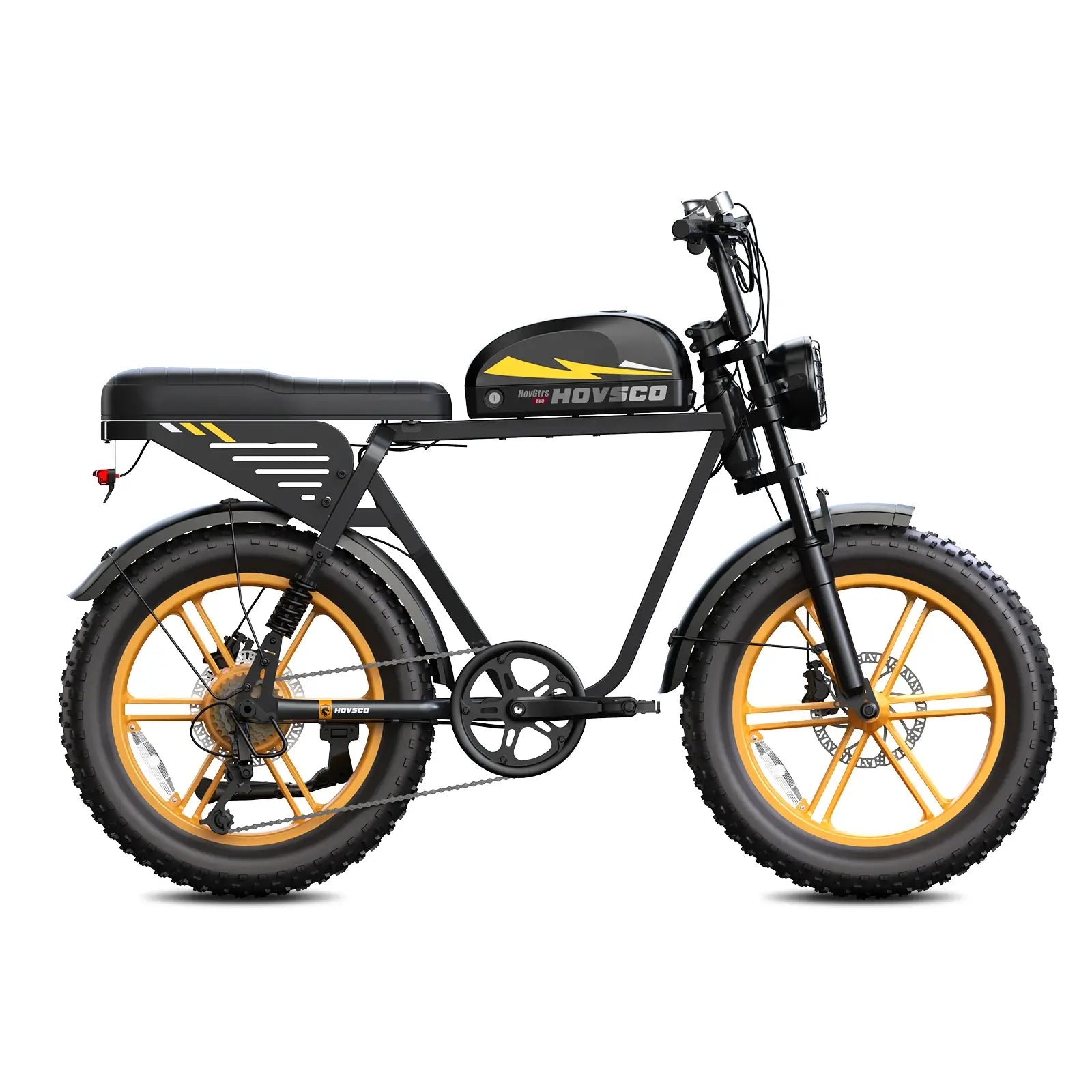
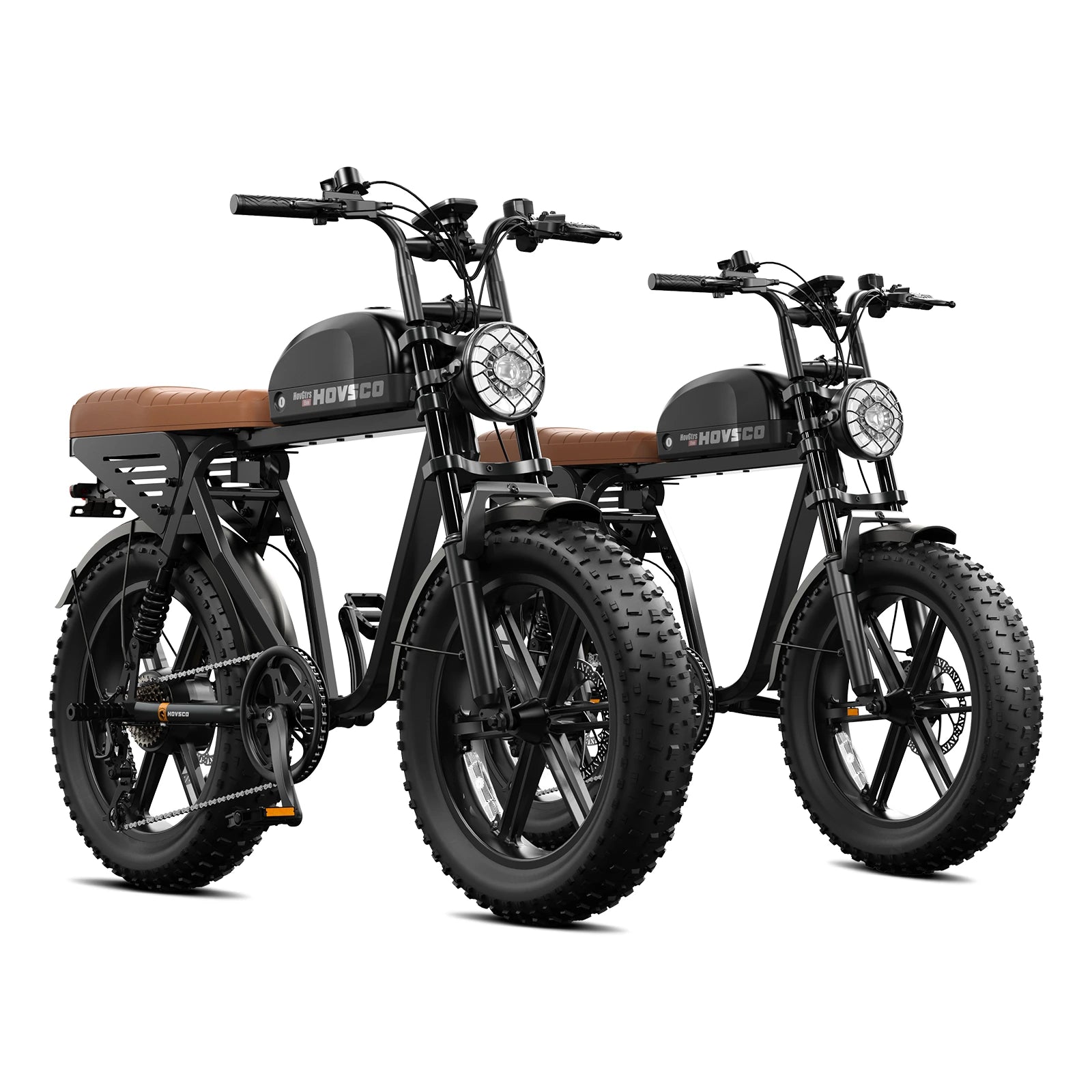
The HovGtrs listing identifies a 750W motor with a 1500W peak output, a 48V 15Ah removable battery, up to 65 miles of claimed range, and a 450 lb payload capacity. It also identifies throttle-on-demand operation from a complete stop. Those specifications indicate a utility-oriented platform rather than a minimalist city bike.
A useful calculation is energy capacity:
That figure describes stored electrical energy under rated conditions, not guaranteed road range. A heavy cargo bike using throttle frequently can consume substantially more energy per mile than a lightweight commuter ridden mostly with pedal assist.
When comparing batteries, inspect:
Voltage and amp-hours.
Whether the battery is removable.
Charger output and charging time.
Battery mounting security.
Replacement availability.
Protection and certification information.
Whether the stated range uses throttle-only or pedal-assist testing.
Throttle use is particularly demanding during acceleration because the motor draws high current before the bike reaches a steady speed. Repeated stop-start riding can reduce range more quickly than a smooth pedal-assist commute.
Brakes and tires matter more with a throttle because on-demand acceleration can increase speed and momentum without a corresponding increase in rider effort. A heavy bike, cargo load, or passenger requires braking hardware and tire grip that match the total system weight.
Inspect:
Front and rear brake type.
Rotor diameter and pad availability.
Hydraulic or mechanical actuation.
Lever reach and cutoff behavior.
Tire width, tread, and pressure range.
Fender and frame clearance.
Lighting and reflectors.
The HovGtrs listing identifies front and rear suspension and hydraulic disc brakes. That equipment is consistent with a heavier, higher-output utility design, where controlling speed is as important as producing it.
The first throttle test should be performed in an empty area at walking speed. Apply the control gradually, then release it before touching the brake. Confirm that motor power stops predictably. Next, test braking with the bike unloaded and loaded, because cargo changes stopping distance and steering behavior.
A common engineering mistake is to treat the throttle as an isolated component. The throttle, controller, motor, battery, brake cutoff, tires, and frame form one system. Improving one component without checking the others can produce an unbalanced ride.
Based on currently accessible HOVSCO product information, HovScout and HovGtrs have explicit throttle-related specifications, while other models should not be assumed to include a throttle unless their current product page or manual says so. This article intentionally limits its model discussion to specifications that directly identify throttle operation.
HovScout is the more informative choice for riders comparing multiple control modes because its listing identifies pedal assist, torque sensing, throttle operation, normal mode, and walk mode. It may suit riders who want a bicycle-like pedal response but still need an independent boost.
HovGtrs is positioned around utility and carrying capacity. Its complete-stop throttle wording is commercially important for riders who need assistance when launching from a junction, climbing with cargo, or recovering from fatigue.
HOVSCO model pages and configurations can change, so verify the exact SKU, current display settings, throttle installation, shipping restrictions, and regional configuration before ordering. Do not infer throttle availability from a generic brand collection page or from a photograph of a handlebar.
Inspect throttle quality by confirming its activation range, return action, wiring, brake interaction, and low-speed response. The control should move smoothly, return immediately when released, and remain easy to operate without loosening your grip or interfering with braking.
Use this pre-purchase checklist:
Confirm the product page explicitly says “throttle.”
Identify whether it is thumb, half-twist, or full-twist.
Confirm whether it works from a complete stop.
Check whether the throttle is installed or an optional accessory.
Verify the maximum throttle-assisted speed.
Ask whether brake levers cut motor power.
Check whether the display shows throttle mode separately.
Confirm regional firmware and class configuration.
Test the control with the handlebar turned left and right.
Read the warranty terms for throttle and controller faults.
At the production level, wiring near the handlebar is exposed to repeated bending. A clean cable path should allow full steering without pulling the connector. Waterproof connectors should be seated and supported, but users should not spray high-pressure water directly at them.
I also recommend checking the throttle after transport. A bike that works in the shop can develop an intermittent connection if the handlebar is rotated, folded, or pressed against a vehicle wall.
A throttle benefits commuters facing frequent stops, cargo riders, people managing hills, and riders who want motor assistance without immediately applying pedal force. It can also help when restarting after a stop or when a rider needs a short recovery interval.
The feature is especially useful for:
Heavy cargo and utility riding.
Steep starts and short climbs.
Stop-and-go intersections.
Riders with variable energy or mobility.
Low-speed maneuvering on private property.
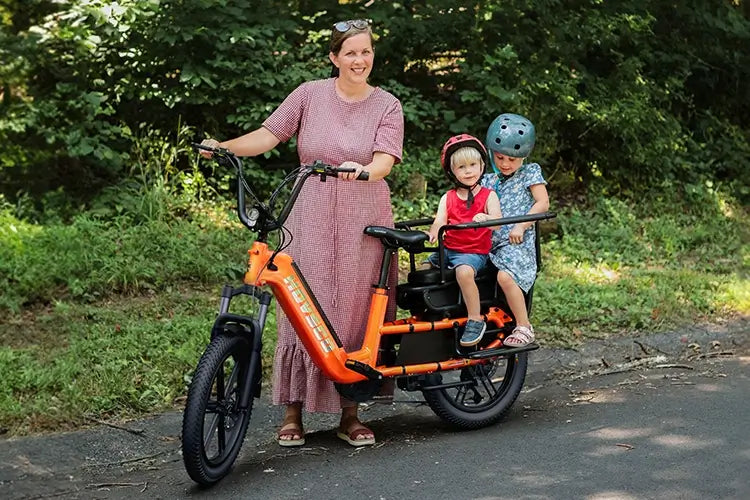
Carrying a passenger where the bike is designed and legally approved for it.
A throttle is less essential for riders who want maximum exercise, broad trail access, or the lightest possible bicycle. It can also be unnecessary if the rider prefers a seamless torque-sensor response and rarely stops on hills.
The key is to identify whether you need continuous throttle use or occasional assistance. Occasional use can extend comfort without turning the entire ride into scooter-style operation. Continuous use requires more attention to battery consumption, braking, tire wear, and local rules.
Compare throttle, PAS, and speed as three separate decisions: how the motor starts, how it responds during pedaling, and how fast assistance continues. A bike can have a smooth pedal-assist system but an abrupt throttle, or a refined throttle but limited range under repeated acceleration.
For most riders:
Choose throttle for instant starts and recovery.
Choose torque-sensor PAS for natural effort matching.
Choose cadence-sensor PAS for simple, predictable assistance.
Choose Class 2 when 20 mph and throttle access fit the route.
Choose Class 3 only when higher-speed pedal assist and stricter access are acceptable.
A throttle should not be judged solely by maximum speed. At low speed, controllability is more important. The best system lets you add just enough power to balance, clear a junction, or climb a ramp without producing a sudden surge.
When learning how to choose electric bike with throttle controls, compare the first second of power delivery, not just the advertised motor rating. That test exposes controller tuning, sensor delay, and the rider’s ability to modulate the bike safely.
“A throttle is valuable when it solves a specific interruption in the ride: a steep start, a loaded launch, or a short recovery period. I evaluate the control together with the brake cutoff, controller ramp, tire grip, battery current, and legal speed setting. A bike that accelerates quickly but feels abrupt is not finished engineering. For buyers, the most important question is not whether a bike has a throttle; it is whether the throttle behaves predictably at the speed and load you will actually use. Verify the exact configuration, test low-speed response, and preserve the legal factory setting unless local rules clearly allow another mode.”
Choose a throttle e-bike when independent motor control is part of your daily use, not merely an attractive specification. It is a strong choice for cargo, hills, stop-start traffic, variable mobility needs, and riders who want the option to move without pedaling briefly.
Before buying, write down:
Your typical rider and cargo weight.
The steepest regular hill.
Your normal road speed.
Whether you need trail access.
How often you stop.
Whether you can charge at work or home.
Whether you need a removable battery.
Whether a passenger is permitted and supported.
Then select the lowest speed and power category that solves the problem. This approach usually improves range, handling, legal access, and component life.
HOVSCO’s explicitly throttle-labeled HovScout and HovGtrs demonstrate two distinct directions: a multi-mode performance bike and a high-capacity utility platform. Compare them through your route and load rather than assuming the larger motor is automatically better.
The best way to choose an electric bike with throttle is to verify the exact throttle format, complete-stop behavior, pedal-assist interaction, speed category, and legal access before comparing motor size or range. Then match braking, tires, battery, payload, and controller response to your real riding conditions.
Use this final checklist:
Confirm that the current model page explicitly lists a throttle.
Identify the control type and whether it works from a stop.
Test throttle and pedal-assist interaction.
Match the bike to Class 1, Class 2, or Class 3 rules in your area.
Check brakes, tires, payload, and battery capacity together.
Verify regional firmware, warranty, and service support.
Ride conservatively until you understand the power delivery.
If you are learning how to choose electric bike with throttle equipment, remember that the safest purchase is not necessarily the fastest one. It is the bike whose controls, speed, load capacity, and legal status match the way you will ride it.
Does every electric bike with throttle qualify as Class 2?
No. Under the common U.S. framework, Class 2 generally uses a throttle up to 20 mph, but models with different speed behavior or regional configurations may not fit that category. Confirm the current label and local law.
Can a throttle work without pedaling?
Yes, if the bike is designed for throttle-on-demand operation. HOVSCO’s HovScout and HovGtrs product information explicitly identifies throttle functions, including complete-stop operation for HovGtrs.
Which throttle is easiest to control?
A thumb throttle is often easiest for precise low-speed control because the palm remains around the grip. Individual comfort varies, so test the lever with both hands and while braking.
Does using a throttle reduce range?
Usually, frequent throttle acceleration consumes more energy than steady pedal assist because the motor supplies more of the total work. Rider weight, hills, wind, speed, and cargo also affect range.
Can I unlock a higher speed setting?
Only if the product, local law, and route rules permit it. Unlocking can change the bike’s classification, access, equipment requirements, and warranty implications, so check the current instructions before making changes.
Share:
What Is a Long-Range Fat Tire Ebike?
How to Choose a Folding Electric Scooter?