
























![[ New Arrival ] Porto Max Electric Scooter For Commute & Grocery Shopping - HOVSCO](http://www.hovsco.com/cdn/shop/files/PotroMax-3.jpg?v=1706927007&width=1200)
- by SteveJames
What Is a Long-Range Fat Tire Ebike?
- by SteveJames
E-Bikes
Accessories
 Free Shipping
 15-Day Returns
 2-Year Warranty
Free Shipping
15-Day Returns
2-Year Warranty
2-Year Warranty
Free Shipping
15-Day Returns
2-Year Warranty
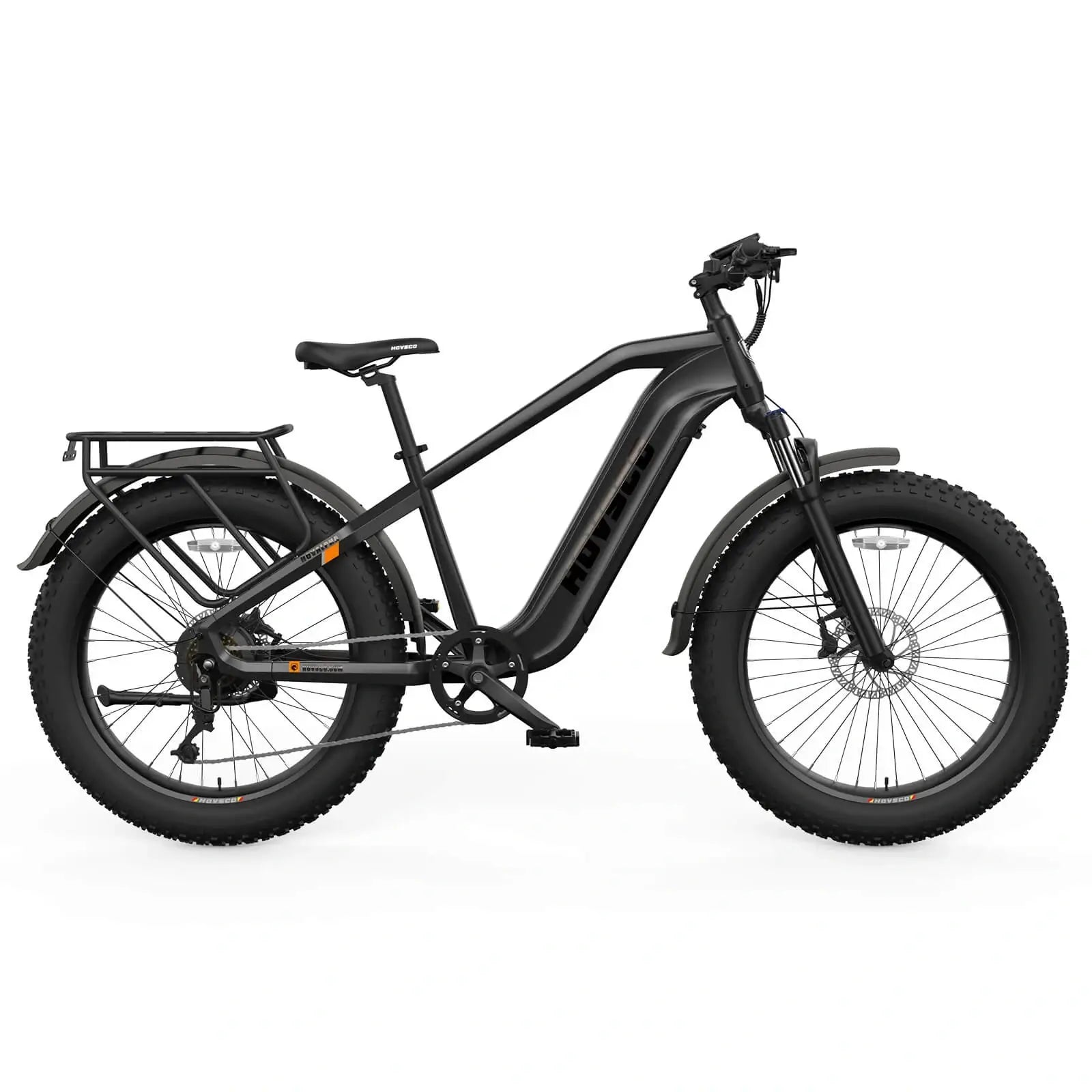
A long-range fat tire ebike combines 4-inch-plus tires for all-terrain traction with a high-capacity battery (typically 600Wh–900Wh+) to deliver 40–90 miles per charge. This pairing suits riders who want comfort, stability, and versatility across mixed surfaces without frequent recharging.
In practice, “fat tire” means 4.0–5.0 inch tires on wide rims (20–26 inch), while “long range” means a battery and drivetrain tuned to exceed typical fat-tire efficiency penalties. Many fat tire ebikes advertise big numbers on PAS 1, but real-world mixed riding often delivers 50–70% of that. A true long-range fat tire ebike accounts for rolling resistance, weight, and rider behavior so the usable range still meets daily commuting and weekend adventure needs.
From a factory-floor perspective, this means pairing a high-capacity pack (often 600–900Wh) with a motor and controller calibrated for efficiency, not just peak power. At HOVSCO, we see riders prioritize models where the battery management system (BMS) and assist curves are tuned to preserve range under real loads—commuter bags, hills, stop-and-go traffic—rather than just lab conditions.
Fat tires increase rolling resistance, weight, and drag, which typically reduces range by 15–20% on pavement compared to narrow-tire ebikes with the same battery. However, on soft or uneven terrain, fat tires can improve efficiency by preventing slippage and sinkage that would otherwise waste energy.
Fat tires deform more under load and create a larger contact patch, especially at lower pressures (5–15 PSI). Laboratory data suggests rolling a fat tire at commuter speeds can require roughly 30–45 watts per tire versus 10–15 watts for a slim commuter tire. That extra load forces the motor to draw more current, shortening range on smooth surfaces.
Rotational mass matters too: heavier tires and rims increase inertia, demanding more torque during acceleration. In stop-and-go urban riding, this adds up. The engineering trade-off is clear: you gain comfort and traction but pay an efficiency tax on clean pavement.
On sand, snow, mud, or loose gravel, fat tires spread the load and maintain grip, often using less total energy than a narrow tire that would slip or dig in. In those conditions, the “range penalty” flips into a net gain because the bike can move forward without wasting power fighting loss of traction.
In a long range fat tire ebike buying guide, prioritize battery capacity (600Wh+), motor torque and efficiency, tire quality, and frame geometry that supports long-haul comfort. These features determine whether the bike can truly deliver distance without sacrificing fat-tire benefits.
Battery capacity and real-world range math
Look for 600Wh or higher for 40+ miles of mixed riding; 800Wh+ is ideal for 60–85+ miles. A practical rule: take the advertised PAS-1 range and multiply by 0.5–0.7 for realistic mixed riding. If your daily loop is 20 miles, aim for a bike rated at 40+ miles to keep a safety buffer.
Motor power, torque, and assist tuning
For hills and cargo, 750W nominal (1000W+ peak) is a strong baseline. But torque and controller mapping matter more than peak wattage alone. A well-tuned mid-drive can feel more efficient on climbs, while a quality hub motor with smart assist curves can preserve battery in urban riding.
Tire construction, pressure, and puncture resistance
Choose puncture-resistant casings and tread patterns matched to your terrain. On pavement, running higher pressures (20–30 PSI) reduces rolling resistance; on soft ground, drop to 10–15 PSI for grip and cushion. This adjustability is a key lever to reclaim range without losing fat-tire advantages.
Frame geometry, comfort, and load capacity
Long rides demand relaxed geometry, wide saddles, and upright bars to reduce fatigue. Check weight capacity if you carry bags or gear; overloaded bikes lose efficiency and handling. A sturdy frame with thoughtful mounting points supports commuting and adventure use without compromising stability.
A long-range fat tire ebike suits mixed-terrain commuting because it delivers comfort, stability, and confidence across potholes, gravel cuts, curbs, and wet roads while still covering typical daily distances on one charge.
Comfort and control in real urban conditions
City streets are rarely perfect. Fat tires absorb bumps and vibrations that would tire you out on narrow tires, reducing back strain and hand fatigue over long commutes. The wider contact patch also improves grip in rain or on debris, making stops and cornering more predictable.
Range confidence for daily loops and errands
Commuters need range that survives detours, errands, and headwinds. A long-range pack ensures you can complete a 15–25 mile daily loop with margin, even when using moderate assist. This reduces charging anxiety and makes the ebike a practical car replacement for many urban riders.
Long-range fat tire ebikes excel on beaches, snow routes, forest service roads, and rural gravel networks where traction and comfort matter more than pure speed. They’re built for riders who want one bike that can handle commute days and weekend exploration without compromise.
Adventure riding: sand, snow, and soft surfaces
On sand and snow, fat tires float over the surface instead of digging in, maintaining forward momentum with less wheel spin. Combined with a long-range battery, you can explore remote trails or shoreline paths without worrying about running out of power far from outlets.
Rural and gravel commuting with cargo
For rural riders, gravel shoulders and unpaved shortcuts are normal. Fat tires provide stability under load, and a large battery covers longer distances between towns. Add racks or panniers, and you have a practical, all-weather commuter that doesn’t flinch at rough patches.
The key trade-offs are reduced efficiency on smooth pavement, higher weight, and increased cost versus narrow-tire commuters. These are acceptable if you value all-terrain capability and comfort over maximum speed and minimal weight.
Efficiency tax on pavement and added weight
Expect a 15–20% range reduction on clean asphalt compared to a slim-tire ebike with the same battery. Fat tire models also tend to weigh 55–77 lbs, affecting portability and storage. If your routes are mostly smooth bike lanes, a narrow-tire long-range commuter may be more efficient.
Cost, maintenance, and logistics
Fat tire ebikes often cost more due to robust frames, wider rims, and larger batteries. Tire replacements and accessories (racks, fenders sized for fat tires) can be pricier. Transporting and storing a bulky bike also requires more space and planning.
Riders can maximize range by adjusting tire pressure to terrain, using lower assist levels, maintaining steady speeds, and keeping the drivetrain clean and lubricated. These habits reduce motor load and improve battery efficiency without sacrificing comfort.
Tire pressure strategy by surface
On pavement, inflate to 20–30 PSI to shrink the contact patch and lower rolling resistance. On gravel or dirt, drop to 12–18 PSI for grip and cushion. On sand or snow, 8–12 PSI maximizes float. Adjusting pressure is the single easiest way to tune range versus traction.
Assist mode, cadence, and speed discipline
Use the lowest assist that keeps your target speed; reserve higher assist for hills or headwinds. Maintain a steady cadence and avoid hard accelerations. Keeping speeds moderate (15–18 mph) dramatically reduces aerodynamic drag and motor current draw, extending range.
Riders whose routes are almost entirely smooth pavement and who prioritize maximum efficiency, minimal weight, and lowest cost should consider narrow-tire long-range commuters instead. Fat tires shine when terrain is mixed or unpredictable.
Pavement-only commuters seeking maximum efficiency
If your daily ride is 10–20 miles on dedicated bike lanes and you want the longest possible range per watt-hour, a slim-tire ebike will outperform a fat tire setup. The efficiency penalty of fat tires is hardest to justify on perfect asphalt.
Riders with strict weight or storage constraints
If you frequently carry your bike upstairs, load it onto small car racks, or store it in tight spaces, the extra bulk and weight of a fat tire ebike may be a burden. In those cases, a lighter, narrower commuter may fit your lifestyle better.
“From our engineering and rider-testing experience, the sweet spot for a long-range fat tire ebike is a 600–900Wh battery paired with a motor and controller tuned for real-world efficiency, not just peak power. We see riders gain the most by matching tire pressure to terrain and choosing assist levels that keep cadence steady rather than chasing speed. At HOVSCO, we design fat tire platforms that balance traction, comfort, and range so daily commuters and weekend explorers can rely on one bike across seasons and surfaces.”
A long-range fat tire ebike is the right choice when you need one bike that handles mixed terrain, delivers 40–90 miles per charge, and prioritizes comfort and confidence over maximum efficiency. Use a long range fat tire ebike buying guide to focus on battery capacity, motor tuning, tire quality, and geometry that fit your actual routes. If your riding includes gravel, snow, sand, or rough city streets, the trade-offs are worth it; if you ride only smooth pavement and want every watt-hour stretched, a narrow-tire long-range commuter may suit you better.
What range should I expect from a long-range fat tire ebike?
Realistically 40–90 miles per charge depending on battery size, terrain, rider weight, and assist level. Use 50–70% of advertised PAS-1 range as a practical estimate for mixed riding.
Are fat tire ebikes good for daily commuting?
Yes, especially on mixed or imperfect surfaces. They offer comfort, stability, and sufficient range for most urban commutes when paired with a long-range battery.
Do fat tires significantly reduce battery life?
On smooth pavement, expect a 15–20% range reduction versus narrow tires due to higher rolling resistance and weight. On soft or uneven terrain, fat tires can improve overall efficiency by preventing slippage.
How do I choose between fat tire and narrow tire for long range?
If your routes include gravel, snow, sand, or rough roads, choose fat tires for traction and comfort. If you ride mostly smooth pavement and want maximum efficiency, choose a narrow-tire long-range commuter.
Can I improve range on my fat tire ebike?
Yes. Increase tire pressure on pavement, use lower assist levels, maintain steady speeds, and keep the drivetrain clean and lubricated. These steps reduce motor load and extend battery life.
Share:
How Do You Choose an Electric Bike for Hills?
How to Choose an Electric Bike With Throttle