



























![[ New Arrival ] Porto Max Electric Scooter For Commute & Grocery Shopping - HOVSCO](http://www.hovsco.com/cdn/shop/files/PotroMax-3.jpg?v=1706927007&width=1200)
- by SteveJames
How Much Can a Business E-Bike Actually Carry?
- by SteveJames
E-Bikes
Accessories
 Free Shipping
 15-Day Returns
 2-Year Warranty
Free Shipping
15-Day Returns
2-Year Warranty
2-Year Warranty
Free Shipping
15-Day Returns
2-Year Warranty
A bike's published payload is a total figure, not a cargo allowance. The rider, battery, locks, bags, tools, and cargo all count toward it, and every rack, basket, seat, or cargo attachment has its own compatibility and limit — the smaller applicable limit governs. This guide owns the combined-load math for business bikes; for payload-first education, HOVSCO also offers the high-payload collection.
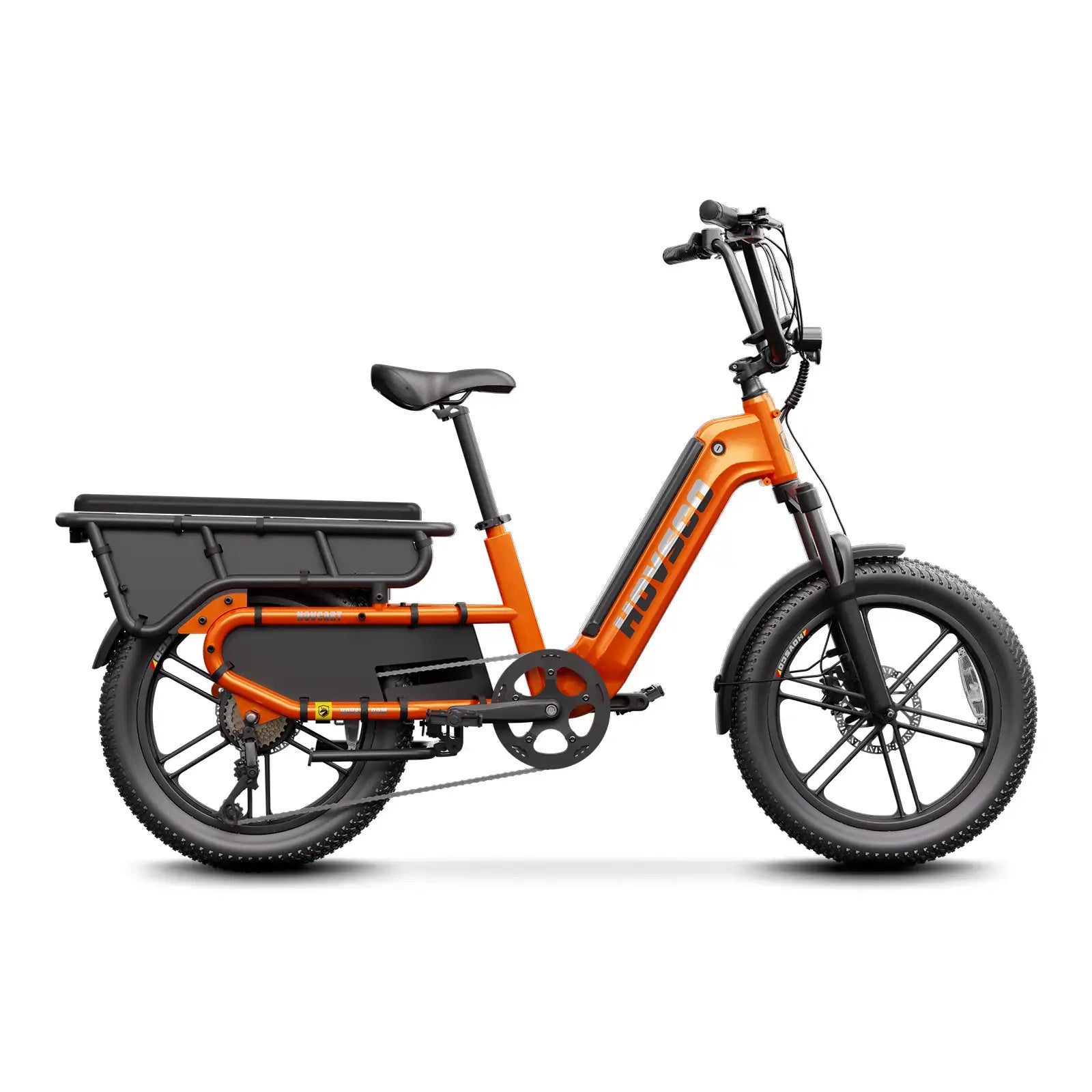
The HovCart publishes a 450 lb payload figure, which sounds like a generous cargo allowance until the math is done: the rider, the battery, the lock, the bags, the tools, and the cargo all count toward the same 450 lb. The cargo alone is only the leftover after everything else.
Total payload is not a cargo attachment limit. A business that treats 450 lb as the box limit discovers the error the first time a fully loaded bike is weighed — or the first time the bike is pushed past its design load.
The confusion is understandable: consumer ads talk about payload as if it were cargo capacity. The business version of the same number is different, and the difference is exactly where overloaded bikes, damaged attachments, and failed deliveries come from.
Weigh every item that rides with the bike, not just the cargo. The table below shows the standard lines.
| Item | Typical weight |
|---|---|
| Rider | Actual rider weight |
| Battery | Included in the complete weight when mounted |
| Locks | 1–3 lb for quality locks |
| Bags and tools | Work equipment carried on the bike |
| Cargo | The actual delivery or equipment load |
| Total | Must stay at or below the published payload |
Weigh the real configuration once — rider, gear, and cargo together — and keep the number. It is the number every route and every attachment decision uses.
If the total exceeds the published payload, the fix is not a stronger attachment — it is a lighter load, a different format, or a second bike. No accessory raises the frame's rated capacity, and no business process should pretend otherwise.
Weigh the bike itself once too, so the worksheet separates the machine's weight from the load's: the published complete weight already includes the battery, and the worksheet should not double-count it.
The same worksheet serves the route plan: once the real cargo ceiling is known, the route can be matched to the load instead of the other way around. That is the order the whole business workflow depends on.
A rack, basket, seat, or cargo attachment is not an extension of the bike's payload; it has its own compatibility and weight limit, often far below the bike's total. The smaller applicable limit governs, which means a 50 lb-rated basket limits the load in that basket even when the bike could carry more.
Confirm the attachment limit on the product page before ordering, and check compatibility with the exact model and frame. A cargo attachment that fits one frame may not fit another, and a limit assumed from a photo is a limit that gets discovered the wrong way.
Apply the worksheet to the HovCart: a 180 lb rider, a 5 lb lock, a 10 lb tool bag, and a 20 lb battery-mounted configuration leave about 235 lb for cargo before reaching the 450 lb total. Add a second rider seat and its limit applies separately.
The point is not the arithmetic — it is the method. A business that runs the combined-load worksheet once knows its real cargo ceiling; a business that quotes the 450 lb figure does not. The ceiling is the number that survives the route, not the headline.
The HovCart's cargo attachments add their own limits and compatibility rules, so the worksheet should be re-run whenever the configuration changes — a new box, a new tool, a new attachment. The ceiling is a moving number that only the worksheet tracks.
Keep the attachment manuals with the bike records: the compatibility and limit figures are documented there, and the service provider should confirm them with the same manual the business uses.
A loaded bike brakes and handles differently, and the difference grows with the load. Test braking distance with the normal work load before the first delivery day, and re-test after any change to the cargo configuration or attachments.
The same rule applies to rider training: a new rider should practice without a business-critical load in a controlled area. Load changes the bike's behavior, and the behavior must be familiar before the bike carries a deadline.
The same loaded-braking test belongs in rider training: each rider should practice stopping with the real load in a controlled area before the first delivery. A rider who knows the loaded stopping distance is a rider who plans stops with that distance in mind.
Record the configuration and weight of each route in the business log: rider, gear, cargo, and attachments. When the load changes — a heavier tool, a new box, a second rider — re-run the worksheet before the route, not after.
A load log also feeds the maintenance schedule: a bike ridden near its limit wears tires, brakes, and drivetrain faster, and the inspection intervals should reflect the real load. The log turns payload from a one-time calculation into an operating discipline.
The log also protects the business case: if a route or an attachment causes repeated overload or wear, the log shows it and the process changes. Payload discipline is a management tool, not paperwork.
Run this before any purchase and before any route change.
| Check | Pass condition |
|---|---|
| Combined load weighed | Rider, gear, and cargo total at or below payload |
| Attachment limits confirmed | Each rack or basket limit known and respected |
| Compatibility verified | Attachments fit the exact model and frame |
| Braking checked with load | Stopping distance known with the work load |
| Load log updated | Route weights recorded for maintenance planning |
" The payload number on the page is a total, and the smaller applicable limit always governs. Weigh the real configuration, confirm every attachment's limit, and the cargo ceiling becomes a fact instead of a guess." — HOVSCO Engineering & Content Team
A business bike's real cargo ceiling is the published payload minus the rider, battery, locks, bags, and tools, further capped by every attachment's independent limit. Weigh the configuration, confirm compatibility, test braking with the load, and keep the load log current.
Can the maximum bike payload be used as the cargo limit?
No. Total payload includes the rider, battery, locks, accessories, and cargo. Each rack, basket, or attachment has its own compatibility and limit, and the smaller applicable limit governs.
How much cargo can a HovCart actually carry?
It depends on the combined load: subtract the rider, locks, bags, and tools from the 450 lb total, then apply any attachment limit. Weigh the real configuration to find the actual ceiling.
Do attachments increase the bike's payload?
No. Attachments have their own limits, often lower than the bike's total, and they do not raise the frame's rated capacity. The smaller applicable limit governs.
Why does braking change with a load?
A loaded bike carries more momentum and needs more distance to stop. Test braking with the normal work load before delivery days, and re-test when the configuration changes.
Should a business log its loads?
Yes. A load log records each route's rider, gear, cargo, and attachments, feeds the maintenance schedule, and catches overload before it damages the bike or the delivery.
Share:
What Should You Check Before Stop-and-Go Commuting?
What Does Battery Capacity Actually Buy on an Electric Scooter?