
























![[ New Arrival ] Porto Max Electric Scooter For Commute & Grocery Shopping - HOVSCO](http://www.hovsco.com/cdn/shop/files/PotroMax-3.jpg?v=1706927007&width=1200)
- by SteveJames
What Does Battery Capacity Actually Buy on an Electric Scooter?
- by SteveJames
E-Bikes
Accessories
 Free Shipping
 15-Day Returns
 2-Year Warranty
Free Shipping
15-Day Returns
2-Year Warranty
2-Year Warranty
Free Shipping
15-Day Returns
2-Year Warranty
The number that decides how far a scooter goes is watt-hours, not the range badge. All three HOVSCO long-range scooters use a 36V 10.4Ah pack — 374.4Wh of stored energy — and the way that energy is spent depends on the rider, the route, and the speed. The battery-capacity story for scooters is told here; the care routine itself is covered in our e-bike battery charging guide.
Amp-hours describe the current a battery can deliver; watt-hours describe the energy it actually stores. The calculation is simple — volts times amp-hours — and for all three scooters it is 36V × 10.4Ah = 374.4Wh. That is the energy budget every route draws from.
The range badge on the box is a projection of how far that budget goes under ideal conditions. The Wh figure is the fact; the range figure is the interpretation, and the interpretation depends on the rider.
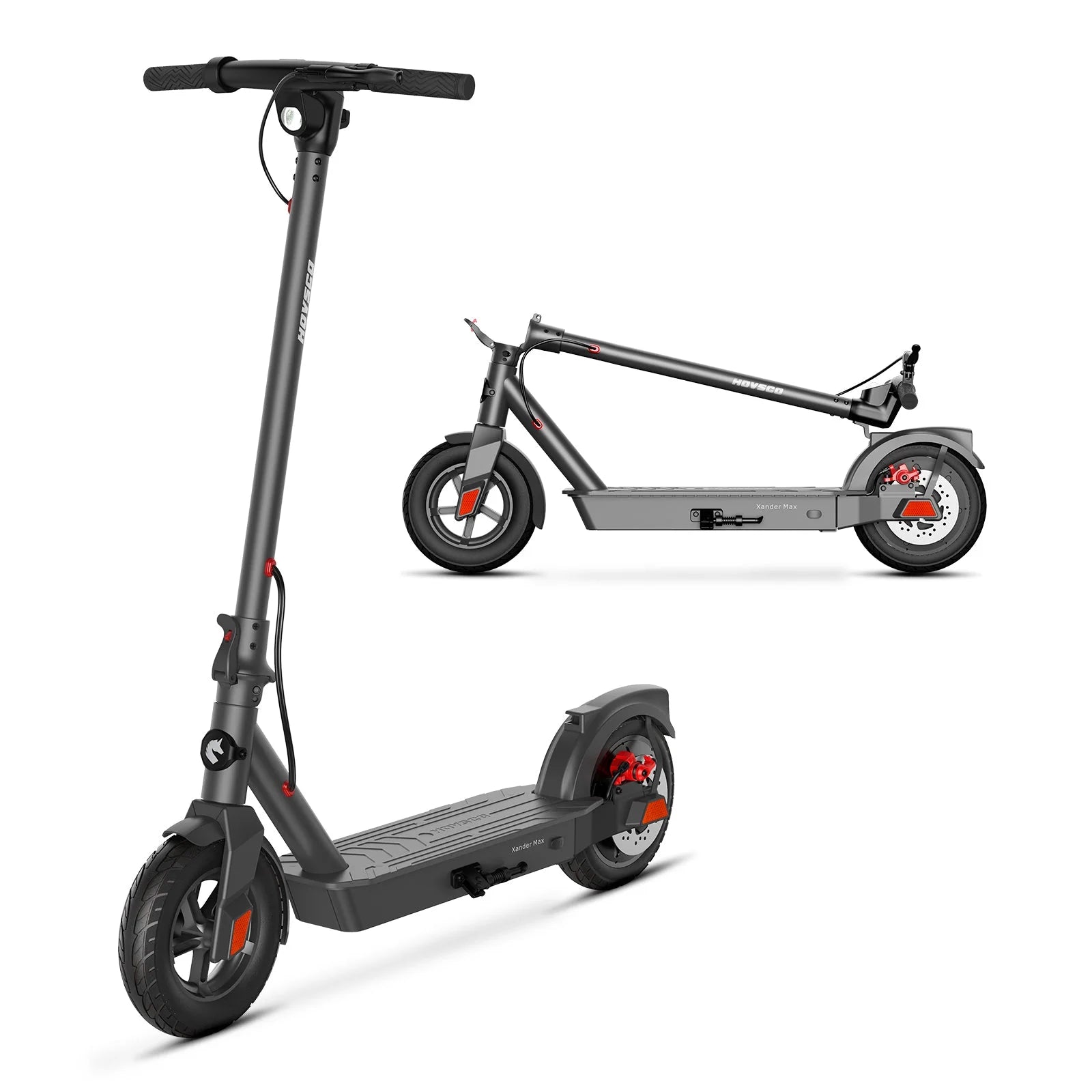
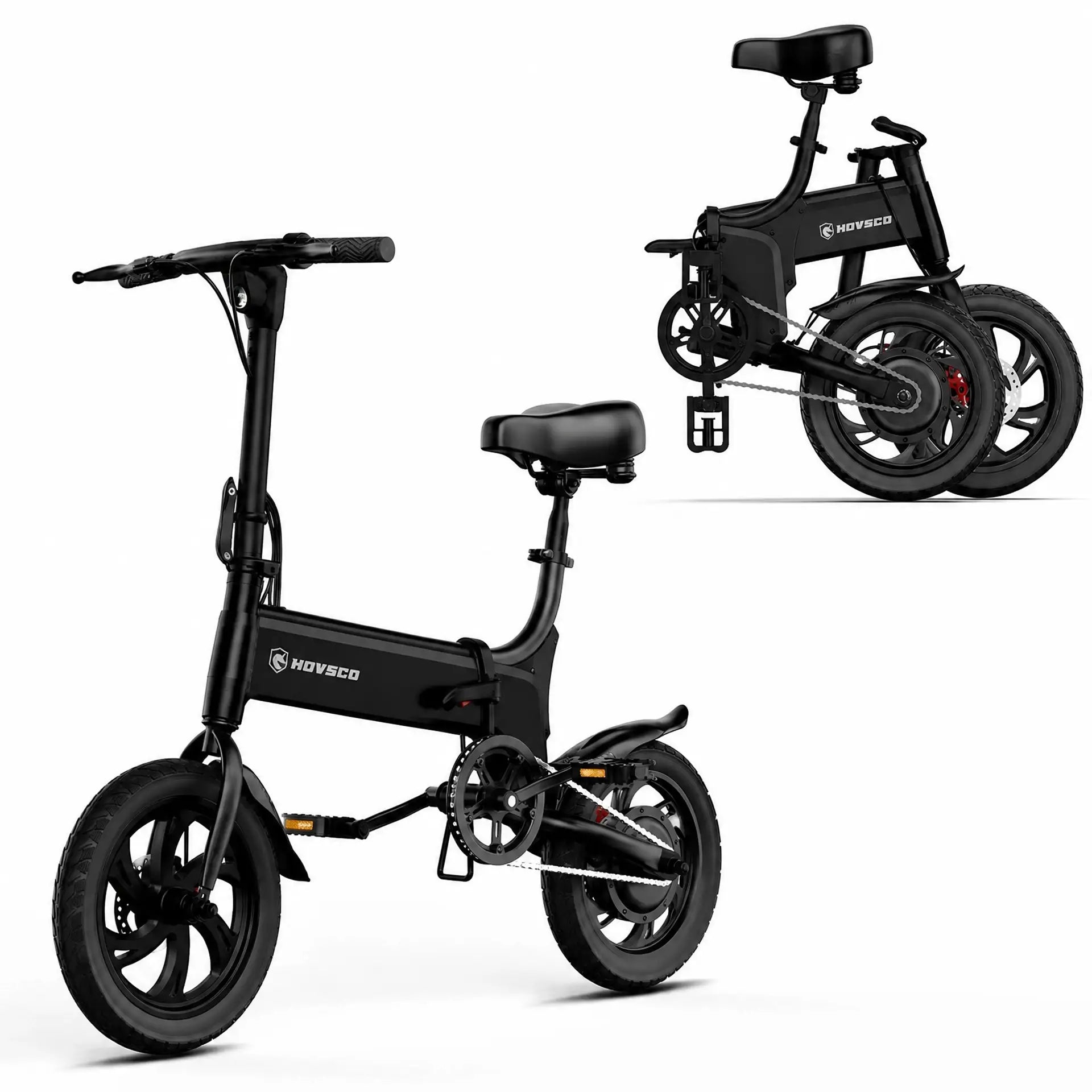
The shared 374.4Wh pack buys roughly 30 miles on the folders and 35 miles on the Porto under ideal conditions. In real riding, the same budget buys less: a heavier rider, a hill, a headwind, or a higher speed each spends the Wh faster.
The practical takeaway is that the three scooters are not different battery classes competing on capacity — they are three spending plans for the same budget. A bigger number on the box does not mean more energy; it means a more efficient setup.
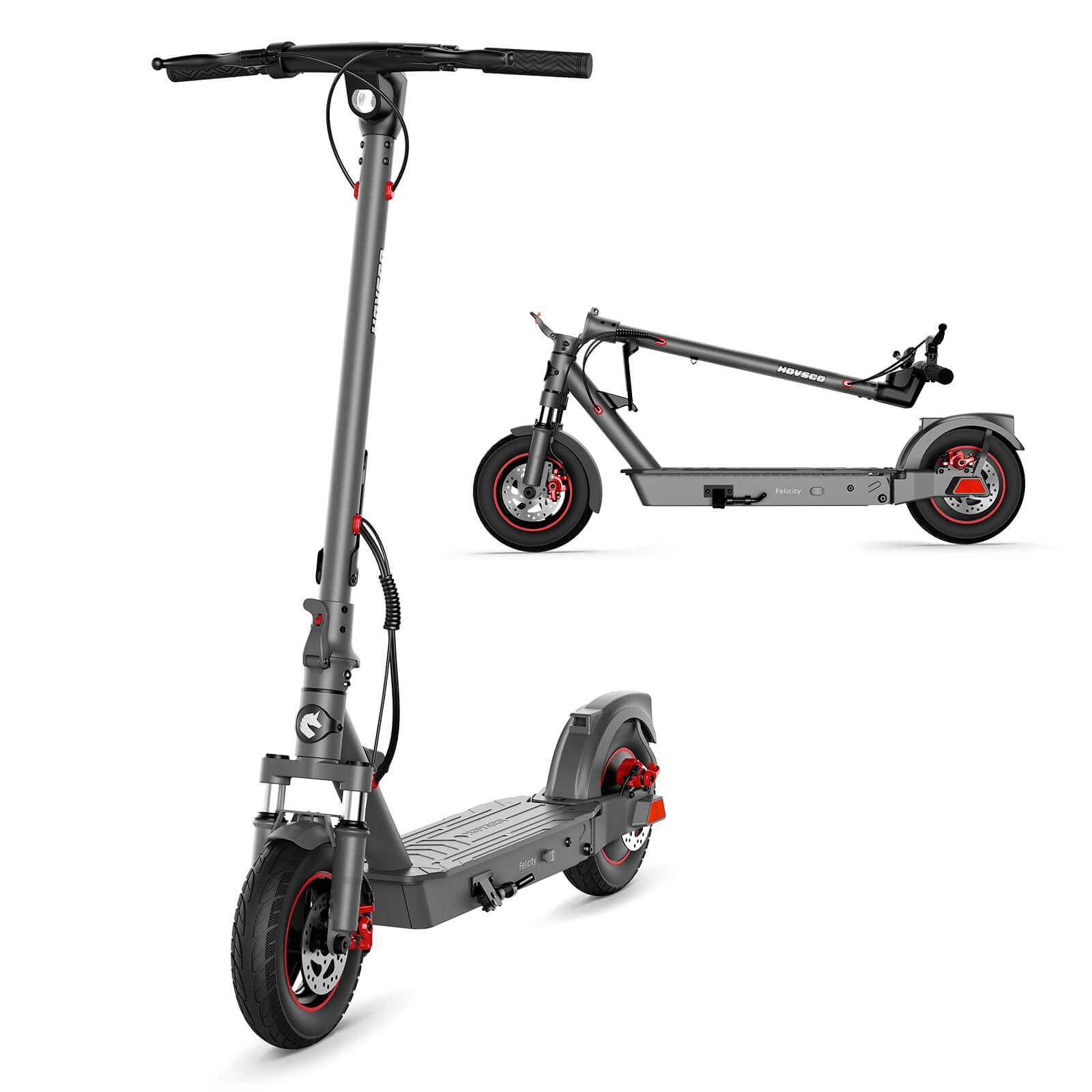
The same logic explains why the Felicity's 21 mph and the others' 19 mph coexist with identical batteries: the Felicity sustains 450W against 350W, so it spends the same Wh faster and smoother, not further.
A larger battery — say 48V or a higher amp-hour count — would add range and weight at the same time. The trade is real: more Wh means more cells, more weight to carry, and a longer charge, which is why the collection keeps the 374.4Wh class and differentiates on setup instead.
For a 30–35 mile published class, the practical weekly window is usually 12–20 miles with a reserve, which the 374.4Wh pack covers comfortably. A bigger pack would buy a longer maximum and a heavier daily carry that most city routes do not need.
If a route genuinely needs more than the class provides, the honest answer is a different vehicle class — the moped-style collection with 65–150 mile battery plans — rather than a scooter stretched past its design.
All three scooters charge in about 6 hours with their included chargers, which fits an overnight or an evening routine. The charge time matters to the weekly plan: a scooter that charges overnight is ready every morning, and a scooter that needs a midday top-up is a scooter whose routine needs a rethink.
Charge in a dry, clear area at normal room temperature, and unplug when the indicator shows full. The charger that ships with the model is the one to use; a borrowed charger with the wrong voltage can damage the pack.
The 6-hour figure also shapes the week: a scooter charged overnight is ready every morning, and a scooter that needs a midday charge is a scooter whose route needs a rethink.
Scooter batteries are internal, so the charging location and the storage temperature do the work that removable packs do by being carried indoors. Keep the scooter out of extreme heat and cold, and avoid leaving the battery at zero for days.
The general care routine — avoid deep discharge, avoid long storage at full charge, and stop at the first sign of swelling or abnormal heat — is the same lithium-ion guidance as e-bikes, detailed in our battery charging guide. The scooter version just adds the internal-battery reminder.
Storage matters more for a scooter than for a bike with a removable pack: the whole scooter is the battery housing, so where it is stored is where the battery lives. Choose a dry, room-temperature spot over a garage that freezes or a hallway that bakes.
The display shows an estimate, not a precise measurement: bars and percentages are projections that drift with load, hills, and temperature. Learn how the indicator behaves on your route during the first weeks — how it drops on the hill and recovers on the flat.
A familiar display turns a charge decision into a plan; an unfamiliar one turns it into a guess. The planning number from our range guide assumes you can read the estimate honestly, which is exactly what the first weeks of use teach.
If the display behaves differently than expected — a sudden drop, a jump, or a range that shrinks quickly — note it in the battery record and check the tires and the charging routine before assuming the pack is failing.
Fill this in once, then update it when the season or the route changes.
| Line | Your number |
|---|---|
| Battery capacity | 374.4Wh on all three models |
| Charge time | About 6 hours |
| Weekly route total | Sum of all trips plus reserve |
| Charge rhythm | Overnight charge, unplug when full |
| Seasonal adjustment | Cold weather reduces usable capacity |
Keep the worksheet with the range plan from our route planning guide; the battery number feeds the route number, and the route number keeps the battery honest.
" Watt-hours are the fact and range is the interpretation. The 374.4Wh pack is the same on all three scooters — the setup decides how far that budget goes, and the rider decides how much of it is left at the end." — HOVSCO Engineering & Content Team
A scooter's range starts with its watt-hours: 374.4Wh on all three models, spent differently by wheels, weight, and rider setup. Charge in about 6 hours, follow the lithium-ion care routine, and plan with the practical number, not the badge.
What does 374.4Wh mean for a scooter battery?
It is the energy stored — 36V × 10.4Ah. All three HOVSCO long-range scooters share this pack, and the range figure is how far that energy goes under ideal conditions.
Why do all three scooters use the same battery?
Because the collection differentiates on setup — wheels, seating, suspension, and weight — rather than on pack size. The same 374.4Wh budget is spent differently by each model.
How long does a scooter battery take to charge?
About 6 hours with the included charger. An overnight charge fits the daily routine, and the included charger is the one to use for the exact model.
Is the scooter battery removable?
No. The scooter packs are internal, so charging location and storage temperature do the work that removable packs do by being carried indoors.
How should I care for a scooter battery?
Follow the lithium-ion routine: avoid deep discharge, avoid long storage at full charge, keep it out of extreme heat and cold, and stop at the first sign of swelling or abnormal heat.
Share:
How Much Can a Business E-Bike Actually Carry?
Can You Take a Folding Scooter on Transit?