
























![[ New Arrival ] Porto Max Electric Scooter For Commute & Grocery Shopping - HOVSCO](http://www.hovsco.com/cdn/shop/files/PotroMax-3.jpg?v=1706927007&width=1200)
- by SteveJames
Are Electric Bikes Easy to Ride?
- by SteveJames
E-Bikes
Accessories
 Free Shipping
 15-Day Returns
 2-Year Warranty
Free Shipping
15-Day Returns
2-Year Warranty
2-Year Warranty
Free Shipping
15-Day Returns
2-Year Warranty
For most people, yes — if you can ride a bicycle, you can ride an e-bike. The motor removes the reasons many adults stop riding, such as hills, headwinds, and long distances, and the extra weight is a habit you adjust to in a session or two. Below we cover what feels easy, what feels new, a realistic learning timeline, and the common speed bumps. Step-by-step riding basics are in our how to ride an electric bike guide, and the safety fundamentals are in our e-bike safety for beginners guide.
The skills are the same as a conventional bicycle: balance, pedaling, braking, and steering. The motor simply adds power when you pedal, or on demand with a throttle. Nothing about an e-bike requires a new balance system.
If you have not ridden in years, balance returns faster than most people expect — especially when you start on low assist in an open space. The heaviness is real, but stopping and walking are habits, not barriers.
The one skill that genuinely changes is anticipation. Because an e-bike covers ground faster than a conventional bike with the same effort, you need to look further ahead: earlier braking, earlier signaling, and earlier decisions at intersections. That is a habit, not a talent, and it develops within the first few rides.
The motor removes the reasons most people stop riding. Hills become flats, headwinds become manageable, and a commute that was too long on a regular bike becomes realistic. That is why beginners describe their first e-bike ride as easier than expected.
Low assist still gives most of the feeling of normal cycling, so you decide how much work the ride involves. The motor is a tool you can turn down; it does not force effortlessness.
The practical effect is that e-bikes widen the range of rides a person will attempt. The same rider who avoids the hilly route on a conventional bike will take it on an e-bike, and the ride they were too tired for after work becomes the ride that helps them unwind. That shift — from avoiding rides to planning them — is the real ease beginners are describing.
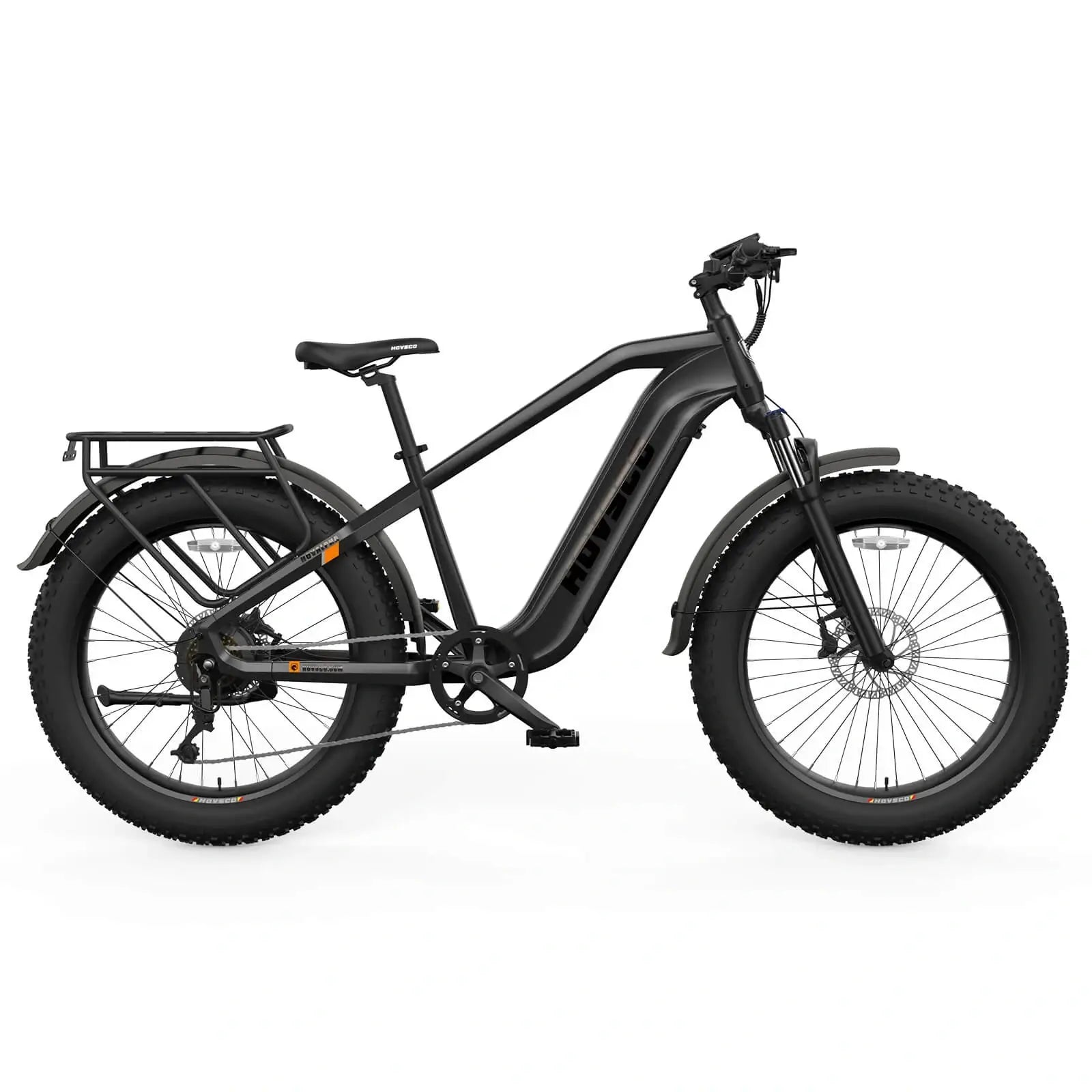
Three things feel different on an e-bike: weight, power delivery, and braking. A 55 lb bike like the HovRanger Step-Thru is heavier to walk and park, the motor surges when you start pedaling or press the throttle, and the extra momentum means you brake earlier.
None of these are hard to learn; they are just new. The fastest way to adapt is to practice the things that feel odd — mounting, walking, slow turns, and braking — in an empty space before riding in traffic.
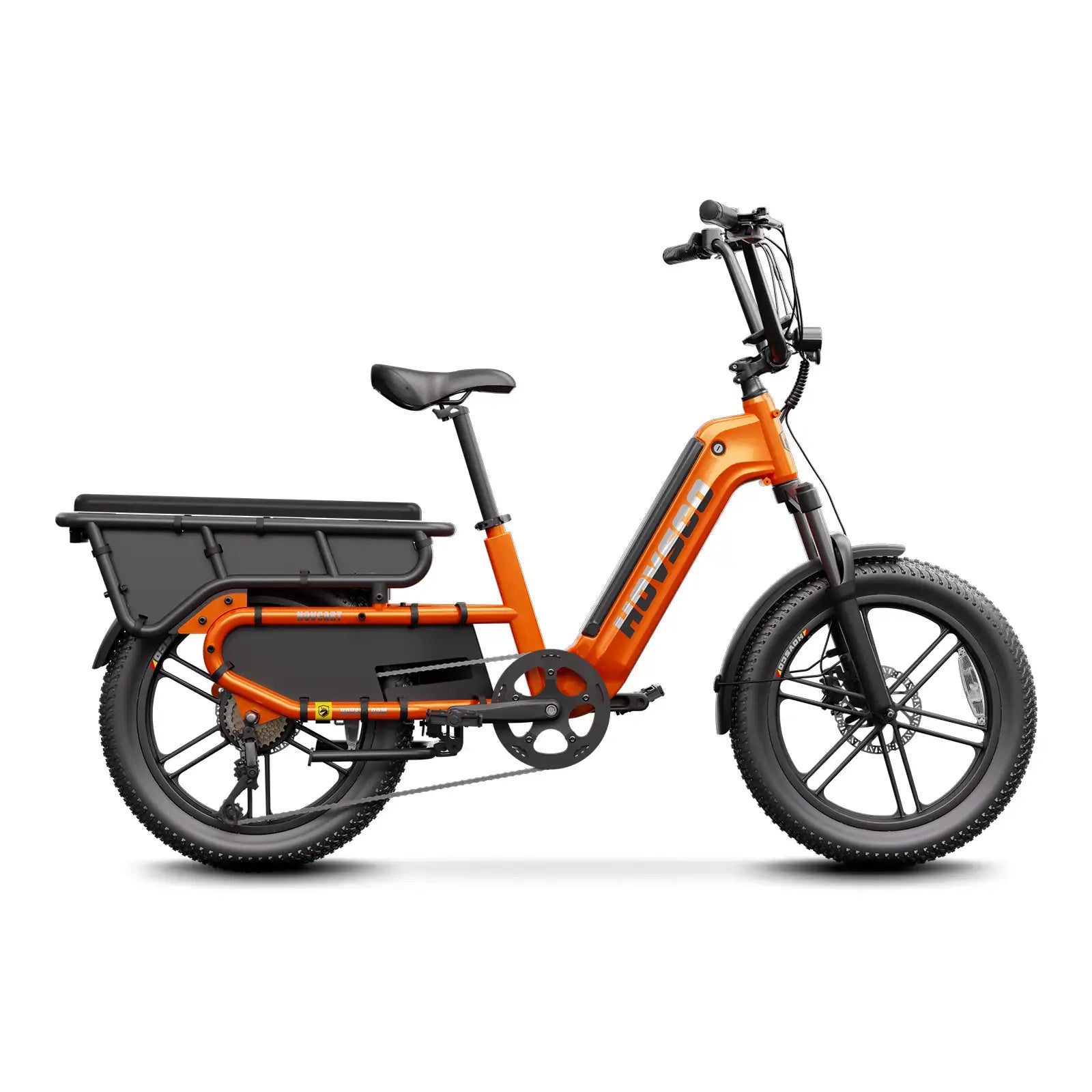
Weight affects one area beginners rarely expect: getting the bike on its kickstand and parking on a slope. On a 66 lb model such as the HovBeta or HovCart, that maneuver needs a deliberate technique — plant the stand, lean the bike onto it, and keep one hand on the saddle. Practicing it once with the power off makes every future stop calmer.
The table below shows a typical progression for an adult who already rides a bicycle. If you are starting from zero, add two or three extra practice sessions and consider a coach or a confident friend for the first hour.
| Stage | What you practice | Typical time |
|---|---|---|
| Session 1 | Mounting, walking, low-assist starts | 30–45 minutes |
| Session 2 | Braking, slow turns, figure-eights | 30–45 minutes |
| Session 3 | Quiet streets, signals, shoulder checks | 45–60 minutes |
| Week 2 onward | Hills, intersections, the real commute | Ongoing |
Two details make the timeline work in practice: practice on the model you will actually ride, and keep each session to one or two skills. A rider who switches between bikes in the first week spends the sessions relearning weight and controls; a rider who repeats one skill per session can see the improvement by the next ride.
Three groups usually need more patience: riders who have not cycled for decades, smaller riders handling heavier bikes, and riders with limited confidence at speed. For each one, the fix is fit and practice, not power.
A smaller rider on a 66.4 lb bike — the HovBeta or HovCart — will feel the weight more at a standstill; a low standover and step-through frame reduce the difficulty. A rider who dislikes speed can simply keep assistance low; the bike does not force anyone to go fast.
The good news for all three groups is that the hardest moments are the ones practiced first: starting, stopping, and slow turns. None of them involve speed, and all of them improve measurably within two sessions. Difficulty on day one is a schedule, not a verdict.
Ride one: fit and controls — saddle height, brakes, assist levels, mounting, and walking. Ride two: low-assist laps — starts, stops, wide turns, and figure-eights. Ride three: a quiet route with a known endpoint.
Keep each ride short and end on a positive note. Confidence compounds when the last ten minutes of every ride feel comfortable, so resist the urge to push through a bad session.
A simple rule keeps the plan honest: if a ride feels harder than the one before, it was planned too aggressively. Move back a step — shorter distance, lower assist, a quieter road — and try the bigger step again next time. Progress on an e-bike is built from comfortable repetitions, not heroic ones.
Slow-speed wobble is usually a looking-down problem — keep your head up and your eyes toward your exit. Difficulty stopping? Brake earlier and progressively, because e-bike momentum takes longer to shed. Sore hands? Grip the bars lightly and let the saddle take your weight.
If the bike itself feels unmanageable, revisit fit: a saddle that is too high, a reach that is too long, or a model that is heavier than you can walk comfortably will make every ride harder. Fit problems do not resolve with practice.
One more speed bump is common in the first week: range anxiety. The fix is simple and mechanical — charge after every ride for the first month, and plan routes with a return reserve. Once you know from experience what a full charge does on your route, the worry disappears on its own.
You are ready to ride in traffic when these five habits are automatic:
Traffic is the last step, not the first. When the checklist feels boring, the bike has become a tool rather than a challenge.
Every timeline in this article is a guide, not a deadline. Some riders feel at home after one session; others prefer two weeks of parking-lot laps, and both are normal. What matters is the direction: each ride should be slightly more automatic than the last, not slightly more intimidating.
If a skill is not improving after several sessions, change one variable rather than repeating the same attempt: a lower assist level, a wider turn radius, a quieter practice space, or a session with a confident friend. The skill is rarely the problem; the conditions usually are.
" E-bikes are easy in the way bicycles are easy: the motor removes the hills, but the riding skills still belong to the rider. A few deliberate sessions cover most of the learning curve." — HOVSCO Engineering & Content Team
Are electric bikes easy to ride? For most people, yes. The motor removes the physical barriers, and the new part — weight, power delivery, and braking — is a short learning curve you can flatten with three deliberate practice sessions.
1. Are electric bikes easy to ride?
For most people, yes. If you can ride a bicycle, you can ride an e-bike; the motor adds power when you pedal, and the heavier weight and quicker acceleration become familiar within a session or two.
2. Is it hard to ride an e-bike if you haven't ridden a bike in years?
Balance returns faster than most people expect, especially on low assist in an open space. Plan two or three short practice sessions before riding in traffic.
3. Do you need balance to ride an e-bike?
The same balance a bicycle requires. Low-speed control is the part that feels new because the bike is heavier, so practice slow turns and figure-eights before real corners.
4. Are e-bikes harder to control than regular bikes?
Not once you adapt to the weight and power delivery. Braking takes a little more distance and the motor responds to your pedaling, so the first rides should stay on low assist.
5. How many rides does it take to feel comfortable on an e-bike?
Most adults feel comfortable after two to four short sessions: one for fit and controls, one for starts and turns, and one or two on quiet streets.
Share:
How Do You Travel With a Lightweight E-Bike?
E-Bike Range for a Campus Week: How Much Do You Really Need?