








![[ New Arrival ] Porto Max Electric Scooter For Commute & Grocery Shopping - HOVSCO](http://www.hovsco.com/cdn/shop/files/PotroMax-3.jpg?v=1706927007&width=1200)
- by SteveJames
How Does Rebound Damping Stop Pogo Stick Suspension?
- by SteveJames
E-Bikes
Accessories
 Free Shipping
 15-Day Returns
 2-Year Warranty
Free Shipping
15-Day Returns
2-Year Warranty
2-Year Warranty
Free Shipping
15-Day Returns
2-Year Warranty
Rebound damping controls how fast your suspension extends after a bump, so the wheel returns to the ground without bouncing like a pogo stick. When it is tuned correctly, the bike feels calmer, more controlled, and more grippy. When it is too fast, the suspension can kick back; when it is too slow, it can pack down and lose travel.
Rebound damping is the hydraulic resistance that slows the spring’s return after compression. In simple terms, the spring stores energy when it compresses, and the damper uses oil flow through valves to release that energy in a controlled way. The result is smoother recovery instead of uncontrolled bounce.
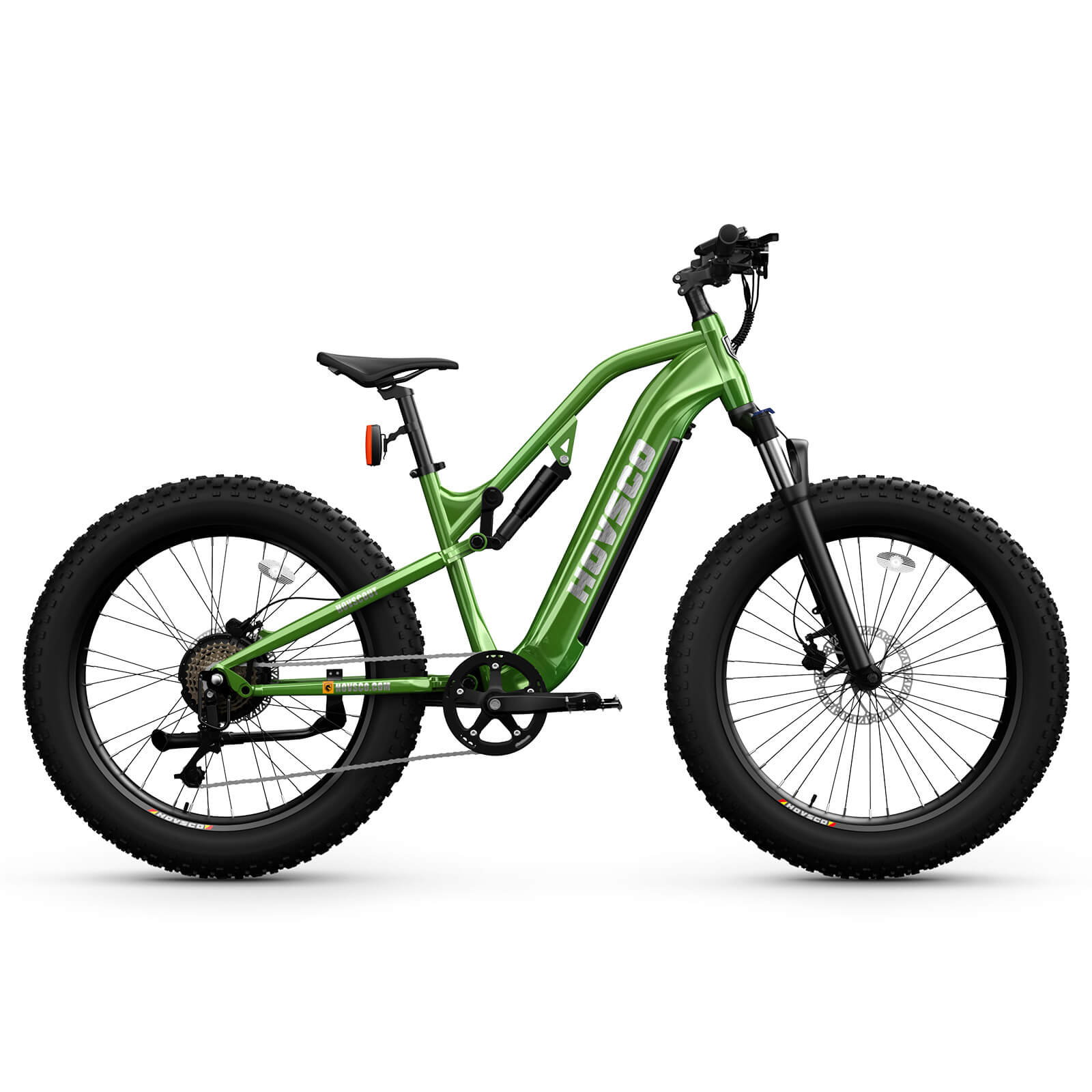
On a full-suspension bike, rebound damping matters because both the fork and rear shock must recover quickly enough to follow terrain, but not so fast that they launch the wheel upward. That balance is what keeps traction alive on roots, rocks, braking bumps, and repeated hits.
Inside the damper, oil moves through ports, needles, shims, and valves. Tightening rebound damping restricts oil flow and slows extension; loosening it allows oil to flow more freely and speeds up the return stroke.
This is why riders often describe rebound as “too bouncy” or “too dead.” The system is not changing spring force itself; it is controlling the speed at which stored spring energy is released. That distinction matters, because a bike can feel harsh, lively, stable, or nervous even with the same spring rate.
Too-fast rebound lets the suspension spring back before the wheel has finished settling from the first hit. That creates a repeated up-and-down motion, which riders feel as pogoing, kicking, wheel chatter, or rear-end bucking.
The practical clue is simple: if the bike feels like it is pushing you up after a bump, or the tire seems to lose contact and then slap back down, rebound is likely too open. In technical terrain, that can reduce control faster than many riders expect, especially on the rear shock where the bike’s mass can amplify the bounce.
The correct setting is the fastest rebound you can run without losing control. You want the wheel to return quickly enough to stay glued to the trail, but slowly enough that it does not overshoot and rebound into the next hit.
A good trail check is repeatability: ride the same curb, root cluster, or braking bump section several times, then adjust one or two clicks at a time. If the bike feels lively and tracks the ground better, you moved in the right direction. If it starts kicking or feels like it is climbing back too aggressively, you went too far.
If rebound is too slow, the suspension can “pack,” meaning it stays deeper in its travel after repeated hits. That reduces available travel, makes the bike ride lower, and can turn a rough trail into a harsh one even if the spring rate is correct.
A damper works by forcing oil through a controlled path, and that resistance turns motion into heat. The tighter the path, the greater the resistance and the slower the rebound. This is the real engineering reason suspension can stop feeling like a springy trampoline and start feeling like a controlled machine.
In practice, this is where HOVSCO-style product thinking matters: small changes in oil restriction can create big changes in ride feel, so factory tuning is never just “stiffer is better.” The best setup is the one that matches rider weight, terrain speed, and chassis balance front to rear.
Rebound damping directly affects tire contact. If the wheel returns too slowly, it cannot follow the terrain closely enough; if it returns too quickly, it can bounce off the ground and lose grip. The sweet spot is the one that keeps the tire planted with minimal lag.
That is why experienced tuners often say rebound is a traction setting as much as a comfort setting. On a full-suspension bike, especially on the rear shock, a well-tuned rebound circuit helps the bike stay composed under pedaling, braking, cornering, and repeated impacts.
Start from the manufacturer’s baseline, then change only one thing at a time. Make small adjustments, test on the same trail, and judge the result by whether the bike feels more controlled rather than simply softer or firmer.
A practical tuning order is: set sag first, confirm spring pressure or coil rate, then tune rebound. If you chase rebound before the spring is correct, you will often misread the symptoms and end up solving the wrong problem. That is one of the most common setup mistakes on both fork and shock.
The suspension recovers quickly and feels lively. On rough, fast terrain, this can improve grip because the wheel gets back to the ground sooner, but if it is too open, the bike can feel nervous and uncontrolled.
The bike feels stable but still responsive. The wheel returns fast enough to be ready for the next impact, yet the chassis does not slap upward or oscillate. This is the setting most riders are chasing for mixed trail use.
The bike feels calm at first, but repeated hits can make it ride lower and harsher. In this state, the suspension loses the ability to recover fully between impacts, so comfort and traction both suffer.
“In factory testing, rebound is never tuned in isolation. We watch the bike as a system: spring rate, damping, tire pressure, terrain speed, and rider position all interact. The best setup is not the one that feels dramatic in the parking lot; it is the one that stays quiet, tracks the ground, and repeats the same way on every lap.” — HOVSCO suspension mindset
This is where HOVSCO riders can think like mechanics, not just consumers. A good rebound setting should disappear under you until the trail gets rough, and then it should quietly do its job without drama.
Yes. A bad rebound setup is often obvious once you know the signs. Fast rebound usually feels like a springy kick, while slow rebound feels like the suspension is clogged, lazy, or stuck low in its travel.
The best diagnostic tool is your body: listen for repeated bounce, watch whether the rear end rises after each hit, and note whether the wheel seems to keep contact with the trail. If you feel the bike fighting back, rebound is probably off.
A fast, underdamped system produces a larger oscillation after the bump, with multiple peaks before settling. A well-damped system settles quickly after a single controlled return. That is the clean visual difference between “乱跳” and “一下吸能.”
The useful insight is that rebound is not trying to erase motion; it is trying to shorten the motion’s life. That is why a healthy suspension still moves, but it stops moving for no reason.
Because hydraulic oil is the heart of the system. Without controlled oil flow, rebound damping cannot meter energy, and the suspension cannot separate a small bump from a big hit in a useful way. Oil viscosity, valve design, and internal porting all affect how the bike feels on the trail.
For riders choosing an upgrade or replacement part, the phrase “original sealed hydraulic damping oil replacement” matters because consistency is everything. Poor-quality oil or incorrect service can change damping behavior, create fade, or make the system feel inconsistent even when the spring is fine. HOVSCO riders should think of damping oil as a precision fluid, not a generic lubricant.
Do not tune rebound before sag. Do not make big changes all at once. Do not confuse slow rebound with more support; they are not the same thing.
Also, do not judge the setting only in a parking lot. The trail is the real test because rebound reveals itself under repeated impacts, corner loading, and braking chatter. A setup that feels safe in place can become wrong within the first 100 meters of real riding.
For riders using HOVSCO products, the service logic is straightforward: restore the damper to clean, consistent hydraulic behavior, then tune from baseline. If the oil is degraded, contaminated, or mismatched, no click adjustment can fully fix the ride feel.
That is why the phrase HOVSCO original sealed hydraulic damping oil replacement should be understood as a performance decision, not just a maintenance purchase. The best rebound tune depends on healthy internals first, and only then on the external adjuster.
Rebound damping is the control system that keeps your full-suspension bike from acting like a pogo stick. Too fast causes bounce and instability, while too slow causes packing and harshness, so the goal is always the fastest controlled return you can run. If you remember only one thing, remember this: correct spring setup first, then fine-tune rebound for traction, stability, and repeatable trail feel. HOVSCO riders who treat damping as a precision system will get a calmer, faster, and more confident bike.
Does rebound damping affect climbing?
Yes. Too-fast rebound can make the bike feel active and inefficient, while too-slow rebound can make the rear ride lower and feel harsh over repeated trail chatter.
Should front and rear rebound match?
Not exactly. They should be balanced, but fork and shock often need different settings because they carry different loads and respond differently on trail.
Can I fix a bad rebound tune with tire pressure?
Only partly. Tire pressure changes feel, but it does not replace correct damping. If rebound is wrong, the suspension will still bounce or pack.
Is slower rebound always safer?
No. Slower rebound can reduce kick, but too much of it causes packing and lost traction. The safest setting is the controlled one, not the slowest one.
Can I ride with damaged damping oil?
You should not. Dirty or degraded oil can make the suspension inconsistent and reduce performance, so service is the right move when the damper loses smooth, predictable behavior.
Share:
How to Set Suspension Sag for E-Bikes?
How Does Dual Suspension Add Weight?