




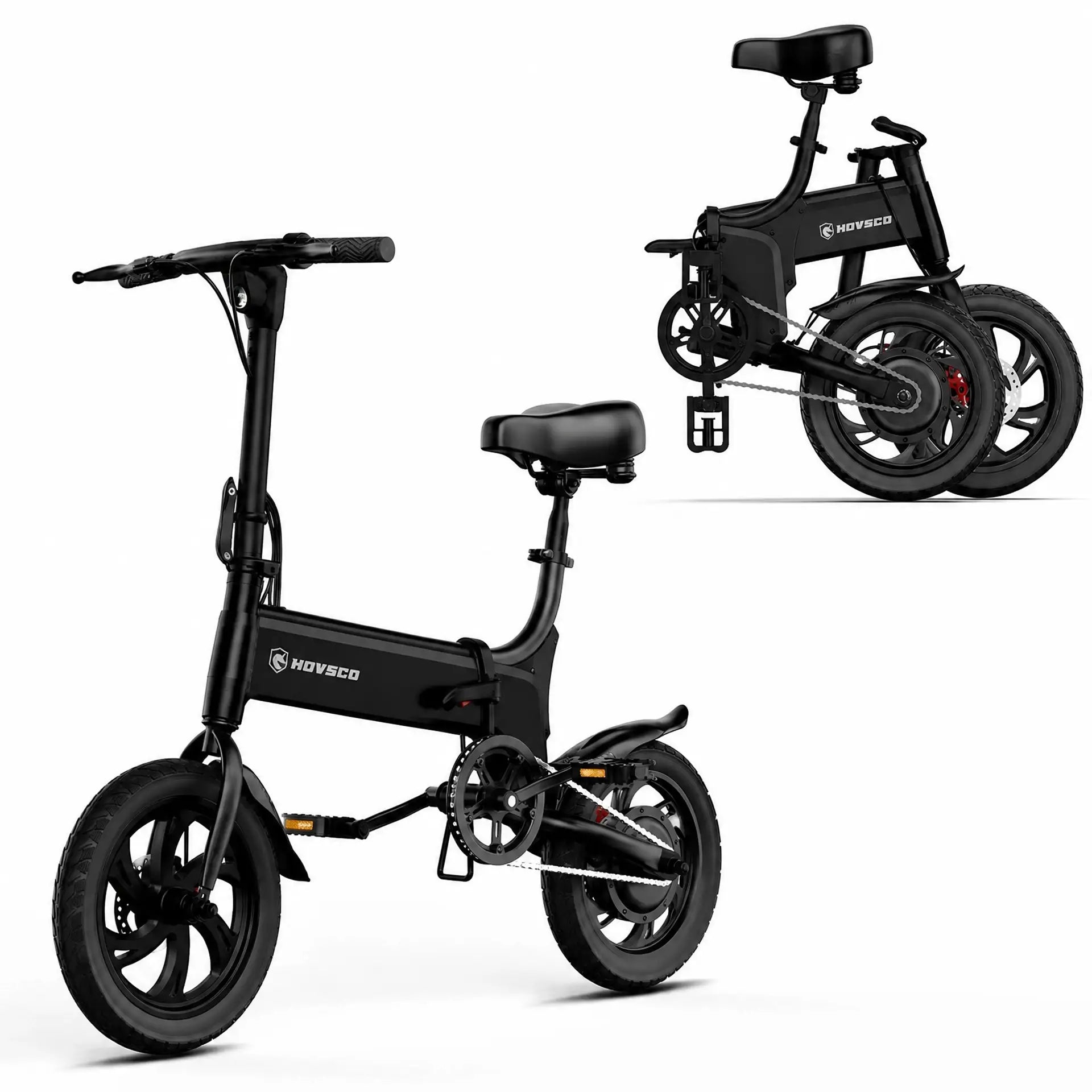
![[ New Arrival ] Porto Max Electric Scooter For Commute & Grocery Shopping - HOVSCO](http://www.hovsco.com/cdn/shop/files/PotroMax-3.jpg?v=1706927007&width=1200)
- by SteveJames
How Do Ebike Suspension Kinematics Turn Power Into Control?
- by SteveJames
E-Bikes
Accessories
 Free Shipping
 15-Day Returns
 2-Year Warranty
Free Shipping
15-Day Returns
2-Year Warranty
2-Year Warranty
Free Shipping
15-Day Returns
2-Year Warranty
Modern ebike suspension kinematics use four-bar linkage physics, air and coil shocks, and carefully tuned anti-squat curves to turn 1000W peak motor power into controlled traction instead of wasted bobbing. By placing virtual pivots and shock leverage points precisely—like HovScout does—you can separate pedaling and braking forces so the rear wheel tracks terrain instead of reacting to your inputs.
full suspension electric bikes
A four-bar linkage rear suspension uses four connected links and pivots to control how the rear wheel moves, allowing engineers to tune leverage ratio, anti-squat, and brake-squat independently. On ebikes, this structure turns motor and pedal forces into predictable wheel paths, improving traction, comfort, and energy efficiency across varied terrain.
On a typical bike, the four-bar linkage is formed by the main front triangle, the chainstay, the seatstay, and a rocker link connecting to the shock. Each pivot location defines how the rear axle travels as the suspension compresses. By adjusting the relative positions and lengths of these links, we can design specific axle paths and force responses.
For ebikes, the challenge is more complex than for analog bikes. The rear suspension must handle not only rider input but also continuous motor torque—often up to 1000W peak—without diving, squatting, or skipping under power. Four-bar kinematics let us shape how chain forces interact with the suspension, reducing unwanted bob while preserving sensitivity to bumps.
In practice, the linkage defines leverage ratio (how much wheel travel per shock stroke), antisquat (how much the suspension resists compressing under acceleration), and anti-rise (how it reacts under braking). Carefully balancing these curves ensures the bike stays supportive when you power up climbs, yet remains supple on descents and chatter.
When we simulate the four-bar system in kinematic software, we track key points: bottom bracket, rear axle, pivots, and shock mounts. The outputs—axle path, instantaneous center, and leverage curves—tell us whether the bike will feel like a stable platform or a pogo stick under real-world ebike loads. For performance machines, the four-bar layout is our main design language.
Air shocks and coil shocks behave differently because air springs offer progressive rates and broad adjustability, while coil shocks provide linear response and superior small-bump sensitivity. In ebike suspension kinematics, air shocks suit playful, tunable setups, whereas coil shocks complement linkage designs focused on grip, consistency, and heavy-duty descending.
Air shocks use compressed air as the spring medium. As the shock compresses, pressure rises progressively, so resistance increases sharply near the end of travel. This gives strong bottom-out protection and lets engineers and riders tune progression by changing air volume spacers and pressure. For ebikes, that progression helps manage heavy chassis and high-speed impacts.
Coil shocks rely on steel or titanium springs with nearly linear rates. The force required to compress them grows in a straight line, making the response predictable throughout the stroke. They generally start moving with less force, enhancing small-bump sensitivity and traction. On powerful ebikes, that sensitivity translates to calm, glued-down rear ends on rough terrain.
From the factory floor perspective, air shocks are easier to adapt across rider weights. You can simply adjust pressure and tokens instead of swapping springs. This flexibility is valuable for brands like HOVSCO, which serve riders with diverse body types and use cases. Air systems also tend to weigh less, supporting agile trail and all-mountain platforms.
Coil shocks demand more upfront tuning work. Each rider weight and style may require a specific spring rate, and packaging the coil within compact ebike frames can be challenging. However, when paired with a well-optimized four-bar linkage, coil setups provide unmatched consistency over long descents and under sustained 1000W peak motor pushes.
In kinematic terms, engineers often design linkage leverage curves around the chosen spring type. Progressive air shocks can be matched with somewhat more linear leverage, while coil shocks may benefit from linkages that introduce subtle progression to guard against harsh bottom-outs. The choice is never just “air vs coil”; it’s “air with this curve, coil with that curve.”
Anti-squat is critical for a 1000W peak-power ebike because it determines how much the rear suspension resists compressing under acceleration, preventing pedal and motor-induced bob. Properly tuned anti-squat keeps the chassis level while you power up climbs, yet allows full suspension action when coasting or descending, improving both efficiency and comfort.
When you accelerate, chain tension pulls on the rear suspension. In many layouts, this force tries to compress the rear shock, causing the bike to squat. On a powerful ebike, motor torque magnifies this effect. Excessive squat wastes energy, reduces traction on the front wheel, and makes the bike feel vague and oscillatory under hard power.
Anti-squat is defined by the relationship between the chain line, center of mass, and pivot locations. In four-bar kinematics, we can design the instantaneous center of rotation so that chain forces oppose weight transfer. The goal is to balance these effects so the suspension stays neutral—neither collapsing nor extending excessively—as torque builds.
For a 1000W peak system, tuning anti-squat is a game of precision. Too little, and the rear end wallows under motor thrust. Too much, and the suspension becomes harsh and loses traction over small bumps. Engineers use kinematic models to plot anti-squat percentage across travel and gears, then refine pivot positions until a usable curve appears.
Designs like HovScout treat anti-squat as a variable, not a static number. By exploiting virtual pivots in a four-bar layout, they can let anti-squat be high at sag (for efficient climbing) and fall off deeper in the travel (for supple descending). This dynamic approach is particularly important when an ebike’s motor keeps pushing even as terrain gets rough.
On the test bench, we validate anti-squat tuning by instrumenting frames and shocks, then running controlled acceleration patterns. The suspension’s movement under motor-only, pedal-only, and combined loading reveals whether the kinematic theory holds up. When done correctly, riders report that the bike “just goes forward” instead of bouncing under power.
Virtual pivot design in a four-bar linkage kills pedal bob by letting the effective rotation center move as the suspension compresses, aligning chain forces to counter squat only where needed. This dynamic geometry allows engineers to dial out unwanted bob near sag while keeping the suspension free to absorb bumps deeper in the travel.
Unlike simple single-pivot frames, four-bar systems don’t have one fixed rotation point for the rear axle. Instead, the instantaneous center shifts as links articulate. By plotting this moving center relative to the chain line and rear axle, we can tune how chain tension interacts with the suspension at different points in the stroke.
When virtual pivots are positioned so that the chain force acts through, or close to, the instantaneous center at sag, it creates effective anti-squat right where riders pedal and motors push hardest. This means the suspension resists compressing under torque, dampening bob. As the bike moves into deeper travel, the geometry can allow that force to bypass the center, freeing the suspension.
For ebikes, this is especially powerful. You can design kinematics that hold firm under steady 1000W peak motor output while the bike is climbing, then let the rear end become more sensitive once you crest and start descending with less torque. Virtual pivots essentially let you “switch personality” without any electronic interventions.
From a factory-floor standpoint, implementing virtual pivot design demands tight manufacturing tolerances. Link lengths, pivot locations, and shock mounts must match the CAD model closely; even small deviations can shift anti-squat and leverage curves. Brands like HOVSCO bake these tolerances into their frame production to ensure real frames behave like simulations.
On the trail, riders experience well-designed virtual pivots as a bike that accelerates cleanly yet rides “deep” and controlled over rough sections. There’s less need to lock out the shock or over-damp compression just to fight bob, because the kinematics themselves do most of the work. This preserves suspension performance without sacrificing efficiency.
Brake-squat and brake-jack describe how braking forces interfere with suspension movement—either locking it up or forcing it to compress. Linkage physics help eliminate them by routing torque paths and pivot locations so that braking loads do not significantly change effective leverage or axle path, allowing the rear wheel to keep tracking terrain during deceleration.
When you apply the rear brake, the caliper clamps the rotor, creating a torque that tries to rotate the wheel and hub backward. In some suspension designs, this torque reacts directly against the main pivot or stays, effectively stiffening or compressing the rear triangle. The result is a suspension that stops moving just when you most need traction.
Brake-squat occurs when braking forces pull the suspension into compression, causing the rear to sink and potentially overloading the shock. Brake-jack is the opposite, where braking locks the linkage and prevents movement, making the wheel skip over bumps. Both behaviors reduce control and can lengthen stopping distances on rough trails.
Four-bar linkage physics give us tools to manage these effects. By decoupling the brake mount from the main pivot line and carefully choosing where the stay pivots connect, we can route braking torque through paths that minimally affect suspension motion. Some layouts effectively “neutralize” brake-induced changes in leverage ratio.
In kinematic analysis, we simulate braking by applying hub torque with the shock in different positions. We then observe whether the linkage tends to compress, extend, or remain neutral. Small design changes—such as shifting a pivot a few millimeters—can significantly reduce brake-squat or brake-jack, especially when combined with modern disc and caliper placements.
On an ebike with powerful brakes and heavy mass, these issues are magnified. Designs like HovScout use virtual pivot and four-bar kinematics to keep braking and suspension behaviors separate. The rider feels this as a rear end that continues to absorb bumps while slowing down, instead of chattering and skipping in steep, rough descents.
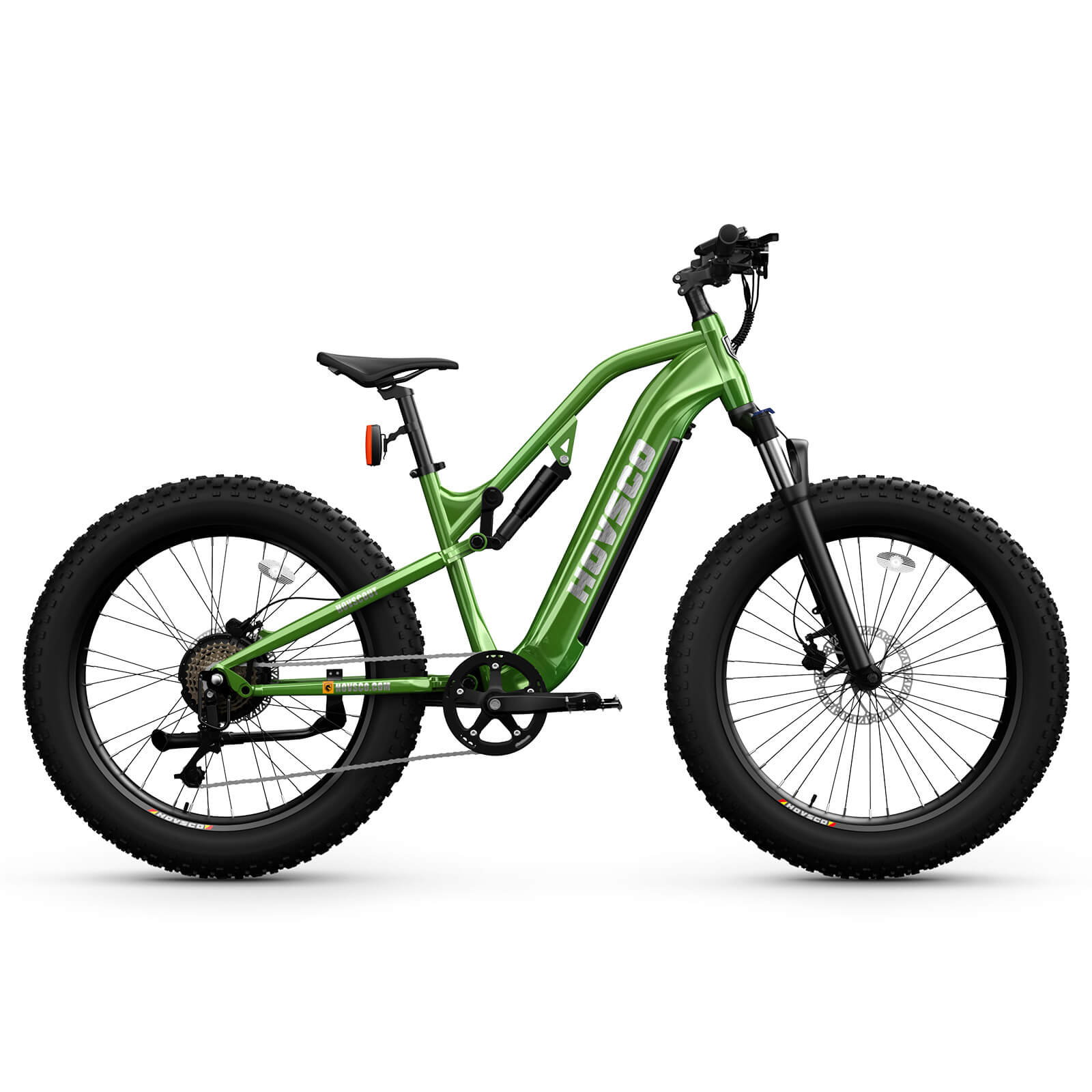
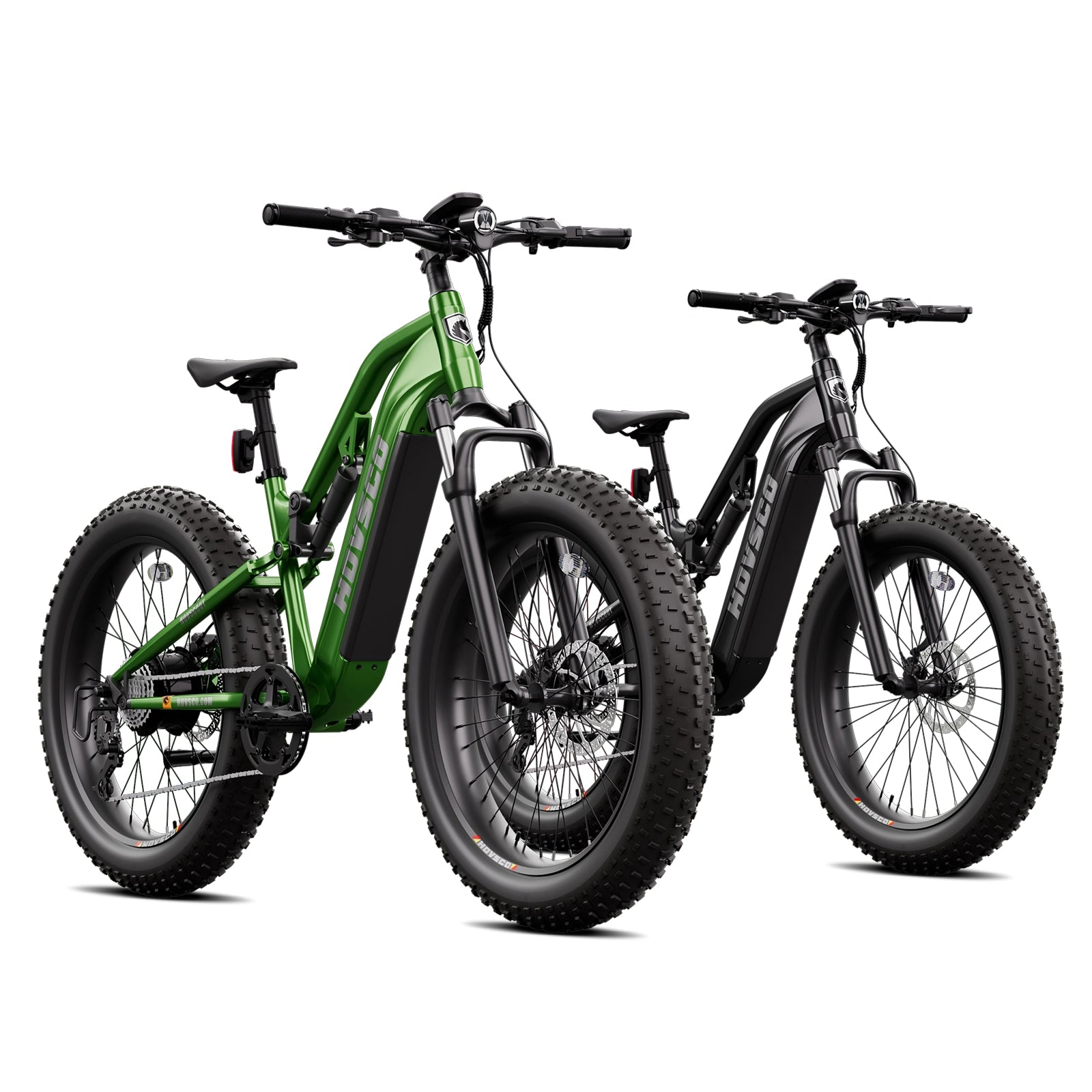
HovScout uses virtual pivot kinematics to balance 1000W peak drive with neutral suspension behavior by placing linkage pivots and shock mounts so that chain forces generate effective anti-squat at sag but taper off deeper in travel, while brake torque paths are kept separate from primary suspension motion to avoid interference.
In the kinematic design phase, the HovScout layout starts with known constraints: motor power, expected torque at the rear wheel, rider weight range, and desired travel. Engineers then define key pivots and link lengths, iterating geometric configurations until anti-squat curves sit in a sweet spot—high enough for support at pedaling points, lower where comfort and grip matter most.
Virtual pivots are central to this process. Rather than anchoring the suspension around a single rotation center, HovScout’s four-bar system lets the axle path evolve through the stroke. This evolving geometry ensures that the instantaneous center aligns favorably with the chain line under power, then shifts into a more neutral stance during deeper compression.
On the braking side, pivot placements and link orientations are chosen so that hub braking torque follows routes that don’t significantly alter leverage. In practical terms, this means the rear wheel can continue to move freely over obstacles while braking hard, maintaining contact and control. Brake-squat and brake-jack are intentionally minimized.
From an engineering bench viewpoint, we verify this with instrumented test frames. Running sequences of motor-only acceleration, pedal sprints, and controlled braking over test tracks, we measure shock stroke, wheel movement, and chassis pitch. HovScout’s kinematics are tuned so that the bike stays composed, avoiding big dynamic weight shifts despite strong drive forces.
On real trails, riders experience HovScout as an ebike that climbs without wallow, descends without brake chatter, and tracks in a way that feels closer to a well-mannered enduro bike than a heavy utility machine. The virtual pivot four-bar linkage is the quiet engine behind that behavior, harmonizing suspension physics with ebike power realities.
Air shocks and coil shocks can both work well on a four-bar ebike frame when the linkage leverage curve is designed for the chosen spring type. Neither is universally superior; air excels in versatility and progression, while coil shines in consistency and traction, so the “better” option depends on rider priorities and terrain.
For a four-bar ebike aimed at versatile trail use, air shocks are often preferred. Their progressive nature complements leverage curves that keep mid-stroke supportive yet allow strong bottom-out protection. Riders can easily tweak pressure and tokens for different trails, rider weights, or even payloads, making a single frame platform adaptable to many scenarios.
Coil shocks find their home on ebikes targeting aggressive descending and bike-park usage. Here, the linear response and small-bump sensitivity help maintain grip and confidence at high speeds and over repeated big hits. With a four-bar kinematic that adds modest progression, coil-equipped frames can handle 1000W peak drive and steep terrain without feeling harsh.
From the manufacturing side, offering both options requires careful planning. Shock mounts, clearance, and leverage ratios must accommodate different sag points and stroke behaviors. HOVSCO’s approach is to treat suspension and shock as a paired system: the frame is tuned with a particular spring curve in mind, and recommended shock types follow that design intent.
In purely kinematic terms, neither air nor coil changes the fundamental motion of the four-bar. They change how forces are resisted along that motion. This means the same frame can theoretically take both, but only one will be optimum unless the leverage curve is specifically designed to bridge their behaviors.
For many ebike riders, the question is less “Which is superior?” and more “Which suits my style now, with the option to evolve later?” A well-designed four-bar frame—such as those HOVSCO develops through detailed kinematic and FEA work—keeps doors open, allowing riders to experiment within a sound structural and suspension foundation.
An FEA linkage mechanics stress-strain heat map reveals where four-bar ebike frames concentrate loads during compression, braking, and pedaling, exposing weak zones in pivots, rocker links, and shock mounts. These simulations guide material thickness, weld placement, and hardware sizing so the frame withstands real-world forces without fatigue or unexpected failure.
Finite Element Analysis (FEA) breaks the frame and linkage into thousands of small elements and simulates how each deforms under specific load cases. Color-coded heat maps show high-stress areas in red and lower-stress zones in cooler colors. Engineers interpret these maps to reinforce critical regions and reduce excess material elsewhere.
For ebike four-bar systems, typical load cases include hard landings, full-power sprints at 1000W peak, and emergency braking on steep terrain. Each scenario imposes different twisting and bending patterns on the linkages. FEA reveals, for example, whether a rocker link needs thicker walls or if a shock mount needs a broader gusset.
In practice, these heat maps often highlight pivot zones and link intersections where concentrated stress could cause cracks over time. By adjusting link profiles and pivot positions, designers can spread loads more evenly, lowering peak stresses and improving fatigue life. This is especially important for heavy, powered ebikes that see higher cumulative loads than analog bikes.
HOVSCO uses FEA not as a marketing checkbox but as a design tool. Iterating through multiple simulations, they refine the four-bar layout until stress patterns align with desired safety margins. The goal is not just to survive lab tests but to handle years of real-world abuse by riders who may not treat the bike gently.
On the shop floor, the benefits show up as fewer frame-related warranty claims and more consistent performance over a bike’s lifespan. When the kinematic and structural design are backed by solid FEA, riders can trust that the linkage will keep working smoothly long after the paint is scratched and the tires have seen dozens of trails.
Coil-optimized and air-optimized kinematics are tuned differently for ebikes than for analog MTBs because the added mass, constant motor torque, and higher average speeds demand more support, anti-squat control, and durability. Ebike-specific curves often favor mid-stroke stability and power-neutral behavior over ultra-lightweight pedaling sensations.
On analog mountain bikes, designers can prioritize ultra-sensitive small-bump feel and minimal pedaling drag. Riders generate all their own power, and overall mass is lower. For ebikes, motor assistance changes the dynamics: the chassis carries more weight, sees more frequent full-power bursts, and often spends more time at speed on mixed terrain.
Coil-optimized ebike kinematics thus tend to incorporate modest progression or ramp-up to guard against harsh bottom-outs under combined rider and motor forces. They still preserve the small-bump traction coils are known for, but leverage curves are drawn with heavy, powered systems in mind rather than featherweight race frames.
Air-optimized ebike kinematics exploit the inherent progression of air springs while ensuring mid-stroke doesn’t wallow under sustained torque. Anti-squat profiles are tuned higher around sag to keep the bike riding level under motor use, then allowed to relax deeper in travel to maintain comfort. This balance differs from analog setups, which may prioritize efficiency even more strongly.
From a factory engineering perspective, we’ve learned that copying analog MTB kinematics directly into ebikes leads to issues: excessive wallow, harshness under combined loads, or premature hardware wear. E-bike kinematics must be treated as their own discipline, with spring type, linkage, and drive system considered holistically.
HOVSCO’s suspension work embraces this philosophy. Whether the frame is paired with coil or air, simulations and real-world tests are conducted with motor power enabled, battery mass accounted for, and typical ebike ride patterns in mind. That’s how “The Masterclass in Ebike Suspension Kinematics” looks behind the scenes—less about buzzwords, more about data-driven trade-offs.
“When we built HovScout’s four-bar rear end, we didn’t start from a catalog of ‘MTB kinematics.’ We started from actual ebike loads—a 1000W peak motor, heavy batteries, real braking torque—and then let the linkage physics tell us where the virtual pivots wanted to live. The result is a frame that climbs, descends, and brakes like a serious suspension bike, just with more quiet power in the mix.”
Riders can definitely feel the difference between well-tuned ebike kinematics and basic suspension layouts. Proper four-bar design with controlled anti-squat and neutral braking produces a bike that accelerates without bobbing, descends without chattering, and stays composed under motor power, while simpler layouts often feel vague, harsh, or unpredictable.
On climbs, kinematically tuned ebikes like HOVSCO’s platforms sit into their sag and then hold that posture as you engage power. There’s minimal pitching or oscillation; the bike simply moves forward. Basic layouts may bounce as torque rises, forcing riders to rely on lockouts or overly stiff shock settings that compromise comfort.
On descents, the differences grow. Frames with neutral braking behavior keep the rear wheel glued to the trail even when you drag the brake through choppy sections. The suspension continues to move, maintaining grip. Simpler designs often jack or squat under braking, making the rear end skip and reducing confidence.
Even on flat terrain, riders notice that well-tuned kinematics track small irregularities better. The suspension neither disappears under pedaling nor fights the rider. Instead, it quietly absorbs noise while preserving a stable platform. This is especially important when carrying speed on ebikes, where average speeds are higher and control margins are thinner.
For experienced riders, the feel is obvious within the first few minutes. For newer riders, the confidence difference shows up as fewer sketchy moments: less front-wheel lift on climbs, fewer rear-end slides under braking, and smoother transitions when switching from powered sections to coasting. Good kinematics make a powerful ebike feel less like a “motorized frame” and more like a refined, integrated machine.
Ebike suspension kinematics are more than buzzwords; they are the physics that decide whether 1000W peak power becomes stable traction or chaotic bobbing. Four-bar linkage design, virtual pivots, and carefully tuned anti-squat and brake behavior allow modern frames—like HovScout-level platforms from HOVSCO—to climb firmly, descend smoothly, and brake neutrally, all while carrying the mass and torque unique to ebikes.
Choosing between air and coil shocks is just one part of the story. True performance comes from matching spring type to leverage curves, using FEA linkage mechanics heat maps to reinforce stressed zones, and treating ebike kinematics as a distinct discipline rather than copying analog MTB designs. For riders, the payoff is simple: a bike that feels predictable, supportive, and fun, whether you’re pedaling gently or letting the motor work hard.
Does anti-squat matter if my ebike has a lockout?
Yes. Lockouts are crude fixes; properly tuned anti-squat lets your suspension stay active while still resisting bob, which is far better for traction, comfort, and long-term shock health.
Can I swap from air to coil without changing the linkage?
You can, but results vary. The frame’s leverage curve may favor one spring type, so consult your manufacturer (such as HOVSCO) before swapping to ensure you don’t create harshness or bottom-out issues.
Are four-bar kinematics overkill for casual ebike riders?
No. Even casual riders benefit from neutral braking, controlled anti-squat, and better comfort. Sophisticated kinematics simply make the bike easier and safer to ride at all speeds.
Will advanced kinematics make my ebike climb better?
Yes. Well-designed anti-squat and virtual pivot geometry reduce energy loss to bobbing, keep weight distribution balanced, and improve traction, all of which contribute to more efficient climbing.
Is frame stiffness as important as shock choice on full-suspension ebikes?
Absolutely. Without a stiff, well-engineered linkage and main triangle, even the best shock can’t perform properly. Kinematics and structural integrity must work together to deliver real-world performance.
Share:
Is a full suspension ebike the real spine savior for riders?
How Do Full Suspension and Fat Tires Deliver Absolute Off-Road Traction?