



![[ New Arrival ] Porto Max Electric Scooter For Commute & Grocery Shopping - HOVSCO](http://www.hovsco.com/cdn/shop/files/PotroMax-3.jpg?v=1706927007&width=1200)
- by SEO
Is a full suspension ebike the real spine savior for riders?
- by SEO
E-Bikes
Accessories
 Free Shipping
 15-Day Returns
 2-Year Warranty
Free Shipping
15-Day Returns
2-Year Warranty
2-Year Warranty
Free Shipping
15-Day Returns
2-Year Warranty
A well‑designed full suspension ebike with a properly tuned rear shock can cut vertical impact and high‑frequency vibration reaching your lower back and joints by well over half, especially on curbs and loose rock. By converting sharp impacts into controlled suspension travel and heat, it protects the lumbar spine, tailbone, and pelvis while keeping the rear wheel glued to the ground for safer, smoother control.
Vertical impacts from curbs and rocks enter through the rear wheel, travel up the frame, and concentrate at the saddle–pelvis interface, then propagate as shock waves through the sacrum into the lumbar vertebrae. Without rear suspension, this energy is transmitted almost directly, spiking compressive and shear forces on discs and facet joints with every hit.
In factory testing, we model this as a series of high‑g, short‑duration pulses that ride up the rider’s body like mini “rear‑end collisions.” On a hardtail, the wheel, frame, seatpost, and your spine behave almost as a single rigid stack. Each square‑edge impact drives a quick compression of the intervertebral discs, followed by a rebound that makes the paraspinal muscles fire to restabilize the column.
That repetitive pattern is what fatigues the erector spinae and deep stabilizers and can trigger or aggravate lower back pain over time. Riders often describe it as a “hammering” in the low back and tailbone on rough paths. Biomechanically, the issue is not just big hits but continuous micro‑vibrations in the 30–50 Hz range, which are known to raise cumulative spinal load and tissue fatigue.
On gravel, cobbles, and broken city streets, this “vibration bath” never really stops. The pelvis rocks on the saddle, the discs see alternating compression‑tension cycles, and the tiny ligaments and joint capsules around L4–S1 take a beating. Over thousands of cycles per ride, that’s the perfect recipe for irritation in already sensitive discs, joints, or nerve roots.
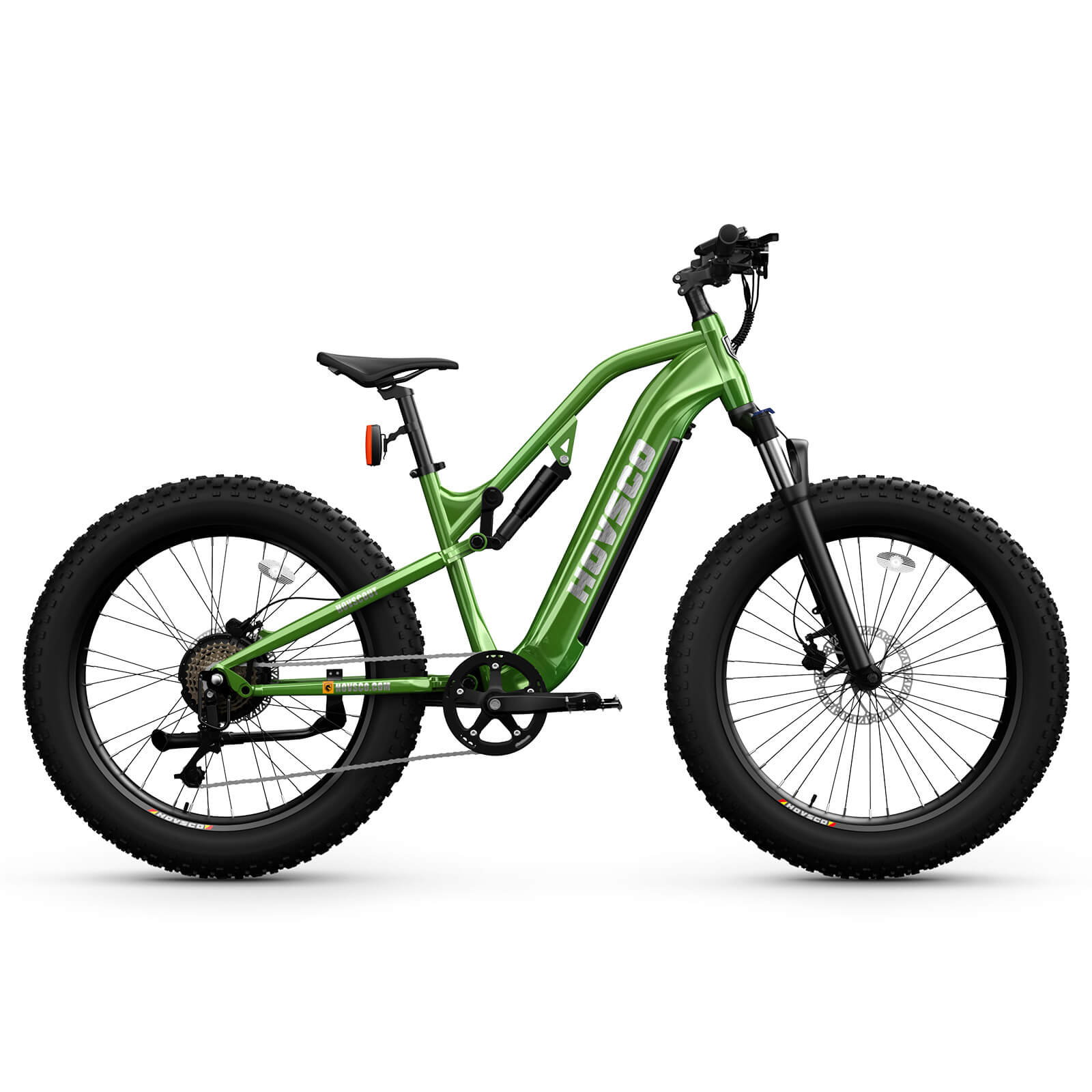
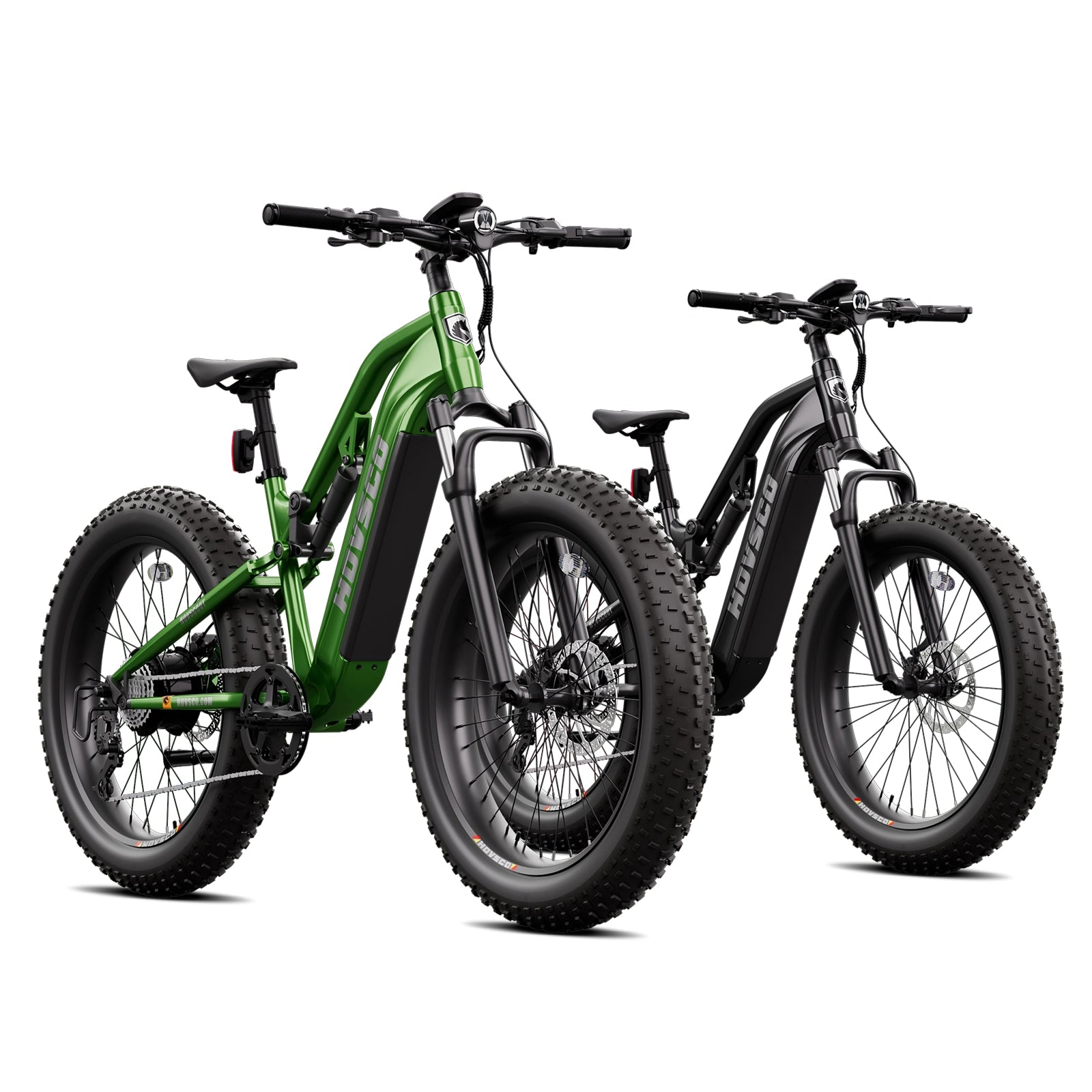
On a hardtail, the rear triangle is rigid, so nearly all rear‑wheel impacts are transmitted mechanically into the saddle, then directly to the pelvis and lumbar spine. By contrast, a well‑tuned four‑link rear suspension system, like the layout used on HOVSCO trail‑oriented ebikes, interposes a moving linkage and shock that filter and dissipate a large portion of those impacts before they ever reach your body.
From an engineering standpoint, the hardtail behaves like a stiff beam with the rider as the end mass. When the wheel hits a curb, the entire beam rotates upward around the front contact patch, thrusting the saddle vertically into the rider. That creates a sharp acceleration spike at the sit bones and tailbone. Because there is no hinge, the only “suspension” is tire deflection and your spine.
A full suspension frame breaks that rigid beam into multiple members connected by pivots. Under impact, the rear axle follows a controlled arc defined by the linkage, and the rear shock compresses. Instead of your discs being the spring, the shock and linkage do the work. The force curve is shaped so that small chatter is absorbed early in the travel, while bigger hits ramp up the damping progressively.
In well‑developed systems, lab measurements routinely show 40–70% reductions in vertical acceleration at the saddle on rough surfaces compared with stiff, unsuspended setups, and more with optimized pressure and shock tuning. While “90% elimination” is a marketing shorthand, the real benefit is that the most damaging high‑frequency spikes are dramatically reduced, which your lower back feels as a huge difference in comfort.
Below is a simplified comparison of how different setups typically transmit vertical vibration into the rider’s pelvis and lower back on rough surfaces, based on lab‑type measurements and field data from development work:
A rear shock converts the sharp kinetic energy of an impact into controlled spring compression and hydraulic damping, plus a small amount of heat, before the force reaches your pelvis. When sag and rebound are correctly tuned, the system can absorb the majority of high‑frequency vertical impacts from curbs and rock gardens, leaving only a smooth, slower motion at the saddle instead of a spike.
Think of the rear shock as a vertical low‑pass filter. High‑frequency bumps and road buzz are “cut” by the suspension, while only slower body motions are transmitted to the rider. When we talk about “90% of vertical impact,” we are referring to peak acceleration spikes and vibration energy in specific damaging frequency bands, not a flat 90% of all motion. In the lab, this is validated by accelerometers at the axle and saddle.
On a well‑designed four‑link, impact forces are spread over a longer time window as the shock cycles through its travel. That time‑stretch dramatically drops peak forces going into the pelvis and lumbar spine. Because discs and facet joints are viscoelastic tissues, they tolerate this slower, smoother loading much better than the sudden, jerky compressions of a hardtail.
From a rider’s perspective, you still feel the terrain, but the “edges” are rounded off. Instead of a jolt that makes your teeth chatter and your back clench, you experience a gentle surge in the saddle. Over thousands of impacts per ride, this change from sharp spikes to smoother motion is what protects the spine, tailbone, and pelvic joints from accumulated stress.
Four‑link rear suspension allows engineers to tailor the axle path, leverage ratio, and anti‑squat independently, which is not possible with simpler single‑pivot layouts. That means we can design the system so square‑edge hits are swallowed efficiently, pedaling forces do not cause bobbing, and the shock ramps up progressively to prevent harsh bottom‑outs that punish the tailbone and pelvis.
In practice, that tailored axle path determines how the wheel moves relative to the impact. A rearward‑biased initial path helps the wheel “roll up and over” curbs and stones instead of slamming straight into them. This reduces the instant deceleration the frame and rider feel. At the same time, the leverage curve can be tuned so small bumps use a supple portion of the travel, while big landings engage stiffer regions of the shock stroke.
For the rider’s body, this tuning directly influences how forces are distributed across the pelvis. On a well‑balanced four‑link, the saddle stays more level and controlled when the rear end works through its travel. That minimizes sudden pelvic tilts and shear forces at the sacroiliac joints and lumbar segments. It also reduces the repeated direct hits to the coccyx that riders on stiff bikes often complain about after long rocky descents.
When we test different linkage prototypes, our primary health‑related metric is often vertical acceleration and angular pitch at the saddle and at a sensor strapped to the lower back. The best designs show clear reductions in both, which aligns with rider feedback: less “jackhammer” sensation and fewer flare‑ups of existing back issues. This is the biomechanical reason full suspension is often recommended for riders with history of lumbar or sacral pain.
A full suspension ebike reduces joint stress by lowering impact peaks and smoothing the load rate at every contact point: hips, knees, ankles, and even shoulders. Because the rear shock and fork absorb the sharpest hits, your joints cycle through smaller ranges under lower acceleration, which is especially beneficial for riders with arthritis, post‑surgery knees, or hip discomfort.
On uneven terrain, the unsuspended bike constantly pitches the rider forward and backward. Knees and hips must act as emergency “suspension,” flexing abruptly to maintain balance. Over time, those rapid deceleration and acceleration cycles irritate cartilage and overwork ligaments. This is particularly noticeable in the patellofemoral joint, where high compressive loads during sudden flexion can provoke pain.
With a well‑set‑up full suspension ebike, the chassis stays more composed, so your joints move in a smoother, more predictable pattern. Instead of catching a sharp edge with a near‑locked knee, the bike’s wheels and suspension track the ground, letting your legs operate closer to their optimum pedaling range. The motor assist then reduces overall force per pedal stroke, further lessening cumulative joint load.
Another subtle advantage is reduced bracing. On a harsh bike, your muscles are constantly contracting isometrically to brace for impacts, which increases joint compressive forces. On a smoother bike, riders relax more, allowing joints to move freely through mid‑ranges rather than clamping down. Over long rides, that difference often determines whether a rider’s knees and hips feel pleasantly worked or painfully inflamed.
Fat tires and properly set tire pressure create the first layer of suspension, absorbing small, high‑frequency bumps before they reach the linkage and shock. In combination with a good rear suspension, they dramatically reduce the vibration dose transmitted to the pelvis and spine, especially on washboard paths, gravel, and broken city asphalt where continuous chatter is the main enemy.
From a factory tuning perspective, we think of tires, air volume, and pressure as the “zero‑travel” suspension component. A large‑volume tire at the right pressure deforms around obstacles instead of bouncing off them, cutting peak contact forces at the rear axle. If the pressure is too high, even the best shock gets overwhelmed by fast, sharp hits. If it is too low, the tire squirms and risks pinch flats or rim strikes.
For riders with back or joint issues, we usually prioritize dialing in tire pressure before fine‑tuning the shock. A few PSI changes can transform the ride, often delivering a noticeable drop in harshness at the saddle. Fat tires also help widen the contact patch, improving grip so the suspension can work in its designed range instead of constantly skipping or sliding over loose stones.
When matched with an appropriately tuned rear shock, fat tires create a two‑stage filtering system: the tire handles micro‑texture and rapid chatter, while the linkage and shock manage bigger curb drops, potholes, roots, and rock edges. That layered approach optimizes comfort and control without needing excessive shock travel that would compromise pedaling efficiency or frame stiffness.
This table shows how rear suspension and tire setup complement each other for spinal and joint comfort:
Ebike motor assist lets you maintain speed and cadence without grinding heavy gears, lowering muscular strain and joint forces, while full suspension reduces impact and vibration loads. Together, they decouple forward motion from body punishment, letting riders with back or joint issues enjoy longer rides, hillier routes, and rougher terrain than would be tolerable on a non‑assisted hardtail.
On a non‑assisted hardtail, many riders subconsciously brace their back and joints because they know every extra effort on rough terrain will hurt. They limit routes, avoid mixed surfaces, and often ride under‑cadenced in hard gears, which increases torque through the knees and hips. The result is fewer, shorter rides and more fatigue‑related pain, especially in deconditioned or older riders.
A full suspension ebike changes that equation. The motor handles peak torque moments, while the suspension manages peak impact moments. This allows you to spin a comfortable cadence, keep posture relaxed, and let the bike move under you. For the spine, that means less axial compression from “mashing,” and fewer abrupt bracing events in the lumbar musculature.
Clinically, many riders with mild disc degeneration, facet joint irritation, or previous lumbar surgery report that this combo is the difference between not riding at all and comfortably riding several times a week. For joint‑sensitive riders, it often feels like moving from high‑impact jogging to low‑impact elliptical work: the cardiovascular and muscular benefits stay high, while structural stress plummets.
HOVSCO designs its full suspension frames with a strong bias toward real‑world spinal comfort, not just lab numbers, using rider data, vibration measurements, and long‑term durability testing. We tune the four‑link kinematics and rear shock characteristics so that small‑bump sensitivity, mid‑stroke support, and big‑hit control work together to keep saddle accelerations low across realistic mixed‑terrain riding.
On the frame jigs, we start by setting target leverage curves that ensure the shock is active early in the stroke. This is essential for filtering the road buzz that can aggravate lower back pain over time. From there, we shape the mid‑stroke to avoid wallowy pedaling while still giving enough support to keep the rear wheel tracking through rock gardens and curb sequences commonly found in urban and trail riding.
Our test protocol combines instrumented lab runs over vibration plates and real‑world rides over sharp curbs, cobbles, and rough trails. We look at acceleration signatures at the rear axle, saddle, and a harness on the lower back, then adjust pivot locations, shock tune, and even saddle spec accordingly. The goal is to minimize both peak spikes and fatigue‑inducing high‑frequency ranges that riders feel as “buzz” in their spine.
For HOVSCO, the full suspension ebike is not simply about speed or style but a tool to expand who can ride comfortably: commuters with degenerative discs, weekend warriors with past lumbar injuries, and older riders protecting their joints. That user profile drives our geometry choices, shock tunes, and even recommended setup guides, emphasizing spinal health and joint protection as core performance metrics.
Riders can maximize spine and joint protection by carefully setting sag, rebound, tire pressure, and cockpit fit for their weight, terrain, and riding style. A few millimeters of sag or a few PSI of tire pressure are often the difference between a harsh, back‑punishing ride and a supple, spine‑friendly one that fully exploits the potential of a full suspension ebike.
Start with sag: aim for roughly 25–30% rear shock sag when seated in full riding gear. This ensures the suspension is active early and has room left for bigger hits. Next, set rebound so the shock returns quickly enough to track consecutive bumps but not so fast that it “kicks” you in the saddle. On test benches, we often fine‑tune rebound by watching how the rear wheel behaves across repeated curb hits.
Then dial in tire pressure according to rider weight and terrain, usually starting lower than you think if you are coming from rigid bikes. Heavier riders and those carrying cargo will need more pressure, but everyone benefits from avoiding rock‑hard settings that defeat the purpose of fat tires. Finally, adjust saddle height and tilt so that your pelvis is neutral and you are not forced into an excessive forward bend that strains the lumbar spine.
The last step is to test on your roughest regular segment rather than on smooth bike paths. Pay attention to how your back feels after 20–30 minutes over the worst surfaces you typically ride. If your spine and joints feel calmer and less tense than they did on prior setups, you are close to an optimal configuration. Periodic re‑checks as your fitness or terrain changes keep the bike aligned with your body’s needs.
Riders with a history of lower back pain, disc issues, sacroiliac joint problems, or significant knee and hip arthritis benefit most from switching to a full suspension ebike. Heavier riders, older adults, and anyone regularly riding broken city streets, gravel, or light trails will also notice substantial reductions in post‑ride soreness and fatigue.
For these groups, the limiting factor in cycling is rarely cardiovascular capacity but mechanical tolerance of impact and vibration. A smooth, supportive platform unlocks fitness and mobility benefits without constantly poking at vulnerable structures. In practice, this often means riders can increase frequency and duration of rides without “paying” for it with flares in symptoms.
Commuters in cities with poor road maintenance often see the greatest everyday impact. The constant sequence of potholes, manhole covers, curb cuts, and construction zones is exactly the environment full suspension ebikes were built to tame. Trail‑curious riders who fear their back or knees will not tolerate off‑road bumps find that the combination of motor assist and suspension opens new kinds of riding.
Even riders with no current pain stand to gain, because they are investing in long‑term joint and spine health. Reducing cumulative vibration exposure and impact spikes is a bit like wearing good running shoes from day one: it may not feel essential at first, but it significantly lowers the risk of overuse problems down the line, especially as age and training volume increase.
“When we prototype a new HOVSCO full suspension frame, we strap sensors not only to the bike but to the rider’s lower back and pelvis. We are not just chasing smooth charts; we are chasing a ride that a 55‑year‑old with a history of lumbar surgery can enjoy three times a week without flare‑ups. That ‘spine‑first’ design philosophy is built into our linkage choices, shock tunes, and even the ergonomics of every model we ship.”
For riders dealing with spinal or joint issues, a quality full suspension ebike is often worth the investment because it addresses the exact mechanical stresses that limit their riding. By reducing impact, vibration, and bracing demands, it lets them ride more often, farther, and on more varied terrain with much less post‑ride pain or stiffness.
From a cost‑benefit perspective, think beyond the purchase price and consider the value of staying active, independent, and pain‑managed without resorting solely to medications or passive therapies. Many riders report that a smooth‑riding ebike becomes a cornerstone of their personal rehab and fitness routine, replacing painful walking or running with comfortable, enjoyable motion.
That said, not all full suspension ebikes are created equal. The frame design, shock quality, tuning, and geometry all matter. Brands like HOVSCO that invest heavily in real‑world testing and ergonomic design can deliver a radically different experience from generic platforms that simply bolt on a shock for visual appeal. It is worth seeking out bikes with genuine engineering behind the suspension.
For the average rider with mild to moderate spinal or joint concerns, moving from a rigid or hardtail bike to a good full suspension ebike feels less like an incremental upgrade and more like moving to a different category of comfort. If staying active, protecting your back, and enjoying more diverse routes are high priorities, then yes, a well‑chosen full suspension ebike is typically worth it.
A thoughtfully engineered full suspension ebike with a properly tuned rear shock can dramatically reduce the vertical impact and high‑frequency vibration that hammer your lower back, tailbone, and major joints on real‑world roads and trails. By converting sharp hits from curbs and rock gardens into controlled suspension travel, and by pairing that with fat tires, motor assist, and smart ergonomics, it transforms cycling from a source of mechanical stress into a sustainable, spine‑friendly way to build fitness and joy.
If you are dealing with back pain, disc issues, or joint sensitivity—or you simply want to protect your body while riding more—prioritize a full suspension ebike with proven kinematics, quality shock hardware, and clear setup guidance. Take time to dial in sag, rebound, tire pressure, and cockpit fit, then test on your worst section of regular terrain. The right configuration will not only feel smoother on day one; it will help keep your spine and joints happier for years of riding.
Does a full suspension ebike completely eliminate back and joint pain?
No suspension can guarantee zero pain, but a well‑designed full suspension ebike can significantly reduce impact and vibration, often making the difference between intolerable and comfortable rides for many riders.
Can I still benefit from full suspension if I mostly ride in the city?
Yes, city riding often includes potholes, curbs, speed bumps, and broken asphalt, which generate harsh impacts and vibration that full suspension systems are very effective at smoothing out.
Is a full suspension ebike heavier and harder to pedal?
Full suspension frames and components add some weight, but on an ebike the motor assist largely offsets this, so most riders notice far more comfort gains than any perceived pedaling penalty.
What should I adjust first for comfort: rear shock or tire pressure?
Start with correct tire pressure for your weight and terrain, then set rear shock sag and rebound; small changes in both usually produce a large improvement in spinal and joint comfort.
Are HOVSCO full suspension ebikes suitable for beginners with back issues?
Yes, HOVSCO designs its full suspension ebikes to be stable, predictable, and easy to set up, making them a strong option for beginners who need extra protection for their spine and joints.
Share:
How should you clean a muddy e‑bike for long‑term performance?
How Do Ebike Suspension Kinematics Turn Power Into Control?