




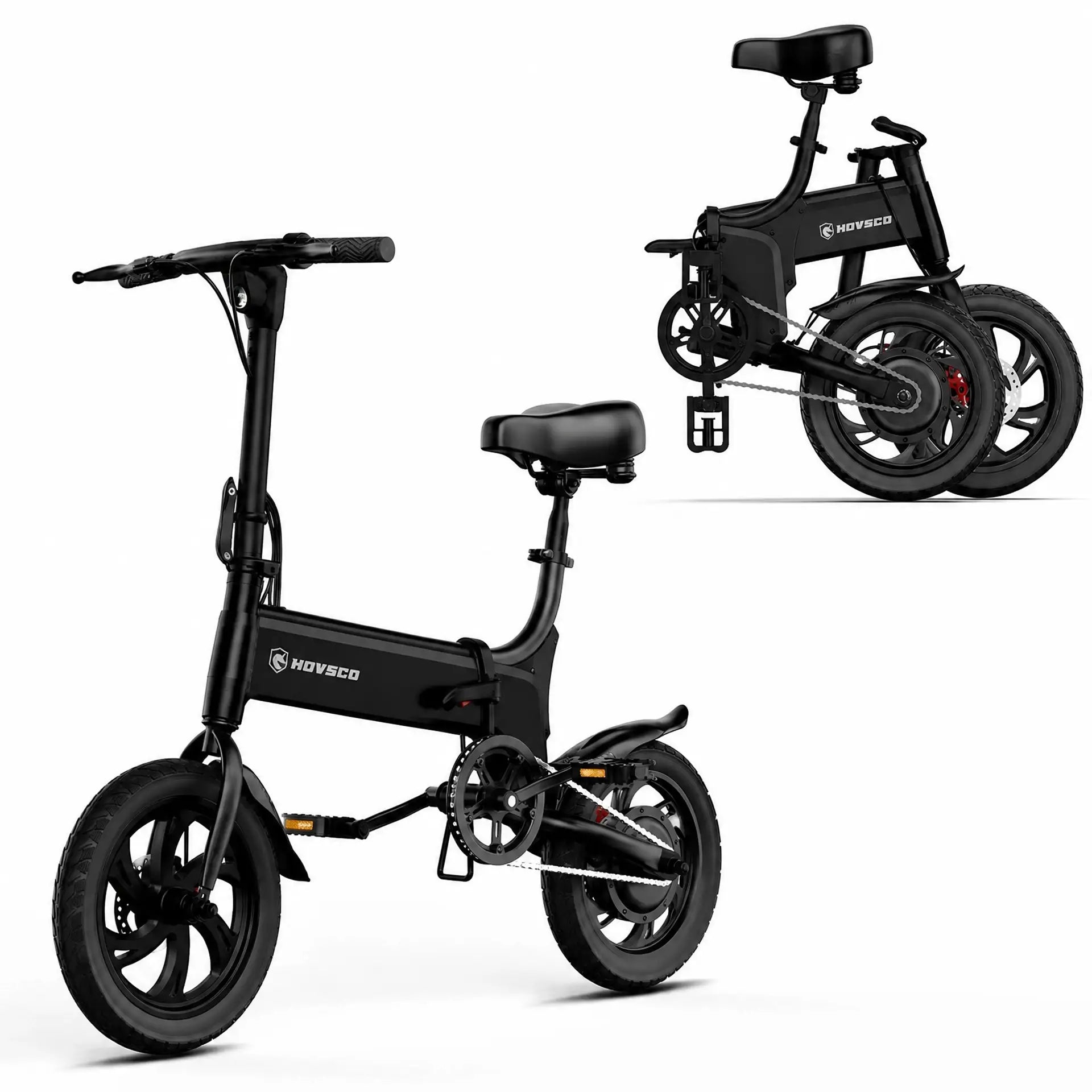
![[ New Arrival ] Porto Max Electric Scooter For Commute & Grocery Shopping - HOVSCO](http://www.hovsco.com/cdn/shop/files/PotroMax-3.jpg?v=1706927007&width=1200)
- by SteveJames
How to Set Suspension Sag for E-Bikes?
- by SteveJames
E-Bikes
Accessories
 Free Shipping
 15-Day Returns
 2-Year Warranty
Free Shipping
15-Day Returns
2-Year Warranty
2-Year Warranty
Free Shipping
15-Day Returns
2-Year Warranty
Suspension sag is the amount your fork or shock compresses under your riding weight, and for most e-bikes a good starting point is 25%-30% of total travel. Measure it with the bike in full riding gear, adjust air pressure or preload in small steps, and recheck until the bike feels balanced, supportive, and resistant to bottom-out.
adjusting ebike suspension sag
Sag is the percentage of suspension travel used when the bike is loaded with your body weight and gear. The formula is simple: sag percentage = sag distance ÷ total travel × 100. If your fork has 100 mm of travel and you want 30% sag, your target compression is 30 mm.
The easiest way to think about it is ride height. Too little sag keeps the bike riding high and can reduce grip, while too much sag makes the bike sit too deep and can eat up travel too quickly. For most e-bikes, 25%-30% gives a practical balance of comfort, control, and traction.
To measure accurately, use the same setup each time: same shoes, same backpack, same tire pressure, and same rider posture. That consistency matters more than chasing a perfect number on the first try. In real tuning work, I would rather see a repeatable 28% than a messy reading that jumps between 24% and 32%.
You only need a few basic tools to set sag well. A shock pump, a ruler or tape measure, and an O-ring or sag marker will handle most jobs. A helper makes the process much easier because you can stay neutral on the bike instead of balancing awkwardly.
A rider scale helps if you want to record setup by actual load. A notebook or phone note is also useful because your first setting is rarely the final one. Write down the air pressure, measured sag, and how the bike feels after each adjustment.
For e-bikes, do not ignore the extra weight of the motor, battery, rack, or cargo. Those parts change how the bike settles under load, so a setting copied from another bike can feel wrong very quickly. Start from the suspension’s travel, then tune for your real ride weight.
For most e-bikes, 25%-30% sag is the sweet spot. If you ride mostly on pavement or smoother roads, the lower end feels firmer and more efficient. If you ride rough streets, mixed terrain, or downhill sections, the higher end usually gives better grip and comfort.
Here is a simple starting guide:
Do not treat these numbers as fixed law. Different forks, rear shocks, and frame designs can need slightly different front and rear values. The right target is the one that keeps the bike from riding harshly while still leaving enough travel for real impacts.
Start on level ground and make sure the suspension is fully extended before you begin. Slide the O-ring to the dust seal, then sit on the bike in your normal riding position with hands on the bars and feet on the pedals. Have a helper steady the bike so you can stay relaxed and avoid bouncing.
Carefully get off and measure how far the O-ring moved. Divide that number by total travel to get the sag percentage, or compare the distance directly to your target. If the reading is too small, the suspension is too firm; if it is too large, it is too soft.
This is where real-world experience matters. Riders often lean too far forward, brace their arms, or forget the weight of a backpack, and that throws the result off. I always recommend checking sag after a short warm-up because seal friction and temperature can change the feel slightly. On a HOVSCO e-bike, measure with the same riding load you actually use most often.
On air suspension, add or release air in small steps until sag falls into range. A change of 5-10 psi is usually enough for one round of tuning, followed by another measurement. On coil suspension, use preload only to remove free play and fine-tune the starting point, not to force the wrong spring into doing the job.
If you need extreme preload or very high air pressure to hit target sag, the spring rate is probably wrong. That is not a small tuning issue; it is a setup mismatch. A spring that is too soft will sit too deep, while a spring that is too stiff will never settle into the right range.
For HOVSCO e-bikes, I usually recommend starting with the rear, especially if the rider carries more weight over the back wheel. Then match the fork so the front and rear settle together in a balanced way. When the bike sits evenly, it corners cleaner, brakes more predictably, and feels calmer under acceleration.
Sag decides how much travel is left for bumps, drops, and sharp hits. Too little sag makes the suspension ride too high and feel harsh, but too much sag uses up travel too early and makes bottom-out more likely. The best setup leaves enough reserve travel for sudden compressions.
Bottom-out happens when the suspension reaches the end of its stroke. If sag is excessive, the bike can dive too far into its travel on potholes, curbs, or trail hits. If sag is too shallow, the ride may feel stiff, but the bike can also lose traction because it skips over bumps instead of absorbing them.
The real goal is not simply “softer.” It is controlled movement through the middle of the travel with enough protection at the end. That balance comes from the right sag number, plus the right spring rate, damping, and in some systems, volume spacers. HOVSCO emphasizes sag first because it is the foundation for everything else.
A correct sag setting feels planted, predictable, and quiet over rough ground. The bike should settle smoothly when you sit on it, use travel without a harsh clunk, and still keep enough reserve for bigger bumps. It should not feel nervous in the front or wallowy in the rear.
If the front feels twitchy, the fork may be too firm or the rear too soft. If the bike leans and drifts in corners, sag may be too deep. If small bumps feel sharp and sticky, sag may be too shallow or seal friction may be too high.
Think of suspension tuning as a system, not a single number. Tire pressure, rider posture, cargo weight, and terrain all affect the final result. HOVSCO recommends testing on the road or trail you actually ride, because the perfect parking-lot setup often fails in the real world.
“I tune sag like I would set the foundation of a machine on the factory floor: get the ride height right first, then refine everything else. On e-bikes, the motor and battery shift the load pattern, so a setting that looks fine on paper can still dive or bottom-out in actual riding. My rule is simple: begin at 25%-30%, test with real riding weight, and trust the ride feel more than the first measurement.”
Recheck sag whenever your load changes, your riding style changes, or the bike starts feeling different. A heavier backpack, cargo rack, child seat, panniers, or even seasonal clothing can change how the suspension sits. Temperature also affects air-spring behavior, especially when the weather swings a lot.
You should also remeasure after the first few rides on a new bike. Seals settle, your body position becomes more natural, and the suspension often feels slightly different once everything has broken in. If the bike starts bottoming out after a season of use, sag may still be close, but damping or spring rate may need attention too.
A practical habit is to check sag every few months. It only takes a few minutes and prevents small changes from turning into handling problems. For HOVSCO riders who switch between commuting and trail riding, keeping two setup notes can save time and make the bike feel consistent every day.
Yes, and you absolutely should. Rider weight, gear, and cargo all affect sag, so the right setup is personal. A 70 kg rider and a 95 kg rider should not use the same pressure or spring rate just because they ride the same frame.
The best method is to set sag with your actual riding load, not your body alone. That means shoes, backpack, water bottle, and regular carry items should be included. If you commute with gear during the week and ride light on weekends, tune for the load you use most often.
For HOVSCO e-bikes, this matters even more because electric bikes often carry extra accessories. The correct sag keeps the bike from feeling dead in the rear or harsh in the fork. It also lowers the chance of unnecessary bottom-out on curbs, potholes, and trail impacts.
Getting sag right is one of the most valuable tuning steps you can make on an e-bike. Start with 25%-30%, measure carefully, and adjust in small steps until the bike feels balanced, supportive, and resistant to bottom-out. If you ride a HOVSCO e-bike, think in terms of real-world load, not just a chart number, because the best setup is the one that matches how you actually ride.
The practical formula is simple: set the correct ride height first, then refine the rest of the suspension later. When sag is dialed in, braking improves, cornering feels cleaner, and rough roads become less tiring. That is why proper sag tuning is not just maintenance; it is the foundation of a better ride.
How much sag is best for an e-bike?
Most riders should begin at 25%-30% sag, then fine-tune based on comfort, grip, and terrain. More sag feels plusher, while less sag feels firmer and more efficient.
Do I set front and rear sag the same?
Not always. The fork and rear shock may need different settings because the weight split, travel, and leverage ratio are not identical.
Can preload fix bottom-out?
Only a little. Preload is for small adjustments, not for correcting the wrong spring rate or air pressure range.
Should I measure sag with cargo on the bike?
Yes, if you normally ride with that cargo. Set the bike for your real riding condition, not an empty-bike situation.
Why does sag change after a few rides?
Seals, temperature, and riding position can all shift the reading slightly. Recheck after the suspension has settled and after any major load change.
Share:
Why Choose Full Suspension for City Rides?
How Does Rebound Damping Stop Pogo Stick Suspension?