




























![[ New Arrival ] Porto Max Electric Scooter For Commute & Grocery Shopping - HOVSCO](http://www.hovsco.com/cdn/shop/files/PotroMax-3.jpg?v=1706927007&width=1200)
- by SEO
Deciding Between Zero Punctures and Cushion‑Soft Ride Quality (June 2026)
- by SEO
E-Bikes
Accessories
 Free Shipping
 15-Day Returns
 2-Year Warranty
Free Shipping
15-Day Returns
2-Year Warranty
2-Year Warranty
Free Shipping
15-Day Returns
2-Year Warranty
Choosing between solid and pneumatic tires is no longer a niche technical detail; it decides how safe, smooth, and hassle‑free your daily rides feel. Recent cycling and tire research shows that reinforced tubeless and pneumatic systems can dramatically cut punctures while still delivering superior comfort and grip compared with rigid solid tires and basic tube‑type setups. For e‑bikes and scooters, where speed and weight are higher than on traditional bikes, that balance between durability and ride quality is more critical than ever.
HOVSCO positions its e‑bikes and electric scooters around real‑world use: commuting, cargo, and mixed‑terrain riding, supported by puncture‑resistant tires, safe braking systems, and robust frames. In that context, the brand’s thickened puncture‑resistant tubeless tire specification on city and off‑road models is not a luxury add‑on; it is the most practical equilibrium point between “never flat” and “never too harsh.”
electric scooter tire comparison
Industry test data and expert reviews across the last three years keep reinforcing three big truths:
Tubeless and high‑quality pneumatic tires allow lower pressures and better deformation, which increases comfort and wet‑weather grip while reducing rolling resistance in many scenarios.
Puncture‑resistant casings and sealant drastically cut flat incidents compared with basic tube‑type systems, especially on debris‑strewn and urban roads.
Fully solid tires remove puncture risk but deliver significantly harsher ride quality, reduced compliance on uneven surfaces, and less predictable wet‑surface behavior.
At the same time, HOVSCO’s own safety‑focused content highlights puncture‑resistant tires as one of the core features for commuting reliability alongside disc brakes, integrated lights, and strong frames. That alignment between independent testing and brand direction is exactly what riders should look for when deciding how to equip an e‑bike or scooter for daily use.
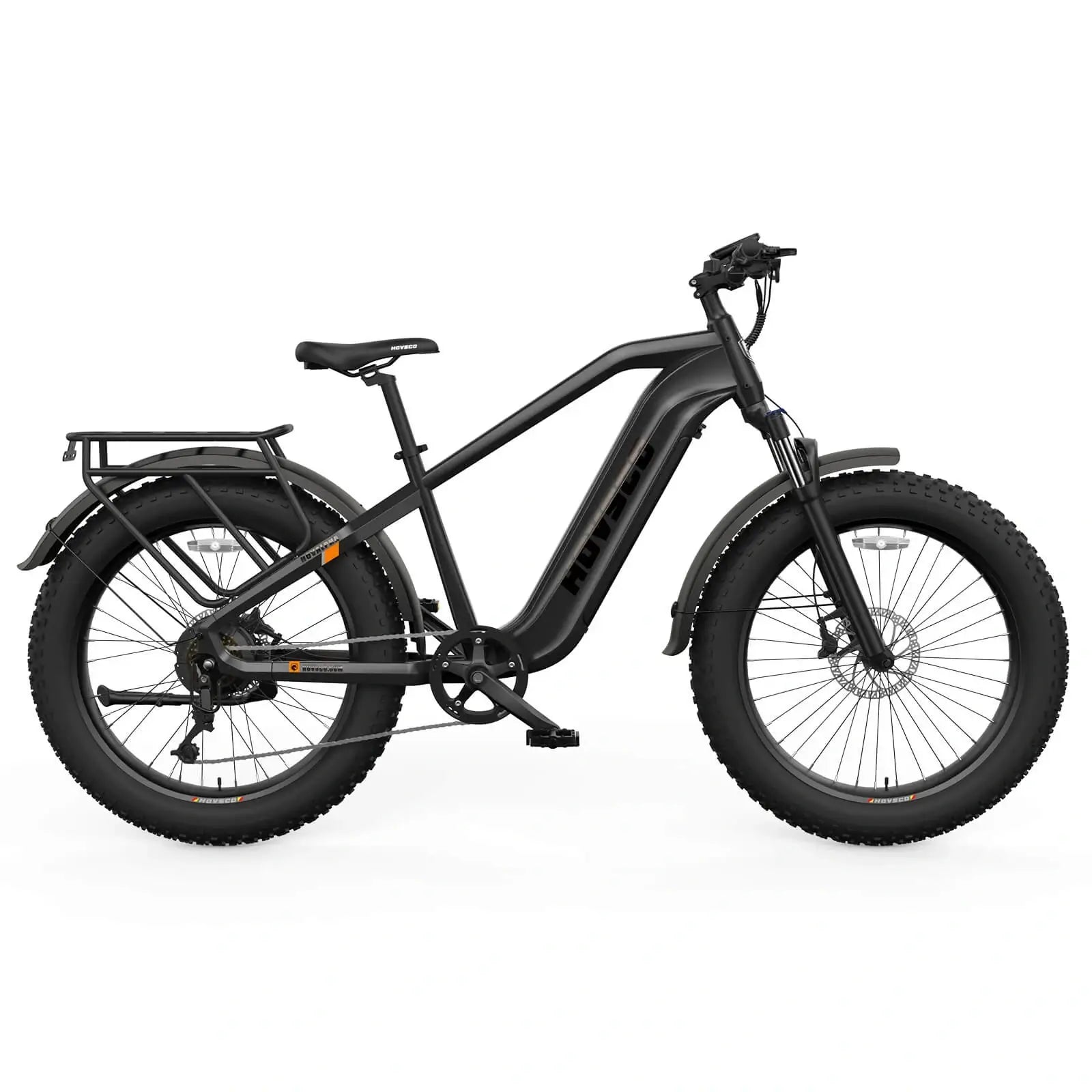
Across its lineup, HOVSCO’s city, cargo, and mountain‑style e‑bikes and scooters pair wide, stable tires with puncture resistance and, on key platforms, tubeless‑ready or tubeless configurations aimed at everyday reliability. Whether you are considering a heavy‑duty cargo model such as those promoted through the HovGtrs Series Bundle Sale or a more compact utility bike from the main HOVSCO catalog, the tire choice is tuned around all‑weather commuting and real city surfaces rather than just showroom looks.
Solid vs. pneumatic tires refers to the fundamental construction difference between a non‑air tire and an air‑filled tire. Solid tires are made of dense rubber or similar material with no internal air chamber, so they cannot go flat; pneumatic tires contain air under pressure and may use inner tubes or tubeless setups to hold that air. When riders add puncture‑resistant layers and tubeless sealant to pneumatic tires, they gain much of the flat protection of a solid tire while keeping the comfort and grip advantages of air.
Riders do not think in tire chemistry; they think in problems:
“My tire went flat on the way to work.”
“My scooter feels like it is rattling my bones.”
“The road was wet, and I did not trust my tires in corners.”
Solid tires, basic honeycomb tires, and generic tube‑type pneumatics all address some of those problems and worsen others.
First, maintenance anxiety. Many commuters choose solid or very hard tires because they are tired of flats on glass‑strewn bike lanes, construction zones, and poorly maintained side streets. Eliminating tubes can look like the only answer. However, rigid tires transmit far more vibration into the rider and the frame, increasing fatigue and reducing control on broken surfaces. Over time, that “bone‑hard” feeling often becomes its own daily frustration.
Second, ride comfort and health. Reviews of road and e‑bike tires consistently show that lower pressures and more compliant casings reduce micro‑vibration and impact forces. Solid and overly stiff tires cannot deform around small edges and holes; instead, the hit goes straight into hands, wrists, and back. On an e‑bike or scooter, where speed and distance are higher, this can mean arriving at work already tense and tired.
Third, wet‑weather confidence. On wet asphalt, paint, and metal grates, traction depends on the tire’s ability to conform to micro‑texture and maintain a stable contact patch. Air‑filled and tubeless systems excel here because the casing flexes under load. Solid and overly rigid tires have less contact adaptation, which can feel skittish when braking or cornering on slick surfaces. For riders who cannot simply skip rainy days, this is a major safety concern.
Finally, rolling resistance and energy. While e‑bike motors mask some inefficiencies, testing shows that many solid tire designs generate higher rolling resistance than quality pneumatic tires, wasting battery range and rider effort over time. On longer commutes, that is the difference between arriving with spare capacity and limping home on the last bar of battery.
Put together, those pain points explain why “never flat” is not automatically “best,” and why HOVSCO emphasizes puncture‑resistant tubeless or pneumatic solutions rather than defaulting to solid tires on its serious commuter and cargo platforms.
The most robust real‑world setups today do not abandon air; they combine reinforced casings, tubeless technology, and correct pressure to deliver both flat resistance and a genuinely smoother, safer ride.
Reinforced puncture protection
Modern puncture‑resistant tires use extra belts or denser materials in the tread and sidewall to stop sharp debris before it reaches the air cavity. That reinforcement is what lets a tubeless or pneumatic tire roll over small shards of glass that would instantly defeat a generic, thin commuter tire. HOVSCO’s own how‑to content on flat prevention underscores this, recommending puncture‑resistant casings over basic replacements for riders who frequently encounter debris.
Tubeless construction and sealant
By eliminating the inner tube and forming an airtight seal directly between tire and rim, tubeless systems remove the classic pinch‑flat failure mode and allow lower pressures without the “snake bite” risk. Liquid sealant inside the tire can plug many small punctures automatically, which is particularly valuable for e‑bike riders who may not want to stop roadside to swap a tube in traffic or bad weather.
Pressure as fine‑tuning
Because pneumatic and tubeless tires rely on air, they let riders tune pressure to body weight, cargo, and terrain, effectively adding a controllable “micro‑suspension” layer. HOVSCO’s broader design language—fat or semi‑fat tires, suspension forks on certain models, and ergonomic frames—works hand‑in‑hand with that tunability to produce rides that are stable yet not punishing. Solid tires, by contrast, offer almost no such adjustment.
Imagine two tires rolling across a scattered patch of fine broken glass:
A solid tire stays rigid. The glass either bounces off or, in worst cases, slowly chews and cuts into the rubber over time. There is no sudden flat, but the rider feels a distinct “chatter” as the tire cannot deform around edges.
A puncture‑resistant tubeless tire compresses at the contact patch, letting the tread pattern and casing mold around small, sharp pieces. Reinforced layers deflect many shards, and any that penetrate may be sealed almost instantly by the tubeless sealant before significant pressure loss appears.
Macro photography in lab tests and marketing materials often shows this micro‑deformation: the tubeless tire visibly flattens and wraps around edges, while the solid tire shows a much smaller contact patch and sharper stress concentration at impact points. From the rider’s perspective, that deformation is what turns a hard impact into a muted thump instead of a jarring hit.
Because HOVSCO designs its e‑bikes and scooters as systems, tire choice connects naturally to the rest of the product family. Riders who lean on puncture‑resistant tubeless or pneumatic tires will likely also care about:
Cargo and utility e‑bikes from HOVSCO’s main lineup, where wide tires and strong frames carry kids, groceries, or tools with more stability and comfort.
Commuter‑focused e‑bikes that pair durable tires with hydraulic disc brakes, integrated lighting, and reflective components to maximize visibility and control in traffic.
Electric scooters highlighted in “What Features Define a HOVSCO Electric Scooter?”, which rely on 10–12 inch puncture‑proof pneumatic tires for stable handling and better shock absorption at scooter speeds.
Within the site, these categories are interlinked so that someone researching tire resilience will naturally discover frame, brake, and lighting features that complete the safety picture. A rider who starts by asking “how do I stop getting flats?” often ends by realizing that tires, brakes, and visibility must be selected together.
Define your main route.
Map your typical rides: distance, road surface quality, and frequency of debris or construction zones. Urban riders with rough pavement and occasional glass benefit most from puncture‑resistant tubeless or pneumatic tires instead of solid options.
Set your comfort and safety priorities.
If you regularly ride more than a few kilometers, comfort and grip should matter as much as flat prevention. Testing shows that better deformation and lower pressure improve both ride feel and control.
Check your wheel and frame compatibility.
Not all rims are tubeless‑ready. Review your HOVSCO model’s specifications on the relevant product page and ensure the wheel, tire, and recommended pressure range are a safe match. If in doubt, consult the brand’s support resources before upgrading.
Choose a reinforced tubeless or pneumatic setup.
Opt for tires with stated puncture‑resistant belts or reinforced casings, ideally with tubeless compatibility or factory tubeless configuration. For most HOVSCO riders, that gives the best mix of durability and comfort.
Dial in tire pressure correctly.
Use a quality gauge and follow recommended ranges, adjusting for your body weight and load. Too much pressure makes any tire feel harsh; too little increases squirm and potential damage on impacts.
Maintain and inspect regularly.
For tubeless setups, refresh sealant on the schedule recommended by the tire manufacturer and check for visible cuts or wear. For all tires, inspect tread and sidewalls at least monthly and before long trips.
Scenario 1: Urban commuter with daily glass and potholes
Traditional approach: Install a cheap solid or honeycomb tire to “never worry about flats again,” accepting a harsh ride and reduced wet grip.
With HOVSCO’s balanced solution: Run a puncture‑resistant tubeless or reinforced pneumatic tire at tuned pressures, allowing the casing to absorb pothole hits while sealant and extra belts handle small debris.
Scenario 2: Family cargo rider hauling kids and groceries
Traditional approach: Overinflate basic pneumatic tires for load capacity, making the bike twitchy and uncomfortable; flats become more likely under higher stress.
With HOVSCO’s balanced solution: Use wide, reinforced tires from HOVSCO’s cargo‑oriented range, maintaining moderate pressures that stabilize the bike and keep traction while still resisting punctures.
Scenario 3: All‑weather commuter in a rainy city
Traditional approach: Prioritize stiff, long‑wear tires with little thought to wet‑road deformation, leading to cautious, low‑confidence cornering in the rain.
With HOVSCO’s balanced solution: Select puncture‑resistant tubeless tires with compounds and casings designed for all‑weather grip, supported by strong brakes and lights, so wet‑road stops and turns remain predictable.
Do solid tires really mean “zero punctures” in daily riding?
Solid tires cannot lose air, so traditional punctures do not occur, and that is their main advantage. However, they can still suffer cuts, chunking, and structural damage over time, and they trade that puncture immunity for a much harsher ride and less adaptable grip on rough or wet surfaces.
How do honeycomb (airless) tires compare with solid and pneumatic tires?
Honeycomb or cellular tires are designed to add some internal compliance, making them more forgiving than fully solid designs. Still, they usually cannot match the comfort, rolling efficiency, or wet‑surface grip of a well‑set tubeless or pneumatic tire and are best considered a middle ground where maintenance‑free operation is more important than ultimate ride feel.
Why are puncture‑resistant tubeless tires considered a “best balance”?
They combine reinforced casings, no inner tube, and sealant to cut flat risk while preserving the fundamental benefits of air: adjustable pressure, better deformation, and finer traction control. Tests routinely find that quality tubeless tires can be both faster and more comfortable than traditional tube‑type setups, with significantly fewer roadside repairs.
Are tubeless tires harder to install and maintain for the average rider?
Initial setup can be more involved, requiring proper rim tape, sealant, and careful seating of the tire, but once installed the ongoing maintenance is largely limited to periodic sealant replacement and pressure checks. For many daily riders, the time saved by avoiding frequent tube changes more than offsets the learning curve.
How do HOVSCO’s tire choices support commuting safety?
HOVSCO’s bikes and scooters are typically configured with wide, puncture‑resistant tires that work together with hydraulic or strong mechanical disc brakes, integrated lights, and reflective elements to maximize control in real urban conditions. That system approach helps riders maintain traction and braking performance across wet roads, rough asphalt, and varying loads.
Is it worth upgrading stock tires on an older e‑bike or scooter to a HOVSCO‑style setup?
If your existing tires are thin, frequently puncturing, or untrustworthy in the rain, upgrading to puncture‑resistant tubeless or high‑quality pneumatic tires can transform the ride. For many riders, that upgrade—especially in combination with a robust e‑bike frame like those in HOVSCO’s range—delivers more comfort, confidence, and uptime than almost any other single component change.
Solid tires deliver on one promise—no air, no traditional flats—but the cost in comfort, control, and wet‑weather confidence is high for most real‑world e‑bike and scooter riders. Reinforced tubeless and pneumatic systems, by contrast, preserve the crucial benefits of air while drastically reducing puncture incidents through stronger casings and sealant. For a brand like HOVSCO, focused on daily commuting, cargo, and mixed‑terrain riding, thickened puncture‑resistant tubeless tires are the logical “best balance” between zero‑puncture ambitions and cushion‑soft ride quality.
Share:
Which Ebike Type Works Best for Trail Riding?
Can a folding ebike really fit inside a compact SUV or sedan trunk?