
























![[ New Arrival ] Porto Max Electric Scooter For Commute & Grocery Shopping - HOVSCO](http://www.hovsco.com/cdn/shop/files/PotroMax-3.jpg?v=1706927007&width=1200)
- by SEO
Which Ebike Type Works Best for Trail Riding?
- by SEO
E-Bikes
Accessories
 Free Shipping
 15-Day Returns
 2-Year Warranty
Free Shipping
15-Day Returns
2-Year Warranty
2-Year Warranty
Free Shipping
15-Day Returns
2-Year Warranty
An electric dirt bike and a traditional mountain ebike deliver very different trail experiences, even when they share similar motors and wheels. An electric dirt bike like the HovGtrs focuses on low-center-of-gravity stability, throttle power, and relaxed body position, while a traditional mountain ebike like the HovScout focuses on pedal-efficient geometry, cadence-dependent assistance, and agile suspension for technical singletrack. Understanding five core technical differences—geometry, cadence dependence, torque, seat height, and suspension—helps you pick the right machine for your trails and riding style.
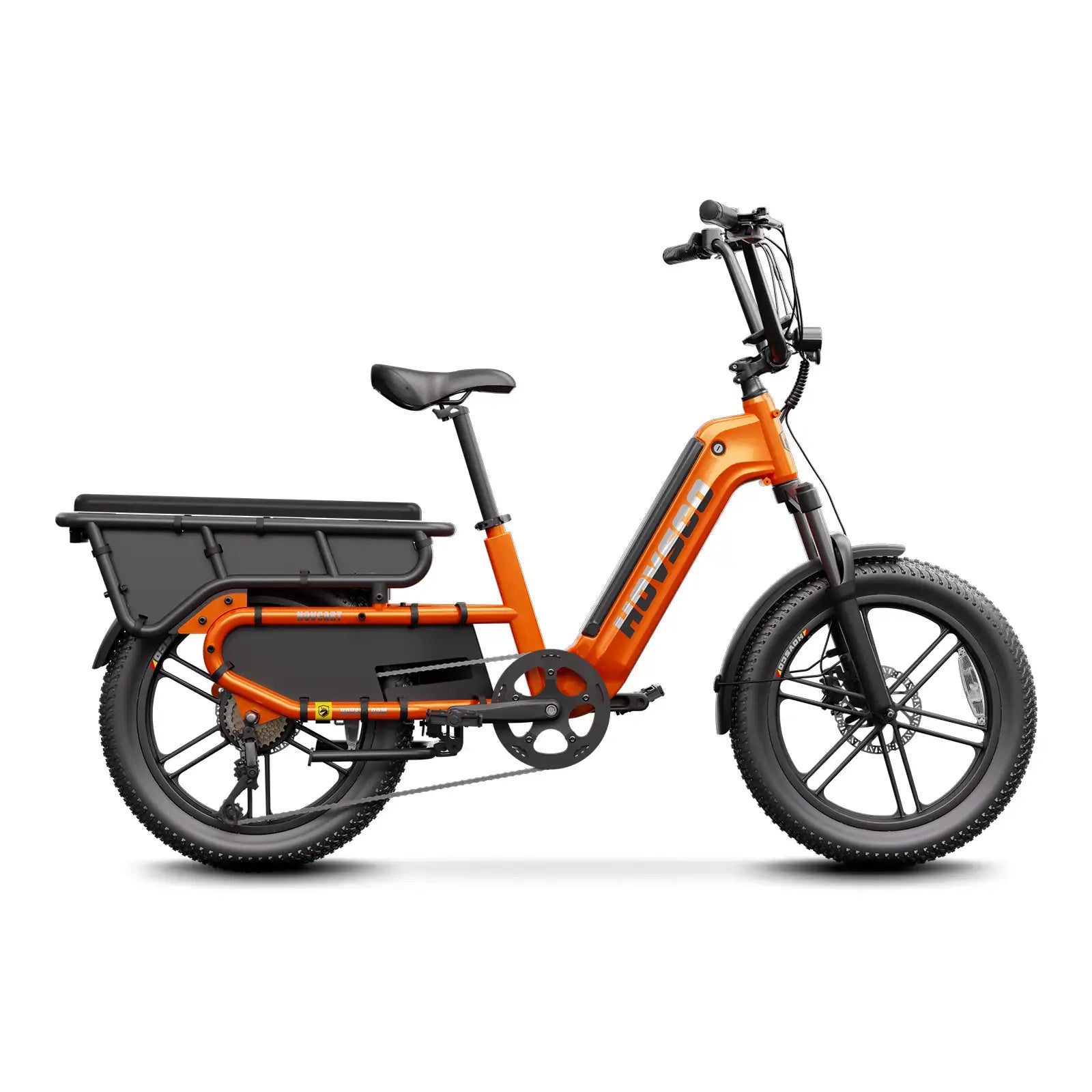
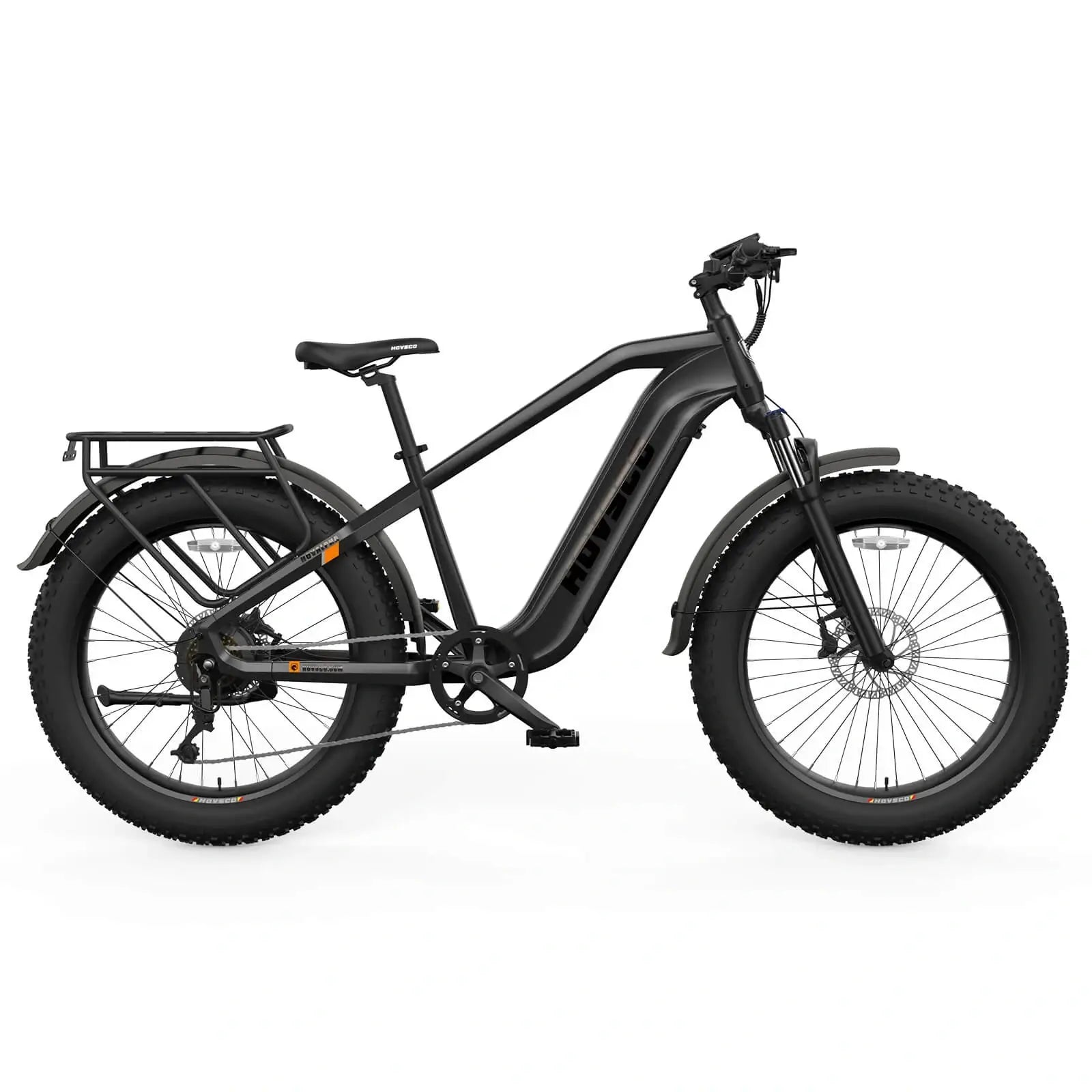
Frame geometry decides whether a bike feels like a compact electric dirt bike or a true trail-focused mountain ebike. The HovGtrs leans toward a moped-style, low-slung frame that prioritizes stability and comfort, while the HovScout uses a more stretched, sport-oriented trail geometry designed around active pedaling and body movement.
In practical terms, the HovGtrs puts more of your weight between the axles with a long saddle and a relatively upright torso. That favors relaxed seated riding, easy balance at low speeds, and planted straight-line stability on loose dirt roads. By contrast, the HovScout puts you in a more athletic stance: slightly forward, closer to the bars, with a shorter cockpit that encourages frequent weight shifts for climbing, cornering, and pumping terrain.
From an engineering standpoint, this geometry split also changes how forces flow through the frame. The HovGtrs can carry more rear-biased load without feeling nervous, which matches its role as a powerful cruiser that can double as a light trail explorer. The HovScout, built around “sporting pedaling geometry,” keeps the rider more centered over the bottom bracket, so pedal input, traction, and steering all feel tightly linked on technical singletrack and steep climbs.
On the trail, this means HovGtrs shines when you want to sit, steer, and let the motor pull you, while HovScout shines when you want to stand, pump, and actively “work” the bike through rocks, roots, and switchbacks.
Cadence dependence describes how much a bike’s motor performance relies on your pedaling rhythm. A traditional mountain ebike like the HovScout uses torque and cadence sensing to deliver assistance only when you pedal, rewarding consistent leg speed and proper gear choice. An electric dirt-style bike like the HovGtrs leans more on throttle response and is less dependent on a smooth cadence.
On the HovScout, the control system expects you to keep a steady cadence in the motor’s sweet spot. When you do, assistance ramps in smoothly, giving you that “bionic legs” feeling as you climb. Stop pedaling or mash irregularly, and the support backs off. This encourages better pedaling technique and keeps the bike feeling like a mountain bike first, an ebike second.
The HovGtrs, by contrast, lets you decouple motor output from pedal cadence via throttle. If you stall out in a technical section or hit a steep ramp with poor gear choice, you can rely on the motor to pull you through without perfect pedaling. This is a major advantage for riders who prioritize convenience and confidence on variable terrain, even if they are not interested in maintaining “ideal” cadence all day.
In real-world trail riding, cadence dependence is the dividing line between “I am still cycling” and “I am piloting a small electric motorcycle.” HovScout lives on the cycling side, demanding your input, while HovGtrs gives you an easier path through tough sections regardless of how tidy your pedal stroke is.
Torque is not just about headline numbers; it is about how the bike delivers that twisting force to the rear wheel in actual trail situations. The HovGtrs is tuned to feel punchy and responsive off the throttle, giving you strong low-end torque and quick launches. The HovScout is tuned for smoother, more proportional torque linked to pedaling effort, maximizing traction and control on variable surfaces.
On an electric dirt-style platform like HovGtrs, when you twist the throttle, you get immediate, noticeable acceleration. That is ideal for short, steep climbs, fire-road blasts, or when you need to clear a hazard quickly. The torque delivery feels more binary: off, then strong, so your main skill is throttle modulation rather than fine pedal control.
On the HovScout, the same hill is approached differently. The torque system amplifies your leg force in a more linear way. Push harder on the pedals, and the motor responds with extra drive that still feels controllable. This helps prevent rear-wheel spin on loose climbs and allows you to “dose” torque precisely as you pick your way through rocks or roots.
For trail riders, this translates into different kinds of confidence. HovGtrs gives confidence that you will not stall in tough sections as long as you manage the throttle. HovScout gives confidence that the rear wheel will stay hooked up under power, preserving traction and letting you use classic mountain-bike line choice and technique without being overpowered by the motor.
Seat height and ergonomics control how easily you can move your body relative to the bike. The HovGtrs uses a lower, longer saddle that supports a more seated, moto-like stance, while the HovScout uses a traditional MTB saddle position optimized for efficient pedaling and fast transitions into a standing attack position.
On HovGtrs, you sit “in” the bike rather than “on top” of it. The lower seat height (relative to bar position) and longer saddle are comfortable for cruising, carrying passengers, or covering distance without frequent body shifts. For moderate-speed trail riding, this is relaxing and intuitive, especially if you are used to scooters or mopeds.
On HovScout, the saddle is higher relative to the crank to give you a strong pedaling platform. It is also paired with a geometry that invites you to drop the seat (with a dropper post) for descents and technical features. This makes it far easier to move your hips back, lower your chest, and actively balance the bike on steep or rough sections.
If your trail use is mostly fire roads, rolling doubletrack, and casual exploring, HovGtrs ergonomics will feel natural and supportive. If your trail use includes steep singletrack, frequent short climbs and descents, or technical corners, the HovScout’s more dynamic seat and cockpit configuration will help you ride faster and with more control.
Suspension design influences how well the bike maintains traction, absorbs hits, and stays composed when you push the pace. The HovGtrs uses suspension primarily to keep a heavier, more seated chassis stable and comfortable, while the HovScout’s suspension is tuned for active, repeated body movement and efficient climbing.
A dirt-style ebike like HovGtrs often combines a stout fork with a rear shock that prioritizes comfort and big-bump absorption. With a more rearward weight bias and long saddle, the rear suspension sees significant continuous load. The goal is to smooth out square-edge hits and maintain composure at speed, even when the rider stays seated.
The HovScout, as a full-suspension mountain ebike, uses its suspension as a traction and performance tool. Anti-squat characteristics, leverage curves, and rebound damping are tuned so the bike can climb without excessive bobbing yet still open up on descents. The suspension works in concert with the rider’s body positions—standing, pumping, pre-loading—to generate grip and speed.
On the trail, that means HovGtrs feels like a very comfortable, confident “trail moped” that shrugs off rough surfaces, while HovScout feels more like a sharpened instrument that lets you read and shape the terrain. If your priority is “make it smooth and simple,” HovGtrs is compelling. If your priority is “make it precise and fast,” HovScout’s suspension design is the better fit.
Center of gravity (COG) has a major impact on how a bike feels when you lean, brake, or hit obstacles. The HovGtrs is engineered to keep mass low and slightly rearward, giving it a very stable, planted feel at speed and over rough ground. The HovScout keeps mass low but more centralized, which better supports quick transitions, tight turns, and technical maneuvers.
On a HovGtrs, the battery, motor, and frame design place a lot of weight low, between the wheels. This helps the bike resist being knocked off line by rocks or ruts and makes straight-line high-speed runs feel very secure. On long, rough descents or fast gravel, that “low and long” feel inspires confidence for less experienced riders.
On a HovScout, the same low-mass principle applies, but with more emphasis on balance around the bottom bracket and front wheel. This lets skilled riders load and unload each tire intentionally: pushing the front wheel into corners, unweighting over obstacles, and keeping both wheels tracking predictably in tight, technical sections.
If you imagine the “dual bike core structure diagram” the brand might show, the HovGtrs would highlight a low COG axis that favors stability, while the HovScout would highlight an “athletic pedaling geometry” axis that favors agility and rider-driven control. Both are deliberate; they simply prioritize different definitions of confidence on the trail.
For true technical singletrack—with tight switchbacks, short punchy climbs, drops, roots, and rocks—the traditional mountain ebike layout of the HovScout generally wins. Its geometry, seat height, cadence-dependent assist, and suspension tuning all favor precise line choice and responsive handling at a wide range of speeds.
On such trails, the HovScout’s pedal-assist system helps you maintain momentum without overpowering the rear wheel. You can feather power with your legs, stand into turns, and quickly move your weight forward or back as the trail demands. The bike responds predictably when you preload for a small jump or manual over an obstacle.
The HovGtrs can still handle moderate singletrack, but you will feel its design bias. The longer saddle and more rearward stance encourage seated riding, and the throttle-based torque can make precise traction management trickier on slippery uphill roots or off-camber corners. It becomes more of a “trail-capable cruiser” than a specialist technical tool.
If your main goal is to ride and progress on technical mountain-bike trails, HovScout is the more suitable choice. HovGtrs fits better if technical sections are occasional, and your rides mostly blend smoother dirt, doubletrack, and mixed urban-trail environments.
Rider fatigue and fitness outcomes differ because the two platforms engage your body differently. The HovScout keeps you pedaling and moving on the bike, spreading effort between legs, core, and upper body. The HovGtrs offloads more of the propulsion work to the motor and focuses your effort on balance and control.
Over a long ride, the HovScout encourages continuous light-to-moderate exertion. Cadence-dependent assistance means your legs keep turning, even on climbs, and your core stabilizes your body as you stand and move through terrain. Many riders find they ride further and burn meaningful calories without feeling destroyed, making the HovScout a strong fitness and skill-development platform.
On HovGtrs, the physical load shifts. You can ride with minimal leg input using throttle, which is great if you have joint issues, are returning from injury, or simply want to enjoy the trail scenery without working as hard. Fatigue tends to show up more in your hands, shoulders, and mental focus when riding longer or rougher sections, as you manage speed and line choice at higher average velocities.
If your priority is fitness and technical skill progression, a traditional mountain ebike like HovScout is the better long-term partner. If your priority is accessibility, low perceived exertion, and shared rides with faster or fitter friends, an electric dirt-style bike like HovGtrs can be the more inclusive and enjoyable option.
“When we engineer platforms like HovGtrs and HovScout side by side, we do not start from the same drawing and just ‘tune the motor.’ We start from two different riding intentions. For HovGtrs, we bias mass low and rearward, extend the saddle, and tune torque for confident throttle control. For HovScout, we bias geometry around the bottom bracket, refine cadence-sensing, and let the rider’s legs remain the primary input. In lab testing, you can see this in how each frame reacts on the jig: one damps big hits for a seated rider, the other tracks small inputs and rewards movement. That difference is what you feel on the trail.”
Trail riders should start by mapping their real riding patterns and goals against these five technical differences. Ask whether you want your trail experience to feel more like powered mountain biking or compact electric motorcycling, and then choose the platform that aligns with that answer.
If your rides are mainly on multi-use trails, forest roads, mellow singletrack, or mixed commuting and weekend exploring, HovGtrs offers powerful, stable fun with less dependence on fitness and cadence discipline. Its low center of gravity, comfortable seat height, and strong torque make it a confident all-rounder, especially for new ebike riders.
If your rides include technical singletrack, skill progression, or group rides with traditional mountain bikers, HovScout will likely serve you better. Its geometry, seat and cockpit layout, cadence-dependent assistance, and suspension setup keep the experience firmly rooted in mountain-bike technique, just with extra power.
For many riders, the ideal answer is not “which is better in theory,” but “which best fits the trails I ride 80% of the time.” HOVSCO’s advantage is giving you two clearly differentiated tools rather than pretending one bike can be perfect for every trail scenario.
Electric dirt bikes and traditional mountain ebikes may look similar at first glance, but geometry, cadence dependence, torque delivery, seat height, and suspension design make them fundamentally different trail machines. The HovGtrs represents the electric dirt-bike side: low center of gravity, throttle-dominant torque, and relaxed ergonomics that favor stable, seated power. The HovScout represents the traditional mountain-ebike side: athletic pedaling geometry, cadence-linked assistance, and responsive suspension that rewards rider movement and technique.
If you want an ebike that feels like a compact, go-anywhere electric dirt bike for mixed terrain and relaxed trail riding, HovGtrs is the natural choice. If you want a trail partner that feels like a mountain bike with superpowers, carrying you up climbs while sharpening your skills on descents, HovScout is the smarter investment. HOVSCO’s trail lineup is strongest when you see these two platforms not as competitors, but as purpose-built answers to different rider personalities and terrain profiles.
Is an electric dirt-style ebike harder to control for beginners?
It can be, because throttle power arrives quickly, but the stable geometry and low center of gravity help beginners adapt with a short learning curve.
Does a traditional mountain ebike still give a good workout?
Yes. You must pedal to get assistance, so you maintain steady effort while riding further and climbing more than on a non-assisted bike.
Which is better for steep technical climbs, HovGtrs or HovScout?
HovScout usually wins here, because its cadence-dependent torque and trail geometry help maintain traction and control on loose, technical climbs.
Can I use HovGtrs on the same trails as regular mountain bikes?
Sometimes, but not always. Check local regulations, as some areas restrict throttle-equipped or high-speed ebikes on non-motorized singletrack.
Is it worth owning both an electric dirt-style bike and a mountain ebike?
If you ride a wide mix of terrain—from OHV-style areas to tight singletrack—owning both can make sense, letting you pick the perfect tool for each ride.
Share:
Smoother Rides with 10-Inch Pneumatic Tires and Suspension — June 2026
Deciding Between Zero Punctures and Cushion‑Soft Ride Quality (June 2026)