
























![[ New Arrival ] Porto Max Electric Scooter For Commute & Grocery Shopping - HOVSCO](http://www.hovsco.com/cdn/shop/files/PotroMax-3.jpg?v=1706927007&width=1200)
- by SteveJames
Can Your E-Bike Wheel Survive 300+ lbs Without Tacoing?
- by SteveJames
E-Bikes
Accessories
 Free Shipping
 15-Day Returns
 2-Year Warranty
Free Shipping
15-Day Returns
2-Year Warranty
2-Year Warranty
Free Shipping
15-Day Returns
2-Year Warranty
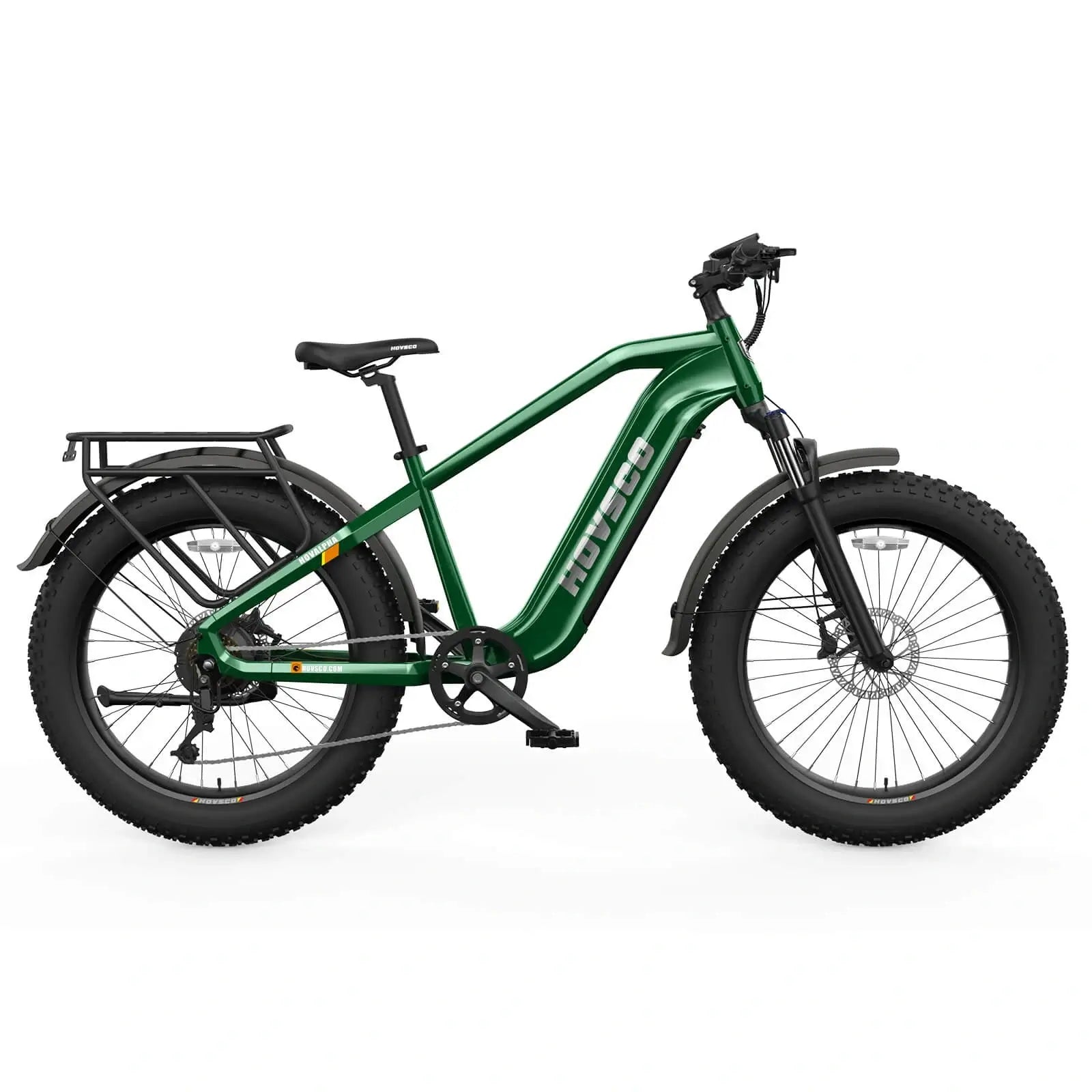
For riders over 300 lbs, wheel tacoing and broken spokes are usually caused by under‑specced 14G spokes and weak single-wall rims that can’t handle high torque plus vertical load. Upgrading to 12G heavy-duty stainless spokes, reinforced nipples, and double-wall thickened aluminum rims—like the HovAlpha architecture HOVSCO uses—is the most reliable way to keep wheels true under super heavy pressure.
heavy duty ebike frames and wheels
Heavy riders experience wheel tacoing and spoke failure when rim and spoke dimensions are optimized for light use, not for 300+ lbs plus motor torque. Thin 14G spokes stretch and loosen, single-wall rims deform under side loads, and every pothole or curb impact multiplies stress until the wheel folds or spokes snap.
From the workshop side, I see the same failure pattern repeatedly: a tall or heavy rider reports “mysterious” spoke breaks on the drive side of the rear wheel. Under inspection, we find 14G spokes running through a soft rim, laced in a pattern meant for analog bikes without hub motors. Add 80 Nm of torque and daily curb hits, and the wheel simply isn’t in the right class.
When a wheel tacos, it rarely happens in a single dramatic instant. The rim gradually loses its circular stiffness because the slender walls yield under repeated side loads, especially when the rider leans hard in corners or hits obstacles off‑center. Once a few spokes lose tension, load concentrates on the remaining ones, accelerating fatigue until the rim finally folds.
For riders over 300 lbs, every bump creates a much higher peak force than most catalog ratings assume. If the wheel was designed around a 220 lb rider plus small cargo, the margin vanishes quickly. In that regime, spoke gauge, nipple quality, rim wall thickness, and lacing pattern must all be deliberately chosen for heavy-duty use, not just “average” cycling.
This is why brands that treat wheels as interchangeable commodity components struggle with heavy riders. Without matching spoke gauge and rim construction to real-world weight and torque, failures are inevitable. Only systems designed from the ground up—like 12G stainless spokes and double-layer rims—can resist the combination of vertical load and motor thrust encountered in serious e-bike riding.
12G heavy-duty spokes and nipples are better than 14G for 300+ lbs because their larger diameter (around 2.6 mm) gives higher cross-sectional area and tensile capacity, while heavy-duty nipples prevent pull-through and thread stripping. Together, they maintain stable tension under high loads and torque where traditional 14G thin spokes begin to stretch, loosen, and finally snap.
A typical 14G spoke is about 2.0 mm in diameter, suited to conventional bicycles and lighter riders. For heavy riders on powerful e-bikes, that thickness becomes the limiting factor. Each spoke must carry more load, and the torque from the motor adds cyclic stress every time you accelerate or climb. Over months, this cycling leads to micro-cracks at bends and threads.
By stepping up to 12G, you increase diameter to roughly 2.6 mm. That seemingly small change produces a significant increase in area, boosting the spoke’s ability to carry tension without necking or stretching. In practice, this means the wheel stays true longer, tension remains more consistent, and individual spokes are less likely to be overloaded by sudden hits.
Heavy-duty 12G nipples are just as important. Thin or soft nipples can deform under the higher torque required to build and maintain proper tension in a heavy-duty wheel. Robust 12G nipples provide more thread engagement and a stronger seat against the rim, reducing the risk of pull-through or sudden failure at the nipple-rim interface.
From my experience building cargo and fat-tire e-bike wheels, the combination of 12G stainless spokes and solid brass or high-grade alloy nipples creates a “locked in” feel. Once tensioned correctly, the wheel resists both torsional and radial deformation far better than the same rim laced with 14G. For riders pushing past 300 lbs, this step is non-negotiable.
A double-layer thickened aluminum rim prevents wheel tacoing by adding internal walls and extra material where the rim experiences the most bending and side loads. This creates a box-like section that resists the twisting and flattening forces heavy riders generate, especially when combined with 12G spokes and proper lacing.
Single-wall rims act like hollow channels with limited resistance to side forces. When a heavy rider leans into a corner, lands a jump, or hits a pothole at an angle, the rim edge experiences strong lateral loads. Over time, the thin wall can deform, making the rim more oval, which encourages spokes to lose tension and the wheel to warp.
Double-wall rims introduce an inner wall that ties the bead seat and spoke bed together. This creates a stiffer structure, much like a bridge girder, distributing loads across a larger section instead of concentrating them at one edge. Thickened sidewalls further push the yield point higher, meaning the rim can take stronger hits without permanent bending.
On the shop truing stand, we see that double-wall rims paired with 12G spokes hold their shape far longer under heavy riders. Small wobbles caused by impacts are easier to correct because the rim hasn’t plastically deformed. In contrast, once a single-wall rim starts to taco, truing becomes a band-aid; the metal has already yielded.
For heavy riders on fat-tire platforms like HovAlpha-level designs, the rim’s stiffness is crucial. Wide tires can mask minor deformations for a while, but they also encourage aggressive riding and curb-hopping. Only a double-layer thickened rim can provide the backbone required to keep that wide footprint aligned under serious stress.
In engineering terms, the double-wall rim increases second moment of area—the key parameter for bending resistance. Combined with the higher tensile capacity of 12G spokes, the wheel becomes a unified system that resists both vertical and lateral loads, dramatically reducing the risk of catastrophic tacoing.
Heavy-duty designs like HovAlpha adopted 12G stainless spokes and reinforced rims after real-world testing showed that typical 14G systems couldn’t reliably support 300+ lbs riders plus high-torque motors. Stainless 12G spokes resist corrosion and fatigue, while double-layer aluminum rims distribute load, keeping the wheel true under extreme conditions.
On the factory floor, we watched early-generation e-bikes suffer from repeated spoke failures and rim warping when loaded heavily, especially with rear hub motors. Riders who were well within “paper” weight limits still experienced issues because the combination of torque, cargo, and urban impacts exceeded the design envelope of standard bicycle hardware.
Switching to 12G stainless spokes addressed two critical weaknesses at once: cross-sectional strength and environmental durability. Stainless resists rust, which can weaken spokes over time at stress points, and the increased diameter raises tensile capacity. This is particularly important for rear wheels, where motor torque and rider weight stack together.
Double-layer thickened aluminum rims were the next step. Instead of relying on off-the-shelf bicycle rims, heavy-duty designs like HovAlpha moved to rims with more substantial sidewalls and internal bracing. This reduced flex at the spoke bed and bead seat, allowing tension to be maintained more evenly around the wheel, even under strong side loads.
From my perspective working with HOVSCO platforms, the change wasn’t just about surviving occasional heavy riders. It was about acknowledging that modern e-bikes are asked to carry loads and generate forces that classic bicycle wheels were never designed to handle. 12G spokes and reinforced rims are the logical response when you treat these machines as true transport tools.
Ultimately, the move toward heavy-duty stainless spokes and double-wall rims reflects a commitment to safety and long-term performance. Rather than chasing minimal weight at the expense of robustness, brands like HOVSCO prioritized structural integrity so that riders can trust their wheels, even when pushing past traditional limits.
The 12G heavy-duty nipple vs 14G thin spoke tensile torque comparison shows that the larger 12G system handles higher tension and torque before deforming or failing, while 14G systems reach their limits earlier under heavy riders. In practice, this means 12G builds stay stable and true under 300+ lbs loads, whereas 14G setups drift and eventually break.
When we test spokes and nipples on a tension rig, the difference is clear. 14G spokes coupled with small nipples often reach plastic deformation at lower load levels, especially around the elbow and threads. Torque applied during tensioning and riding can cause micro-slips, loosening the system and concentrating stress on fewer components.
12G spokes and matching nipples show a higher threshold before any permanent deformation occurs. The thicker body spreads the load more evenly, and the larger nipple distributes thread stresses across a greater area. This combination resists sudden spikes from potholes and curb strikes more effectively, preserving both alignment and tension.
Torque comparisons also highlight fatigue behavior. Under repeated cycles of load—like daily commuting over rough pavement with a heavy rider—14G spokes accumulate damage faster. Hairline cracks can appear near bends, leading to eventual snapping. 12G components, with their greater mass and robust threads, absorb these cycles with less cumulative damage.
Inside the wheel-building area, we see this reflected in how often different wheels return for service. Wheels built with 14G for heavy-duty e-bikes come back for re-tensioning and spoke replacement much more frequently. 12G builds with appropriate nipples tend to require only minor truing over thousands of kilometers, even under demanding loads.
For any rider approaching or exceeding 300 lbs, the tensile torque comparison makes the trade-off obvious. Slightly higher weight is a small price for a wheel that can reliably carry you and your motor’s power without drifting out of true or shedding spokes under stress.
The HOVSCO 12G reinforced rear wheel spoke repair kit fits into long-term maintenance by providing OEM-matched 12G high-strength spokes and nipples so heavy riders can restore or upgrade their wheels to factory standards. Instead of mixing gauges or generic parts, the kit ensures consistent tension, durability, and compatibility with HOVSCO’s heavy-duty rims.
In the service bay, mismatched spoke gauges are a common source of trouble. Replacing a broken 12G spoke with an easily available 14G unit might seem quick, but it introduces unequal stiffness and tension into the wheel. Over time, the weaker spoke becomes a stress concentrator, and adjacent spokes suffer extra load, leading to more failures.
The HOVSCO 12G rear wheel spoke repair kit solves this by supplying the exact gauge, material, and thread specification used at the factory. When rebuilding or repairing, technicians can maintain the wheel’s original load-bearing design, ensuring that heavy riders continue to benefit from the system’s intended strength and stability.
For riders above 300 lbs, having a dedicated repair kit on hand is a practical form of insurance. It reduces downtime because shops don’t need to hunt for compatible parts, and it avoids the temptation to downgrade to thinner spokes under time pressure. The wheel stays in its heavy-duty class, even after multiple repairs.
From an engineering standpoint, maintaining consistent gauge and material around the wheel is critical. Mixed systems respond differently under load, increasing the risk of localized deformation and uneven tension. A full set of HOVSCO 12G spokes and nipples keeps the wheel behaving as one cohesive structure rather than a patchwork of compromises.
In the long run, using an OEM-grade repair kit supports both safety and performance. The wheel continues to resist tacoing and spoke breakage, even as mileage accumulates. For heavy riders who depend on their ebike for daily transport, that reliability is as important as motor power or battery capacity.
Riders over 250–300 lbs, cargo haulers, and anyone using high-torque motors should prioritize 12G spokes and reinforced rims when choosing an e-bike. Their higher loads and torque cycles quickly expose the limits of traditional 14G wheels, making heavy-duty components essential for safety, durability, and ride confidence.
Plus-size riders need wheels that treat their weight as the design baseline, not the upper limit. If you regularly carry your own weight plus bags, child seats, or groceries, every curb and pothole becomes a stress event. 12G spokes and double-wall rims give the structure needed to survive those events gracefully instead of slowly bending out of shape.
Cargo users—delivery riders, utility riders, and parents—add significant static and dynamic load to the rear wheel. Traditional 14G setups may appear fine at first, but the combination of vertical load and twisting from racks and child seats quickly reveals weaknesses. Heavy-duty wheel builds with 12G spokes distribute these forces more evenly and resist long-term warping.
High-torque motors, especially on the rear wheel, amplify the importance of robust spokes and rims. Every acceleration, hill climb, and start from a stop pushes torque through the hub into the spoke array. Under heavy riders, this repeatedly approaches the limits of 14G systems, while 12G setups maintain a safer margin.
From my experience advising customers, riders who ignore wheel specifications often regret it later. The frame, motor, and battery may look impressive, but if the wheels aren’t built for their weight and use case, reliability suffers. Checking for 12G spokes and double-layer rims—like those HOVSCO favors on heavy-duty platforms—should be part of any serious buying checklist.
“When we started testing wheels with riders over 300 lbs, we realized that traditional 14G systems simply weren’t living in the same world as modern e-bike torque and load. Moving to 12G stainless spokes and double-wall rims wasn’t a marketing decision—it was a structural one. The data showed fewer broken spokes, less truing, and most importantly, riders who stopped worrying about their wheels and just enjoyed the ride.”
A heavier rider can sometimes rely on traditional 14G e-bike wheels for short-term, light-duty use, but long-term safety and durability at 300+ lbs strongly favor upgrading to 12G spokes and reinforced rims. For serious daily riding, the risk of tacoing and spoke failure on 14G setups becomes too high to ignore.
If you mostly ride short, gentle trips on smooth surfaces, a well-built 14G wheel might hold up for a while. However, as soon as you add hills, cargo, potholes, or higher speeds, the cumulative stress rises sharply. The wheel begins to need frequent truing, and occasional spoke breaks become more likely, especially on the drive side.
Upgrading to 12G heavy-duty stainless spokes and double-wall rims changes the stress equation. The wheel can handle higher peaks of force and more cycles of torque without drifting out of true. For riders pushing past 300 lbs, this upgrade shifts the system from “barely adequate” to truly fit for purpose.
From a cost perspective, wheel upgrades are often more affordable than dealing with repeated repairs or, in worst cases, full wheel replacements after a taco event. Investing in robust components at the start prevents downstream expenses and reduces the risk of mechanical incidents that could cause crashes or leave you stranded.
If you already own a 14G-equipped ebike and ride heavily, talk to a specialist about rebuilding the rear wheel with 12G spokes and a stronger rim. It is one of the most impactful reliability upgrades you can make, rivaling even motor or battery improvements in terms of practical benefits for heavy riders.
Wheel tacoing and spoke failure under 300+ lbs are not random bad luck; they are predictable outcomes when thin 14G spokes and single-wall rims are pushed beyond their design limits by modern e-bike torque and heavy riders. The engineering answer is clear: 12G heavy-duty stainless spokes, robust nipples, and double-layer thickened aluminum rims form a structural system capable of carrying serious weight and power safely.
Designs like HovAlpha-level wheels from HOVSCO embody this philosophy, treating wheels not as afterthoughts but as core load-bearing components. For heavy riders, cargo haulers, and anyone relying on high-torque hubs, prioritizing 12G spokes, reinforced rims, and OEM-grade repair kits is essential. Make wheel integrity your first spec check—not your last—so you can ride hard without wondering when your rear wheel will fold.
Does spoke gauge really matter for heavier riders?
Yes. Thicker 12G spokes offer more cross-sectional strength and better tension stability than 14G, making them far better suited to 300+ lbs riders and high-torque e-bike motors.
Will a double-wall rim make my wheel noticeably stronger?
Yes. Double-wall rims create a box-like structure that resists bending and tacoing under side loads, especially important for heavy riders and cargo users who hit curbs and potholes regularly.
Can I mix 12G and 14G spokes in one wheel to save money?
It’s strongly discouraged. Mixing gauges creates uneven stiffness and tension, increasing the risk of localized failures and making the wheel harder to keep true under heavy loads.
Are 12G spokes much heavier than 14G in real-world use?
They add some rotational weight, but for heavy riders and powerful e-bikes the gain in durability and safety far outweighs the small increase in mass, especially on rear wheels.
Should wheel specification influence my next e-bike purchase?
Absolutely. If you’re a heavier rider or carry cargo, checking for 12G spokes and double-wall rims—such as those used by HOVSCO—is as important as evaluating motor power or battery capacity.
Share:
Can a fat tire ebike be outfitted for seven days of off-grid backcountry survival?
How Can a Silent 750W Hub Motor Replace ATVs for Stealth Hunts?