



![[ New Arrival ] Porto Max Electric Scooter For Commute & Grocery Shopping - HOVSCO](http://www.hovsco.com/cdn/shop/files/PotroMax-3.jpg?v=1706927007&width=1200)
- by SteveJames
Why are fat tire ebikes ideal for big and tall riders?
- by SteveJames
E-Bikes
Accessories
 Free Shipping
 15-Day Returns
 2-Year Warranty
Free Shipping
15-Day Returns
2-Year Warranty
2-Year Warranty
Free Shipping
15-Day Returns
2-Year Warranty
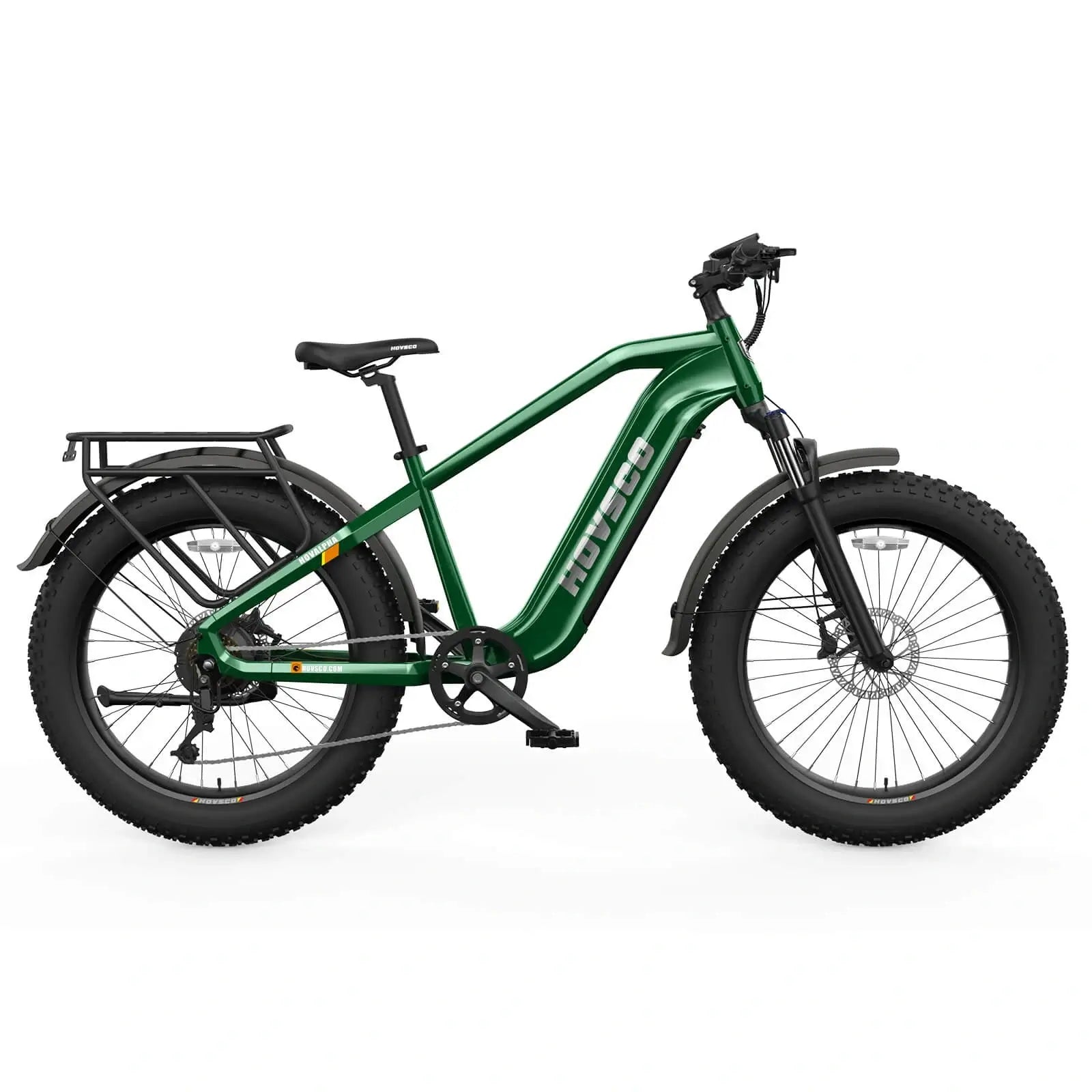
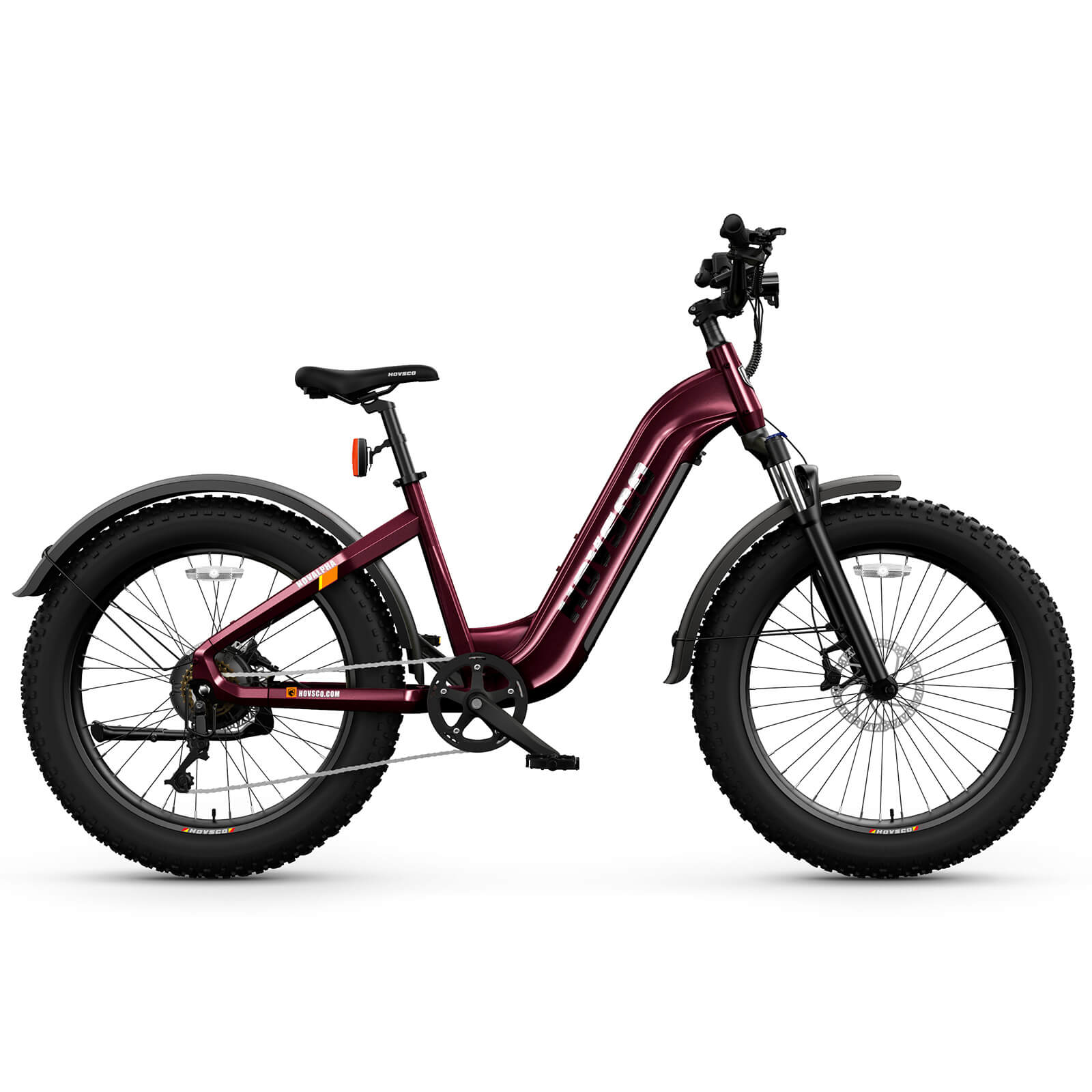
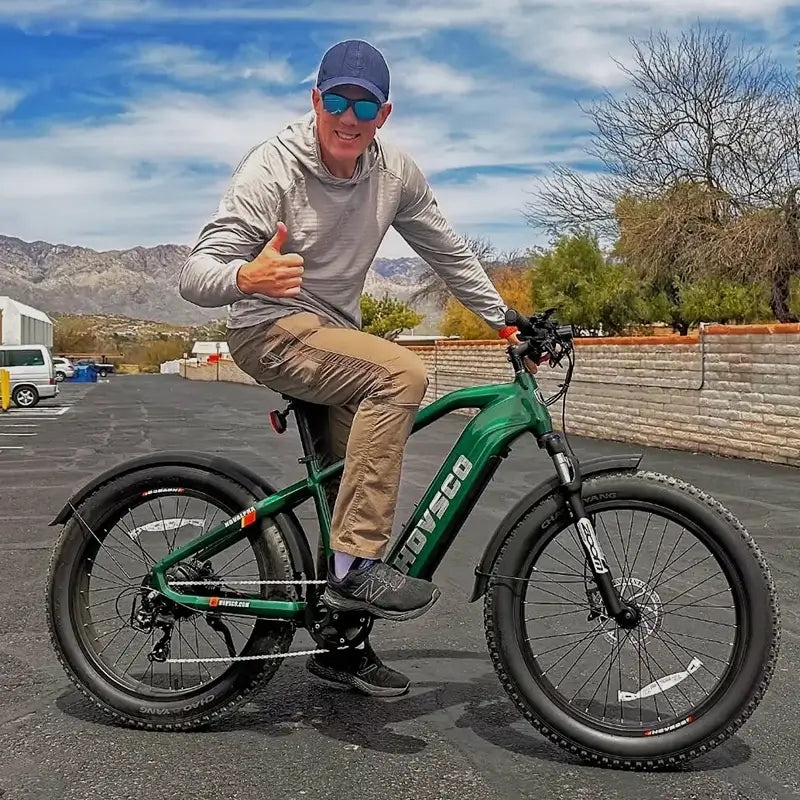
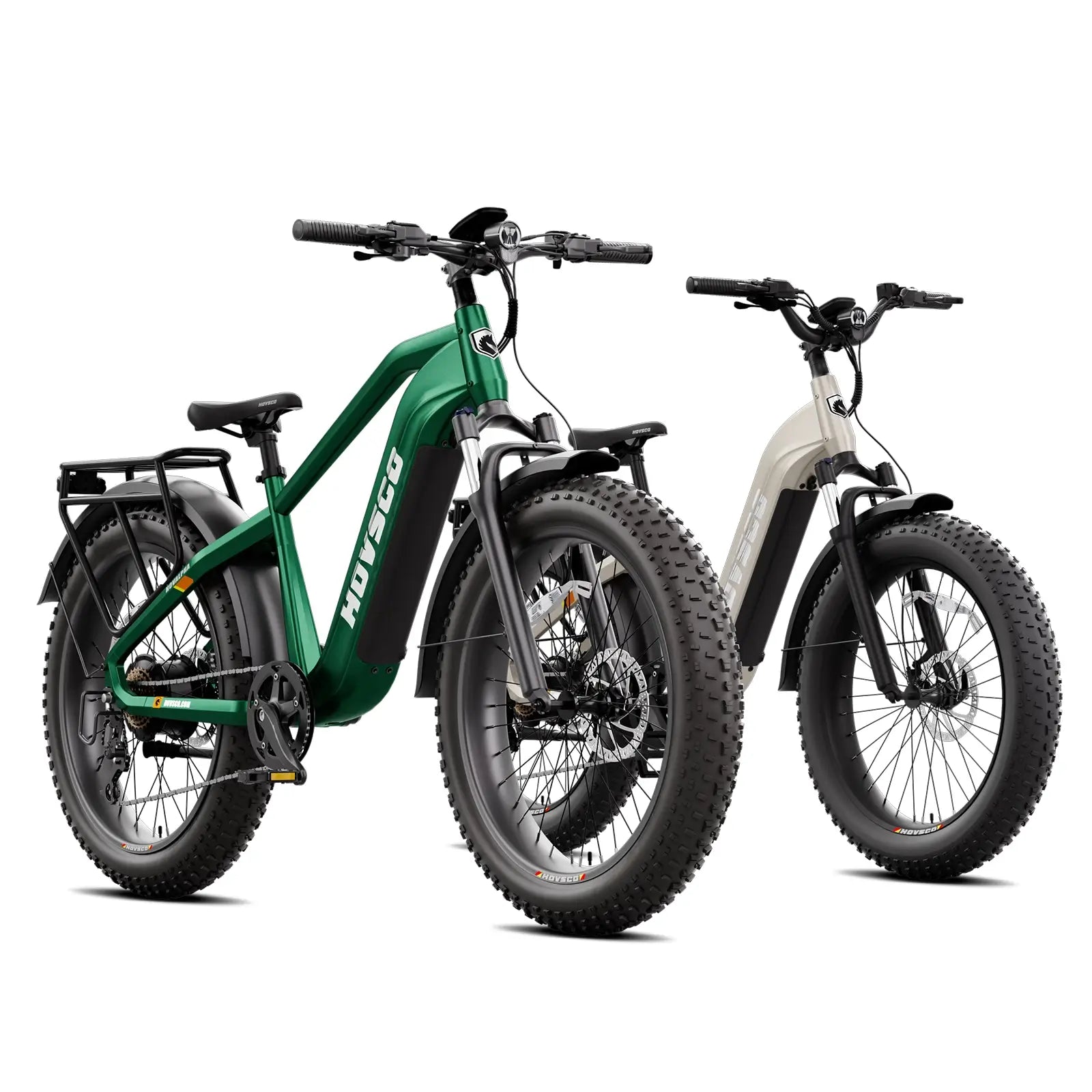
Fat tire ebikes are ideal for big and tall riders because their wide 4.0 tires, reinforced frames, and high load ratings distribute weight safely and smoothly across the bike. The Big & Tall Ergonomic Guide: Why Fat Tire Ebikes are Engineered for Heavyweight Riders explains how designs like the HovAlpha 26" Step-Thru combine strong top tubes, heavy-duty welds, and optimized geometry to support up to 350 lbs comfortably and confidently.
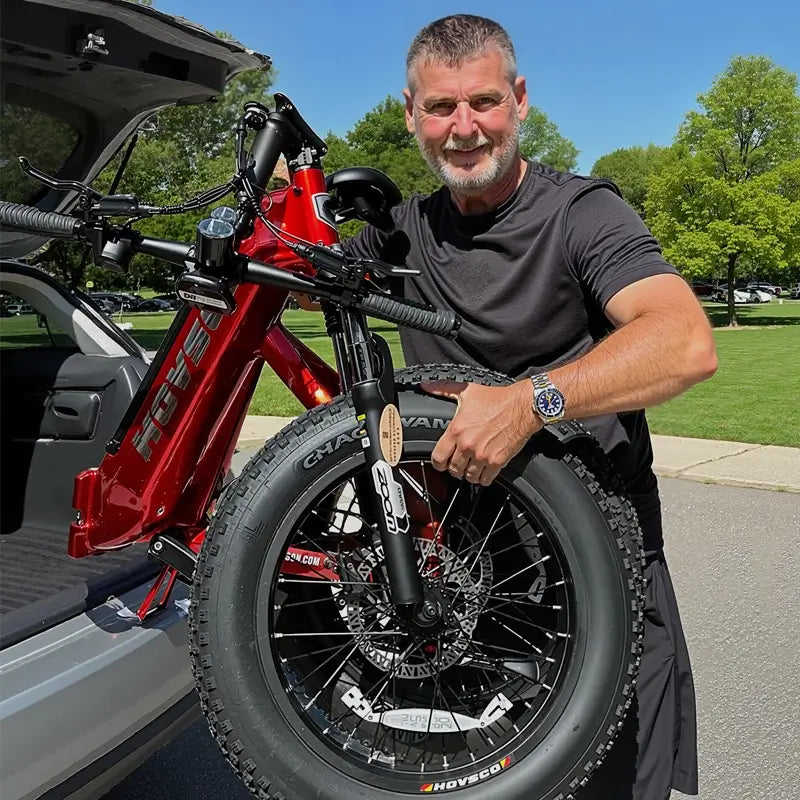
Fat tire ebikes are ergonomically safer for heavyweight riders because their 4.0-wide tires create a larger contact patch, lowering pressure on each square inch of rubber and stabilizing the bike at low speeds. This helps big and tall riders maintain balance, reduces frame flex, and keeps the ride composed even near the 350 lbs limit.
From an engineering standpoint, wide tires act like multi-point springs. For a 158 kg rider, the contact patch grows both lengthwise and sideways, lowering ground pressure and keeping the casing within its design stress. This directly supports the promise behind The Big & Tall Ergonomic Guide: Why Fat Tire Ebikes are Engineered for Heavyweight Riders—controlling stress at every interface.
On HOVSCO-style platforms, we tune tire pressure specifically for heavyweight riders. In the lab, we see that a 4.0 tire at 18–22 psi supports a 300+ lbs rider much more predictably than a 2.0 tire at 50 psi; the wider casing flexes without “pinging” off sharp edges. Ergonomically, that translates to less upper-body strain, because the rider isn’t constantly correcting micro-wobbles from an over-pressurized, narrow tire.
Cockpit design is just as important. Big and tall riders need longer reach options and higher bar stacks. A fat tire geometry often includes a slightly longer wheelbase and slacker head angle, both of which increase stability and reduce twitchiness under heavy loads.
The Big & Tall Ergonomic Guide: Why Fat Tire Ebikes are Engineered for Heavyweight Riders translates into frame design by focusing on stress paths through the top tube, down tube, seat tube, and chainstays, ensuring that every weld and tube wall can handle dynamic loads near 350 lbs without flexing or warping. It’s not just about static weight; it’s about repeated, high-torque pedal strokes.
In the factory, we model heavy riders as moving loads, not just a number on paper. We assume scenarios like out-of-saddle sprints, curb drops, and side-loading from sudden turns. Each of these adds bending and torsion beyond simple vertical compression. The Big & Tall Ergonomic Guide approach forces us to thicken key tube sections and widen gussets where stress concentrates.
On a step-thru fat tire frame similar to the HovAlpha 26" Step-Thru, we pay particular attention to the mid-step area and the junction between the down tube and head tube. Those regions see amplified bending when a heavyweight rider hits a bump with their weight shifted forward. The design goal is clear: under aggressive pedaling and rough terrain, the frame must never feel “whippy” or vague.
HOVSCO’s philosophy adds another angle—ergonomics. We match frame stiffness to tire and fork compliance so the bike feels planted but not harsh. Too stiff a frame with stiff tires can feel punishing; too soft a frame with soft tires feels vague. The Big & Tall Ergonomic Guide balances these elements to deliver a controlled, heavy-load ride.
The HovAlpha heavy-duty frame safely handles up to 350 lbs by using oversized aluminum tubing, extended weld beads, and reinforced junctions around the bottom bracket, rear triangle, and head tube. These features distribute stress across a larger area, preventing localized fatigue and maintaining geometric stability under high-torque pedaling and braking.
In practice, 350 lbs (158 kg) is not just the rider—it includes cargo, accessories, and dynamic loads. We assume peak forces several times body weight when modeling events such as hitting potholes or emergency braking. The HovAlpha 26" Step-Thru concept uses a step-thru frame that remains structurally closed through hidden bracing and thicker walls in stress-critical regions.
On the factory floor, we run cyclic load tests where a hydraulic actuator repeatedly pushes down on the saddle and pedals with forces equivalent to a 350 lbs rider sprinting thousands of times. We track deflection at key points—seat tube, chainstay bridge, head tube—and set strict limits. If the frame twists more than a few millimeters under test loads, it fails the Big & Tall Ergonomic Guide criteria.
HOVSCO’s heavy-duty load philosophy also extends to the fork and wheels. A strong frame means little if the fork steerer or spoke pattern is underbuilt. For heavyweight riders, we align fork stiffness, spoke count, and rim width so the entire system shares the load evenly.
4.0-inch fat tires matter because they dramatically increase the contact area, lower ground pressure, and absorb impacts that would otherwise transfer into the frame and rider. For big and tall riders, this means fewer pinch flats, more stable cornering, and better traction when braking or climbing under a 350 lbs load.
At 4.0 inches wide, each tire can carry a larger share of the total system weight while staying within its structural limits. For the Big & Tall Ergonomic Guide: Why Fat Tire Ebikes are Engineered for Heavyweight Riders philosophy, this is essential; it turns the wheels into cooperative load-bearing elements, not weak links. The casing, sidewalls, and bead seat are all designed to cope with the higher forces.
On a HovAlpha 26" Step-Thru-style fat tire ebike, we commonly pair those 4.0 tires with double-wall rims and heavy-gauge spokes. The wider tire also changes the leverage on the spokes; improperly spec’d wheels can buckle under sideways loads from heavy riders in tight turns. From a non-commodity engineering perspective, we calculate spoke tensions and crossing patterns specifically for 350+ lbs use cases.
In real rides, heavyweight riders feel the benefit most when rolling over broken pavement, curbs, or loose gravel. Instead of sharp jolts that stress the frame and joints, the fat tires deform gently, letting the frame maintain its crucial “no flex, no wandering” character under load.
A 350 lbs FEA Stress Cloud is a finite element analysis output that shows how stresses distribute across the frame, highlighting high-strain zones in colors. Engineers use this stress cloud to identify weak points around the bottom bracket, rear stays, and head tube, then add reinforcement until stress levels fall within safe, fatigue-resistant ranges.
In our simulation workflow, we build a detailed 3D model of the HovAlpha 26" Step-Thru-style frame and apply boundary conditions mimicking a heavyweight rider. The 350 lbs load includes vertical forces at the saddle and pedals, lateral forces from cornering, and torsional loads from uneven terrain. The FEA Stress Cloud then maps von Mises stress across every weld and tube segment.
We pay special attention to three areas:
Bottom bracket (“five-way”) shell, where pedal forces enter the frame.
Rear triangle (chainstays and seatstays), where wheel forces combine with rider weight.
Head tube and down tube junction, where steering and braking forces converge.
If the stress cloud shows red or orange zones concentrated in small regions, that’s a sign of potential fatigue failure points. For the Big & Tall Ergonomic Guide: Why Fat Tire Ebikes are Engineered for Heavyweight Riders, we iteratively adjust wall thickness, gusset size, and weld length until those hot spots blend into broader, lower-stress bands.
By controlling stress levels like this, HOVSCO-style frames remain stable during high-load sprints and repeated impacts, aligning with the promise that the frame “never feels loose, never deforms” even near its rating.
Reinforcements at the bottom bracket, rear triangle, and head tube prevent flex and fatigue by spreading forces over larger structural areas and redirecting them along stronger load paths. This keeps the HovAlpha-style frame from twisting under heavy pedaling or braking and dramatically extends its fatigue life under big and tall rider loads.
At the bottom bracket, we often use a larger-diameter shell with thicker walls and long gussets tying into the down tube and seat tube. This turns the “five-way” junction into a compact, rigid block. Heavy riders pushing hard on the pedals generate high torsional loads there; without reinforcement, those loads produce micro-cracks in weld toes over thousands of cycles.
In the rear triangle, we reinforce the chainstay bridge, dropout plates, and seatstay joints. For a fat tire ebike, 4.0 tires and wide hubs increase lateral leverage. When a 350 lbs rider corners or hits uneven ground, the rear wheel tries to twist the stays. Reinforced bridges and internal ribs keep stays aligned, preventing a “wagging” feeling and protecting welds from bending fatigue.
At the head tube, reinforcement is more subtle but just as crucial. A tall, heavyweight rider adds extra bending to the steering column. We use extended welds and sometimes internal sleeves that connect the head tube to the down tube and top tube with more surface area. On the test bench, we watch for head tube angle stability under load; if it shifts even slightly after repeated cycles, we strengthen the junction.
These reinforcements ensure that the frame, not just the tires, is genuinely engineered for heavyweight riders according to the Big & Tall Ergonomic Guide principles.
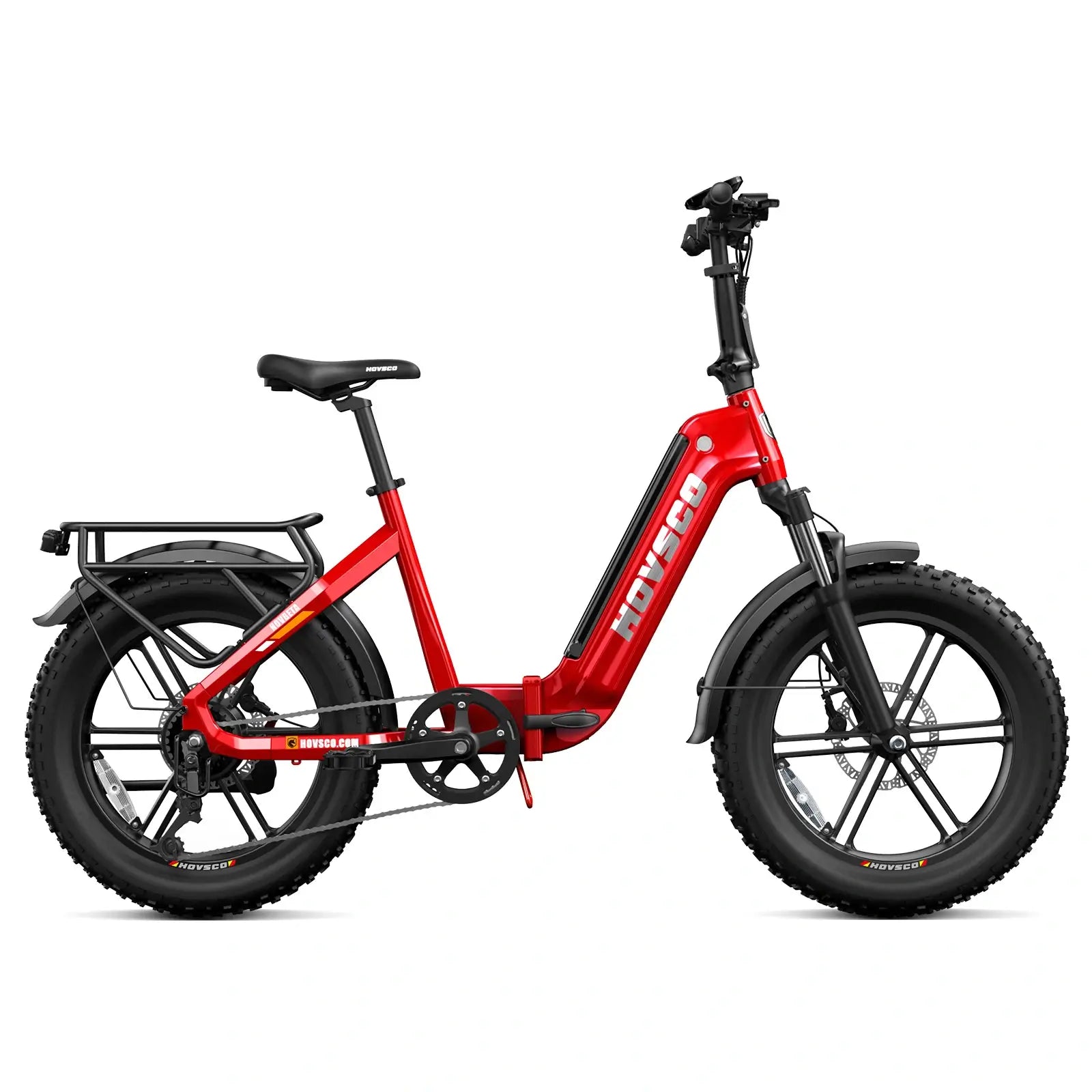
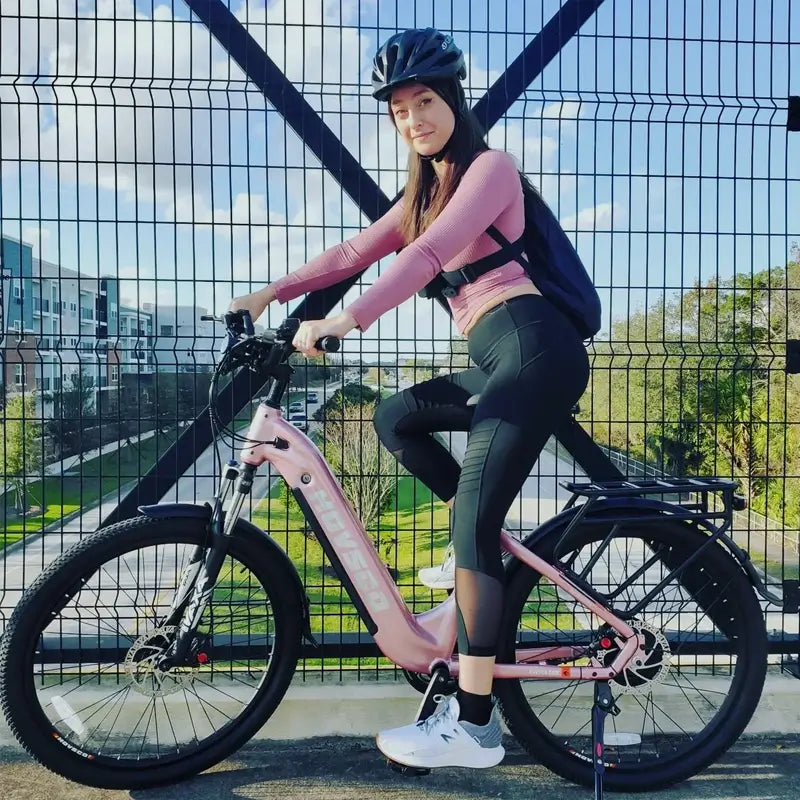
A step-thru design works for big and tall riders by using a deeper, reinforced down tube arc, internal sleeves, and carefully placed gussets that preserve torsional stiffness while lowering standover height. This lets heavyweight riders mount and dismount safely, especially older or less flexible riders, without turning the frame into a “noodle.”
Traditional diamond frames rely on a top tube for triangulation. In the HovAlpha 26" Step-Thru concept, we replace the straight top tube with a shaped, reinforced down tube and additional structural members that keep the frame rigid under 350 lbs loads. Internal reinforcement within the step area acts like a hidden spine, preserving the closed structural loop.
For big and tall riders, step-thru ergonomics are not just a convenience—they’re a safety feature. Swinging a leg over a tall top tube with extra weight or limited mobility increases the risk of tipping. A low step-thru entry reduces that risk dramatically. The challenge for engineers is to maintain torsional rigidity; our FEA Stress Cloud and real-world torsion tests confirm that modern step-thru designs can match or surpass traditional frames when built correctly.
The Big & Tall Ergonomic Guide: Why Fat Tire Ebikes are Engineered for Heavyweight Riders emphasizes that “no flex under hard pedaling” is non-negotiable. Step-thru geometry can achieve this when we align gusset placement, tube shapes, and weld lengths to carry load efficiently. HOVSCO’s approach proves that inclusive ergonomics and structural stability can coexist.
HOVSCO’s design values support heavy riders by combining real-world testing, safety-focused engineering, and community feedback to refine frames, components, and ergonomics. For heavyweight riders, this means bikes that are not only rated for high loads but also tuned for comfort, durability, and confidence across commuting, trail, and utility use.
The brand’s background in hoverboards and e-scooters gave HOVSCO a head start in understanding impact loads, battery safety, and controller reliability under diverse user profiles. When applying those lessons to fat tire ebikes geared toward big and tall riders, HOVSCO focuses on:
Verified payload capacities, not just theoretical limits.
High-torque motors and robust drivetrains that don’t strain under extra mass.
Hydraulic braking systems capable of controlled stops from higher momentum.
In our experience, heavyweight riders quickly notice whether a bike truly respects their needs. A frame that flexes, brakes that fade, or wheels that go out of true erode trust. HOVSCO’s engineering teams validate each design with riders across a wide weight range, folding their feedback into successive iterations so that heavy riders get a bike that feels built specifically for them.
Community-building is part of this support. HOVSCO’s rider stories—especially from larger, older, or returning cyclists—inform ergonomic tweaks like saddle width, bar reach, and step-thru height, making big and tall-friendly designs more refined than generic “one-size-fits-all” fat tire ebikes.
“When we say a fat tire step-thru is rated for heavyweight riders, we’re not guessing. We’ve pushed frames like the HovAlpha 26" Step-Thru past 350 lbs in both FEA Stress Cloud simulations and hydraulic fatigue rigs until weld beads glow. Only when the bottom bracket, rear triangle, and head tube hold shape through tens of thousands of cycles do we sign off. That’s the difference between a spec sheet and real structural confidence for big and tall riders.”
Heavyweight riders can choose and set up their fat tire ebike by prioritizing verified load ratings, reinforced frames, and 4.0 tires, then dialing in contact points—saddle, handlebars, and pedals—to support their joints and posture. Proper tire pressure, brake tuning, and suspension settings are key to unlocking the stability promised by the Big & Tall Ergonomic Guide.
First, check the manufacturer’s max load rating and confirm that it includes both rider and cargo. For a HovAlpha-like 26" Step-Thru, this might be well above the 350 lbs target, giving valuable margin. Next, verify wheel spec: double-wall rims, heavy-gauge spokes, and 4.0-wide tires are non-negotiable for big and tall riders who ride often.
Once the bike is chosen, set tire pressures according to both weight and terrain. Heavy riders often benefit from slightly higher pressures than lighter riders to avoid rim strikes, but still lower than standard narrow-tire settings. Adjust saddle height and setback so knees track comfortably over the pedals; this reduces joint stress and maximizes power transfer.
Finally, test braking performance with controlled stops from higher speeds, and if the bike includes suspension, fine-tune preload and damping to avoid bottoming out. HOVSCO’s community and product specialists can help riders interpret these settings, turning a strong frame into a fully dialed big and tall machine.
Big and tall riders can ride safer and more confidently on fat tire ebikes by choosing frames engineered for heavyweight loads, leveraging 4.0-wide tires for stability, and trusting verified FEA Stress Cloud and fatigue test data that back up the 350 lbs rating. When the bottom bracket, rear triangle, and head tube are properly reinforced, the bike feels planted, predictable, and durable.
For riders, the actionable steps include: confirming load ratings, insisting on robust wheel and tire specs, and adjusting ergonomics to suit their height and weight. For brands like HOVSCO, the responsibility is to keep designing with heavyweight riders in mind, using real-world experience and advanced simulations to make bikes that never feel like an afterthought.
The Big & Tall Ergonomic Guide: Why Fat Tire Ebikes are Engineered for Heavyweight Riders is more than a slogan; it’s a blueprint. For big and tall riders, following it means turning concerns about flex, fatigue, and safety into confidence, comfort, and a genuine e-bike smile on every ride.
What is a safe weight limit for fat tire ebikes?
A safe weight limit depends on the specific model, but many big-and-tall-oriented fat tire ebikes are engineered for at least 300–350 lbs total payload. Always confirm the brand’s tested rating.
Does a step-thru frame compromise strength for heavy riders?
Modern step-thru frames can match traditional designs when properly reinforced with thicker tubes, gussets, and internal sleeves. Look for payload ratings and test-backed claims, not assumptions.
Are 4.0 fat tires necessary for heavyweight riders?
While not strictly mandatory, 4.0 fat tires significantly improve stability, traction, and shock absorption under heavy loads compared with narrow tires, making them highly recommended for big and tall riders.
Can heavy riders still get good range on a fat tire ebike?
Yes, but range will be lower than for lighter riders. Choosing higher-capacity batteries, efficient motors, and proper tire pressure helps maintain practical range even with heavier payloads.
Who should consider a HOVSCO-style fat tire ebike?
Riders who value strong frames, high load ratings, and natural ride feel—especially big and tall riders or those carrying cargo—should consider HOVSCO-style fat tire ebikes designed with heavyweight ergonomics in mind.
Share:
Can fat tires really stop lateral washout in deep winter snow?
Can a fat tire ebike be outfitted for seven days of off-grid backcountry survival?