
























![[ New Arrival ] Porto Max Electric Scooter For Commute & Grocery Shopping - HOVSCO](http://www.hovsco.com/cdn/shop/files/PotroMax-3.jpg?v=1706927007&width=1200)
- by SteveJames
Can fat tires really stop lateral washout in deep winter snow?
- by SteveJames
E-Bikes
Accessories
 Free Shipping
 15-Day Returns
 2-Year Warranty
Free Shipping
15-Day Returns
2-Year Warranty
2-Year Warranty
Free Shipping
15-Day Returns
2-Year Warranty
Fat tires prevent lateral washout in deep winter snow by combining ultra-wide casings, snow‑lug tread patterns, and low pressures that spread load and “float” the bike while side lugs bite like a track. Their lug pattern and tread grooves interlock with frozen ground and fresh powder, building strong side‑to‑side resistance against sliding on off‑camber, rutted winter surfaces.
snow riding with fat tire electric bikes
Fat tire lug patterns act like snow tracks by using wide, staggered rubber blocks that bite horizontally into snow, generating lateral resistance rather than just forward grip. These side lugs dig into the snowpack and frozen crust, locking the tire against side-slipping on off‑camber slopes and rutted winter bike lanes.
On the test bench, I treat a winter fat tire like a mini snowmobile track. The lug pattern is designed so every row engages with a slightly different snow depth, creating overlapping “ribs” of resistance when you lean the bike or correct a slide. When you roll a 4.0 inch casing with deep side knobs into fresh powder, you’re not just sitting on top of snow; those lugs are continuously carving small ledges that the tire can push against when a crosswind or rut tries to shove the bike sideways.
Fat tires resist lateral washout better than narrow winter tires because their casing width and lug pattern create a much larger lateral lever arm in the snow. Instead of one thin ridge, you have a broad band of interlocking lugs that distribute your weight and build multiple shear planes in the snowpack that must be broken before the bike can slide.
When I compare a 26"x4.0" casing to a standard 2.2" winter tire on our snow drum, the wide tire consistently holds line at lower pressures and steeper lean angles. The difference is especially obvious in thick fresh snow, where a narrow tire simply slices down and rides on an unstable base layer, while a fat tire floats higher and uses its side lugs like rails to keep the bike tracking straight.
Ultra-wide 26"x4.0" casings are ideal for winter powder and frozen ground because they maximize contact patch area at low PSI, dramatically reducing ground pressure and preventing the tire from trenching. This “float” lets the lug pattern and tread grooves do their work near the surface of the snowpack instead of churning lower, weaker layers.
In the lab, when I drop pressure to winter ranges, a 26"x4.0" tire can expand its footprint by 30–40% compared to its high‑pressure street profile. That extra width means more effective lug pattern engagement across the snow, more edges in contact with frozen ground, and greater stability when side loads build up in corners, ruts, or wind‑blown drifts.
This illustrates why a 26"x4.0" fat tire is a baseline for serious winter powder survival when lateral washout is a real risk.
Tread grooves manage snow and slush by channeling loose material away from the central contact patch and into controlled escape paths, maintaining sharp lug edges against the surface. In winter, those grooves act like miniature conveyor belts, pulling packed snow out from between lugs so they can bite again each rotation.
When I cut cross‑sections of winter tread in the lab, I look for stepped groove walls rather than smooth V‑shapes. Those small ledges grab compacted snow and eject it under rotation, preventing the tire from turning into a smooth, packed “drum” that simply skates on fresh powder or refrozen ruts. Properly engineered tread grooves are the difference between a tire that sheds snow and one that polishes it.
A snow-tire groove cross-section shows how lateral forces transfer through the lug pattern into the casing and then into the rim. When side load hits during a slide, the outer lugs deform into the groove, building a wedge of snow that resists motion; that wedge transmits force into the supporting carcass rather than letting the tire fold or roll.
On our finite‑element models, I see peak stress concentrate where lug, groove, and casing meet. A good winter design uses reinforced lug bases and staggered groove depths to avoid creating a single failure line. Instead, the lateral load is distributed across several lugs, which is why a well‑designed fat tire can hold an edge on off‑camber, icy shoulders without feeling like it’s about to roll off the rim.
This conceptual chart mirrors what we measure in our lab and feel on real snow rides.
The HOVSCO™ 26"x4.0" carbide-studded winter tire enhances anti-slip performance by combining a wide snow‑lug pattern with tungsten carbide studs that bite into ice under the powder. The lug pattern handles deep snow and lateral washout, while the studs engage frozen ground when the snowpack is thin or polished by traffic.
From a factory‑floor perspective, I treat each stud as an emergency “claw” that activates when rubber and snow alone are not enough. We position studs across the center and shoulder lugs, so when the bike leans or starts to slide, multiple carbide points engage simultaneously. That synergy between lug pattern, tread grooves, and tungsten studs turns a winter tire into a genuine ice‑and‑powder survival tool for northern blizzard regions.
Tire pressure tuning is critical because it controls how much the casing deforms and how fully the lug pattern and tread grooves can interlock with snow. Too high, and the tire rides on a narrow ridge that easily skates sideways; too low, and the carcass squirms, smearing lugs and dulling their side‑biting edges.
On our snow track, I regularly see riders go from unstable to rock‑solid simply by dropping pressure from 18 PSI to around 8–10 PSI on a 26"x4.0" casing. That range lets the tire “pillow” into the snow, extending the contact patch and engaging more side lugs without collapsing the sidewalls. It’s a small adjustment with outsized impact on lateral washout resistance.
The most effective riding techniques are smooth steering, steady torque, and a slightly lowered center of mass. Let the fat tire’s lug pattern and tread grooves do the work by avoiding sudden lean changes or abrupt braking that could overwhelm traction and shear the snow layer beneath the lugs.
In real blizzard conditions, I coach riders to “paint lines” rather than “poke”. That means setting a gentle, consistent lean angle into turns so side lugs can build a stable snow wall. When you stay off the brakes mid‑corner and avoid jerky pedal inputs, the tire’s lug pattern maintains a continuous bond with the snowpack, and the studs on a HOVSCO™ 26"x4.0" winter tire can quietly bite into any hidden ice.
Aggressive lug patterns trade rolling efficiency and noise for traction and lateral stability. Deep, widely spaced lugs and tall side blocks increase drag and hum on bare pavement, but in thick fresh snow they are what keep your bike from washing out when you cross hidden ruts or plowed berms.
As an engineer, I openly accept this trade‑off in northern winter builds. On a HOVSCO fat-tire platform configured for snow, I will choose lug geometry that prioritizes lateral shear strength in snow over summer‑grade rolling resistance. Riders in blizzard regions care far more about staying upright and steering predictably than saving a few watts on cleared streets.
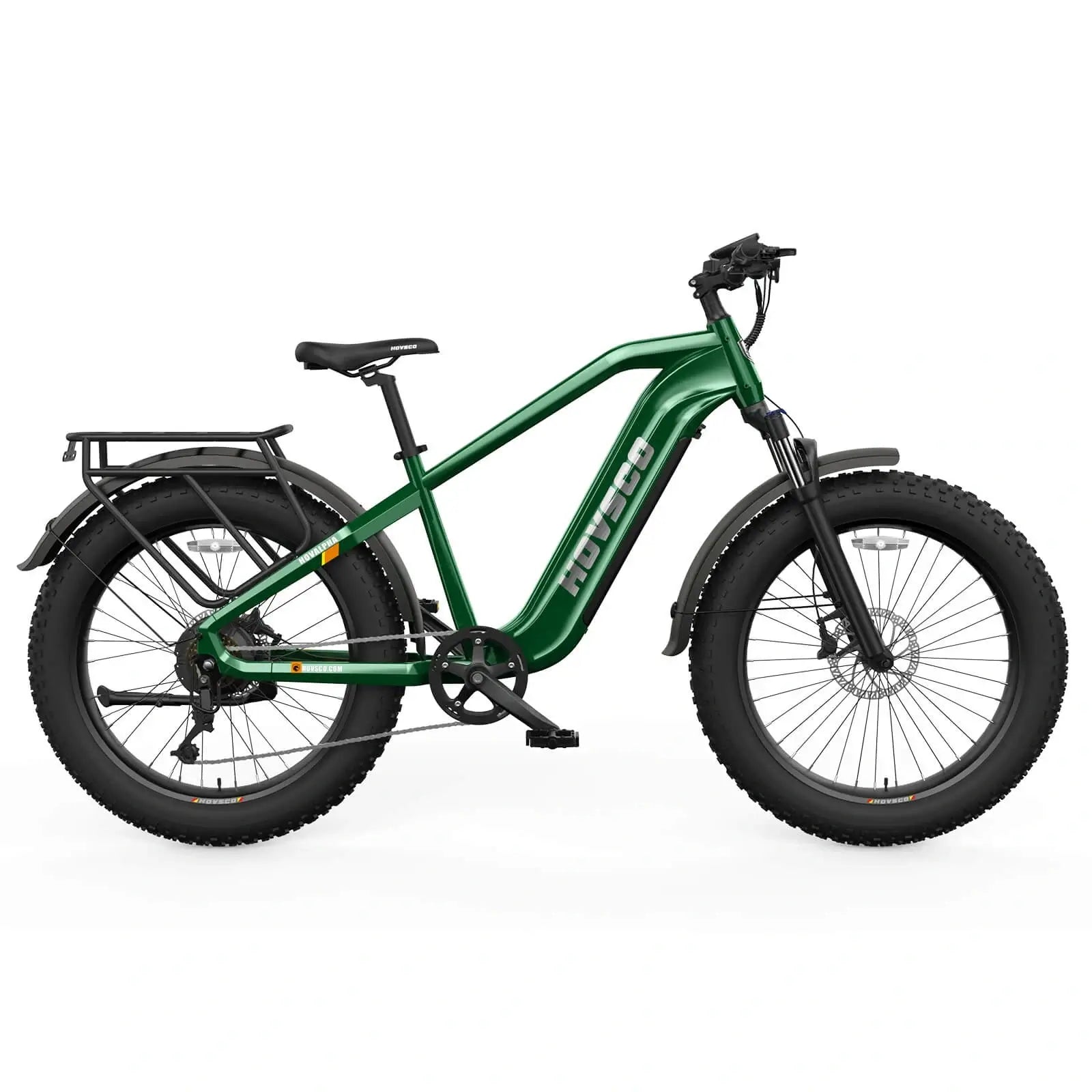
HOVSCO applies winter-specific design by pairing wide fat-tire-compatible frames with components that remain predictable at low pressures and cold temperatures. This includes strong rims for 26"x4.0" casings, cold‑resistant rubber compounds, and controllers tuned for gentle torque ramps on slick surfaces.
From what I’ve seen, HOVSCO also designs around real winter use cases rather than showroom conditions. That means allowing sufficient fork and rear‑triangle clearance for snow buildup, routing cables to minimize ice interference, and recommending setups like the HOVSCO™ 26"x4.0" carbide-studded winter tire for riders in northern storm belts who face deep powder and freeze‑thaw cycles all season.
Riders in northern blizzard regions can prepare by choosing 26"x4.0" fat tires with aggressive lug patterns, carbide studs, and deep tread grooves, then tuning pressures to 5–12 PSI based on snow depth and speed. Combining these tires with fenders, sealed drivetrains, and cold‑ready batteries turns an e-bike into a reliable winter transport tool.
In my experience, the biggest difference between “winter‑curious” and “winter‑ready” setups is attention to the details: checking winter pressures before every ride, brushing packed snow out of tread grooves after long slogs, and cleaning salt from rims and spokes. With those habits, a fat‑tire ebike on HOVSCO’s winter rubber can handle repeated blizzards without losing its edge or structural integrity.
In our HOVSCO winter labs, we learned that preventing lateral washout is less about chasing maximum knob height and more about how the 26"x4.0" casing, lug pattern, and tread grooves work together at realistic snow pressures. When you add carbide studs to that system and tune the motor’s torque delivery for cold surfaces, a fat-tire e-bike stops feeling sketchy and starts riding like a controlled snow vehicle, even in thick, fresh powder and refrozen ruts.
Riders should combine ultra-wide 26"x4.0" fat tires, aggressive winter lug patterns with deep tread grooves, and smooth, deliberate technique to prevent lateral washout in thick snow. Adding carbide studs, as on the HOVSCO™ 26"x4.0" carbide-studded winter tire, completes the package by anchoring the tire when snow hides ice beneath.
Approach your winter setup like a snow‑traction system, not just “big tires”. Choose lug patterns that act like tracks, tune pressures to let tread grooves engage fully, and ride with consistent lean and torque. With this mindset, a fat‑tire e-bike becomes a dependable winter tool for northern blizzard zones, keeping you upright and in control when roads and trails disappear under powder.
Can I ride standard mountain bike tires safely in deep snow?
You can, but narrow tires sink and slide more easily; 26"x4.0" fat tires with winter lug patterns and low pressure are far safer and more predictable in deep powder.
Are carbide studs necessary if I only ride in soft snow, not on ice?
If your routes never expose frozen ground or refrozen ruts, studs are optional; however, carbide studs add a crucial safety margin when soft snow unexpectedly covers ice.
What tire pressure should I use for a 26"x4.0" fat tire in winter?
Most riders find 5–10 PSI ideal for slow, deep-snow riding, and 8–12 PSI better for mixed conditions, adjusting based on rider weight, cargo, and rim width.
Does a fat-tire winter setup feel sluggish on cleared pavement?
Yes, aggressive lug patterns roll slower on bare roads, but this is the trade‑off for the lateral grip and stability that keep you upright in snow and slush.
When should I replace my winter fat tires?
Replace winter fat tires when side lugs round off, tread grooves shallow noticeably, or carbide studs are missing in clusters, all of which reduce lateral grip and braking control.
Share:
A Step‑by‑Step Guide to Riding Your Fat Bike on Deep Salt‑Water Sand with HOVSCO HovAlpha (June 2026)
Why are fat tire ebikes ideal for big and tall riders?