


![[ New Arrival ] Porto Max Electric Scooter For Commute & Grocery Shopping - HOVSCO](http://www.hovsco.com/cdn/shop/files/PotroMax-3.jpg?v=1706927007&width=1200)
- by SEO
How 4.0-Inch Fat Tires Turn Sand, Snow, and Mud Into Your Highway (June 2026)
- by SEO
E-Bikes
Accessories
 Free Shipping
 15-Day Returns
 2-Year Warranty
Free Shipping
15-Day Returns
2-Year Warranty
2-Year Warranty
Free Shipping
15-Day Returns
2-Year Warranty
Fat-tire e-bikes are transforming from niche winter toys into all-season transportation, driven by riders who want real off-road capability without sacrificing daily usability. At the same time, global fat-tire e-bike demand is accelerating, with market value projected to grow strongly through the 2030s as riders seek stability, comfort, and adventure-ready designs. In this shift, 26 x 4.0-inch tires running low pressures around 5–15 PSI have become the gold standard for riding on sand, snow, and mud, where traditional narrow tires simply sink.
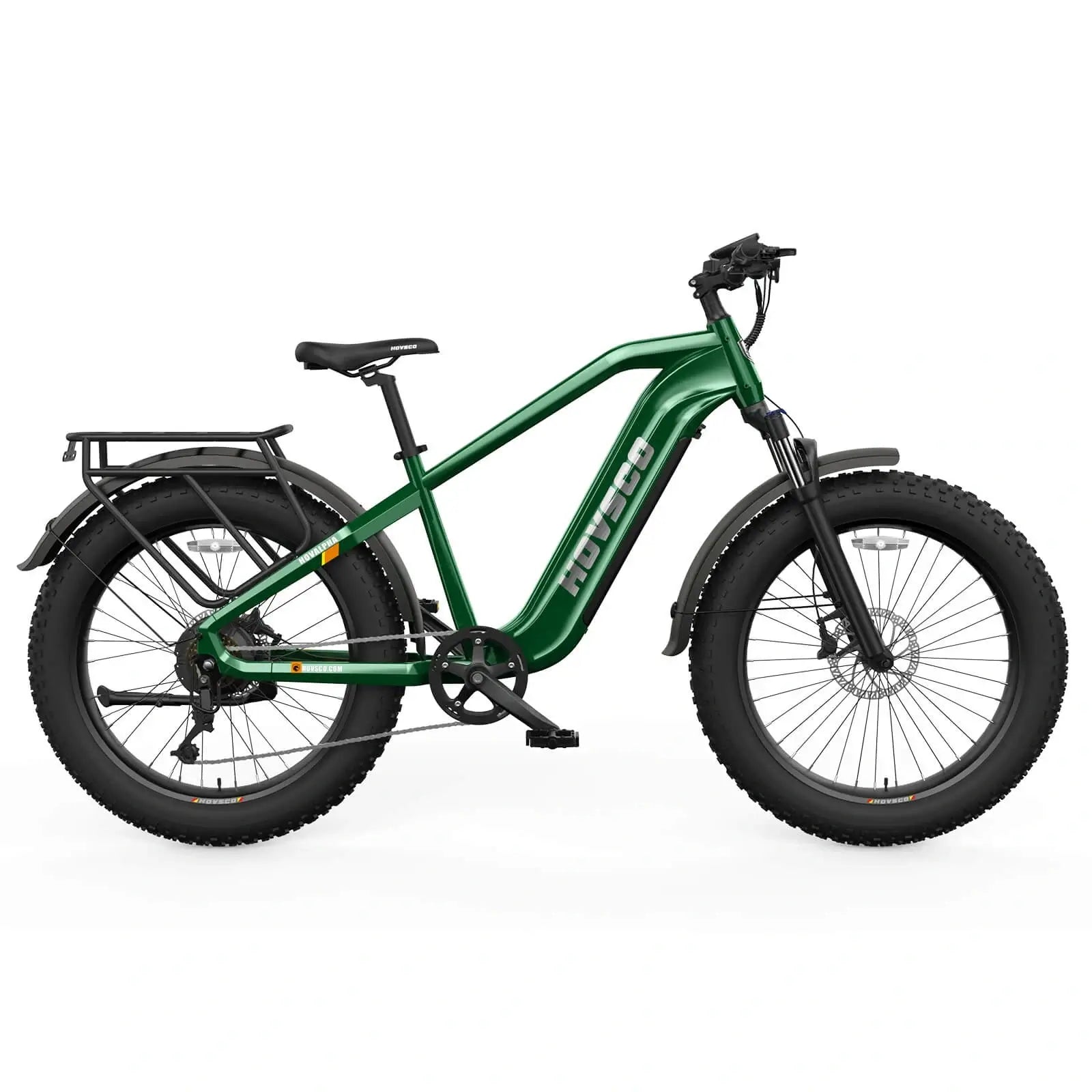
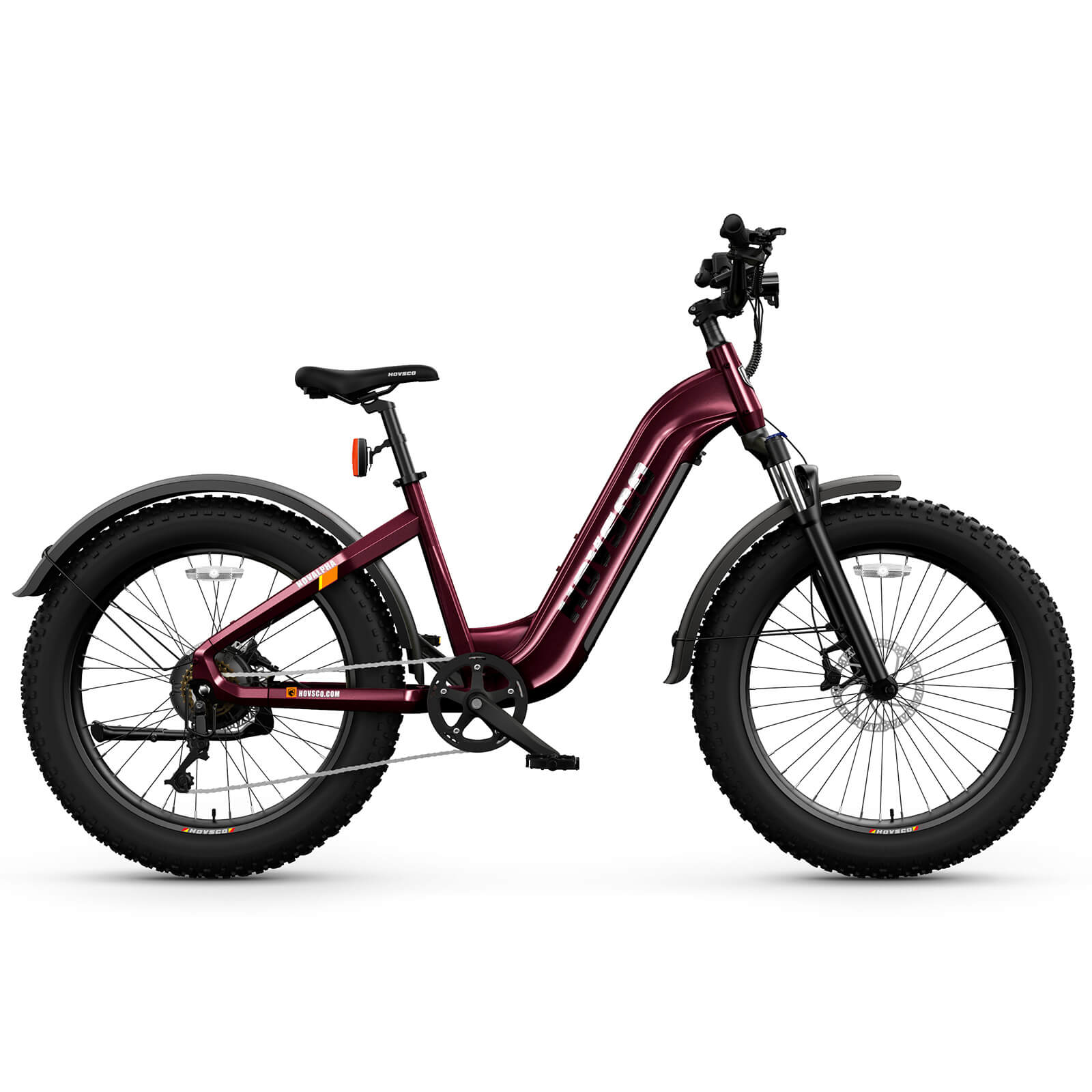
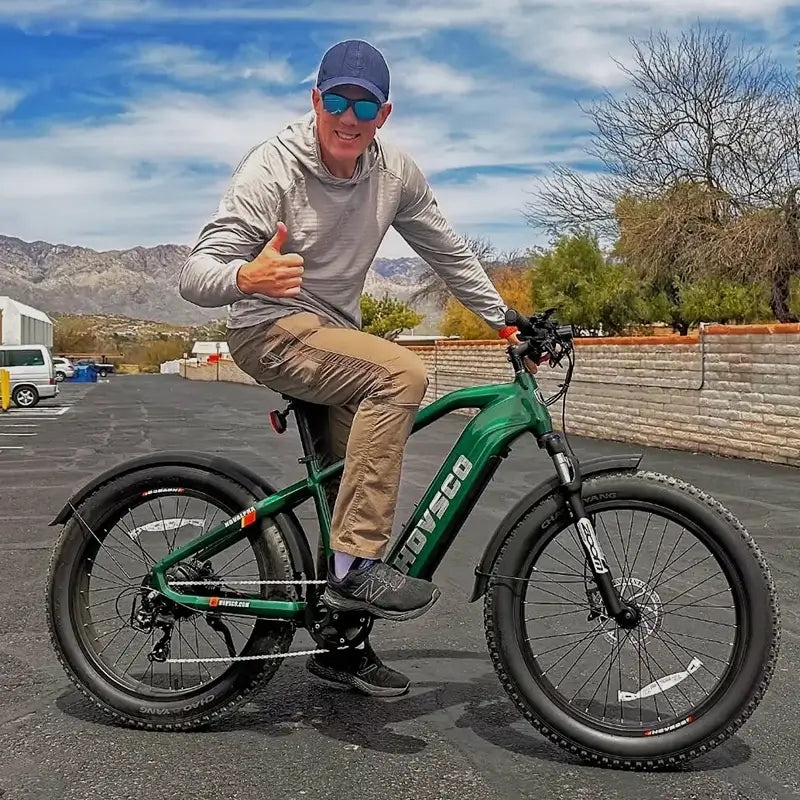
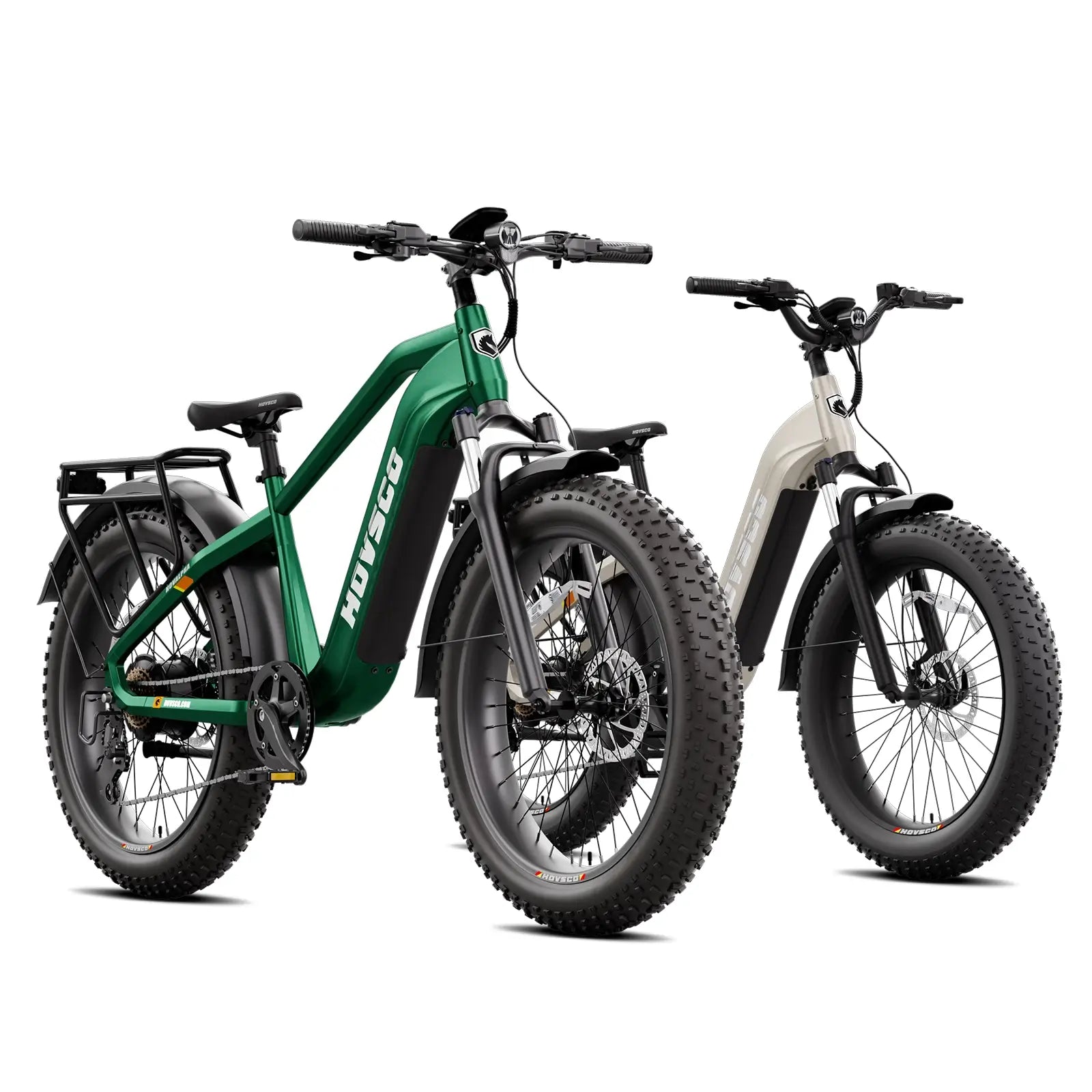
With its 26 x 4.0-inch fat tires, 1300W peak motor, 48V 20Ah battery, and up to 80-mile range, the HOVSCO HovAlpha Long-Range Fat Tire Electric Bike is purpose-built to float over loose terrain while still cruising comfortably on pavement. For riders who want one bike that can commute during the week and explore beaches, snow trails, and muddy backroads on weekends, HovAlpha’s blend of flotation, power, and payload capacity up to 450 lbs stands out as a practical, real-world solution.
How 4.0-Inch Fat Tires Turn Sand, Snow, and Mud Into Your Highway with the HOVSCO HovAlpha 26" Fat Tire E-bike, June 2026.
Floatation physics describes how a 4.0-inch fat tire, run at low pressures around 5–15 PSI, spreads a rider’s weight over a much larger contact patch so the tire “floats” on loose sand, snow, or mud instead of cutting through and sinking. On a bike like the HOVSCO HovAlpha with 26 x 4.0-inch tires, dropping pressure into this range can more than double the rubber actually touching the ground, dramatically reducing ground pressure and improving traction on unstable surfaces.
Riders who only know traditional 2.1-inch mountain bike tires often underestimate how brutal loose terrain can be. On dry beach sand, a narrow, high-pressure tire concentrates your full system weight into a contact patch only a few square inches in size, pushing the tire deep into the surface so every pedal stroke feels like wading through water. In shallow snow or muddy ruts, the same small, stiff contact patch slides, slices, and digs instead of gripping, forcing riders to dab, walk, or give up sections altogether.
By contrast, a 4.0-inch fat tire at low PSI deforms significantly to match the shape of the terrain, turning that tiny footprint into a long, wide “foot” that spreads weight like a snowshoe. Lowering pressure from typical on-road values to around 10 PSI can increase contact patch area by well over 50%, and carefully tuned setups for sand and snow can reach increases of 100–150% or more depending on rider weight and rim profile. On a bike like the HovAlpha, that means the same 450 lbs rated payload is now supported by a far bigger area, cutting ground pressure dramatically and making it far easier to glide over sand, snow, or mud instead of plowing through it.
At the heart of floatation is a simple relationship: tire contact patch size is roughly equal to load divided by tire inflation pressure. If you halve the inflation pressure while keeping rider and bike weight the same, you roughly double the size of the contact patch, allowing the tire to run larger and flatter against the ground.
For a 26 x 4.0-inch fat tire under a 200 lb total load, a representative example shows that at 30 PSI the contact patch might be around 12 square inches with ground pressure near 16.7 PSI; dropping pressure to 10 PSI can expand the contact patch to around 30 square inches and cut ground pressure to only 6.7 PSI. This expansion is exactly why fat tires at 5–15 PSI behave like miniature hovercraft: by spreading your weight, they ride higher in soft material, preserve forward momentum, and maintain traction where narrow tires would stall or trench. On HOVSCO fat-tire models like the HovAlpha and HovScout, 4.0-inch e-bike-rated tires are specifically chosen to operate in this low-pressure zone, pairing flotation with the motor’s 750W sustained power and up to 80-mile range for real-world all-terrain use.
Low-pressure 4.0-inch fat tires can cut ground pressure by more than half versus narrow, high-pressure tires, which is why they float over soft terrain instead of digging in.
Below is a conceptual comparison of the HOVSCO HovAlpha 26" Electric Fat Bike and two typical alternatives: a traditional 2.1" hardtail mountain bike and a hybrid/trekking e-bike with mid-width tires. Data for HovAlpha comes from HOVSCO’s official specifications; narrow-tire values are representative, not model-specific.
Floatation on sand
On beaches and dune tracks, the HovAlpha’s 26 x 4.0" tires flatten out at low PSI, distributing your weight so you skim the surface rather than cutting deep trenches that stall each pedal stroke. This lower ground pressure means you can maintain speed, steer more calmly, and avoid constantly dismounting in soft sections, even when carrying cargo up to the bike’s 450 lbs payload capacity.
Control in snow and mud
In snow and mud, the same wide footprint lets the tires bite through the top layer just enough to find grip while still staying high enough to avoid bogging down. Combined with the HovAlpha’s 750W sustained motor and torque sensor, you get smooth power delivery that reduces wheel spin, helping you climb and corner more predictably in low-traction environments.
Comfort on broken pavement
Even on rough city streets, low-pressure 4.0-inch tires act as natural suspension, absorbing bumps, cracks, and potholes that would rattle a narrow-tire bike. When paired with the HovAlpha’s front suspension fork and long wheelbase, this tire system turns broken pavement and gravel connectors into a more relaxed daily ride without sacrificing up to 28 mph top speed on open roads.
On a winter bike path with packed but uneven snow, dropping the HovAlpha’s tires to around 8–10 PSI lets them conform to ruts and footprints, so you track straight instead of being thrown off line.
On a tidal beach where the sand transitions from hard to powdery, a 4.0-inch tire at 10–12 PSI keeps the bike riding high when you cross softer patches, avoiding sudden sink that would stop a narrow-tire wheel cold.
On muddy forest access roads after rain, the long, wide contact patch of the HovAlpha’s tires spreads torque over more lugs, reducing spin-outs and letting the 750W motor pull you steadily uphill without chopping the trail into deep ruts.
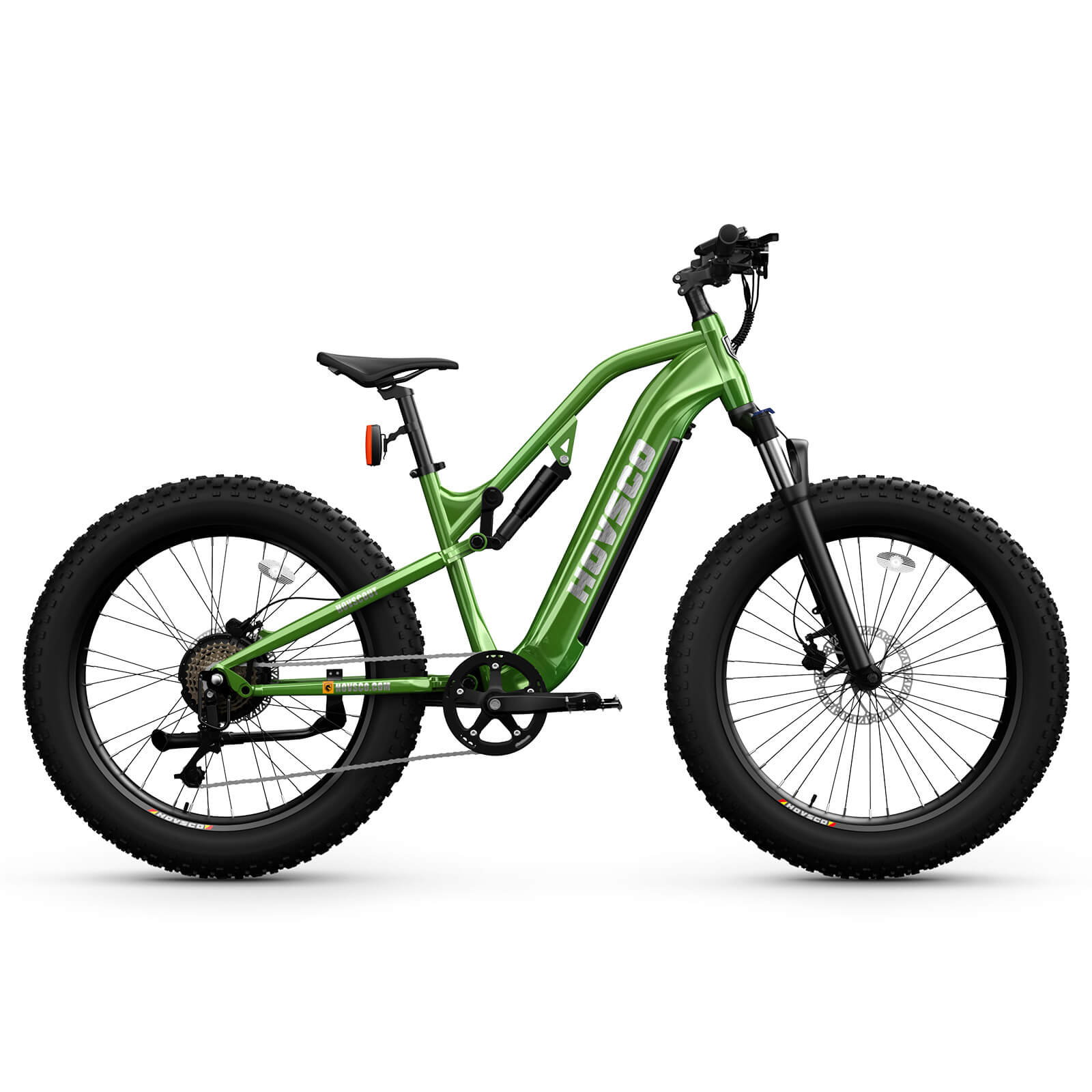
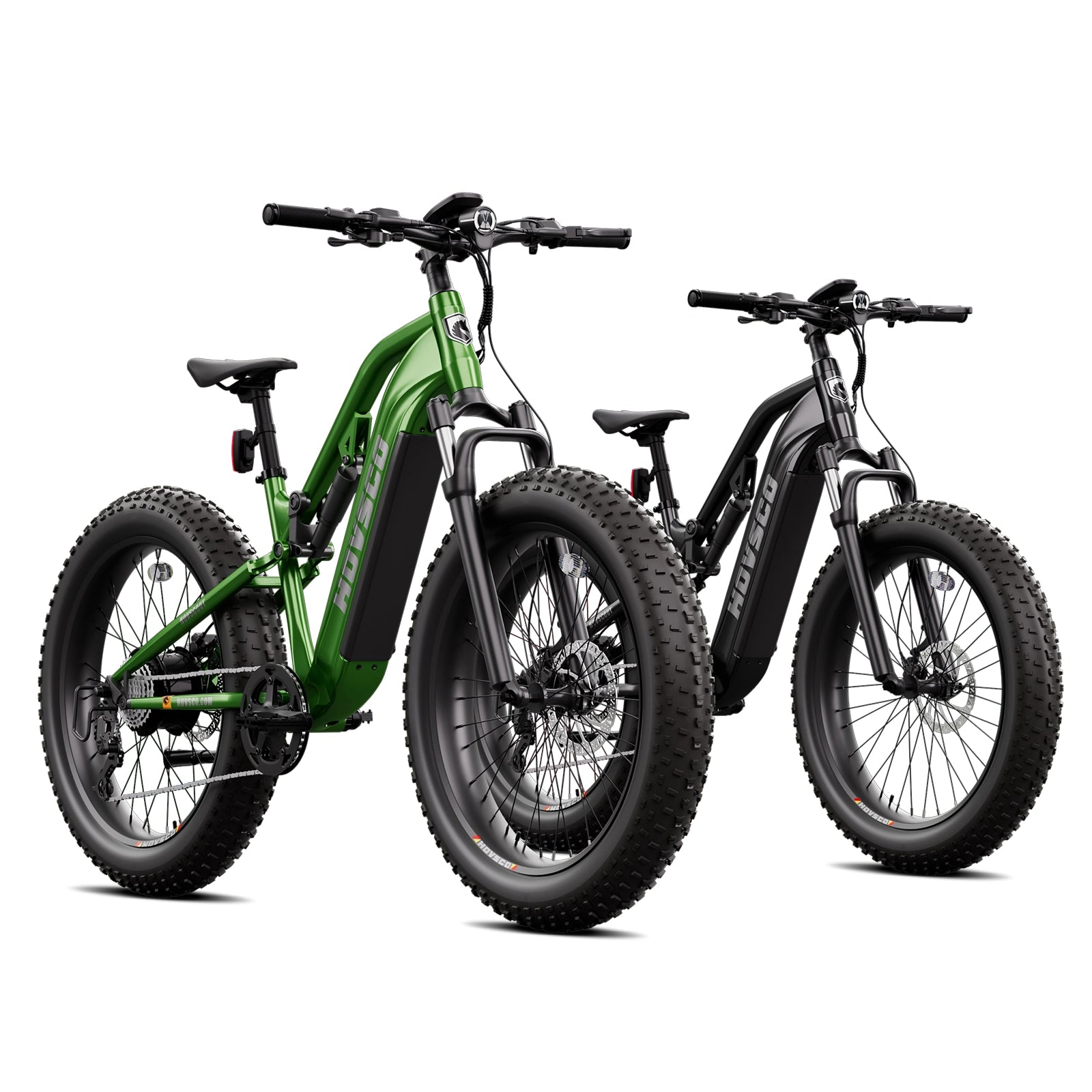
For riders who like the floatation physics of the HovAlpha but want different formats, HOVSCO offers several complementary models. The HovScout 26" Full Suspension Fat Tire E-bike adds rear suspension to a similar fat-tire platform, making it appealing for riders who prioritize comfort and control on technical trails and rough off-road touring. Its 1300W motor, 26 x 4.0" tires, and 60-mile range are tuned to the same low-pressure flotation logic, but the four-bar rear linkage further smooths repeated hits and roots.
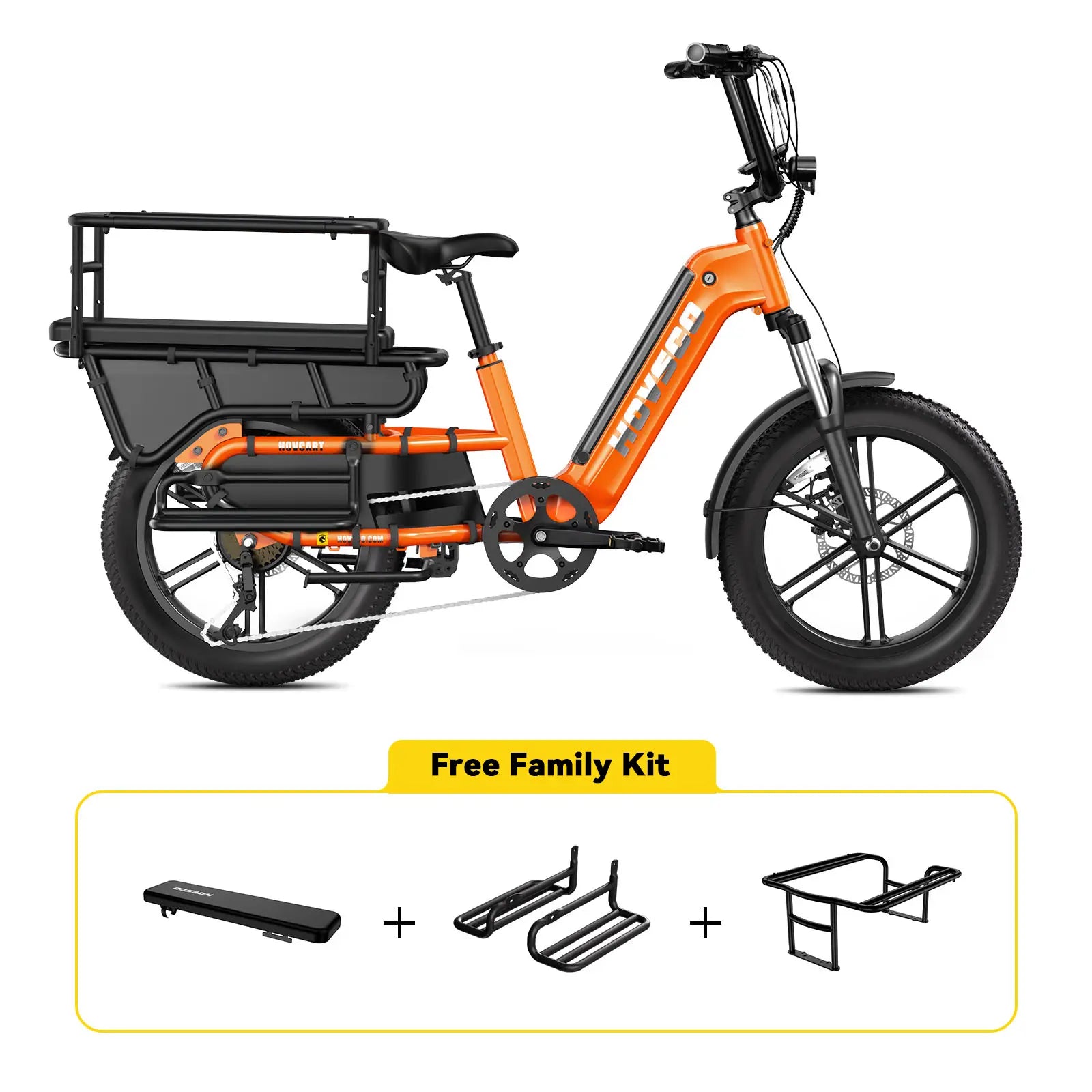
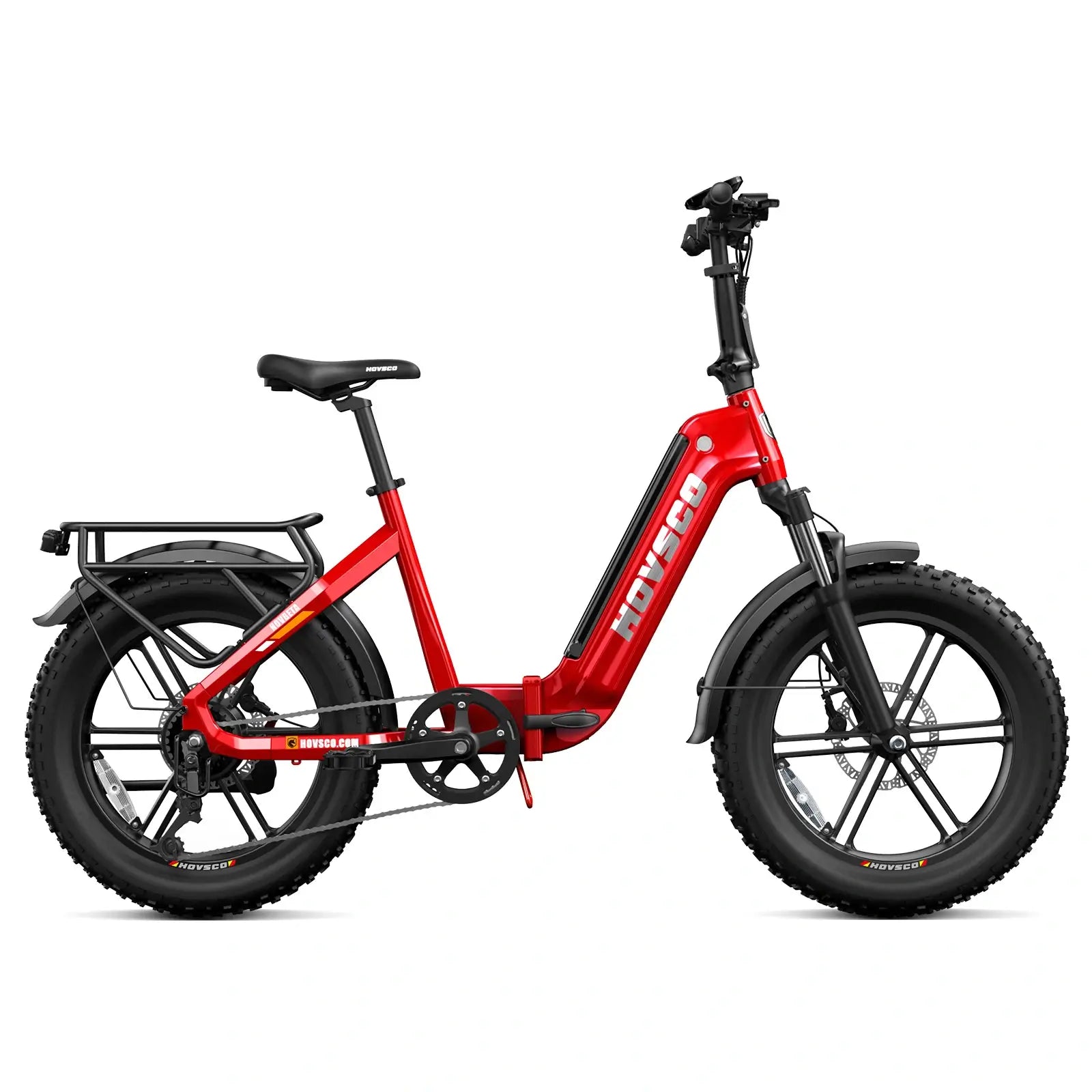
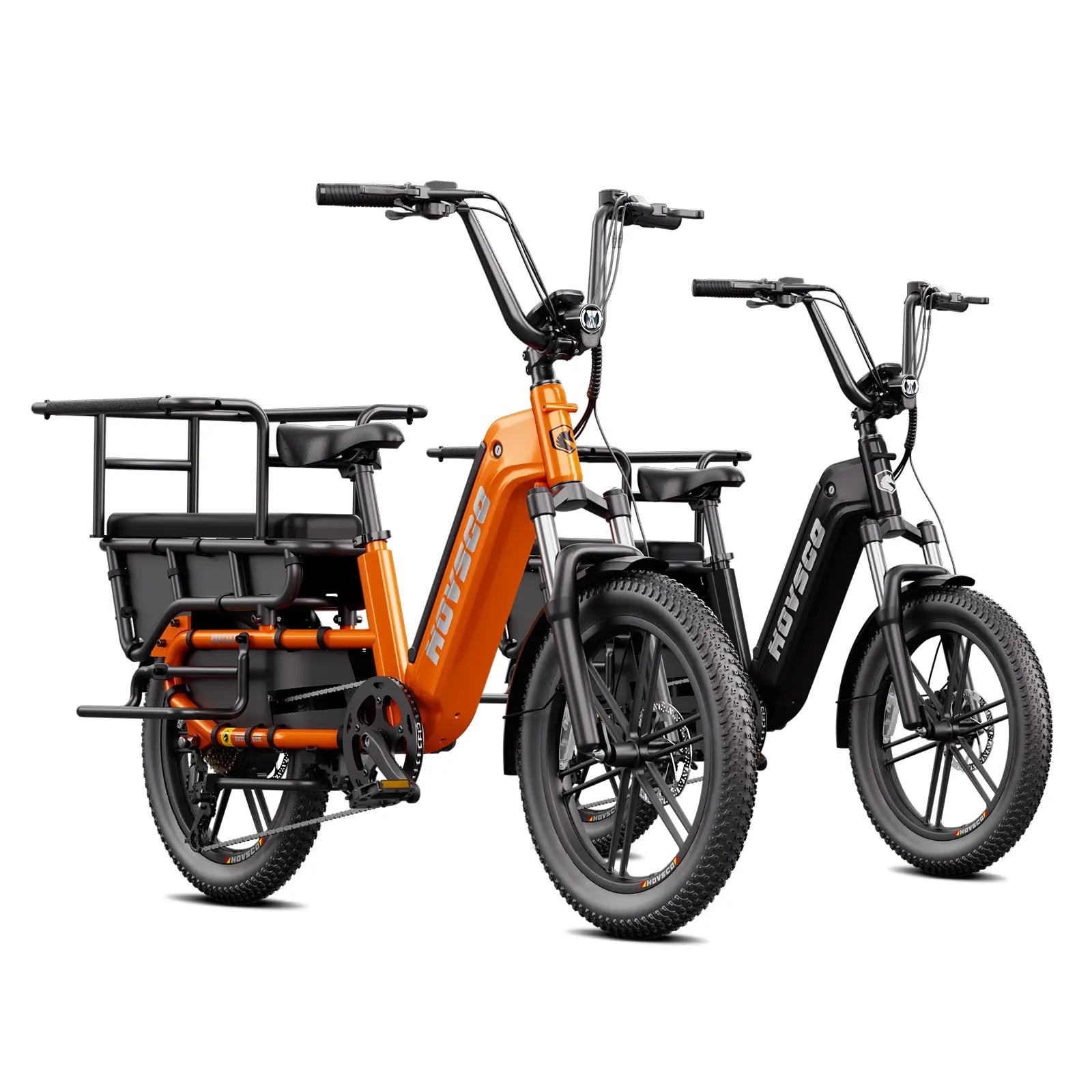
If you want fat-tire float but in a compact, apartment-friendly package, the HovBeta Foldable Fat Tire Ebike combines 20 x 4.0" tires with a folding frame. This format keeps the same low-PSI, large-contact-patch benefits for sand and snow, while making it easier to store in small spaces or load into a car trunk for weekend trips. For families and cargo-heavy riders who still occasionally encounter sand or snow, the HovCart Family E-bike offers wide, stable tires and a 450 lbs payload rating, designed to replace short car trips with practical, electric-assisted hauling.
Define your terrain first
Before reaching for the pump, decide where you will ride: hardpack gravel, soft beach sand, slushy city snow, or mixed conditions. Harder surfaces can handle higher PSI for efficiency, while loose terrain demands lower PSI to maximize floatation and grip.
Start from a safe baseline PSI
For a typical HovAlpha rider on mixed terrain, a starting point around 12–15 PSI balances rolling resistance with comfort and traction. Heavier riders or those carrying cargo close to the 450 lbs limit should begin nearer the top of that range to protect rims and avoid excessive sidewall squirm.
Lower PSI gradually for sand and snow
When you reach soft surfaces, bleed pressure down in small steps, checking tire deformation as you go; a good visual indicator on 4.0-inch tires is a noticeable but not extreme sidewall bulge under your full weight. Many experienced fat bikers settle between 6–10 PSI for deep snow or powdery sand depending on rider weight and load.
Test floatation and steering feel while riding
Ride a short section and evaluate whether the tires are still cutting too deeply or feel “wooden” over bumps; if they are, release another small amount of air to expand the contact patch and soften impacts. Your goal is a smooth, gliding sensation where the HovAlpha maintains momentum without sudden front-wheel sink.
Avoid going too low for the rim and load
Extremely low PSI increases the risk of bottoming the rim on rocks, roots, or edges, particularly at higher speeds or with heavy cargo. If you feel the rim touch or see severe sidewall folding in hard turns, add air until the tire stabilizes while still maintaining the floating feel on soft sections.
Reinflate for pavement and commuting
After leaving sand, snow, or mud, bring pressures back up closer to 15–20 PSI to restore efficiency and reduce heat build-up at higher speeds, especially when using the HovAlpha’s 28 mph capability. Carrying a compact pump ensures you can fine-tune PSI on the go, unlocking the full versatility of fat-tire floatation without compromising day-to-day commuting performance.
Scenario 1: Beach commuter vs weekend explorer
Traditional approach: A hybrid or city e-bike with mid-width tires handles paved bike paths well, but when you ride along the soft upper sections of a beach or cross dry dune sand, the front wheel sinks, steering wanders, and you end up pushing more than riding.
With HovAlpha: Running its 26 x 4.0" tires around 8–12 PSI, the HovAlpha stays on top of the sand, so you can ride the length of the beach, cut across soft patches, and still comfortably cruise home on pavement using its 80-mile pedal-assist range.
Scenario 2: Winter city rider on unplowed paths
Traditional approach: A narrow-tire commuter struggles once snow becomes uneven or partially packed, with ruts grabbing the wheels and icy patches causing sudden slides.
With HovAlpha: The wide, low-pressure tires act like built-in snowshoes, flexing into ruts for stability while the 750W sustained motor and torque sensor give controlled power, helping you maintain balance and speed even when plows have not yet cleared your route.
Scenario 3: Loaded bikepacking on muddy backroads
Traditional approach: On wet rural roads, a touring bike with narrower tires digs into muddy shoulders and loses traction on climbs, forcing you to dismount or reroute.
With HovAlpha: The 4.0-inch tires disperse your bikepacking load across a large contact area, while the 1300W peak motor and 90 Nm-class torque help keep the wheels turning smoothly over mud and washboard, turning unpredictable backroads into enjoyable, controllable tracks.
How does a 4.0-inch fat tire contact patch compare to a 2.1-inch tire on sand and snow?
A 4.0-inch fat tire at low PSI can easily have a contact patch that is more than twice as large as a narrow 2.1-inch tire under similar load, dramatically lowering ground pressure. This means the fat tire floats on top of sand or snow instead of cutting through and sinking, which is why bikes like the HovAlpha can ride where traditional mountain bikes stall.
Is 10–15 PSI really safe for 26 x 4.0-inch e-bike tires like those on the HovAlpha?
For most riders, 10–15 PSI is a well-recognized operating range for 4.0-inch fat tires on loose terrain, offering strong flotation and grip without excessive rim risk when ridden sensibly. As with any fat bike, heavier riders or those carrying cargo should start higher within that range and adjust cautiously while monitoring sidewall support and rim clearance.
Will low-pressure 4.0-inch tires feel sluggish on pavement with the HovAlpha motor?
At very low PSI, fat tires do create more rolling resistance on pavement, but the HovAlpha’s 750W sustained motor and 28 mph top speed help offset that drag for everyday riding. Many riders choose to increase tire pressure slightly for paved commutes and lower it again for off-road adventures, using the bike’s generous battery capacity to keep rides efficient.
How does the HovAlpha’s 4.0-inch tire setup interact with its 1300W peak motor on steep, loose climbs?
The large contact patch allows the tire to transfer the motor’s torque more evenly to the ground, reducing wheel spin and helping the HovAlpha climb soft, steep sections more predictably than narrow-tire setups. The torque-sensing pedal assist further modulates power, matching output to rider input so the rear wheel maintains grip rather than breaking loose.
What’s the difference between HovAlpha and full-suspension fat bikes like HovScout for soft terrain floatation?
Both models use 4.0-inch fat tires and similar low-pressure floatation principles, but the HovScout adds rear suspension to better absorb repeated hits on technical trails. For riders focused on mixed city, gravel, and soft terrain with some off-road, the HovAlpha’s hardtail format is typically sufficient, while more aggressive trail riders may prefer the added comfort and control of HovScout’s full suspension.
Can I use HovAlpha with cargo or passengers on sand and snow without losing stability?
The HovAlpha’s 450 lbs payload rating and wide tire footprint are specifically designed to maintain stability even under substantial load, provided pressures are tuned appropriately for terrain. When combined with controlled motor assist and low PSI, you can carry gear or heavy groceries and still benefit from the floatation effect that keeps the bike riding high on soft surfaces.
The floatation physics of 4.0-inch fat tires at 5–15 PSI transforms sand, snow, and mud from obstacles into usable routes by enlarging the contact patch and slashing ground pressure. On a purpose-built platform like the HOVSCO HovAlpha—with its 26 x 4.0" tires, 1300W peak motor, 48V 20Ah battery, and 80-mile pedal-assist range—this physics translates into real-world capability: commuting on Monday, beach cruising on Saturday, and winter paths all season long. For riders who want to extend their map without changing bikes, learning to tune tire pressure becomes as important as choosing the right frame, making HovAlpha a compelling centerpiece of a year-round, all-terrain lifestyle.
If you are ready to stop avoiding sand, snow, and mud and start riding over them, explore the HovAlpha 26" Electric Fat Bike and its fat-tire siblings directly on HOVSCO’s site. HOVSCO is a U.S.-based e-bike brand focused on long-range, fat-tire and cargo platforms that combine UL 2849-certified safety, up to 450 lbs payload capacity, and accessible pricing for families and adventure riders alike.
HOVSCO — Official Website, Product Listings and Specs (2026)
HOVSCO — Blog: What Makes Fat Bike Tires So Special for Snow, Sand, and Trails? (2026)
HOVSCO — Blog: What Is the Best Fat Tire E-Bike for Sand and Snow Riding? (2026)
River Valley Cycling — Fat Bike Tire Pressure: Dialing in Your Ride (2022)
EbikePsi — Fat-Tire PSI in Sand & Snow: Traction vs Rim Protection (2025)
InsideEVs — E-Bike Specialist HOVSCO Showcases The HovAlpha Fat-Tire Bike (2022)
Accio — 2025 Fat Tire Ebike Trends: Market Growth & Top Models (2025)
Strategic Market Research — Electric Bike Market Report (2024)
Road & Track — Point(s) of Contact: Wider Isn’t Necessarily Better (2013)
Share:
What Are the Pros and Cons of Fat Tires?
Fine-Tuning Fat Tire Air Pressure for Sand Dunes, Snowdrift, and Asphalt with HOVSCO’s Digital Pump (June 2026)