























![[ New Arrival ] Porto Max Electric Scooter For Commute & Grocery Shopping - HOVSCO](http://www.hovsco.com/cdn/shop/files/PotroMax-3.jpg?v=1706927007&width=1200)
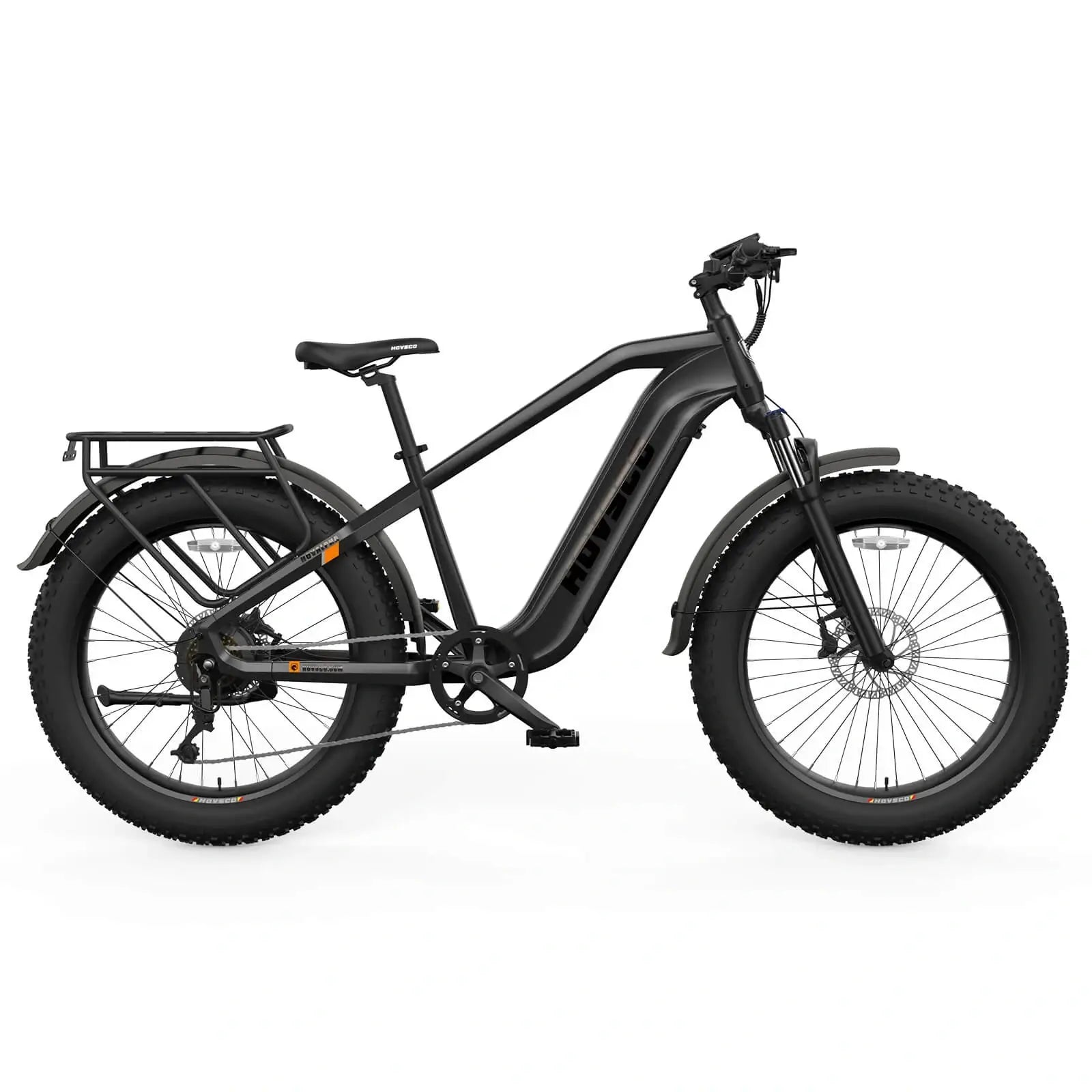
HovAlpha Step-Through
26 × 4-inch tires, a 960Wh battery and a listed 450 lb payload make this the collection’s clearest full-size fat-tire option.
Shop HovAlpha →E-Bikes
Accessories
 Free Shipping
 15-Day Returns
 2-Year Warranty
Free Shipping
15-Day Returns
2-Year Warranty
2-Year Warranty
Free Shipping
15-Day Returns
2-Year Warranty
Low entry. Width chosen on purpose.
Compare HOVSCO low-step e-bikes by actual tire width, frame use and everyday handling—not by category label alone. The current collection ranges from 4-inch fat-tire bikes to a narrower city alternative.
Compare by real specification
26 × 4 in · full-size fat tire 20 × 4 in · folding fat tire

Motor Power

Top Speed

Payload Capacity

Range
HOVSCO HovBeta Foldable E-Bike
Motor Power
Top Speed
Payload Capacity
Range
HOVSCO HovAlpha Long-Range E-Bike
Motor Power
Top Speed
Payload Capacity
Range
MOTOR POWER
Top Speed
Payload Capacity
Range
Four low-step choices, three tire approaches
Start with mounting clearance, then compare tire width, storage, load and route. A wider tire can add flotation and cushion, but it also changes weight, rolling feel and transport space.
26 × 4-inch tires, a 960Wh battery and a listed 450 lb payload make this the collection’s clearest full-size fat-tire option.
Shop HovAlpha →20 × 4-inch tires combine true fat-tire width with a folding frame. Measure folded dimensions and lifting weight before choosing it for storage.
Shop HovBeta →20 × 3-inch tires, an extended cargo layout and a listed 450 lb payload prioritize passengers and loads over a classic 4-inch fat-tire profile.
Shop HovCart →27.5 × 2.20-inch tires make this the narrower, lighter city-oriented comparison. Choose it when paved-road efficiency matters more than fat-tire width.
Shop HovRanger →Compare low-step access, real tire specifications, handling, load and storage before choosing.
A step-through fat tire electric bike combines an open, low-entry frame with wide tires. The frame can reduce how high a rider must lift a leg when mounting or stopping; the tires can provide a larger contact patch and more air volume. Neither feature guarantees comfort, stability or suitability by itself. Fit, geometry, total weight, tire pressure, surface, load and rider technique still matter.
This collection currently contains two 4-inch fat-tire models, one 3-inch cargo model and one 2.20-inch city model. That range is useful for comparison, but it means shoppers should read each specification rather than assume every listed bike has the same tire category.
A step-through frame removes or substantially lowers the traditional top tube, creating a more open path between the saddle and handlebar area. This can help riders who make frequent stops, carry a rear load, wear everyday clothing or simply prefer not to swing a leg high over the saddle.
鈥淪tep-through鈥?does not specify one exact standover height. Compare the published dimensions, saddle adjustment range, handlebar reach and your own inseam. Stand beside the bike, consider how you will start and stop, and remember that racks, child seats or cargo can change the mounting routine. If easy entry matters but wide tires do not, compare the broader step-through e-bike collection instead.
For this page, the clearest fat tire step-through e-bikes are the HovAlpha with 26 脳 4-inch tires and the HovBeta with 20 脳 4-inch tires. HovCart uses 20 脳 3-inch tires, while HovRanger Step-Thru uses 27.5 脳 2.20-inch tires. The narrower option may feel more direct on pavement; the wider options can provide more air volume and flotation on loose or uneven surfaces.
Do not choose solely by width. Wheel diameter, tread, casing, rim, bike weight and pressure all affect steering and rolling behavior. Use only the tire sizes and pressure range approved for the exact bike, rim and load. The tire sidewall and current manual鈥攏ot a generic online number鈥攕hould guide inflation.
A low-step fat tire electric bike may make mounting easier, but wide tires, batteries, motors, racks and cargo equipment can make the complete bicycle substantial. Current listed weights range from approximately 55.4 lb for HovRanger to 73.6 lb for HovAlpha, including battery. Confirm the latest variant specification before ordering.
Think through parking, stairs, elevators, racks and vehicle transport. Measure both the usable storage footprint and every doorway or turn along the path. If you must lift the bike, evaluate the actual lifting points and your ability to control the full weight; never lift from a display cable, brake hose or removable accessory.
Wider tires can be useful on packed dirt, gravel and other imperfect surfaces, but they do not turn every route into an appropriate riding area. Sand depth, mud, snow, grade, surface firmness and local access rules change what is practical. Ride conservatively, leave extra braking room and avoid assuming that tire width replaces skill or route judgment.
For a page focused specifically on loose surfaces, compare electric bikes for beach and sand. For sustained climbing considerations, use the electric bikes for hills collection. Those pages own their terrain-specific search intent; this page remains focused on the low-step plus tire-width combination.
The current collection lists removable 48V batteries from 720Wh to 960Wh, torque sensors, hydraulic disc brakes and different rated loads. Battery watt-hours help compare stored energy, but real range changes with assistance, speed, hills, temperature, tire pressure, rider and cargo weight. For range-first shopping, go to long-range fat tire e-bikes.
Motor peak wattage is not the same as sustained output, and neither number alone predicts hill performance or ride feel. Confirm the exact variant, legal class settings and local operating rules. Brake performance also depends on setup, pad condition, rotor condition, load, traction and rider input.
Published payload is normally the combined load carried by the bike, not permission to place that amount on any single rack. Include the rider, battery, bags, locks, child equipment and cargo, then follow every frame, rack and accessory limit. The lowest applicable limit controls.
For family loads and a long rear platform, the HovCart is the relevant comparison here, but detailed cargo intent belongs on the cargo electric bikes page. If daily errands are the purpose, see electric bikes for grocery shopping.
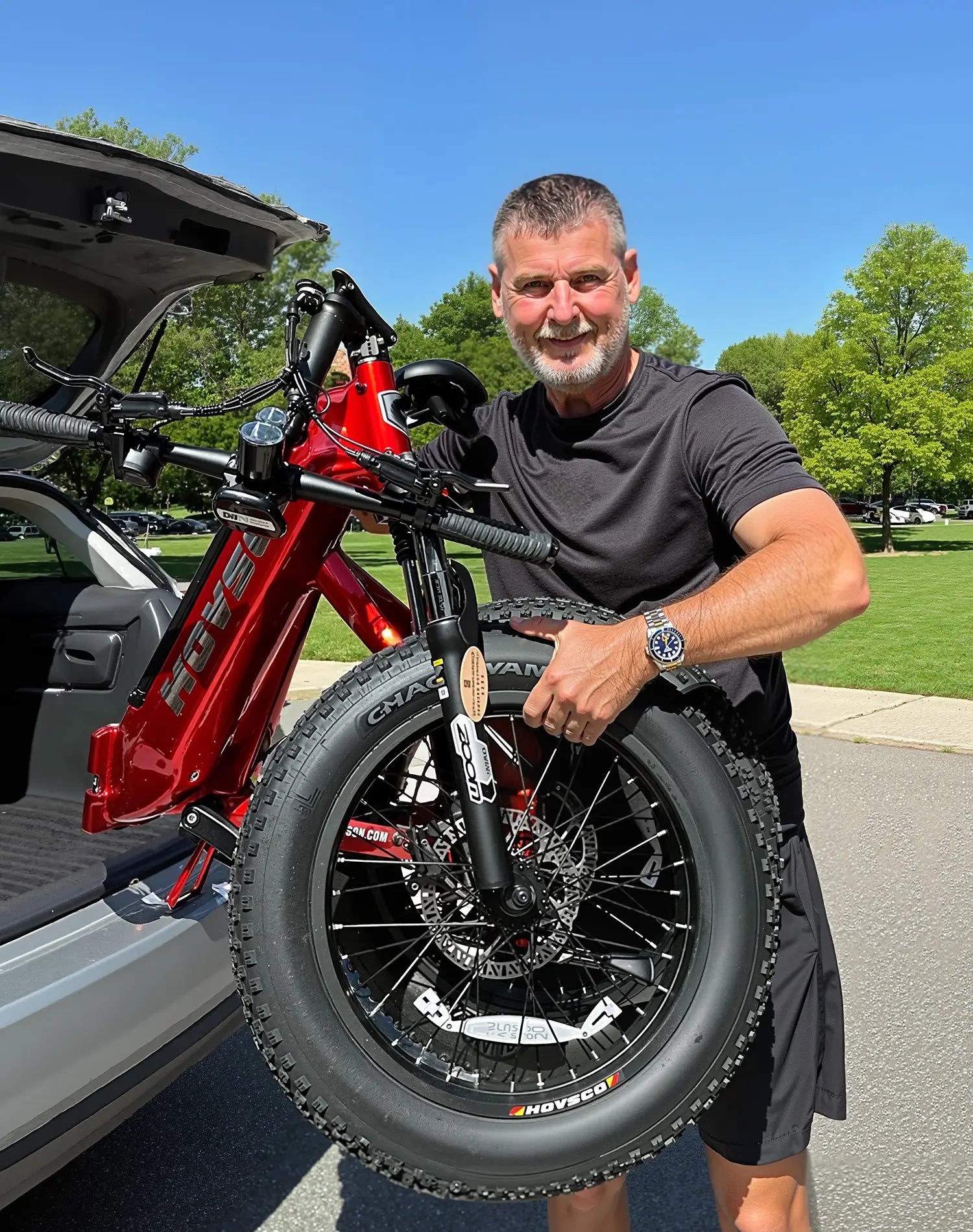
HovBeta folds, while all four current models list removable internal batteries. A folding frame reduces part of the bike鈥檚 footprint; a removable battery can change the charging and storage routine. Neither feature guarantees that the complete bike will fit an apartment, vehicle or RV.
Use folding e-bikes for small spaces when storage footprint is the primary intent. Use electric bikes with removable batteries when off-bike charging and battery handling are the primary intent. Keeping those questions on their dedicated pages prevents this collection from competing with them.
Questions before choosing tire width
No. Current specifications list 26 × 4-inch tires for HovAlpha, 20 × 4-inch tires for HovBeta, 20 × 3-inch tires for HovCart and 27.5 × 2.20-inch tires for HovRanger Step-Thru.
A step-through frame creates a lower, more open mounting path than a traditional high top tube. It may help with frequent stops or limited leg clearance, but shoppers should still compare standover height, reach, saddle adjustment and total bike weight.
The current HovAlpha Step-Through uses 26 × 4-inch tires, while the HovBeta uses 20 × 4-inch tires. Confirm the tire specification on the exact product page because models and variants can change.
Not necessarily. A low entry can make mounting easier, but fat tires, batteries, motors and accessories add weight. Current listed complete-bike weights range from about 55.4 lb to 73.6 lb, so evaluate stairs, racks and vehicle loading separately.
HovRanger Step-Thru is the narrower-tire city comparison at 27.5 × 2.20 inches. HovAlpha and HovBeta are the 4-inch choices; HovCart prioritizes cargo use with 20 × 3-inch tires. Base the choice on your route, load, storage and fit.
Review HOVSCO's shipping policy, assembly videos and manuals, limited warranty and return and refund policy. Check current deadlines, eligibility, fees and product-condition requirements before ordering.