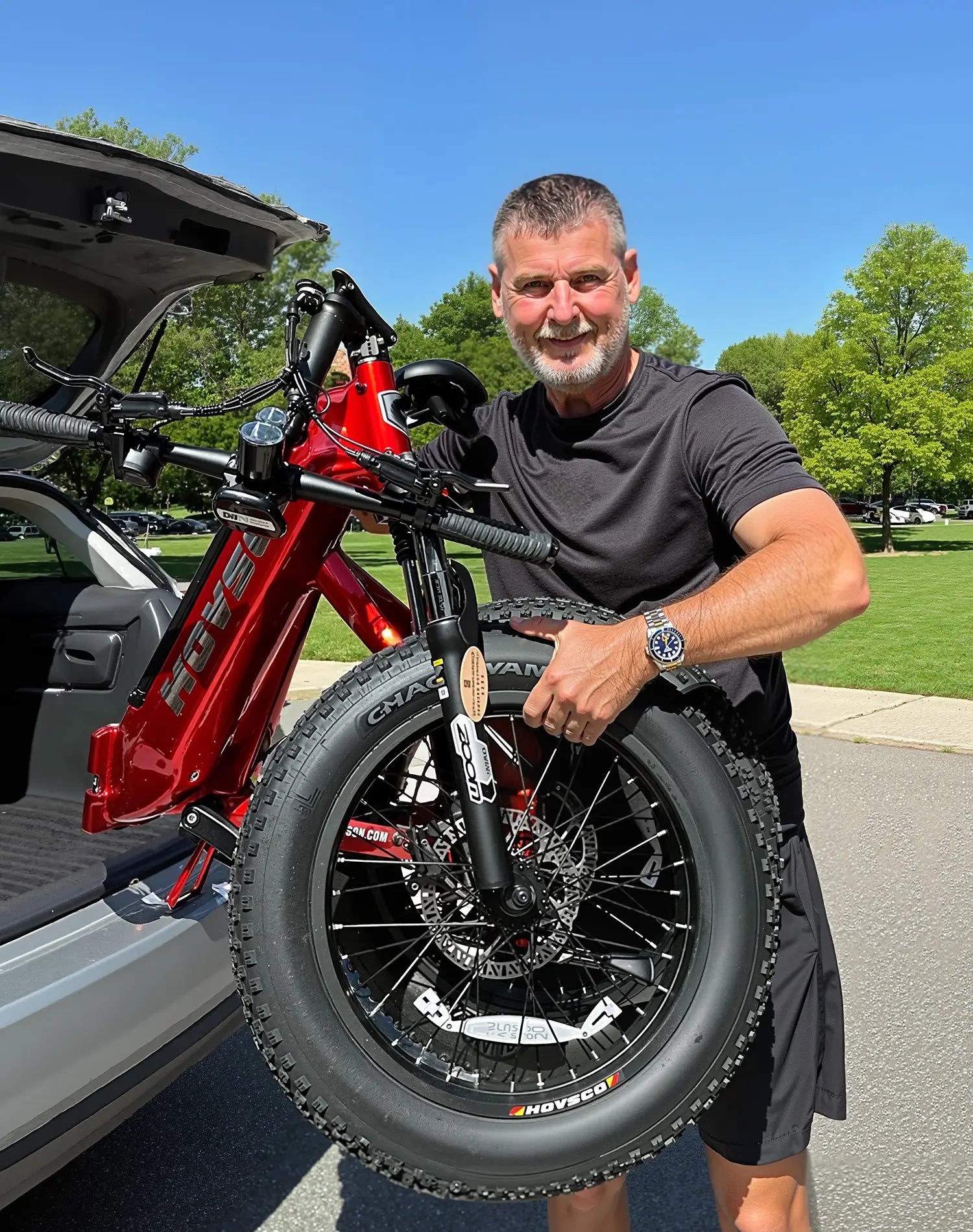
A folding e-bike for a small space should make indoor ownership practical without turning a hallway, closet or living area into an obstacle course. Folded size matters, but it is only one part of the fit. The bike must pass through the narrowest opening, rotate into the intended position, remain stable, protect the surrounding surfaces and be manageable every time it is moved.
Choose a permanent landing zone first
Start with one realistic storage location instead of hoping the bike will fit somewhere after delivery. Consider a closet floor, entry corner, utility area or another building-approved indoor space. The location should be dry, stable and accessible without moving furniture every day. Keep doors, stairs, corridors, fire equipment, electrical panels, heaters, appliances and ventilation openings clear.
Shared hallways and stair landings may be prohibited storage even when they look convenient. Confirm building, lease, condominium or property-management rules before planning to leave a bike there. A compact electric bike for apartment storage still needs a secure location inside the space you are permitted to use.
Measure the opening, interior and turning path
Measure the clear width and height of the narrowest doorway, closet opening and elevator entrance. Door trim, hinges, handles, closers and shelves reduce usable space. Then measure interior width, depth and height. Finally, allow space to rotate the folded bike through the opening and lower it into position. A rectangular set of folded dimensions can fit on paper while the actual bike cannot make the turn.
Use cardboard, taped floor lines or a box that matches the latest published folded dimensions. Move the outline through the complete path from building entrance to storage zone. Include pedals, handlebars, racks, bags, mirrors and any cover that stays on the bike. Accessories can change the effective width and make a small folding electric bike harder to position.
Separate storage footprint from carrying weight
Folding reduces occupied space; it does not automatically reduce weight or improve balance. HOVSCO currently lists Sync Max at 42.3 lb net weight and HovBeta at 66.4 lb including its battery. Check the latest product specifications again before ordering and add the weight of installed accessories.
Count every stair, threshold and lift between the street and the storage location. An elevator can solve the vertical distance but still requires enough interior space to enter, turn and exit without trapping the rider. Test the repeated movement with an equivalent weight when possible. A model can fit a closet yet remain unsuitable for a walk-up apartment if the lift is not controlled.
Compare the two listed formats
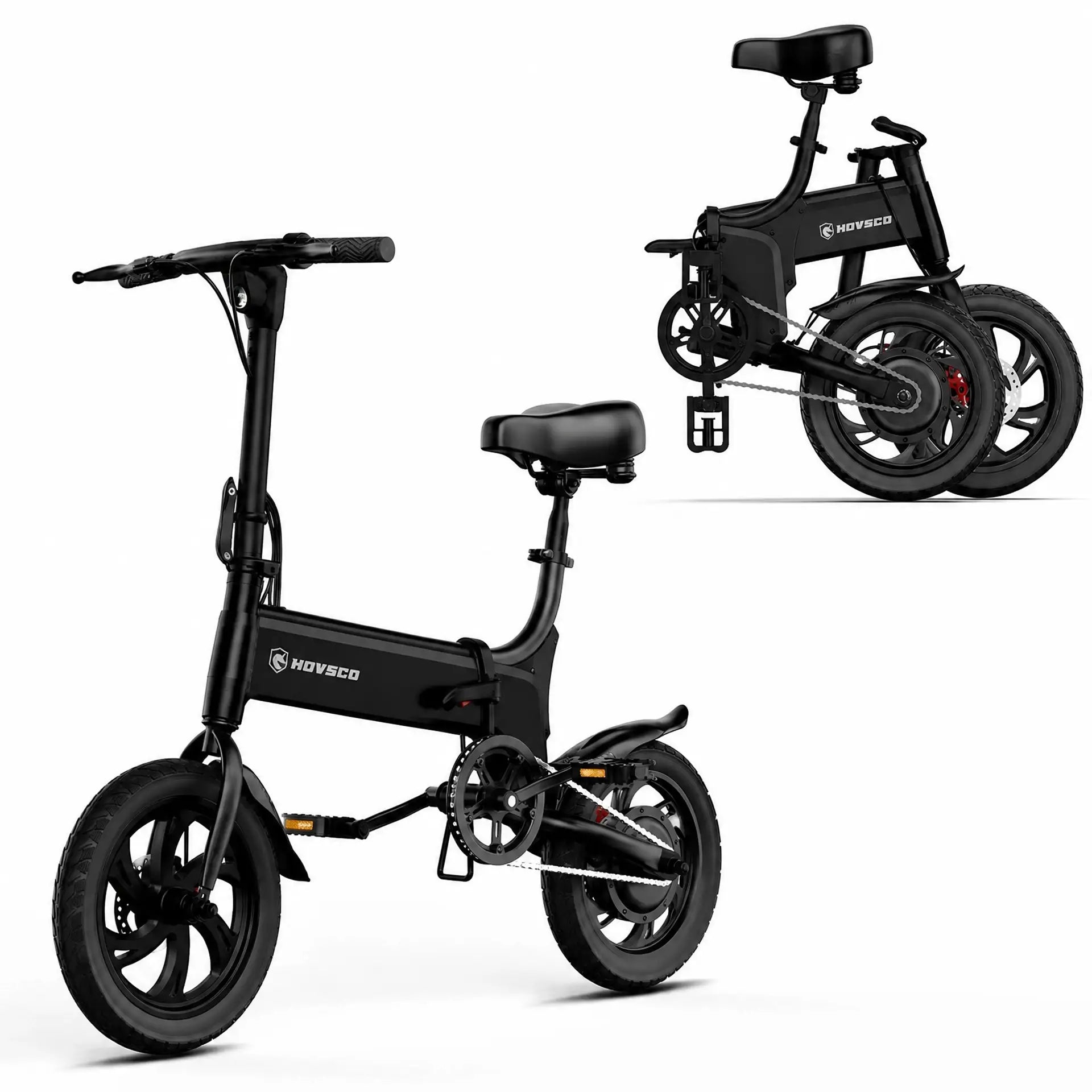
Sync Max uses a 14-inch format, has a published net weight of 42.3 lb and lists up to 30 miles of range. It is the first model to evaluate when a smaller format and lower published weight are the main constraints. Confirm the current folded dimensions, rider fit, storage stability and availability on the product page.
HovBeta uses 20 x 4-inch tires, is listed at 66.4 lb with battery and has a 40-60 mile average published range. The folding frame can reduce its storage footprint, but the wider tires and higher complete weight need more handling and floor-space planning. Neither wheel size proves that the bike will fit; compare the full measurements against the exact home.
Protect floors, walls and the bike
Create a clean landing area with a stable floor mat or tray that does not create a trip hazard. Let a wet or dirty bike dry in an appropriate ventilated location before placing it against furniture or inside a closed closet. Do not use high-pressure water for cleaning electrical components, and follow the product care instructions.
Keep controls, cables, brake levers, the display and folding latch away from hard contact points. Secure the folded package so it cannot open or roll. Do not improvise a wall hook, overhead shelf or vertical mount unless the equipment maker approves the complete bike weight and the building surface can support the installation. Floor-level storage is usually easier to inspect and retrieve.
If the approved storage area is shared, lock the frame to an appropriate fixed point where permitted and keep the key, charger and removable accessories organized inside the home. Record the serial number and avoid leaving the battery or display exposed to casual impact. A locked room does not replace stable positioning: the folded bike still needs to be prevented from rolling, opening or falling when another resident moves items nearby.
Plan battery storage and indoor charging
Follow the model instructions and building rules for battery handling, storage and charging. Use only the charger supplied or approved for the exact battery. Charge in a dry, stable and ventilated place that stays clear of exits, walkways, heat, direct sun, water and combustible clutter. Do not cover the charger or battery while charging.
Inspect the battery, port and charger after riding or moving the bike. Do not charge a battery that is damaged, swollen, leaking, unusually hot or showing another abnormal condition; stop using it and contact HOVSCO support. Removing a battery may reduce lifting weight when the manual allows it, but store the battery so its contacts cannot be damaged or shorted.
Make folding part of a repeatable home routine
Practice in a clear area before placing the bike near furniture. Power the bike off, remove loose cargo, follow the model-specific folding sequence and keep fingers clear of pinch points. Decide where the lock, charger, keys, helmet and removable accessories will go so the storage zone does not spread into the rest of the room.
Before the next ride, inspect the frame hinge and latch, handlebar, seatpost, pedals, wheels, brakes, tires and battery seating. Never ride when a folding latch is not fully closed and secured according to the manual. Use the HOVSCO assembly videos as an additional reference and request help if the mechanism does not look or feel correct.
Keep this page separate from commute and travel needs
This collection is for apartment, studio, condo, closet, elevator and limited indoor storage questions. If the main problem is carrying the bike on a train, planning a last-mile route or storing it at work, use the foldable commuter electric bikes page. If the primary space is a motorhome or camper van, use the RV folding electric bikes page.
For broad folding-bike shopping that is not tied to a small home, visit the foldable electric bikes collection. These links keep each page focused on a different task even when some models appear in more than one collection.
Complete the small-space purchase checklist
- Choose one permitted, stable and accessible indoor landing zone.
- Measure the narrowest opening, usable interior and three-dimensional turning path.
- Include handlebars, pedals, accessories and the space needed to fold and unfold.
- Confirm complete-bike weight and every stair, threshold, elevator and lift.
- Plan floor protection, drying, security, battery storage and approved charging.
- Check rider fit and route needs after the home storage requirements pass.
- Review current availability, specifications, shipping, assembly, warranty and returns.
Use the unchanged product grid above for current availability and inspect both product pages. The HOVSCO comparison tool can help if a different model may suit the riding need. Before checkout, read the current shipping policy, warranty policy and return and refund policy because terms can change.

























![[ New Arrival ] Porto Max Electric Scooter For Commute & Grocery Shopping - HOVSCO](http://www.hovsco.com/cdn/shop/files/PotroMax-3.jpg?v=1706927007&width=1200)