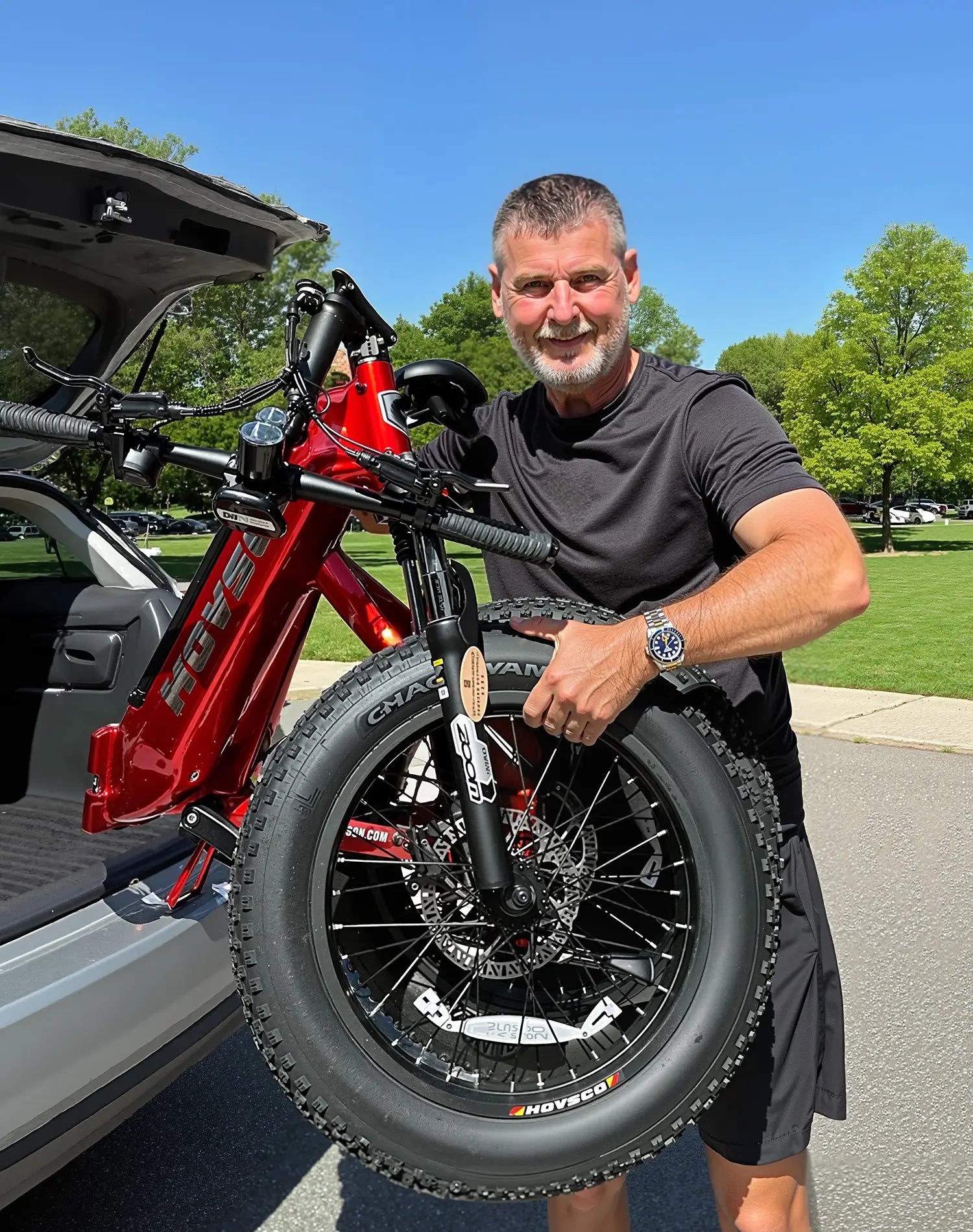
A folding electric bike for RV travel should solve a specific transport
problem: it must fit the space you actually have, be manageable at every loading stop and
support the rides you plan after the motorhome or camper van is parked. Folding changes the
bike's footprint, but it does not automatically make the bike light, weatherproof or suitable
for every exterior carrier. Use the process below before treating any model as the best fit.
Start with the RV, not the bike specification
Measure the clear width and height of the storage opening, not just the cabinet or bay
interior. Hinges, latches, door stays, slide rails and trim can reduce the usable entrance.
Then measure usable depth and the area required to turn the folded bike into position. A
rectangular set of product dimensions may fit on paper while the bike still cannot pass
through the opening at the required angle.
Mark the measurements on cardboard or tape and test the loading path. Include handlebars,
pedals, racks, baskets, mirrors and any cover that will travel with the bike. Accessories can
make a compact e-bike for RV storage wider or more awkward even when the
frame folds. If indoor storage is your main need rather than vehicle travel, compare the
purpose-built folding e-bikes for small spaces page.
Separate folded size from lifting weight
Folded dimensions describe space; complete-bike weight describes handling. HOVSCO currently
lists the Sync Max at 42.3 lb net weight and the HovBeta at 66.4 lb including its battery.
Those numbers should be checked again on the individual product pages because specifications
can change. Add the weight of installed accessories when planning a lift, tray or carrier.
Before buying an RV electric bike, practice the movement you will need to
repeat: lower the handlebar or frame, control the folded bike, lift it over the threshold and
secure it without twisting. Consider a second person, a suitable ramp or another loading
method if the movement is not controlled. A removable battery may reduce lifting weight, but
only remove it according to the product instructions and store it so the contacts cannot be
damaged or shorted.
Compare the two listed folding formats
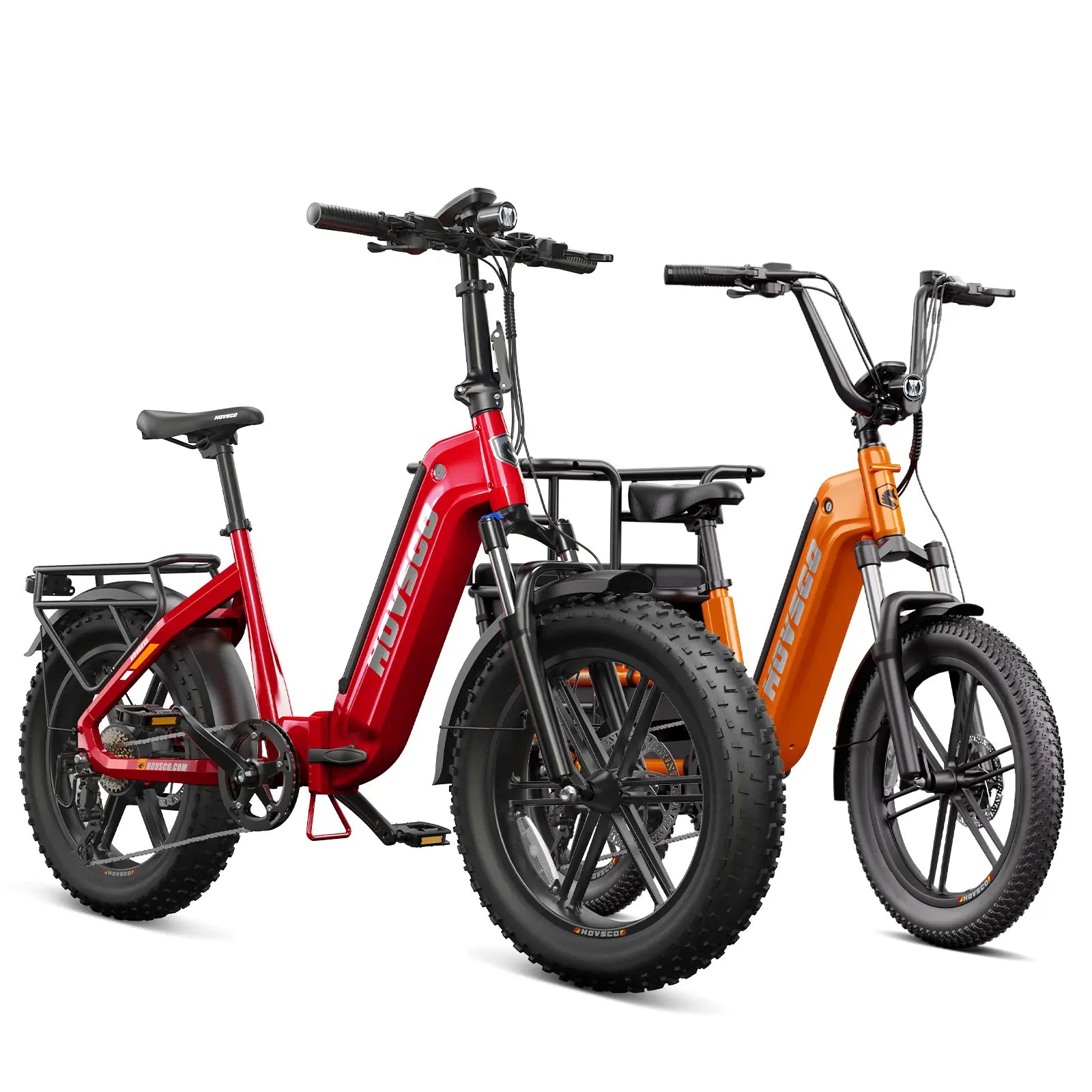
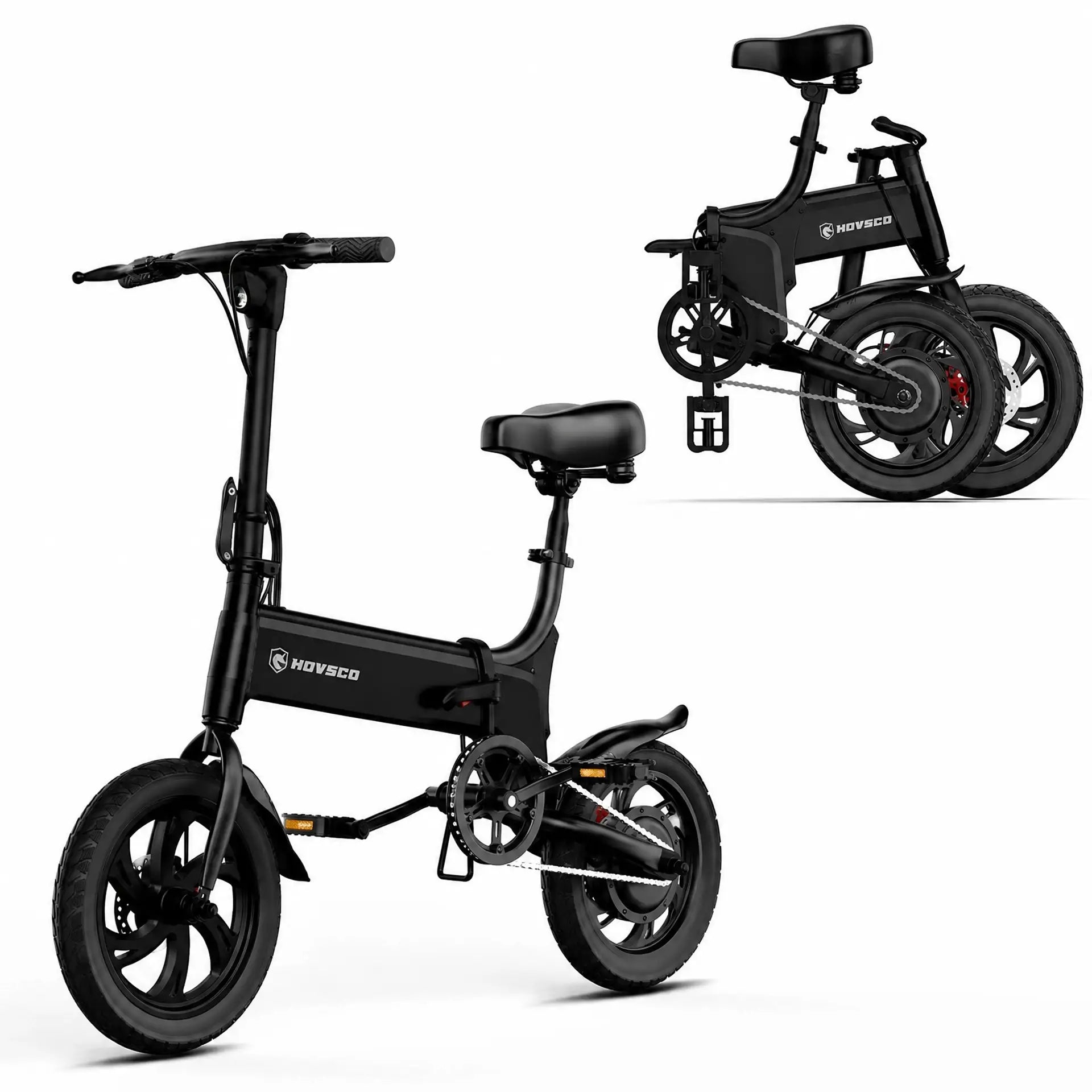
The 14-inch Sync Max is the lower-published-weight option on this collection. Its product page
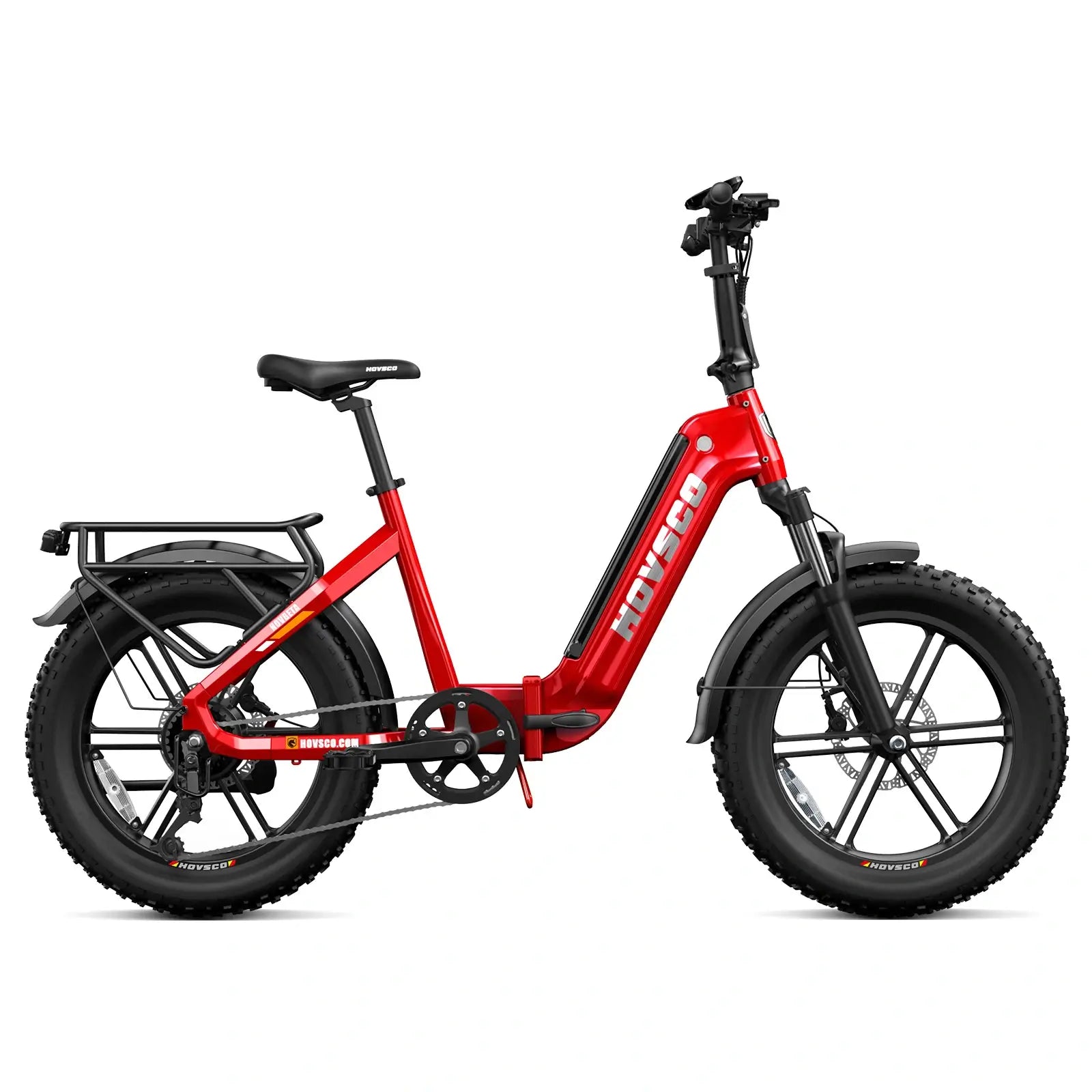
lists up to 30 miles of range and a 260 lb maximum load. The 20-inch HovBeta uses 20 x 4-inch
tires, is listed at 40-60 miles of average range and has a 450 lb maximum payload. Payload is
not the same as carrier weight capacity, and a higher payload does not mean the bike is easier
to move inside an RV.
Choose between them around storage, rider fit, lifting and route needs. The broader HovBeta
tire format can help with comfort and traction on some surfaces, but tire pressure, surface
condition and rider technique still matter. The smaller Sync Max format can reduce the space
and weight burden, while its shorter published range requires a more conservative route plan.
For general model shopping without the RV transport intent, use the
foldable electric bikes collection instead.
Internal RV storage and exterior carriers need different checks
Interior storage shields a bike from most road spray and direct weather, but the bike must be
prevented from shifting into furniture, wiring, plumbing or another battery. Use stable contact
points and avoid loading force onto the display, brake levers, cables or folding latch. Protect
nearby surfaces and leave enough access to inspect the bike after a rough travel day.
For exterior transport, do not assume that a hitch, bumper or platform approved for a passenger
vehicle is also approved behind a motorhome or travel trailer. Rear movement and leverage can be
different. Confirm the carrier maker's approved vehicle position, hitch class, maximum total load,
per-bike limit, wheelbase, tire width and tie-down method. The combined weight of bike, battery and
accessories must stay within every relevant limit. If any part is unclear, ask the carrier and RV
manufacturers before transport rather than relying on a generic e-bike rack for RV claim.
Plan range for the parked-RV route
Published range is a comparison reference measured under specific conditions, not a promise for
every ride. Rider weight, cargo, assistance level, stop-and-go riding, hills, temperature, headwind,
tire pressure and loose surfaces can all change consumption. Build the route from the complete
round trip and keep a reserve for wrong turns, campground detours and the return climb.
A practical foldable e-bike for a motorhome may be used for a campground-to-town
loop, a supply stop or local sightseeing after the RV is parked. Confirm that e-bikes are permitted
on each road, path and trail segment. A campground stay does not make every nearby trail legal. If
the trip is mainly about campsite and mixed-surface use, visit the dedicated
electric bikes for camping collection. If
distance is the dominant requirement, compare the
long-range fat-tire e-bike collection without
changing this page's RV storage focus.
Use the approved charger and a deliberate power plan
Bring the charger supplied or approved for the exact battery. Check the product instructions,
outlet condition and the RV park or campground's charging policy before connecting. Do not assume
that every inverter, generator, adapter or portable power station produces the power quality and
capacity required by the charger. Keep charging equipment dry, ventilated and away from a walkway.
Inspect the battery, port and charger after transport. Do not charge a battery that is damaged,
unusually hot, swollen, leaking or showing other abnormal signs; stop using it and contact
HOVSCO support. Follow the manual for charging temperature, sequence
and supervision. Never place a charging battery where it blocks an RV exit or is exposed to rain,
direct heat or combustible clutter.
Fold, secure and unfold in the same sequence
Practice before departure while the RV is level and there is room to work. Power the bike off,
remove loose cargo, follow the model's folding sequence and keep fingers clear of pinch points.
Secure the folded package so a hinge, crank or wheel cannot swing during transit. Do not use a
strap in a way that presses a brake lever or damages a cable.
At the destination, inspect the frame hinge, latch, handlebar position, seatpost, pedals, wheels,
brakes, tires and battery seating before riding. Never ride if a folding latch is not fully closed
and secured according to the manual. The model-specific process belongs on the product instructions;
use the HOVSCO assembly videos as an additional reference and
contact support when the mechanism does not look or feel correct.
Protect the bike between destinations
Road vibration, dust, salt, rain and direct sun can affect an externally carried bike. Use only a
cover that is compatible with the transport method and does not hide required lights or the license
plate. A loose cover can flap against the bike or add wind load. After wet or dusty travel, dry and
inspect the bike rather than storing it immediately for a long period.
At overnight stops, lock the frame to an appropriate fixed point where allowed and remove easily
detached valuables. Security inside a locked RV bay is helpful, but it does not replace correct
tie-downs during movement. Record the bike serial number and keep the key, charger and documentation
in a consistent place so the bike can be checked without unpacking the entire vehicle.
Complete the pre-purchase RV checklist
- Measure the storage opening, usable interior and loading path.
- Confirm complete-bike weight and add installed accessory weight.
- Choose a controlled lifting, ramp or loading method for every stop.
- Verify that any exterior carrier is approved for the exact RV position and total load.
- Check rider fit, route rules, realistic round-trip range and a return reserve.
- Plan battery protection and charging with the approved charger.
- Review current availability, specifications, shipping, assembly, warranty and returns.
The native product grid above is the source for current availability. Compare the two product pages,
then use the HOVSCO comparison tool if you also need to evaluate a
non-folding model. Before checkout, review the current shipping policy,
warranty policy and
return and refund policy because service terms may change.
Return to the two RV folding e-bikes
Recheck current specifications, availability, rider fit and transport requirements.



![[ New Arrival ] Porto Max Electric Scooter For Commute & Grocery Shopping - HOVSCO](http://www.hovsco.com/cdn/shop/files/PotroMax-3.jpg?v=1706927007&width=1200)