Snow and Sand Cycling: The Ultimate Guide to Year-Round Adventure with Fat Tire E-Bikes
by SteveJames
Discover how fat tire e-bikes revolutionize snow and sand cycling. Learn techniques, gear tips, and why HOVSCO's HovScout delivers unmatched performance for extreme terrain adventures.
The Rise of All-Terrain E-Biking
The global e-bike market has surged to $69.7 billion in 2025, with fat tire models capturing an increasingly dominant share as riders seek year-round mobility. Fat tire electric bikes alone reached $49.6 billion in 2023 and are projected to hit $71.5 billion by 2031, driven by demand for versatile all-terrain capability. Electric fat bikes specifically are expected to grow from 37.6% market share in 2025 to 48.2% by 2034, reflecting a fundamental shift toward adventure-ready transportation.
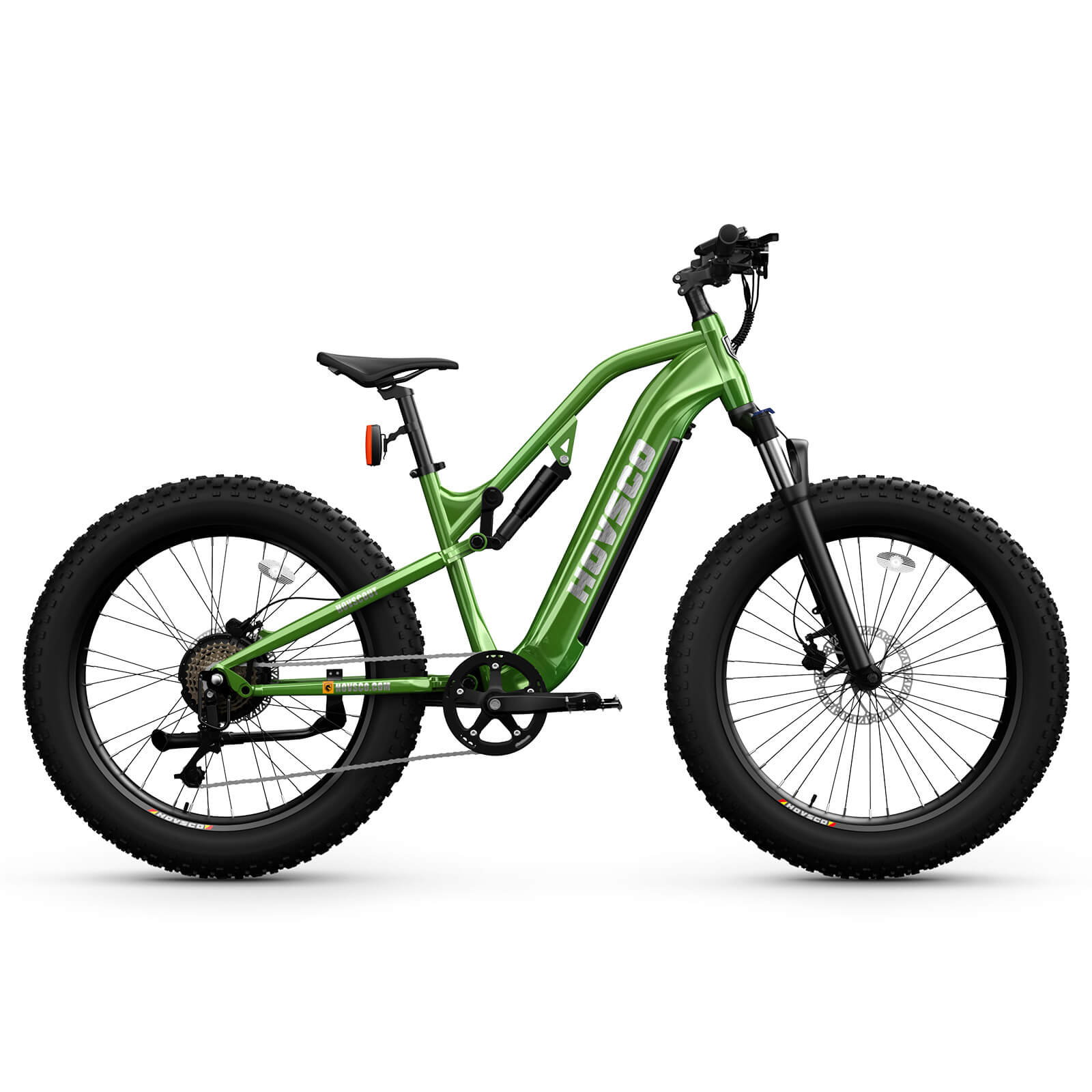
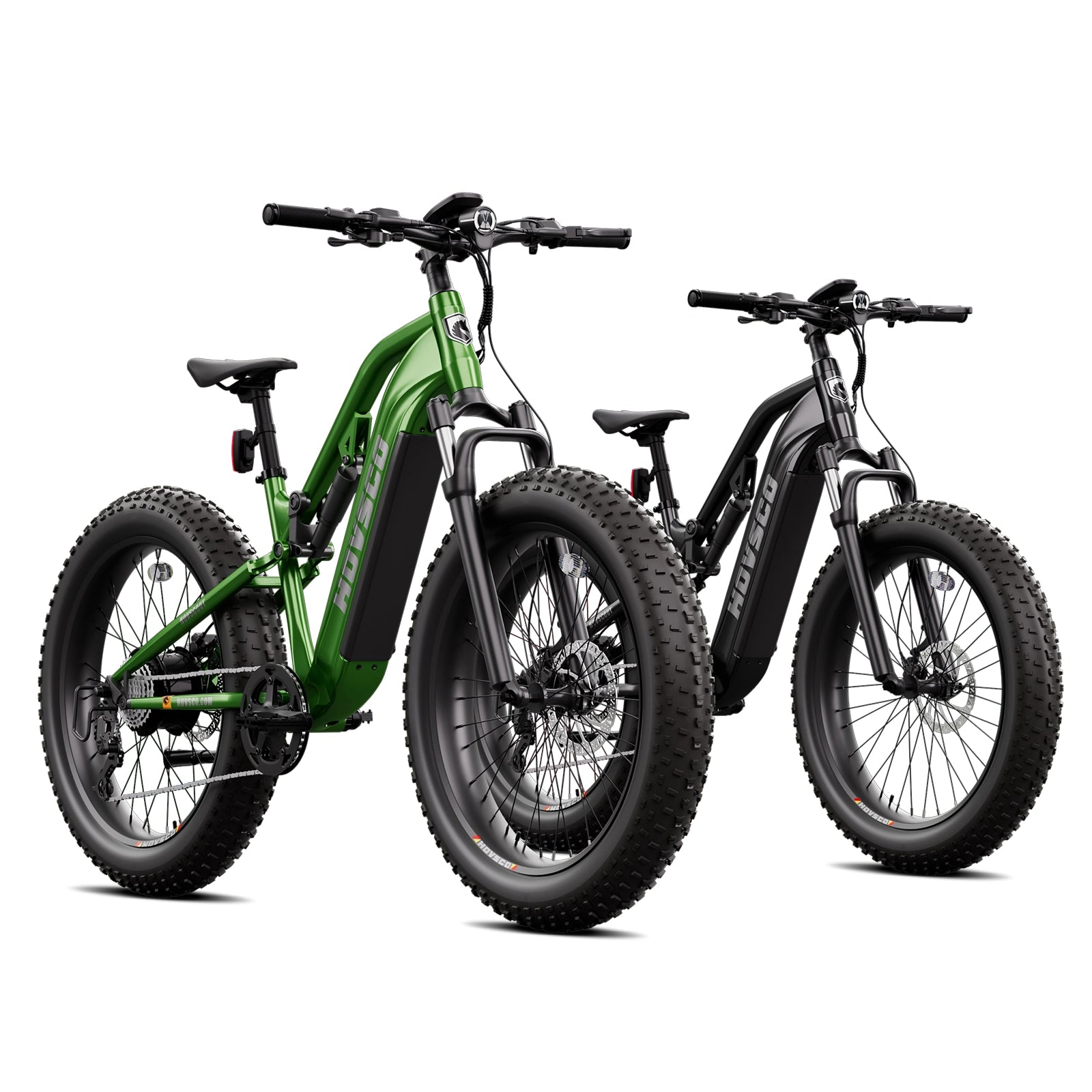
For riders who refuse to let seasonal changes dictate their outdoor lifestyle, fat tire e-bikes have emerged as the definitive solution. These machines transform what were once impossible conditions—deep powder snow, loose beach sand, muddy trails—into accessible playgrounds. Among the leaders in this space, HOVSCO has built a reputation for engineering fat tire e-bikes that balance raw power with refined control, particularly through models like the HovScout Full Suspension Fat eBike designed explicitly for extreme conditions.
What Is Snow and Sand Cycling?
Snow and sand cycling refers to riding bicycles on loose, low-traction surfaces where traditional narrow tires would sink or slip. Fat tire e-bikes, with their 4-inch-wide tires operated at low pressure (5-10 PSI), create a large contact patch that distributes rider weight, enabling flotation over soft terrain while maintaining enough grip for forward momentum.
Why Traditional Bikes Fail on Loose Terrain
Riders attempting snow or sand cycling on standard bicycles quickly encounter three fundamental problems that make the experience frustrating or impossible.
First, narrow tires concentrate weight into a small footprint, causing immediate sinkage in soft sand or fresh snow. Instead of rolling over the surface, the bike digs in, requiring constant dismounting and pushing. This physical exhaustion defeats the purpose of recreational cycling and turns what should be an adventure into a chore.
Second, conventional bikes lack the torque and power delivery needed to maintain momentum through resistance. Sand and snow create exponentially higher rolling resistance than pavement—up to five times more in deep conditions. Without electric assist, riders must generate unsustainable power outputs just to maintain walking pace, leading to rapid fatigue and abandoned rides.
Third, rigid frames and inadequate suspension transfer every bump and vibration directly to the rider's body. On uneven snow-packed trails or undulating dunes, this constant pounding causes discomfort, reduces control, and increases the risk of losing traction when wheels bounce off the surface. The cumulative effect is a ride that feels punishing rather than empowering.
The Hidden Costs of Seasonal Storage
Many cyclists accept a four-to-six-month annual hiatus, storing their bikes during winter or avoiding beach trips altogether. This seasonal inactivity carries hidden costs beyond mere inconvenience.
Physically, extended breaks from cycling erode fitness gains, requiring weeks of rebuilding effort each spring. Mentally, the loss of outdoor activity during darker months contributes to seasonal mood dips for many riders. Financially, owning a bike used only half the year represents poor value—premium bicycles depreciate regardless of usage, meaning stored bikes lose value while gathering dust.
The opportunity cost extends to experiences. Winter landscapes offer unique beauty: snow-blanketed forests, frozen lakeshores, deserted beaches. Riders who cannot access these environments miss moments that define memorable adventures. Meanwhile, friends on fat tire e-bikes continue exploring, building skills and confidence that compound year after year.
Safety Concerns That Keep Riders Indoors
Legitimate safety worries prevent many from attempting snow and sand cycling. Slippery surfaces increase crash risk, particularly on descents or around corners where traction limits are easily exceeded. Cold temperatures reduce battery performance in standard e-bikes, potentially leaving riders stranded miles from help.
Visibility compounds these risks. Winter days offer fewer daylight hours, and snowstorms or coastal fog dramatically reduce sight lines. Traditional bikes often lack integrated lighting systems bright enough for these conditions, forcing riders to add aftermarket accessories that may fail or prove insufficient.
HOVSCO addresses these concerns through design choices that prioritize safety without sacrificing performance. The HovScout, for instance, features hydraulic disc brakes with 180mm rotors that deliver consistent stopping power even in wet, slushy conditions where mechanical brakes fade. Integrated headlight and taillight systems ensure visibility, while the HOVSCO App provides real-time battery monitoring so riders never face unexpected depletion.
"HOVSCO fat tire e-bikes achieve 40-80 miles per charge in mixed conditions, dropping to 20-35 miles in deep sand/snow—real-world figures for planning epic rides."
HOVSCO HovScout vs. Alternative Solutions
Feature
HOVSCO HovScout Full Suspension
Standard Mountain Bike
Generic Fat Tire E-Bike
Motor Power
1300W peak / 750W sustained
None (human power only)
750W-1000W peak
Suspension
80mm front fork + rear four-bar linkage
100-120mm front only
Rigid or basic front
Tire Size
26 x 4" eBike-rated
27.5-29 x 2.3-2.6"
20-26 x 4"
Battery Range
40-60 miles (real-world)
N/A
25-45 miles
Braking System
Hydraulic disc, 180mm rotors
Mechanical or hydraulic disc
Mechanical disc
Payload Capacity
450 lbs
250-300 lbs
300-350 lbs
Torque Sensor
Yes (intuitive power delivery)
N/A
Rare (cadence sensor common)
Warranty
2-year comprehensive
1-5 years (frame only)
1 year limited
Price Range
~$2,000-2,500
$500-1,500
$1,200-2,000
Core Technologies That Enable Snow and Sand Mastery
Fat Tire Flotation Physics
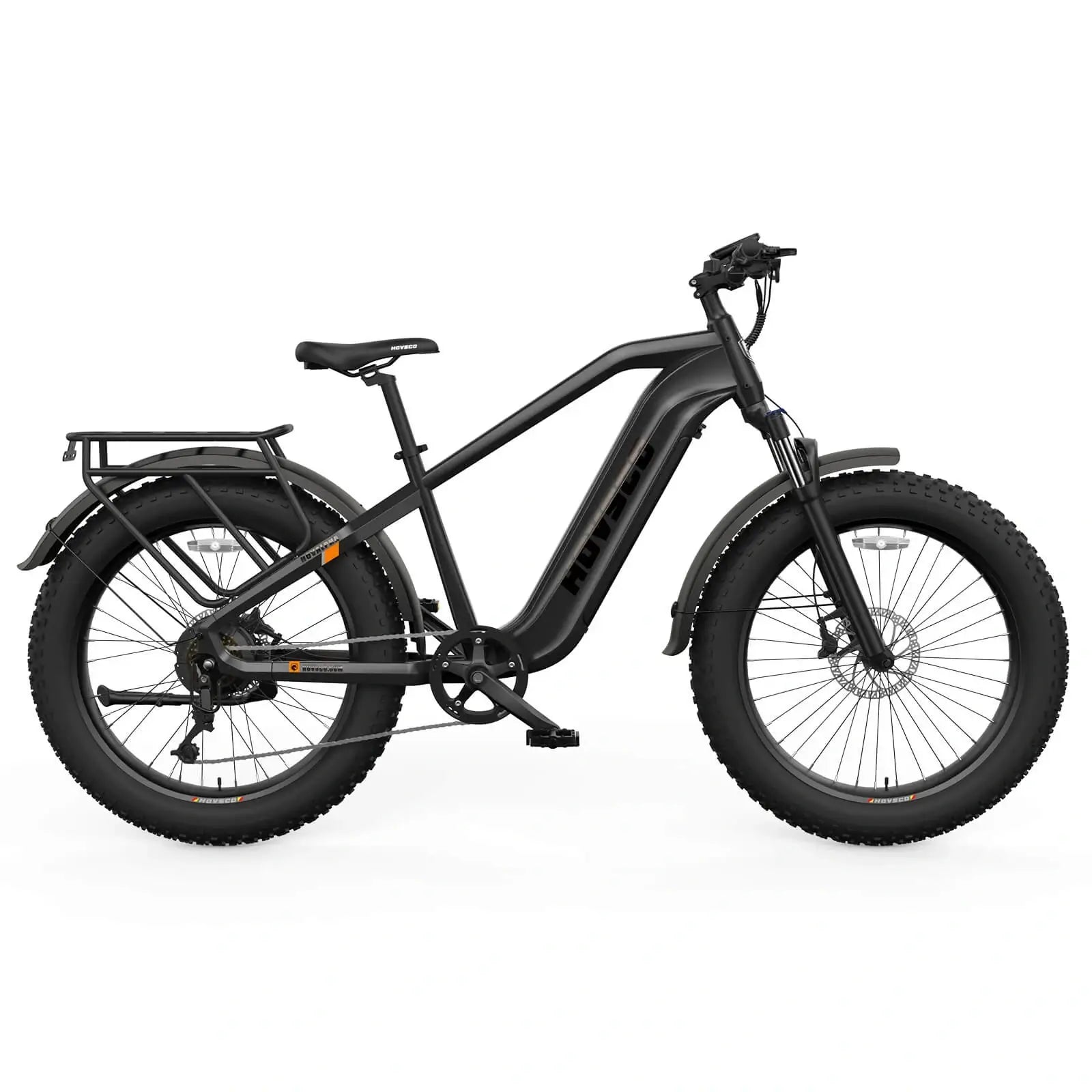
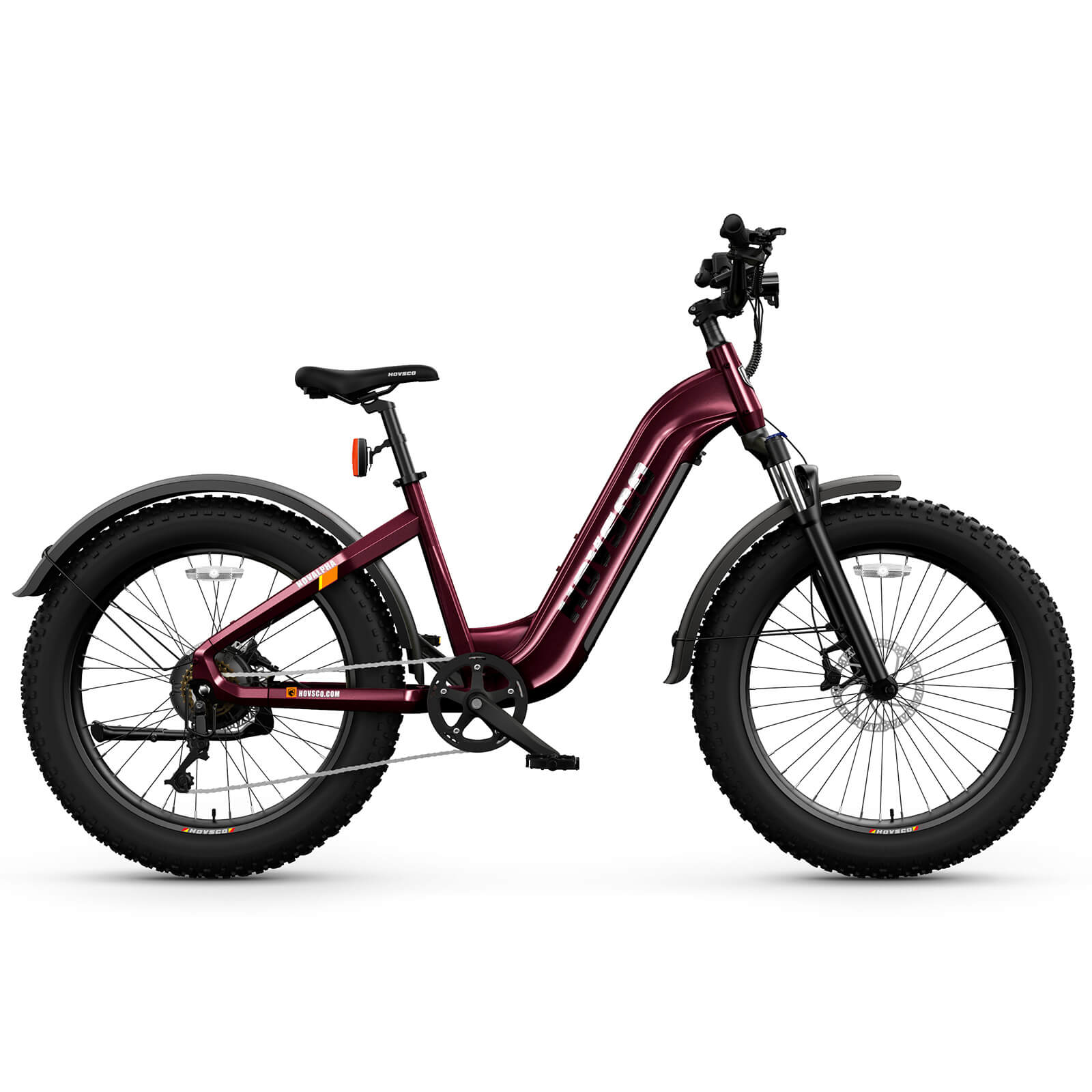
The 26 x 4" tires on HOVSCO models like the HovScout and HovAlpha create a low-pressure footprint that mimics snowshoes or sandboards. By running tires at 5-10 PSI, the contact patch expands dramatically, distributing rider and bike weight over a larger area. This prevents sinkage and allows the bike to literally float across soft surfaces. The eBike-rated construction adds reinforced sidewalls to handle the abuse of rocky trails hidden beneath snow or sharp shells on beaches.
Full Suspension for Continuous Traction
Unlike rigid or front-suspension-only bikes, the HovScout's rear four-bar linkage coil suspension keeps both wheels planted on uneven terrain. When one wheel encounters an obstacle—say, a buried rock in snow or a sudden dune depression—the suspension absorbs the impact while maintaining tire contact. This continuous traction is critical for control: bouncing wheels lose grip, leading to fishtailing or washouts. The 80mm front fork with lockout complements this system, allowing riders to stiffen suspension for smooth surfaces or activate it for technical sections.
Torque Sensor Intelligence
HOVSCO's torque sensor technology, featured across the HovScout, HovAlpha, and HovBeta lines, senses pedaling force and amplifies it proportionally. This creates natural, intuitive power delivery: pedal harder through deep snow, and the 1300W peak motor responds instantly without overwhelming available traction. Unlike cadence sensors that deliver fixed power regardless of effort—often causing wheel spin on loose surfaces—torque sensors match motor output to rider input. The result is precise control that prevents the sudden surges that lead to crashes on slippery terrain.
Real Riders, Real Results
"The HovScout's 4-inch tires combined with rear suspension make you feel like you're skimming the surface—it's a floating sensation that turns exhausting hikes into thrilling cruises."
"HOVSCO's torque sensors are game-changers for off-road fat tire riding. By matching motor output to rider input, they prevent wheel slip on sand and snow, delivering precise power where throttles alone fall short." — HOVSCO Product Engineering Team
"I've ridden generic fat tire e-bikes on beaches before, but the HovScout's hydraulic brakes and full suspension give me confidence on descents I would never attempt on my old bike."
Expand Your Adventure: HOVSCO's Complete Fat Tire Lineup
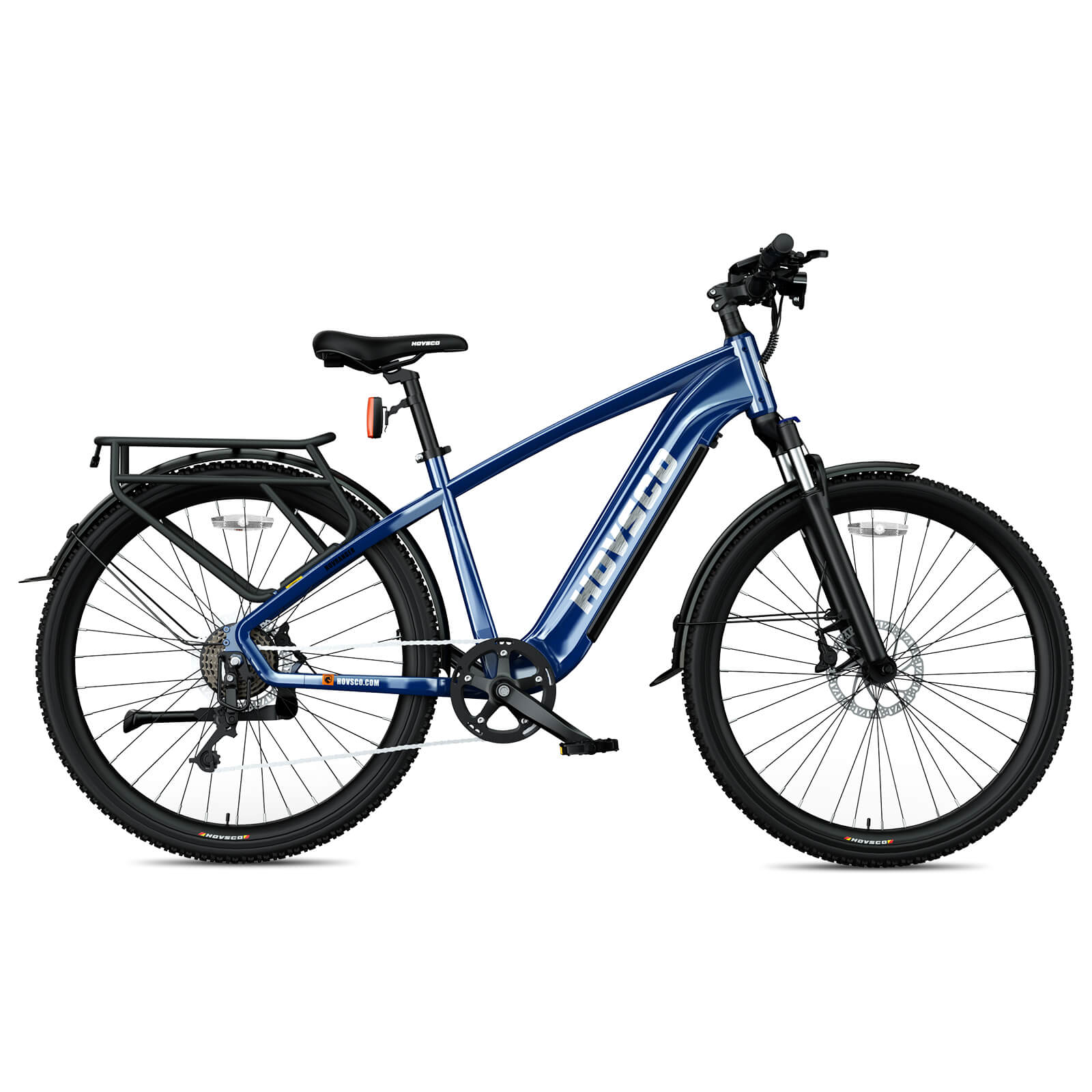
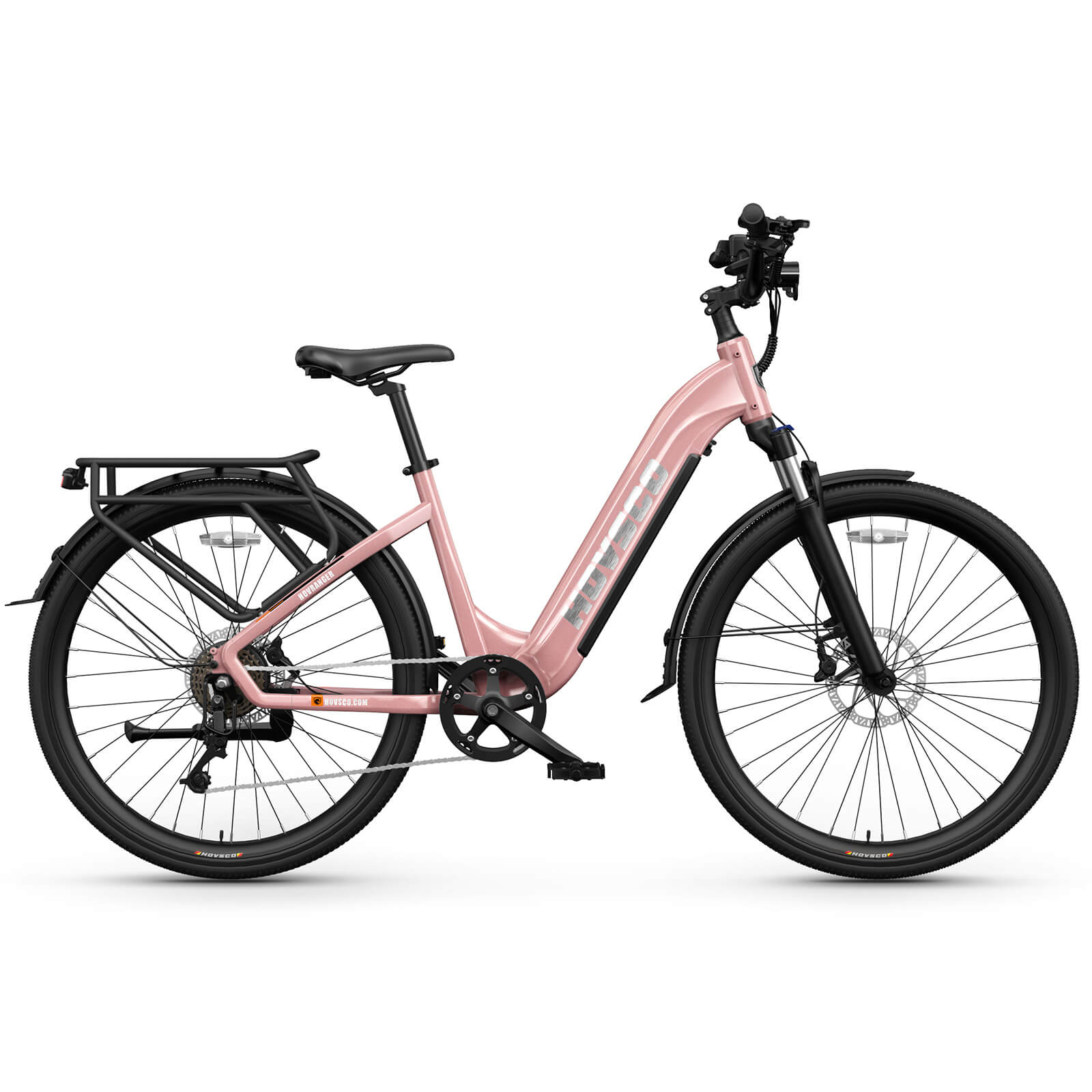
While the HovScout dominates extreme conditions, HOVSCO offers a full spectrum of fat tire e-bikes tailored to different riding styles and body types.
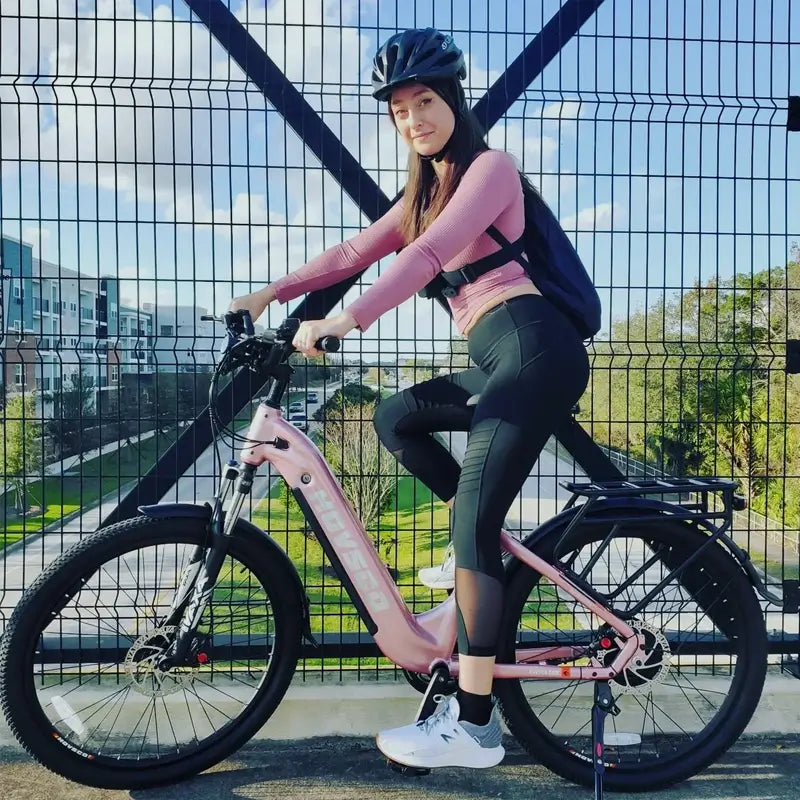
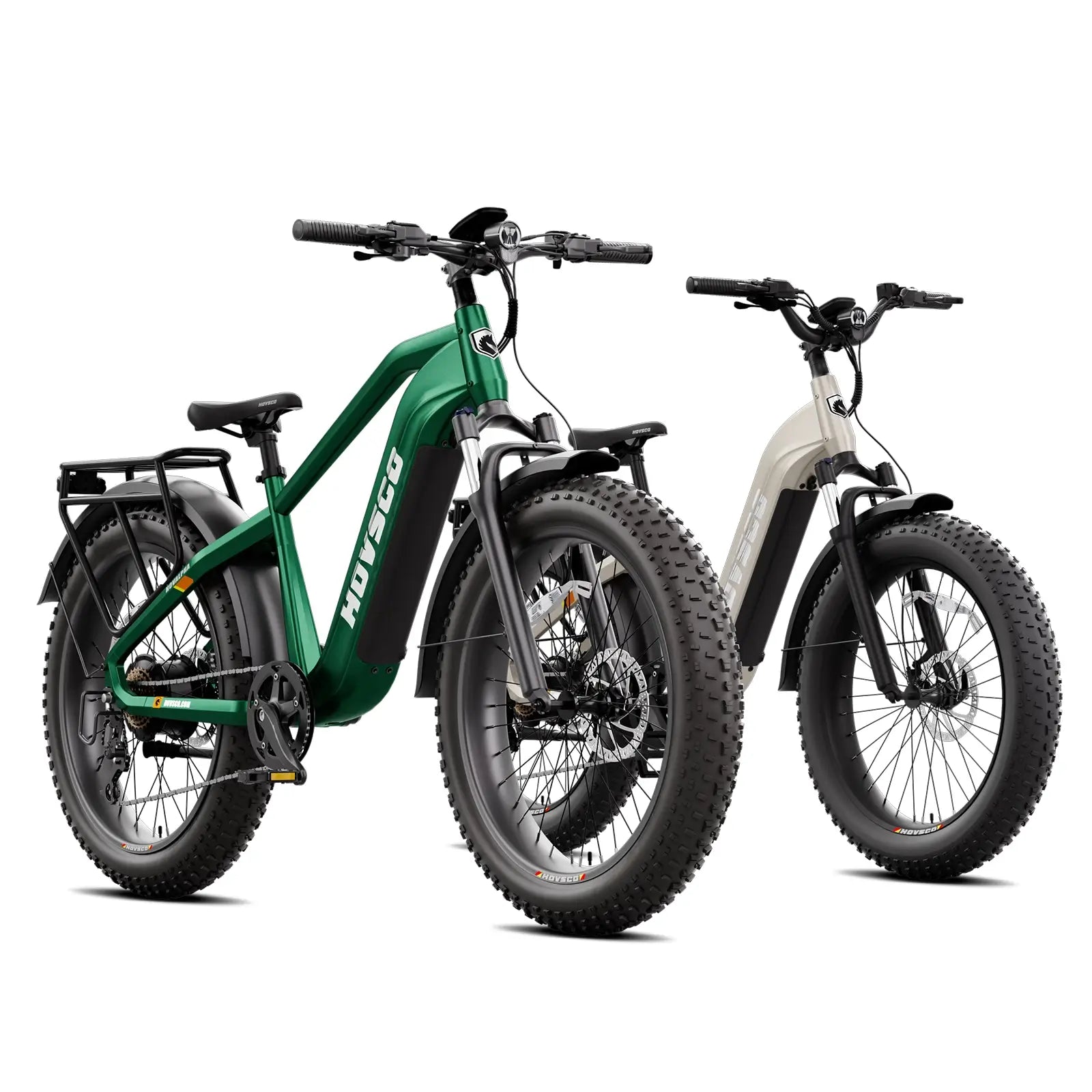
For riders prioritizing maximum range over suspension comfort, the HovAlpha Long-Range E-Bike delivers 60-80 miles per charge thanks to its larger 48V 20Ah battery. Available in both standard and step-thru frames, the HovAlpha maintains the same 1300W peak motor and 26 x 4" tires as the HovScout, making it ideal for long beach cruising or extended snow trail exploration where recharging opportunities are limited. The step-thru variant particularly appeals to riders seeking easier mounting, including many women cyclists who value accessibility without sacrificing performance.
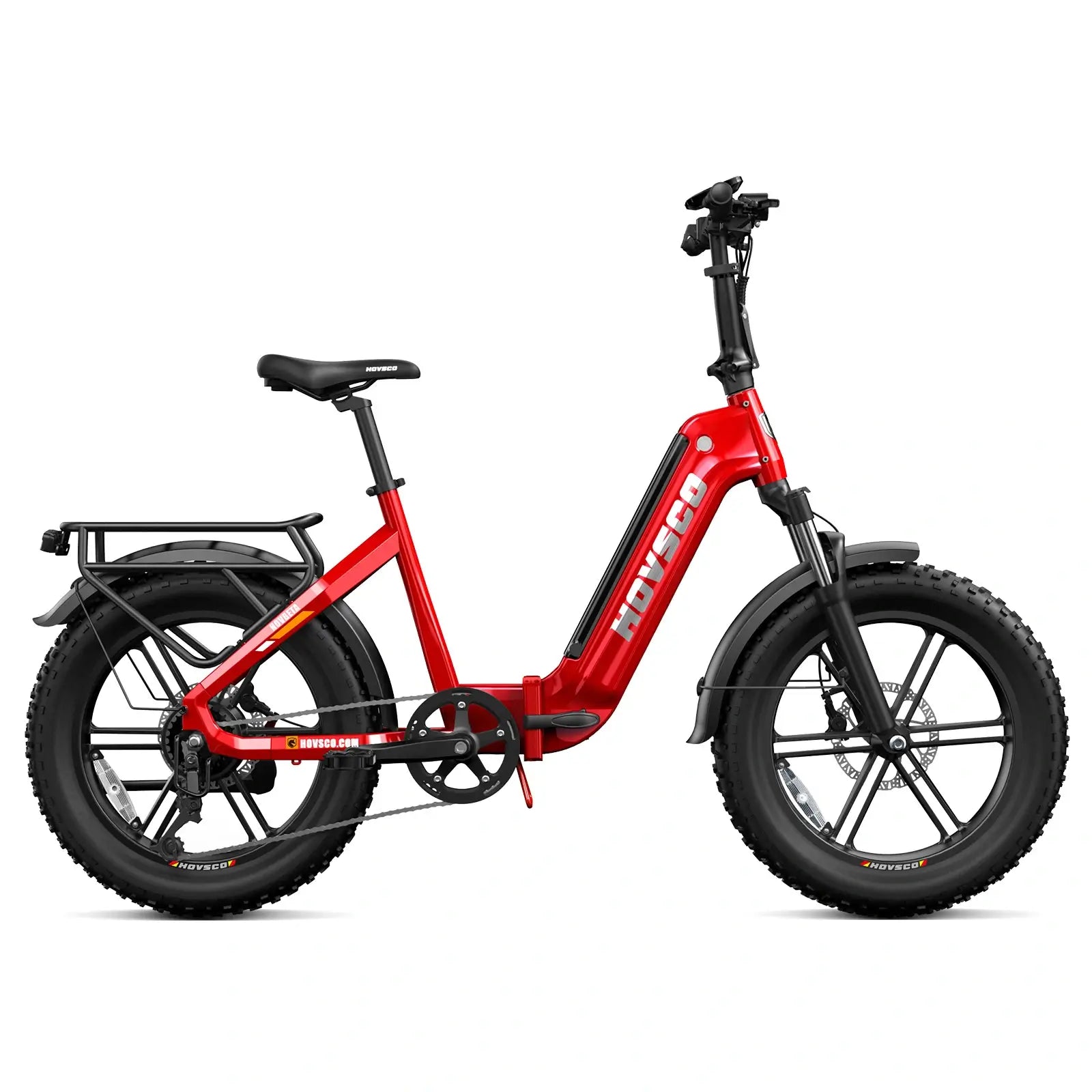
For those needing portability—apartment dwellers, RV travelers, or riders who combine e-biking with car trips—the HovBeta Foldable Fat Tire E-Bike packs similar power into a compact package. Weighing 66.4 lbs with battery and folding to fit in car trunks or small storage spaces, the HovBeta features 20 x 4" tires, hydraulic disc brakes, and the same torque sensor technology as its larger siblings. Its 45mm front suspension with lockout handles moderate off-road use while maintaining foldability.
All three models share HOVSCO's community-focused philosophy: "Enjoy the ride. Be with us!" Whether choosing the HovScout for technical terrain, the HovAlpha for endurance, or the HovBeta for convenience, riders gain access to the same HOVSCO App ecosystem for ride tracking, assist level customization, and battery monitoring.
Step-by-Step: Mastering Snow and Sand Cycling
Tire Pressure Adjustment: Before riding, reduce tire pressure to 5-10 PSI for maximum flotation. Use a gauge with a low-pressure range; HOVSCO's eBike-rated tires can handle this without risk of pinch flats. Lower pressure increases the contact patch, preventing sinkage in soft conditions.
Body Positioning: Shift your weight slightly rearward on climbs to keep the front wheel light and prevent digging. On descents, move weight back and lower your center of gravity by bending elbows and knees. This stance improves traction and absorbs bumps through your legs rather than your spine.
Pedaling Technique: Maintain a steady cadence of 60-70 RPM in a lower gear, using pedal assist to supplement rather than replace your effort. Sudden bursts of power cause wheel spin; smooth, consistent pedaling keeps momentum without breaking traction. Let the torque sensor do its job—pedal harder when needed, and the motor responds proportionally.
Braking Strategy: Begin braking earlier than on pavement, applying gentle, progressive pressure to both brakes simultaneously. On descents, favor the rear brake (about 70% rear, 30% front) to prevent front-wheel lockup and skidding. Hydraulic brakes like those on the HovScout offer superior modulation, allowing precise control even in wet, slushy conditions.
Line Selection: Scan ahead for the smoothest path, avoiding obvious obstacles like buried rocks, deep ruts, or sudden drop-offs. Look where you want to go—your bike naturally follows your eye line. Start turns wider than necessary, then progressively tighten your line as confidence builds. Fresh snow and undisturbed sand offer better traction than packed, icy surfaces.
Post-Ride Maintenance: After each ride, clear snow and ice from tires, brakes, and drivetrain components. Wipe down the frame to remove salt, sand, or moisture that can cause corrosion. Check tire pressure and inspect for embedded debris. Store the battery indoors at room temperature to preserve capacity, especially in cold climates.
Scenarios Where Fat Tire E-Bikes Transform the Experience
Scenario 1: Winter Commuting in Snowy Suburbs
Traditional Approach: Wait for plows to clear roads, take public transit, or drive—adding to winter traffic and carbon emissions. If cycling, struggle on narrow tires that slip on ice patches and sink in unplowed sections, arriving sweaty and stressed.
With HOVSCO HovScout: Ride confidently on snow-covered bike paths and side streets. The 4-inch tires float over unplowed sections while the torque sensor provides smooth power delivery that prevents wheel spin on icy patches. Hydraulic brakes ensure controlled stops even in slushy conditions. Arrive fresh, having commuted carbon-free while maintaining fitness through winter.
Scenario 2: Beach Cruising with Gear
Traditional Approach: Park far from the water to avoid getting stuck in sand, then carry coolers, chairs, and umbrellas across hot, soft sand—an exhausting trek that saps energy before the beach day begins.
With HOVSCO HovAlpha: Ride directly to the shoreline on 26 x 4" tires that distribute weight across 450 lbs of payload capacity. Attach a rear rack (included with many HOVSCO models) to carry gear effortlessly. The 60-80 mile range ensures ample power for a full day of beach hopping along the coast, then ride home without range anxiety.
Scenario 3: Mountain Trail Exploration in Shoulder Seasons
Traditional Approach: Store the mountain bike during muddy spring thaw or early snowfall when trails are too soft for narrow tires but too treacherous for hiking. Miss weeks of prime riding weather waiting for "perfect" conditions.
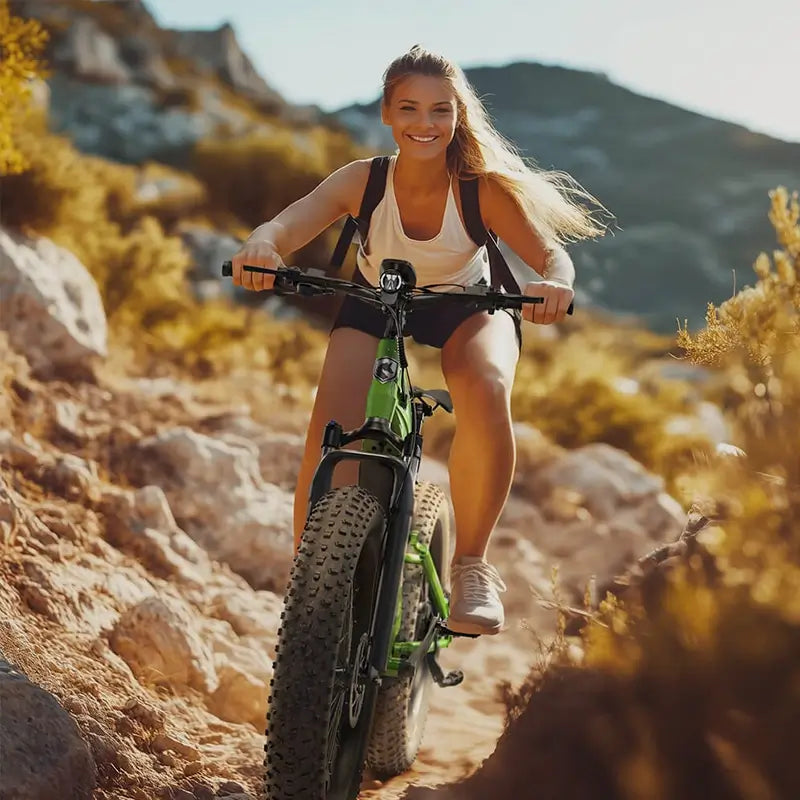
With HOVSCO HovScout: Ride year-round on trails that would be inaccessible otherwise. The full suspension absorbs impacts from hidden rocks and roots beneath snow, while fat tires provide traction on muddy sections. The 1300W peak motor climbs steep grades that would require dismounting on a traditional bike, extending accessible terrain dramatically.
Frequently Asked Questions
Are HOVSCO fat tire e-bikes suitable for beginners attempting snow cycling for the first time?
Yes, absolutely. The torque sensor technology makes power delivery intuitive and forgiving—beginners won't experience the sudden jerky acceleration common with cadence-sensor bikes that can cause wheel spin on loose surfaces. The HovScout's full suspension further eases the learning curve by absorbing bumps that might otherwise unsettle a novice rider. Start in an empty parking lot with light snow to practice emergency stops and gradual acceleration, then progressively build confidence on trails.
What is the realistic top speed for safe sand and snow riding?
While HOVSCO models like the HovScout and HovAlpha can reach 28 mph when unlocked on pavement, safe speeds on sand and snow are typically 8-15 mph depending on conditions. Fresh, deep snow or loose sand requires slower speeds to maintain control and react to hidden obstacles. Packed snow or firm sand allows higher speeds, but always prioritize traction over velocity. The key advantage of fat tire e-bikes is not top speed but the ability to maintain steady momentum through resistance that would stop traditional bikes entirely.
Can I use the HOVSCO App for navigation and tracking during off-road snow or sand rides?
Yes, the HOVSCO App works seamlessly off-road, connecting via the BC280 LCD display to provide real-time ride data, assist level adjustments, and GPS tracking. Download the app from the Apple App Store or Google Play Store before your ride. The app displays speed, distance, battery level, and assist mode, allowing you to monitor range even in remote areas without cell service (GPS tracking continues offline, syncing when you regain connectivity). For winter riding, keep your phone in an insulated pocket to preserve battery life in cold temperatures.
How do I maintain fat tires specifically for snow and sand conditions?
Keep tire pressures low (5-10 PSI) for maximum flotation, checking before each ride with a low-pressure gauge. After riding in sand, rinse tires and rims with fresh water to remove abrasive particles that can wear down rubber and corrode metal. For snow riding, inspect tires for embedded ice or salt buildup, wiping down with a damp cloth. HOVSCO's eBike-rated tires feature reinforced sidewalls to handle this abuse, but regular inspection prevents premature wear. Rotate tires every 500 miles to ensure even wear patterns, and replace when tread depth falls below 2mm for optimal traction.
Is the HovScout's 72.8 lb weight a disadvantage for off-road snow and sand riding?
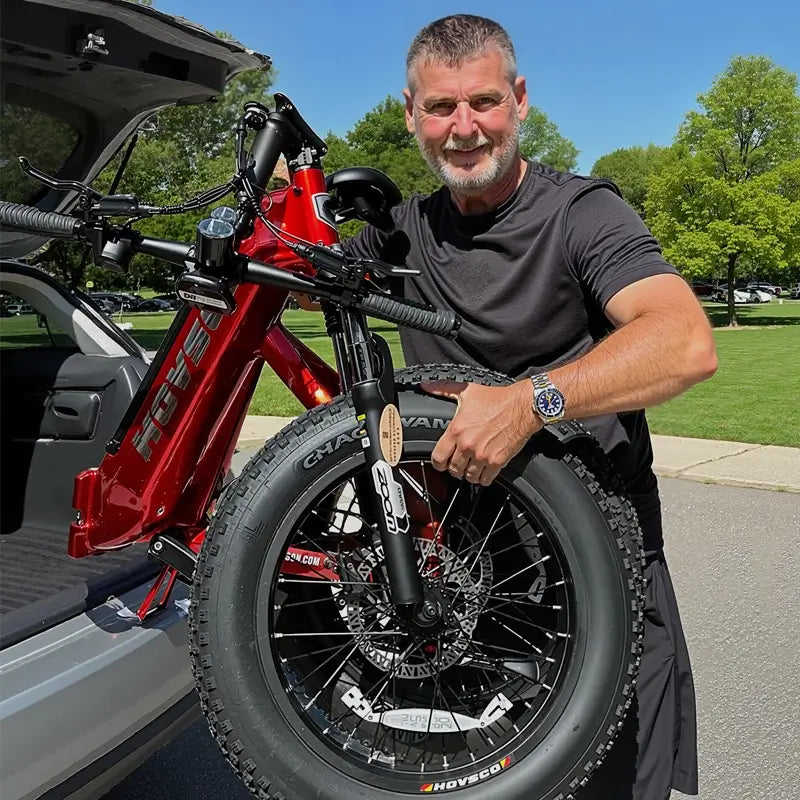
No—the weight is actually an advantage in these conditions. The 72.8 lb total (with battery) provides stability that lighter bikes lack, particularly in crosswinds on open beaches or when traversing sidehills on snow. The 450 lbs payload capacity means the bike can carry gear, passengers, or heavy winter clothing without feeling overloaded. While the weight makes lifting the bike (over obstacles or onto car racks) more demanding, the trade-off is a planted, confident ride that inspires trust on technical terrain. For riders concerned about weight, the HovBeta offers similar capabilities at 66.4 lbs while maintaining foldability.
How does battery performance change in cold snow versus hot sand conditions?
Cold temperatures reduce lithium-ion battery capacity—expect 20-30% range reduction in sub-freezing conditions compared to summer riding. The HovScout's 48V 15Ah battery delivers 40-60 miles in mixed conditions but may drop to 20-35 miles in deep snow with temperatures below 32°F (0°C). To mitigate this, store the battery indoors at room temperature until just before riding, and consider a neoprene battery cover for insulation. In hot sand conditions (90°F+), battery performance remains stable, but avoid leaving the battery in direct sunlight for extended periods, as excessive heat can degrade cells over time.
The Bottom Line: Why Fat Tire E-Bikes Are the Future of Year-Round Cycling
The convergence of market data and rider experience makes a clear case: fat tire e-bikes are not a niche product but the logical evolution of cycling for anyone seeking true all-terrain capability. With the global e-bike market projected to reach $144.3 billion by 2033 and electric fat bikes capturing nearly half of that growth, the technology has moved from experimental to essential.
HOVSCO's approach—combining torque sensors, full suspension, hydraulic brakes, and 4-inch eBike-rated tires—addresses the specific challenges of snow and sand cycling with engineering precision. The HovScout, HovAlpha, and HovBeta each serve different rider profiles, but all share the core philosophy that adventure should not be seasonal.
For riders tired of watching weather dictate their outdoor lifestyle, the solution is no longer aspirational. It is available now, proven by thousands of riders across North America's beaches, mountain trails, and winter commuting routes. The question is not whether fat tire e-bikes work—it is which HOVSCO model best fits your terrain, body type, and adventure goals.
Ready to Ride Beyond the Pavement?
HOVSCO, founded in 2019 by cycling enthusiasts in Diamond Bar, California, builds e-bikes for riders who refuse to let conditions limit their exploration. With 2-year warranties, and US-based customer service available seven days a week, HOVSCO combines adventure-ready performance with peace-of-mind reliability.
Explore the complete Fat Tire E-Bikes Collection to find your ideal match—whether the HovScout for extreme terrain, the HovAlpha for endurance, or the HovBeta for portability. Your next adventure awaits, regardless of the season.



![[ New Arrival ] Porto Max Electric Scooter For Commute & Grocery Shopping - HOVSCO](http://www.hovsco.com/cdn/shop/files/PotroMax-3.jpg?v=1706927007&width=1200)
Share:
Urban Green Spaces Access: Ride More, Explore More
E-Bike Tourism Economy: How Electric Bikes Unlock Local Travel Spending