
























![[ New Arrival ] Porto Max Electric Scooter For Commute & Grocery Shopping - HOVSCO](http://www.hovsco.com/cdn/shop/files/PotroMax-3.jpg?v=1706927007&width=1200)
- by SteveJames
E-Bike Tourism Economy: How Electric Bikes Unlock Local Travel Spending
- by SteveJames
E-Bikes
Accessories
 Free Shipping
 15-Day Returns
 2-Year Warranty
Free Shipping
15-Day Returns
2-Year Warranty
2-Year Warranty
Free Shipping
15-Day Returns
2-Year Warranty
E-bike tourism economy is booming as electric bikes reshape how travelers explore destinations, extend ranges, and support local businesses. Discover key trends, numbers, and why HOVSCO e-bikes are becoming a smart choice for tourism-focused riders and operators.
Cycle and e-bike tourism have moved from niche to mainstream economic engines. In 2025, the global cycle tourism market was valued around 146–147 billion USD, with projections to more than double by 2033 at annual growth rates above 11%. Europe currently leads, while Asia-Pacific is the fastest-growing region. At the same time, the global e-bike market reached roughly 57.5 billion USD in 2025 and is forecast to grow to more than 190 billion USD by the mid-2030s, driven heavily by leisure and tourism demand.
Within this landscape, the dedicated e-bike tourism segment alone was worth about 11.2 billion USD in 2025 and is expected to expand at over 12% annually through 2034. In the U.S., bicycle tourism already generates an estimated 83 billion USD in trip-related consumer spending each year, with visitors staying longer and spending more per day than motorized tourists. Against this backdrop, robust, long-range e-bikes like HOVSCO’s HovCart, HovAlpha, HovRanger and HovBeta are increasingly positioned as core tools for destinations, rentals, and traveling families.
HOVSCO, a U.S.-based electric bike company, focuses on high-power, long-range, utility and family cargo e-bikes that suit tourism use cases—from city sightseeing to rural trail exploration. Models such as the HovCart Family E-Bike, HovAlpha Long-Range E-Bike, HovRanger City E-Bike and HovBeta Foldable Fat Tire E-Bike combine motors up to 1300W, ranges up to 80+ miles on many models (and up to 150 miles on HovGtrs), payload capacities up to 450 lbs, and integrated app support. That combination makes them practical solutions for tourism operators, rental fleets and traveling households who need reliable, easy-to-ride bikes capable of full-day adventures.
The e-bike tourism economy refers to all travel and leisure activity where electric bicycles are central to how visitors move, spend, and experience destinations. It includes guided tours, self-guided itineraries, multi-day trips, family vacations, and city breaks where e-bikes are rented or owned by visitors, and where their presence drives spending on lodging, food, attractions, and local services. As more destinations adopt cycle-friendly infrastructure, electric bikes extend access to hills, rural roads and longer routes, broadening who can participate in active tourism.
Limited exploration beyond main roads
Many destinations still depend on cars, buses, or traditional bicycles as primary visitor transport. Cars often confine tourists to main roads and parking areas, limiting exploration of side streets, rural villages and scenic trails. Conventional bikes, while flexible, restrict less-fit travelers and older visitors to short distances and gentle terrain, cutting off hill towns, gravel paths and remote viewpoints that could otherwise drive more local spending.
Concentrated spending instead of dispersed local impact
Motorized sightseeing and bus tours tend to focus stops on major attractions, highway service areas and large businesses. Research on bike tourism shows that bicycle travelers move more slowly, stop more frequently, and spend significantly more per day in local businesses than average motorized tourists. Without accessible cycling routes and suitable bikes, many small communities miss out on this higher per-visitor spend and the opportunity to keep revenue circulating locally.
Barriers to participation for seniors and families
Demographic trends show strong participation from age 31–50 in cycle tourism, but growth is fastest among younger adults and seniors seeking low-impact, health-supporting travel. Many of these travelers struggle with conventional bikes on hills or long distances, limiting their ability to join tours or self-guided itineraries. Families face practical issues as well: carrying kids, luggage and shopping while navigating unfamiliar streets.
Safety and infrastructure gaps for modern visitors
E-bikes introduce specific needs: secure parking, charging points, appropriate speed management and safe bike lanes. Without investments in infrastructure and clear guidance, destinations risk underusing e-bike fleets or facing safety incidents. At the same time, visitors today expect clear routing, reliable equipment and basic services such as recharging and maintenance. The gap between expectations and reality can hold back adoption—even where potential demand is high.
The cycle tourism market is projected to grow from roughly 146 billion USD in 2025 to more than 330 billion USD by 2033, while electric bikes themselves are forecast to more than triple in global market value over a similar period—creating a powerful intersection between e-bike tourism and destination-level economic growth.
Range and power for real-world routes
Many HOVSCO models combine up to 1300W motors with assist speeds up to 28–32 mph, giving visitors enough power to climb hills, handle headwinds and complete full-day scenic loops without worrying about distance or fatigue. Long-range batteries on models like HovAlpha and HovGtrs enable routes that link out-of-town attractions and rural roads in a single itinerary.
Cargo capacity and family-friendly layouts
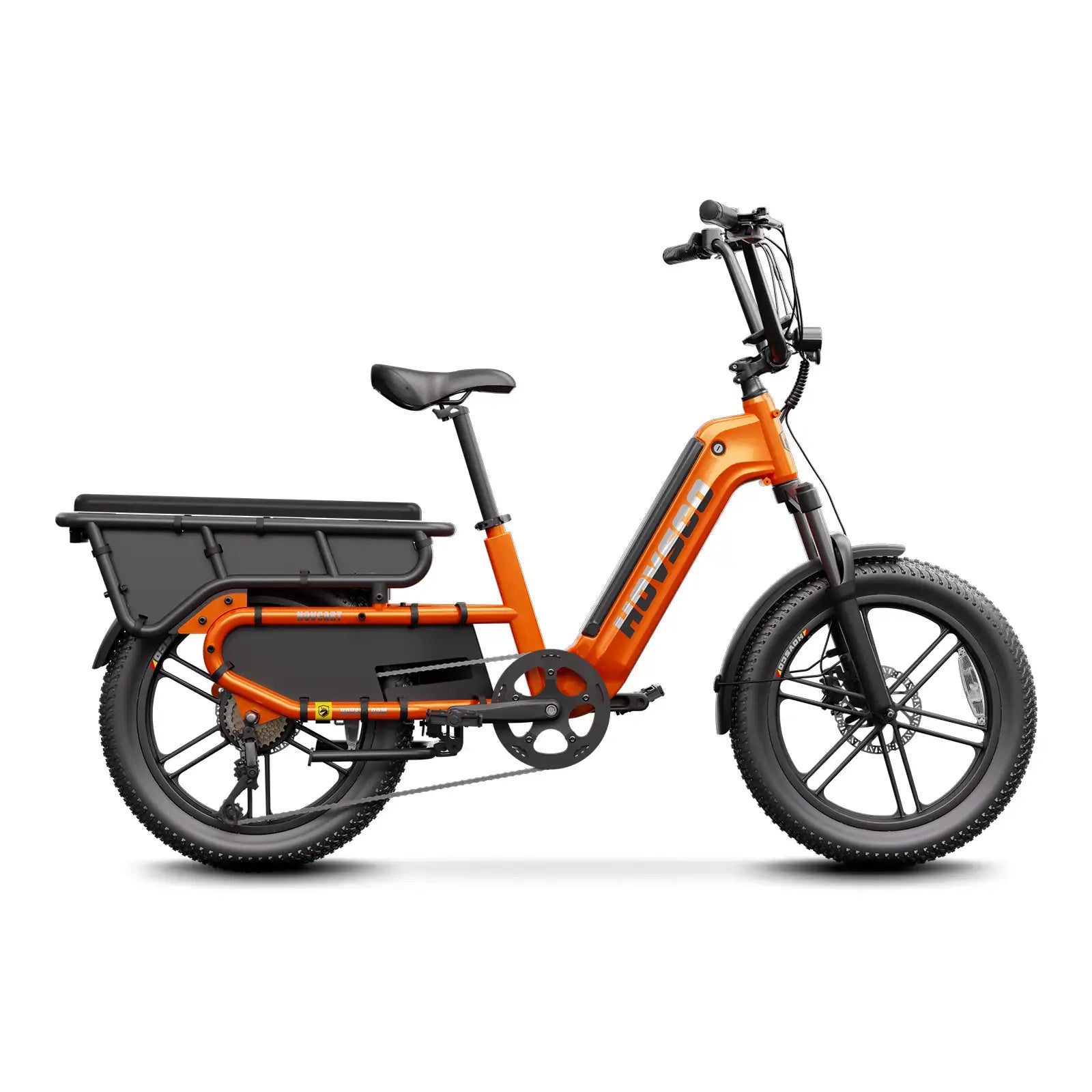
The HovCart Family E-Bike is designed around a low-step frame and a large rear cargo area, ready for child seats, baskets and cushions. With payloads advertised up to 450 lbs, families can carry kids, groceries, picnic gear and luggage between parks, beaches, markets and museums. For tourism operators, that means one bike can serve both residents and visitors with diverse needs.
Versatile frames and tires for mixed terrain
HOVSCO’s lineup includes fat-tire models such as HovAlpha and HovScout, commuter-focused HovRanger and HovCity, and foldable HovBeta for compact storage. Fat tires add stability on sand, snow and gravel trails, while commuter frames prioritize upright comfort on city bike lanes. This variety allows destinations and rental businesses to match frame types and tire choices to local terrain and tourism niches without leaving gaps.
A family staying near a coastal town uses a HovCart instead of a car, riding to markets, beaches and museums while children sit comfortably in rear seats and cargo racks carry snacks and towels.
An RV couple packs two foldable HovBeta e-bikes in their camper, exploring state park trails and small towns without worrying about parking, campground traffic or fuel costs.
City visitors book a weekend rental on HovRanger commuter e-bikes, using well-marked bike lanes to tour neighborhoods, restaurants, breweries and cultural venues in one continuous loop, turning transport into part of the experience.
Tourism riders rarely need a single fixed setup. HOVSCO’s ecosystem of bikes and accessories supports layered use cases that can evolve as destinations or operators grow.
Family cargo and everyday tourism mobility
The HovCart Family E-Bike anchors many tourism scenarios where families want car-free travel between accommodation, parks, schools and local services. Adding child seats, large baskets, backseat cushions and racks from HOVSCO’s Accessories collection converts it into a fully equipped family shuttle that works equally well for residents and visiting households.
Long-range exploring on trails and backroads
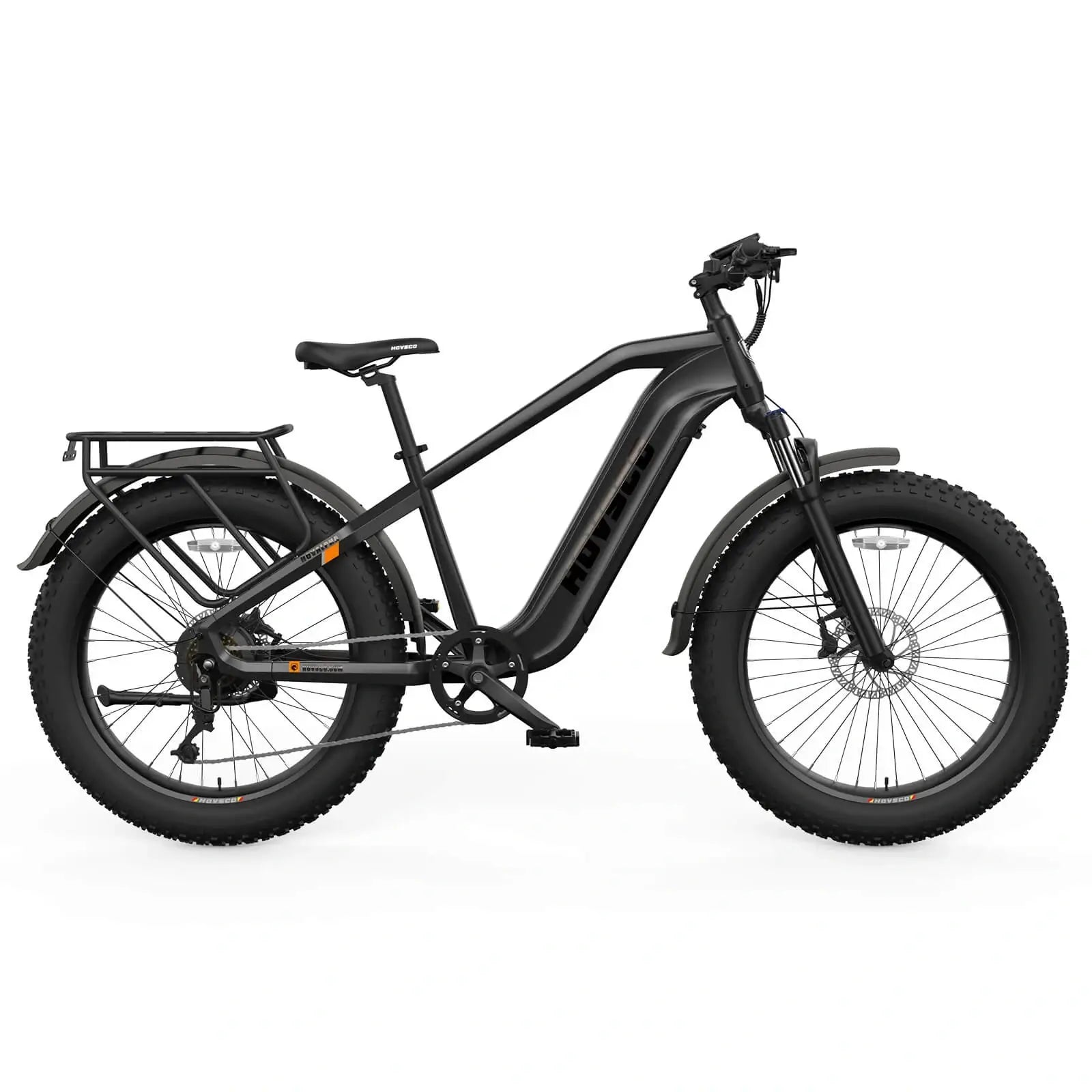
The HovAlpha e-bike suits riders who want extended adventures on rugged trails, forest roads or beachside paths. Its fat tires and powerful motor deliver stability and comfort on variable surfaces, making it a strong candidate for destinations that promote mixed-surface cycling tourism and scenic loops outside city centers.
Urban sightseeing and commuter-style tourism
Models like HovRanger and HovCity focus on upright riding positions, integrated lights and commuter-ready features. They fit city tourism where visitors stay in hotels or short-term rentals and move across districts, campuses and waterfronts on bike lanes and shared paths, often combining leisure and business travel.
RV, van-life and multi-modal trips
The foldable HovBeta fat-tire e-bike is a natural fit for RV parks, van-life travelers and destinations that attract road trippers. Its folding design simplifies storage in campers and apartments, while wide tires allow riders to leave paved roads for light trails or gravel paths, expanding the tourism catchment area around campgrounds and parking areas.
Clarify your tourism niche and target riders
Define whether you focus on family vacations, urban sightseeing, countryside retreats or adventure travel. Data from cycle tourism shows strong demand from couples, groups of friends and age 31–50 riders, with fast growth among younger adults and seniors who want low-impact activities and immersive experiences.
Match e-bike models to terrain and use cases
Choose cargo-focused HovCart for families and shopping, HovAlpha or HovScout for trails and mixed surfaces, HovRanger or HovCity for urban lanes, and HovBeta for RV and compact storage scenarios. Consider payload capacity, motor wattage, battery range and frame type against typical daily routes and visitor expectations.
Design routes that drive spending across local businesses
Build loops and point-to-point rides that pass cafés, farm stands, markets, cultural sites and viewpoints instead of only major attractions. Evidence from bicycle tourism suggests that when routes encourage frequent stops and slow travel, visitors stay longer and spend more per day in local businesses—including food, lodging and small shops.
Invest in infrastructure and basic services for e-bike guests
Set up secure parking, simple charging points and clear wayfinding. Offer basic maintenance, orientation and safety briefings. Because e-bikes are heavier and faster than conventional bikes, they benefit from high-quality bike lanes and parking areas. Destination-level investment helps rental operators and tour providers deliver consistent, safe experiences.
Create integrated packages and themed experiences
Combine e-bike rentals with lodging, food or guided tours. Examples include half-day city rides, full-day countryside loops, multi-day itineraries with luggage transfer, or themed routes such as wine, heritage corridors or coastal trips. Bundling services simplifies choices for visitors and increases revenue per booking for operators and local partners.
Measure outcomes and communicate sustainability benefits
Track bookings, route usage, average spend and feedback from visitors. Use these insights to refine routes and services. Communicate how e-bike tourism supports climate goals, reduces congestion, encourages active lifestyles and channels money into locally owned businesses, aligning your offer with public-sector sustainability agendas and destination marketing messages.
Scenario 1: Coastal town weekend break
Traditional approach: Visitors drive into town, park once and walk within a narrow radius. They miss outlying beaches, small villages and hilltop viewpoints, concentrating spending in the central district and along main streets.
With HOVSCO e-bikes: Renting HovRanger city e-bikes or HovAlpha fat-tire models, visitors follow well-marked loops to remote beaches, harborside cafés, scenic lookouts and rural trails. Long-range assist lets them comfortably cover 60–80 miles over two days, spreading spending across multiple neighborhoods and independent businesses.
Scenario 2: Rural wine country and villages
Traditional approach: Tour buses shuttle groups between major wineries on fixed schedules. Short stops and bus routes reduce flexibility and limit serendipitous discoveries in small towns and local shops.
With HOVSCO e-bikes: Couples and small groups ride HovAlpha or HovScout bikes along quiet roads and cycle routes, stopping at small vineyards, farm markets and viewpoints. Cargo racks and baskets carry bottles and produce. The slower pace and frequent breaks encourage higher per-day spending and deeper engagement with locally owned businesses.
Scenario 3: Family vacation in a small city
Traditional approach: Families rely on taxis or private cars for each outing, dealing with parking costs, traffic and time lost in transit. Some activities are skipped because logistics feel complicated with children.
With HOVSCO e-bikes: A HovCart Family E-Bike configured with child seats and rear baskets becomes the main way to move through the city—school runs, park visits, markets, museums and riverside paths. High payload capacity and low-step frames make loading children and cargo easy, turning daily mobility into a shared experience and reducing dependence on cars.
How does the e-bike tourism economy affect local businesses differently from car-based travel?
E-bike tourism encourages slower movement and more frequent stops, which many studies link to higher per-day visitor spending and longer stays. Unlike car-based tourists who tend to focus on major attractions and highway stops, e-bike riders naturally weave through side streets and rural roads, patronizing cafés, shops and accommodations that would otherwise see less traffic.
What are the main growth trends shaping the e-bike tourism economy?
Recent market analyses show the e-bike tourism segment valued around 11.2 billion USD in 2025, with projected annual growth above 12% through 2034. Cycle tourism overall is expanding at double-digit rates, driven by demand for sustainable, immersive experiences, better infrastructure and digital booking tools. E-bikes are central to this growth because they allow more people—including less athletic riders and seniors—to join longer tours and hillier routes comfortably.
Which HOVSCO e-bike models best fit tourism operators and rental services?
Cargo-focused HovCart Family E-Bikes work well for family-oriented destinations and mixed-use rental fleets thanks to their low-step frames and high payload capacity. HovAlpha fat-tire models and HovScout full-suspension bikes are suited to trails and mixed-surface touring. Urban sightseeing operations often choose HovRanger and HovCity commuter bikes, while RV parks and campgrounds integrate foldable HovBeta models that store easily in campers and small spaces.
How does the e-bike tourism economy support sustainability and climate goals for destinations?
Electric bikes emit far less than cars, reduce congestion and support active transport policies. As destinations position themselves around climate action and eco-tourism, e-bike tourism offers a concrete, scalable way to reduce vehicle miles traveled while still encouraging visitors to explore widely. By pushing more spending toward local businesses and away from high-emission transport, e-bike tourism aligns economic development with environmental goals.
What challenges should destinations address when expanding e-bike tourism offers?
Key challenges include building safe cycling infrastructure, providing secure parking and charging, and aligning regulations with e-bike classes and speeds. E-bikes are heavier and often faster than traditional bikes, so basic bike lanes may need upgrades. Destinations must also ensure that rental operators and tour providers use reliable brands like HOVSCO, provide guidance on route choice and safety, and offer maintenance support to reduce downtime and incidents.
How can families and older travelers join the e-bike tourism economy if they are not regular cyclists?
E-bikes lower physical barriers through pedal assist and, in some cases, throttle use, making hills and longer routes manageable. HOVSCO highlights low-step frames, fat tires and intuitive assist systems on models like HovCart, HovAlpha Step-Thru, HovRanger Step-Thru and HovBeta. With well-chosen routes, basic orientation and proper helmets and lights, non-cyclists can comfortably join guided rides or self-guided itineraries that would be too demanding on conventional bikes.
As cycle tourism and e-bike adoption expand in parallel, destinations that integrate electric bikes into their tourism strategies will capture more visitor days, higher per-capita spending and stronger sustainability credentials. Current data suggests that by the early 2030s, both cycle tourism and e-bike markets will more than double compared with mid-2020s baselines, with tourism representing a large share of this growth.
For operators, policymakers and traveling families, the e-bike tourism economy offers a practical way to unlock immersive experiences without relying on cars, making local landscapes more accessible while keeping economic benefits in the hands of small businesses. HOVSCO’s long-range, high-capacity cargo, commuter, fat-tire and foldable e-bikes are well positioned to support these ambitions across different destination types.
If you’re looking to participate in or build around the e-bike tourism economy—whether as a traveler, rental operator or destination manager—exploring HOVSCO’s lineup of cargo, commuter, fat-tire and foldable e-bikes is a practical starting point. U.S.-based support, 2-year warranties, free continental U.S. shipping and a broad accessory ecosystem for cargo and family use, HOVSCO focuses on making long-range, tourism-ready e-bike experiences accessible to more riders and communities.
Grand View Research — Cycle Tourism Market Report, 2026–2033
MarketIntelo — eBike Tourism Market Research Report 2034, 2025
Fortune Business Insights — Electric E-Bike Market, 2025–2034
EuroVelo / ECF — How Do E-bikes Impact Cycling Tourism? 2023
Adventure Cycling Association — Economic Impact of Bike Tourism, 2024
Share:
Snow and Sand Cycling: The Ultimate Guide to Year-Round Adventure with Fat Tire E-Bikes
Suburban Commuting Trends: How E-Bikes Are Reshaping Daily Travel with HOVSCO