




























![[ New Arrival ] Porto Max Electric Scooter For Commute & Grocery Shopping - HOVSCO](http://www.hovsco.com/cdn/shop/files/PotroMax-3.jpg?v=1706927007&width=1200)
- by SteveJames
Off-Road Electric Cycling: Explore Rugged Trails with Confidence (July 2026)
- by SteveJames
E-Bikes
Accessories
 Free Shipping
 15-Day Returns
 2-Year Warranty
Free Shipping
15-Day Returns
2-Year Warranty
2-Year Warranty
Free Shipping
15-Day Returns
2-Year Warranty
Discover how off-road electric cycling transforms trail riding, with performance insights, safety tips, and why HOVSCO's off-road e-bikes stand out in 2026.
Off-road electric cycling is booming: the global off-road e-bike market is projected to reach roughly $5.5 billion by 2025, growing at a ~15% CAGR through 2033 as riders seek sustainable, high-performance trail options. Search trends show "electric mountain bike" and "electric dirt bike" dominating interest in 2025, reflecting strong demand for rugged, battery-assisted adventure. At the same time, newer injury studies find that electronic mountain bike (EMTB) riders have an injury profile similar to traditional mountain bikers, but with a slightly older, more diverse demographic.
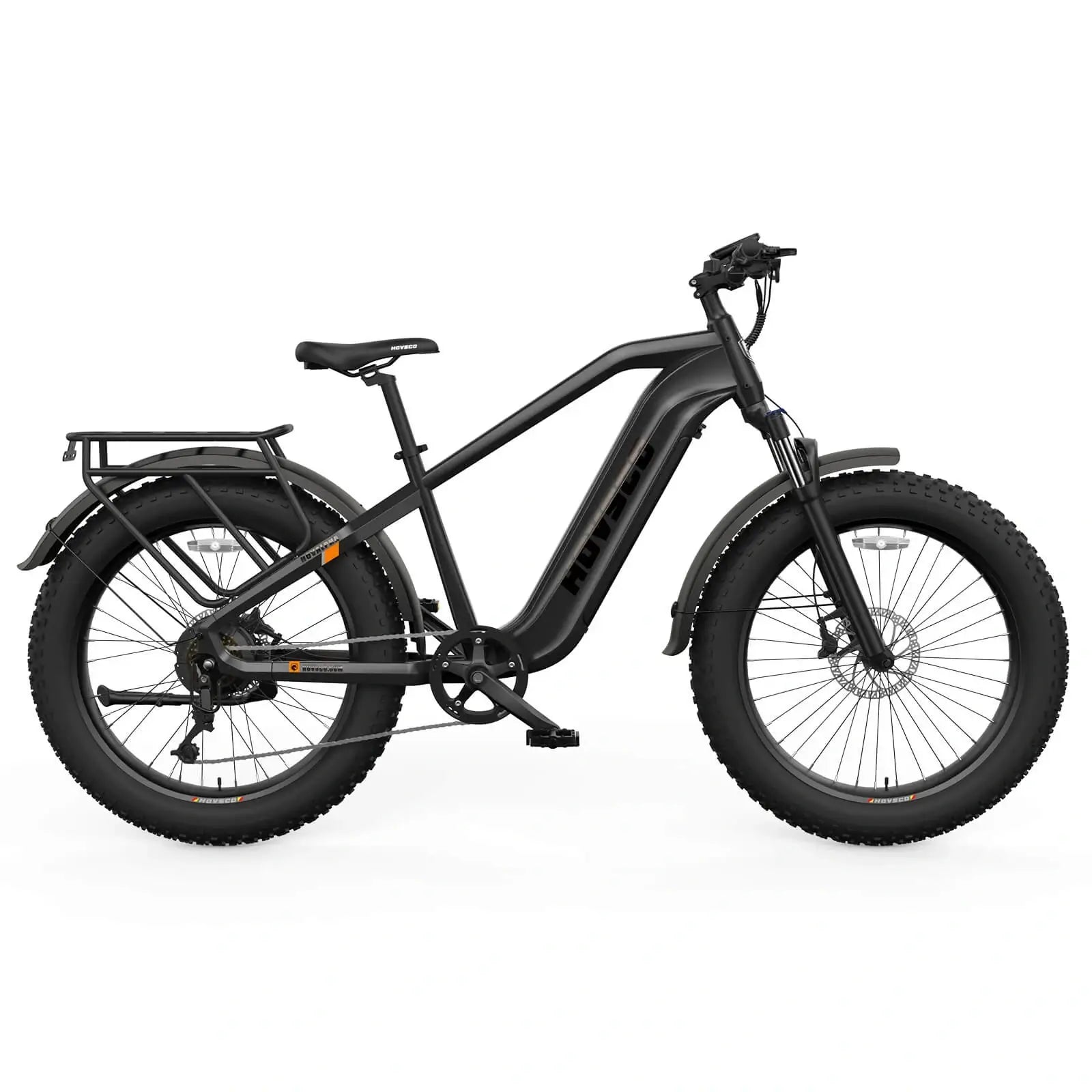
For riders who want to tackle gravel paths, forest trails, and steep hills without sacrificing fun or fitness, HOVSCO's off-road e-bikes—like the HovScout full-suspension fat-tire model and the HovRanger mountain-style city/mountain hybrid—offer a compelling blend of power, range, and comfort tailored to real-world off-road use.
Off-road electric cycling means riding an electric bicycle on unpaved surfaces such as dirt roads, gravel paths, forest trails, and rocky terrain, using motor assist to climb hills, maintain speed, and reduce fatigue while still pedaling. It merges traditional mountain biking skills with the extended range and easier effort that electric drive provides, making challenging terrain more accessible to a wider range of riders.
The rise of off-road electric cycling is not just a niche trend; it reflects broader shifts in how people move, exercise, and explore.
More riders are looking for ways to stay active outdoors while reducing car use. Off-road e-bikes let people explore nature trails, countryside roads, and even hunting or exploration routes with a low-emission vehicle that can go further and faster than a conventional bike on the same effort. This dual role—recreation and sustainable transport—fuels growth in specialty off-road models and accessories.
Modern off-road e-bikes now feature higher-capacity batteries (often 720Wh or more) for 40–60+ miles of range per charge, powerful hub motors (750W–1500W peak) with 80–90 Nm torque for steep climbs, full-suspension frames and wide fat tires for stability on rough terrain, and torque sensors that match assist to your pedaling effort, making the ride feel more natural. These improvements mean riders can tackle longer, more technical routes without the exhaustion that traditionally limited trail time.
Research from Australia shows that EMTB riders tend to be older and include more women than traditional mountain bikers, suggesting that electric assist is widening participation in off-road cycling. For many, the motor helps overcome barriers like age, fitness level, or limited time, allowing them to enjoy the same trails as before—just with less strain.
Despite the joys of trail riding, many potential off-road cyclists hesitate because of real, recurring frustrations.
Steep climbs, especially after long days or on hot trails, can turn an enjoyable ride into a punishing workout. Riders often spend more time pushing or walking their bikes than riding, arrive at destinations exhausted, limiting how far they go, and avoid certain trails altogether because they feel too demanding. Over time, this frustration can lead people to give up on off-road cycling or switch to cars and SUVs, losing the physical and mental benefits of cycling.
On a traditional mountain bike, range is limited by your own stamina. Many riders plan short rides to avoid "bonking" on the way back, skip interesting side trails because they're unsure they can finish, and feel pressured to rush downhill to make it home before dark. Electric assist changes this dynamic, letting riders extend their range without drastically increasing effort. That's particularly valuable in remote areas where rescue or transport options are limited.
Traditional off-road riding often assumes a certain level of strength, endurance, and experience. This can exclude older adults who still want trail adventures but are wary of extreme physical demands, beginners who feel intimidated by technical terrain, and riders returning from injury or downtime who need a gentler reintroduction. Without assist, these groups may never try off-road cycling, or they may quit quickly after a few difficult experiences.
Rough terrain introduces risks: falls, collisions with obstacles, and loss of control on steep descents. Studies on EMTB injuries show that most injuries are superficial (skin injuries, minor bruises), a significant portion occur on downhill sections of singletrack trails, and collisions with obstacles account for nearly half of incidents. While these risks are not unique to electric bikes, riders may feel more pressure to go faster or tackle more challenging lines when they have motor assist, which can increase exposure to certain hazards if they're not careful.
"Electronic mountain biking participants have a similar injury profile to traditional mountain bikers, but their demographics may differ." — Epidemiology of Electronic Mountain Biking Injuries, 2025
The key is not to avoid off-road riding, but to approach it with good preparation, realistic pacing, and bikes designed for the terrain.
HOVSCO positions its off-road lineup as high-performance, long-range e-bikes built for real exploration. Models like the HovScout 26" Full Suspension Fat Tire Ebike and the HovRanger combine rugged frames, powerful motors, and comfortable suspension to handle dirt, gravel, and technical trails.
Rather than marketing "unbeatable" claims, HOVSCO focuses on measurable specs: motors in the 750W–1500W peak range with 80–90 Nm torque, 48V 15Ah (720Wh) or 20Ah batteries for 40–60+ miles of range, full-suspension designs with adjustable rebound and lockout modes, fat tires (26×4" or 20×4") for stability on loose or uneven surfaces, and hydraulic disc brakes and robust drivetrains for control and durability. These features directly address the pain points above: hills become manageable, range extends, and rough terrain feels more controllable.
This comparison shows where HOVSCO's off-road models stand: strong motor and battery, serious suspension, and high payload capacity, all at a price that aims to be accessible to serious recreational riders.
HOVSCO's torque sensor pedal assist measures how hard you're pedaling and adjusts motor output accordingly. This creates smoother acceleration, better hill-climbing, and more efficient energy use compared to basic cadence sensors. On off-road trails, where terrain changes constantly, torque sensing helps the bike feel more like a natural extension of your effort rather than a jerky boost.
Models like the HovScout feature a four-bar rear linkage with adjustable rebound and lockout, plus a coil front suspension. This setup absorbs vibrations from rocks, roots, and uneven ground, reducing fatigue and improving traction. For long off-road sessions, that comfort difference can be the reason you ride further instead of quitting early.
Wide 26×4" or 20×4" tires provide a larger contact patch, improving stability on loose gravel, mud, and sand. Combined with 180mm hydraulic disc brakes, these bikes offer consistent stopping power even when trails get steep or wet. That combination is critical for maintaining control on descents and technical sections.
"We used to skip the steep ridge trail because it was too exhausting; now we ride it every weekend and still have energy for the picnic at the top."
— Weekend trail group, Pacific Northwest
"As a 58-year-old returning to cycling after knee surgery, the torque sensor and suspension let me enjoy forest trails without punishing my joints."
— Recreational rider, Colorado
"Hunting season is easier: I can carry gear farther on rough ground, then ride back without a hours-long hike."
— Outdoor enthusiast, Midwest
These examples reflect common patterns: off-road HOVSCO e-bikes help riders extend their range, revisit trails they previously avoided, and reduce physical strain while still staying active.
Look for motors with torque ≥ 80 Nm for steep climbs, battery capacity ≥ 700Wh for 40+ mile rides, and full suspension and fat tires if you often ride on loose or rocky ground. HOVSCO's off-road models, such as the HovScout, are designed specifically for these conditions.
Use low assist (1–2) on smooth sections to conserve battery and stay fit. Increase to mid/high (3–4) on climbs or technical sections. Reserve full assist for steep, demanding climbs where you need maximum torque.
Soften rebound for very rough, bumpy trails. Use lockout on smoother sections to improve pedaling efficiency. Follow the manufacturer's guidelines for sag and preload if available.
Estimate total distance and max climb. Check that your battery capacity can cover the route with some reserve. Consider pedal-assist level and terrain to avoid running flat mid-ride.
Wear a helmet (ideally full-face for aggressive downhill trails), gloves, knee/shin protection, and sturdy footwear. Carry a basic repair kit: multitool, spare tire, portable pump. Even though EMTB injuries are often minor, preparation reduces risk and builds confidence.
Start on easier trails to learn how the bike behaves. Avoid over-speeding on descents; let the motor help you climb, not recklessly descend. Follow local trail rules and etiquette, and yield to pedestrians and other users.
Traditional approach:
Riders often limit themselves to shorter loops, spend significant time walking steep sections, and finish rides exhausted. Many avoid technical singletrack unless they're very experienced.
With HOVSCO off-road e-bike:
The torque sensor and high-torque motor make climbs feel manageable, allowing riders to complete longer loops and tackle more challenging climbs. Full suspension and fat tires improve comfort and control on rough sections, reducing fatigue and increasing confidence.
Traditional approach:
Long gravel routes can be tiring, especially in wind or heat. Riders may stick to shorter loops or rely on cars to access distant trailheads.
With HOVSCO off-road e-bike:
Extended battery range (40–60 miles) and efficient assist levels let riders explore wider areas without excessive effort. The stable platform and wide tires make gravel and dirt roads more comfortable, encouraging more frequent off-road exploration.
Traditional approach:
Carrying gear over rough terrain often requires hiking or using motor vehicles, which can be limited by access rules or environmental concerns.
With HOVSCO off-road e-bike:
High payload capacity (up to 450 lb on the HovScout) and robust construction allow riders to carry gear, food, and equipment across difficult ground. The motor reduces fatigue, making multi-hour trips more feasible without exhausting the rider.
What is off-road electric cycling, and how is it different from regular e-biking?
Off-road electric cycling involves riding an electric bike on unpaved surfaces like dirt, gravel, and forest trails, often with motor assist to handle climbs and rough terrain. Regular e-biking typically focuses on paved roads, commuting, or light urban use, while off-road electric cycling emphasizes trails, technical sections, and adventure.
Are HOVSCO off-road e-bikes suitable for steep hills and technical trails?
HOVSCO's off-road models feature high-torque motors (up to ~90 Nm), full suspension, and fat tires, which are designed to handle steep climbs and rough terrain. Torque sensor assist helps deliver power smoothly, making technical climbs and descents more manageable for a wide range of riders.
How far can I go on a HOVSCO off-road e-bike on a single charge?
Depending on assist level, terrain, and rider weight, HOVSCO's off-road e-bikes typically offer 40–60 miles of range per charge in pedal-assist mode, with shorter ranges in pure electric mode. Battery capacity (e.g., 720Wh) and motor efficiency are key factors in determining real-world range.
Do I need special skills to ride an off-road HOVSCO e-bike safely?
Basic mountain biking skills—braking, balancing, and navigating obstacles—are still important. The motor and suspension make the bike easier to handle, but riders should start on easier trails, learn how assist levels affect speed, and gradually progress to more technical terrain.
Are off-road HOVSCO e-bikes allowed on public trails and parks?
Trail access depends on local regulations. Some parks and trail systems allow Class 2 or 3 e-bikes on specific routes, while others restrict them. Check with local land managers or trail organizations before riding, and always follow posted rules and signage.
What maintenance do HOVSCO off-road e-bikes require compared to regular bikes?
Maintenance is similar to regular bikes (tires, brakes, drivetrain) but with added electrical components. Regular checks include battery charge cycles, motor connections, brake wear, and suspension service. Following the manufacturer's maintenance schedule and having periodic professional inspections helps ensure long-term reliability.
Off-road electric cycling in 2026 is no longer just for hardcore athletes; it's a practical, accessible way to explore trails, stay active, and reduce reliance on cars. With strong motors, long-range batteries, and thoughtful suspension, HOVSCO's off-road e-bikes like the HovScout and HovRanger offer a balanced solution for riders who want performance without overcomplicating the experience.
Ready to upgrade your trail rides? Explore HOVSCO's off-road e-bikes and find the model that fits your terrain and style.
HOVSCO builds heavy-duty, long-range electric bikes designed for real-world adventures, from city commutes to rugged off-road exploration.
Share:
Outdoor Adventure Gear Essentials: How E-Bikes Expand Your Range in July 2026
Sustainable Tourism Trends 2026: How Low-Carbon Mobility Powers Cleaner Travel — July 2026