
























![[ New Arrival ] Porto Max Electric Scooter For Commute & Grocery Shopping - HOVSCO](http://www.hovsco.com/cdn/shop/files/PotroMax-3.jpg?v=1706927007&width=1200)
- by SteveJames
Electric Cargo Transport: How HOVSCO Cargo E-Bikes Redefine Urban Hauling (June 2026)
- by SteveJames
E-Bikes
Accessories
 Free Shipping
 15-Day Returns
 2-Year Warranty
Free Shipping
15-Day Returns
2-Year Warranty
2-Year Warranty
Free Shipping
15-Day Returns
2-Year Warranty
Electric cargo transport is reshaping how families and businesses move goods in cities. Discover how HOVSCO cargo e-bikes deliver clean, efficient, and flexible transport for daily life.
Electric cargo transport has moved from niche to mainstream as cities push for cleaner, quieter streets and more efficient last‑mile logistics. Recent market research estimates the electric cargo bike market grew from around 1.69 billion USD in 2023 to 1.88 billion USD in 2024, with projections to reach about 2.95 billion USD by 2028, reflecting yearly growth close to 12%. At the same time, studies suggest that mixed fleets combining e‑cargo bikes with electric vans can cut last‑mile logistics emissions by up to 80% while significantly reducing costs for parcel operators. For households and small businesses, this means electric cargo transport is no longer just a sustainability choice, but a practical upgrade in convenience and total cost of ownership.
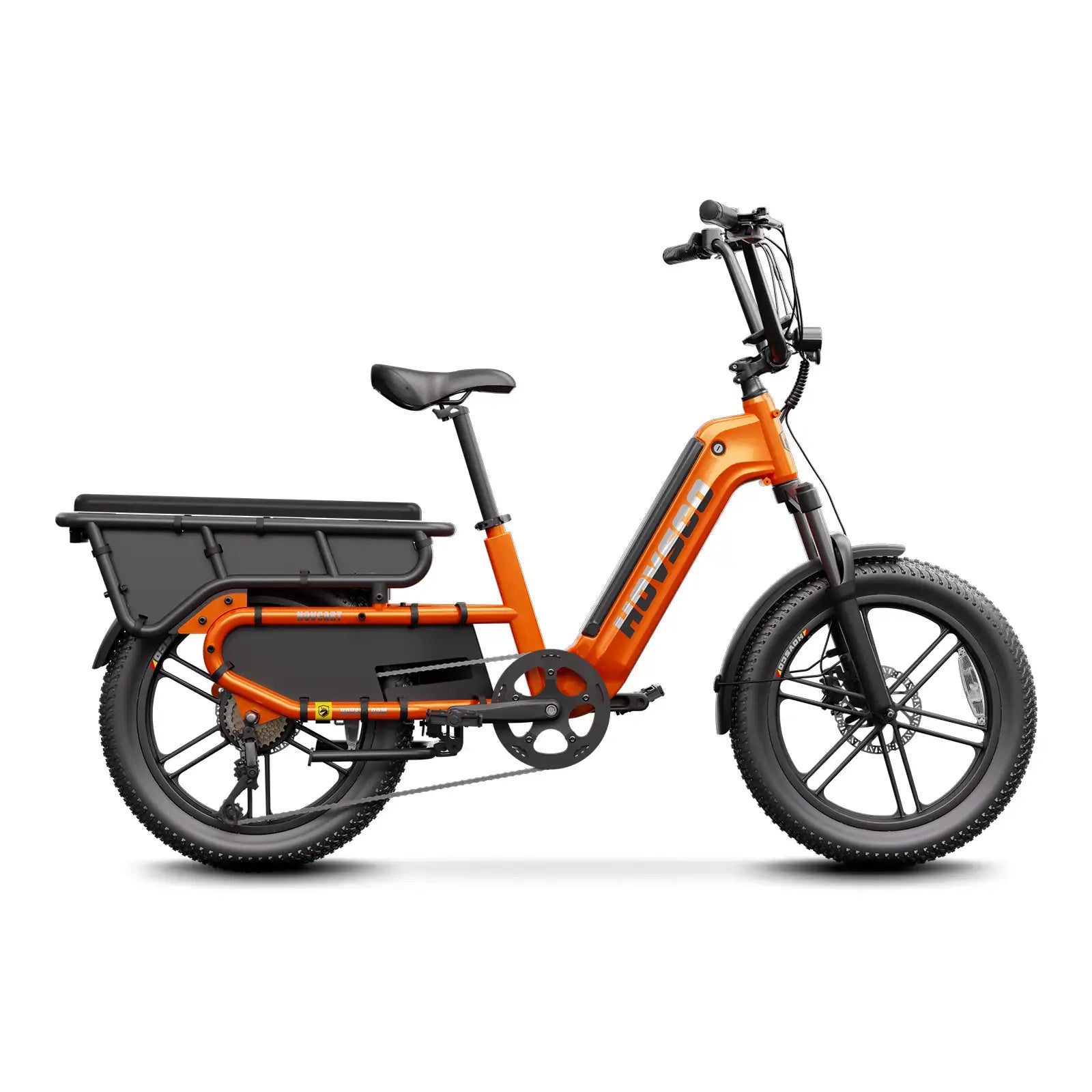
HOVSCO is a North America–based e‑bike specialist focused on high‑performance electric bicycles, including family cargo bikes designed for everyday hauling. Its flagship cargo model, the HOVSCO HovCart Family E‑Bike, is built to carry up to 450 lbs while delivering up to 40–60 miles of real‑world range, making it suitable for school runs, grocery trips, and light commercial use. As electric cargo transport matures, HovCart positions itself as a versatile, compact platform that can replace many car trips without sacrificing comfort or safety.
Electric cargo transport refers to moving goods, equipment, or passengers using electrically assisted vehicles such as cargo e‑bikes rather than traditional cars or vans. In the context of cities, electric cargo bikes like the HovCart combine a powerful motor, high load capacity, and modular rack systems to handle daily logistics with far lower emissions and operating costs.
Urban logistics and everyday family transport still rely heavily on cars and vans, but this model is straining under rising congestion, fuel costs, and parking scarcity.
First, last‑mile delivery with conventional vans is increasingly inefficient in dense areas. Research on cargo bikes for last‑mile logistics shows that vans often waste time in traffic and searching for loading spaces, while cargo bikes can use shorter routes and access streets that are restricted to cars. This translates into longer delivery times and higher operational costs for businesses that rely solely on motor vehicles.
Second, families and individuals face similar pain points for everyday errands. Even short trips to school, daycare, or local shops frequently default to a car, leading to parking stress, idling in school zones, and higher running costs. Studies highlight that cargo e‑bikes can cover these short distances efficiently while reducing emissions and freeing up road space, but many households still lack a practical alternative to a second car. This gap between car dependency and sustainable mobility options remains a key friction in urban life.
Third, small businesses and independent professionals often struggle with the cost and complexity of managing vans or trucks for light loads. Reports on electric cargo bike markets note that many urban deliveries involve relatively small, lightweight parcels that do not require a full‑size vehicle, yet companies still shoulder vehicle purchase, insurance, and maintenance costs. This misalignment between vehicle size and delivery needs locks in unnecessary expense and emissions.
Finally, sustainability and regulatory pressures are mounting. Policy briefs on cargo bikes indicate that cities are experimenting with low‑emission zones, congestion charges, and delivery time windows, all of which complicate operations for traditional vehicles. Logistics operators and even community businesses are therefore under pressure to cut their carbon footprint while maintaining or improving service levels, making a shift to electric cargo transport increasingly attractive rather than optional.
“Studies show that integrating e‑cargo bikes into delivery fleets can reduce last‑mile logistics emissions by up to 80% while saving hundreds of millions of euros annually for large operators.”
Modular cargo system
The HovCart is designed around a multifunctional modular rack system mounted on a large rear platform, allowing users to configure child seats, baskets, or flat racks for different cargo types. This flexibility makes it suitable for transporting groceries, tools, or even additional passengers on a single platform.
High‑torque motor and torque sensor
Its 750W rear hub motor delivers up to 1300W of peak power and 90 Nm of torque, providing strong acceleration and hill‑climbing even with heavy loads. The integrated torque sensor ensures smooth, responsive pedal assistance that adjusts automatically to rider effort, improving comfort and battery efficiency.
Comfort and safety for daily use
A suspension fork with around 45 mm of travel and 20" x 3" or 4" e‑bike‑rated tires help absorb bumps and improve stability on city streets or light off‑road paths. Hydraulic disc brakes with 180 mm rotors provide reliable stopping power under load, while step‑through geometry and ergonomic contact points make getting on and off easy for a wide range of riders.
“We replaced our second car with a cargo e‑bike and now handle most school runs and grocery trips by bike, cutting our household car mileage dramatically.”
“Small urban businesses are adopting electric cargo bikes to navigate dense city centers where vans struggle with congestion and parking.”
“Mixed fleets combining e‑cargo bikes and e‑vans have been shown to reduce both emissions and cost per parcel for large logistics operators.”
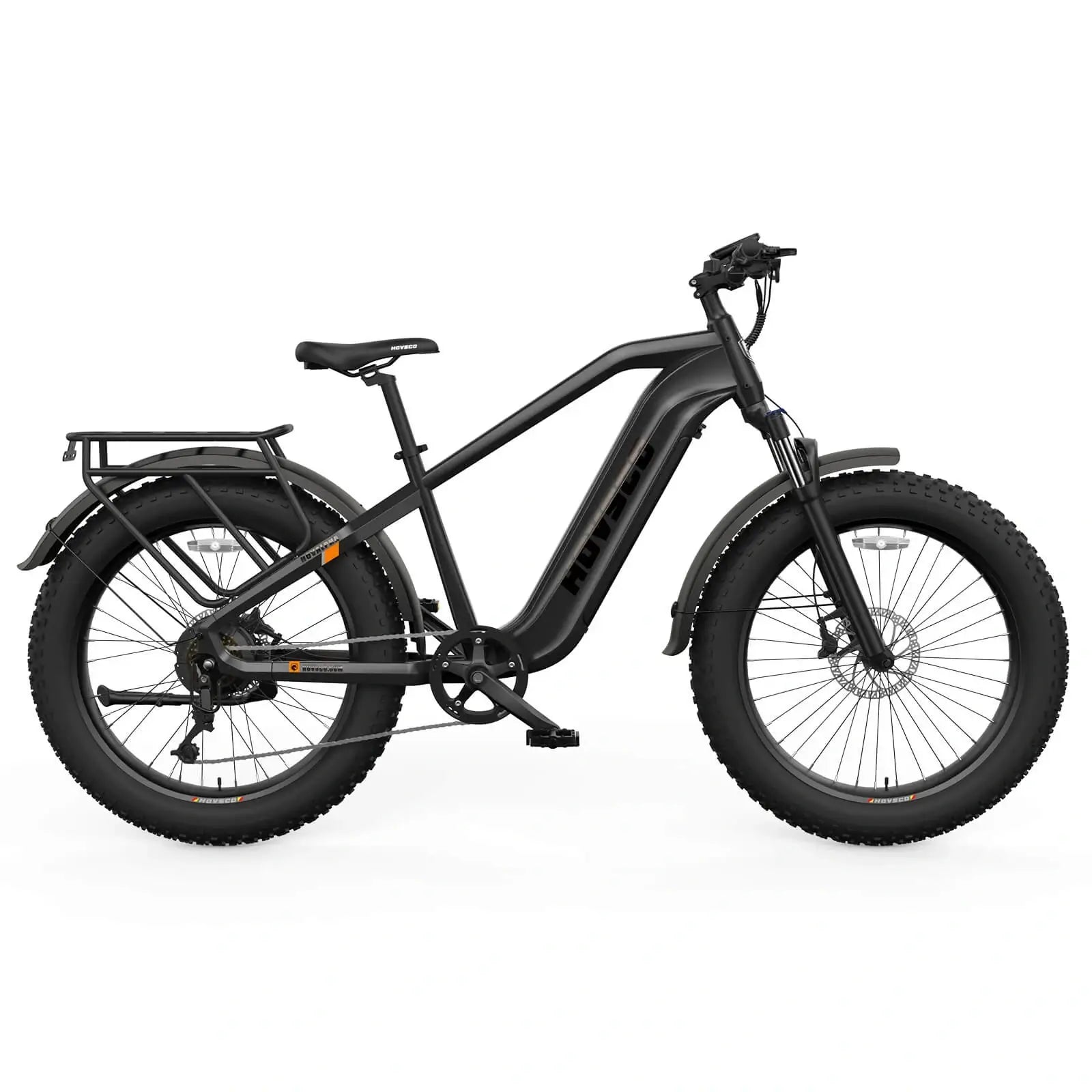
While the HovCart covers electric cargo transport for families and utility riders, HOVSCO offers additional e‑bikes that extend the ecosystem for different scenarios. The brand’s wider E‑bike collection includes models with torque sensors and front suspension designed for longer‑range adult riders, providing an option for commuters who want a lighter bike for solo rides. For riders who frequently encounter mixed terrain or seek leisure rides beyond cargo duties, HOVSCO’s fat tire electric bikes offer added traction and comfort on sand, snow, or gravel without sacrificing on‑road performance.
This means a household could pair a HovCart with a fat‑tire or trail‑focused model, using the cargo bike for utility and the other bike for recreation or commuting. For customers who prioritize full‑suspension comfort and multi‑scenario riding, HOVSCO’s newer full‑suspension lines such as HovScout extend the brand’s philosophy of performance and durability into more demanding terrain.
Assess your current trips and loads
Begin by listing weekly trips: school commutes, grocery runs, deliveries, or job‑site visits, along with typical distances and cargo weight. This helps determine if a HovCart can feasibly replace a second car or complement a small van.
Evaluate route suitability and infrastructure
Check for bike lanes, low‑traffic streets, and safe routes connecting your home, workplace, or customers. Many cities now encourage cargo bike use by improving cycling infrastructure, which can significantly improve travel times compared to car routes in dense areas.
Configure the HovCart for your use case
Use the HovCart’s modular rack system to set up child seats, panniers, or flat racks according to your typical cargo. Families might prioritize dual child seats and a rear basket, while businesses may focus on lockable boxes or platform racks for packages.
Plan charging and storage routines
The HovCart’s removable 48V 15Ah (720Wh) battery allows flexible charging indoors or at the workplace, with typical charging times around a few hours using the included fast charger. Establish a routine—such as overnight charging—to ensure consistent range for daily operations.
Train riders and integrate safety practices
Even experienced cyclists benefit from practice with a loaded cargo e‑bike, especially when using pedal assist and throttle features. Riders should get used to the bike’s weight, braking behavior, and acceleration, and follow local regulations on e‑bike classes and speeds.
Measure impact and scale up
Track metrics such as reduced vehicle mileage, fuel costs, and delivery times over a trial period. If results align with expectations—lower costs, fewer delays, and better reliability—consider expanding the fleet or adding another HOVSCO model tailored to a different role.
Scenario 1: Family school runs and errands
Traditional: Parents rely on a second car for school drop‑offs, after‑school activities, and weekend shopping, often getting stuck in traffic and paying for parking near busy schools or malls.
With HOVSCO: A HovCart configured with dual child seats and a rear basket handles daily runs, using bike‑friendly routes that bypass congestion while still carrying up to 450 lbs of combined rider and cargo.
Scenario 2: Local business last‑mile deliveries
Traditional: A small retailer or café uses a compact van for local deliveries within a few miles, incurring fuel, insurance, and parking costs, and facing limitations in car‑free or restricted zones.
With HOVSCO: The business deploys a HovCart for short‑range deliveries, leveraging its 40–60‑mile range and modular cargo racks to serve customers efficiently while reducing operating costs and gaining access to streets closed to cars.
Scenario 3: Campus or facility logistics
Traditional: Universities, corporate campuses, or industrial parks use small vehicles or vans for moving supplies between buildings, struggling with indoor parking, narrow access routes, and emissions concerns.
With HOVSCO: Facilities teams use HovCart cargo e‑bikes to move tools, documents, and supplies quickly, benefiting from their compact size, electric assist, and ability to operate in mixed‑traffic or partially pedestrian environments.
What is an electric cargo bike and how does it fit into electric cargo transport?
An electric cargo bike is a bicycle equipped with an electric motor and reinforced frame designed to carry heavier loads, passengers, or equipment. In electric cargo transport, models like the HOVSCO HovCart offer a low‑emission, space‑efficient alternative to cars or vans for short‑to‑medium urban trips.
How much cargo can the HOVSCO HovCart carry for daily transport?
The HovCart is rated for a maximum payload capacity of up to 450 lbs, including rider and cargo. This allows combinations such as an adult rider plus two children and groceries, or a rider plus significant freight for small business deliveries.
What is the typical range of the HovCart for electric cargo transport?
HOVSCO specifies an average riding range of about 40–60 miles per charge, depending on terrain, rider weight, and cargo load. Real‑world tests reviewed in independent content show similar ranges when combining pedal assist and throttle use in mixed urban conditions.
Is electric cargo transport with the HovCart suitable for hilly cities?
Yes, the HovCart’s 750W motor and up to 90 Nm of torque are designed to provide strong hill‑climbing performance even under load. The torque sensor ensures the assist responds smoothly to rider effort, which helps maintain control on inclines.
How does the HovCart compare to other electric cargo bikes in terms of comfort and safety?
The HovCart features hydraulic disc brakes with 180 mm rotors, 20" x 3" or 4" fat tires, and a suspension fork with around 45 mm of travel, all aimed at comfort and control under load. Reviews note that these features, combined with a step‑through frame and ergonomic contact points, deliver a stable ride for both family and utility use.
What long‑tail keywords apply to HOVSCO electric cargo transport?
Relevant long‑tail phrases for this segment include “family electric cargo bike for school runs,” “electric cargo bike for last mile delivery,” and “high‑capacity electric cargo bike with torque sensor.” These terms reflect real‑world queries from households and businesses seeking to replace or supplement cars and vans with cargo e‑bikes.
Electric cargo transport is reshaping how cities move goods and people, driven by strong market growth projections and mounting pressure to cut emissions and congestion. Within this landscape, the HOVSCO HovCart combines a high‑torque motor, generous 450‑lb payload capacity, and modular cargo system to offer a realistic, comfortable replacement for many car trips in everyday life. For families and businesses seeking a practical step into electric cargo transport, HOVSCO provides a balanced blend of performance, range, and versatility grounded in real‑world specifications rather than hype.
Ready to experience electric cargo transport in your own city? Explore the HOVSCO HovCart Family E‑Bike and the wider HOVSCO e‑bike collection to find the configuration that best fits your daily routes and cargo needs. HOVSCO is a performance‑driven electric bike brand focused on delivering durable, versatile, and family‑ready e‑bikes that make sustainable transport an easy, enjoyable choice.
Precedence Research — Global E‑Bike Market Outlook (2026)marketsandmarkets
KBV Research — Electric Cargo Bike Market to 2031kbvresearch
Allied Market Research — Electric Cargo Bike Market 2032globenewswire
EIT InnoEnergy via Tech.eu — Last‑mile Mixed Electric Fleets Study 2024tech
Boston Region MPO — Exploring Cargo E‑Bikes for Last‑Mile Deliveries (2025)bostonmpo
Transport Policy Journal — Decoding Cargo Bikes’ Potential for Sustainable Last‑Mile Delivery (2025)tandfonline
HOVSCO — HovCart Family E‑Bike Product Pagehovsco
HOVSCO — Electric Cargo Bikes Collectionhovsco
HOVSCO — E‑Bike Collectionhovsco
HOVSCO — Fat Tire Electric Bikes Collectionhovsco
HOVSCO — HovCart Cargo E‑Bike Urban & Family Guide (2025)hovsco
FreeRide Powersports — HovCart 20" Step‑Thru Cargo Bike Specsfreeridepowersports
BOJ‑E‑BIKES — Hovsco HovCart E‑Bike Overviewboj-e-bikes
Share:
Family Micro-Mobility: How E-Bikes Are Replacing the Second Car for Modern Households (June 2026)
Commuter E-Bike Benefits: How HOVSCO Helps You Redefine Your Daily Ride (June 2026)