
























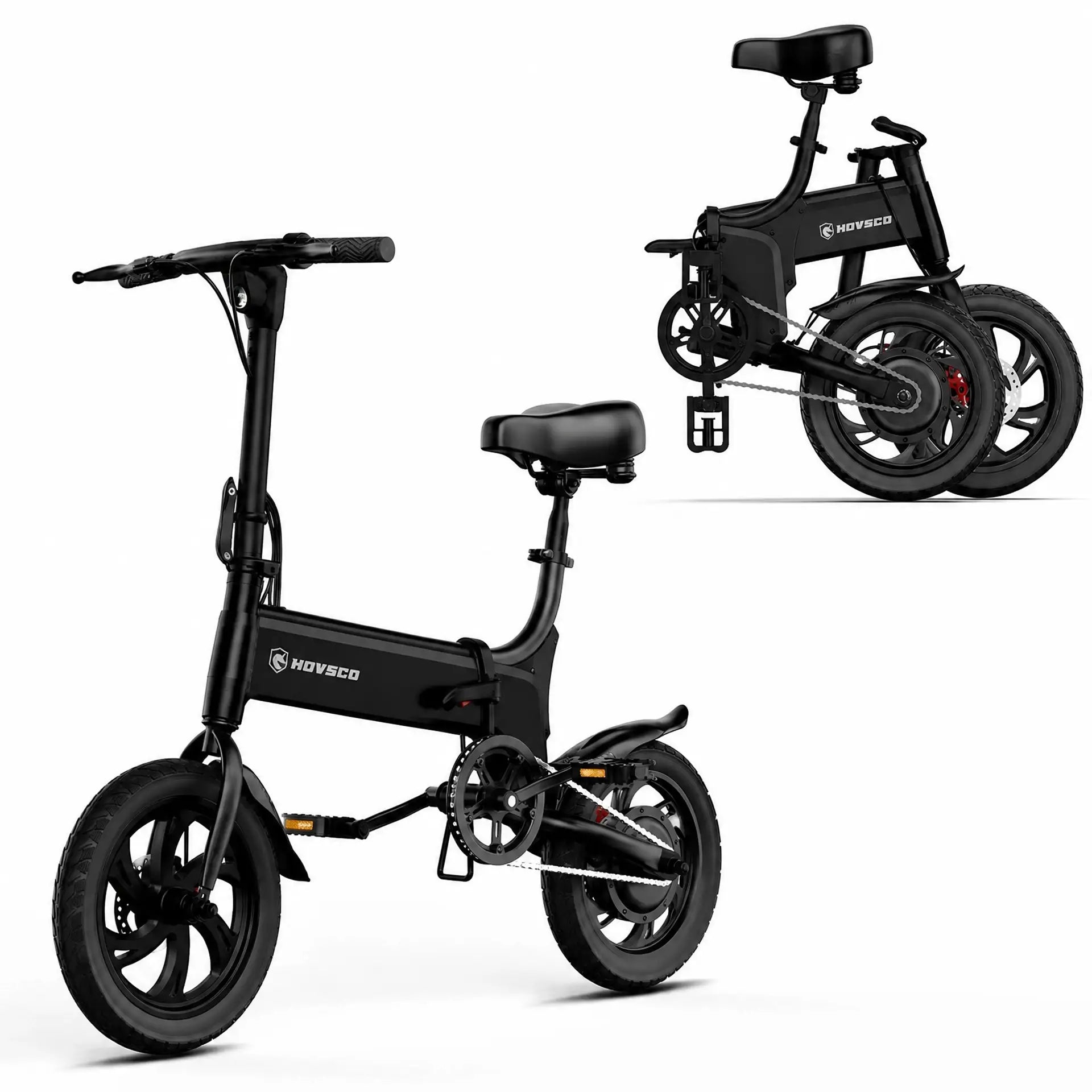
![[ New Arrival ] Porto Max Electric Scooter For Commute & Grocery Shopping - HOVSCO](http://www.hovsco.com/cdn/shop/files/PotroMax-3.jpg?v=1706927007&width=1200)
- by SEO
Commuter E-Bike Benefits: How HOVSCO Helps You Redefine Your Daily Ride (June 2026)
- by SEO
E-Bikes
Accessories
 Free Shipping
 15-Day Returns
 2-Year Warranty
Free Shipping
15-Day Returns
2-Year Warranty
2-Year Warranty
Free Shipping
15-Day Returns
2-Year Warranty
Commuter e-bike benefits go far beyond saving gas. Discover how HOVSCO’s commuter-focused e-bikes improve health, cut costs, and make daily travel faster and greener.
Global demand for e-bikes has surged as cities seek cleaner, less congested transport options, with the global e-bike market estimated at around 36–45 billion USD in 2023 and projected to grow strongly through 2030. Recent analyses suggest the market could reach between 69 and 80 billion USD by the early 2030s, mirroring rising adoption among everyday commuters. Studies also show that a large share of riders use e-bikes primarily for commuting, underlining their role as a practical alternative to cars and crowded public transit.
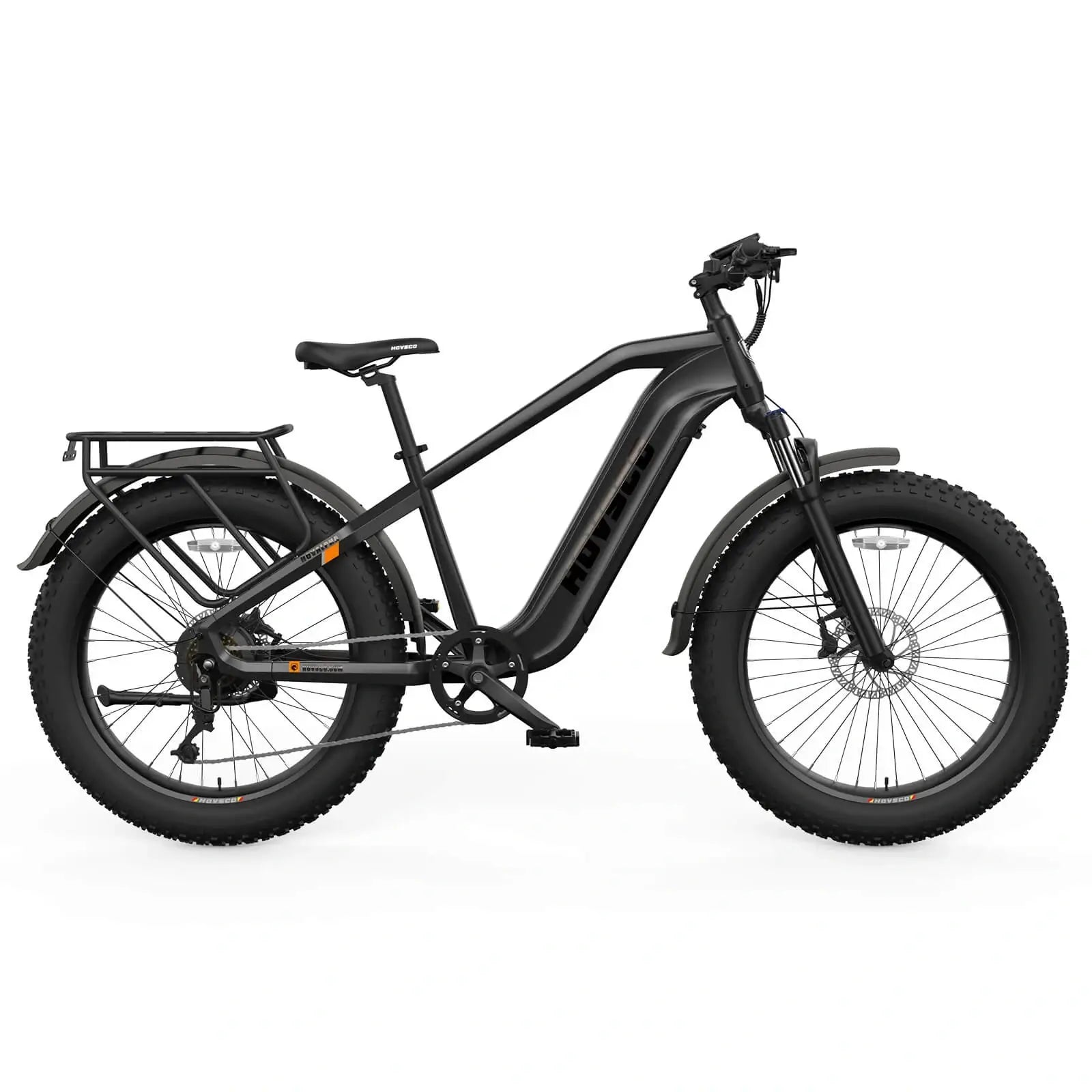
Against this backdrop, brands like HOVSCO have focused on versatile, high-performance e-bikes designed to handle daily urban rides, longer mixed-terrain commutes, and family logistics. Models such as the HovRanger commuter line, the HovScout full-suspension fat-tire bike, and the HovGtrs moped-style bike combine powerful hub motors, long-range batteries, and robust frames to support real-world commuting needs.
HOVSCO offers multiple models that suit commuter e-bike benefits, from the step-thru HovRanger commuter frame to compact fat-tire and cargo-style designs that balance speed, comfort, and practicality for daily rides. Many of these bikes use 48 V hub motors, long-range lithium-ion batteries, and torque sensors to deliver smooth assistance, making them ideal for urban and suburban commuters who want reliability and comfort.
A commuter e-bike is a bicycle equipped with an electric motor and battery that provides pedal assistance or throttle power, specifically tuned for daily travel between home, work, and other regular destinations. Commuter e-bike benefits include reduced physical strain, faster travel times compared with traditional bikes in stop-and-go conditions, and lower environmental impact than driving a car.
Modern commuters face a mix of time pressure, rising costs, and environmental concerns, and commuter e-bike benefits directly address these realities. HOVSCO designs its line-up to respond to several common pain points.
Time lost in traffic and unreliable arrival times
Many urban workers lose significant time in congestion, and studies show that e-bike users often choose them precisely because they can bypass traffic and enjoy predictable travel times. With class 2–3 capability and maximum speeds up to around 28 mph on models like the HovRanger and HovScout, HOVSCO bikes let riders cover typical city commutes faster than a conventional bike and often faster door-to-door than cars in dense areas.
Rising fuel, parking, and maintenance costs
Owning a car involves ongoing fuel, insurance, parking, and maintenance costs, while e-bikes typically cost only cents per charge and have far simpler mechanical systems. HOVSCO positions itself as a “long-range e-bike expert,” offering models with ranges often in the 40–60 mile bracket per charge, which means many commuters can run an entire week’s rides on a single battery without refuelling or parking fees.
Physical strain and accessibility for different fitness levels
Traditional cycling can be daunting for commuters who face long distances, steep hills, or who simply do not want to arrive at the office sweaty and exhausted. Commuter e-bike benefits include adjustable pedal assistance and torque sensors on many HOVSCO models, which scale motor support with rider effort to reduce strain while still providing moderate, health-promoting activity.
Environmental and sustainability concerns
As cities grapple with air pollution and climate targets, e-bikes offer low-carbon, energy-efficient transportation that can replace many short car trips. HOVSCO’s portfolio supports this shift by offering durable, long-range e-bikes that make it realistic to replace a large share of daily urban car journeys with zero tailpipe-emission rides.
“By 2024, e-bikes were the most selected mode for commuting among many riders, and the global e-bike market is projected to more than double in value over the next decade.”
A strong commuter e-bike must blend performance, comfort, reliability, and value, and HOVSCO addresses these criteria through its key platforms. The HovRanger Step-Thru is explicitly framed as a commuter-style model with a comfortable geometry, 500 W rear hub motor, torque sensor, hydraulic disc brakes, and 40–60 mile max range, while the HovScout and HovGtrs extend those capabilities into rougher terrain and higher-power riding for mixed commuting and recreation.
Below is a simplified comparison between a representative HOVSCO commuter-type e-bike (HovRanger ST), a typical conventional commuter bicycle, and a mid-range entry-level car, focusing on everyday commuting considerations.
Motor and assistance
HOVSCO uses hub motors in the 450–750 W range on many models, with peak outputs up to around 1300 W on certain platforms, enabling riders to tackle hills and maintain higher cruising speeds without excessive effort. Torque sensors on selected bikes, such as the HovRanger and HovScout, finely tune assistance based on rider input, delivering smoother acceleration and better energy efficiency than basic cadence-only systems.
Battery and range
Lithium-ion battery packs in the 36–48 V class with capacities around 15 Ah (for example, 48 V 15 Ah/720 Wh systems) support ranges in the 40–60 mile span under pedal assist, which is sufficient for most daily commuters and even longer suburban routes. Many HOVSCO designs integrate the battery into the frame while still allowing removal for convenient indoor charging and security.
Comfort, control, and safety
Hydraulic disc brakes with 180 mm rotors, ergonomic saddles, and suspension forks or full-suspension systems on models like the HovScout provide confident stopping power and a comfortable ride over potholes, curbs, and mixed surfaces. Fat-tire options such as the HovCart and HovAlpha lines offer additional stability and comfort for riders who mix city streets with gravel paths or poor road conditions.
“I used to dread my 8-mile car commute through rush-hour traffic; now, on an e-bike, I cover the same distance in nearly the same time but arrive more relaxed and active.”
“A 12-mile round-trip ride that once felt exhausting on a traditional bike became manageable—and even enjoyable—after switching to a torque-sensor-equipped commuter e-bike.”
“Replacing just a few weekly car trips with an e-bike led to measurable reductions in body mass and blood pressure for participants in recent intervention studies.”
HOVSCO’s range makes it easy for riders to match commuter e-bike benefits with their specific lifestyle and terrain. The HovRanger Step-Thru suits riders who prioritize accessible geometry and city-focused commuting, while the HovScout full-suspension fat-tire platform works for those whose daily route includes rough roads, gravel, or seasonal snow.
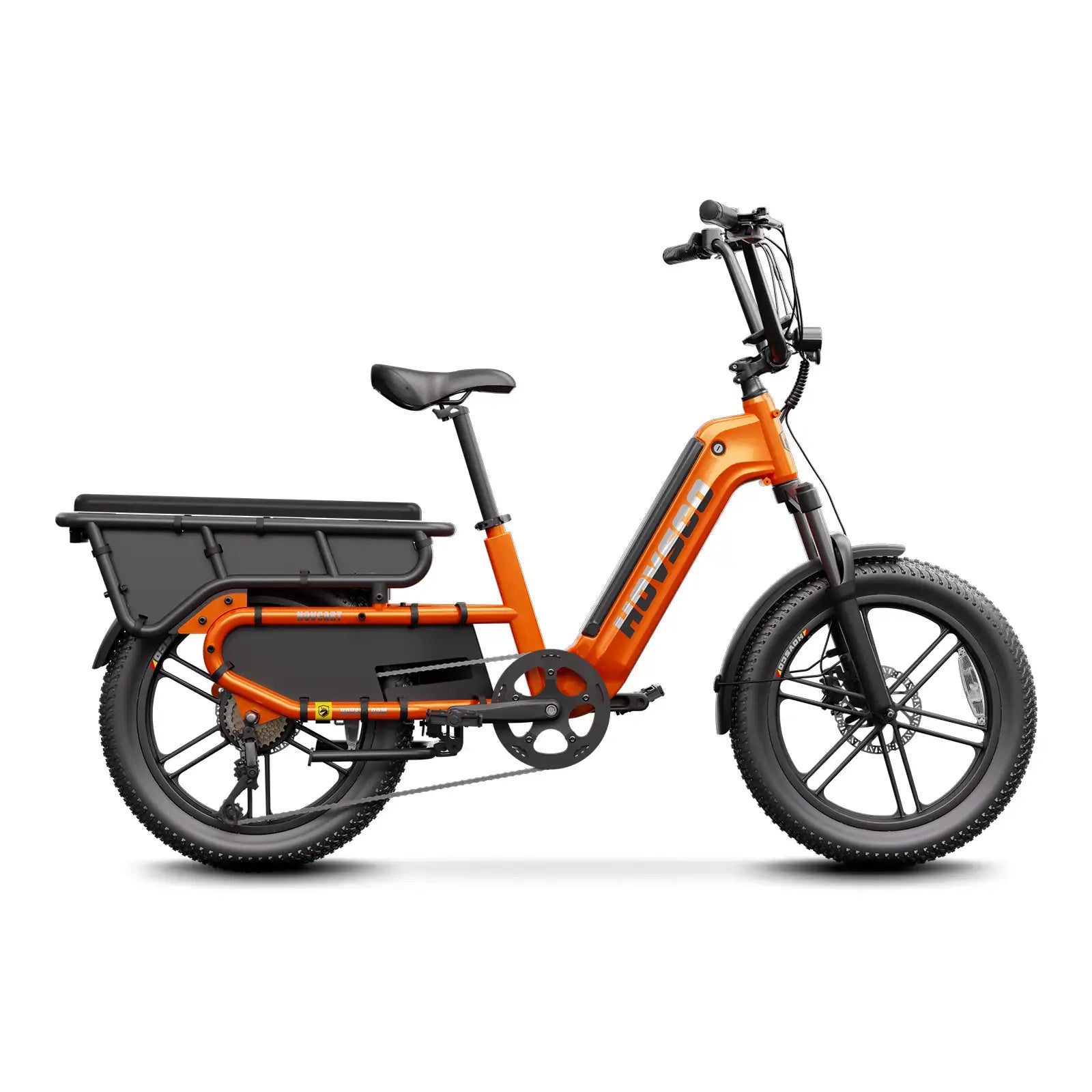
Riders who want a more compact or cargo-friendly solution can explore models listed under fat-tire and cargo collections, such as the HovCart step-thru cargo bike or foldable HovBeta options, which support groceries, school runs, and multi-modal commutes with trains or buses. For commuters who mix city riding and weekend adventures, the HovGtrs moped-style bike offers powerful acceleration, extended range, and robust payload capacity, making it a versatile crossover between daily transport and leisure rides.
In the HOVSCO ecosystem, riders can also find upgraded batteries, racks, and chargers on the E-Bike Products – Batteries, Racks, Chargers & More collection page to tailor their commuter setup as their needs evolve.
Clarify your commute profile
Identify your typical distance, terrain, and climate to understand how much range and what type of support you need, keeping in mind that many HOVSCO models comfortably cover 40–60 miles per charge.
Choose a frame style and tire type
Decide whether a step-thru frame like the HovRanger suits your mounting preferences or whether a fat-tire model such as the HovScout or HovAlpha better matches your route’s surfaces and weather conditions.
Match motor power and assistance to your fitness level Riders in hilly regions or those carrying cargo may prioritize higher-power hub motors and torque sensors, while flatter-city commuters might favour lighter setups with moderate assistance and folding options.
Plan charging routines around your schedule Most commuter e-bike batteries recharge in a few hours, so consider whether you will charge at home, at work, or both, and check that your chosen model has removable batteries and compatible chargers.
Equip for safety and comfort Add essentials such as helmets, lights, reflective clothing, and racks or panniers, leveraging HOVSCO’s accessories selection to integrate storage, fenders, or upgraded components when needed.
Start with test rides and incremental adoption If possible, test ride comparable models or consult HOVSCO dealers to fine-tune fit and feel, then gradually replace car journeys with e-bike trips as you gain confidence and refine your routes.
Scenario 1: Suburban office commute
A suburban professional drives 10–12 miles each way to a city office, spending 45–60 minutes in traffic, paying for parking, and remaining largely sedentary throughout the day.
Switching to a HOVSCO commuter e-bike like the HovRanger cuts door-to-door travel time by using bike lanes, eliminates fuel and parking fees, and adds moderate daily exercise without leaving the rider exhausted.
Scenario 2: Multi-stop urban errands
Short car trips for groceries, gym sessions, and visits to friends involve repeated parking searches and costs, and they contribute disproportionately to urban congestion and emissions.
A HOVSCO fat-tire or cargo model such as the HovCart allows riders to carry loads across city streets and mixed surfaces, weaving through traffic calmly and replacing multiple short car trips with one efficient, low-emission ride.
Scenario 3: Mixed-commute with weekend adventures
A rider uses a conventional bike for commuting and a separate mountain bike for weekend trails, facing fatigue on steep weekday climbs and limited range.
With a full-suspension HovScout or powerful HovGtrs, the same rider enjoys assisted weekday commutes and, on weekends, leverages the same bike’s 750–1500 W-class performance and 40–60 mile range for longer off-road or mixed-terrain journeys.
What are the main commuter e-bike benefits for daily city travel?
Commuter e-bikes reduce travel time by allowing riders to bypass traffic and use bike lanes, deliver predictable arrival times, and lower operating costs compared with cars and many public-transit options. They also support moderate daily activity without excessive effort, which can contribute to improved health markers when used regularly.
How far can a HOVSCO commuter e-bike travel on a single charge?
Range depends on the specific model, rider weight, terrain, and assistance level, but several HOVSCO commuter-type bikes, such as the HovRanger and HovScout platforms, list typical ranges of around 40–60 miles under pedal assist. This is sufficient for most daily commutes and many longer routes when charging at home or work is available.
Are commuter e-bike benefits limited to fit or experienced cyclists?
No. Studies show e-bike commuting encourages people of varied fitness levels to increase their daily physical activity while moderating strain through adjustable assistance modes. HOVSCO’s use of torque sensors and multiple pedal-assist levels makes it easier for beginners to find a comfortable balance between motor support and effort.
How do commuter e-bikes compare environmentally with cars and public transport?
E-bikes generate zero tailpipe emissions and have a far smaller lifecycle carbon footprint than typical cars, especially when charged from cleaner electricity mixes. Because many e-bike commutes replace short car trips—the most energy- and emission-intensive segment—commuter e-bike benefits include tangible reductions in local air pollution and congestion.
What safety features do HOVSCO commuter e-bikes include for daily riders?
HOVSCO equips many models with hydraulic disc brakes, large rotors (around 180 mm), and e-bike-rated tires for reliable stopping and traction, even under heavier payloads. Additional features such as integrated lighting, stable frames, and ergonomic cockpit designs support confident handling in urban environments.
Can a HOVSCO commuter e-bike replace a car entirely?
For some riders, especially those with commutes within the 10–20 mile range and good cycling infrastructure, a well-chosen HOVSCO model can replace most daily car trips, including commutes, errands, and social visits. However, complete car replacement depends on individual circumstances, such as family size, weather, and access to public transit or car-sharing for longer journeys.
Commuter e-bikes sit at the intersection of convenience, cost savings, and sustainability, with market data and health research alike highlighting their growing importance in modern urban mobility. HOVSCO’s range of commuter-focused models—from step-thru city bikes to full-suspension and moped-style platforms—offers practical, well-specified options for riders who want to commute faster, spend less, and live more actively without sacrificing comfort.
If you are considering an e-bike to transform your daily routine, exploring HOVSCO’s commuter lineup—including the HovRanger step-thru, HovScout full-suspension, and HovGtrs moped-style models—can be a strong first step toward a more efficient, healthier commute. With long-range batteries, robust motors, and a growing ecosystem of accessories and support, HOVSCO gives commuters a practical, future-ready way to move through the city every day.
Which commuting distance range (for example, under 10 miles, 10–20 miles, or over 20 miles one way) best describes your typical daily ride so we can align the HOVSCO model story more precisely in future content?
Precedence Research — E-bike Market 2024
Fortune Business Insights — Electric Bike Market 2024
BCC Research — E-Bike Global Markets 2024
IMARC Group — Electric Bike Market 2023–2028
ScienceDirect — E-bike use and commuting behaviour 2025
ScienceDirect — E-bike distance and health changes 2024
ScienceDirect — E-bike share in total cycling distance 2024
PMC — Narrative review of e-bikes, health and urban air 2025
Market Data Forecast — Electric Bicycle Market 2026
Verified Market Reports — Electric Bicycles Market 2025
Share:
Electric Cargo Transport: How HOVSCO Cargo E-Bikes Redefine Urban Hauling (June 2026)
Commuter E-Bike Benefits: How HOVSCO Makes Daily Riding Easier (June 2026)