
























![[ New Arrival ] Porto Max Electric Scooter For Commute & Grocery Shopping - HOVSCO](http://www.hovsco.com/cdn/shop/files/PotroMax-3.jpg?v=1706927007&width=1200)
- by SEO
E-Bike Motor Efficiency: How HOVSCO Helps You Go Further With Less Energy (June 2026)
- by SEO
E-Bikes
Accessories
 Free Shipping
 15-Day Returns
 2-Year Warranty
Free Shipping
15-Day Returns
2-Year Warranty
2-Year Warranty
Free Shipping
15-Day Returns
2-Year Warranty
E-bike motor efficiency is becoming a decisive factor for riders who care about range, running costs, and sustainability, and brands like HOVSCO are building their bikes around efficient hub-motor systems to maximize real‑world performance. As the global e-bike market accelerates, choosing a motor that converts battery power into motion efficiently can be the difference between range anxiety and everyday confidence.
Efficient e-bike motors help riders travel farther per charge, reduce electricity use, and cut transport emissions. This article explains what e-bike motor efficiency is, why it matters, how hub and mid-drive systems compare, and how HOVSCO’s motor and battery choices support practical, long-range riding for commuting, cargo, and adventure.
E-bike motor efficiency explained: learn how motor design, hub vs mid-drive systems, and HOVSCO’s 750W–1300W motors and batteries impact range, performance, and daily riding in 2026.
The global electric bike market is projected to reach roughly 83 billion USD by 2030, growing at around 11–16% annually as more riders adopt e-bikes for commuting and daily mobility. At the same time, dedicated e-bike motor revenues are expected to grow steadily to about 13 billion USD by 2032, showing how critical drive systems are to the industry’s future. In this context, e-bike motor efficiency—how effectively a motor converts electrical energy into forward motion—directly affects real-world range, total cost of ownership, and environmental impact.
For urban riders, even small gains in motor efficiency can translate into dozens of extra miles per charge over a typical month, while fleet and cargo operators can cut both charging downtime and electricity bills. Because of this, both mid-drive and hub-motor technologies are evolving rapidly, with mid-drives often optimized for peak efficiency under heavy load and premium hub motors like the 750W–1300W units used by HOVSCO focusing on robust, low-maintenance everyday performance.
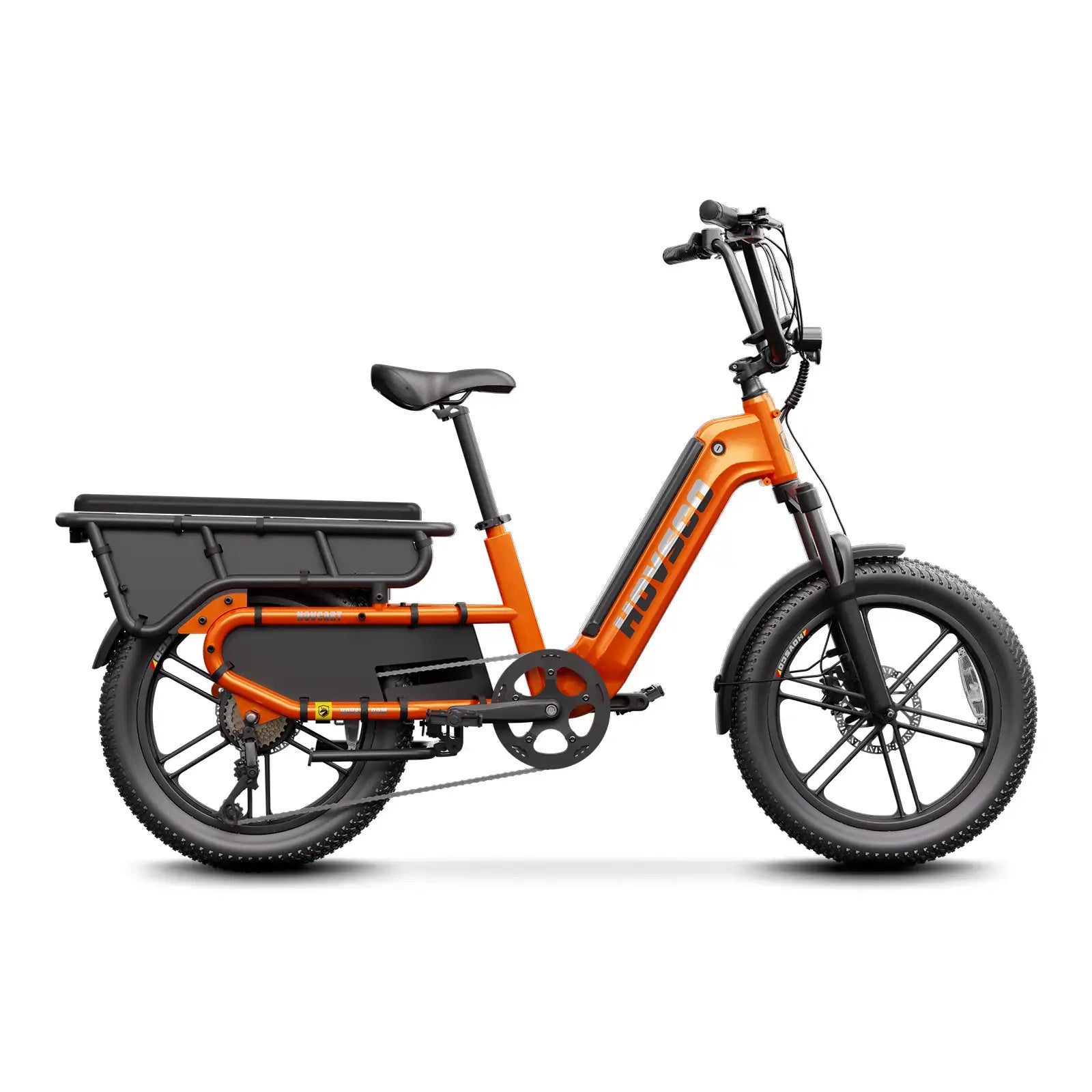
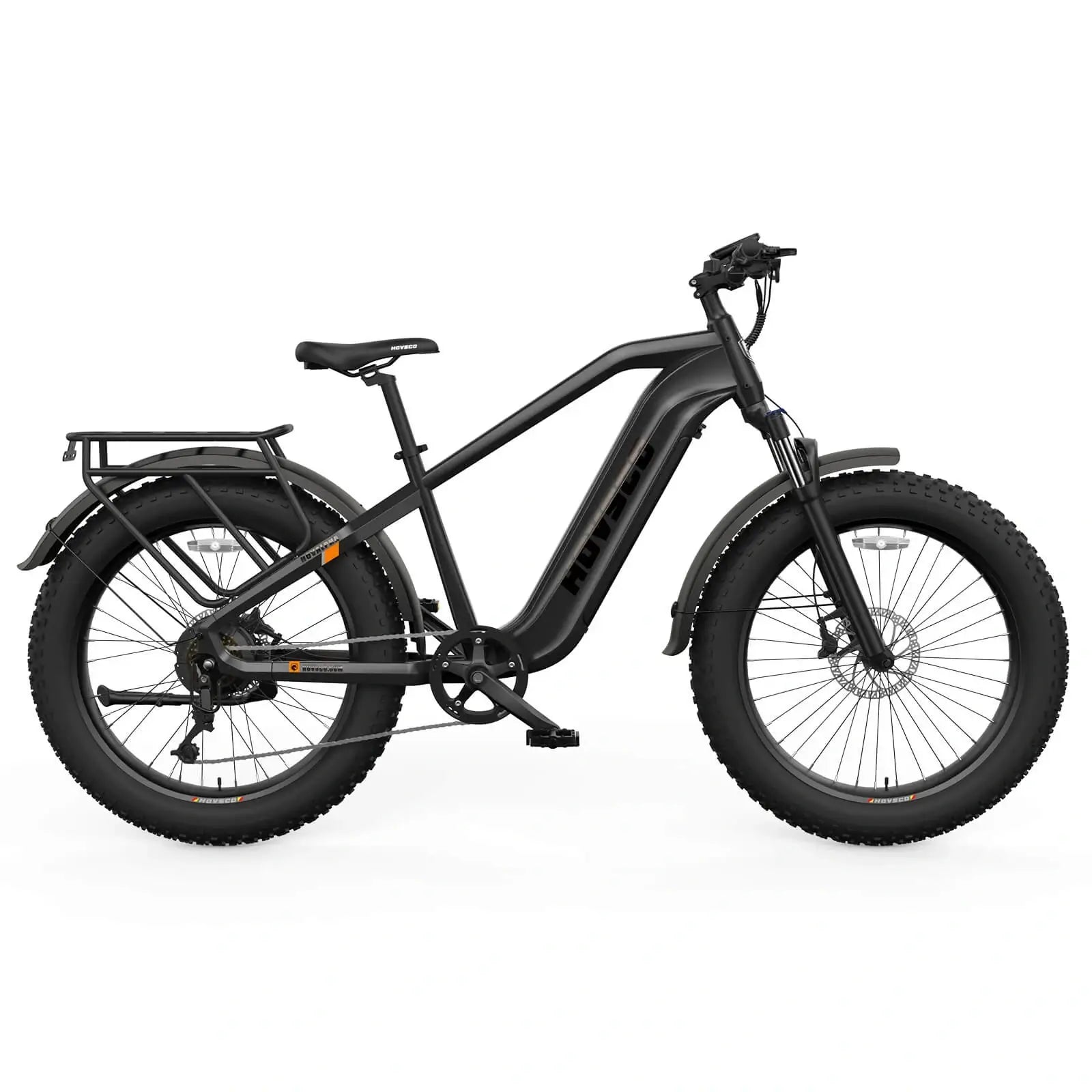
HOVSCO builds its utility and family-focused e-bikes around powerful yet efficient rear hub motors, with flagship models such as the HovCart cargo e-bike using a 750W sustained, 1300W peak brushless rear hub motor paired with a 48V system for strong, controllable assistance. Across its line-up, HOVSCO combines these motors with removable high-capacity batteries to deliver claimed real-world ranges of roughly 50–60 miles on a charge in pedal-assist mode, depending on model and riding conditions.
These systems are designed to balance efficiency, torque, and reliability rather than chasing extreme power outputs that can quickly drain the battery. For riders this means smoother acceleration, predictable range, and fewer worries about overheating or excessive drivetrain wear, especially on mixed urban and light off-road routes.
E-bike motor efficiency describes how much of the electrical energy drawn from the battery is converted into useful mechanical power at the wheel, instead of being lost as heat or internal friction. When we talk about “efficient e-bike motors”, we mean systems that deliver the necessary torque and speed while consuming less watt-hours per kilometer or mile under real-world conditions.
In controlled comparisons, mid-drive motors can reach efficiencies of around 70–80% and even over 90% in optimal conditions, while typical hub-drive systems often operate in the 60–70% range depending on load and speed. However, overall bike efficiency also depends on rider behavior, terrain, tire choice, and weight, which is why well-matched hub-motor bikes like HOVSCO’s still offer competitive daily range for many riders.
Many new e-bike riders focus on top speed or peak wattage and only discover later how low motor efficiency can undermine their everyday experience. Several recurring pain points show up whenever motor and system efficiency are not treated as priorities.
First, range anxiety quickly becomes a barrier to using an e-bike as a genuine car replacement when inefficient motors drain batteries faster than expected on hills or when carrying cargo. Riders planning 25–30 mile round-trip commutes frequently discover that they must use the lowest assist levels or pedal harder than intended simply to make it home without recharging. This can discourage consistent use and push people back toward cars or public transport.
Second, inefficient or poorly tuned motors can waste energy as heat, which not only shortens range but also raises concerns about long-term durability and battery health. Under heavy loads, such as steep inclines or cargo hauling, an inefficient hub motor may operate outside its optimal efficiency band, increasing current draw and thermal stress on both motor windings and the controller. Over time, this can lead to reduced performance, more frequent service needs, or premature component replacement, raising total ownership costs.
Third, mismatched systems can deliver jerky, unnatural-feeling assistance that makes it difficult to modulate speed smoothly in city traffic. If the motor’s response curve is not well aligned with cadence and torque sensing, riders may experience abrupt surges of power on flat ground and a sluggish response on hills. That not only feels less safe but also encourages inefficient riding habits such as constantly toggling assist levels or overusing the throttle, which further reduces energy efficiency.
Finally, uncertainty about range and efficiency complicates trip planning and charging behavior. Without reliable expectations for watt-hour consumption per mile across different conditions, riders often “overcharge” or limit their rides to conservative distances, undermining the flexibility that e-bikes should provide. Efficient, predictable systems like HOVSCO’s 750W hub motors with optimized controllers and appropriately sized batteries aim to reduce these pain points by delivering consistent performance across common commuting and leisure scenarios.
Studies comparing mid-drive and hub-drive systems have found that hub-drive configurations can consume about 18% more energy than mid-drive setups over the same route, underscoring how much design and motor choice impact e-bike efficiency.
Motor selection and power bandwidth
HOVSCO’s e-bikes use brushless rear hub motors rated around 750W sustained, with models such as the HovCart reaching 1300W peak, giving riders enough power for real-world cargo and family use while avoiding extreme outputs that would rapidly drain the battery. This power band is chosen to balance acceleration, hill-climbing capability, and energy efficiency on common urban routes.
Battery capacity matched to motor needs
Across its product line, HOVSCO pairs its motors with high-capacity 48V batteries in the 14–15Ah range, providing roughly 672–720Wh of stored energy for ranges of around 50–60 miles, depending on model and assist level. This alignment between battery size and motor demand helps prevent excessive depth-of-discharge cycles, supporting both efficient operation and long-term battery health.
Controller tuning and riding modes
HOVSCO’s controllers and pedal-assist modes are configured to provide smooth, progressive power rather than abrupt surges, enabling riders to stay closer to the motor’s efficient operating range at everyday speeds. By offering multiple assist levels and throttle support, the brand allows riders to fine-tune how aggressively the motor contributes, which directly influences watt-hour consumption per mile.
A rider using a hub-motor e-bike for flat urban commuting who keeps assist to moderate levels may see annual electricity use of well under 20 kWh, making operating costs only a fraction of car ownership.
On rolling terrain, a mid-drive system may deliver 10–20% greater efficiency than a comparable hub motor, especially when the rider makes good use of gears and rides at a steady cadence.
For utility and cargo bikes like the HOVSCO HovCart, a 750W hub motor with a 48V battery can provide a practical compromise: enough torque for family hauling while still maintaining predictable 50‑mile class ranges with pedal assist.
E-bike motor efficiency is not just about one cargo bike model; HOVSCO’s range includes several platforms that apply similar design principles to different riding needs. Riders focused on commuting and urban mobility can look at city-oriented models highlighted in the company’s own insights on long-range e-bikes, where 48V 15Ah battery packs and 750W hub motors deliver 50–60 mile real-world ranges with two-year warranties.
For families and cargo-focused users, the HovCart cargo e-bike combines a 750W (1300W peak) hub motor, step-through design, and load-ready frame, translating motor efficiency into practical hauling capacity for school runs, groceries, or last-mile deliveries. Riders who split their time between city streets and recreational trails can also explore HOVSCO’s broader e-bike lineup, which emphasizes ergonomic frames, integrated lighting, and robust components that support efficient, low-maintenance use over years of daily riding.
Choose the right motor system and battery size
Start by selecting an e-bike whose motor and battery are matched to your terrain and usage. For mostly flat city riding with occasional hills and cargo, a 750W hub motor with a 48V, 14–15Ah battery, such as that used on HOVSCO’s cargo and commuter bikes, is a strong efficiency-focused baseline.
Ride in the most efficient assist level
Mid to low assist levels often provide the best compromise between support and energy use. Instead of defaulting to maximum assist or constant throttle, let your legs handle acceleration from stops and use the motor to maintain cruising speed, which can significantly extend your range.
Use gears intelligently, especially on hills
Whether riding a hub or mid-drive e-bike, downshifting before climbs keeps cadence and motor RPM in more efficient ranges. For mid-drives, this is critical to avoid lugging the motor; hub-motor riders also benefit because smooth, steady torque draws fewer amps than abrupt, low-cadence pushes.
Manage tire pressure and rolling resistance
Underinflated or overly aggressive off-road tires increase rolling resistance and therefore energy use. Keeping tires inflated to recommended pressures and choosing tread patterns suited to your typical surfaces can reduce watt-hour consumption per mile without changing your riding style.
Plan charging and battery care for longevity
Efficient e-bike ownership includes treating the battery well: avoid frequently running it to empty, store it at moderate temperatures, and follow the manufacturer’s charging guidance. HOVSCO’s removable batteries simplify this by allowing easy indoor charging, which helps maintain both efficiency and cycle life over hundreds of charges.
Track your own real-world efficiency
Use your display’s trip and battery indicators to track watt-hours per mile or at least miles per bar of charge, and note how terrain and assist levels affect it. Over time, you can tune your riding style and assist choices to match your desired range, turning abstract efficiency numbers into practical, day-to-day habits.
Scenario 1: Daily urban commuting
Traditional approach: A rider commutes 10 miles each way with a budget hub-motor e-bike, using high assist to maintain 20 mph and arriving with the battery nearly depleted, limiting flexibility for errands.
With HOVSCO: On a HOVSCO hub-motor e-bike tuned for smooth pedal assist and paired with a 48V, 15Ah battery, the same rider uses moderate assist, keeps a steady cadence, and completes the round trip with sufficient reserve for side trips, all while staying within a comfortable energy budget.
Scenario 2: Family cargo and school runs
Traditional approach: Parents using an undersized 250W e-bike to tow a child trailer experience sluggish starts, rapid battery drain, and overheating concerns on gentle hills, leading to inconsistent use.
With HOVSCO: A family switches to the HovCart cargo e-bike with a 750W (1300W peak) hub motor, allowing them to carry kids and groceries with confident acceleration while still seeing practical 40–50 mile ranges in mixed city use thanks to balanced motor and battery choices.
Scenario 3: Recreational weekend touring
Traditional approach: A rider on a powerful but inefficient high-wattage e-bike takes frequent throttle-heavy bursts on a 40‑mile scenic loop, forcing an unplanned mid-ride fast charge or a shortened route.
With HOVSCO: On a HOVSCO commuter or step-through model with efficient hub motor and 720Wh battery, the rider maintains moderate assist on flats, uses lower assist on descents, and comfortably completes the loop with charge to spare, proving that careful motor tuning can support all‑day leisure rides.
How does e-bike motor efficiency affect my daily range?
Motor efficiency determines how much of the battery’s stored energy actually propels you forward versus being lost as heat in the motor and electronics. Higher-efficiency systems translate directly into more miles per charge, while less efficient setups can consume up to 18% more energy over the same route.
Are hub motors less efficient than mid-drive motors for e-bikes?
In controlled tests, mid-drive systems often show higher peak efficiencies—around 70–80% and even over 90% in favorable conditions—while hub motors typically operate at slightly lower efficiencies. However, hub motors like HOVSCO’s 750W units remain highly practical because they are simpler, robust, and efficient enough for flat to moderate terrain when paired with appropriate gearing and batteries.
Can a HOVSCO hub-motor e-bike handle hills efficiently?
HOVSCO’s rear hub motors provide strong torque suitable for moderate hills and typical city gradients, especially when riders use appropriate gears and pedal-assist levels. While extremely steep climbs reveal the inherent efficiency edge of mid-drive motors, many riders find HOVSCO’s tuning sufficient for everyday urban and suburban hills.
What range can I expect from a HOVSCO e-bike in real conditions?
Depending on model, rider weight, terrain, and assist level, HOVSCO e-bikes equipped with 48V 15Ah batteries commonly achieve around 50–60 miles of range in pedal-assist mode. Using higher assist or throttle-only riding can reduce this, while efficient riding habits and flatter routes may extend it beyond the claimed figures.
How do HOVSCO batteries and motors support long-term efficiency?
HOVSCO focuses on pairing its 750W hub motors with robust, removable lithium-ion battery packs around 720Wh, which helps maintain consistent performance over many charge cycles. The combination of balanced power output, controlled current draw, and practical range reduces stress on components and supports reliable, efficient operation over several years of regular riding.
What should I look at besides motor efficiency when choosing an e-bike?
Beyond efficiency percentages, consider total system design: battery capacity, frame geometry, cargo or passenger needs, braking performance, and warranty coverage. HOVSCO’s offerings pair efficient hub motors with step-through frames, cargo-ready platforms such as the HovCart, and comprehensive support, making them strong candidates for riders balancing performance, practicality, and value.
As regulations, incentives, and urban infrastructure continue to push toward low-emission mobility, e-bike motor efficiency will increasingly shape how riders choose their next bike. Efficient motors reduce the energy footprint of personal transport, stretch battery resources further, and make e-bikes more attractive as replacements for second cars or short car trips. In this environment, HOVSCO’s choice to build around robust, relatively efficient hub motors with well-matched batteries positions the brand as a pragmatic option for riders looking for dependable, real-world performance rather than headline-grabbing peak power figures.
At the same time, ongoing innovation in controllers, torque sensors, and battery chemistry will gradually narrow the practical gap between hub and mid-drive systems in certain use cases. Riders who understand the basics of motor efficiency, and who choose bikes from brands that design thoughtfully around it, will benefit from longer ranges, lower costs, and a more satisfying daily riding experience.
If you want to turn e-bike motor efficiency from a technical spec into everyday freedom, consider taking a HOVSCO hub-motor e-bike for a real-world test ride and see how far a balanced 750W system with a 48V battery can take you. Built around practical ranges, strong torque, and user-friendly frames, HOVSCO’s bikes help riders in cities and suburbs move more efficiently, carry more, and enjoy the ride along the way.
Electric Bikes: Survey and Energy Efficiency Analysis — Efficiency Vermont, 2023
E-bike motor trends: mid-drives vs. hub drives — Bicycle Retailer, 2022
Electric Bike Market Report — Strategic Market Research, 2024
E-bike Motor Market Size, Industry Trends & Analysis, 2032 — Persistence Market Research, 2025
Mid Drive vs Hub — technical comparison of e-bike motor efficiency, 2025
E-Bike Market Size, Share, Scope, Trends, Growth Report 2035 — Market Research Future, 2025
E-bike to the future: Scalability, emission-saving, and eco-efficiency — ScienceDirect, 2024
HOVSCO HovCart Family E-Bike — Product Page
Which Brands Make Reliable Long-Range E-Bikes — HOVSCO Blog, 2025
Share:
Torque Sensor Technology in E-Bikes: Why It Matters for Real-World Riding (June 2026)
Battery Range Optimization for E-Bikes: How HOVSCO Helps You Ride Further (June 2026)