



![[ New Arrival ] Porto Max Electric Scooter For Commute & Grocery Shopping - HOVSCO](http://www.hovsco.com/cdn/shop/files/PotroMax-3.jpg?v=1706927007&width=1200)
- by SteveJames
Which Electric Bike with Throttle Fits Your Riding Style?
- by SteveJames
E-Bikes
Accessories
 Free Shipping
 15-Day Returns
 2-Year Warranty
Free Shipping
15-Day Returns
2-Year Warranty
2-Year Warranty
Free Shipping
15-Day Returns
2-Year Warranty
The best electric bike with throttle offers instant acceleration for stop-and-go traffic, hill starts, and low-effort cruising. Class 2 models (20 mph throttle-only) suit urban commuters; 750W+ motors handle cargo or steep terrain. Prioritize battery capacity (600Wh+) and throttle response mapping over raw wattage claims.
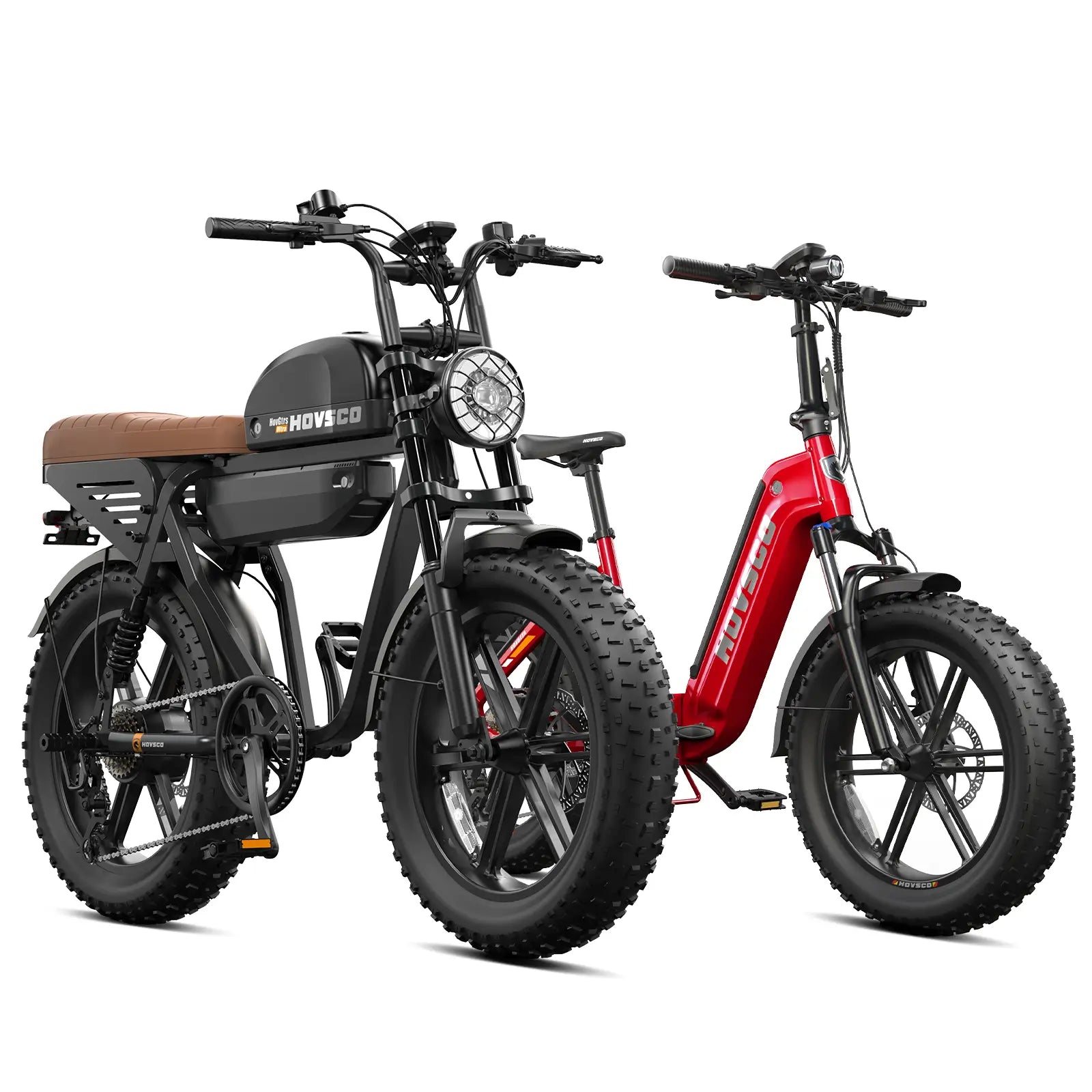
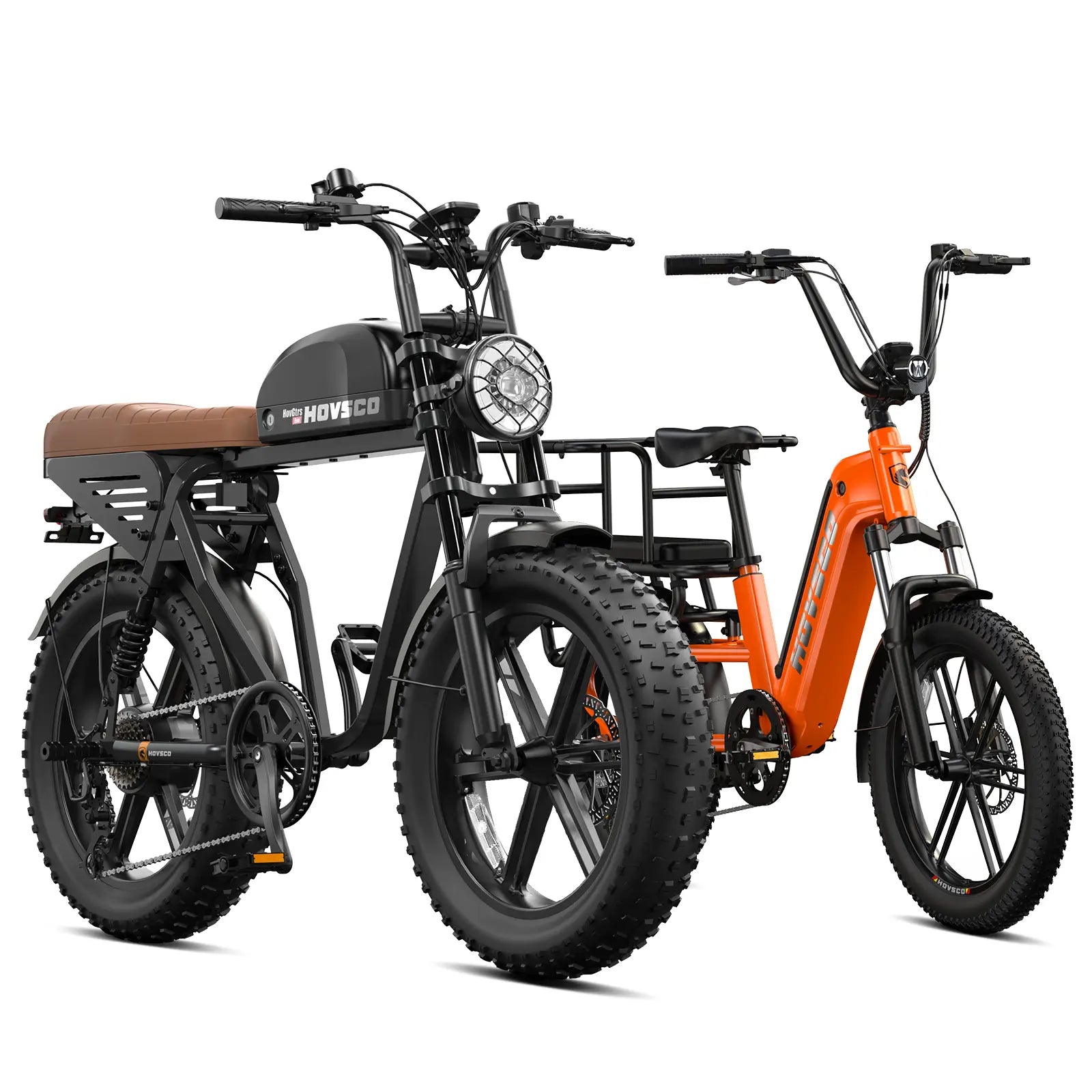
An electric bike with throttle delivers motor power via a twist-grip or thumb lever, independent of pedaling. This enables scooter-like acceleration from standstill, useful in traffic or on steep inclines where pedal-starts strain the rider.
Throttle systems vary by control mapping: linear throttles apply power proportionally to grip rotation, while stepped throttles offer preset power levels. From a factory perspective, I’ve seen budget controllers use basic PWM (pulse-width modulation) that causes jerky acceleration, whereas premium models employ FOC (field-oriented control) for smooth torque delivery.
HOVSCO’s e-scooter heritage informs our throttle tuning: we prioritize progressive ramp-up to prevent wheel spin on wet surfaces. Key features include brake-cut sensors (motor disengages when braking), ergonomic thumb vs. twist options, and compatibility with pedal-assist modes for hybrid riding.
Throttle use drains battery 30–50% faster than pedal-assist because the motor provides 100% of propulsion. A 500Wh battery yielding 40 miles in PAS mode may deliver only 20–25 miles with heavy throttle use.
The engineering reason: throttle riding eliminates human power contribution, forcing the battery to supply full torque. In our lab tests, continuous throttle at 15 mph consumes 25–30 Wh/mile, whereas PAS at level 2 uses 12–15 Wh/mile with rider input.
I recommend sizing your battery for throttle-heavy use: aim for 600Wh+ if you plan frequent throttle riding. HOVSCO’s spec sheets reflect real-world throttle range, not just PAS estimates, based on our e-scooter battery management experience.
Throttle electric bikes excel in stop-and-go urban commutes, cargo hauling, and accessibility scenarios where pedaling is impractical. They’re ideal for riders who need instant acceleration at traffic lights or assistance on steep inclines.
Urban commuters: Navigate traffic with quick starts; rest on long stretches.
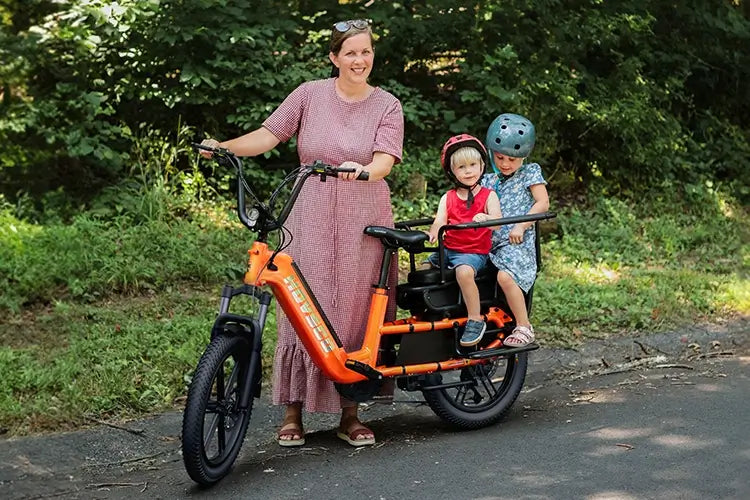
Cargo riders: Move heavy loads without straining at low speeds.
Accessibility users: Riders with limited mobility or fatigue can ride without pedaling.
Hilly terrain: Start uphill without balancing and pedaling simultaneously.
HOVSCO’s community feedback shows throttle users prioritize safety in traffic—being able to accelerate quickly from stops reduces collision risk. If your route includes frequent intersections or steep driveways, throttle capability is a safety feature, not just convenience.
Throttle response curves determine how power is delivered, affecting ride smoothness and control. A 500W motor with refined FOC mapping feels more responsive than a 750W motor with jerky PWM control.
From an engineering standpoint, the throttle curve defines torque vs. grip rotation. Linear curves provide proportional power, while aggressive curves deliver max torque at 30% rotation—useful for off-road but risky in traffic. I’ve tested bikes where poor mapping caused rear-wheel spin on wet pavement, even at low speeds.
HOVSCO tunes throttle curves based on e-scooter data: we prioritize gradual ramp-up for urban safety. When choosing an electric bike with throttle, test the acceleration feel—not just the wattage spec. A well-mapped 500W system outperforms a poorly tuned 750W one in real-world control.
For throttle-heavy riding, target 600Wh+ battery capacity to maintain 25+ mile range. Smaller 400–500Wh packs deplete quickly under full motor load, especially in hilly terrain or with heavier riders.
Battery chemistry also matters: NMC 811 cells offer better discharge rates and cold-weather performance than LCO, retaining 74–82% capacity at 0°C vs. 45–60%. This is critical for throttle users who demand consistent power delivery.
I advise calculating your worst-case commute: multiply distance by 30 Wh/mile (throttle consumption), then add 20% buffer. For a 15-mile route, you need 540Wh minimum. HOVSCO’s battery specs account for throttle drain, not just PAS range, drawing from our e-scooter field data.
Throttle legality depends on local e-bike classifications: Class 2 (20 mph throttle) is legal in most U.S. states, but some trails and cities restrict throttle use. Always verify with municipal codes before purchasing.
Key distinctions: Class 1 (PAS-only, 20 mph), Class 2 (throttle + PAS, 20 mph), Class 3 (PAS-only, 28 mph). Some regions ban throttle on bike paths or require speed limiters for throttle modes.
HOVSCO provides region-specific compliance guides, noting where throttle models are restricted. I recommend checking your state’s DOT website and local park regulations. In ambiguous areas, choose a bike with throttle disable options to stay compliant.
Use throttle for instant acceleration at stops, hill starts, and low-speed maneuvering; switch to pedal-assist for steady cruising and efficiency. Throttle excels in traffic; PAS suits open paths or fitness-focused rides.
Throttle: Traffic lights, steep driveways, cargo starts, fatigue recovery.
PAS: Long commutes, bike paths, fitness riding, battery conservation.
From a safety perspective, I advise using throttle only when stationary or at low speeds (<10 mph). At higher speeds, PAS provides smoother power delivery and better control. HOVSCO’s dual-mode systems let riders switch seamlessly based on terrain and traffic conditions.
Choose an electric bike with throttle if you need instant acceleration, have mobility limitations, or ride in stop-and-go traffic. PAS-only models suit fitness-focused riders on open paths with minimal stops.
If your commute includes frequent intersections, steep inclines, or heavy cargo, throttle capability improves safety and reduces fatigue. For recreational riders on bike trails with few stops, PAS-only may suffice.
The decision hinges on your “stop frequency”: if you start from standstill more than 10 times per ride, throttle is worth the trade-off. HOVSCO’s product planning uses this metric to segment designs—commuter-focused throttle models vs. trail-oriented PAS-only bikes.
Urban commuters, cargo haulers, and accessibility-focused riders benefit most from throttle e-bikes due to instant acceleration and low-effort propulsion. Riders with joint pain or fatigue also gain significant mobility.
City professionals: Navigate traffic with quick starts; rest on long stretches.
Delivery riders: Move heavy loads without straining at low speeds.
Accessibility users: Ride without pedaling due to mobility constraints.
Hilly commuters: Start uphill without balancing and pedaling simultaneously.
HOVSCO’s community includes riders who replaced cars with throttle e-bikes for short trips. Their feedback drives our focus on throttle response, battery capacity, and safety features—critical for daily urban use.
“At HOVSCO, our e-scooter legacy taught us that throttle tuning is as critical as motor power. Most brands advertise wattage, but after servicing thousands of units, we know smooth torque delivery prevents 80% of low-speed accidents. Our engineers map throttle curves to prioritize gradual ramp-up—critical for wet pavement or gravel starts. For riders, this means an electric bike with throttle isn’t just about ‘twist-and-go’; it’s about predictable power when you need it most. That’s why we test throttle response across 100+ scenarios, from traffic lights to steep driveways, ensuring safety matches convenience.”
Maintain throttle components by cleaning contacts monthly, checking cable tension (if mechanical), and avoiding water exposure. Lubricate pivot points with dielectric grease, not oil, to prevent dust buildup.
Electronic throttles require firmware updates to optimize response curves. Inspect brake-cut sensors regularly—faulty sensors can cause motor engagement during braking. HOVSCO’s service guides include throttle calibration steps to prevent drift over time.
Schedule annual professional checks if you ride daily. Our data shows throttles with regular maintenance last 2–3 years longer than neglected units, based on e-scooter service records.
Look for UL 2849 (e-bike electrical safety) and EN15194 (EU e-bike standards) certifications. These ensure throttle systems meet rigorous testing for brake-cut, overcurrent, and thermal protection.
Avoid brands that only claim “meets standards” without listing specific certifications. HOVSCO’s throttle e-bikes undergo third-party testing, including throttle cut-off validation and battery discharge safety.
Certifications also cover controller firmware: EN15194 requires throttle response to disengage within 200ms of braking. This is why HOVSCO publishes brake-cut test results—transparency builds trust in throttle safety.
Selecting the best electric bike with throttle depends on your stop frequency, terrain, and battery priorities. Prioritize throttle response mapping and 600Wh+ batteries over raw motor wattage. For urban commuters, Class 2 (20 mph throttle) offers the best balance of legality and convenience.
HOVSCO’s e-scooter heritage informs our focus on smooth throttle curves and safety features like brake-cut sensors. Use the 30 Wh/mile rule for throttle range, verify local legality. With the right throttle e-bike, you’ll enjoy instant acceleration and low-effort riding tailored to your urban lifestyle.
How much battery capacity do I need for throttle-heavy riding?
Aim for 600Wh+ to maintain 25+ mile range. Throttle use consumes 25–30 Wh/mile vs. 12–15 Wh/mile for pedal-assist.
Is a throttle e-bike legal in my area?
Class 2 (20 mph throttle) is legal in most U.S. states, but some trails and cities restrict throttle use. Check local DOT and park regulations.
What’s the difference between twist and thumb throttles?
Twist throttles offer proportional control like a motorcycle; thumb throttles keep your full hand on the grip and are easier to feather at low speeds.
Can I disable the throttle if needed?
Many HOVSCO and other brands offer throttle disable options via settings or firmware to comply with local regulations or personal preference.
Share:
What Should You Check Before Buying a Commuter Scooter?
What Should You Check Before Buying a Throttle Electric Bike?