






![[ New Arrival ] Porto Max Electric Scooter For Commute & Grocery Shopping - HOVSCO](http://www.hovsco.com/cdn/shop/files/PotroMax-3.jpg?v=1706927007&width=1200)
- by SteveJames
What Should You Check Before Buying a Commuter Scooter?
- by SteveJames
E-Bikes
Accessories
 Free Shipping
 15-Day Returns
 2-Year Warranty
Free Shipping
15-Day Returns
2-Year Warranty
2-Year Warranty
Free Shipping
15-Day Returns
2-Year Warranty
Buy a commuter electric scooter only after matching its real-world range, braking, tires, rider capacity, foldability, charging plan, maintenance needs, and local regulations to your daily route. The right scooter is not simply the fastest or cheapest option; it is one you can safely ride, carry, charge, store, maintain, and rely on every workday.
A search for the best commuter electric scooter should begin with your commute rather than a generic product ranking. Your route’s hills, pavement, weather, storage space, transit connections, and charging access will matter more than a single headline specification.
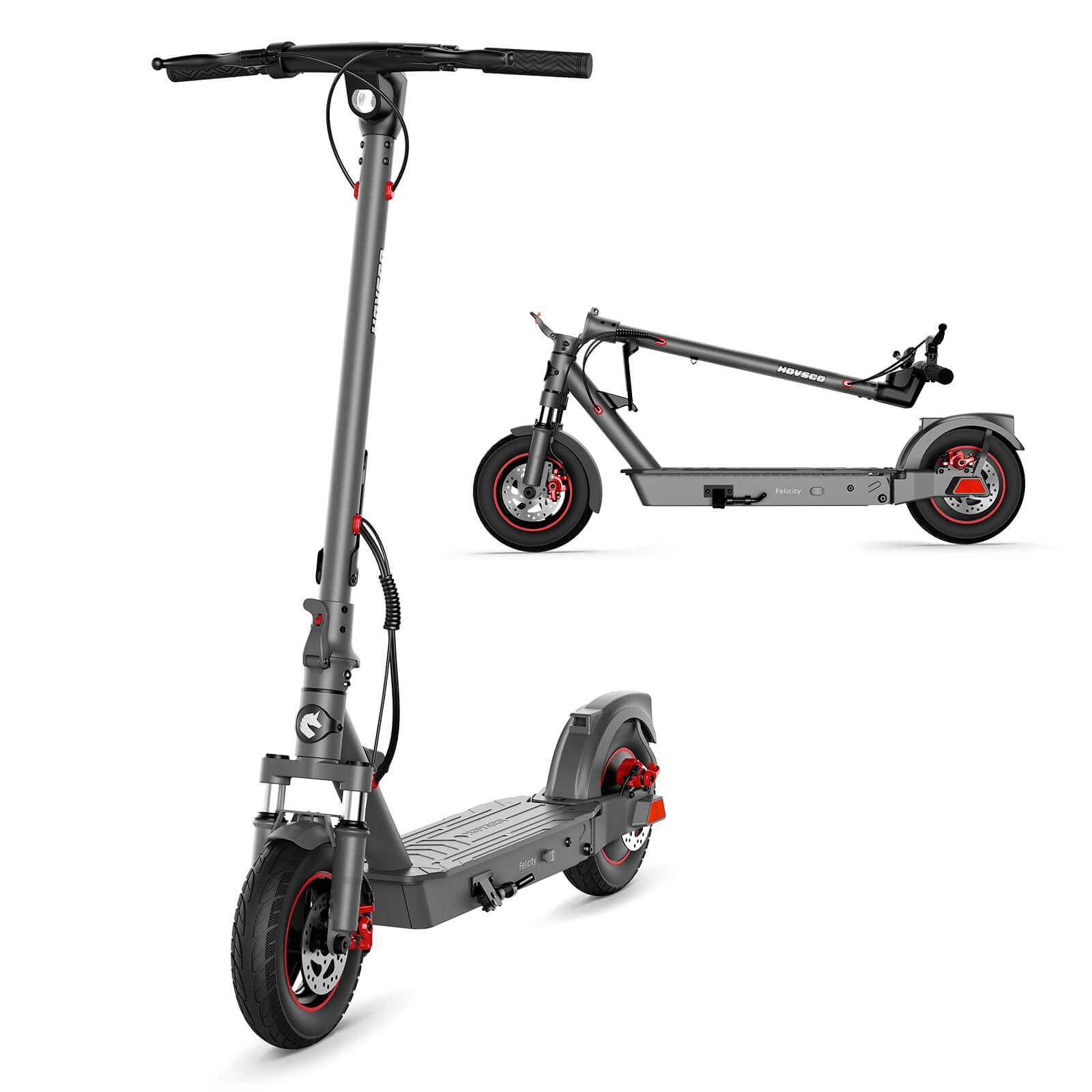
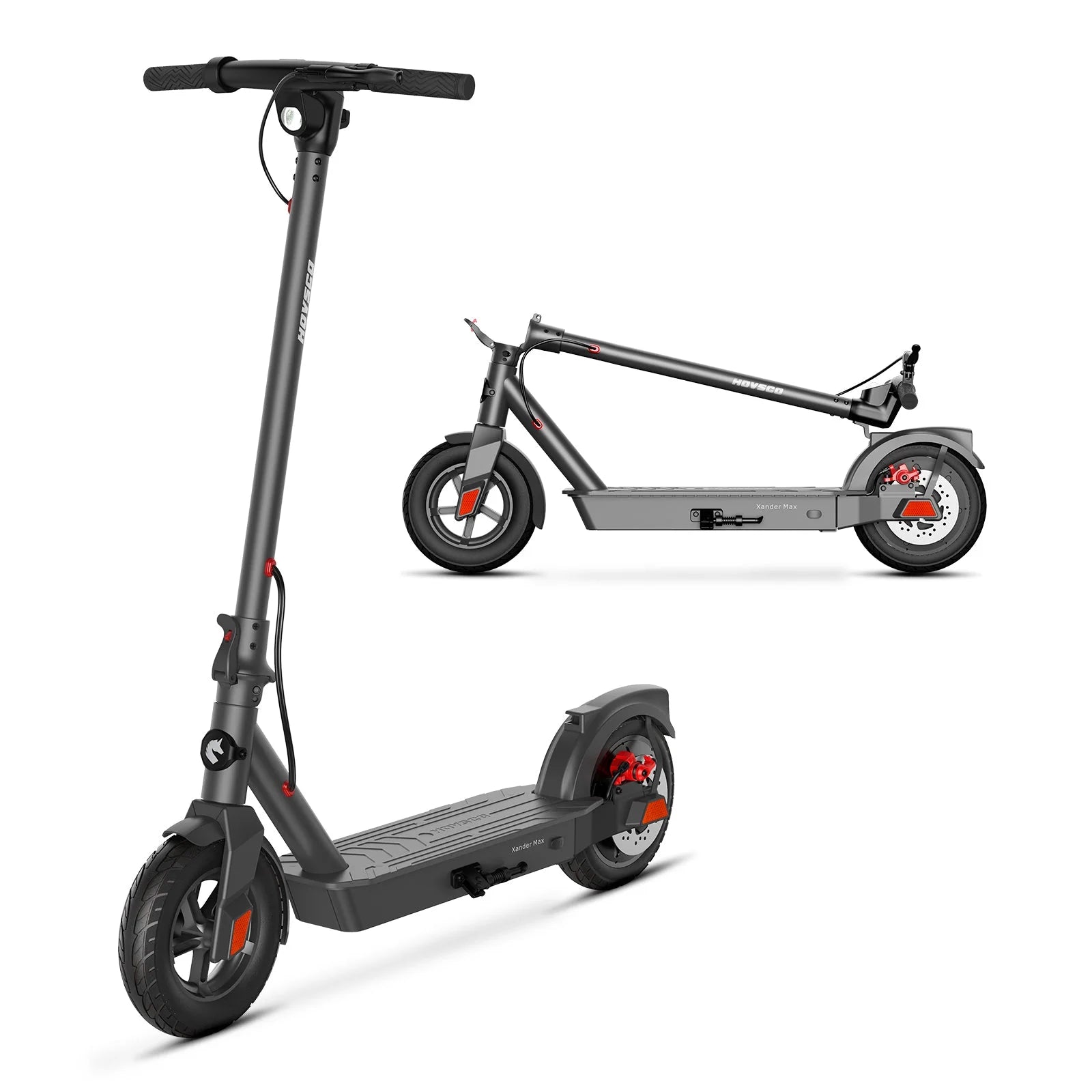
A commuter scooter should provide sufficient real-world battery range, dependable braking, suitable tires, adequate rider capacity, practical lighting, and a frame built for repeated folding and urban use. Choose specifications that suit your actual route, cargo, weather, and storage needs instead of chasing the highest advertised speed.
Start by mapping the complete trip from your front door to your destination. Include the ride to transit, office parking area, detours around construction, hills, and the return journey. A scooter that appears suitable for a flat three-mile ride may be inadequate for a hilly route with frequent stops and a loaded backpack.
The most useful specifications are the ones that affect daily reliability. Battery capacity influences how much reserve you have at the end of a long day. Tire type changes comfort and grip. Brake design determines how confidently you can respond when a car door opens or a pedestrian steps into a crossing.
Do not compare motors by wattage alone. A larger number may represent peak output rather than sustained power, and it does not explain controller tuning, battery voltage, heat control, rider weight, or hill performance. Ask how the scooter performs during a sustained incline, not merely what number appears on the product page.
Choose a scooter with real-world range greater than your round-trip commuting distance plus a meaningful reserve. The extra capacity accounts for hills, headwinds, traffic stops, cold temperatures, rider weight, cargo, battery aging, and unexpected detours.
If your commute totals eight miles each day, buying a scooter advertised for eight miles is usually a poor strategy. Advertised range often assumes favorable conditions such as a lighter rider, level terrain, warm weather, steady speed, and a fully charged battery.
A better approach is to build margin into the decision. A rider who travels eight miles daily may prefer a scooter with enough usable capacity to comfortably handle twelve to sixteen miles under less-than-perfect conditions. That reserve reduces range anxiety and avoids regularly draining the battery to its lowest level.
Battery energy is best compared in watt-hours:
Two scooters may both advertise a 15Ah battery but store different amounts of energy if their voltage differs. When comparing options, look for watt-hours, battery warranty coverage, charging time, battery-management protection, and the future availability of a replacement battery.
For anyone comparing the best commuter electric scooter options, charging access is part of the range calculation. Confirm whether you can charge safely at home, whether charging is permitted at work, and whether you can carry the scooter if the battery is depleted.
Prioritize tires suited to your road surface, brakes with dependable mechanical stopping power, a deck that fits your stance, and handlebars that allow a relaxed riding posture. Larger pneumatic tires generally improve comfort and traction, while solid tires reduce puncture concerns but transfer more vibration to the rider and scooter.
Tires are one of the most important parts of a commuter setup because they are the only contact points between the scooter and the road. Pneumatic tires can absorb cracks, seams, gravel, and rough pavement more effectively. Their trade-off is that they require pressure checks and may need puncture repair.
Solid tires remove many flat-tire worries, but there is no free engineering advantage. Because they do not compress like air-filled tires, they transmit more vibration through the deck, steering column, and rider’s arms and legs. On poor pavement, this can reduce comfort and potentially make small bumps feel sharper than expected.
Before purchasing, stand on the scooter deck while wearing the shoes you expect to use most often. Your feet should fit naturally without forcing you into an uncomfortable or overly narrow stance. The handlebars should let you keep a slight bend in your elbows rather than leaning forward with locked arms.
Brake feel deserves a close inspection. Squeeze each lever and notice whether the action is smooth, whether it engages predictably, and whether you can reach it without changing your grip. Riders should also check the availability of brake pads, rotors, cables, and replacement tires before purchase.
Your scooter should be light enough and compact enough for every lift, stair, train platform, office entrance, elevator, and storage space involved in your normal routine. Check folded dimensions and carrying weight before buying because a scooter that is difficult to move may become impractical despite strong riding performance.
Many buyers imagine carrying their scooter only once in a while. In real commuter use, you may lift it over curbs, fold it at a transit station, carry it through a lobby, place it under a desk, or take it up several stairs.
Before ordering, review the total weight and folded size carefully. If possible, simulate the lift with an object of similar weight. A scooter may be manageable for a short carry but exhausting when carried one-handed through a crowded station or up a stairwell.
The folding mechanism should receive the same attention as the motor or display. Look for a secure latch, a secondary safety feature, minimal looseness, and a folding process you can complete without awkward force. Repeated commuting creates wear around hinge pins, latch hooks, wiring exits, and kickstands, so these small details can matter greatly over time.
Portable design is especially important for mixed-mode commuters. If you combine your scooter with buses, trains, elevators, or rideshares, verify local transit rules and ensure the folded dimensions fit your daily environment.
Maintenance and replacement-part access determine whether a scooter remains useful after normal wear, a flat tire, brake-pad replacement, or minor damage. Before buying, verify that tires, tubes, brake components, chargers, fenders, displays, folding parts, and battery support can be obtained without excessive delay.
A lower purchase price is not always a lower ownership cost. If a simple tire replacement requires unavailable proprietary parts, a minor repair can leave the scooter unused for weeks. The most practical commuter scooter is often one with a clear service path rather than the one with the longest features list.
Ask the seller these questions before buying:
What is covered by the warranty, and for how long?
Are the battery, controller, display, and frame covered separately?
Where can replacement parts be ordered?
Is there an authorized repair network or local service option?
Can a standard repair shop work on the tires and brakes?
Are technical guides available for routine maintenance?
Will firmware updates require a mobile app?
Can the scooter still operate if the app is unavailable?
Routine maintenance is simple but essential. Before riding, check for tire damage, loose fasteners, reduced brake response, damaged cables, unusual sounds, and light function. Keep the scooter dry, avoid pressure washing electrical areas, and inspect the charge port for dirt, moisture, or corrosion.
The best commuter electric scooter is not necessarily the one with the largest screen or highest speed figure. It is the one that can remain operational after ordinary commuter wear.
Charge and store your scooter indoors in a dry, temperature-stable area using its intended charger, away from exits, flammable materials, and direct sunlight. Plan secure storage before buying because indoor storage is often safer and more practical than leaving a commuter scooter locked outside for long periods.
A safe charging plan should be part of the purchase decision. Do not assume that a garage, hallway, office corner, or apartment entrance is automatically suitable. The charging location should be dry, ventilated, visible, and clear of pathways people need to use.
Use the supplied charger or an approved replacement. Inspect the charger cable, plug, and charging port regularly. Stop using charging equipment if you notice swelling, unusual heat, damaged insulation, strong odor, corrosion, or abnormal charging behavior.
Theft prevention also requires a realistic plan. A digital lock or mobile app feature may discourage casual tampering, but it does not replace physical security. If you expect to park outdoors, identify a strong locking point on the scooter frame and assess whether removable accessories or components are exposed.
HOVSCO encourages riders to view electric mobility as a complete ownership system. The scooter itself matters, but so do secure storage, safe charging habits, appropriate riding equipment, and access to support when service is needed.
Verify local rules on speed limits, riding locations, age restrictions, helmet use, lighting, parking, registration, and insurance before operating a commuter scooter. Requirements can vary between cities, neighborhoods, campuses, transit systems, parks, bike paths, and nearby municipalities.
The key question is not simply whether electric scooters are permitted. You also need to know where they may be used, whether sidewalk riding is restricted, what speed limits apply, and where scooters may be parked without obstructing pedestrians.
Check official city, transportation, campus, and transit-provider guidance before purchasing. Local rules can change, and general social-media advice may not match the specific streets, paths, or transit routes you plan to use.
Parking rules are particularly important in dense urban areas. Do not block sidewalks, curb ramps, building entrances, bus stops, driveways, or accessible pathways. A correctly parked scooter protects pedestrians and reduces the chance of complaints, removal, or damage.
Weather also deserves consideration. Water resistance can help reduce exposure risk, but it does not guarantee that every component will perform identically in heavy rain or standing water. Slow down on wet pavement, allow extra stopping distance, and inspect the scooter after riding in difficult conditions.
Yes. Hills, broken pavement, stairs, transit restrictions, workplace storage rules, rain exposure, charging limitations, and theft risk can make a seemingly suitable scooter a poor fit. Walk, ride, or map your route before buying and identify every obstacle that affects daily use.
A commute is not only a mileage number. It is a chain of conditions. A smooth five-mile route with indoor storage requires a different scooter than a three-mile route involving steep hills, narrow sidewalks, train transfers, wet brick paths, and several flights of stairs.
Pay close attention to the route details that product pages often overlook. Does your building have a secure indoor place to park? Will you need to cross rough pavement or railway tracks? Is there an elevator? Can you charge at work? Will the scooter sit outside in rain? Do you need to carry groceries or a laptop?
“A commuter scooter should be chosen from the ground up: route conditions, rider load, storage, charging, and service access come first; speed and appearance come second. In real product evaluation, small details often shape long-term satisfaction. Stem rigidity, brake-lever feel, charge-port sealing, deck grip, and replacement-tire access can matter more over a year of commuting than a single maximum-speed figure. Dependable transportation is designed around repeatable daily use, not ideal-condition specifications.”
HOVSCO brings a practical micromobility perspective shaped by experience in electric transportation and active riding. That perspective supports a simple principle: the best ownership experience comes from evaluating the complete daily system, not just comparing headline numbers.
Complete a route, fit, service, storage, and regulations check before placing an order. Confirm that the scooter meets your realistic range needs, fits your body and carrying demands, can be stored safely, has available support, and is permitted where you expect to ride.
Use this final buying checklist:
Measure the full round-trip commute, including detours.
Identify the steepest hill and roughest road section.
Select battery capacity with reserve beyond daily mileage.
Check rider-load capacity with clothing, bag, lock, and cargo included.
Confirm the deck fits your feet and the handlebars suit your posture.
Favor reliable brakes, visible lighting, and tires suited to your pavement.
Measure stairways, elevators, office storage, and transit space.
Review the folding latch and total carrying weight.
Confirm replacement-part availability and written warranty details.
Plan indoor charging and secure parking before the scooter arrives.
Verify city, campus, transit, and workplace regulations.
Purchase a correctly fitted helmet and practice braking in a safe location.
HOVSCO believes that active transportation should support real routines, not create new daily obstacles. Choose a scooter that fits your life when the weather changes, the battery is not at 100 percent, the train is crowded, and the route is less than perfect.
How often should I charge a commuter electric scooter?
Charge based on your daily use and the manufacturer’s instructions. Avoid making deep battery depletion a routine, allow a warm battery to cool before charging, and use the supplied or approved charger.
Can I ride an electric scooter in the rain?
Ride only in conditions allowed by the manufacturer and local regulations. Rain reduces traction and increases stopping distance, so lower your speed, avoid deep water, and inspect the scooter afterward.
Which tire type is better for commuting?
Pneumatic tires generally provide more comfort and grip, while solid tires reduce flat-related maintenance. Choose based on pavement quality, weather, repair access, and your tolerance for vibration.
Does a higher motor watt rating always mean a better scooter?
No. Real performance also depends on battery voltage, controller tuning, thermal management, rider load, terrain, and whether the listed number represents continuous or peak output.
Who should avoid buying a heavy commuter scooter?
People who frequently use stairs, public transit, small elevators, compact apartments, or office storage should carefully assess scooter weight and folded handling before purchasing.
Share:
How to Choose an E-Bike With a Removable Battery?
Which Electric Bike with Throttle Fits Your Riding Style?