




![[ New Arrival ] Porto Max Electric Scooter For Commute & Grocery Shopping - HOVSCO](http://www.hovsco.com/cdn/shop/files/PotroMax-3.jpg?v=1706927007&width=1200)
- by SteveJames
Where to Park and Lock a Commuter E-Bike at Work
- by SteveJames
E-Bikes
Accessories
 Free Shipping
 15-Day Returns
 2-Year Warranty
Free Shipping
15-Day Returns
2-Year Warranty
2-Year Warranty
Free Shipping
15-Day Returns
2-Year Warranty
Destination parking decides whether a short commute works. A bike with no secure place to park at the destination adds minutes, risk, and stress to every trip — and a fast ride cannot compensate for a bad lock point. This guide covers what to look for at work, how to lock through the frame, and what to ask before relying on office storage or workplace charging. The campus version of this routine is in our campus locking guide; this article owns the workplace version.
Every commute has two ends, and the destination end is where plans fall apart: no rack, a hidden bike room, or a policy that keeps bikes outside. The door-to-door timing from our commute guide counts these minutes, and they can decide whether the bike beats the bus.
Before choosing a bike, confirm the destination in writing: is there an approved lock point, a bike room, or indoor storage? A full-size bike needs a real answer; a folding bike can follow you inside only where the building allows it.
The confirmation matters in writing for the same reason it matters with housing: policies change, buildings vary, and a verbal yes from one manager is not the same as a policy that covers the bike room. A short email to facilities settles it.
The destination check also belongs in the model decision: a bike room with racks changes the full-size calculus, while a no-bike policy pushes the choice toward a folder that follows the rider inside. Ask before the bike, not after.
The destination question is also a route question: a bike that cannot park at the destination turns the return trip into the day's stress point, because the same problem repeats twice. Solve the destination and both ends improve.
A good locking point is visible, fixed, and approved. Visibility matters — a rack near an entrance with foot traffic deters theft far better than a hidden rack behind the building. Fixed means anchored to the ground or structure, and approved means the property allows bikes there.
| Feature | Why it matters |
|---|---|
| Visible from entrances | Foot traffic is a deterrent |
| Anchored structure | A lock needs something solid to attach to |
| Approved by property | No tickets, no removal, no conflict |
| Covered or dry | Keeps the bike drier on rainy days |
If the property has no rack at all, ask facilities where bikes may go before choosing a full-size model. The answer sometimes opens a door — a rack can be added, a bike room can be unlocked, or a folding bike becomes the practical choice.
The quality of the lock point also changes the lock budget: a visible, anchored, covered spot lets a good U-lock do its job, while an exposed spot may justify a second lock or a folding bike instead.
Some buildings offer a bike room with racks, lockers, or even tools. If one exists, ask about access hours, capacity, and whether e-bikes are permitted — some bike rooms restrict battery-equipped bikes, and some charge a fee or require a keycard.
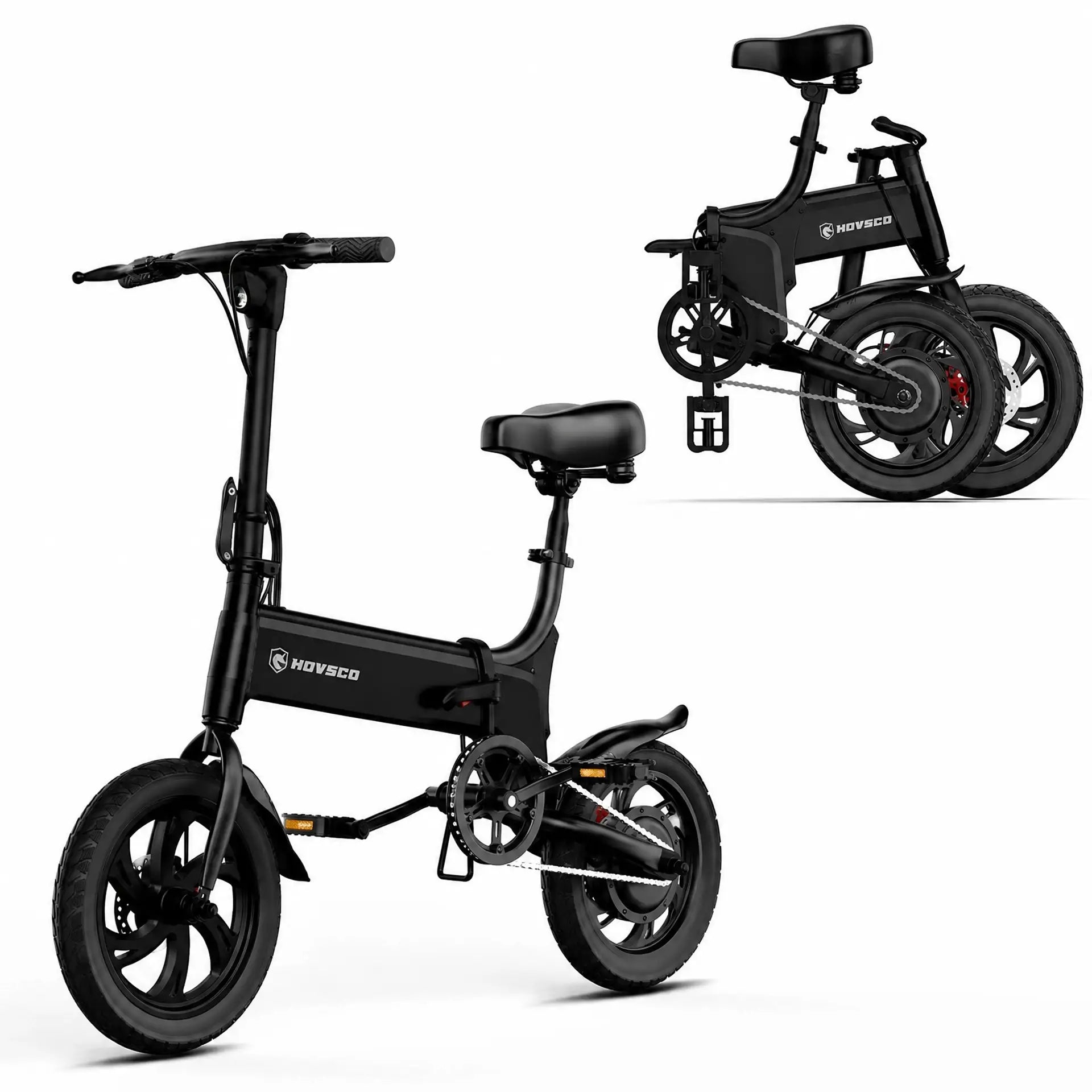
If the office allows bikes at a desk or in a storage closet, a folding model like the Sync Max becomes practical in a way it is not at a public rack. Confirm the policy before buying a folder on that assumption; a policy that sounds informal often changes when a bike appears.
Ask about e-bike specifics in the same conversation: battery-equipped bikes are sometimes treated differently in building rules, so the answer for an acoustic bike may not apply to an e-bike.
If the bike room exists but is full, ask about the waiting list and the season: capacity often changes at semester or quarter boundaries, and a spot that opens in January may be worth planning around.
The workplace lock follows the same rules as every lock: pass a quality U-lock or folding lock through the frame and, where possible, the rear wheel, attached to the approved structure. Never rely on a cable lock alone, and never lock only a wheel.
Remove what is quick to take: lights, the display if removable, saddle bags, and the battery where possible. A bike without its battery and accessories is a much less attractive target, and the same removal routine that protects the bike also keeps the pack indoors.
The removal routine is also a habit: a bike locked outside all day without its battery and lights is a less valuable target, and the routine takes fifteen seconds once the order is fixed. Make the order the same every morning so nothing gets left behind.
Workplace charging is a perk, not a right. If the office offers charging, confirm where, whether the complete bike or only the battery may charge, and what equipment is approved. Use the charger that shipped with the bike in a dry, clear area — and follow the same attended-charging habit as at home.
For riders whose commute length or schedule genuinely needs a workplace top-up, the long-range commuter collection is the better match than a short-commute bike; the weekly rhythm guide explains when charging at both ends is actually necessary.
If the office does offer charging, treat it like the home routine: approved spot, approved charger, attended. And confirm the policy for the battery specifically — some buildings allow the battery indoors but not the complete bike.
The destination deserves the same measurement as home: door widths, elevators, hall turns, and the path from the rack to the desk. A bike that fits the office on paper but not through the service entrance is the same mistake as a bike that does not fit the apartment.
Walk the path once with the bike's complete weight in mind, and note where the bike will sit during weather. The five minutes of measurement saves a year of awkward mornings.
Re-measure when the office moves or the building changes access: a new door, a new elevator schedule, or a new floor changes the path and sometimes the model choice.
The measurement should include the weather path: where the bike waits on rainy days, whether the spot is covered, and whether the route from the rack to the desk stays dry. A dry bike is a bike that starts clean every morning.
Run this checklist before committing to the commute.
| Check | Pass condition |
|---|---|
| Lock point confirmed | Approved, anchored, visible |
| Bike room or indoor storage | Access, capacity, and e-bike policy confirmed |
| Lock setup | Primary lock through the frame, cable for accessories |
| Removal routine | Lights, battery, and valuables come inside |
| Charging permission | Approved spot and approved charger if used at work |
" The destination is half the commute. Riders who confirm the lock point and the bike policy before buying rarely switch back to the car; riders who skip that step discover the problem on day one." — HOVSCO Engineering & Content Team
Workplace parking works when the lock point is approved, visible, and anchored; the bike locks through the frame; valuables and the battery come inside; and any workplace charging follows the same permission and equipment rules as home. Confirm the destination before the bike, not after.
1. Where should I park my e-bike at work?
At an approved, anchored, visible lock point — or in a bike room if the building has one and allows e-bikes. Confirm the policy in writing before relying on any spot.
2. Can I bring a folding e-bike into the office?
Only if the building allows it. Some offices permit bikes at a desk or in a closet, which makes a folder practical; confirm the policy before buying on that assumption.
3. How should I lock my e-bike at work all day?
With a quality U-lock or folding lock through the frame, attached to an approved structure, plus a secondary lock for a wheel or accessories. Remove the battery and valuables.
4. Can I charge my e-bike at work?
Only where the office approves it, with the charger that shipped with the bike. If workplace charging is a regular need, check whether a long-range commuter fits the routine better.
5. What if my workplace has no bike parking?
That is a decision point, not a detail: either find an approved alternative nearby, negotiate indoor storage, or reconsider the bike for that commute. A commute with no secure destination is a commute that will not last.
Share:
HovBeta vs HovRanger vs Sync Max: Which Fits Short Riders?
How Much Does a Business E-Bike Cost to Operate?