



![[ New Arrival ] Porto Max Electric Scooter For Commute & Grocery Shopping - HOVSCO](http://www.hovsco.com/cdn/shop/files/PotroMax-3.jpg?v=1706927007&width=1200)
- by SteveJames
What Should Small Businesses Check Before Buying an E-Bike?
- by SteveJames
E-Bikes
Accessories
 Free Shipping
 15-Day Returns
 2-Year Warranty
Free Shipping
15-Day Returns
2-Year Warranty
2-Year Warranty
Free Shipping
15-Day Returns
2-Year Warranty
Small businesses should check motor power, battery capacity, payload rating, hydraulic disc brakes, torque sensor response, and warranty terms before buying. Match these specs to daily mileage, cargo weight, and local riding laws. A bike that fits one delivery route may fail on hillier terrain or heavier loads, so test-fit before committing to a fleet order.
Choosing the best electric bike for small business use is rarely about picking the highest-spec model on a spreadsheet. It's about matching a machine to a route, a payload, and a maintenance budget that keeps wheels turning five or six days a week. This checklist walks through the specs, compatibility questions, and ownership costs that separate a bike built for weekend errands from one built to survive commercial duty cycles.
A commercial e-bike needs a motor rated 350–750W with at least 60–90Nm of torque for hills and cargo loads, paired with a 48V battery of 15Ah or more for daily range beyond 30 miles. Undersized motors overheat under repeated stop-and-go delivery work, shortening component life.
On the factory floor, the detail most buyers miss isn't peak wattage — it's how the motor sheds heat during back-to-back stop-start cycles. A hub motor rated at 750W on paper can still throttle itself down after 20 consecutive stop-and-restart climbs if the windings aren't built for continuous duty, not just burst output. That's why torque figures (measured in Newton-meters, or Nm) matter more than wattage alone when evaluating a motor for repeated loaded starts: a 90Nm mid-drive or hub motor paired with a responsive torque sensor pulls away from a stop with a fully loaded rear rack far more predictably than a lower-torque unit spinning at higher RPM. A torque sensor also reads pedaling force directly rather than estimating it, which matters most exactly when a bike is heaviest — fully loaded, at a dead stop, on a grade.
Battery sizing follows the same logic. A 48V 15Ah pack (roughly 720Wh) gives most riders 40–60 miles depending on terrain, cargo weight, and assist level — but real-world range on a loaded cargo bike running multiple stops a day typically lands 20-30% below the advertised figure, because that figure is usually tested unloaded on flat ground. Businesses running multi-stop routes should size battery capacity against their heaviest expected load, not their average one. A removable battery pack also simplifies charging logistics for a small business, since a spare can charge indoors overnight while the bike stays parked outside or in a storage area.
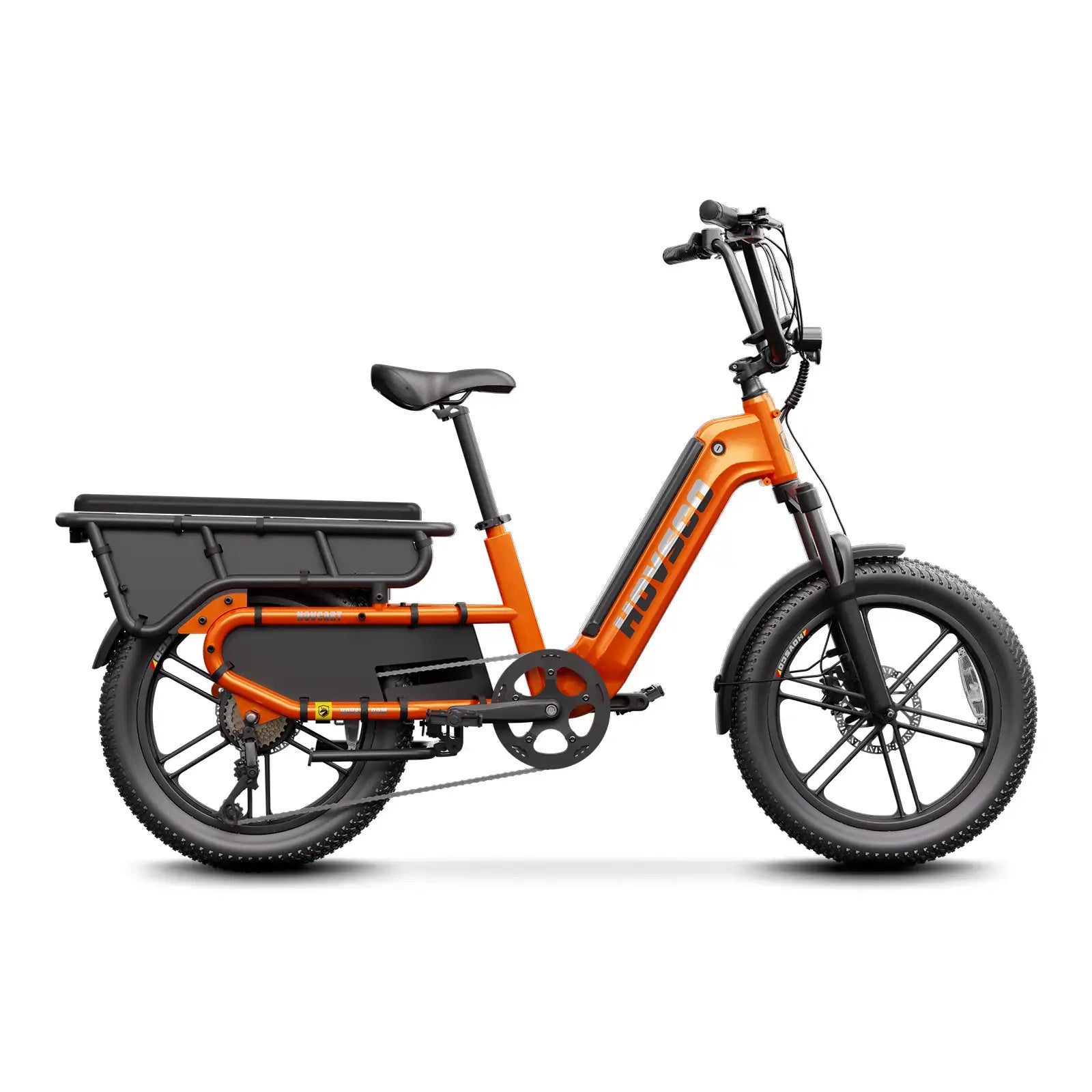
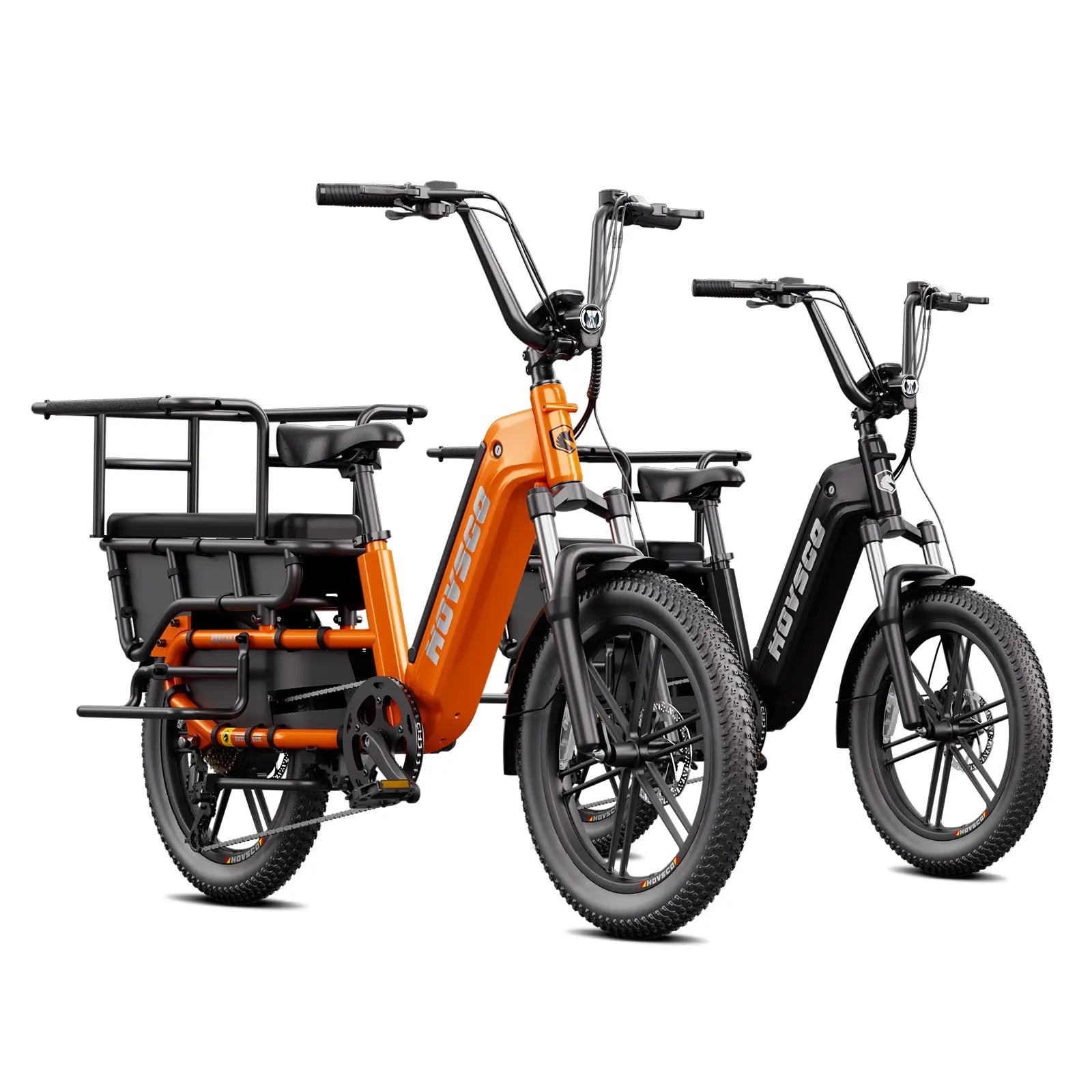
Match payload capacity to your heaviest single load plus rider weight, not your average load. Most commercial-grade e-bikes rate total system weight between 300 and 450 lbs; cargo bikes purpose-built for delivery often reach the top of that range with reinforced racks and low-slung frames for stability.
Payload capacity is a system-wide number, not just a rack rating. It accounts for the rider, cargo, and any accessories mounted to the frame — and exceeding it doesn't just risk a broken rack, it changes braking distance and handling balance in ways that matter at intersections. This is where hydraulic disc brakes earn their keep: under a fully loaded 450-pound system weight, hydraulic brakes deliver more consistent stopping power across repeated hard stops than mechanical brakes, which can fade as cables stretch and pads heat up over a long shift. A frame built with butted 6061 aluminum tubing, for example, holds its shape better under repeated heavy loading than thinner-gauge stock, even when the advertised weight limit looks similar on a spec sheet.
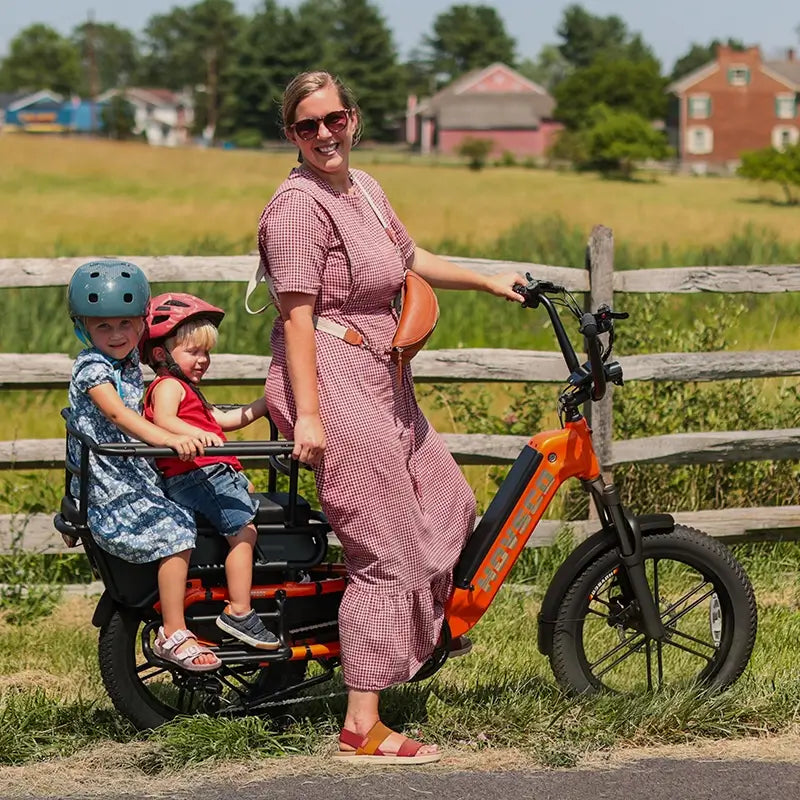
For businesses testing a best electric bike for small business fit, load the bike with your actual heaviest delivery box or tool kit before buying, not a hypothetical estimate. A rack rated for 300 lbs on paper can still flex or sway if the load is unevenly distributed, front-heavy, or top-loaded above the axle line. Low-step frames with the cargo mass centered near the rear wheel typically feel more stable at low speed than models where weight sits high or forward.
US e-bikes fall into three classes: Class 1 (pedal-assist only, 20 mph cap), Class 2 (throttle-enabled, 20 mph cap), and Class 3 (pedal-assist only, 28 mph cap). Class matters because bike lanes, multi-use paths, and some city ordinances restrict Class 2 and Class 3 access differently, directly affecting delivery routes.
Class 1 bikes are pedal-assist only and cut off at 20 mph, and they're allowed on nearly every bike lane, shared path, and trail that permits standard bicycles. Class 2 bikes add a throttle that can propel the bike without pedaling, which is convenient for stop-and-go delivery work but sometimes restricted on shared multi-use paths where motor-only propulsion raises safety concerns. Class 3 bikes assist up to 28 mph but are pedal-assist only, and many jurisdictions restrict them to roadways and bike lanes rather than shared paths, plus require riders to be at least 16 with a helmet.
Before assigning bikes to routes, check the specific class restrictions in the city or state where employees ride, since these rules vary by jurisdiction and change periodically. A fleet running Class 2 throttle bikes through a city with multi-use path restrictions may need to reroute or switch models for certain legs.
Judging e-bike safety without relying on a single label means looking at the whole system: brake type, frame material and construction, battery placement, and how the bike behaves under a realistic load. Hydraulic disc brakes, a torque sensor for predictable power delivery, and a securely mounted, removable battery are practical indicators of a bike engineered for repeated daily use rather than occasional weekend rides.
Brake feel under load is one of the most telling real-world tests. Squeeze the brakes with the bike fully loaded to its rated payload and check whether stopping power stays consistent across several repeated stops, or whether it fades — fading brakes on a loaded cargo bike are a bigger safety concern in commercial use than almost any spec on a data sheet. Frame construction matters just as much: a butted aluminum frame that doesn't flex or creak under a heavy, unevenly distributed load is a better sign of durability than a stated weight limit alone.
Battery placement and mounting security are also worth a physical check, not just a spec comparison. A battery that locks firmly to the frame and doesn't rattle or shift during rough riding reduces wear on the connection points over time. Small businesses evaluating multiple models should also weigh practical ownership support — a 2-year warranty, a 15-day return window, and access to a nearby service network via 500+ partner bike shops all reduce risk if something needs attention after purchase, since even a well-built bike benefits from accessible support.
A commercial e-bike ridden daily needs a basic safety check weekly (tire pressure, brakes, lights), a deeper inspection every 3–4 months or roughly every 1,000 miles, and a full professional tune-up annually. Skipping the 1,000-mile interval is the single most common cause of premature drivetrain wear in fleet use.
In a shop environment, the wear pattern on a business-use e-bike looks different from a hobbyist's bike. Chains stretch faster under repeated heavy-load starts, brake pads wear unevenly when a bike is loaded asymmetrically day after day, and tire sidewalls degrade faster under constant curb-hopping than they would on a smooth commute. Hydraulic disc brakes reduce some of this maintenance burden since they self-adjust for pad wear, unlike mechanical brakes that need periodic cable tension adjustments. Budgeting $100 to $300 per year per bike for routine maintenance is a realistic range for moderate commercial use, with battery replacement (typically $500–$800) needed every 3–5 years depending on charge cycles and how consistently the battery is charged within its recommended range.
One overlooked cost driver: many consumer e-bike warranties explicitly exclude or shorten coverage for "commercial use." Some brands cap commercial warranty coverage at 12 months on frame, battery, and electronics, versus multi-year coverage for personal use. Before buying in volume, ask the seller directly whether the warranty terms change for fleet or delivery use, since this affects real total cost of ownership far more than the sticker price. A 2-year warranty with clear commercial-use terms, paired with access to a wide service network, gives a small business more predictable repair costs than a shorter warranty backed by limited local support.
Removable batteries are worth the added convenience for businesses running bikes more than one shift per day, since a spare pack charging indoors eliminates mid-shift downtime. For single-shift use where the bike charges overnight, one removable battery is usually sufficient and less expensive than maintaining spares.
The economics shift depending on utilization. A bike used for a single 6–8 hour delivery shift can usually complete the day on one charge if the battery is sized correctly for the route, then charge overnight. A bike used across two or three shifts, or one running continuous multi-stop routes exceeding 40–50 miles, benefits from a removable battery system so a depleted pack can be swapped for a charged spare in minutes rather than waiting hours for a recharge. The tradeoff is upfront cost: a spare battery pack adds several hundred dollars per bike, which only pays off if downtime is actually the constraint, not just the range. A smart LCD display that shows real-time battery percentage and estimated remaining range helps operators plan swaps proactively instead of getting caught short mid-route.
Responsibility depends on the warranty terms and whether the failure is a manufacturing defect or wear-and-tear from use. Manufacturer warranties typically cover defects for a set period, while consumables like tires, brake pads, and chains are the owner's responsibility regardless of warranty status.
Small businesses should clarify this before purchase, not after a breakdown mid-route. Ask whether the seller offers local authorized service, whether warranty claims require the bike to be shipped back to a regional center, and how long a typical repair turnaround takes. A bike with strong specs but no accessible local service network can leave a delivery fleet sidelined for weeks waiting on a part, which costs more in lost operating days than the repair itself. Suppliers offering a network of 500+ partner bike shops, 24/7 customer support, and local pickup options generally shorten this downtime compared to mail-in-only service models. Fast shipping — typically 1-3 business days with free shipping within the US — also matters when ordering replacement parts rather than a full bike.
"In our experience building cargo and utility e-bikes since 2019, the businesses that get the best long-term value aren't the ones chasing the highest wattage number — they're the ones who match torque, payload rating, and battery chemistry to their actual route profile before they buy. We've seen operators oversize a battery for range they never use, while undersizing payload capacity for the one heavy delivery day that actually matters. At HOVSCO, we test our cargo frames under repeated loaded-start cycles, not just static weight limits, because that's the stress pattern that actually breaks parts in daily commercial use. A frame that survives a single load test in a showroom isn't the same as one that survives six months of curb-to-curb delivery stops."
— HOVSCO Product Engineering Team
Choosing the best electric bike for small business operations comes down to matching specifications to your actual duty cycle, not the highest number on a spec sheet. Motor torque and battery capacity should reflect your heaviest realistic load and longest realistic route, not an average day. Confirm the applicable e-bike class for every jurisdiction where employees will ride, and physically test brake performance and frame stability under your real cargo load, since these directly affect day-to-day safety and insurance exposure.
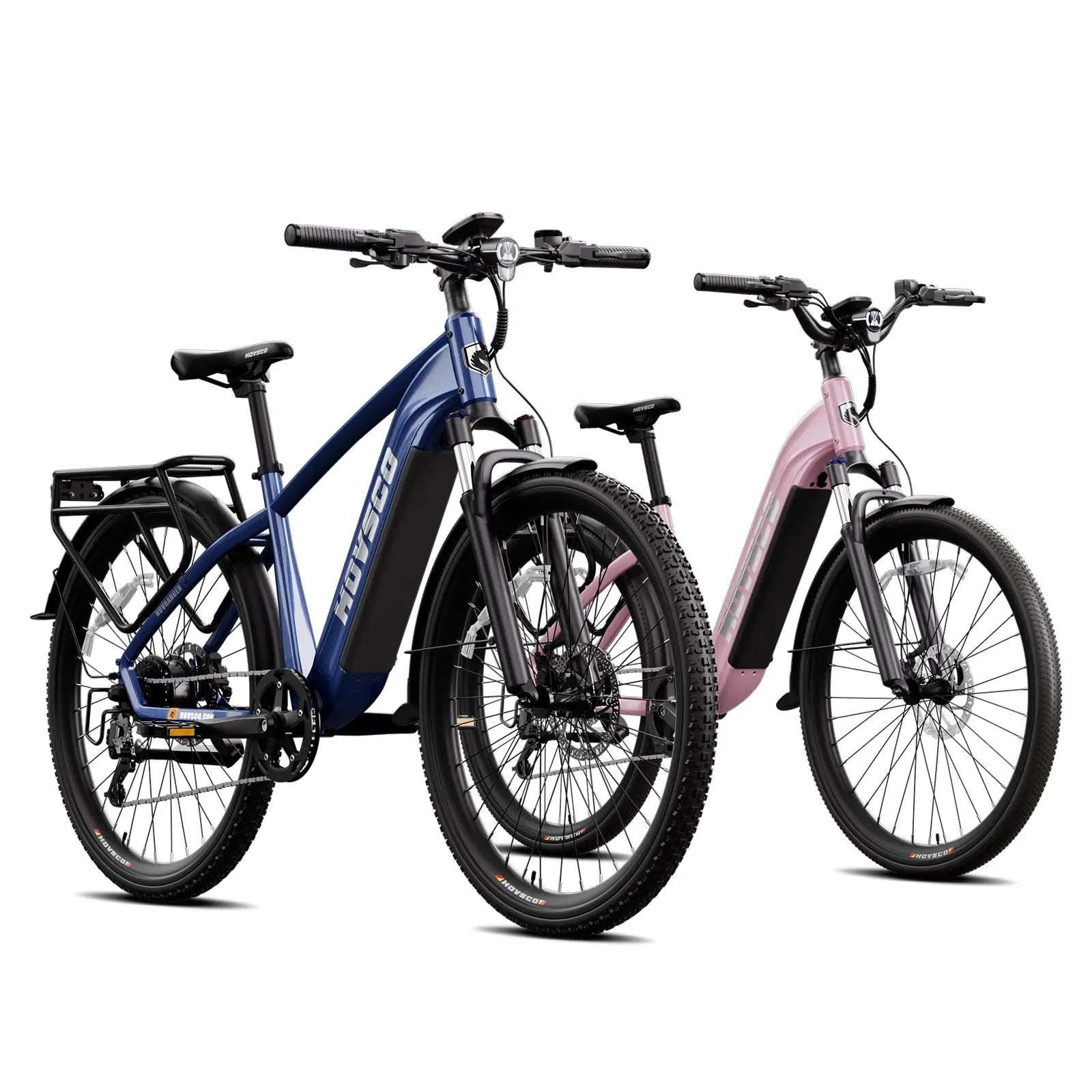
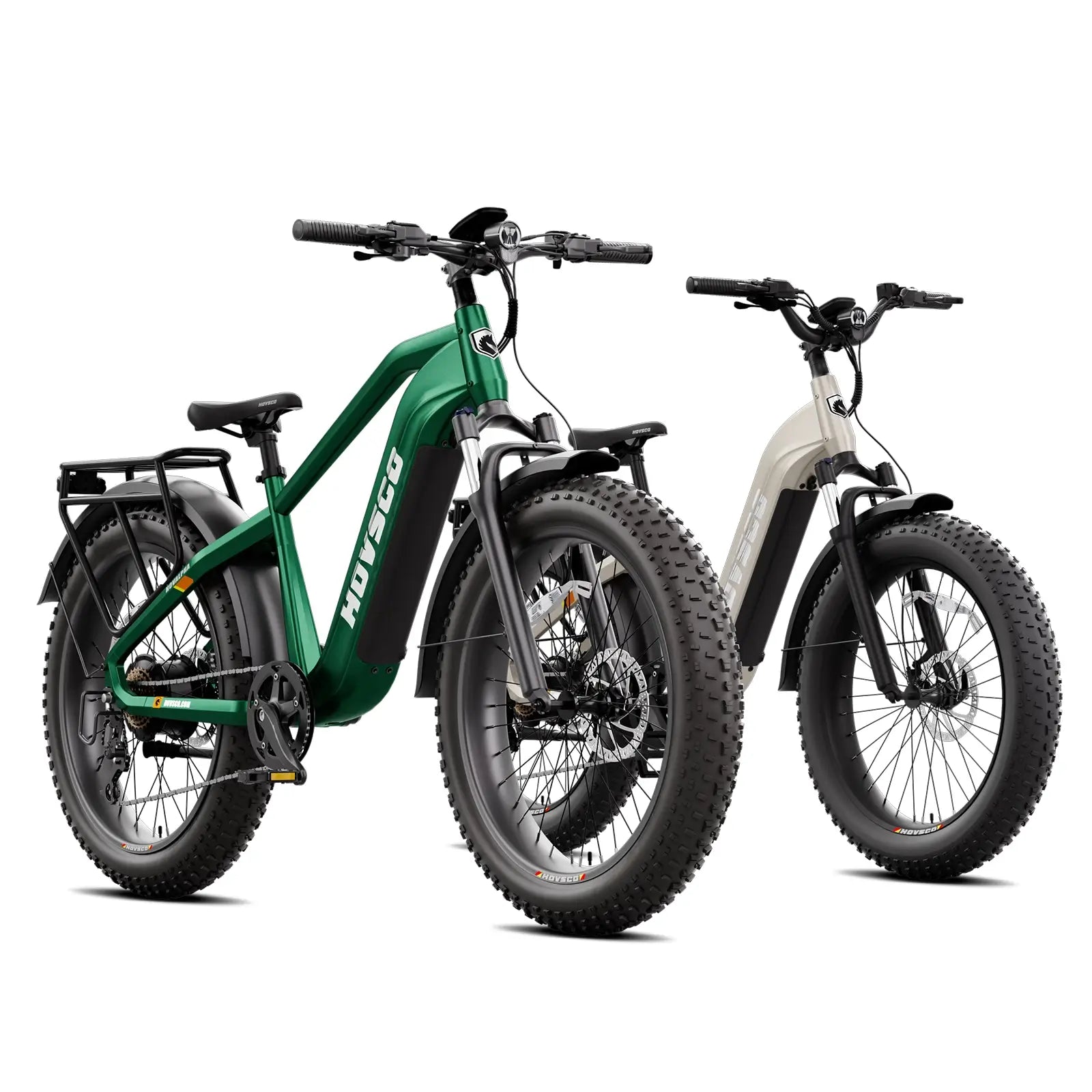
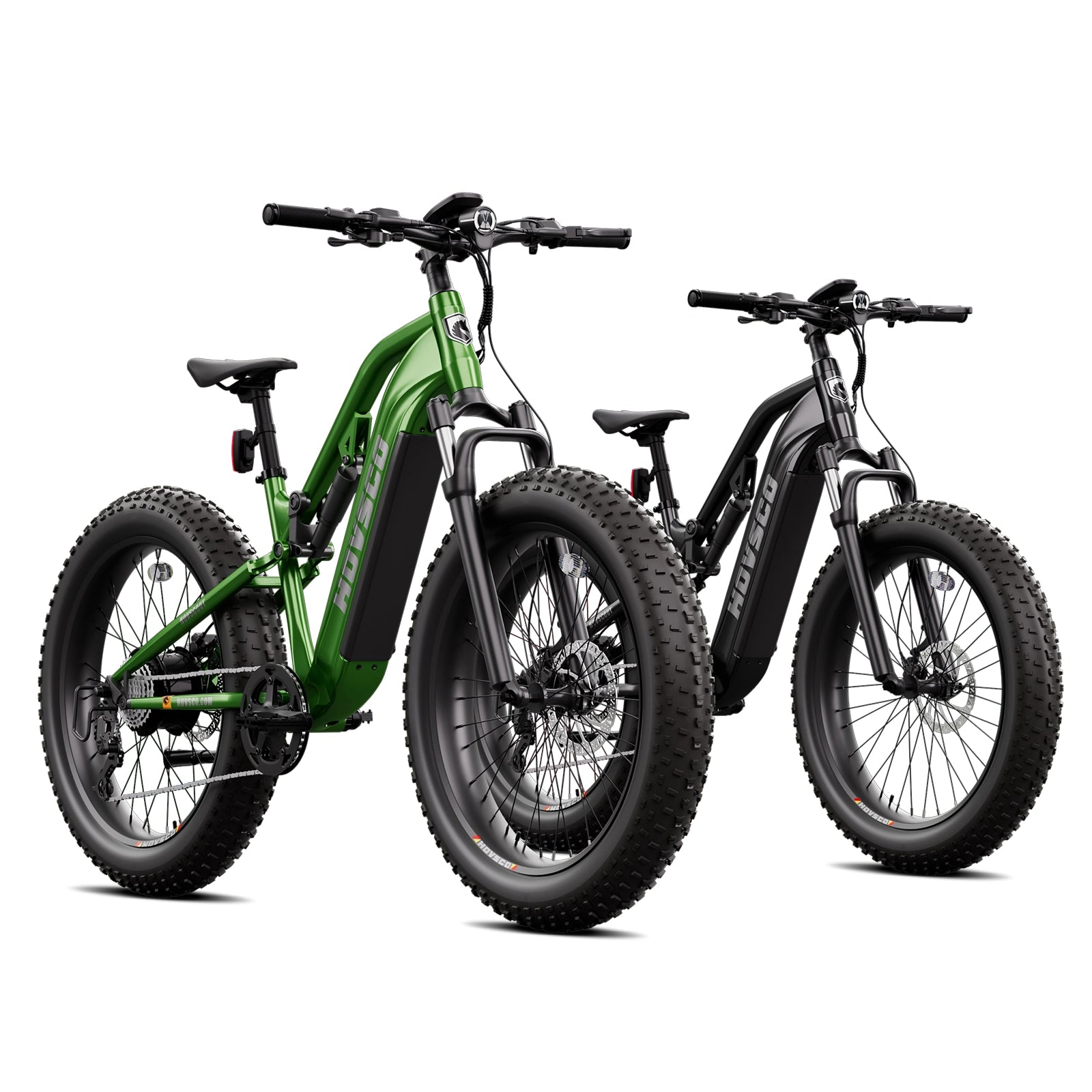
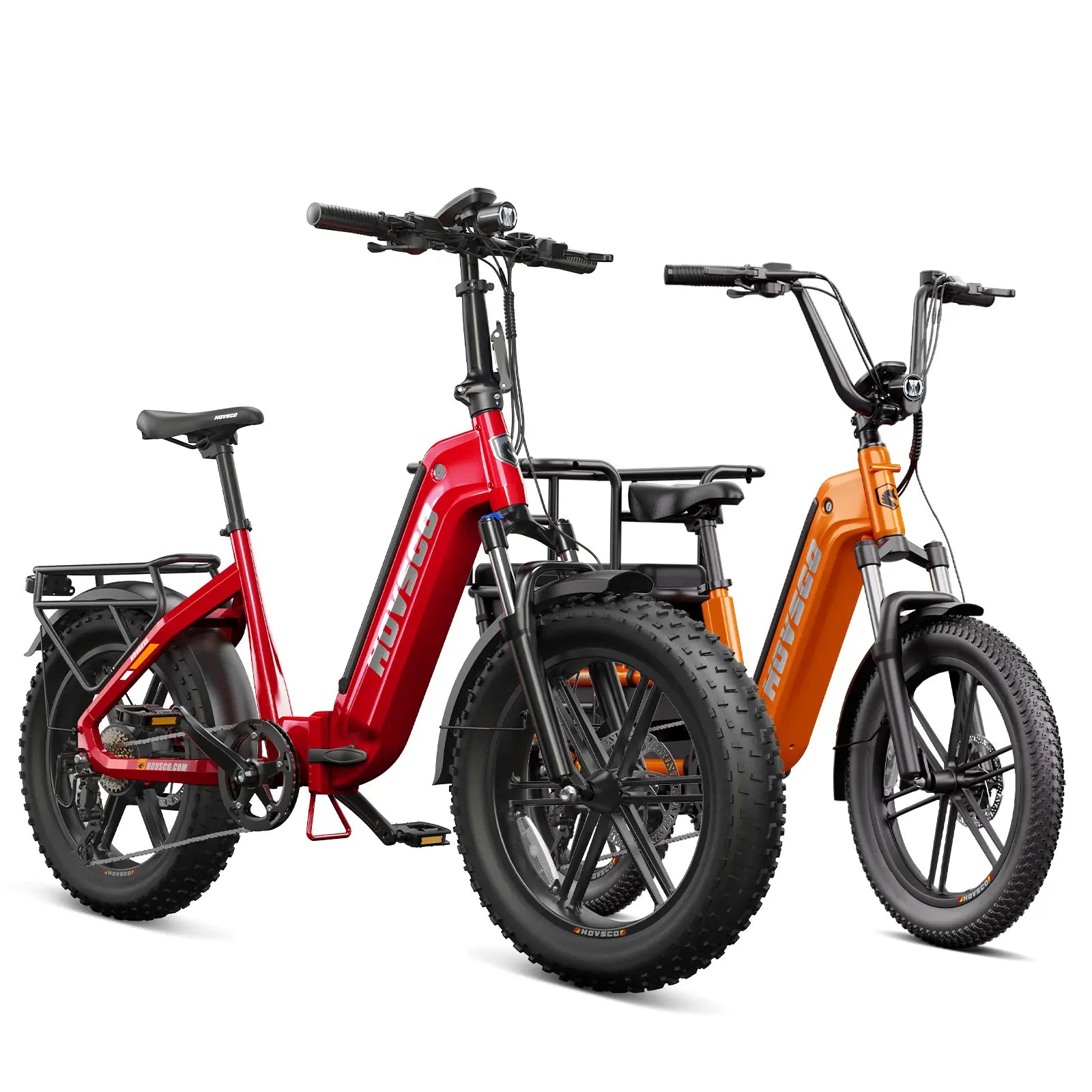
Budget for ongoing maintenance — typically $100 to $300 annually per bike — and read the fine print on warranty terms, since many standard consumer warranties limit or exclude commercial use entirely. Brands like HOVSCO that build cargo-rated frames with documented payload testing, hydraulic disc brakes, torque sensors, and a 2-year warranty backed by a 500+ shop service network give small businesses a clearer starting point than generic consumer models, though every fleet decision should still be verified against the specific routes, loads, and local regulations your business operates under. Test-load a bike with your real cargo before buying in volume, and confirm local service access before you need it.
What size motor does a small business e-bike need for hilly routes?
For hilly or frequently loaded routes, look for at least 500–750W of rated power and 60–90Nm of torque. Lower-powered motors can struggle with repeated loaded starts on grades, leading to overheating and faster component wear over time.
Can Class 2 e-bikes be used for food or package delivery in most cities?
Yes, Class 2 e-bikes are widely used for delivery since the throttle helps with frequent stop-and-go stops. However, some cities restrict throttle-only propulsion on certain multi-use paths, so check local ordinances before assigning routes.
How long does a commercial e-bike battery typically last?
Most e-bike batteries last 3 to 5 years or several hundred to a thousand charge cycles before capacity noticeably declines, depending on charging habits and how often the battery is fully depleted versus partially charged.
Do e-bike warranties cover commercial or delivery use the same as personal use?
Not always. Many manufacturer warranties reduce coverage terms for bikes used commercially, sometimes limiting frame, battery, and electronics coverage to 12 months instead of multi-year personal-use terms. Always confirm commercial-use warranty terms, such as a standard 2-year warranty, before buying in volume.
How long does it take to assemble a commercial e-bike out of the box?
Most e-bikes built for cargo or delivery use take about 45 to 60 minutes to assemble with basic tools, since the frame, wheels, and handlebars typically ship partially assembled. Businesses ordering multiple units should budget setup time accordingly before bikes go into daily rotation.
Share:
How Do You Choose an Electric Bike for Camping?
How Do You Choose E-Bike Replacement Parts?