


![[ New Arrival ] Porto Max Electric Scooter For Commute & Grocery Shopping - HOVSCO](http://www.hovsco.com/cdn/shop/files/PotroMax-3.jpg?v=1706927007&width=1200)
- by SteveJames
How Do You Choose an Electric Bike for Camping?
- by SteveJames
E-Bikes
Accessories
 Free Shipping
 15-Day Returns
 2-Year Warranty
Free Shipping
15-Day Returns
2-Year Warranty
2-Year Warranty
Free Shipping
15-Day Returns
2-Year Warranty
Choosing an electric bike for camping comes down to five filters: how you'll transport it to the campsite, how much gear it needs to haul, what terrain it will cross once you're there, how far it can go on a charge, and how you'll recharge it off-grid. Matching those five needs to the right frame style, motor, and battery size matters more than chasing the highest top speed or biggest number on a spec sheet.
Campground riding is rarely about speed. It's about clearing gravel access roads, packed dirt trails, and loose sand, then squeezing the bike into a truck bed, RV garage, or SUV trunk without a fight. A bike that hits 28 mph on pavement is useless if it can't fit through your vehicle's rear door or bog down on a soft fire road.
This is where campers' priorities diverge sharply from commuters. A commuter optimizes for speed and low weight on smooth pavement. A camper optimizes for ground clearance, tire flotation, cargo capacity, and how the bike stores between trips. Fat tires (typically 20–26 inches in diameter and 3–4 inches wide) trade a bit of rolling resistance for flotation on sand, mud, and washboard gravel — the terrain most campgrounds actually have. Folding frames trade a small amount of ride stiffness for the ability to lay flat in a truck bed or RV bay.
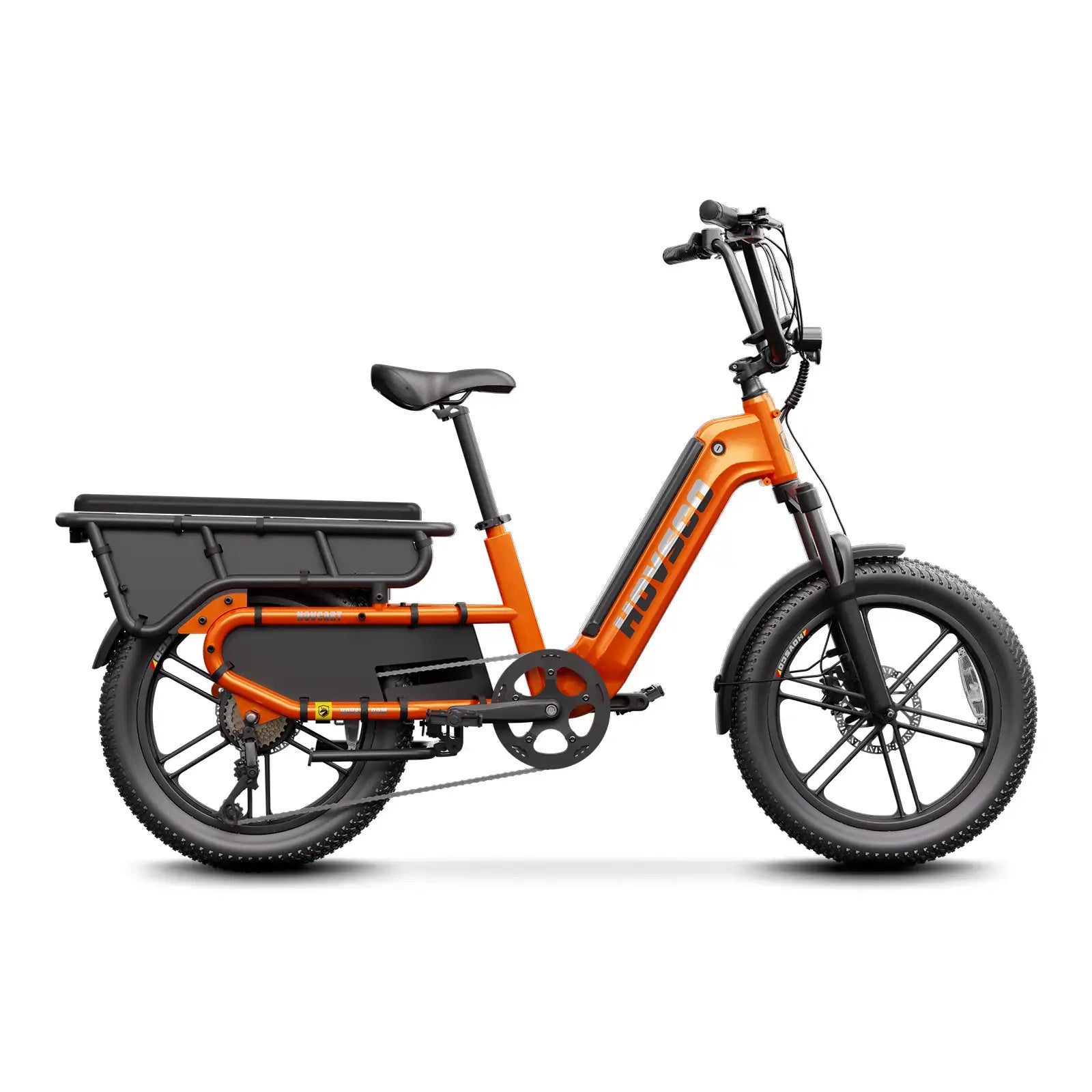
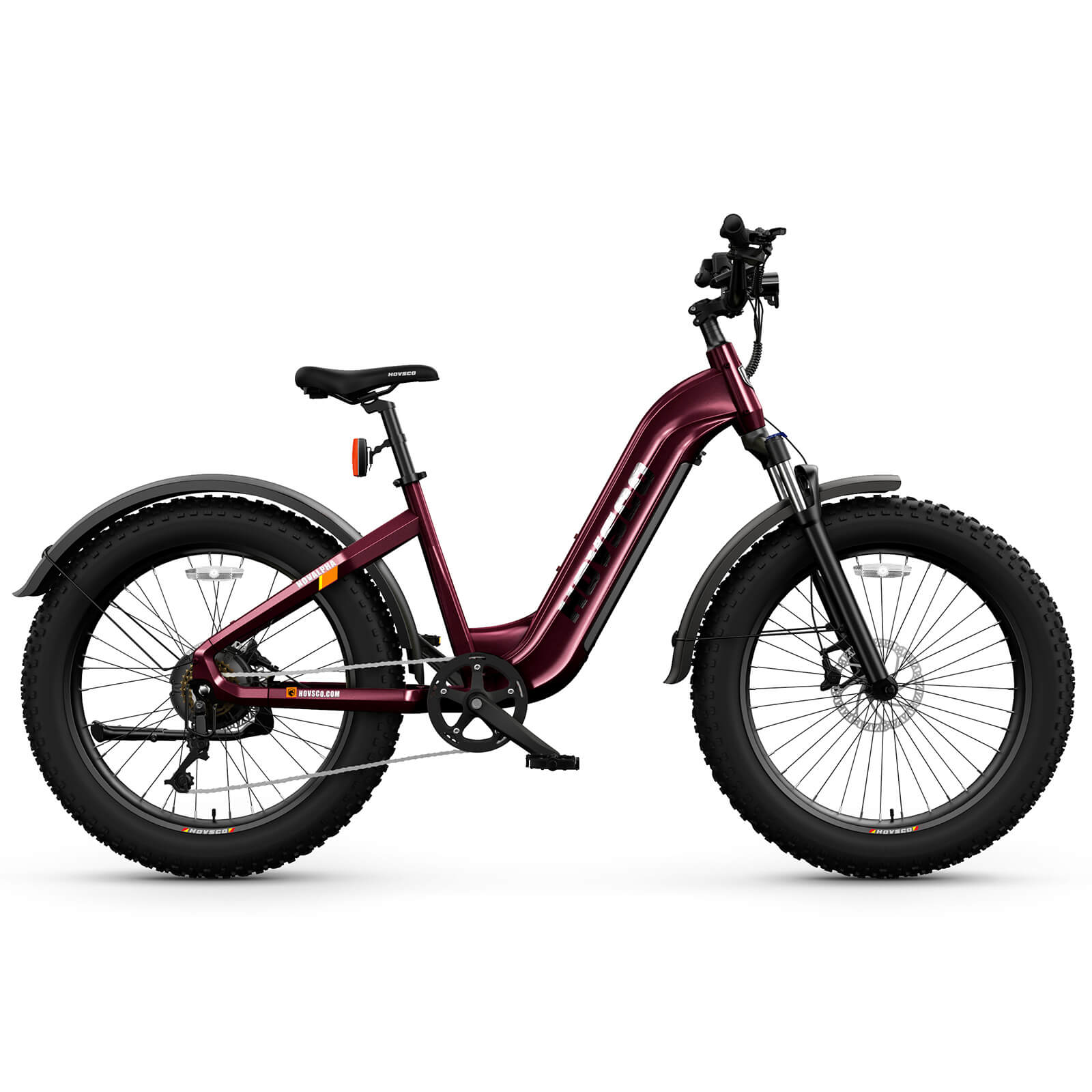
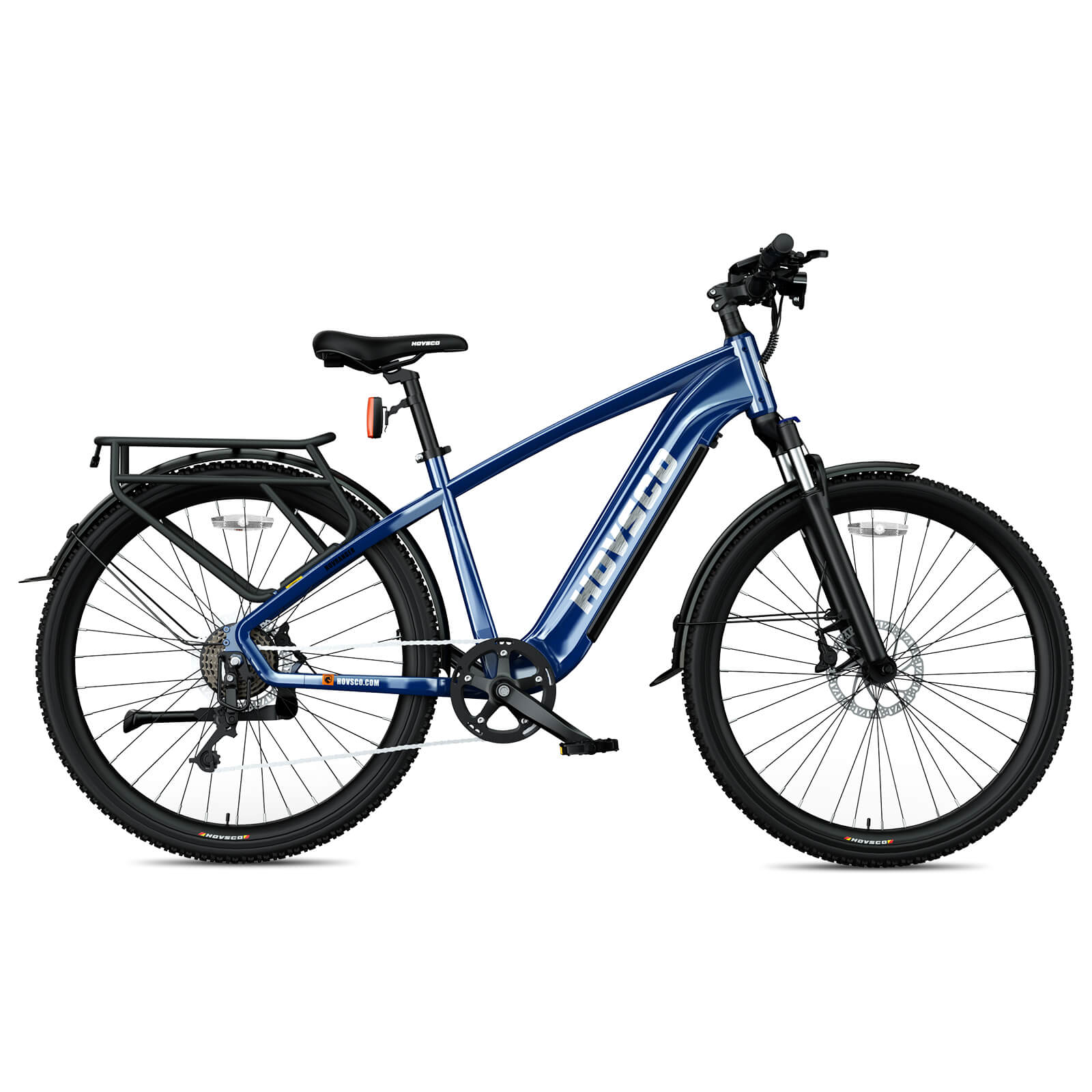
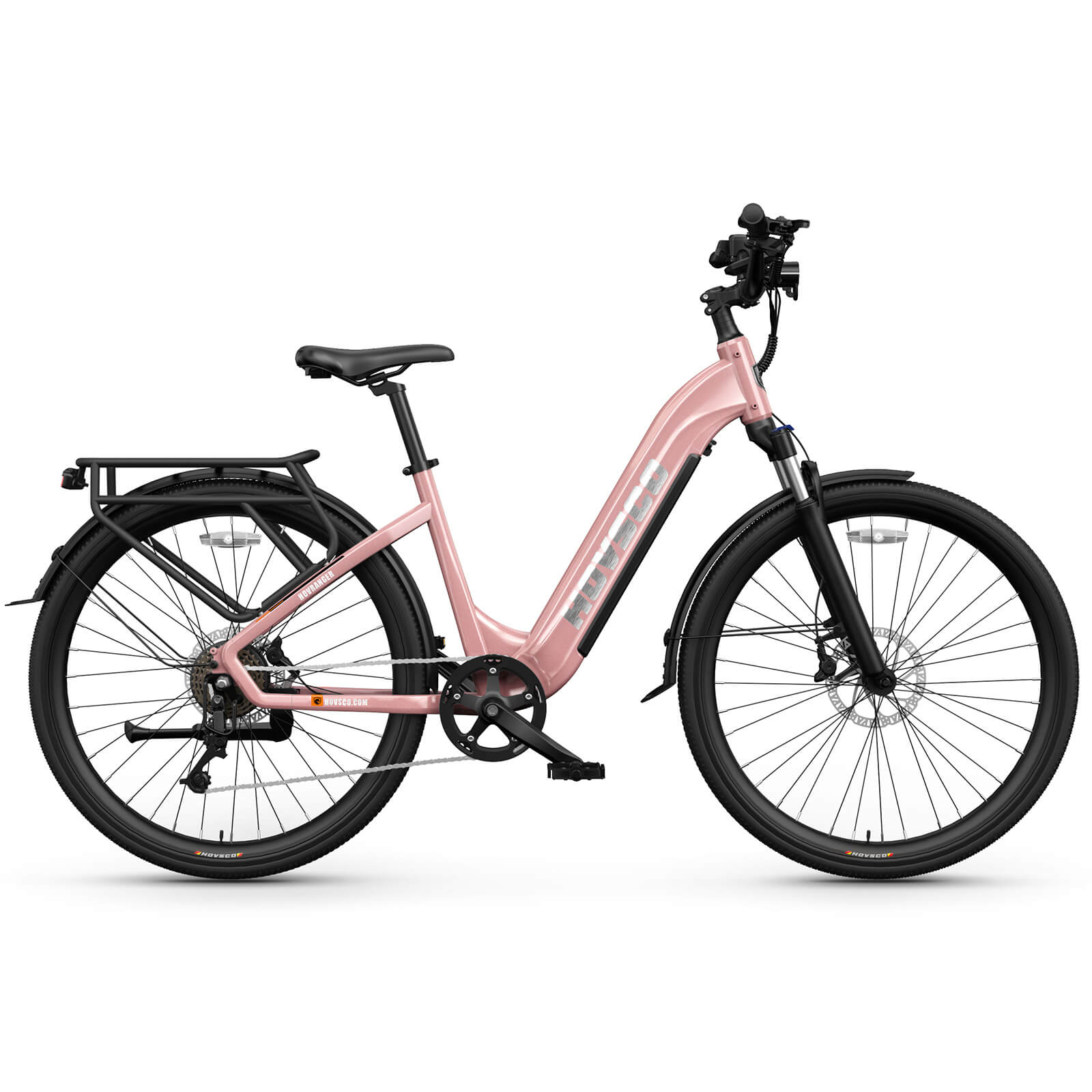
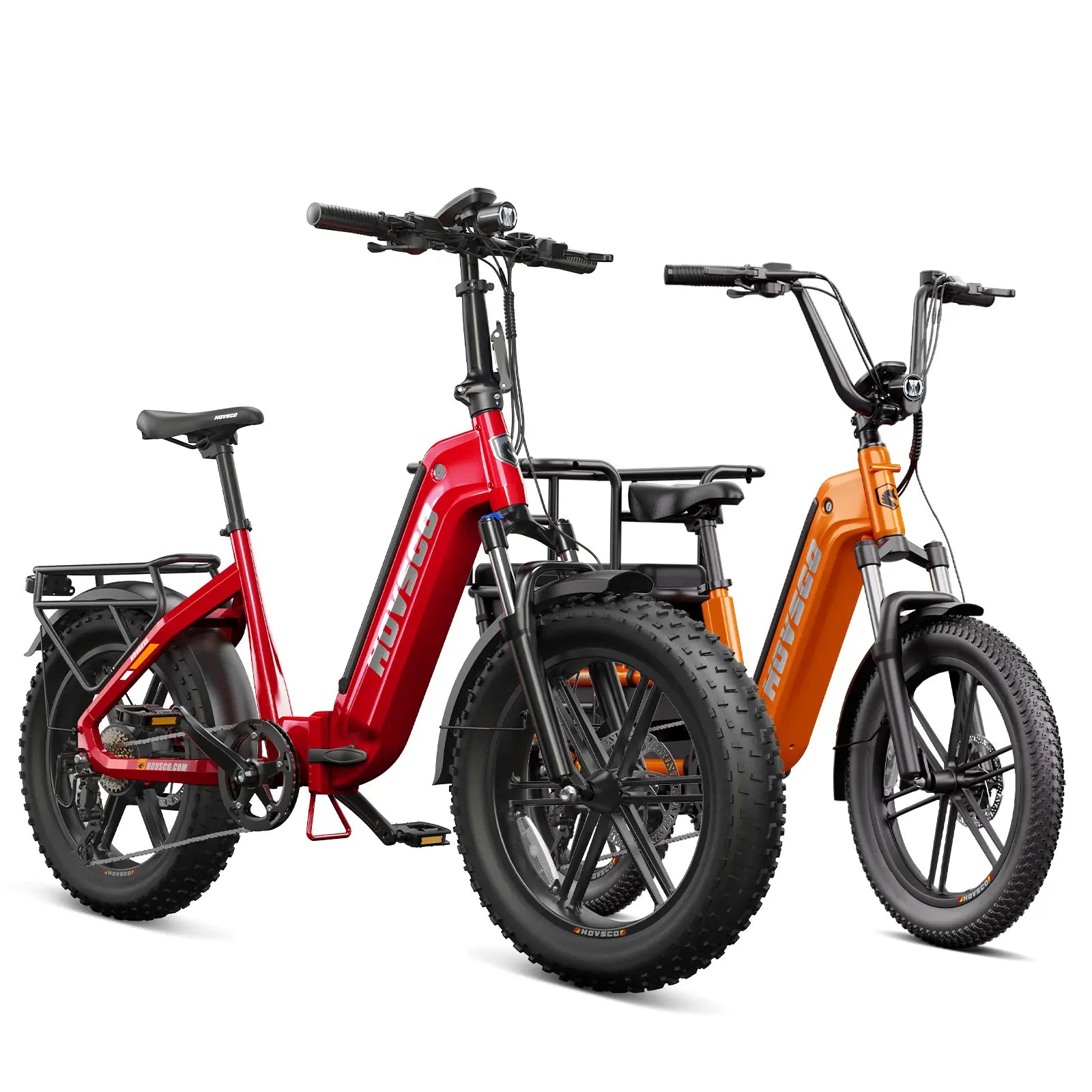
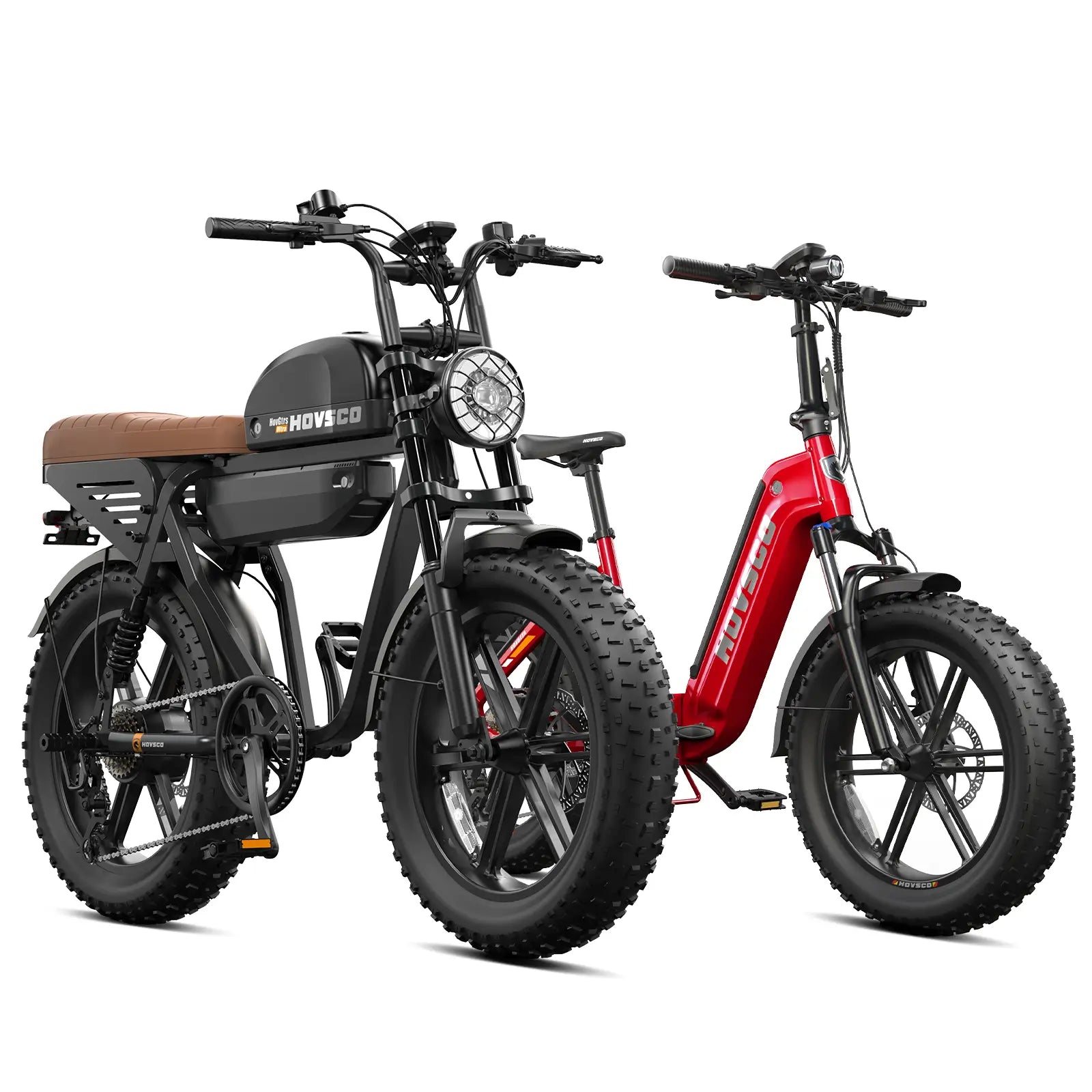
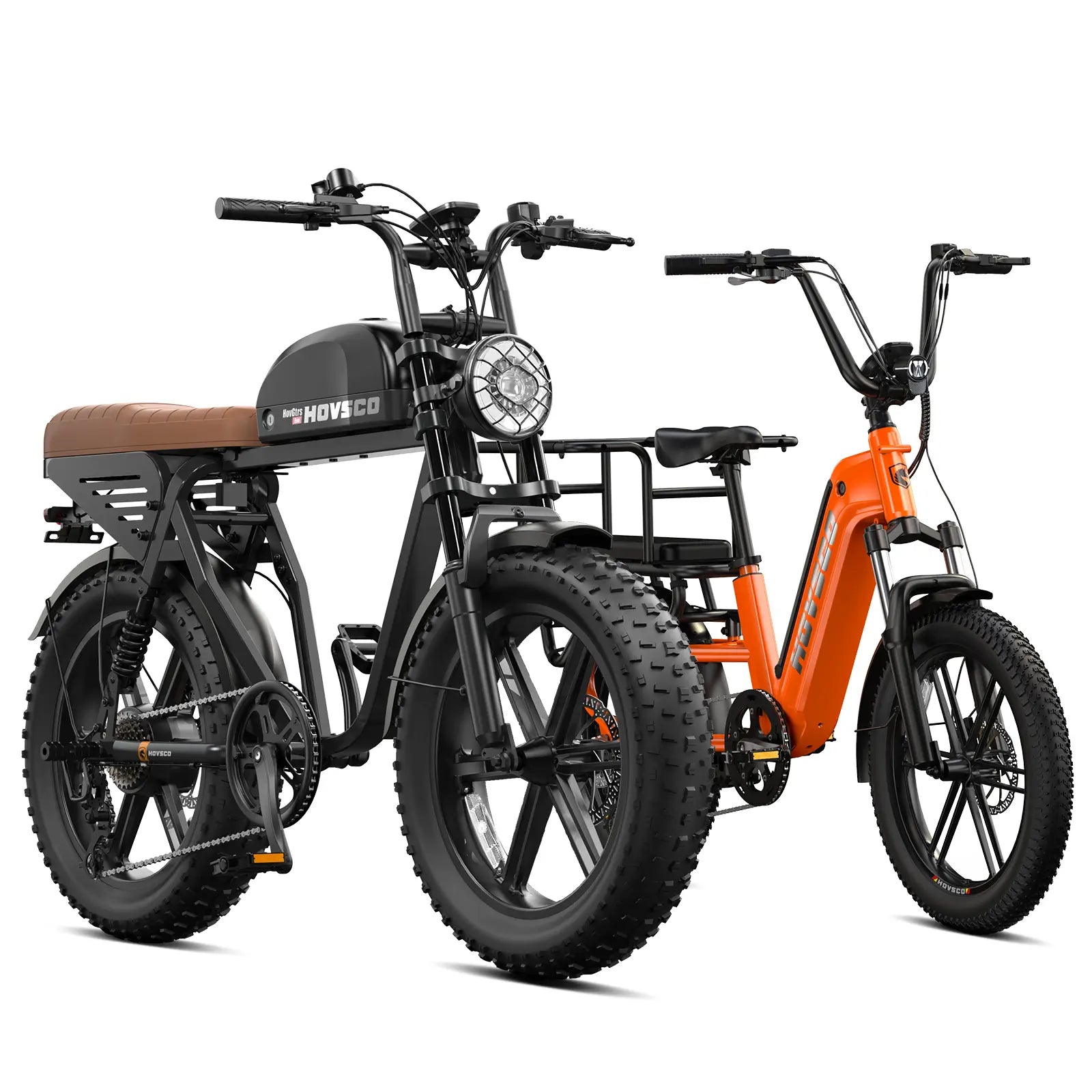
HOVSCO builds several e-bike families that map directly onto these camping use cases — HovCart for hauling gear, HovBeta for folding storage, HovAlpha for long-range exploring, and HovScout for rough single-track around the site. Before picking a model, it helps to walk through the same five filters HOVSCO's product lineup is built around: transport, cargo, terrain, range, and off-grid charging. Each of the sections below breaks one of those down.
Most national forests, state parks, and BLM land classify e-bikes by federal Class 1/2/3 rules, and those classifications determine where you're legally allowed to ride — this is worth confirming before you buy, not after. In general industry terms, Class 1 e-bikes are pedal-assist only up to 20 mph, Class 2 adds a throttle up to 20 mph, and Class 3 allows pedal-assist up to 28 mph but is typically restricted from unpaved multi-use trails in many jurisdictions.
Paved campground roads and bike paths: usually open to all three classes.
Singletrack and unpaved trails: often restricted to Class 1 only, or banned for e-bikes entirely, depending on the land manager.
Motorized-vehicle roads and fire roads: generally open, since e-bikes are treated like any other vehicle there.
HOVSCO's fat-tire models, including HovCart, HovBeta, HovAlpha, and HovScout, ship unlocked to a top assist speed of 28 mph via the HOVSCO app, which puts them in Class 3 territory once unlocked. That's a feature for open roads and fire roads, but it also means you should check the specific park or campground's e-bike policy before assuming trail access — rules vary by land manager, not by bike brand. A quick call to the campground office or a check of the park's official rules page takes five minutes and avoids a wasted trip.
For a weekend camping trip, plan for at least 450 lbs of combined rider-plus-cargo capacity if you're hauling coolers, folding chairs, firewood, or a second passenger; day trips with just a backpack need far less. Payload capacity isn't just a nice-to-have number — it's a hard ceiling that includes the rider's body weight, so a 200 lb rider with a 250 lb payload allowance only has 50 lbs left for gear.
Here's a nuance most buying guides skip: payload ratings assume weight distributed the way the frame was engineered for, not stacked entirely on one rack. A cargo-specific frame with a long rear deck and reinforced dropouts spreads a cooler's weight differently than a standard fat-tire frame with an aftermarket rack bolted on. That's why dedicated cargo e-bikes exist as their own category rather than just "fat-tire bike plus a basket."
Three practical paths for camping cargo:
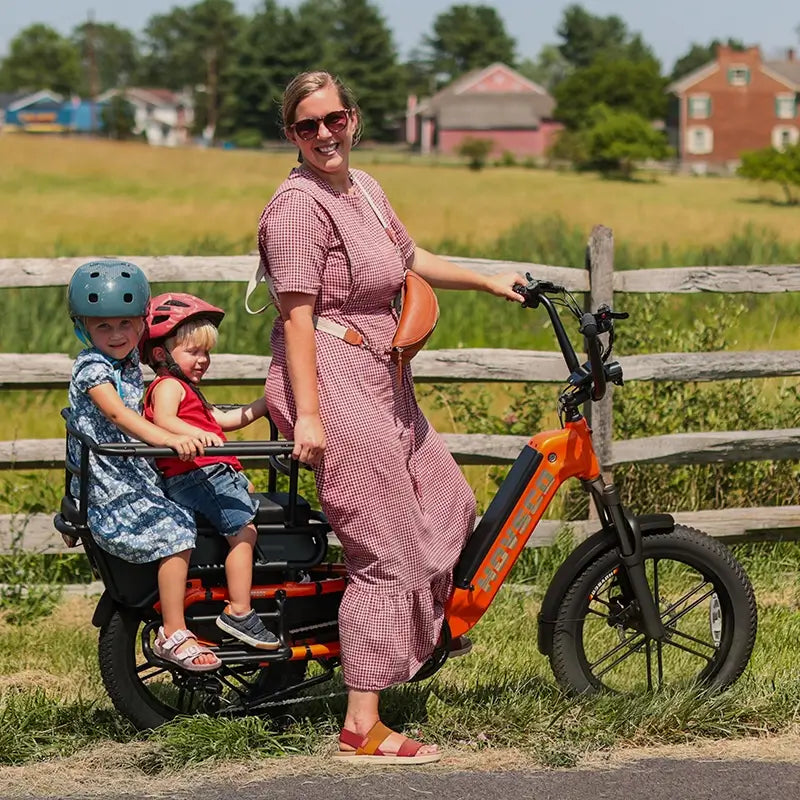
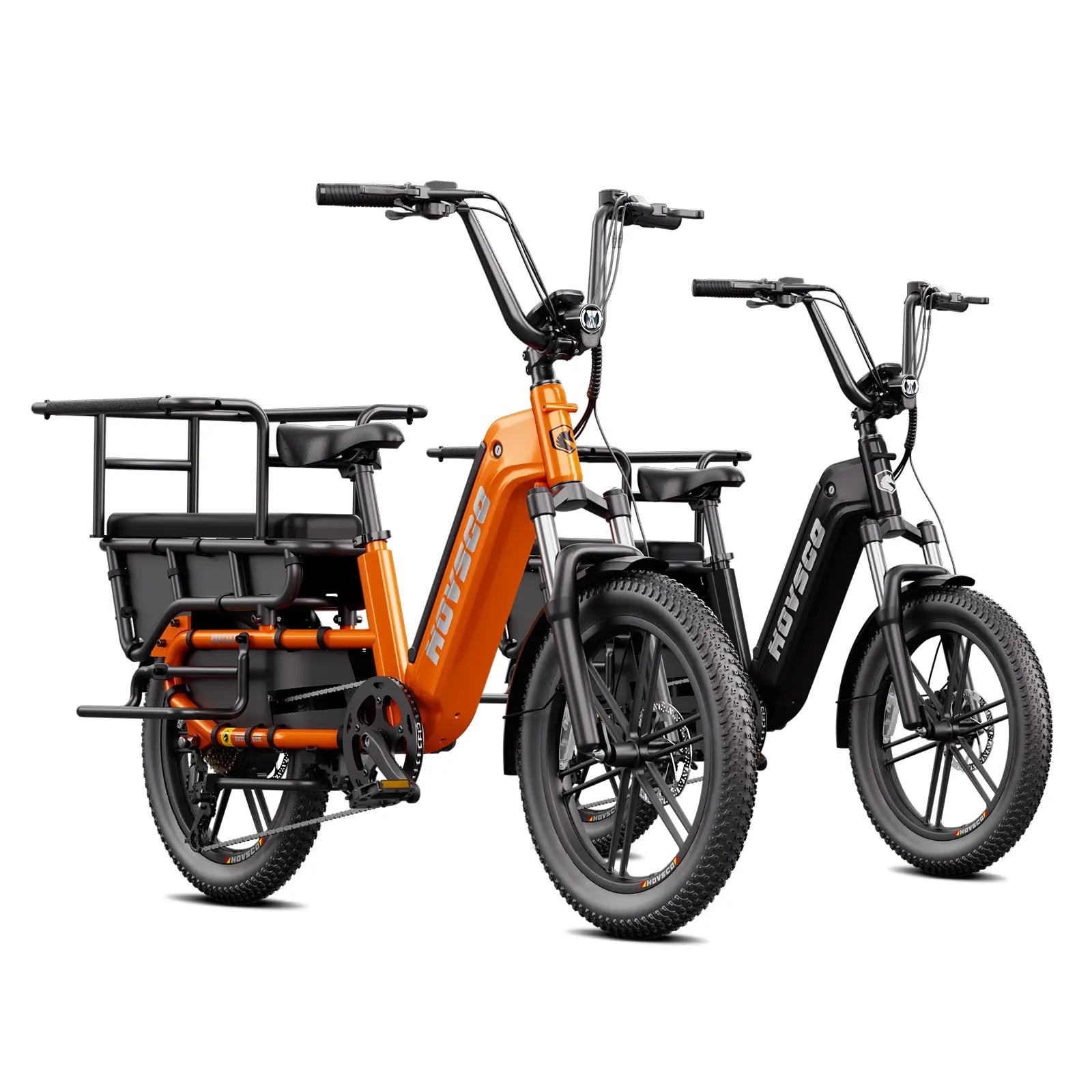
A dedicated cargo frame with a low step-thru and integrated rear deck, built to carry panniers, a cooler box, or a child seat without shifting the bike's balance — the trade-off is a longer wheelbase that's less nimble on tight singletrack.
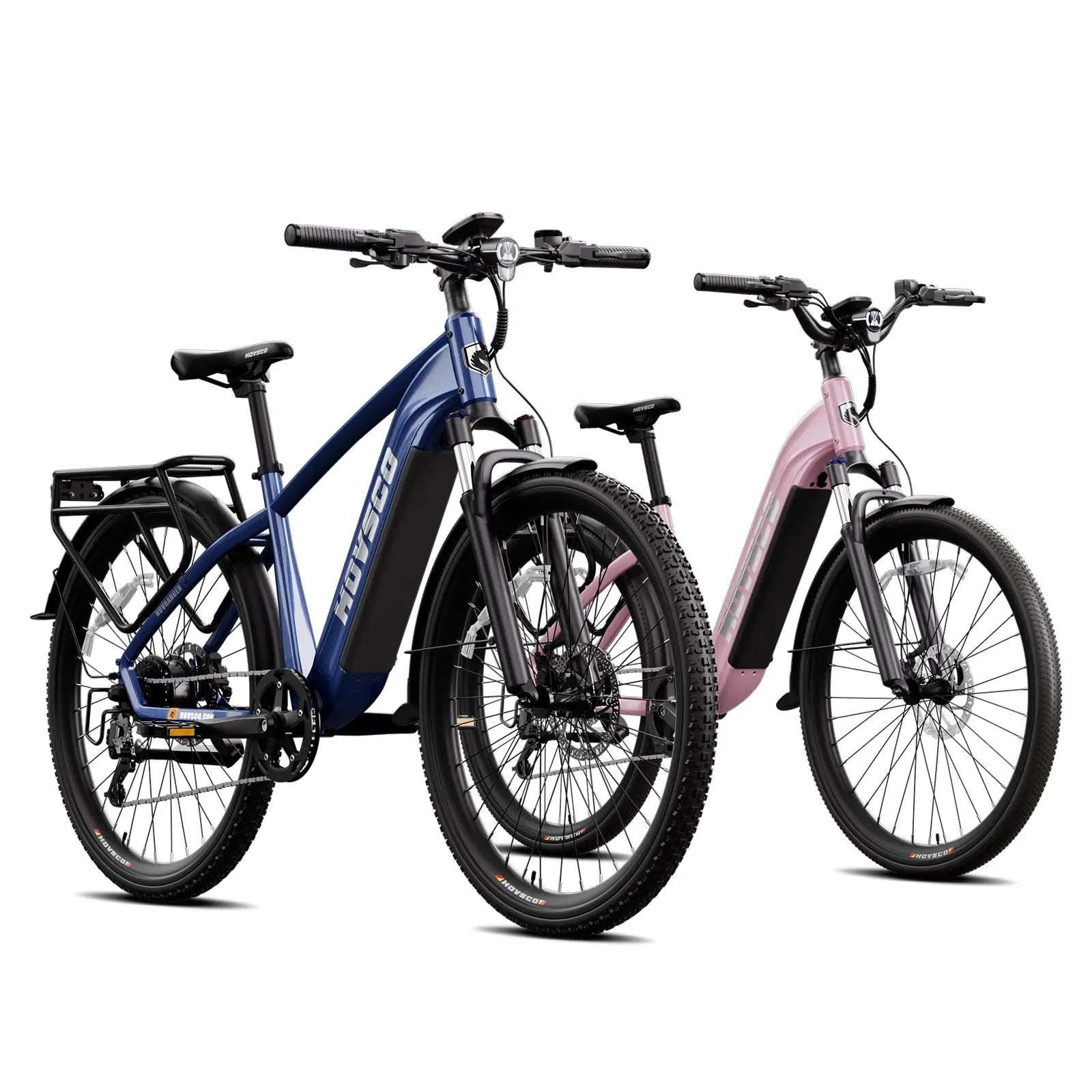
A standard fat-tire frame with add-on racks and baskets, which stays more agile on trails but caps out lower on stable cargo volume.
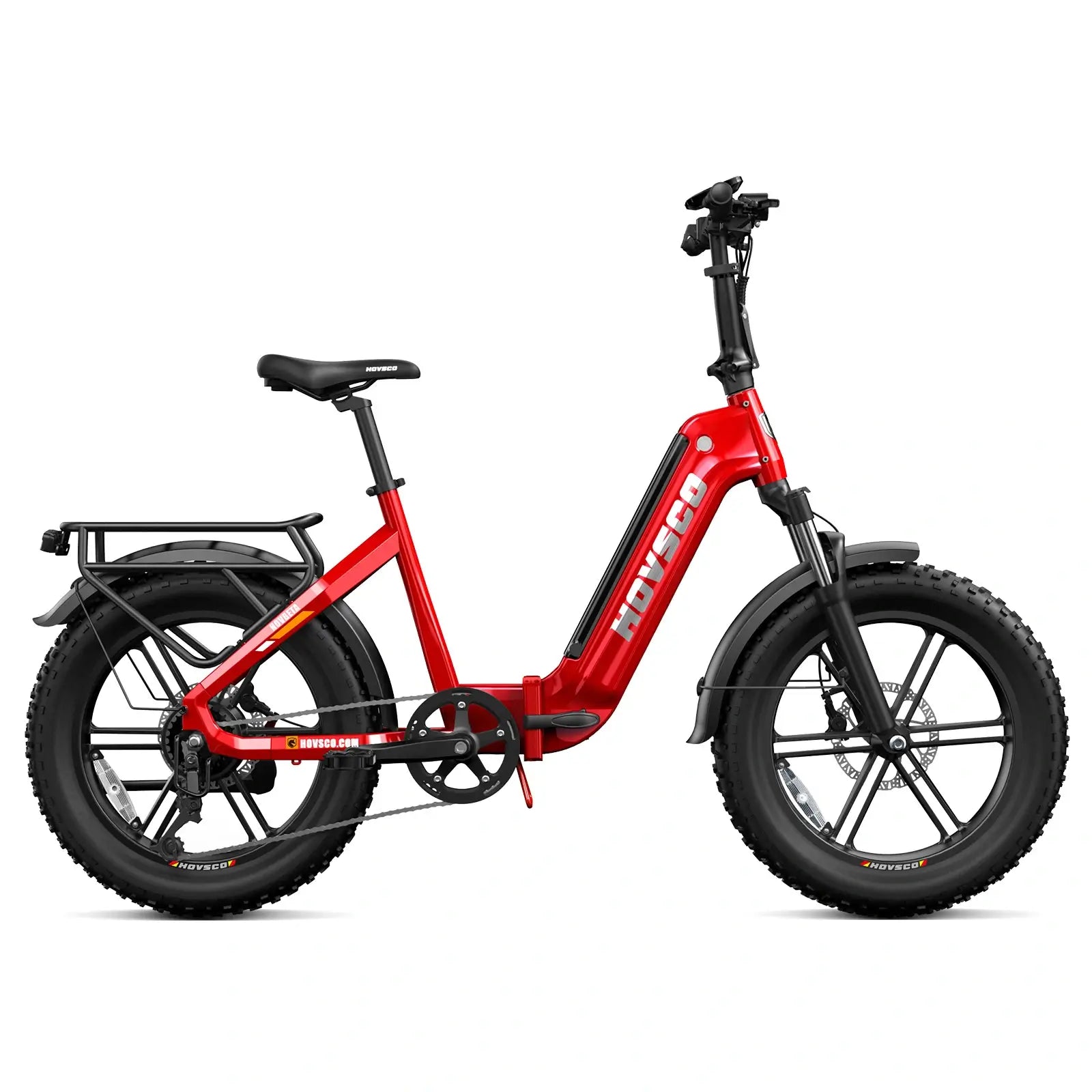
A foldable fat-tire frame, which sacrifices some cargo-mounting real estate for the ability to stow flat in an RV bay or truck bed between rides.
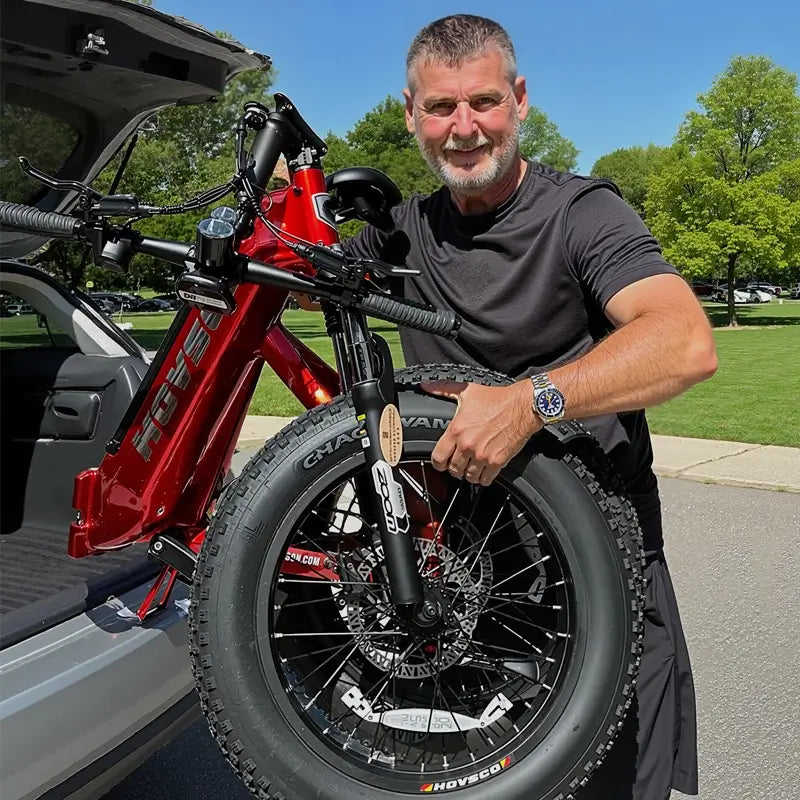
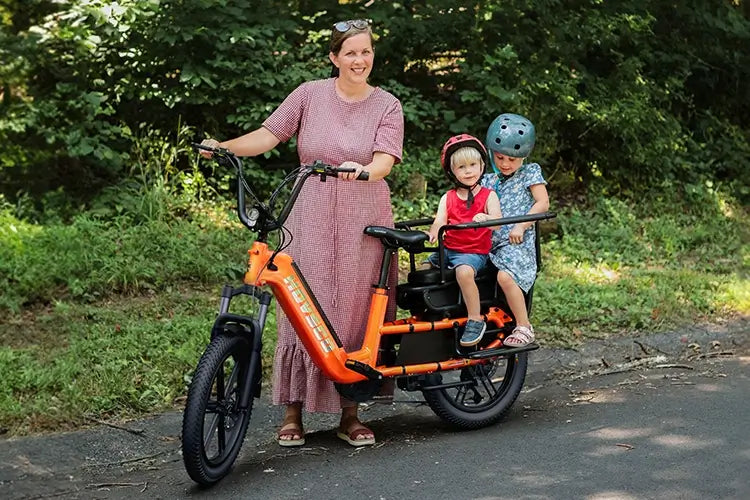
HOVSCO's HovCart is built around the first option: it's rated for a 450 lb payload with a 1300W peak / 750W sustained rear hub motor and a 90 N·m torque sensor, on a 20" fat-tire step-thru frame designed for family and cargo use. On a real camping trip, that means a rider, a cooler, and a couple of folding chairs can ride to the lake without redlining the weight limit — as long as the total stays under that 450 lb ceiling, which is a ceiling, not a target. Cargo capacity solves the "how much can I bring" question; the next filter is whether the bike can actually get that cargo across the terrain you'll face once you arrive.
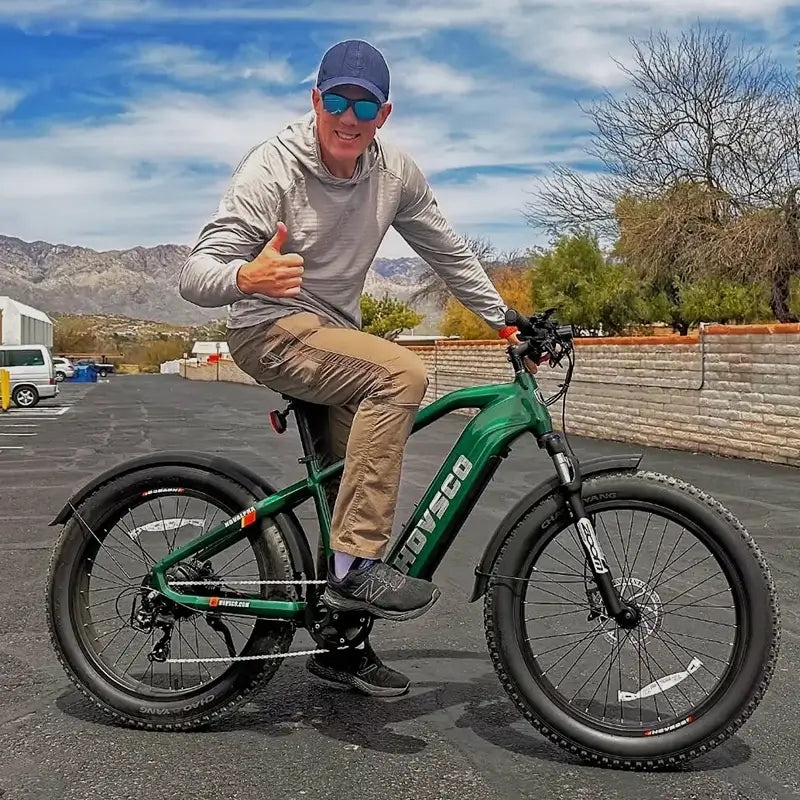
Fat tires in the 3–4 inch width range paired with a torque-sensor pedal-assist motor handle loose gravel, packed dirt, and light sand better than narrow street tires and cadence-only sensors, because wider tires increase the contact area that keeps the bike from sinking into soft ground. Peak wattage alone doesn't tell you how a bike climbs a rutted campground hill — sustained power and torque delivery matter more day-to-day.
The mechanism here is worth understanding: peak power (the number most spec sheets lead with) is the motor's short burst ceiling, while sustained power is what it can deliver continuously without overheating. A motor rated at 1300W peak but 750W sustained will feel strong pulling away from a stop, but it's the sustained figure that determines how it climbs a long, steady grade to a hilltop site. Torque sensors, which measure how hard you're pedaling and scale assist proportionally, feel more natural on uneven terrain than cadence sensors, which just detect that pedals are turning and apply a fixed assist curve.
Wider tires (4") float better on sand and snow but add rolling resistance on pavement — a fair trade for campsites with soft access roads.
Narrower fat tires (3") strike a balance between off-road grip and pavement efficiency, better suited to gravel and packed-dirt campground roads than to deep sand.
Full-suspension frames absorb chatter from rutted, root-crossed trails around the site, at the cost of added weight and mechanical complexity versus a hardtail with a front fork only.
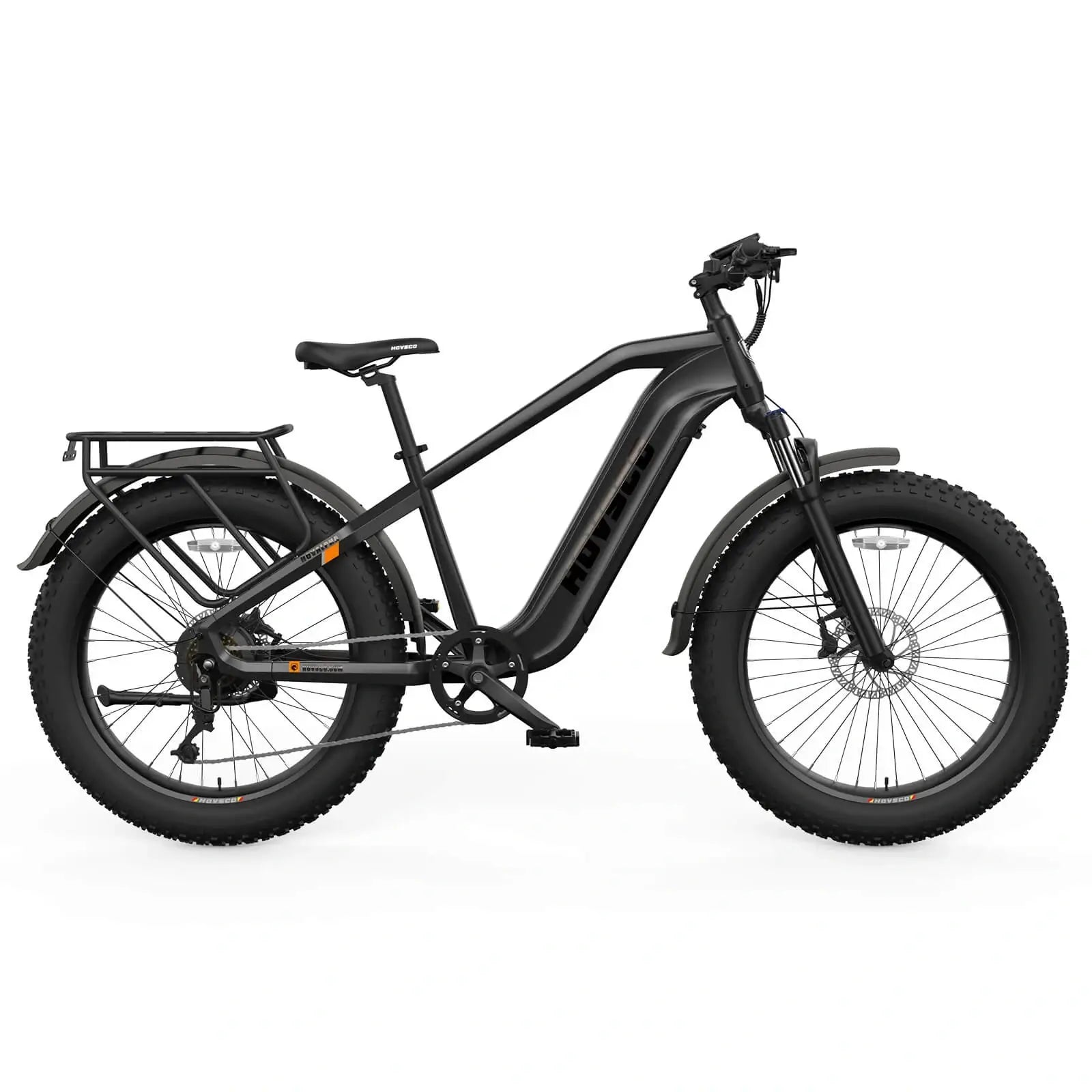
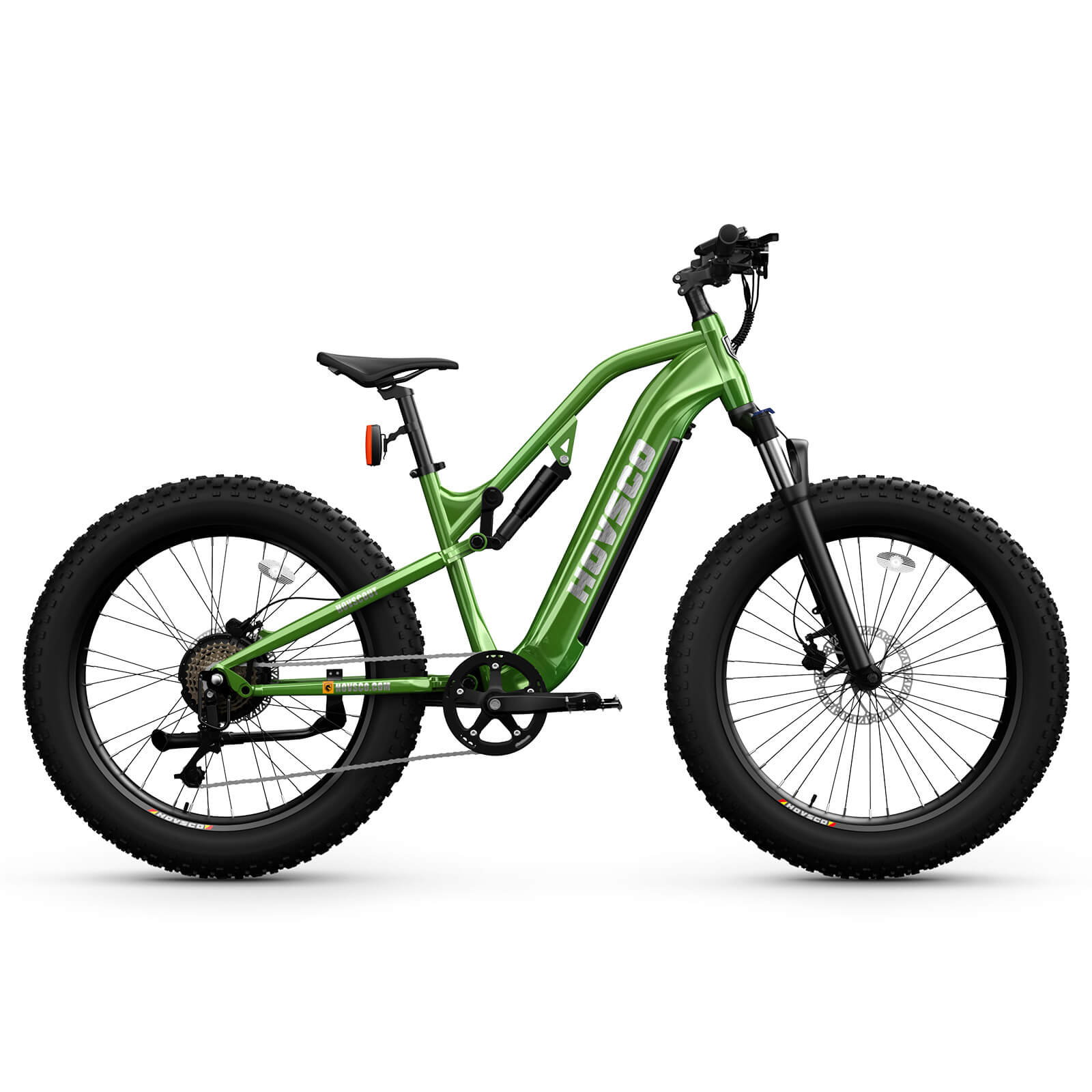
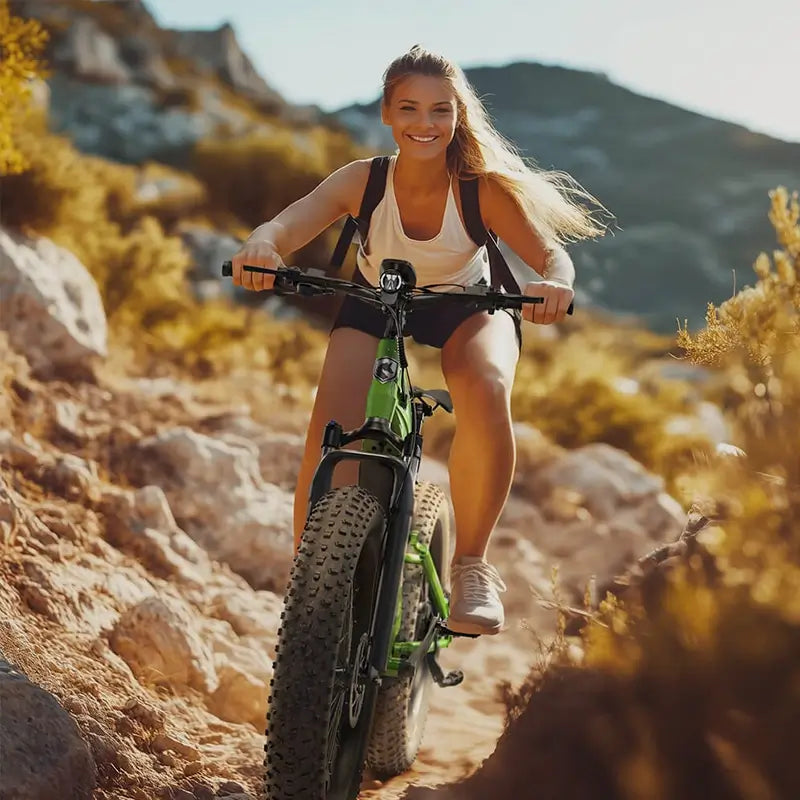
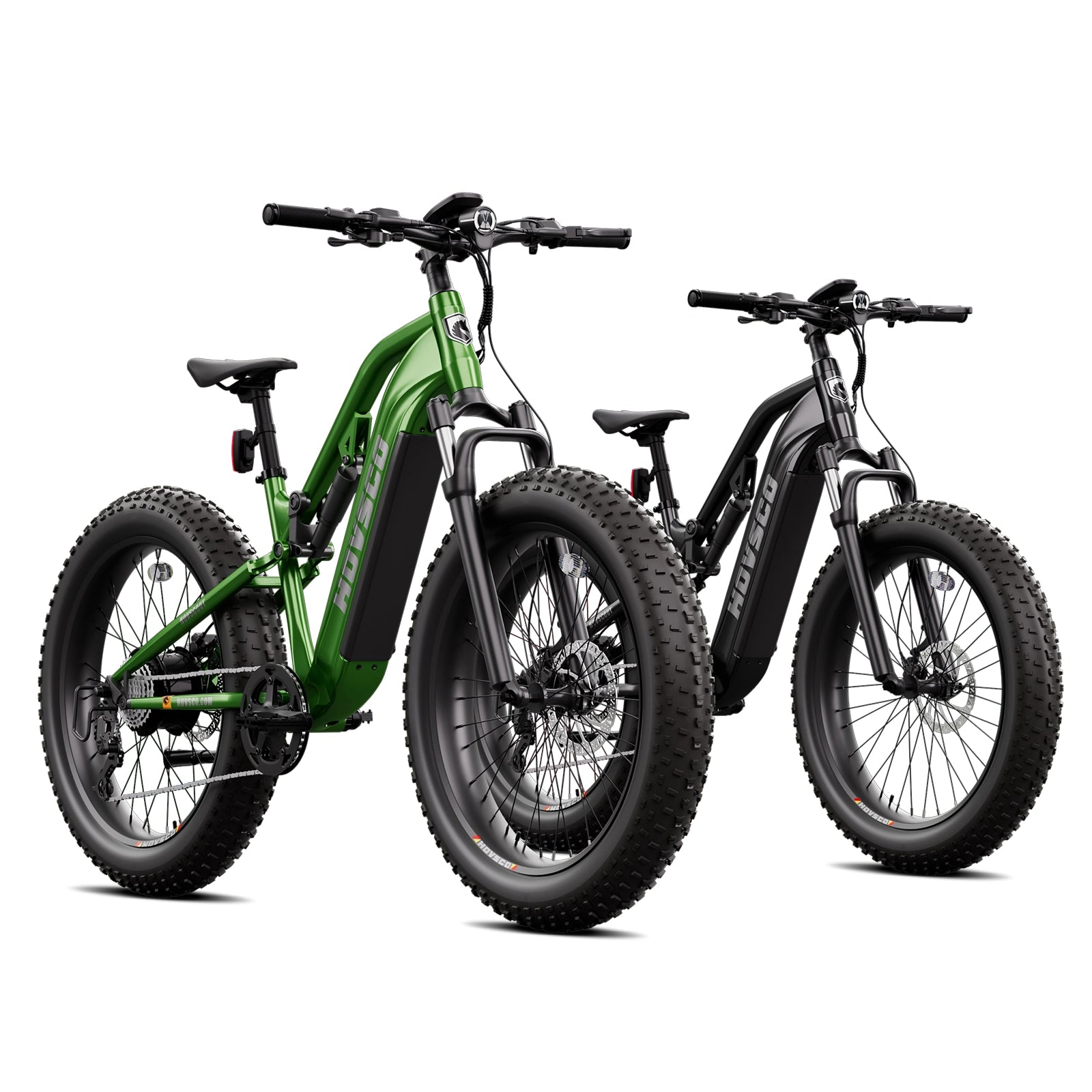
As a general industry guideline, fat-tire pressure typically runs lower for soft terrain and higher for firm surfaces — something like 8–12 psi on snow or sand, stepped up for gravel or pavement, though the exact range depends on tire and rim width. HOVSCO's HovScout is built for exactly the rutted, root-and-rock terrain many campsites sit on: it pairs a torque-sensor pedal-assist system with a Zoom front fork offering 80mm of travel and lockout, plus a four-bar linkage rear suspension with adjustable rebound, on a 26" fat-tire frame. That combination smooths out washboard access roads and root crossings that a hardtail would transmit straight into your hands. Terrain capability only matters if the battery lasts long enough to get you there and back — which is the next filter.
Plan for at least double your expected one-way distance in rated range, since real-world camping rides involve cargo weight, hills, cold mornings, and throttle use that all cut into a bike's advertised number. A bike rated for 60 miles in ideal conditions might realistically deliver less once you load it with gear and ride it on dirt instead of pavement.
The "why" behind that gap is straightforward: manufacturer range figures are typically measured under favorable conditions — moderate rider weight, mild temperatures, lower assist levels, and often pedal-assist rather than throttle-only use. Add a loaded cargo rack, cold morning air, and throttle-heavy riding up a grade, and the number drops. As general industry knowledge, cold weather is commonly cited as cutting lithium battery range by roughly 15–20% versus mild conditions, purely from battery chemistry slowing down in the cold — that's not a HOVSCO-specific figure, it's a widely cited rule of thumb across the e-bike industry.
A smaller battery (around 720Wh) keeps the bike lighter and is enough for day rides around a campground and into town for supplies.
A larger battery (960Wh) extends range for longer exploring days without a charging stop, at the cost of added weight from the bigger cell pack.
Riding in a lower assist level or relying more on pedaling than throttle stretches range further than blasting around on full throttle.
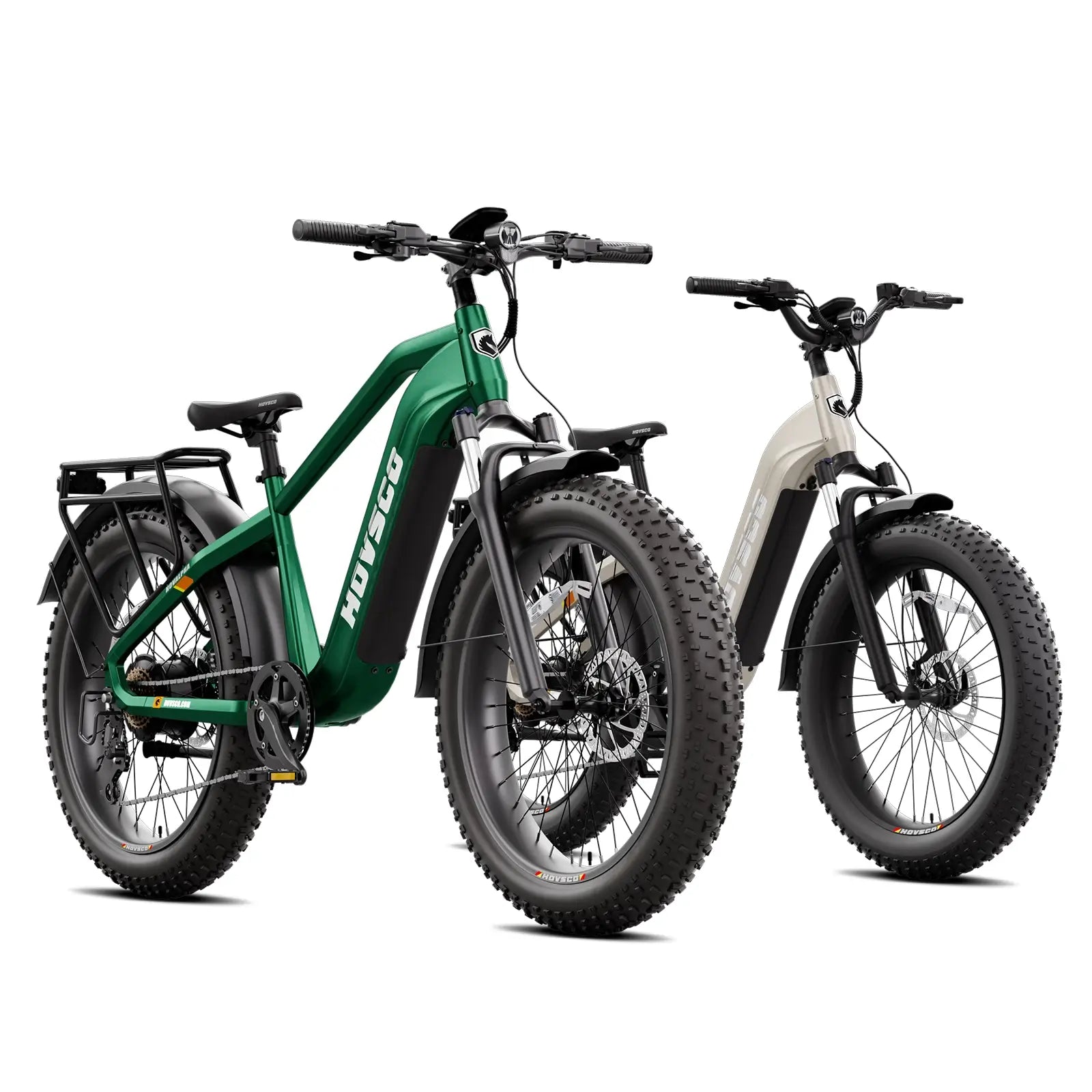
HOVSCO's HovAlpha is built around the range-first end of this trade-off: it carries a 48V 20Ah (960Wh) battery paired with a 1300W peak / 750W sustained motor and a 90 N·m torque sensor, rated for a 60–80 mile average range and a 450 lb payload. That's real headroom for riders who want to explore well beyond the campsite loop without worrying about a mid-afternoon charge. Once you know how far you need to go, the final filter is how you'll actually recharge when there's no wall outlet nearby.
Most developed campgrounds with electrical hookups let you recharge a removable e-bike battery overnight using the same 120V outlet you'd use for an RV, typically in around 4 to 7 hours depending on the battery and charger. Dispersed or primitive camping without hookups requires a different plan: a portable power station, a vehicle's inverter, or simply riding within range of a single charge for the whole trip.
This is where I'd push back on a common assumption — that every e-bike battery works the same way for off-grid trips. A removable battery pack, which several HOVSCO models use, can be pulled out and charged inside a warm tent or RV cabin overnight rather than leaving the whole bike exposed to cold, which also protects the battery from temperature swings that reduce capacity over time. A fixed, non-removable battery forces you to either bring the whole bike to the power source or run a long extension cord to it.
Campground hookup sites: a standard wall charger works fine; check the site's amperage if you're also running an RV, since e-bike chargers usually draw a modest 3-amp fast charge that shouldn't strain shared circuits.
Dispersed camping with a power station: a battery bank rated for at least your charger's wattage lets you top off between rides, though power stations big enough for e-bike charging add real weight to your packing list.
No power source at all: plan the trip entirely within single-charge range, and treat any charge remaining as a safety margin for the ride back, not a reserve to spend exploring further.
A removable 720Wh or 960Wh pack, like the ones used across HOVSCO's fat-tire lineup, typically takes about 4 hours to fully recharge on the included fast charger — a number worth planning around if you only have overnight hookup access. If you're weighing which model fits your specific camping style, the comparison below lays out how HovCart, HovBeta, HovAlpha, and HovScout differ on the specs that actually matter for a trip.
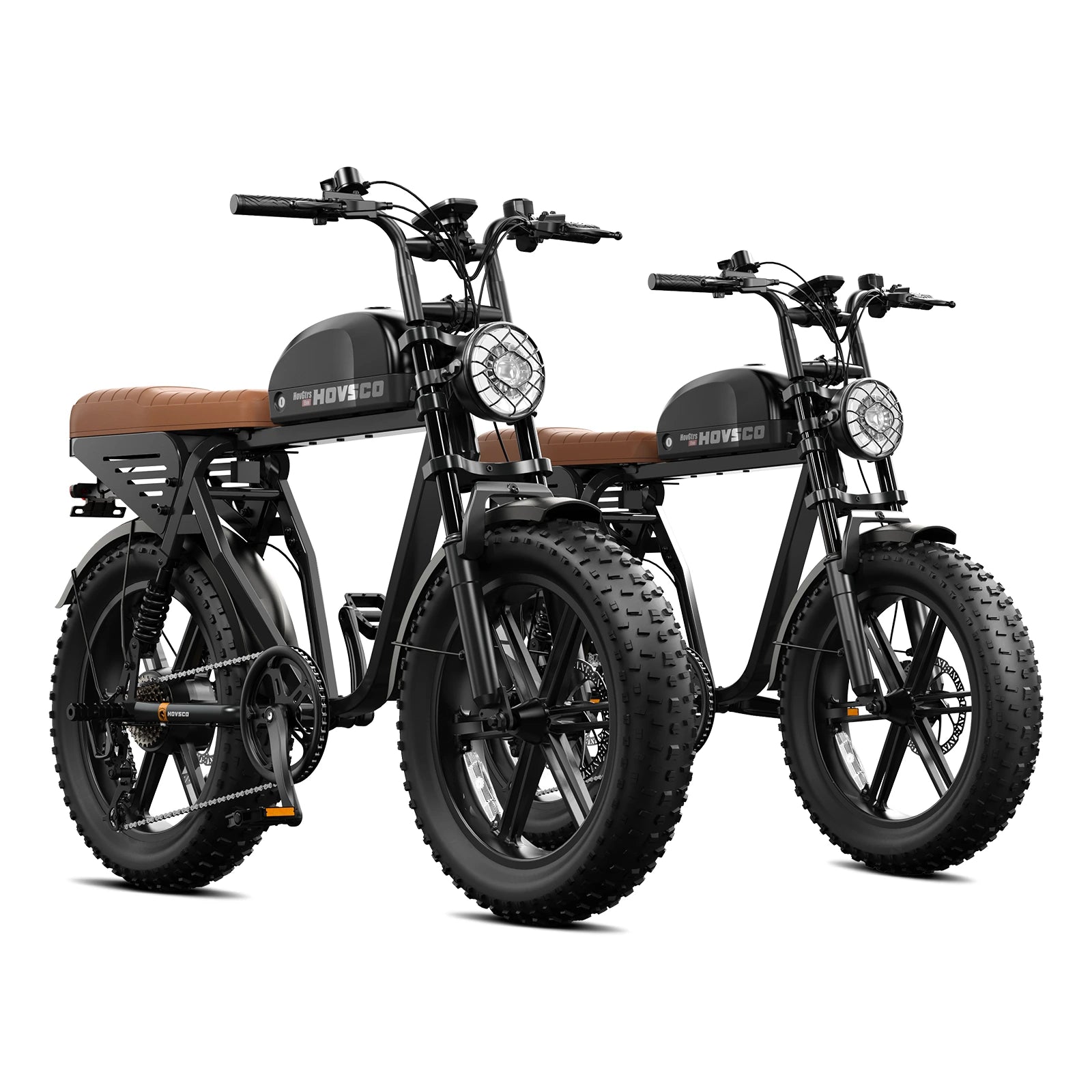
No single e-bike wins on every camping filter — HovCart wins on cargo, HovBeta wins on storage, HovAlpha wins on range, and HovScout wins on rough terrain, so the right choice depends on which filter matters most for your specific trips. The table below lines up the verified specs side by side.
HovCart vs. HovBeta vs. HovAlpha vs. HovScout at a Glance: all four share a 1300W peak / 750W sustained motor family, a 450 lb payload ceiling, and 28 mph top assist speed once unlocked — the differences that matter for camping are battery size, tire diameter, suspension, and whether the frame folds.
Use this checklist to match your camping style to a model:
Primary use — Hauling gear and passengers to the site: HovCart. Squeezing into an RV bay or truck bed: HovBeta. Long exploring days from a base camp: HovAlpha. Rough trails and root-crossed terrain around the campsite: HovScout.
Storage constraint — Fixed garage or truck bed space: any fixed-frame model (HovCart, HovAlpha, HovScout). Tight RV storage or airline/train transport: HovBeta's folding frame.
Typical load — Cooler, chairs, and a passenger: HovCart's cargo-oriented step-thru frame. Personal gear only: any model, since all four share the same 450 lb payload rating.
Range need — Day loops under 40 miles: HovBeta, HovCart, or HovScout's 720Wh pack. Longer exploring days over 60 miles: HovAlpha's 960Wh pack.
Assist feel — All four use torque sensors for proportional, natural-feeling assist rather than cadence-only sensing.
Terrain — Gravel access roads and packed dirt: HovCart or HovBeta. Sand and light snow: HovAlpha's 26 x 4" tires. Rutted, rocky, or root-heavy trails: HovScout's full-suspension setup.
If you're ready to compare current configurations side by side, HOVSCO's fat-tire electric bikes collection lists HovCart, HovBeta, HovAlpha, and HovScout together with their current specs and availability.
HOVSCO's engineering approach across its fat-tire lineup centers on giving each model a distinct job rather than building one do-everything bike. HovCart's frame geometry and 90 N·m torque sensor are tuned around stable cargo handling, HovBeta's folding hinge is designed so the fat-tire, torque-sensor experience isn't sacrificed just because the frame collapses for storage, HovAlpha's larger 960Wh pack targets riders who prioritize range over minimal weight, and HovScout's four-bar rear linkage exists specifically to handle rough terrain that a hardtail fat-tire bike would transmit straight to the rider.
That said, no model in this lineup is a full off-grid overland solution — none carries a generator, solar panel, or multi-day battery reserve, so trips beyond a single charge's range still require a charging plan, whether that's a campground hookup, a portable power station, or a support vehicle. Riders planning multi-day backcountry routes with no charging access at all should treat range as the hard limiting factor and plan accordingly, not assume a bigger battery solves every scenario.
Choosing the right electric bike for camping isn't about finding the single "best" e-bike — it's about matching a model's frame style, cargo capacity, terrain handling, range, and charging setup to how you actually camp. A family hauling a cooler and chairs needs different specs than a solo rider stashing a folding bike in an RV bay.
Confirm land-access rules for e-bike classes at your specific campground or park before you buy.
Match payload capacity to your real cargo, remembering the rider's own body weight counts against that number.
Choose tire width and suspension based on the terrain you'll actually ride, not the terrain you wish you had.
Size the battery to at least double your expected one-way distance, accounting for cargo and cold-weather effects on range.
Plan your charging method — hookup, power station, or single-charge trip — before you're standing at the campsite with an empty battery.
Field checklist before you buy: verify the campground's e-bike class rules, calculate your total rider-plus-cargo weight against the 450 lb payload ceiling, match tire width to your typical terrain, size the battery to your longest planned ride, and confirm your charging plan for the site you're heading to. Working through HovCart, HovBeta, HovAlpha, and HovScout against these five filters is the fastest way to land on the right e-bike for camping trips — and HOVSCO's fat-tire electric bikes collection is where to check current specs before you decide.
Which HOVSCO model is best for hauling camping gear?
HovCart is HOVSCO's cargo-focused model, rated for a 450 lb payload with a 90 N·m torque sensor and a step-thru frame built for stable weight distribution. It's the strongest choice when you're hauling a cooler, chairs, or a passenger rather than prioritizing range or folding storage.
Can a folding e-bike handle rough campground terrain?
HovBeta folds for storage while still using 20 x 4" fat tires, a torque sensor, and a 45mm-travel front fork, so it handles gravel and packed dirt reasonably well. It's not a full-suspension bike, so very rutted or rocky trails are better suited to a model like HovScout.
How much range do I need for a day of riding around a campsite?
Plan for at least double your expected one-way distance, since cargo weight, hills, and cold mornings all reduce real-world range below the rated figure. HovAlpha's 960Wh battery is rated for 60–80 miles average, giving more headroom for longer exploring days than the 720Wh packs in HovCart, HovBeta, and HovScout.
Do I need full suspension for camping trails?
Full suspension helps most on rutted, root-crossed, or rocky terrain, which is what HovScout's 80mm-travel front fork and four-bar rear linkage are built for. For smoother gravel access roads or packed dirt, a front-suspension-only model like HovCart or HovBeta is usually sufficient.
How do I charge an e-bike battery while camping without electrical hookups?
Removable batteries, used across HOVSCO's HovCart, HovBeta, HovAlpha, and HovScout, can be recharged from a portable power station or brought inside a vehicle to charge from an inverter. Without any power source, plan the entire trip within a single charge's range and treat remaining charge as a buffer for the ride back, not extra distance to explore.
Share:
How to Choose an Electric Bike for Fishing?
What Should Small Businesses Check Before Buying an E-Bike?