


![[ New Arrival ] Porto Max Electric Scooter For Commute & Grocery Shopping - HOVSCO](http://www.hovsco.com/cdn/shop/files/PotroMax-3.jpg?v=1706927007&width=1200)
- by SteveJames
How to Choose an Electric Bike for Fishing?
- by SteveJames
E-Bikes
Accessories
 Free Shipping
 15-Day Returns
 2-Year Warranty
Free Shipping
15-Day Returns
2-Year Warranty
2-Year Warranty
Free Shipping
15-Day Returns
2-Year Warranty
Choose an electric bike for fishing by matching your typical fishing-site access, gear load, and route surface to a platform that can carry it safely. Prioritize a rated payload above your total system weight, a rear rack or basket that fits rods and tackle, waterproof or water-resistant storage for electronics and clothing, and a battery large enough to cover your out-and-back distance with a reserve. For many anglers, a 450 lb–rated fat-tire e-bike with a sturdy rear rack, 720–960 Wh battery, and hydraulic brakes is a practical starting point.
The right e-bike turns distant, vehicle-restricted fishing spots into reachable destinations while keeping your hands free for gear. It matters because fishing trips often combine rough surfaces, heavy loads, and early/late hours where quiet, reliable assist makes a real difference. An e-bike that matches your payload and terrain reduces fatigue, protects your equipment, and keeps you compliant with local land-use rules.
Access: Many trailheads, levees, and coastal paths limit motor vehicles but allow e-bikes; a capable e-bike extends your radius without a car.
Load management: Rods, tackle boxes, coolers, and personal gear easily exceed 30–50 lb; a high-payload frame and rack keep weight centered and stable.
Time and energy: Pedal assist preserves energy for casting and hiking, especially on return trips when you're tired.
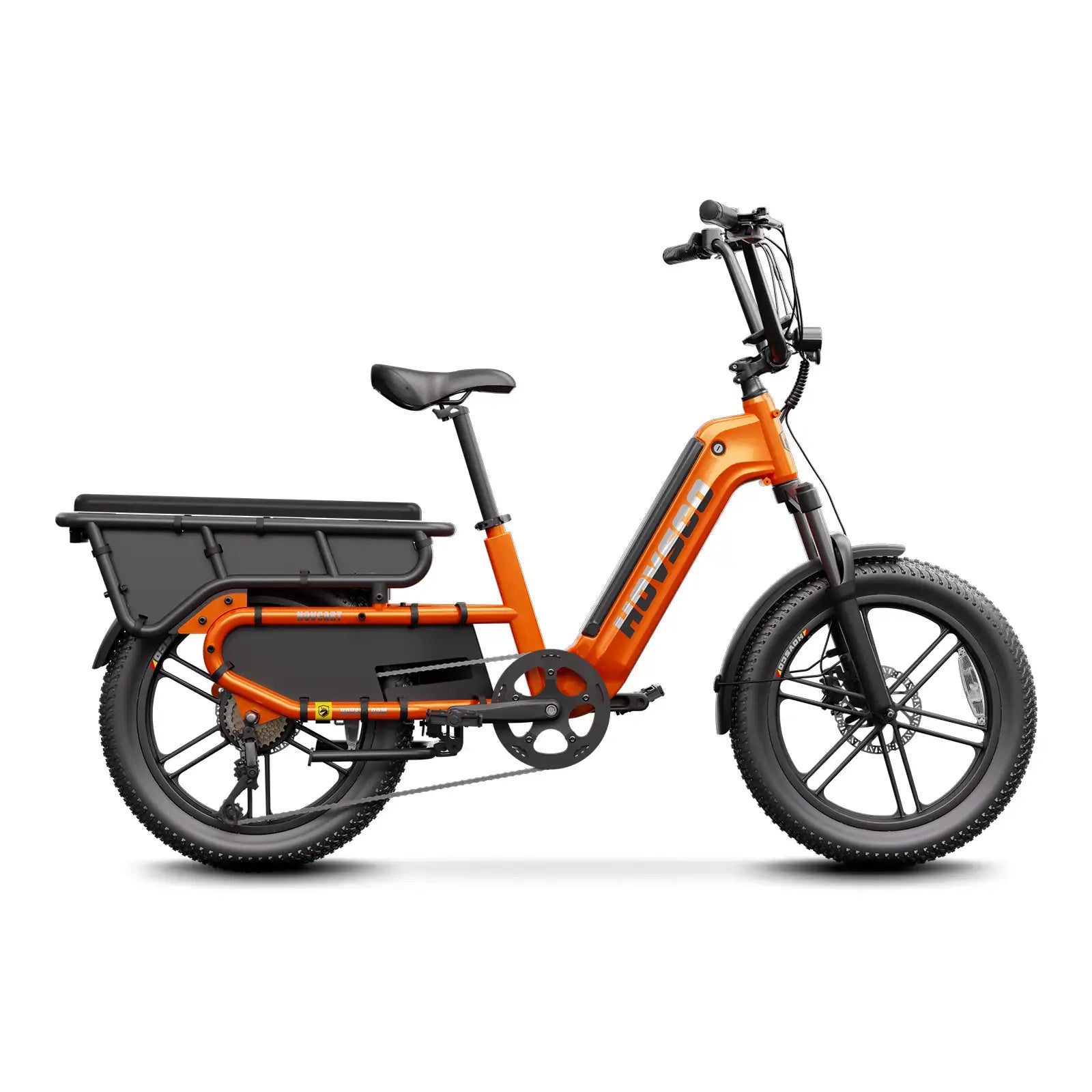
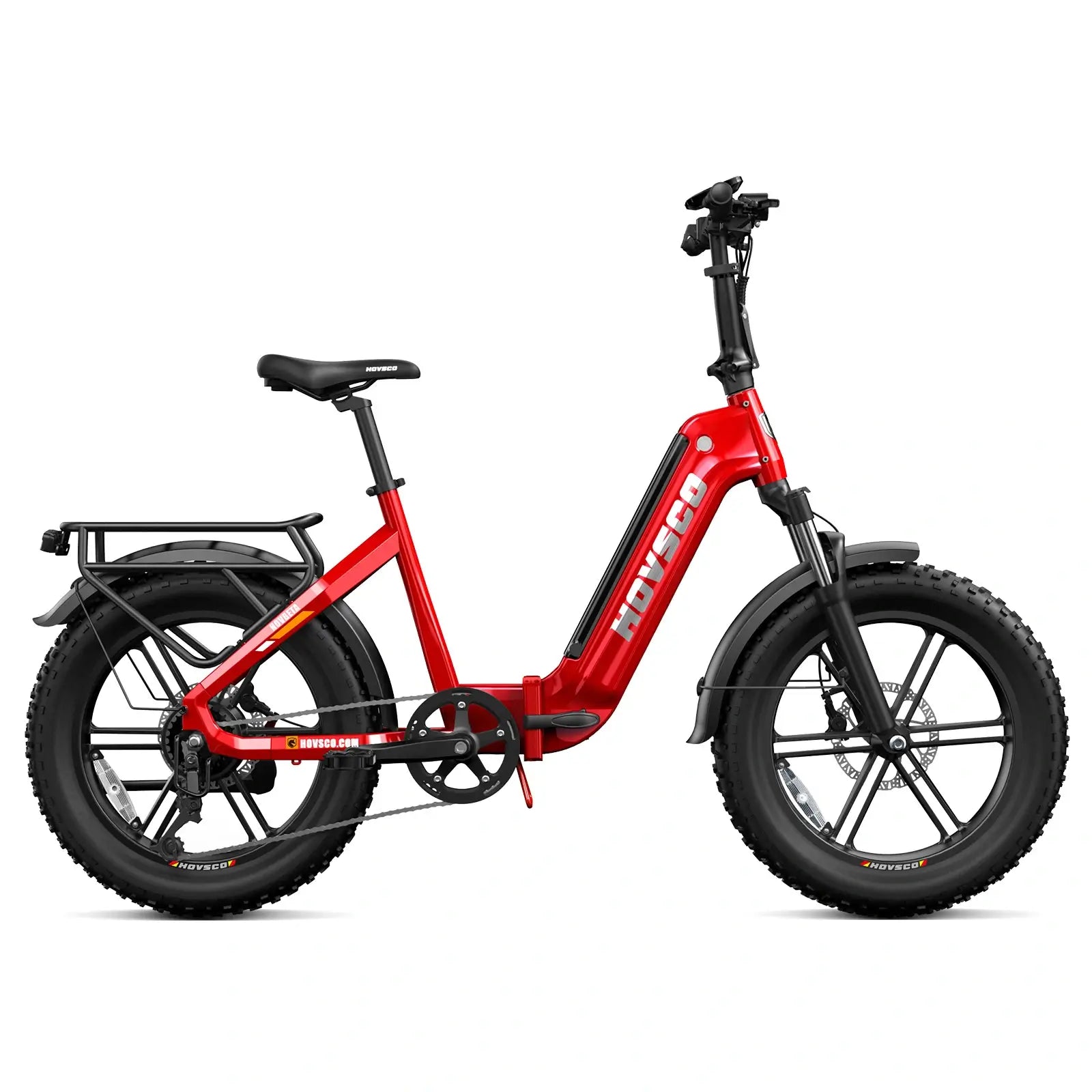
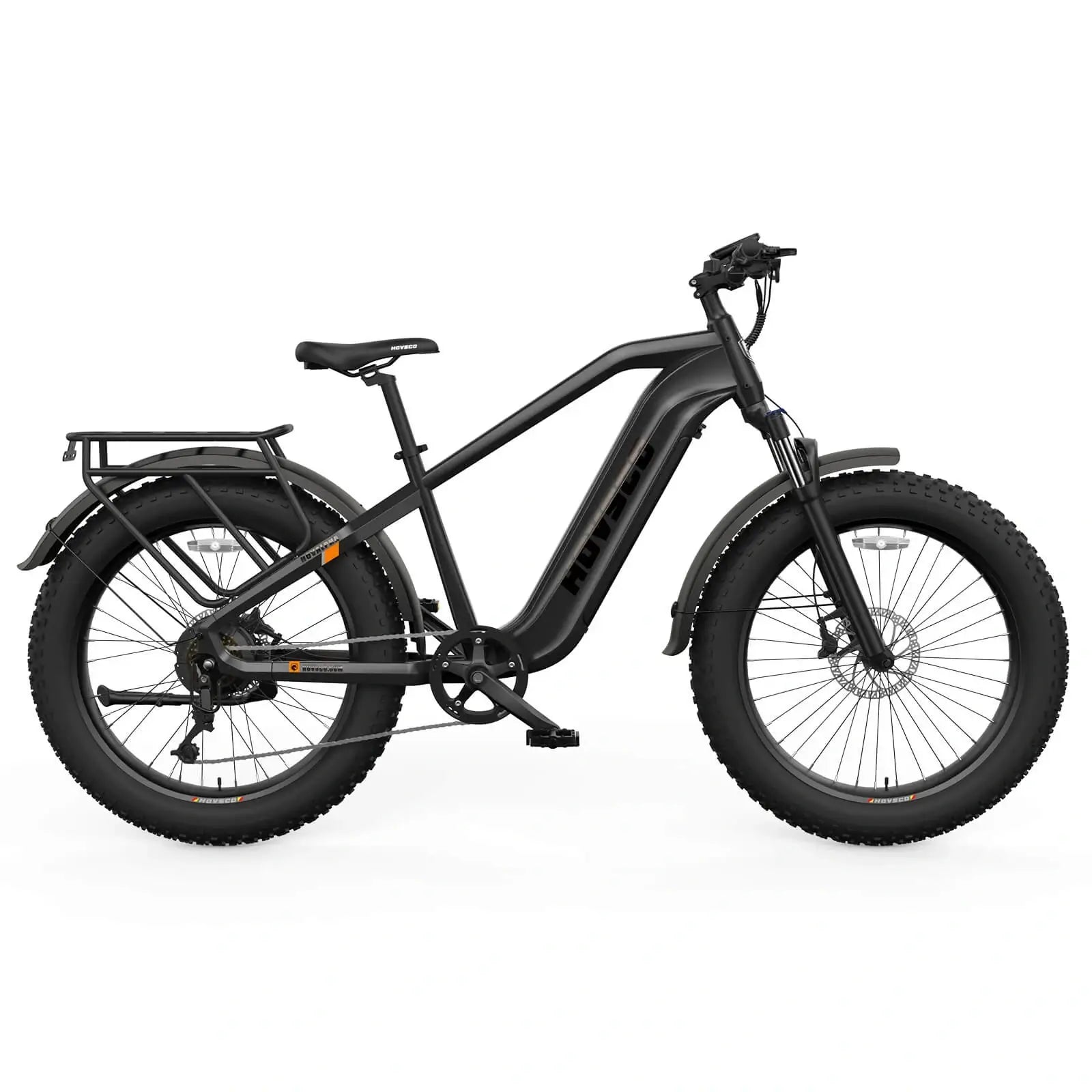
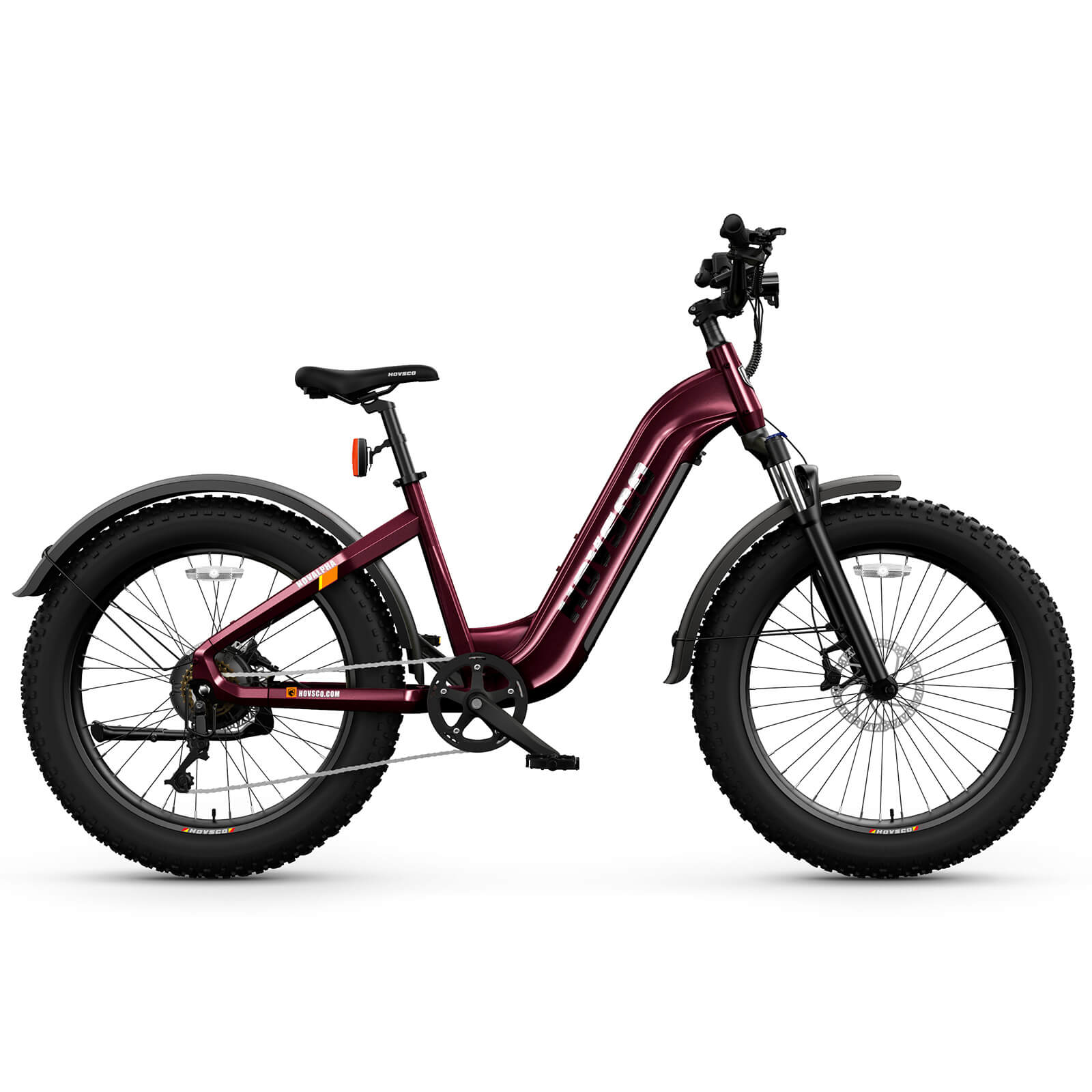
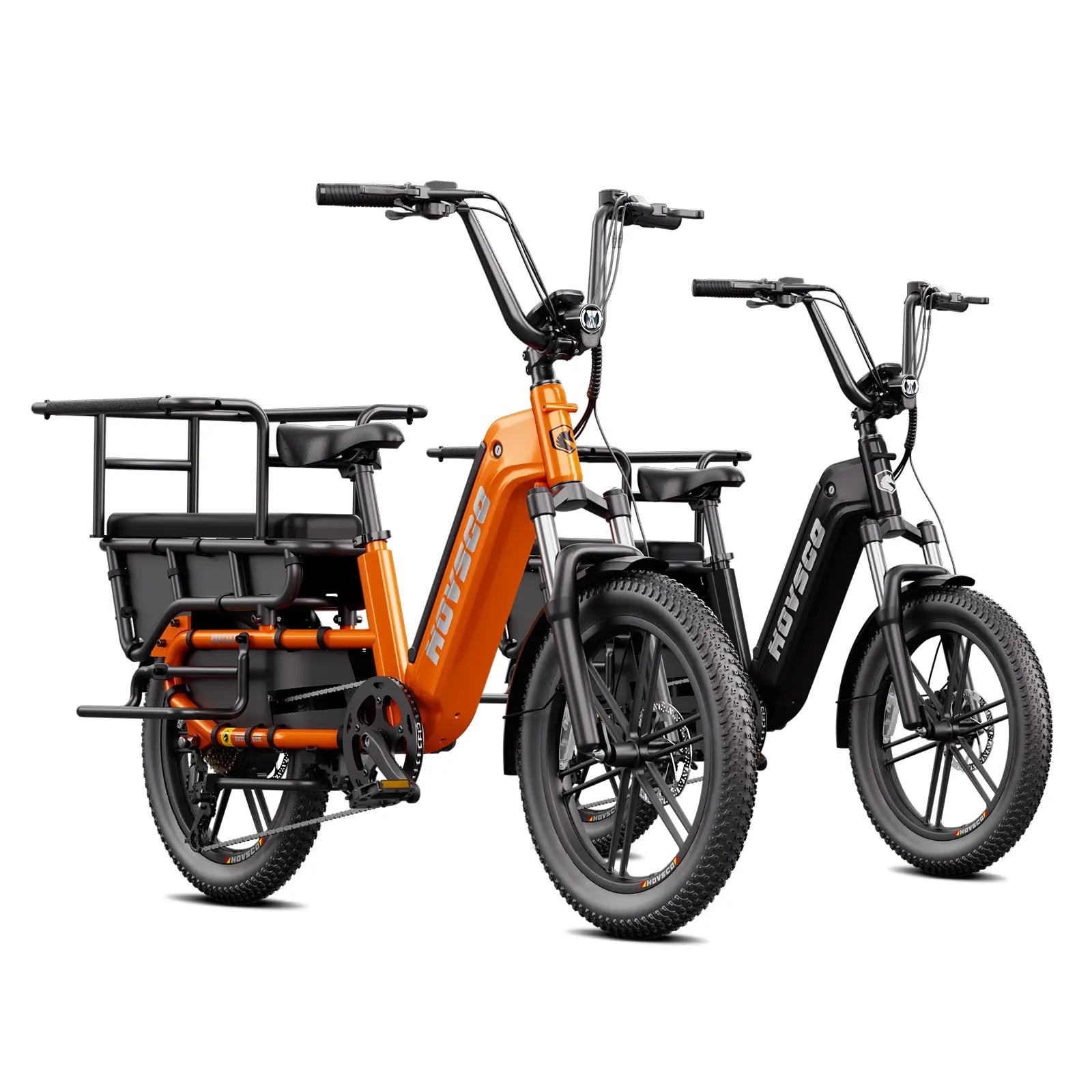
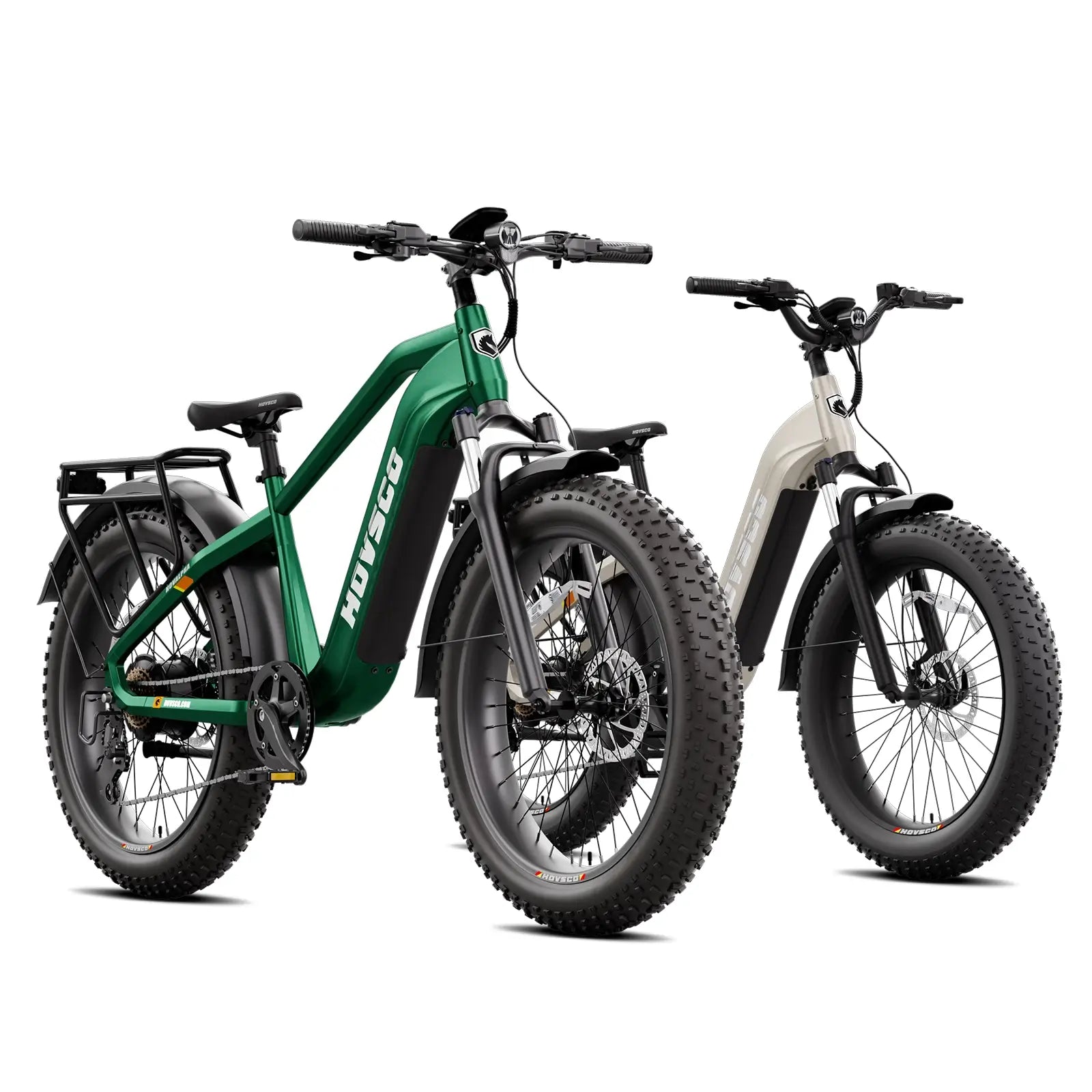
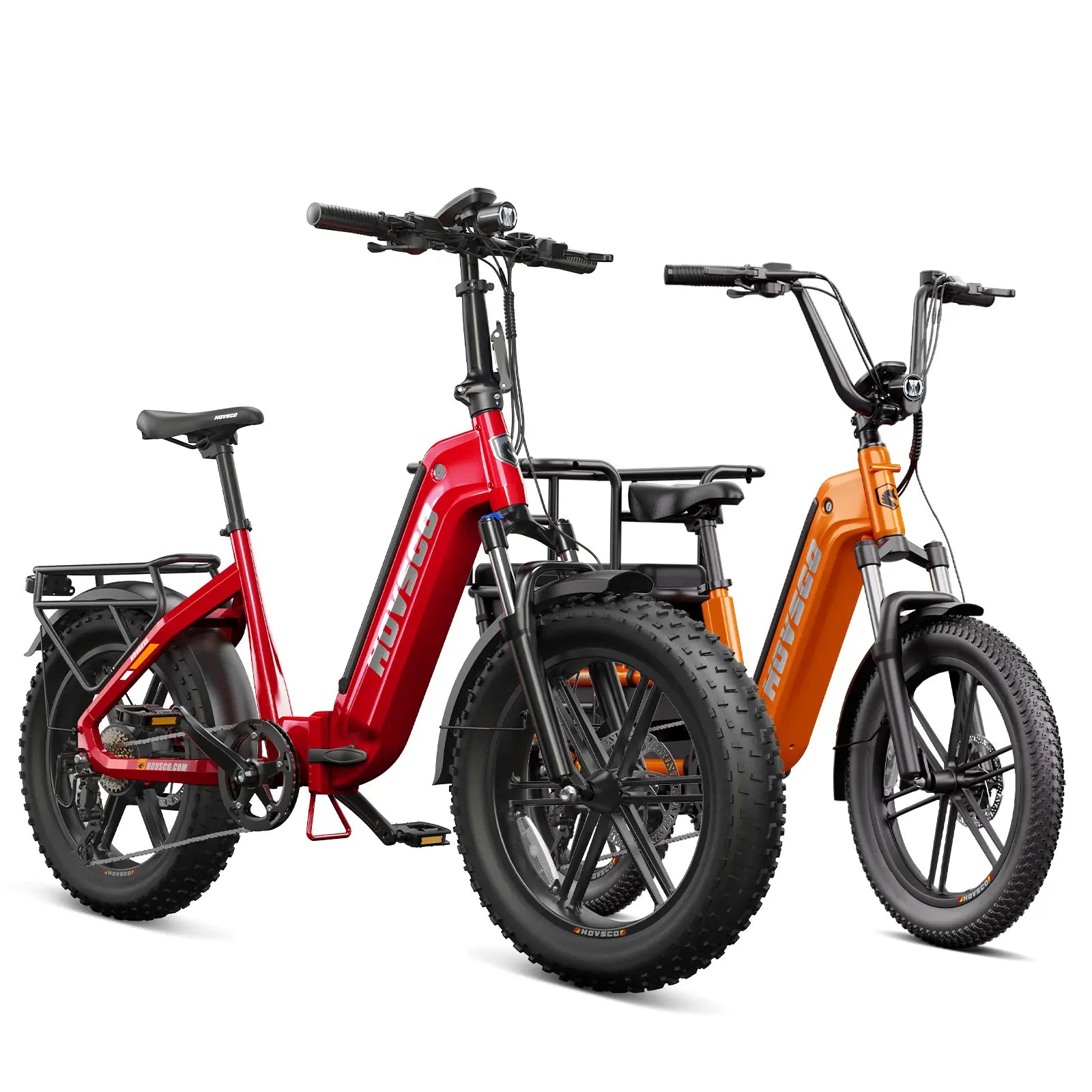
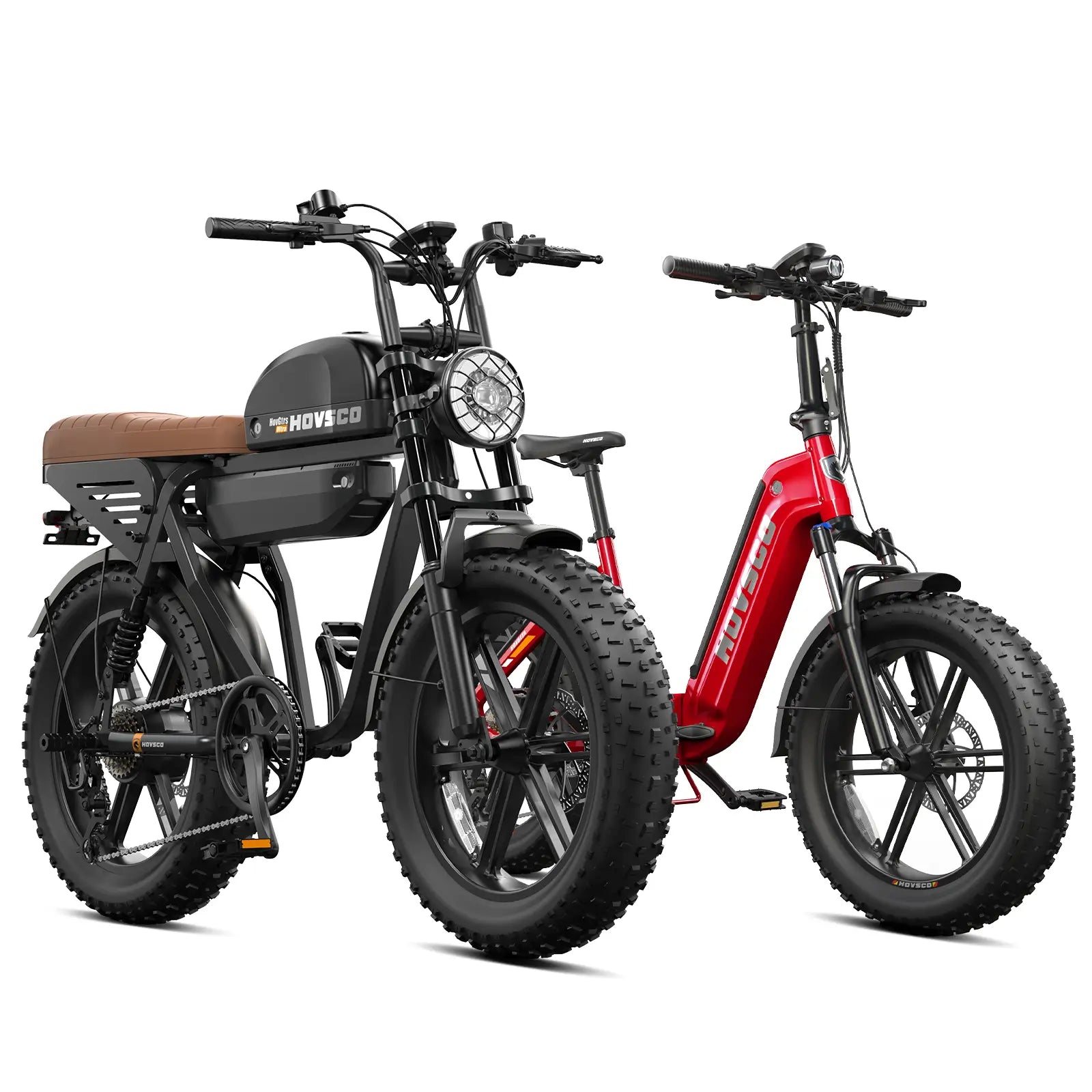
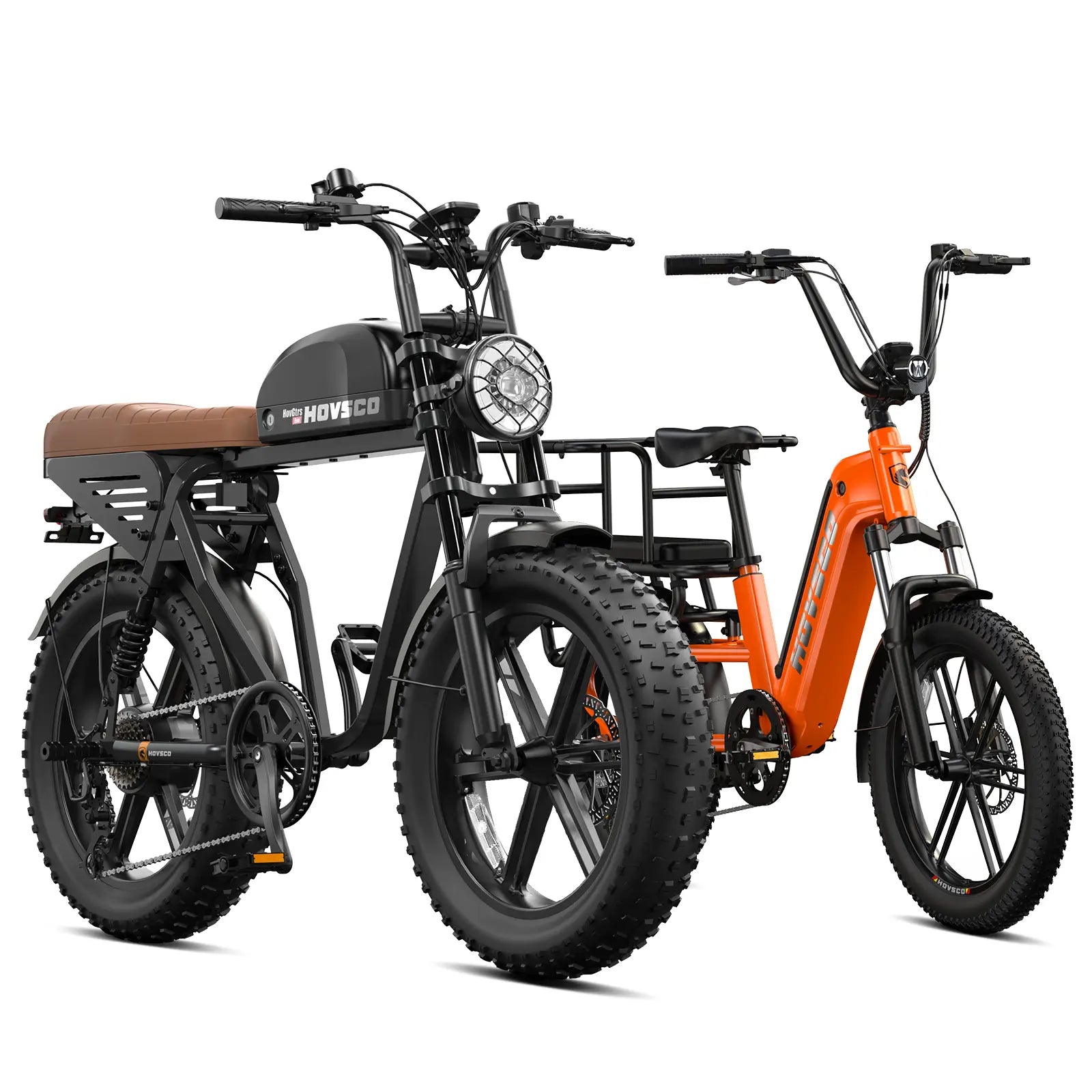
HOVSCO's lineup includes models built around these needs: the HovCart (cargo-focused with a large rear basket), the HovAlpha (long-range fat-tire), and the HovBeta (foldable fat-tire for RVs and compact storage).
Start with your total system weight—rider, clothing, bike, and all gear—then choose a bike rated comfortably above that number. A 450 lb payload platform, like HOVSCO's HovCart, HovAlpha, and HovBeta, gives a practical margin for anglers carrying rods, tackle, and a cooler.
Payload ratings include the bike itself in many manufacturers' definitions; exceeding them stresses spokes, tires, brakes, and the motor controller, especially on soft surfaces or hills. Leaving a 15–20% reserve improves stability, braking, and battery efficiency under real conditions.
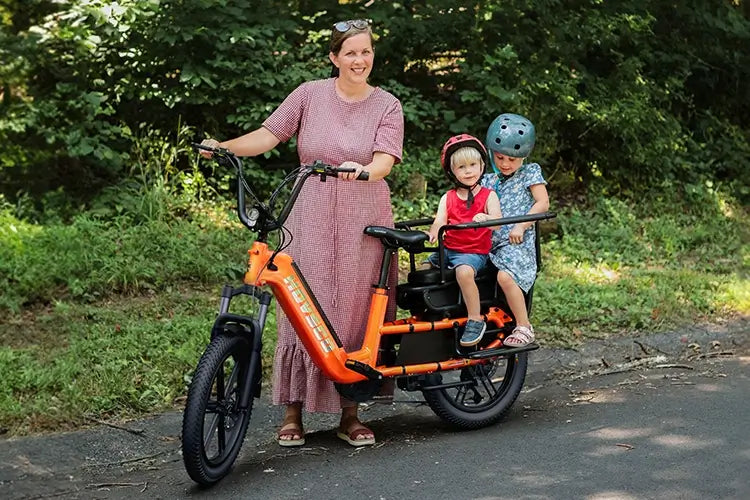
Cargo frame with integrated basket (HovCart): Best for bulky items and child/passenger kits; heavier and less compact.
Fat-tire step-over/step-thru with add-on rack (HovAlpha): Long-range battery and high payload; rack and baskets are add-ons.
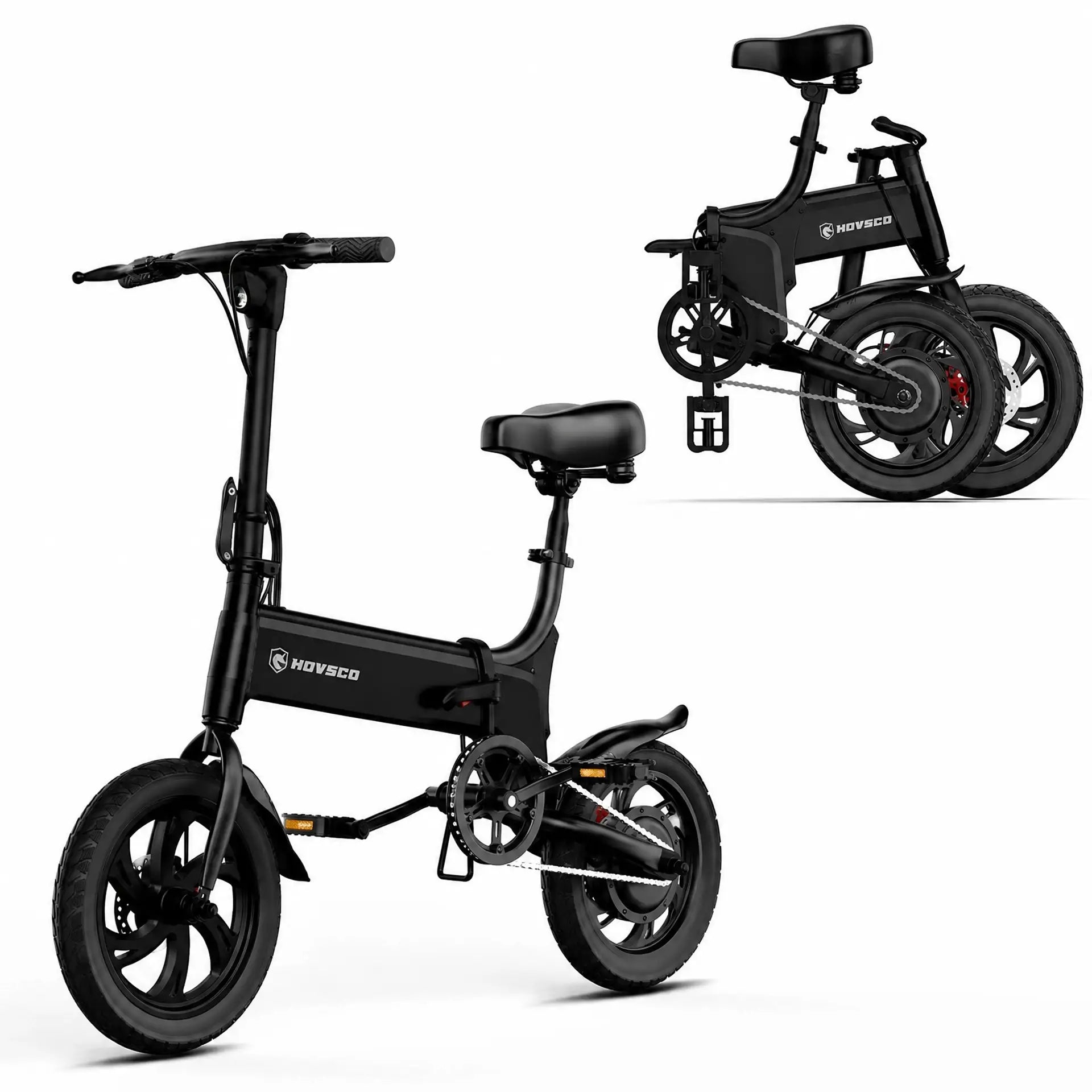
Foldable fat-tire (HovBeta): Ideal for RVs, boats, or small apartments; ensure rack compatibility and weight distribution when folded/unfolded.
A 190 lb angler with 25 lb of gear and a ~75 lb bike operates around 290 lb; a 450 lb–rated platform leaves ample reserve for rough levee roads or sandy approaches.
Next, match your storage layout to rod length and tackle access.
Choose a rear rack or basket that physically fits your longest rod case and keeps tackle boxes accessible without unloading everything. For fishing, a sturdy rear rack with side panniers or a large basket, plus a small waterproof dry bag for electronics, is the most versatile setup.
Rear-mounted loads keep the front end light for steering but can sway if not secured; low, centered panniers improve stability versus top-heavy baskets. Waterproof storage protects phones, keys, and spare electronics from splashes and rain common at dawn/dusk.
Integrated cargo basket (HovCart-style): Excellent for bulky coolers and multiple tackle boxes; rod straps may be needed to secure long cases.
Rear rack + waterproof panniers: Balanced load and weather protection; requires compatible rack and mounting hardware.
Foldable frame with rack (HovBeta): Great for transport; verify rack load limits and ensure rods don't interfere with folding.
Hanging 20-liter waterproof panniers on each side of a rear rack provides roughly 40 liters of protected storage—enough for clothing, snacks, and small tackle—while a basket carries a cooler and rod tube on top.
Next, ensure your tires and suspension match the surfaces you actually ride.
Wider tires at lower pressure increase contact patch and cushion bumps on soft or uneven surfaces common at fishing access points. For gravel levees, packed sand, and wet grass, 20–26" fat tires run around 14–20 psi on hardpack and 8–12 psi on soft surfaces, with a front suspension fork smoothing chatter.
Fat tires deform to surface irregularities, improving grip and comfort, but add rolling resistance on pavement. Lower pressure increases comfort and traction but raises the risk of pinch flats if too low for the terrain.
20x3–4" fat tires (HovCart/HovBeta): Compact and grippy; slightly higher rolling resistance on long paved sections.
26x4" fat tires (HovAlpha): More stability and comfort on long rough sections; larger footprint and weight.
Front suspension fork (45–80 mm travel): Absorbs bumps without the complexity of full suspension; lockout helps on pavement.
On a gravel levee with a loaded rear rack, dropping tire pressure by 2–4 psi and using a 45 mm travel fork reduces hand fatigue and keeps the rear wheel from skipping over loose stones.
Next, size your battery to your actual route, not the marketing maximum.
Plan for a battery that covers your round-trip distance with a 30–40% reserve, especially when carrying gear or riding in wind. A 720 Wh battery (48V 15Ah) typically delivers 40–60 miles depending on assist level, rider weight, and terrain; a 960 Wh pack (48V 20Ah) extends that to roughly 60–80 miles under similar conditions.
Energy use rises with payload, headwinds, stop-start riding, and soft surfaces; finishing with an empty battery risks being stranded far from the launch. Treat advertised range as an upper estimate and keep a charging plan for long days.
48V 15Ah (720 Wh) — HovCart/HovBeta: Sufficient for most local access points and day trips; lighter and faster to charge.
48V 20Ah (960 Wh) — HovAlpha: Better for long levee rides or multiple spots in one outing; heavier and longer charge time.
A 20-mile out-and-back on mixed gravel with a loaded rack and moderate assist may consume 50–60% of a 720 Wh pack; starting with 720 Wh and reserving 30–40% keeps you safe even if winds pick up.
Next, choose brakes and assist feel that keep you in control with wet hands and heavy loads.
Hydraulic disc brakes and a torque sensor provide the most predictable stopping and assist feel when carrying gear and riding in damp conditions. Hydraulic brakes offer stronger modulation with less hand effort, while torque sensors ramp assist smoothly as you pedal harder, reducing wheel slip on wet grass or gravel.
Hydraulic systems transmit force via fluid, giving consistent lever feel and better heat management on descents. Torque sensors measure pedaling force and adjust assist progressively, which helps prevent sudden surges when starting on slippery surfaces.
Hydraulic discs + torque sensor (HovCart/HovAlpha/HovBeta): Best for loaded, wet, or hilly access routes; higher initial cost but superior control.
Mechanical discs + cadence sensor: Adequate for light loads on flat terrain; may feel less smooth under heavy cargo or in wet conditions.
Launching early with dew-covered grass and a rear rack loaded with tackle, a torque-sensor assist prevents the rear wheel from spinning as you start moving, while hydraulic brakes let you modulate speed without squeezing hard with wet gloves.
Match your primary fishing scenario to the model that carries your gear, fits your storage, and covers your range with a reserve. The table below summarizes verified specs for HovCart, HovAlpha, and HovBeta as listed on HOVSCO product pages and third-party spec sheets.
Sources: HOVSCO product pages and verified spec sheets.
Primary use: Local levees and short access paths → HovCart or HovBeta; long multi-spot days → HovAlpha.
Storage constraint: RV/boat trunk or small apartment → HovBeta (foldable); garage/shed with space → HovCart or HovAlpha.
Typical load: Bulky cooler + multiple tackle boxes → HovCart basket; streamlined panniers → HovAlpha/HovBeta with rack.
Range need: 20–40 mi round trip → 720 Wh (HovCart/HovBeta); 40–60+ mi → 960 Wh (HovAlpha).
Assist feel: Wet grass/gravel starts → torque sensor models (all three above).
Terrain: Soft sand or deep gravel → 26x4" (HovAlpha); mixed pavement/gravel → 20x3–4" (HovCart/HovBeta).
HOVSCO designs its high-payload e-bikes around real-world utility: 450 lb ratings, hydraulic brakes, and torque-sensor assist aim to keep loaded rides stable and predictable. The HovCart's integrated basket simplifies carrying bulky fishing gear, while the HovAlpha's 960 Wh battery supports longer days across multiple spots. For anglers who need to stow the bike in an RV or boat, the HovBeta's folding frame offers a practical compromise without sacrificing payload or brake performance.
Match your total system weight to a 450 lb–rated platform to keep a safe reserve for gear and rough surfaces.
Choose a rear rack or basket that fits your longest rod case and keeps tackle accessible; add waterproof panniers or dry bags for electronics.
Size your battery to your round-trip distance with a 30–40% reserve; 720 Wh suits local trips, 960 Wh for long days.
Prefer hydraulic brakes and torque-sensor assist for wet, loaded starts and controlled descents.
Use the checklist above to map your primary use case to HovCart, HovAlpha, or HovBeta.
Field checklist before you ride:
Confirm rack/basket fits your rod tube and tackle boxes.
Inflate tires to terrain-appropriate pressure (lower for soft surfaces).
Pack a waterproof dry bag for phone/keys/spare electronics.
Check brake lever feel and pad condition before loading gear.
Plan your route and ensure battery reserve for the return trip.
What e-bike payload is safe for fishing gear?
A 450 lb–rated platform, like HOVSCO's HovCart, HovAlpha, and HovBeta, provides a practical margin for anglers carrying rods, tackle, and a cooler. Always calculate rider + bike + gear and keep a 15–20% reserve for stability and braking.
Are HOVSCO e-bikes waterproof enough for dawn fishing?
Most e-bikes, including HOVSCO models, are water-resistant (typically IPX4-level) and handle rain and splashes, but they are not submersible. Use waterproof bags for electronics and avoid deep water crossings.
Which model is best for RV or boat storage?
The HovBeta's foldable 20" fat-tire design is built for compact storage in car trunks, RVs, or boats while maintaining a 450 lb payload and hydraulic brakes.
How much range do I need for a 20-mile out-and-back fishing trip?
A 720 Wh battery (48V 15Ah) typically covers 40–60 miles; for a 20-mile round trip with gear, plan to finish with 30–40% reserve to account for wind, terrain, and assist level.
Do I need a torque sensor for fishing access paths?
Torque sensors provide smoother, more predictable assist when starting on wet grass or gravel with a loaded rack, reducing wheel slip and improving control. HOVSCO's HovCart, HovAlpha, and HovBeta use torque-sensor assist.
Share:
What Should You Check Before Buying a High-Payload E-Bike?
How Do You Choose an Electric Bike for Camping?