
























![[ New Arrival ] Porto Max Electric Scooter For Commute & Grocery Shopping - HOVSCO](http://www.hovsco.com/cdn/shop/files/PotroMax-3.jpg?v=1706927007&width=1200)
- by SteveJames
How to Choose Folding Ebikes for Small Spaces?
- by SteveJames
E-Bikes
Accessories
 Free Shipping
 15-Day Returns
 2-Year Warranty
Free Shipping
15-Day Returns
2-Year Warranty
2-Year Warranty
Free Shipping
15-Day Returns
2-Year Warranty
To choose a folding e-bike for a small apartment, measure its folded footprint, confirm its real carry weight, map every doorway and stair on your route, and plan a safe indoor charging spot. A compact fold is useful only when you can move, park, charge, and unfold the bike without turning daily riding into a storage problem.
Apartment buyers often search how to choose folding ebike for small spaces as if there is one universal answer. There is not. A bike that fits beneath a desk may be uncomfortable for a longer commute; a powerful fat-tire folder may fit in a closet but be difficult to carry upstairs. The right choice starts with your home, not the product page.
A folding e-bike fits a small home when its folded length, width, and height fit the smallest part of your storage and transport route—not merely the open area in your living room. Measure the closet opening, elevator door, hallway turns, stair landing, and final parking location before comparing bicycles.
Start by identifying a “storage envelope”: the maximum space the folded bike can occupy without blocking circulation, fire exits, doors, or furniture. Measure length, width, and height, then subtract clearance for your hands and for opening a closet door. A bike that fits with zero clearance is not convenient storage.
In my product-handling experience, folded width is frequently the overlooked measurement. A long folded bike can sit alongside a wall; a wide bike projects into a narrow hallway and creates a daily obstacle. Pedal position, folded handlebars, rack hardware, and wide tires can all increase real-world width beyond what a simple frame measurement suggests.
Use this practical space checklist:
Measure the narrowest doorway, not the widest room.
Check whether the bike must rotate on a stair landing or elevator threshold.
Allow enough room to lift, roll, and unfold it without scraping painted walls.
Consider vertical storage only if the manufacturer permits it and the battery is secured.
Confirm that your chosen parking location does not obstruct building access or emergency routes.
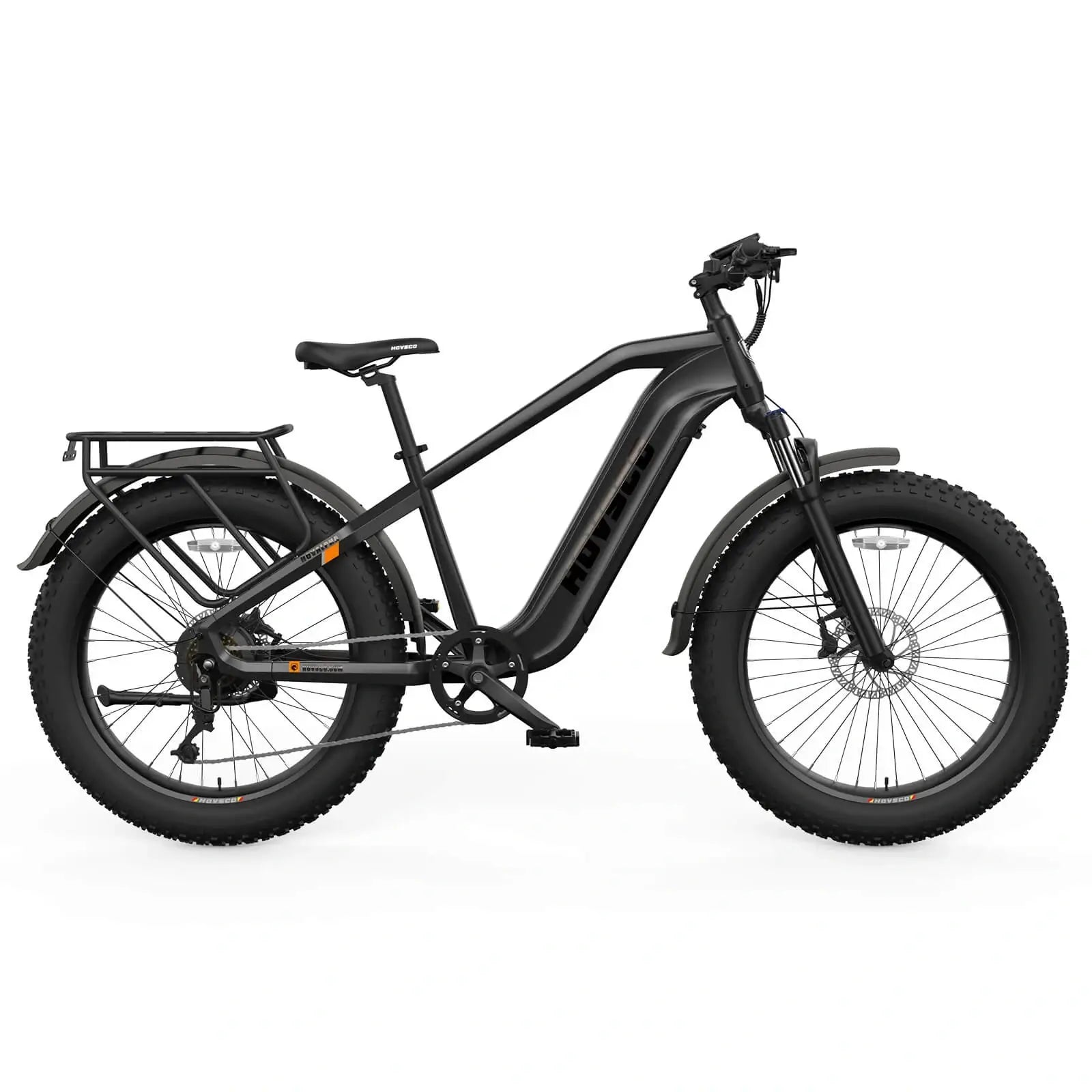
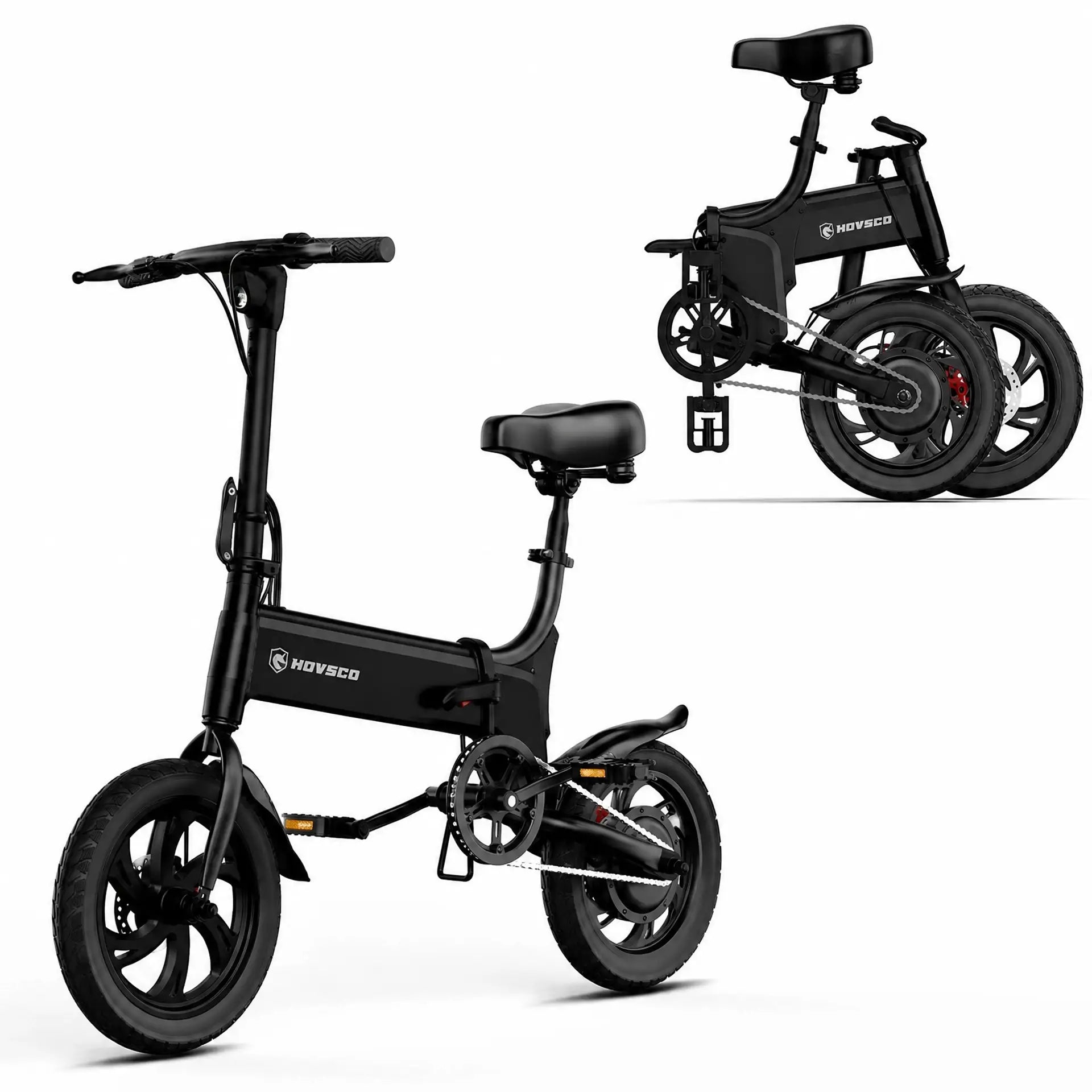
For apartment living, a 14-inch-wheel folder such as the HOVSCO Sync Max is designed around a smaller, lighter package. A 20-inch fat-tire folder such as the HovBeta offers more tire volume and load capability, but its 4-inch tires make the folded package physically bulkier. Neither approach is automatically better; the decisive factor is the space you actually have.
Choose a folding e-bike based on the weight you can repeatedly control, not the weight you can lift once. Include the battery, lock, panniers, and any groceries. If stairs are part of your routine, a difference of 20 pounds can determine whether you ride daily or leave the bike unused.
Manufacturers may state bicycle weight with or without the battery, so compare like with like. Removable batteries can make a bike easier to lift, but only if you are willing to remove and carry the battery separately every time. Also remember that folding joints concentrate mass near the center; the bike can feel awkward even when its listed weight appears manageable.
The Sync Max has a stated net weight of 42.3 pounds including its battery and a maximum load of 260 pounds. That makes it a more realistic candidate for riders who must lift a bike into a vehicle or negotiate a few steps. The HOVSCO HovBeta is listed at 66.4 pounds with its battery installed, while its battery-free weight is stated as 57.58 pounds. Its higher mass is the trade-off for a larger 48V, 15Ah battery, 20 x 4-inch tires, suspension, and a 450-pound payload rating.
Do not confuse payload capacity with portability. A higher-rated frame may carry more rider and cargo weight, yet still be a poor choice for a fourth-floor walk-up.
The best folding e-bike is one that clears the complete daily route: apartment door, corridor, elevator or stairs, street entrance, workplace, and storage point. Mapping this route reveals handling problems that a folded-size specification cannot show.
Walk the route before buying. Note tight corners, automatic doors that close quickly, security gates, raised thresholds, and stairs without a landing. Then imagine handling the bike while holding keys, a coffee, or a work bag. Real life rarely resembles a clean product demonstration.
A useful factory-floor rule is to inspect the “grab zones.” When a bike is folded, identify where you will place both hands. Avoid designs that force you to grip near a chain, disc rotor, cable loop, folding latch, or exposed derailleur. A frame may fold neatly yet still be frustrating to carry if the weight hangs far from your body.
For elevator users, test the turning radius mentally: you may need to enter forward, rotate the folded bike, and stop it rolling before the door closes. For stair users, assess whether the frame can be kept close to your torso. Carrying a bike away from the body multiplies strain on wrists, shoulders, and lower back.
If the bike has a walk-assist mode, it can help guide the folded or unfolded bike through ramps and garages. It does not solve stair carrying. For stairs, weight, balance, handholds, and removable-battery convenience matter far more.
Charge a folding e-bike indoors only in a dry, ventilated location with a stable outlet, the supplied compatible charger, and clear space around the battery and charger. Keep charging away from exits, combustible clutter, direct heat, and places where a cable can become a trip hazard.
The charging location should be part of the purchase decision, not an afterthought. Identify a hard, level surface near an outlet—preferably a location where the bike does not block your apartment entry. A removable battery lets you keep the frame in a storage room or vehicle area while charging the battery in a more suitable indoor location, subject to building rules.
Avoid overloaded power strips, damaged extension cords, wet balconies, and charging directly beside cardboard, fabric, or cleaning chemicals. After a hard rainy ride, let the battery contacts and charging port dry before connecting the charger. Do not charge a battery that is damaged, unusually hot, swollen, leaking, or has an abnormal odor.
HOVSCO models such as the HovBeta use a removable lithium-ion battery, which can simplify apartment routines. The critical point is not simply removability—it is whether you can remove it smoothly in your actual storage position. A tightly parked bike against a wall may make battery extraction inconvenient.
Smaller folding e-bikes usually improve storage and carrying convenience, while larger-wheel or fat-tire folders often improve ride stability, cargo capacity, and rough-surface comfort. Choose the compromise that matches the distance and surface of your actual rides.
Small wheels accelerate quickly and reduce the overall folded package, but they react more sharply to potholes, curb edges, and broken pavement. Tire pressure becomes especially important: excessive pressure can make a compact-wheel bike feel harsh and unsettled, while insufficient pressure raises rolling resistance and pinch-flat risk.
Larger 20-inch wheels and wide tires can feel calmer on rough streets. The HovBeta’s 20 x 4-inch tires and front suspension are intended to add comfort on uneven pavement, while its hydraulic disc brakes and torque-sensing pedal assist support a more substantial commuting setup. That utility comes with a storage and weight penalty.
Compare the bike to the route, not to an abstract “best ebike” standard:
Smooth, short urban trips reward compactness and easy lifting.
Poor pavement and mixed-surface rides reward larger tires and suspension.
Grocery or child-seat planning requires careful payload and rack compatibility checks.
Longer trips require enough battery capacity without assuming maximum advertised range is guaranteed.
A folding frame must also feel rigid enough during pedaling. Check that the central hinge closes cleanly, has no visible damage, and locks without forcing the latch. After initial rides, inspect the hinge area and fasteners according to the owner’s manual; folding mechanisms need attentive routine checks because they experience repeated load cycles.
You should test the complete fold and unfold process because a folding bike’s daily value depends on its sequence, latch ergonomics, and stability when folded. If the process requires excessive force, awkward bending, or several loose parts, it will become a barrier to regular use.
A good store test is not just “Can I fold it?” Instead, fold it as you would after a tiring commute. Apply the brakes, lower or position the seat as required, collapse the stem, release the central latch, and secure the folded package. Then repeat the process while wearing your normal shoes and carrying your usual bag.
Pay close attention to cable routing. Cables should have enough slack to accommodate the fold without being pulled, sharply pinched, or dragged across a hinge. This is an engineering detail that generic buying guides often miss: a fold that looks compact but repeatedly stresses cables can create future maintenance issues.
Also inspect how the folded bike rests. Does it stand securely, roll on small transport wheels, or need to lean against a wall? A self-supporting folded position is valuable in narrow apartment corridors because it reduces the chance of a heavy bike falling when you reach for keys.
Store a folding e-bike indoors or in a protected, dry area where it is secure, upright or manufacturer-approved, and not exposed to temperature extremes or moisture. Keep the tires inflated, protect the drivetrain from dirt, and avoid leaning the bike on sensitive controls, brake rotors, or battery connections.
For a closet, use a floor mat to protect both flooring and the bike’s contact points. If the folded bike rests on a derailleur-side surface, reposition it; placing weight on drivetrain parts can bend components. A wall-side parking position should protect pedals and handlebars from contacting drywall.
A small apartment benefits from a repeatable “arrival routine”: park the bike, remove the battery if needed, wipe off road moisture, secure the fold, and place the charger only when conditions are safe. This takes less time than repairing corroded connectors or cleaning indoor tire marks later.
For renters, avoid drilling hooks or wall anchors without permission. Freestanding storage stands, protective mats, and compact floor parking are lower-commitment alternatives. Before using vertical storage, verify the bike’s manual and ensure the frame is supported rather than hanging from a vulnerable folding component.
Yes, but the best balance depends on whether your limiting factor is space, lifting ability, or ride distance. A larger battery generally supports longer rides, while a smaller and lighter bike is easier to bring indoors. Prioritize the constraint that could stop you from using the bike every day.
The HovBeta’s 720Wh battery is associated with a claimed average range of 40–60 miles under favorable conditions, while the Sync Max is built around a smaller-format commuter role. Actual range changes with rider weight, assist level, speed, gradients, tire pressure, temperature, cargo, and stop-start traffic.
The mistake is buying range you cannot store. A 60-mile-capable folder offers little value if it remains parked because carrying it upstairs is exhausting. Conversely, a very light folder may not suit a long, hilly commute if its battery capacity requires frequent charging.
“In compact-home ownership, the folding hinge is not the true bottleneck—your daily handling path is. We advise riders to measure the narrowest doorway, lift the equivalent of the bike’s ready-to-ride weight, and choose the charging position before they choose motor power. At HOVSCO, we see the most successful apartment setups pair a bike’s format with the building’s realities: a lighter compact folder for frequent lifting, or a more capable fat-tire folder when storage is ground-level and the commute demands comfort and cargo capacity.”
Make the final decision by scoring each candidate against your measured storage space, carry route, charging plan, riding distance, and budget. The winner is the bike with the fewest daily friction points, not necessarily the smallest, fastest, or lowest-priced option.
For buyers asking how to choose folding ebike for small spaces, use a simple pass-or-fail test before comparing optional features. Can it fit through every doorway? Can you safely handle it at its ready-to-ride weight? Can it be charged in an appropriate location? Can it complete your normal route with realistic battery margin?
Then evaluate comfort, braking, tires, warranty support, and service access. HOVSCO’s range includes different formats because apartment needs are not identical: the Sync Max emphasizes a lower 42.3-pound net weight, while the HovBeta favors higher load capacity, larger tires, and longer claimed range.
Browse a folding e-bike collection only after you have your measurements in hand. That turns product specifications into useful evidence rather than marketing noise.
The most reliable answer to how to choose folding ebike for small spaces is to buy for the hardest part of your day: the narrowest doorway, steepest stair, smallest charging area, or roughest stretch of pavement. Measure first, compare ready-to-ride weight, test the fold, and choose a bike you can confidently move every day.
A compact model can make apartment cycling effortless, while a larger folding model can add comfort and carrying capacity when you have ground-level storage. Make the bike fit your life—not just your floor plan.
Can I store a folding e-bike in an apartment hallway?
Only if building rules allow it and it does not block doors, exits, shared access, or emergency routes. Indoor storage inside your unit is usually the safer default.
Is a removable battery useful for apartment riders?
Yes. It can reduce lifting weight and lets you charge the battery in a suitable indoor location while leaving the frame parked elsewhere.
Are fat-tire folding e-bikes practical in small spaces?
They can be practical for ground-floor storage, garages, or elevators, but their wider tires and higher mass make stairs and tight closets more challenging.
How much clearance should I leave around a folded bike?
Leave enough room to grip the frame, turn the bike, open nearby doors, and remove the battery without scraping walls or lifting awkwardly.
Should I choose a lighter bike or a longer-range bike?
Choose the lighter option when you must carry it regularly. Choose more battery capacity when storage is easy and your commute is long, hilly, or cargo-heavy.
Share:
How to Choose a 750W Electric Bike?
How Do You Choose a Commuter Electric Scooter?