





![[ New Arrival ] Porto Max Electric Scooter For Commute & Grocery Shopping - HOVSCO](http://www.hovsco.com/cdn/shop/files/PotroMax-3.jpg?v=1706927007&width=1200)
- by SteveJames
How Do You Choose a Commuter Electric Scooter?
- by SteveJames
E-Bikes
Accessories
 Free Shipping
 15-Day Returns
 2-Year Warranty
Free Shipping
15-Day Returns
2-Year Warranty
2-Year Warranty
Free Shipping
15-Day Returns
2-Year Warranty
Choosing a commuter electric scooter starts with your actual one-way distance, not the advertised maximum range. Then check whether you can fold, carry, park, charge, and safely ride it on your daily route. Prioritize reliable brakes, useful lights, tire comfort, and a storage plan before paying extra for headline speed.
An electric scooter earns its place in a weekday routine when it works beyond the ride itself—from the apartment door and curb ramp to the elevator, office corner, and trip home. The right model has enough usable range, folds without a struggle, rides comfortably on everyday streets, and fits naturally into the way you already travel.
Choose a scooter whose realistic range comfortably exceeds your daily round-trip distance by at least 30 to 50 percent. Hills, cold temperatures, rider weight, stop-start traffic, tire pressure, and faster riding all reduce real-world range compared with laboratory-style maximum claims.
Start by measuring your normal one-way route, then double it. Add detours for coffee stops, a changed train platform, or an evening errand. A rider with a 6-mile one-way commute should not simply buy a scooter advertised for 12 miles; that leaves no practical reserve.
For daily commuting, think in battery energy rather than only “range.” Watt-hours reveal more about the energy available, while the stated range assumes favorable conditions. A battery that appears adequate on a warm, flat weekend may feel very different after a cold morning, several hills, and a heavy laptop backpack.
In product evaluations, we look for a meaningful reserve at the end of a ride. Regularly draining a battery to nearly empty creates anxiety, reduces route flexibility, and leaves no margin when performance drops in less-than-perfect conditions.
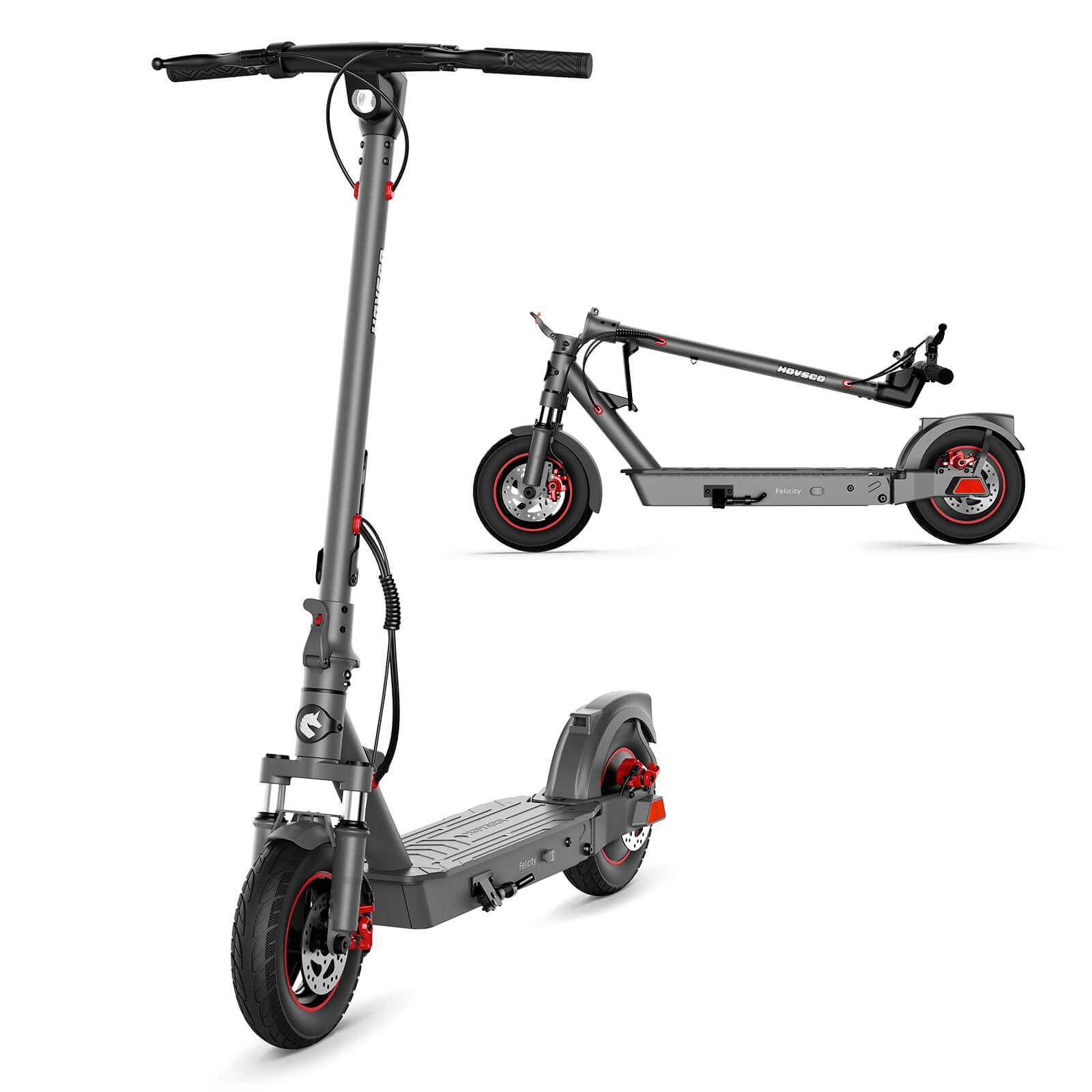
For example, Felicity is positioned with up to 30 miles of stated range, a 450W motor, and a claimed 21 mph top speed. Those specifications can suit a moderate-distance commute, but riders should still choose according to their route’s gradients, surfaces, and charging access—not a single maximum-range number.
Folding matters when your commute includes stairs, elevators, trains, car trunks, or an office desk. Weight matters even more: a scooter can fold neatly yet still be impractical if you must lift it repeatedly, carry it through turnstiles, or store it in a crowded workplace.
Before purchasing, simulate the inconvenient parts of your day. Measure the doorway, elevator, train space, desk clearance, and trunk opening. Then ask a more honest question: can you lift the scooter one-handed for ten seconds without twisting your back?
The hinge is a critical commuter component. It experiences repeated vibration, braking forces, and lifting loads. Check that the folding mechanism locks positively, has minimal lateral play, and does not require awkward hand placement. A compact folded shape is helpful, but a stable lock is more important.
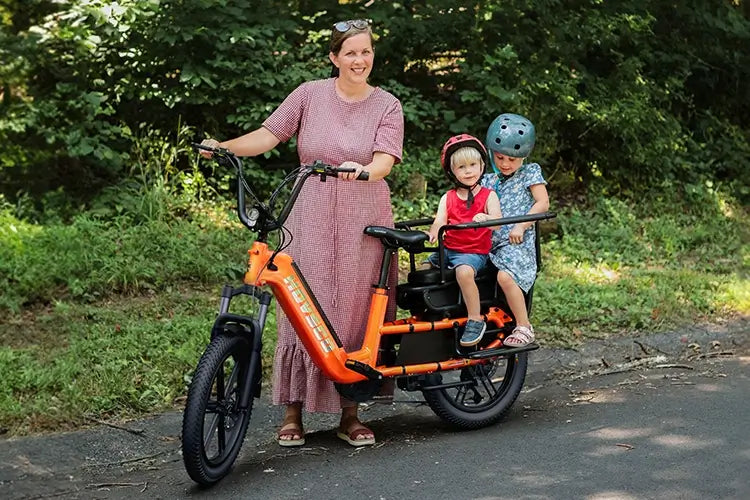
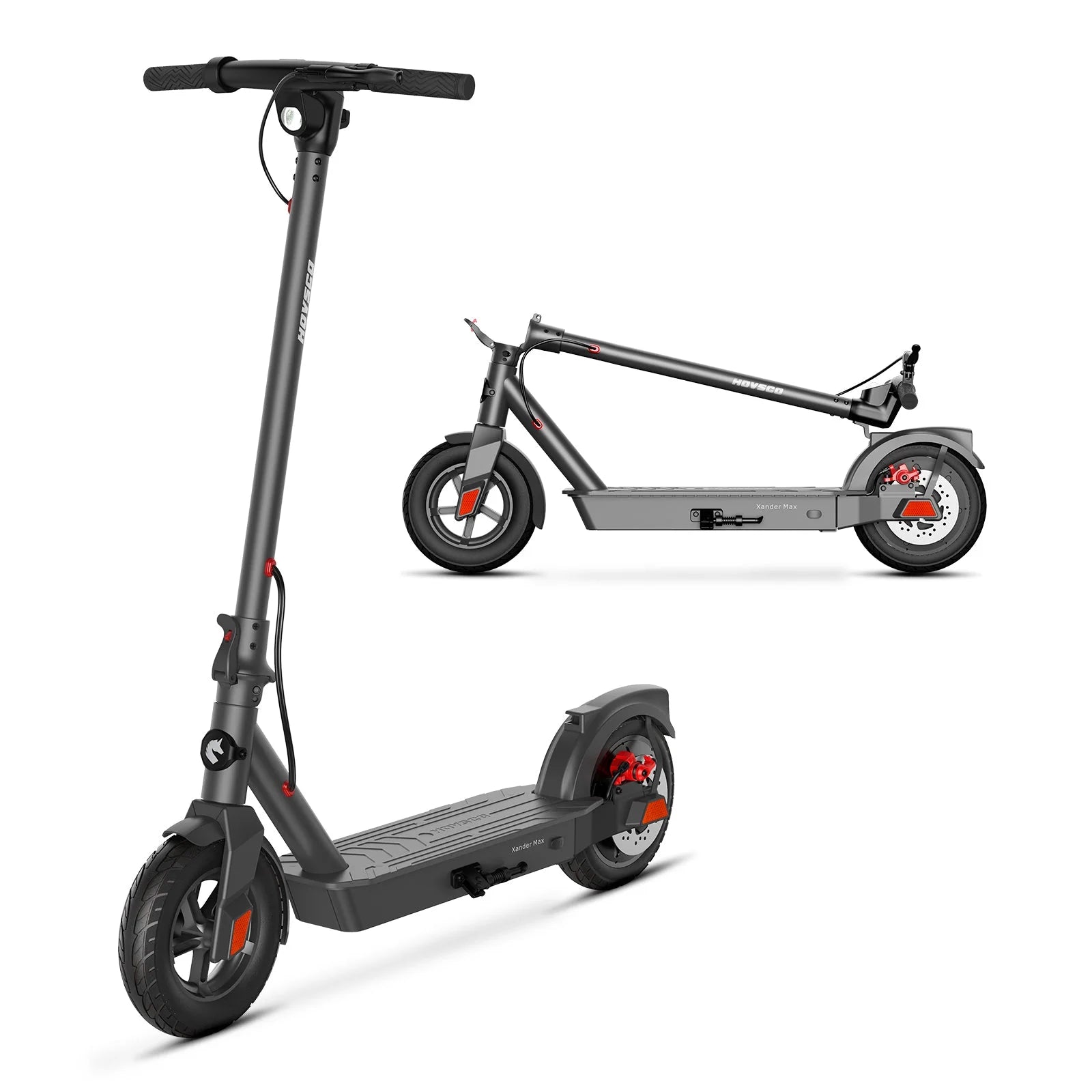
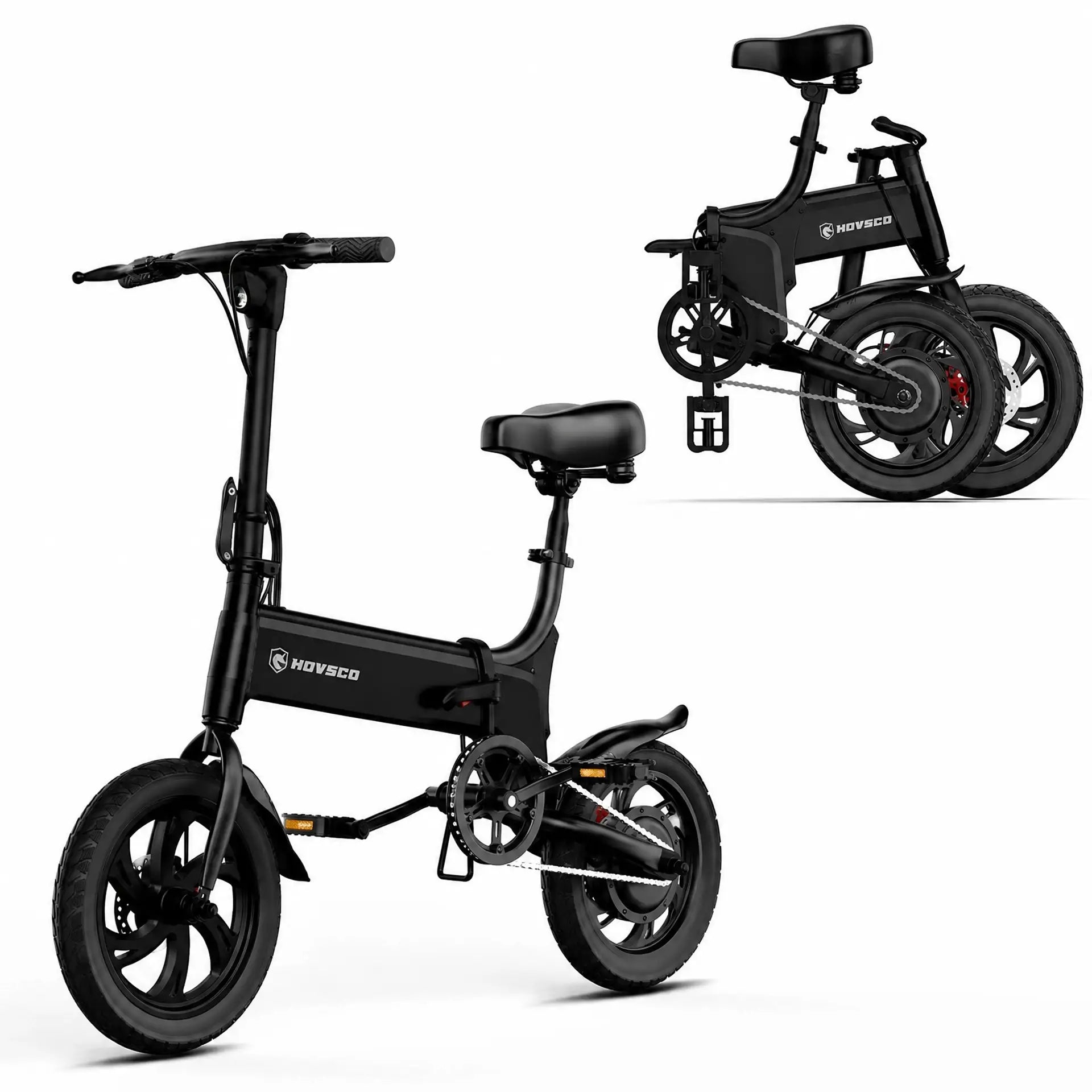
Xander Max offers a standing scooter format that folds for mixed-mode commuting. Porto Max takes a different approach with a seated configuration and rear cargo capability, which may be more useful for riders who value comfort and errands over frequent stair carrying.
A useful rule from product-handling reviews: if you must carry a scooter up two flights of stairs every day, choose the lightest model that still meets your route and safety needs. Do not buy extra battery capacity or suspension that your storage routine makes impossible to use.
Pneumatic tires, adequate wheel size, suspension, and a stable deck matter most on broken pavement. They reduce the sharp impacts that can fatigue your hands, unsettle the steering, loosen fasteners over time, and make a daily ride feel harsher than a short test ride.
Suspension is not automatically essential. For a smooth, short urban route, good pneumatic tires at the correct pressure may provide sufficient comfort with less added weight and mechanical complexity. On patched roads, driveway lips, brick paths, and imperfect bike lanes, suspension becomes more valuable.
Felicity is notable for combining a folding structure with dual suspension. That can be beneficial for commuters who regularly cross uneven pavement, but it also changes the ownership equation: more moving joints mean more points to inspect. Check fasteners, pivot wear, and unusual noises as part of routine maintenance.
Porto Max and Xander Max use a different commuter philosophy. Their practical wheel and tire setup can suit smoother city routes, while Porto Max’s seat can reduce fatigue during longer, steady rides. Neither approach is universally “better”; the correct choice depends on road quality and how often you carry the scooter.
Do not confuse comfort with safety. A softer ride improves control only when the tires, steering, deck grip, and braking system are also maintained. Keep tires properly inflated, inspect tread, and slow down before potholes rather than expecting suspension to erase every impact.
A commuter scooter should have effective front lighting, rear visibility, reflectors, an audible warning device, and braking you can control smoothly. Lights help others detect you, while brakes determine whether you can manage predictable stops without panic or loss of traction.
Treat factory lighting as a starting point, not a complete night-riding solution. Test it on your own streets at dusk. Can drivers notice you from the side? Can you see pavement cracks, wet leaves, and curb edges early enough to react?
Dual braking systems provide useful redundancy. The goal is not dramatic stopping power alone; it is controlled, repeatable braking without wheel lock. Practice progressively applying brake pressure in a clear, dry area before riding in traffic.
For commuter setup, use these checks:
Confirm the headlight aims at the road rather than directly into oncoming eyes.
Verify that the rear light is visible when you wear a backpack or long coat.
Test brake lever feel before every ride; a spongy, loose, or noisy system needs attention.
Use a helmet and obey local rules on speed, riding areas, and required equipment.
Reduce speed in rain, darkness, loose gravel, or unfamiliar sections of road.
HOVSCO scooters such as Felicity, Xander Max, and Porto Max are designed around practical urban riding, but safe commuting still depends on rider behavior, inspection habits, and route judgment.
Plan storage before you buy: identify a legal, dry, secure location away from exits and high-traffic walkways. Confirm whether your workplace permits scooters indoors and whether you can charge under supervision using the supplied charger and an appropriate electrical outlet.
The best office-storage scooter is not always the smallest. A folded standing model may fit behind a desk, while a larger seated model may require a dedicated storage room or bike area. Ask facilities staff about access routes, elevator rules, fire-safety policies, and charging restrictions before delivery day.
Battery care is a commuter discipline. Let the scooter cool after a hard ride before charging, inspect the cable and connector for damage, and avoid improvised extension-cord arrangements. Store the scooter away from direct heat, moisture, and any doorway that could become an emergency route.
Use a strong lock when the scooter must remain outside, but recognize that portability is often the superior security strategy. Bringing a folded scooter inside eliminates many theft risks and protects electronics from weather.
Weight distribution affects steering stability, braking behavior, lifting effort, and how predictable a scooter feels over bumps. A low, centered battery and a deck that gives your feet secure placement generally make a commuter scooter easier to control than a design focused only on appearance.
This point is often missed in generic buying advice. Two scooters with the same motor rating and battery capacity can feel completely different because of deck height, handlebar position, tire diameter, and where the battery mass sits.
During a test ride, make slow turns, brake gently, ride over a mild surface change, and step on and off repeatedly. Notice whether the steering feels twitchy, whether your feet crowd the deck, and whether the scooter remains manageable at walking speed.
Porto Max illustrates a different balance than a standing scooter: its seat and cargo-oriented arrangement can make errands more comfortable, but it needs more storage space. Xander Max may better fit riders who need a conventional fold-and-go standing commuter format.
Match the scooter to the inconvenient reality of your route: stairs, rough pavement, train transfers, darkness, grocery stops, rain exposure, and office rules. The most suitable commuter scooter is the one that solves your daily friction points without adding new ones.
Use this short decision framework:
Choose Felicity if your route benefits from stronger acceleration, a higher stated speed, dual suspension, and a folding standing-scooter layout.
Choose Xander Max if a compact standing format, straightforward commuting, and regular folding are central to your routine.
Choose Porto Max if seated comfort and carrying small items matter more than the smallest possible folded footprint.
Choose a different transport method when your route includes unsafe roads, prohibited riding areas, severe weather, or storage barriers that cannot be solved safely.
HOVSCO brings experience from both personal electric mobility and cycling-focused transportation, which is useful when evaluating how scooters fit real urban routines rather than treating them as novelty devices.
“A commuting scooter succeeds when it disappears into the rider’s routine. We advise buyers to map the whole trip first: the ramp, curb cut, elevator, desk area, charging outlet, and final lock-up point. On the product side, we pay particular attention to folding-latch engagement, cable routing near moving joints, tire condition, brake adjustment, and lighting aim. These details are less glamorous than top speed, but they are the details commuters interact with every day. Choose enough performance for your route, then invest the remaining decision-making effort in comfort, visibility, and storage practicality.”
Choose suspension when poor pavement causes discomfort, reduced control, or repeated jolts on your normal route. Choose portability when stairs, public transit, frequent lifting, and tight office storage create a bigger daily obstacle than road roughness.
There is no free upgrade. Suspension can improve ride quality, but it often adds mass, height, components, and maintenance requirements. A lighter scooter can be easier to carry and store, but smaller tires and a rigid frame may transmit more road shock.
The practical answer is route-specific. Walk or cycle your commute once and count the rough sections. If you encounter occasional cracks but mostly smooth pavement, prioritize tires and portability. If every mile includes broken asphalt, bridge joints, or uneven paths, comfort hardware may justify the trade-off.
Test a scooter on surfaces and situations similar to your commute: smooth pavement, a mild incline, low-speed turns, controlled braking, folding, lifting, and storage placement. A parking-lot loop alone cannot reveal whether it works in your office, apartment, or transit routine.
Bring your usual backpack if possible. Stand naturally on the deck, check handlebar reach, and see whether the throttle response feels manageable. Test the folded position without rushing; a mechanism that seems easy in a showroom can become frustrating when you are late for work.
Also examine service practicality. Ask where replacement tires, brake parts, chargers, and support are available. A commuter vehicle is a repeated-use tool, so routine upkeep matters more than a one-day first impression.
Before purchasing, confirm your distance, realistic range margin, carrying requirement, road condition, lighting needs, storage location, charging permission, local regulations, and service plan. Then select the scooter that meets those non-negotiables before comparing extra speed or promotional pricing.
The most reliable how to choose commuter electric scooter method is simple: buy for your worst normal day, not your best weekend ride. If you can comfortably handle the scooter when tired, carrying a bag, returning after dark, and arriving at a busy office, it is likely the right commuter choice.
HOVSCO buyers should compare Felicity, Xander Max, and Porto Max against their own commute profile rather than assuming one style fits every rider. Explore the commuter electric scooter collection after completing your route checklist, then choose the configuration that supports consistent, safe use.
How much range do I really need for commuting?
Choose a claimed range at least 30 to 50 percent above your normal round-trip distance to account for hills, temperature, rider load, and battery aging.
Is a folding scooter always best for commuters?
No. Folding is best for stairs, transit, and office storage. A seated scooter may be more comfortable for longer routes if you have secure space to park it.
Do I need suspension for city commuting?
Not always. Pneumatic tires can be enough for smooth streets, while suspension becomes more valuable on consistently broken pavement and longer routes.
Can I charge an electric scooter at work?
Only if workplace policy permits it and you can charge safely with the supplied equipment in a dry, supervised location away from exits and trip hazards.
Which matters more: top speed or brakes?
Brakes, lighting, tire condition, and stable handling matter more for daily commuting. Extra speed is useful only when it remains legal, controllable, and appropriate for your route.
Share:
How to Choose Folding Ebikes for Small Spaces?
How Do You Choose an E-Bike With Hydraulic Brakes?