



![[ New Arrival ] Porto Max Electric Scooter For Commute & Grocery Shopping - HOVSCO](http://www.hovsco.com/cdn/shop/files/PotroMax-3.jpg?v=1706927007&width=1200)
- by SteveJames
How Do You Choose a High-Payload Electric Bike?
- by SteveJames
E-Bikes
Accessories
 Free Shipping
 15-Day Returns
 2-Year Warranty
Free Shipping
15-Day Returns
2-Year Warranty
2-Year Warranty
Free Shipping
15-Day Returns
2-Year Warranty
A high-payload electric bike is one that publishes a verified total payload rating—rider plus cargo—of 400 lbs or more, backed by a reinforced frame, hydraulic disc brakes, and load-rated tires. Knowing how to choose a high payload electric bike means comparing total payload, rack limits, braking hardware, and tire load index side by side, not just the headline weight number.
Payload capacity is the combined weight an e-bike is engineered to carry safely: rider, clothing, backpack, panniers, and anything strapped to a rack. It is not the same as "rider weight limit," which some brands list separately. A trustworthy spec sheet states total payload as one number that already assumes a loaded rack, not an idealized empty bike.
On the shop floor, I've seen more returns caused by confusing "rider weight" with "total payload" than by any mechanical defect. If a listing only gives a rider limit and doesn't mention rack or basket capacity separately, treat that as an incomplete spec, not a green light to max out cargo. When you're learning how to choose a high payload electric bike, always look for the phrase "total payload" or "maximum payload capacity" printed as a single figure—that's the number engineers actually tested against, using a loaded rack and a seated rider simultaneously, not two separate lab runs.
A bike's real weight limit is set by four systems working together: the frame and welds, the wheel/spoke count and rim width, the brake rotor size and caliper type, and the tire's load index. Motor wattage has almost nothing to do with how much weight a frame can safely carry—that's purely a structural question, not a power question.
Frame gauge and weld quality matter more than tube diameter alone. A butted 6061 aluminum frame with reinforced dropouts and a gusseted head tube handles repeated heavy loads better than a thinner-walled frame of the same diameter, even if both look identical in a product photo. Wheels built with 12-gauge spokes and a higher spoke count (36 vs. 28) distribute cargo stress more evenly, which matters most on potholed city routes rather than smooth trails.
Braking hardware is the piece buyers skip fastest and regret most. Mechanical rim brakes lose stopping power fast under heavy load and wet conditions; hydraulic disc brakes with 180mm rotors—the standard found across HOVSCO's high-payload lineup—maintain consistent stopping distance even at 400+ lbs combined weight. Finally, check the tire's load rating stamped on the sidewall; a fat tire that looks rugged can still have a lower load index than a narrower, purpose-built cargo tire.
Add your body weight, a fully loaded backpack or panniers, and any passenger or child seat weight, then add 15-20% as a safety buffer. If that total exceeds 300 lbs, you need a bike rated 400 lbs or higher, not one sitting near its limit. Never buy a bike where your everyday load sits within 10% of the stated maximum.
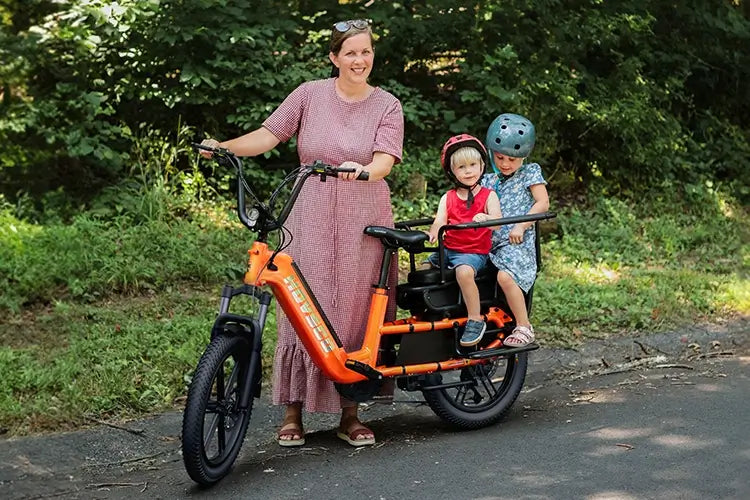
For example, a 220 lb rider carrying a 30 lb bag of groceries and a 15 lb child seat is already at 265 lbs before pedaling a single mile. Add a safety margin and that rider realistically needs a bike rated for at least 350-400 lbs of verified payload, not the bare 300 lbs many standard e-bikes advertise. This calculation is the single most overlooked step in how to choose a high payload electric bike, because most buyers size the bike to themselves alone and forget the cargo entirely.
Yes, but torque matters more than peak wattage. A 750W motor delivering 85-90 Nm of torque will climb hills with a heavy load far better than a higher-wattage motor tuned for top speed instead of torque. Torque sensors, which measure pedaling force in real time, also modulate power more smoothly under heavy load than basic cadence sensors.
Cadence-sensor-only systems apply power in fixed steps regardless of how hard you're pedaling, which feels jerky and inefficient when hauling 100+ lbs of cargo up a grade. A torque sensor reads actual pedal pressure and scales assist proportionally, so the motor works harder exactly when the load demands it—cresting a hill with a loaded rear rack, for instance—and eases off on flat ground to conserve battery. This is a detail spec sheets rarely explain clearly, but it's the difference between a bike that struggles under load and one that carries it confidently.
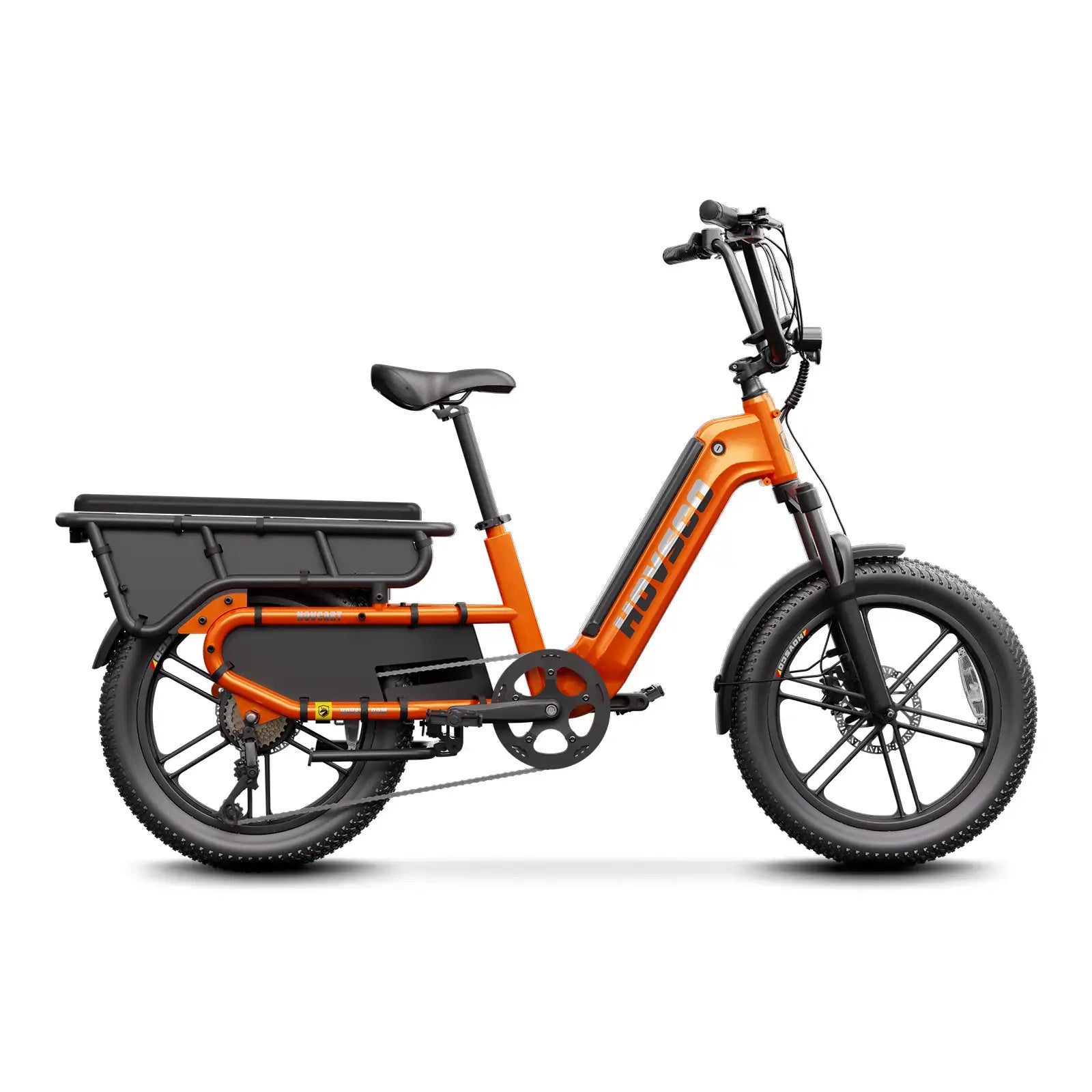
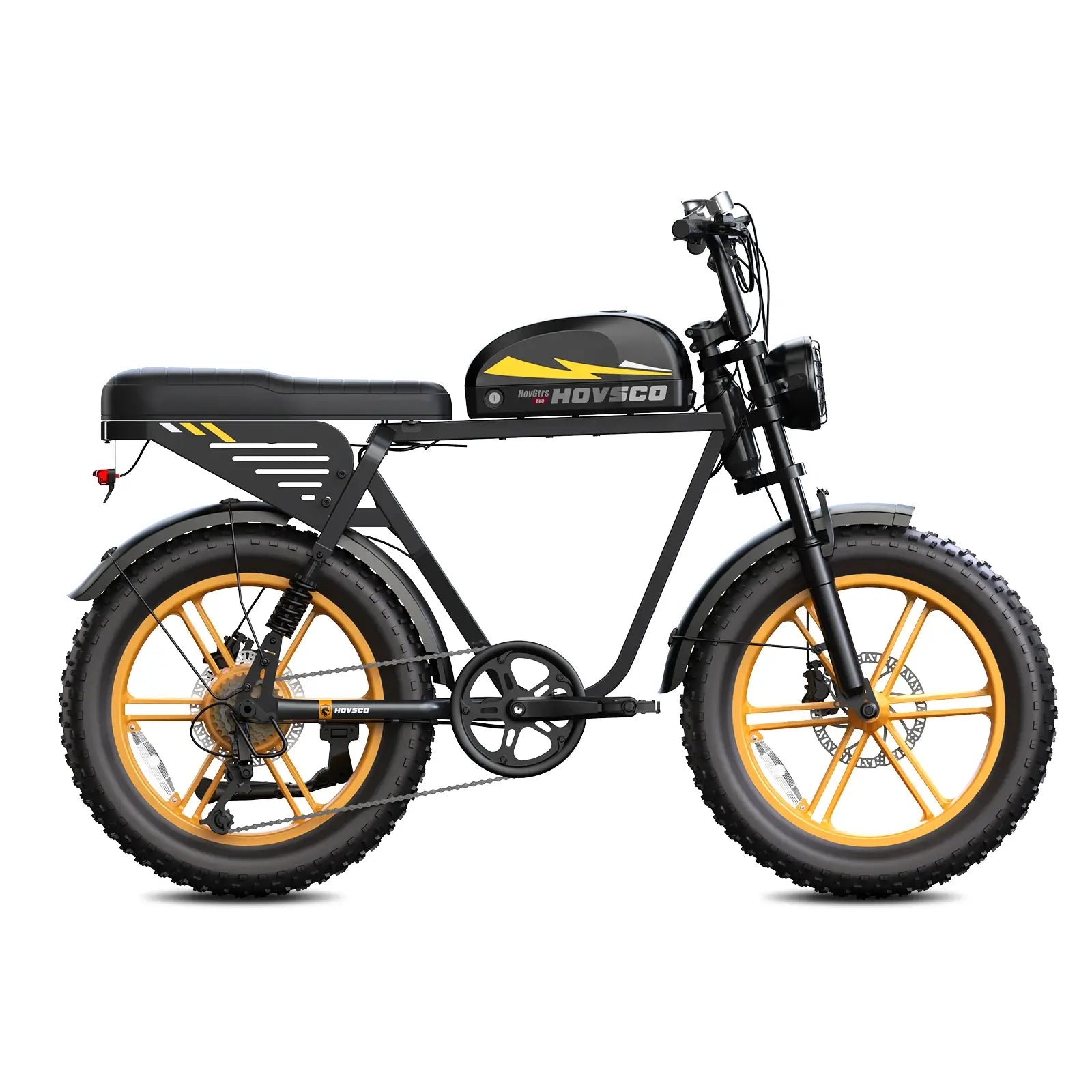
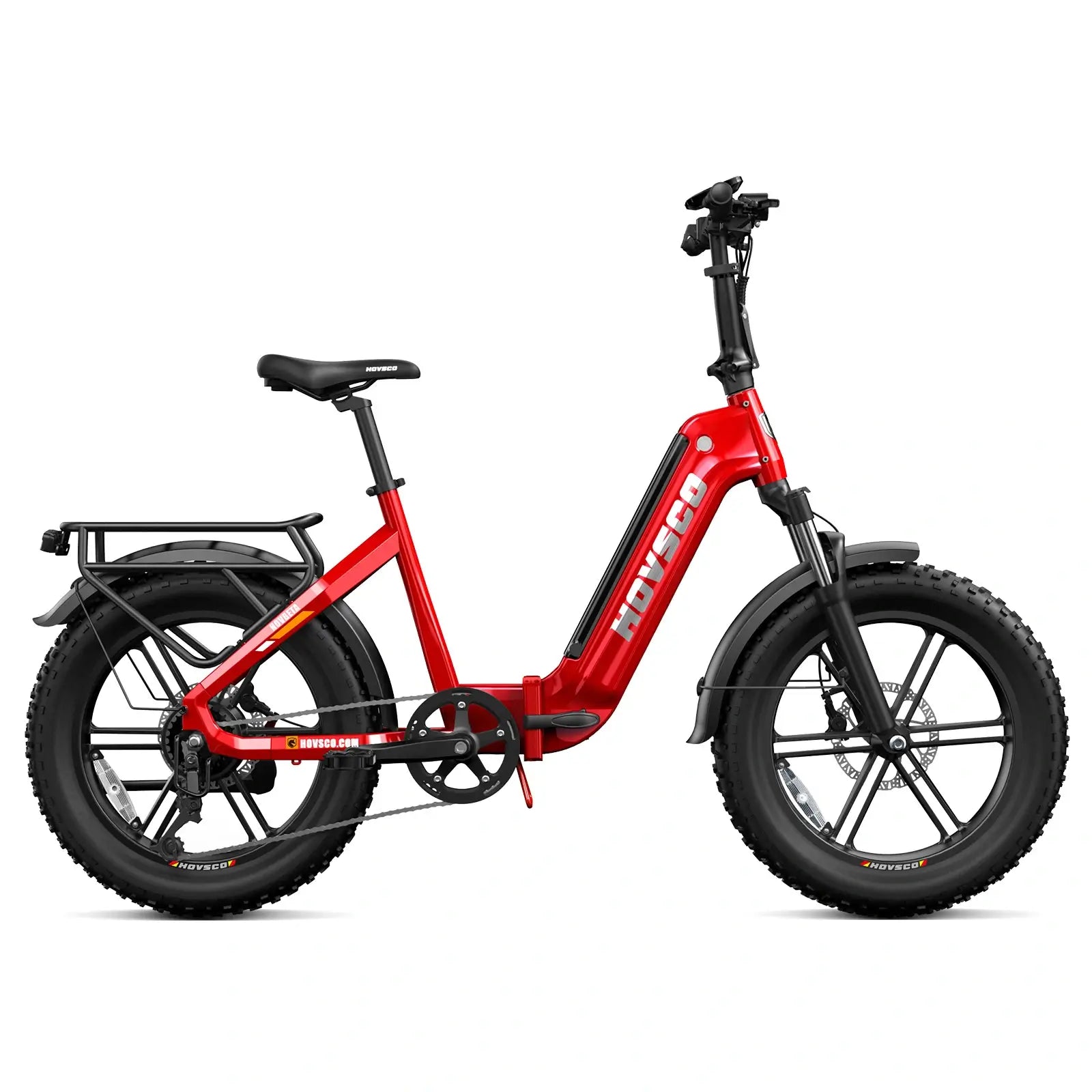
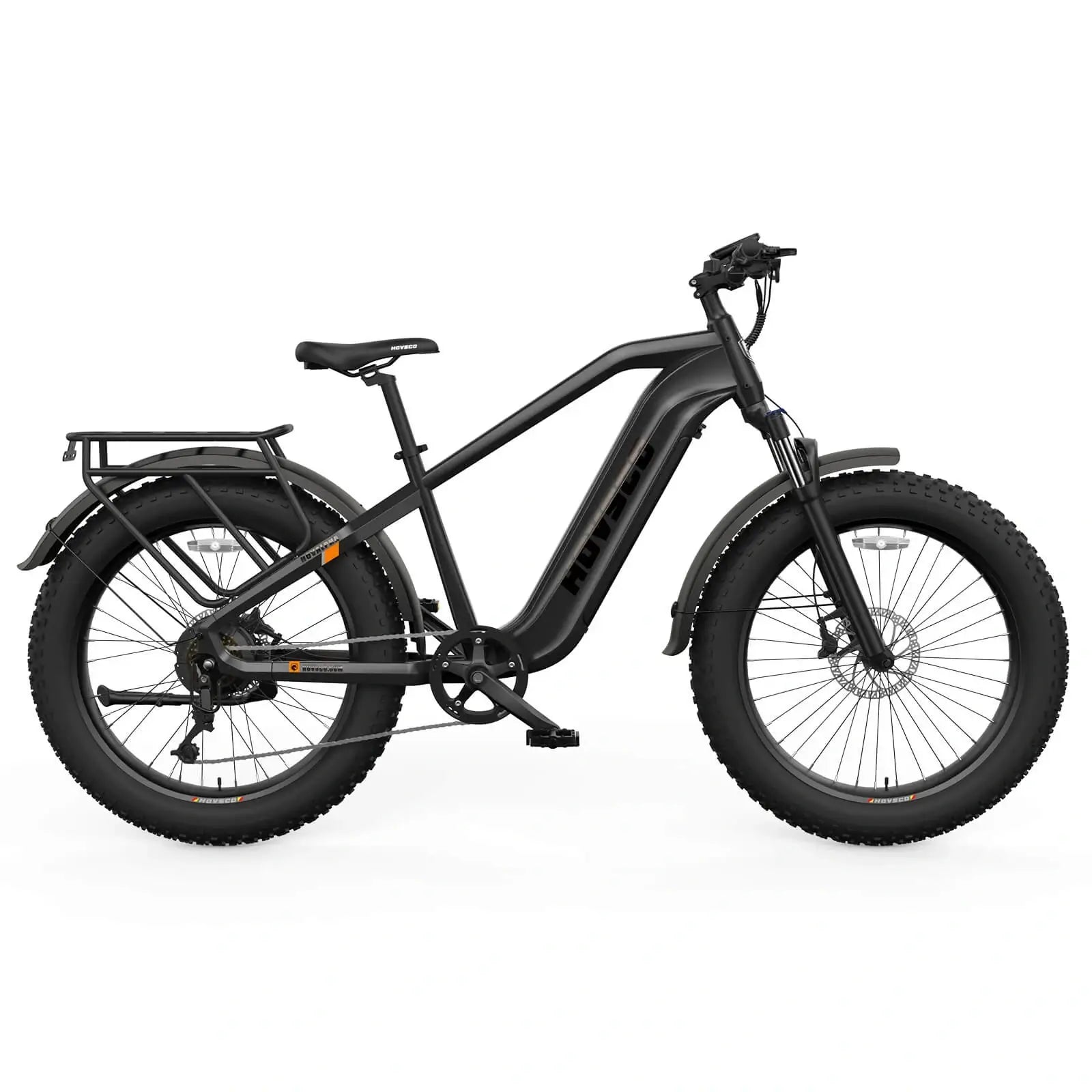
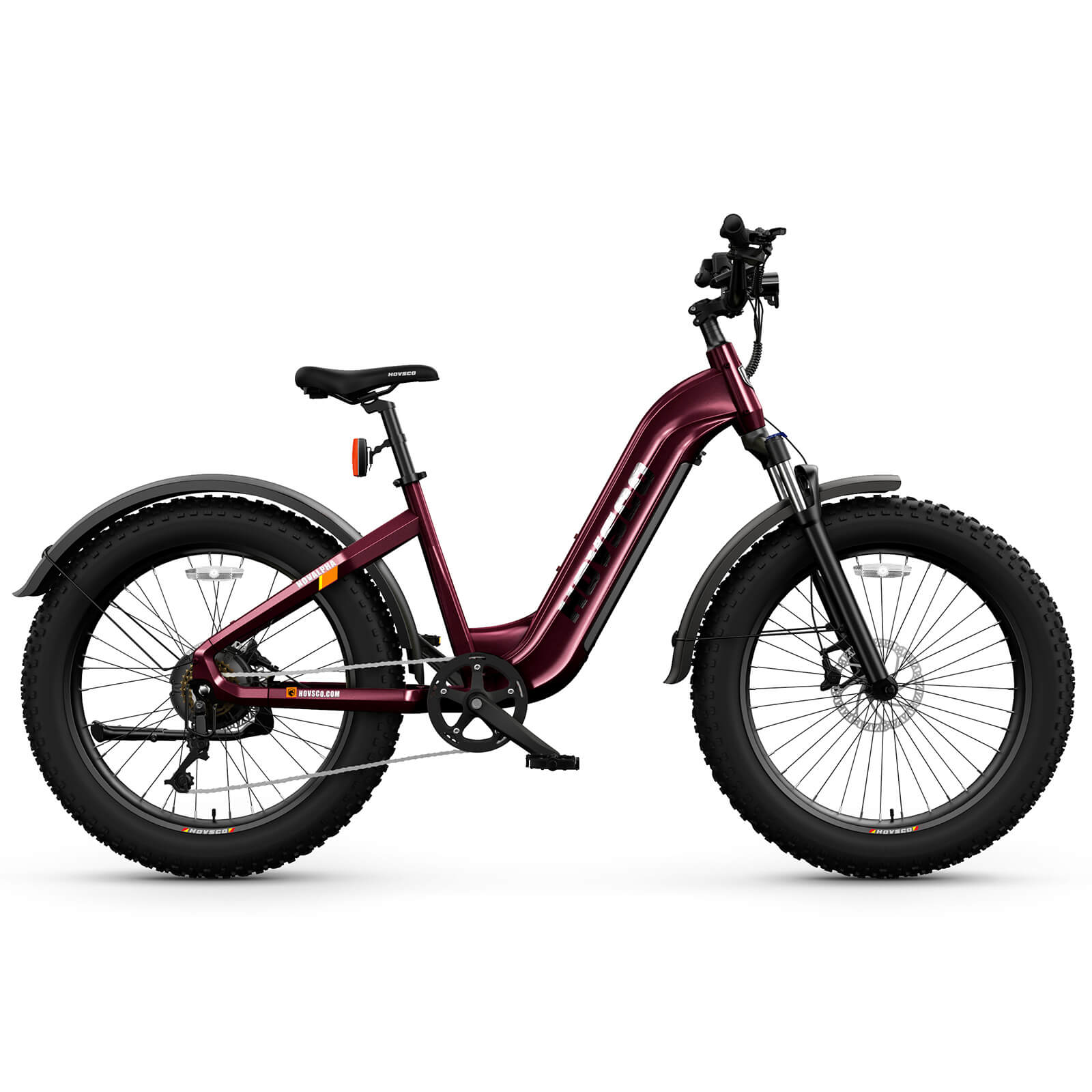
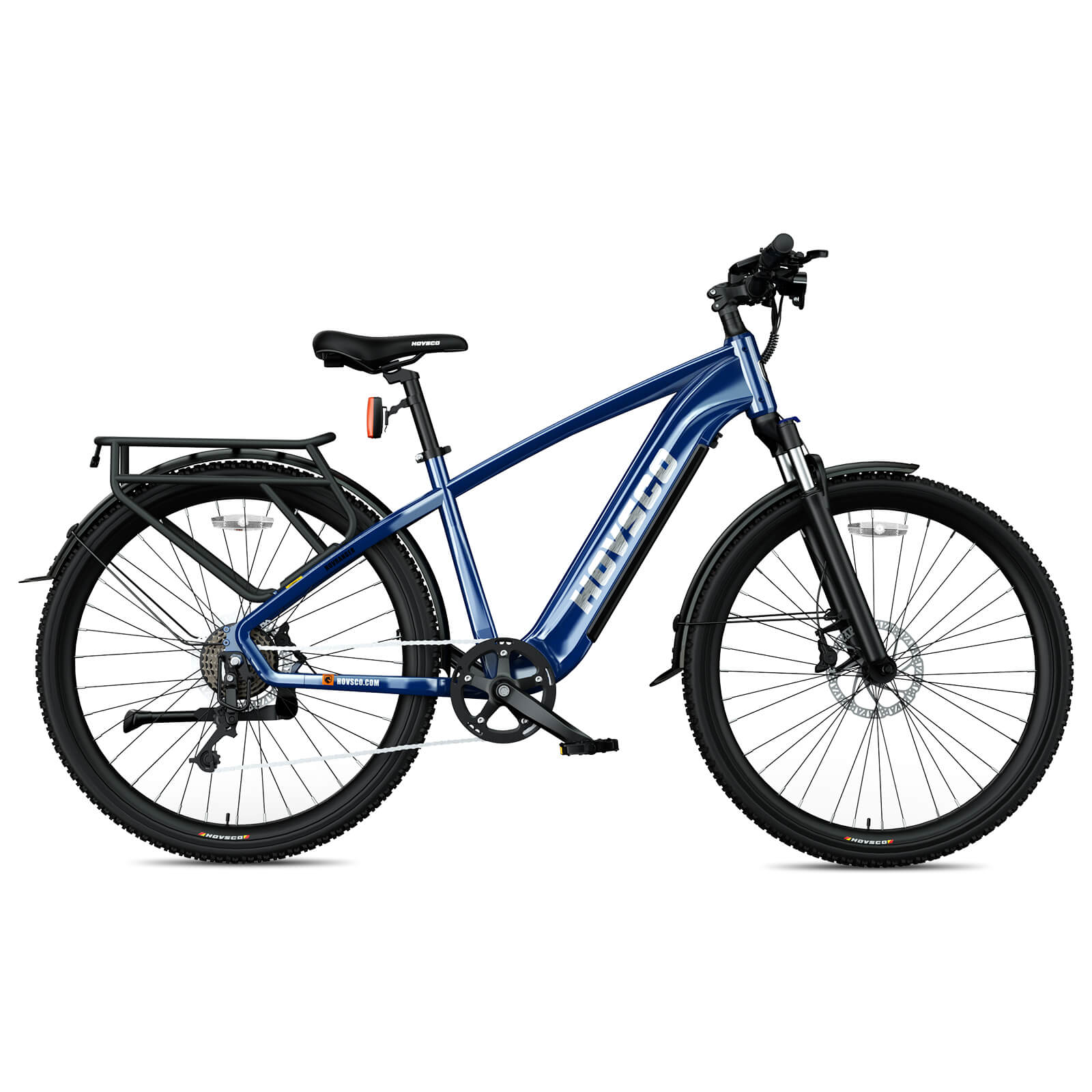
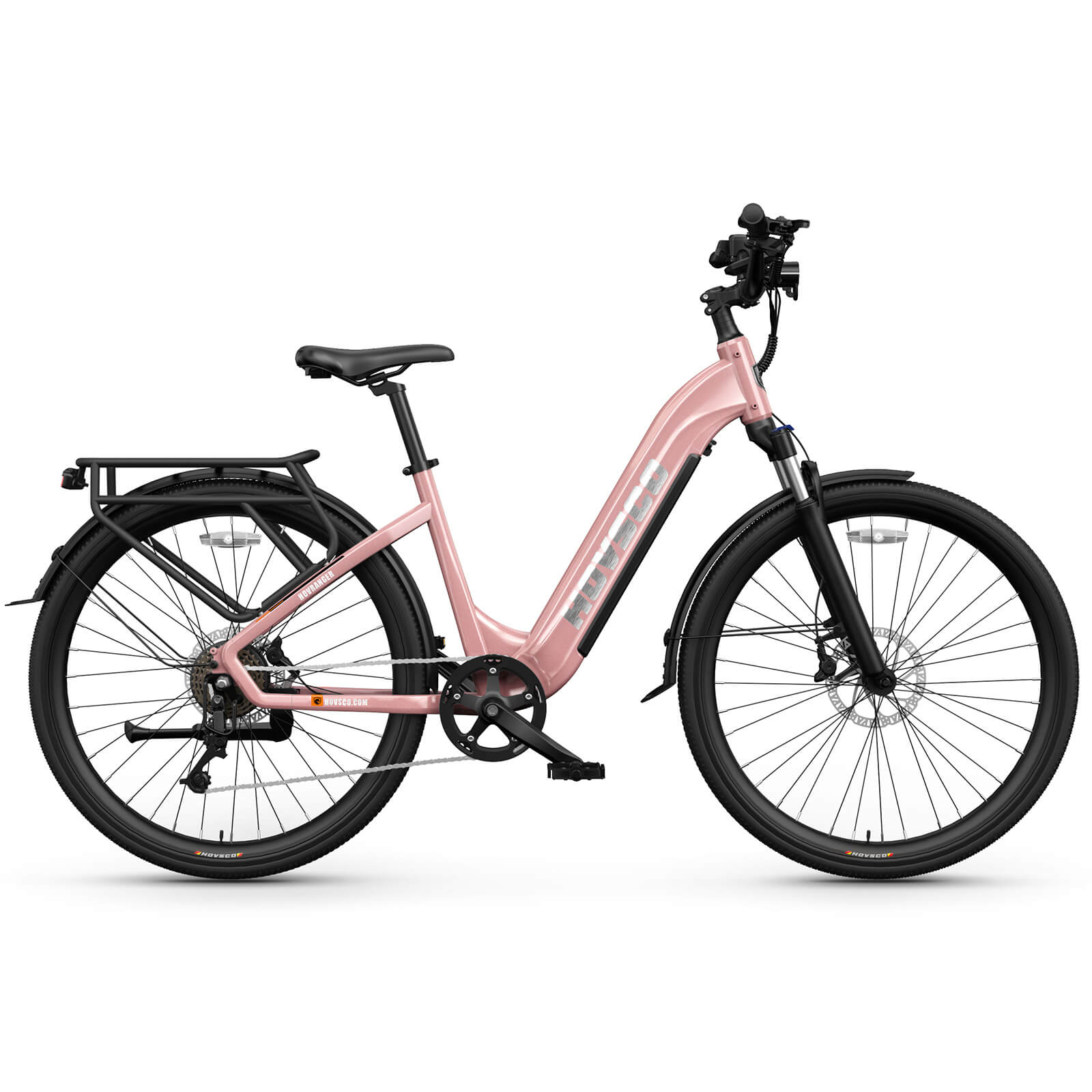
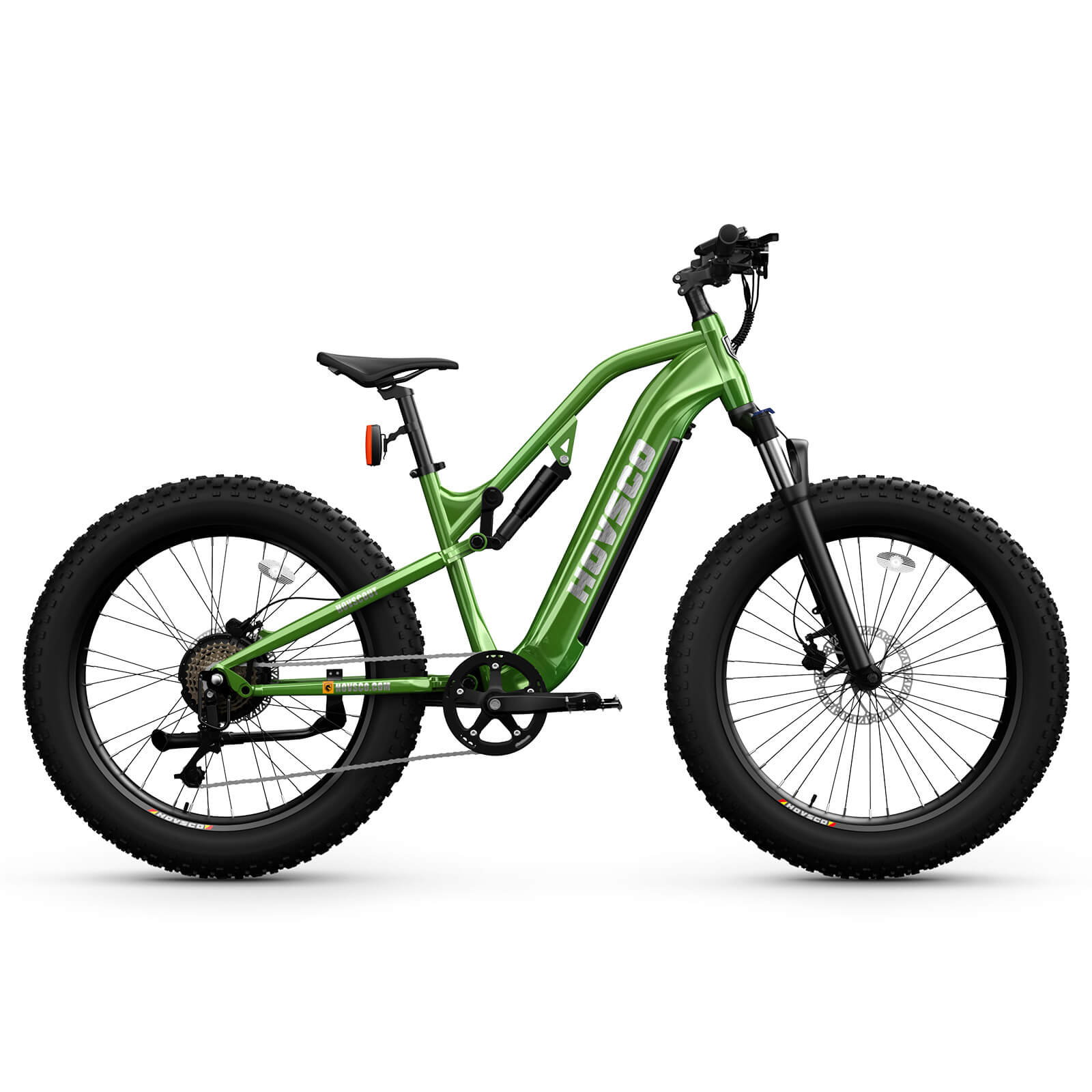
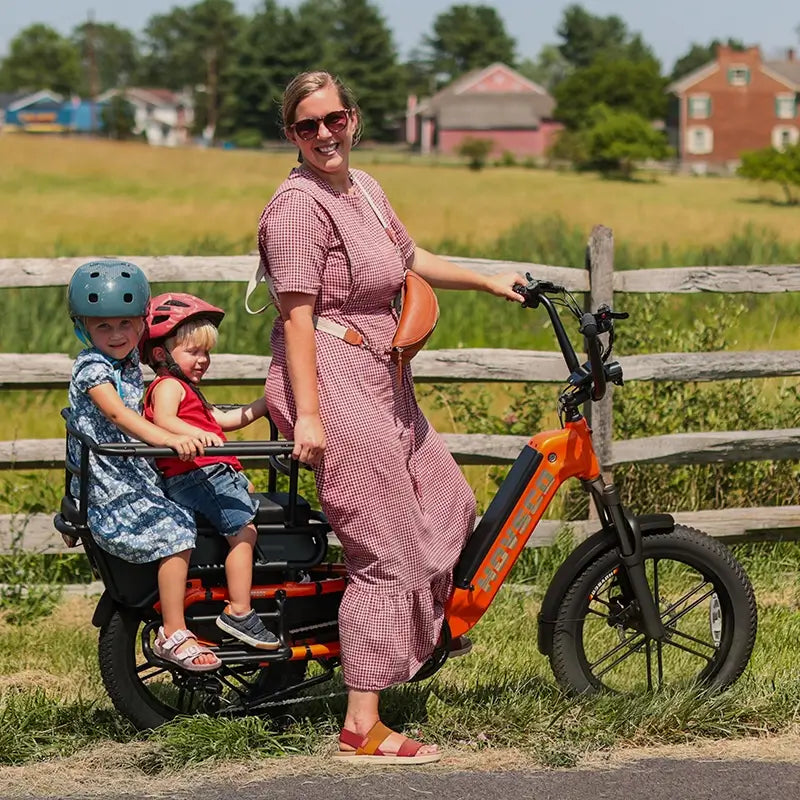
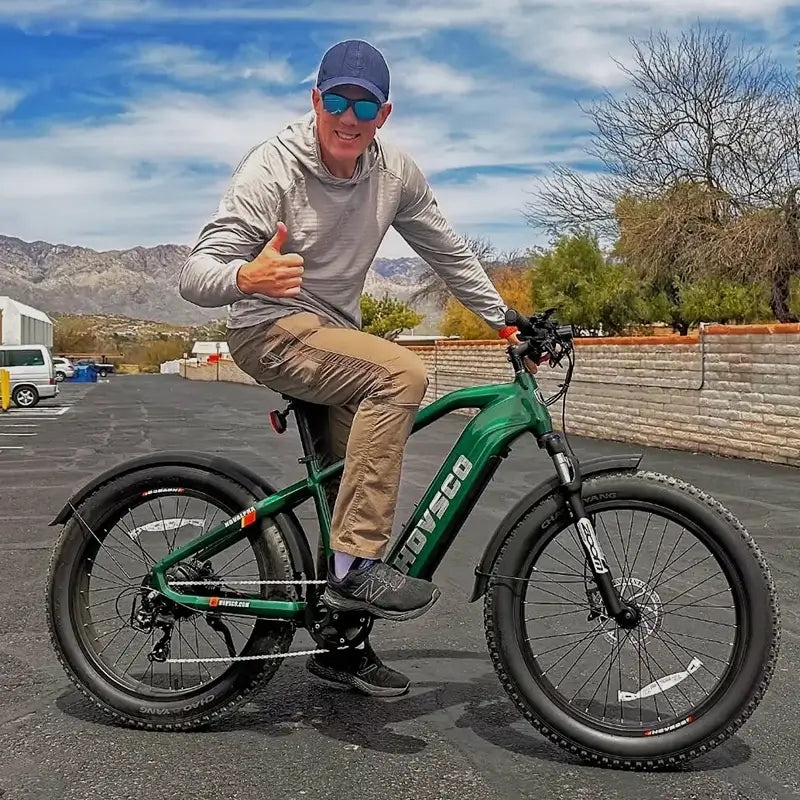
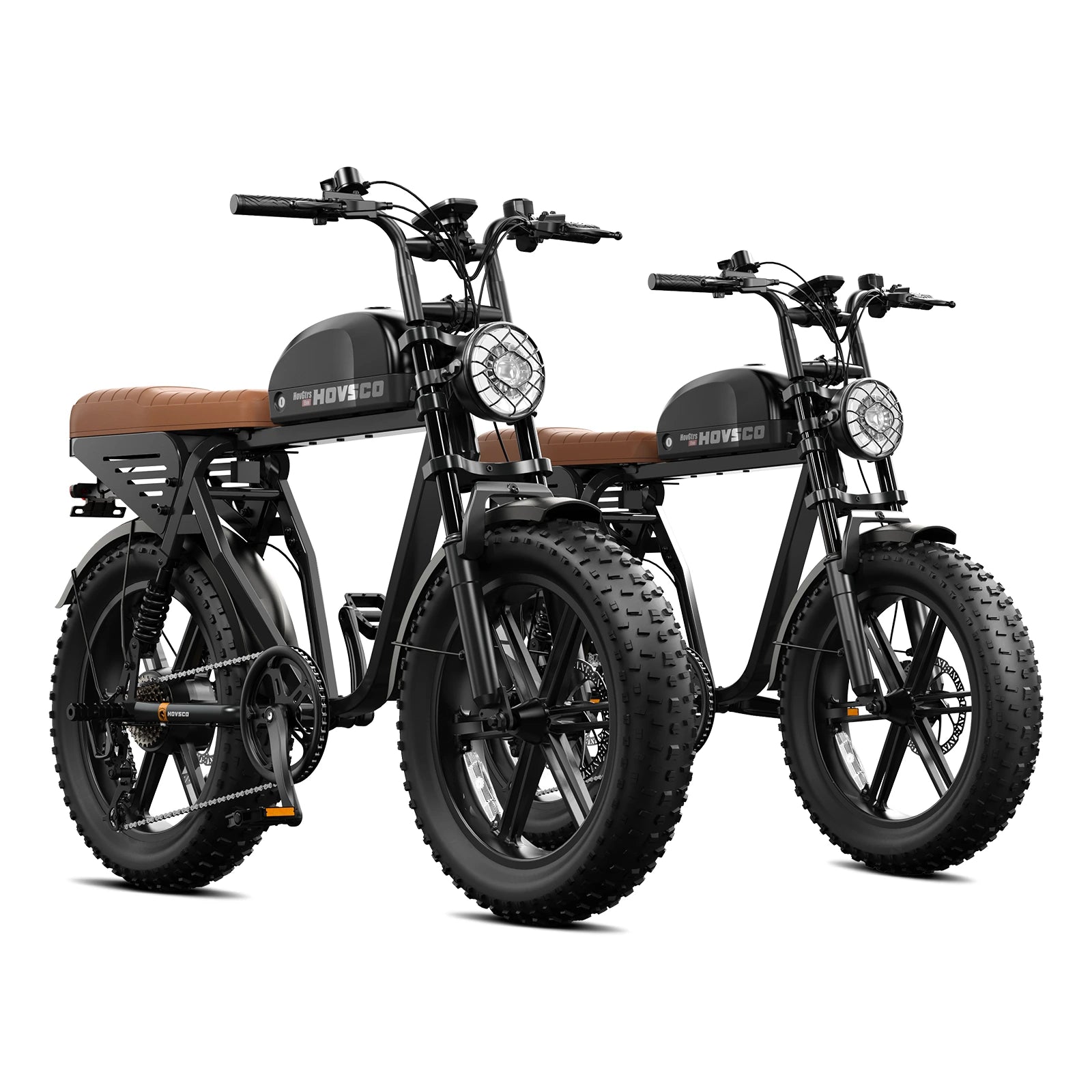
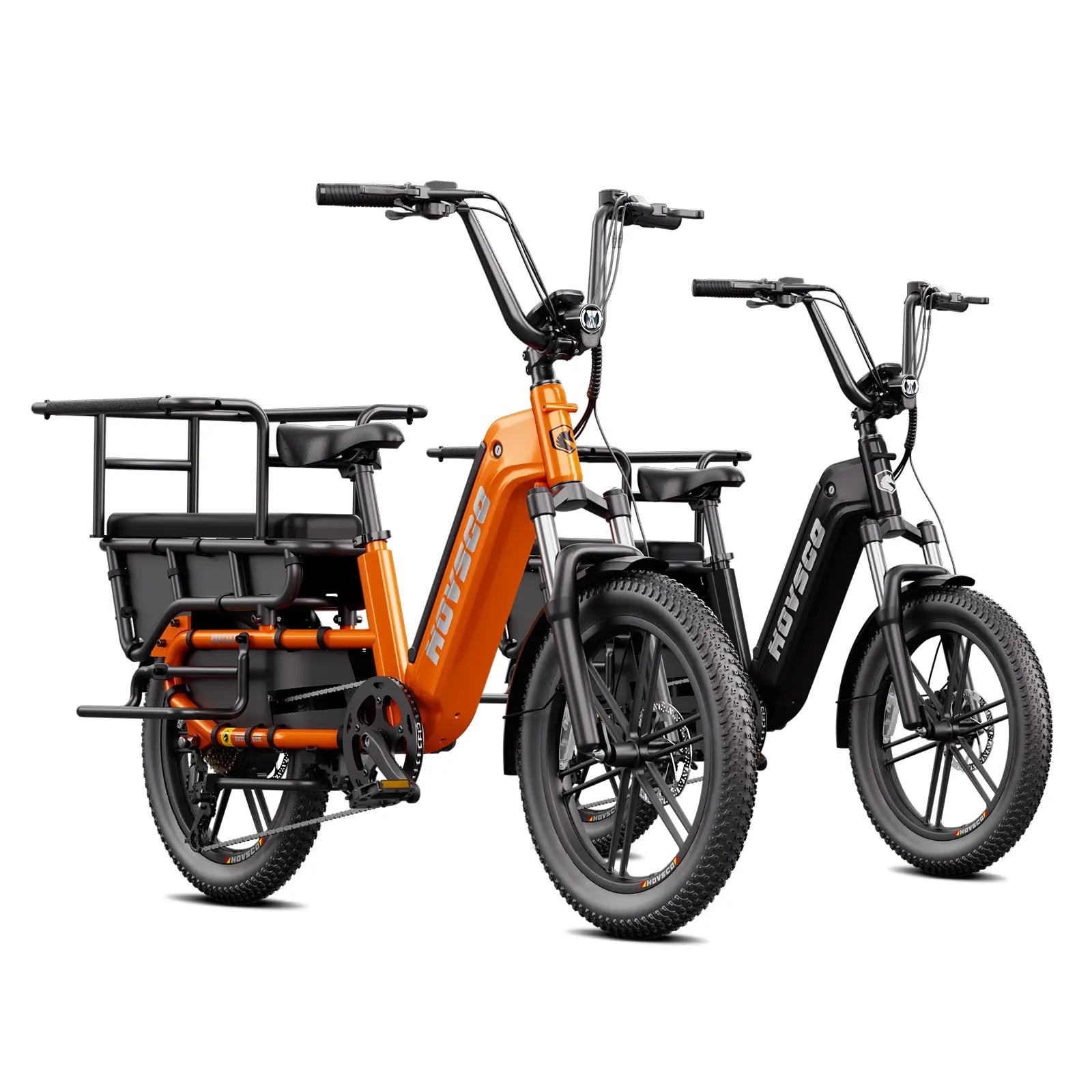
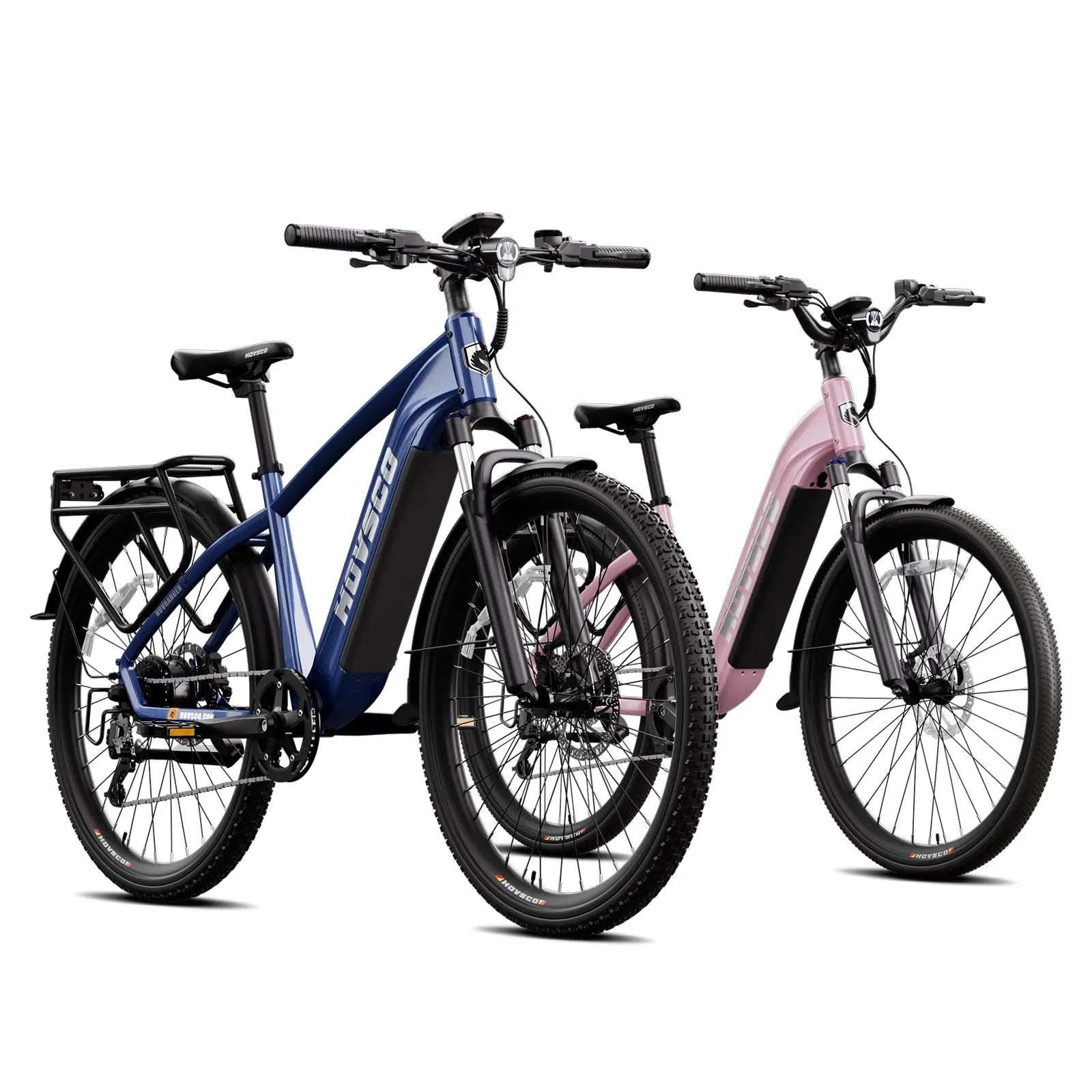
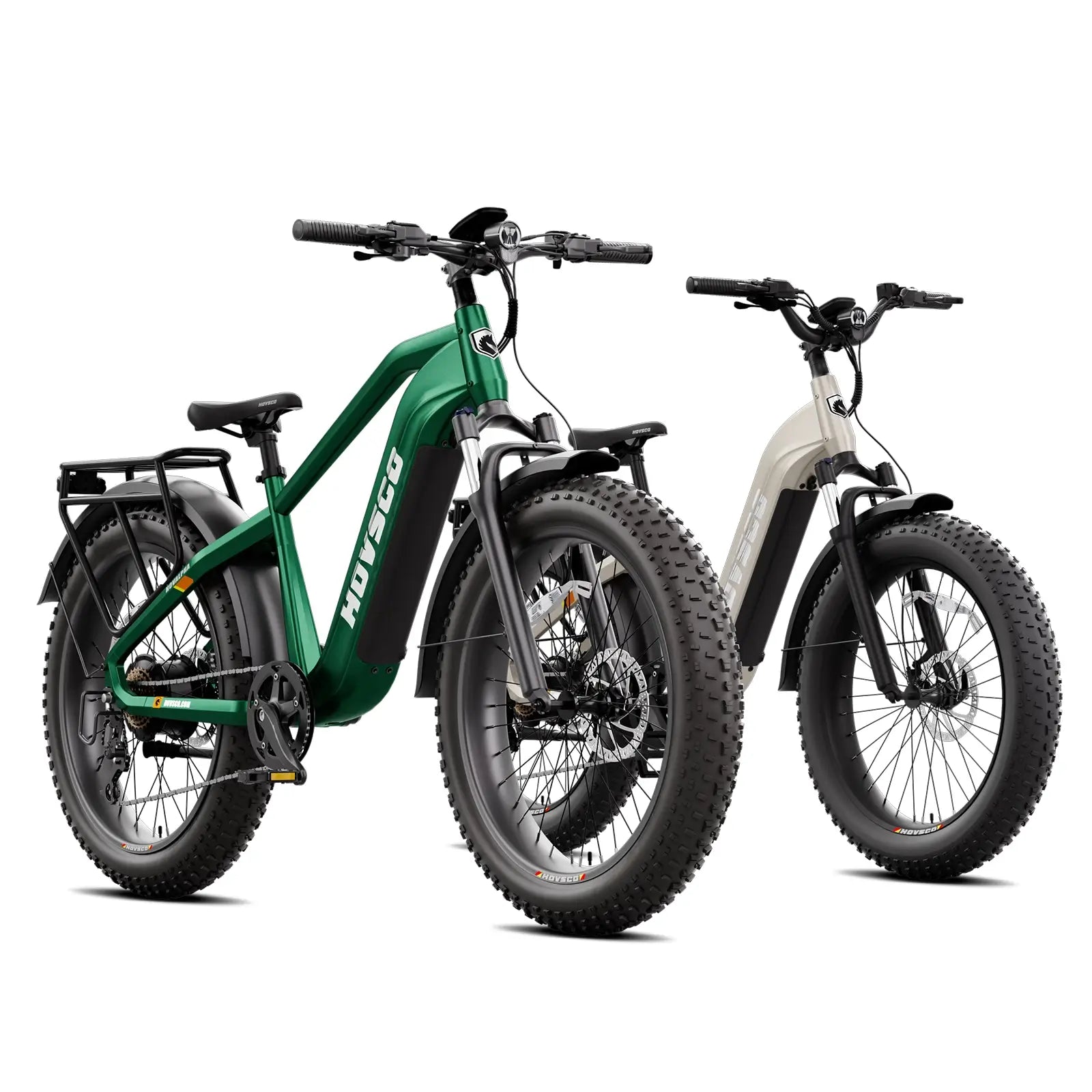
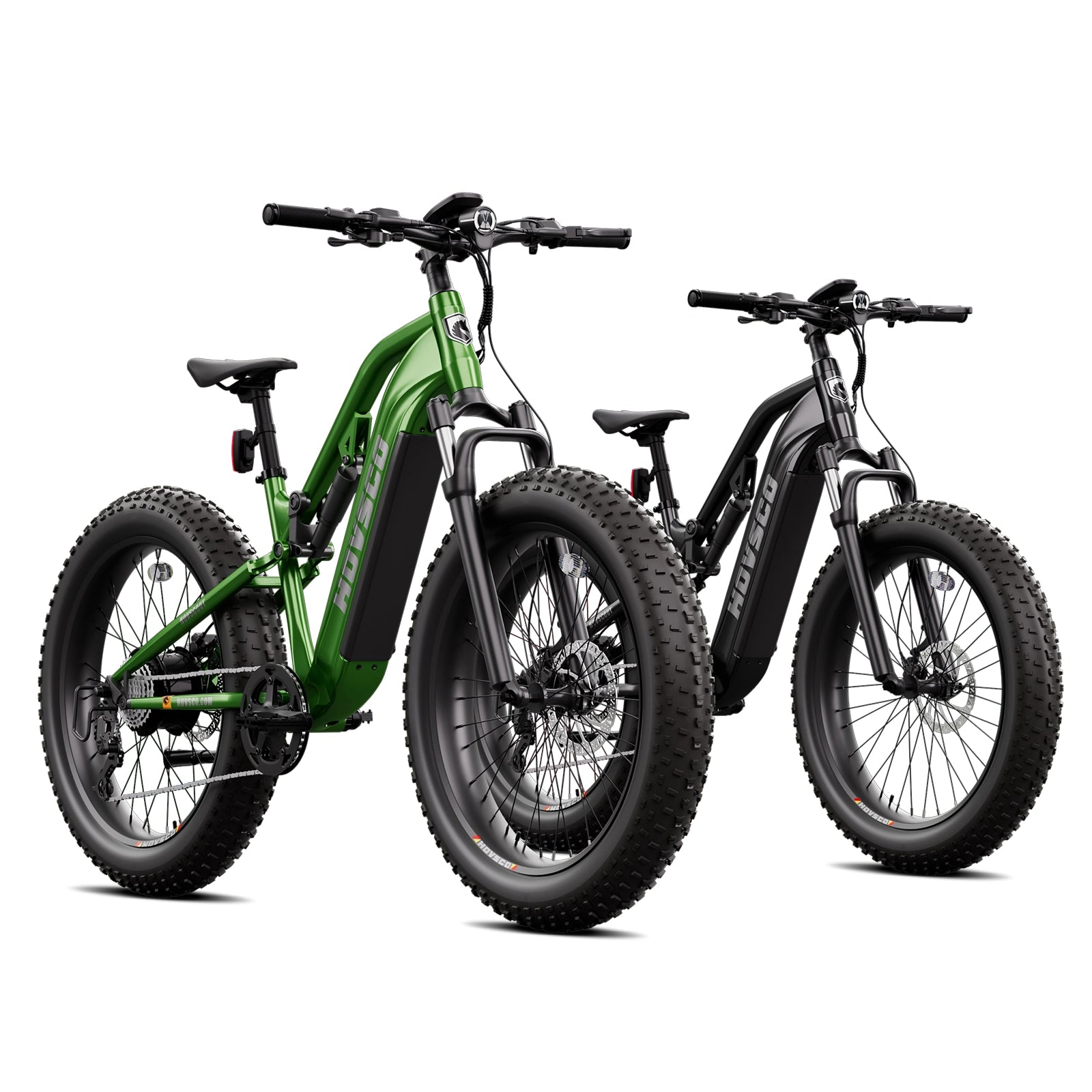
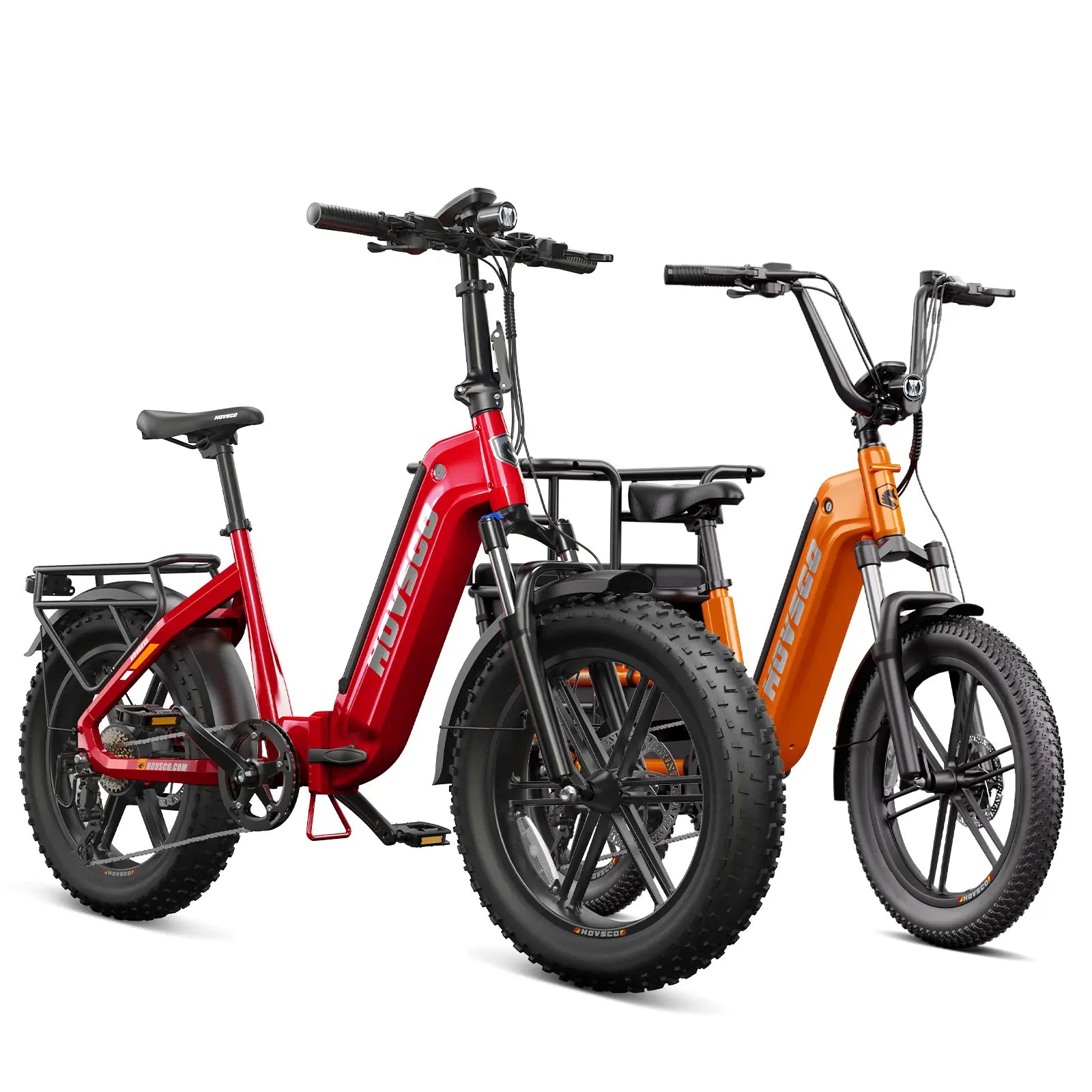
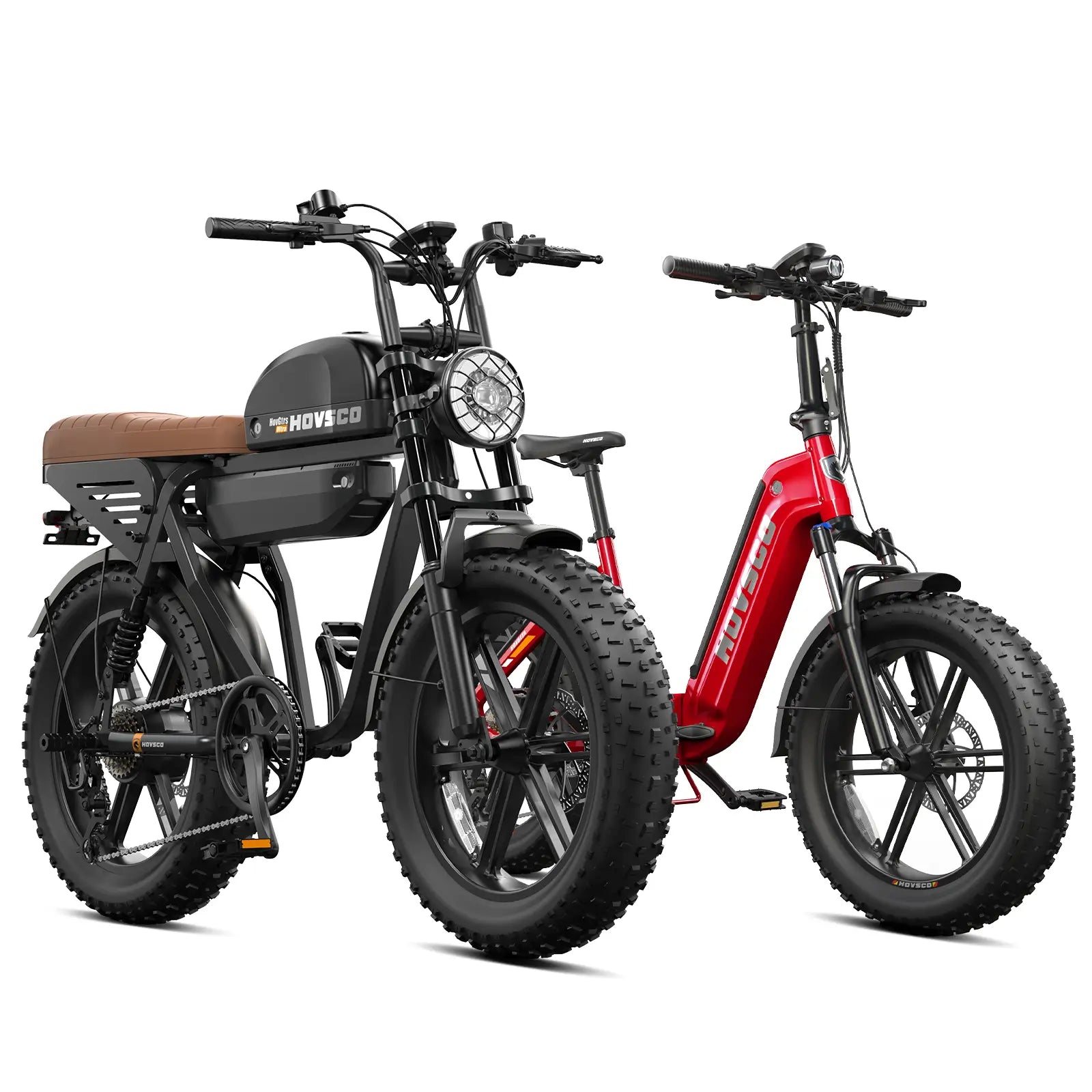
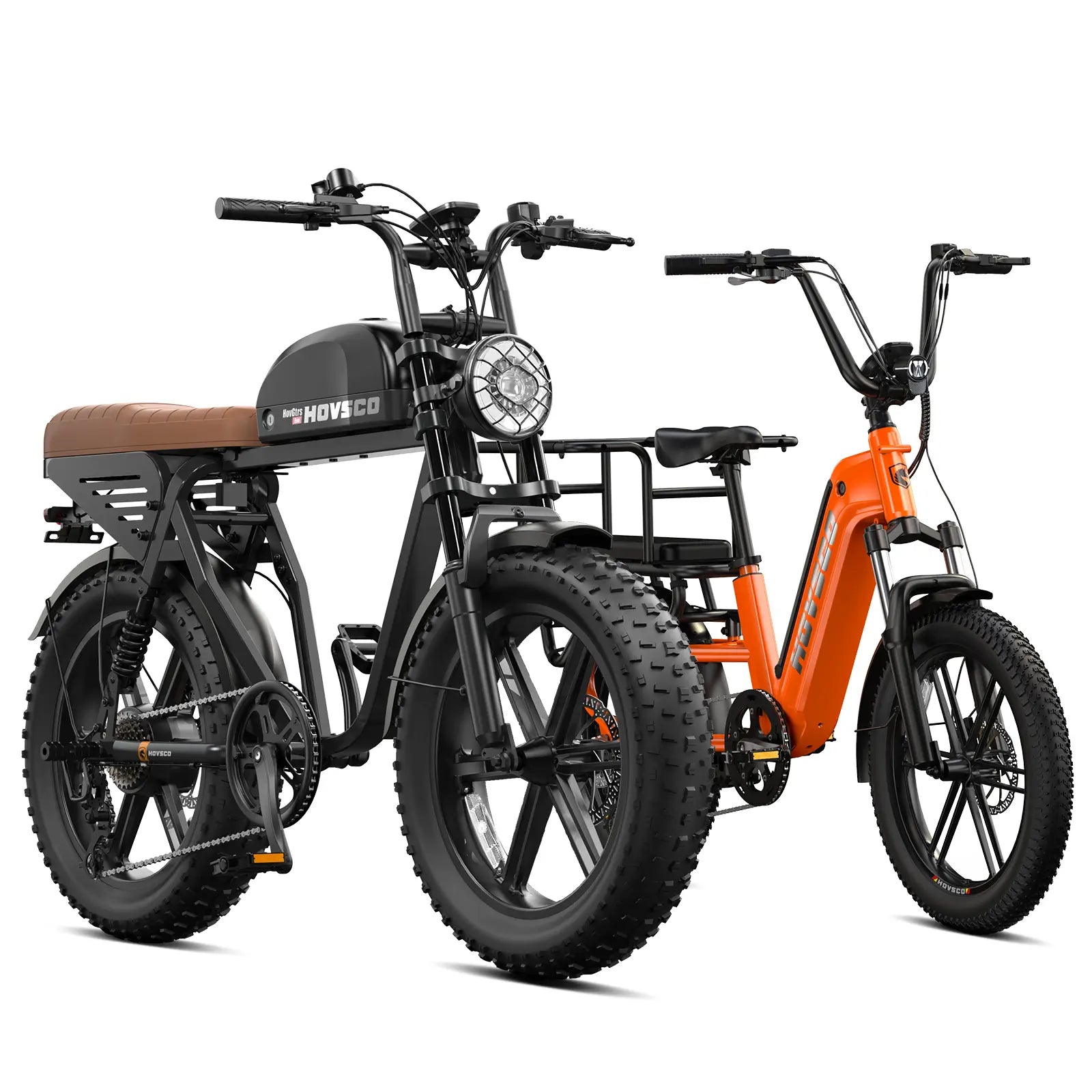
Four HOVSCO models—HovCart, HovBeta, HovAlpha, and HovScout—publish a verified 450 lbs maximum payload capacity, each paired with hydraulic disc brakes on 180mm rotors and fat, load-rated tires. They differ mainly in battery size, suspension type, and intended use case, from cargo hauling to full-suspension trail riding.
Every model in this HOVSCO high-payload lineup ships with the same braking and tire foundation, so the real decision comes down to how you'll use the extra capacity: HovCart's modular rack system for family errands, HovBeta's fold-flat frame for commuters who still need to haul gear, HovAlpha's larger battery for longer unsupported rides, or HovScout's full suspension for rough terrain under heavy load. You can compare full specifications across the entire range on HOVSCO's high-payload electric bikes collection page.
Not strictly, but wider tires with a proper load index absorb road shock and distribute weight over a larger contact patch, reducing rim stress on rough or unpaved surfaces. A 4-inch fat tire run at the correct PSI for a loaded bike will outperform a narrower tire that's technically rated for the same weight but has less sidewall support.
Tire pressure is the detail most riders get wrong under load. A tire inflated to the "comfort" PSI for an unloaded ride will flex excessively once you add 100+ lbs of rider and cargo, increasing rolling resistance and heat buildup at the sidewall. Manufacturers list a PSI range specifically because loaded riding calls for pressure closer to the top of that range—something worth checking every time you switch between commuting light and hauling heavy.
Hydraulic disc brakes with larger rotors (180mm or above) dissipate heat faster and maintain consistent stopping power as cargo weight increases—mechanical brakes fade noticeably under the same conditions. Frame geometry also matters: a longer wheelbase and lower center of gravity, common on cargo-oriented frames, keep a loaded bike stable at low speeds and during stops.
I've watched heavily loaded bikes with mechanical brakes take visibly longer to stop on a wet incline compared to hydraulic-equipped bikes carrying the same weight—the margin isn't marginal, it's the difference between stopping in time and not. Combined with a stable, lower-slung frame, hydraulic braking is non-negotiable on any bike you're loading past 300 lbs, and it's why every verified high-payload model, including HOVSCO's lineup, standardizes on 180mm hydraulic rotors rather than mixing brake types across trims.
"When we engineer for a 450 lb payload rating at HOVSCO, we don't just reinforce the frame and call it done. Brakes, spokes, tire load index, and rack mounting points all have to be validated together as one system, because a bike is only as strong as its weakest connected part. We test each model under sustained heavy-load conditions—repeated stops, hill climbs, uneven pavement—not just a single static weight check. That's the difference between a number on a spec sheet and a rating riders can actually trust day after day."
Commuters carrying gear daily, parents hauling children, riders above average body weight, and anyone using an e-bike for grocery runs or light delivery work should prioritize a verified high-payload model. Standard e-bikes rated near 300 lbs leave little safety margin once a backpack, groceries, or a passenger seat enters the equation.
Choosing a high-payload electric bike comes down to four checks: confirm the total payload figure (not just rider weight), verify hydraulic disc brakes on 180mm-plus rotors, check the tire load index against your realistic cargo weight, and leave a 15-20% safety buffer above your calculated need. Models like HOVSCO's HovCart, HovBeta, HovAlpha, and HovScout each publish a verified 450 lbs payload built on that same brake-and-tire foundation, differing mainly in battery size and suspension for different use cases. Getting this right up front prevents the two most common mistakes: undersizing capacity for daily cargo, and assuming motor wattage alone determines how much weight a bike can safely carry.
What is a good payload capacity for a high-payload electric bike?
Look for a verified total payload of 400 lbs or higher if you regularly carry cargo, a passenger, or weigh more than 220 lbs. Anything below 300 lbs leaves little safety margin once gear is added.
Does a higher payload rating mean the bike is heavier?
Generally yes—high-payload bikes use reinforced frames, larger brake rotors, and heavier-duty wheels, which adds bike weight. HOVSCO's high-payload models typically weigh 66-73 lbs including the battery, a reasonable trade-off for the added strength.
Can I exceed the stated payload capacity occasionally?
No. Payload ratings account for structural stress on the frame, wheels, and brakes; exceeding them even briefly increases the risk of component failure, especially on rough terrain or during hard braking.
Is torque more important than motor wattage for hauling heavy loads?
Yes. Torque (measured in Nm) determines how well a motor handles hills and acceleration under load, while wattage alone reflects top-end power. A 750W motor with 85-90 Nm of torque outperforms a higher-wattage motor with weaker torque when carrying heavy cargo.
Do all HOVSCO high-payload models use the same brakes and tires?
Yes, HovCart, HovBeta, HovAlpha, and HovScout all use hydraulic disc brakes on 180mm rotors and fat, load-rated tires, though they vary in battery size, suspension, and tire diameter depending on the model's intended use.
Share:
Cargo Bikes for Local Delivery: A Business Guide
What Should a Car-Replacement E-Bike Checklist Include?