



![[ New Arrival ] Porto Max Electric Scooter For Commute & Grocery Shopping - HOVSCO](http://www.hovsco.com/cdn/shop/files/PotroMax-3.jpg?v=1706927007&width=1200)
- by SteveJames
Cargo Bikes for Local Delivery: A Business Guide
- by SteveJames
E-Bikes
Accessories
 Free Shipping
 15-Day Returns
 2-Year Warranty
Free Shipping
15-Day Returns
2-Year Warranty
2-Year Warranty
Free Shipping
15-Day Returns
2-Year Warranty
This is the business guide to cargo e-bike delivery — fleet setup, route planning, and ROI. For cargo fundamentals, see our cargo guide; for fleet maintenance, see the maintenance checklist.
Cargo bike delivery is winning local business on the last mile: lower cost per stop than vans in dense areas, faster curbside access, and a visible sustainability story. The commercial cargo bike decision is a route-and-ROI question — this guide covers the cargo bike business case, fleet setup, the last mile delivery ebike math, and the maintenance, insurance, and regulation layers.
Delivery laws, insurance, and fleet requirements vary by city and state — verify the commercial rules for your area, and model the ROI with your own stops and wages.
Delivery at a Glance
Dense, short routes suit cargo bikes · payload and range cap the route · maintenance is a schedule, not a surprise · insurance and rules change for commercial use · ROI is route-specific.
The switch is driven by the last mile: cargo e-bikes cost cents per mile, skip parking and congestion, and deliver a visible low-emission brand image. The cargo bike delivery case is strongest in dense urban routes where vans spend most of their time stopped.
The commercial cargo bike cost per stop drops below a van's on short routes, and the speed advantage compounds in traffic. The cargo bike business case is route-specific — dense and short wins.
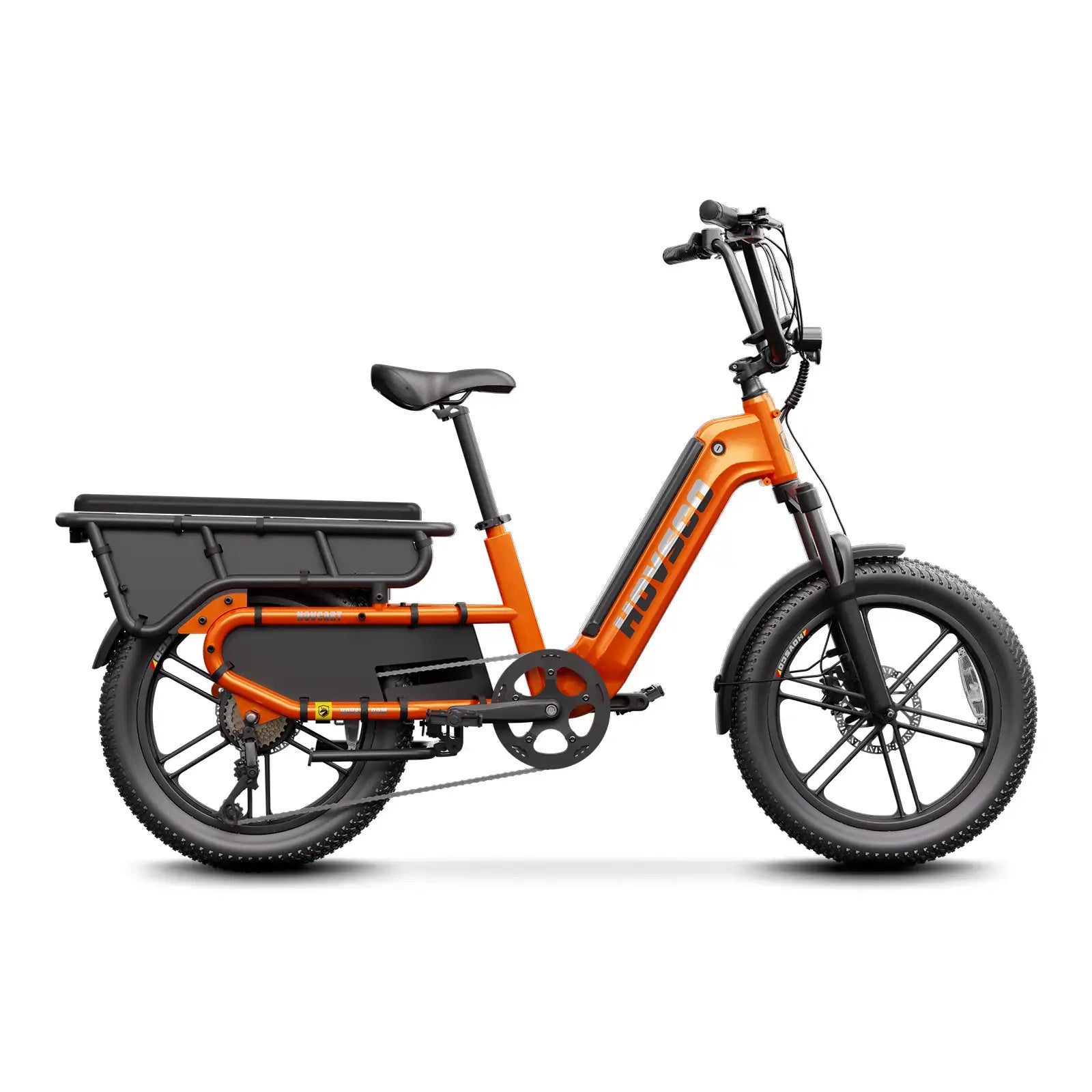
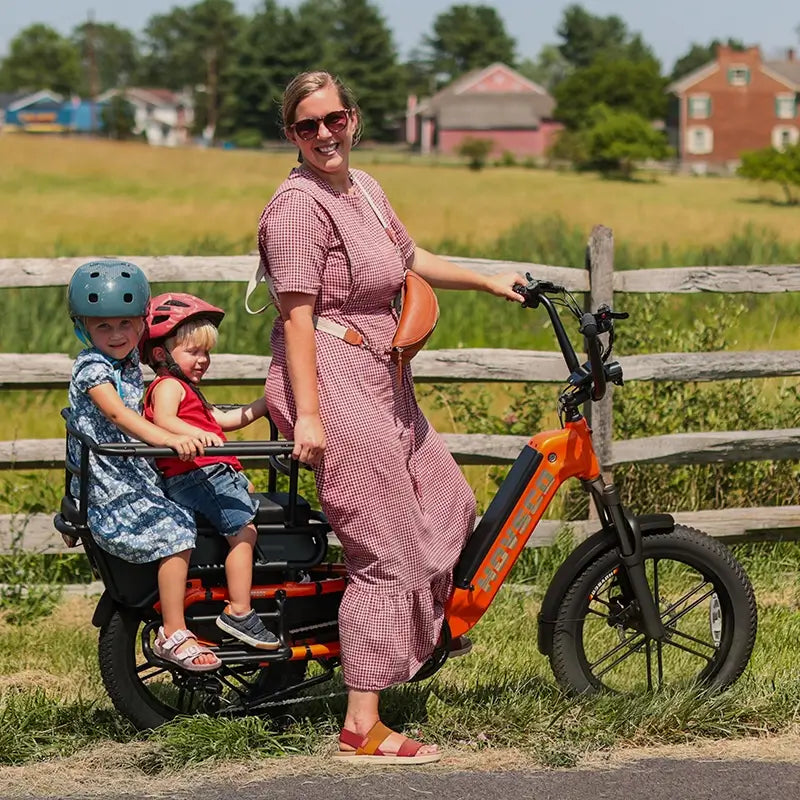
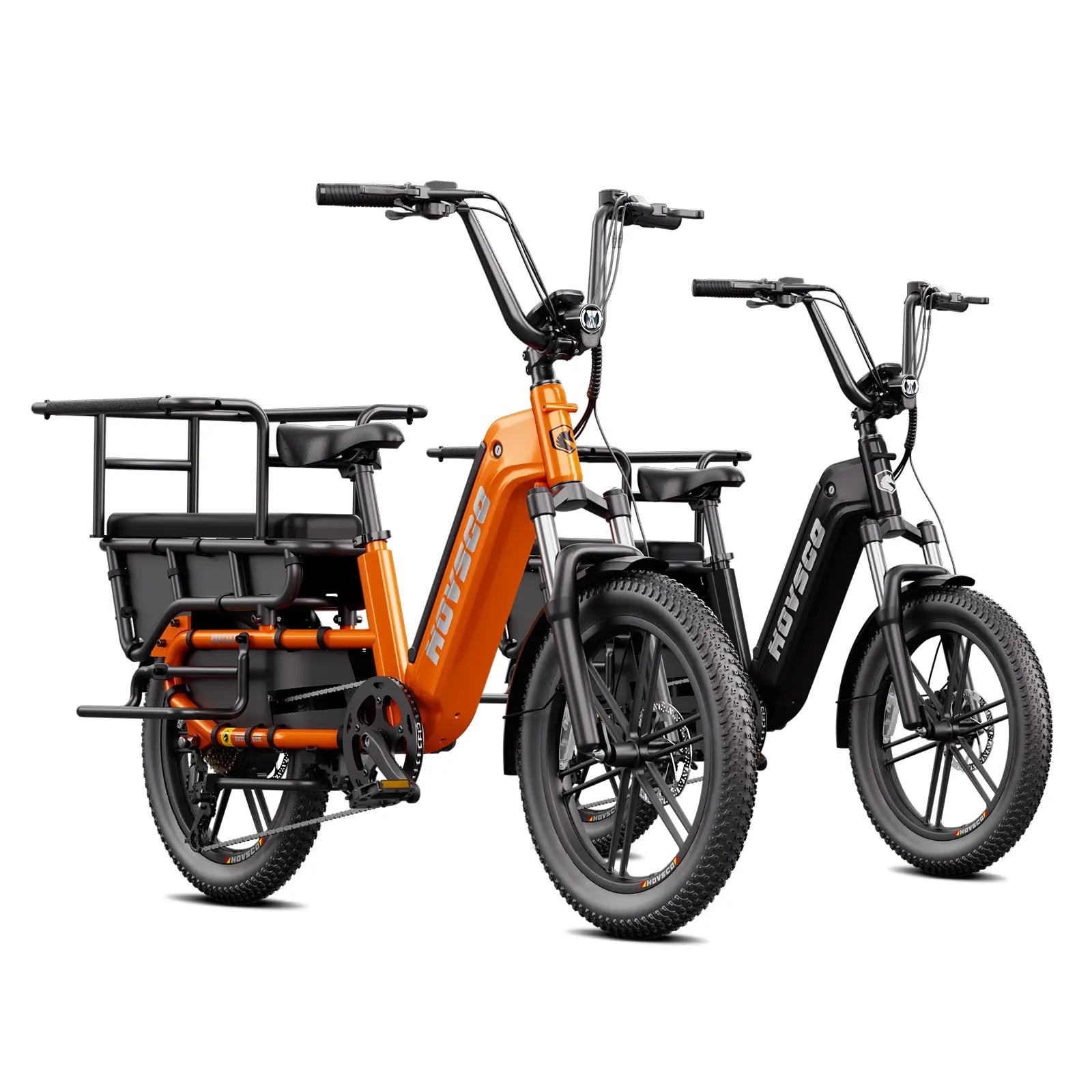
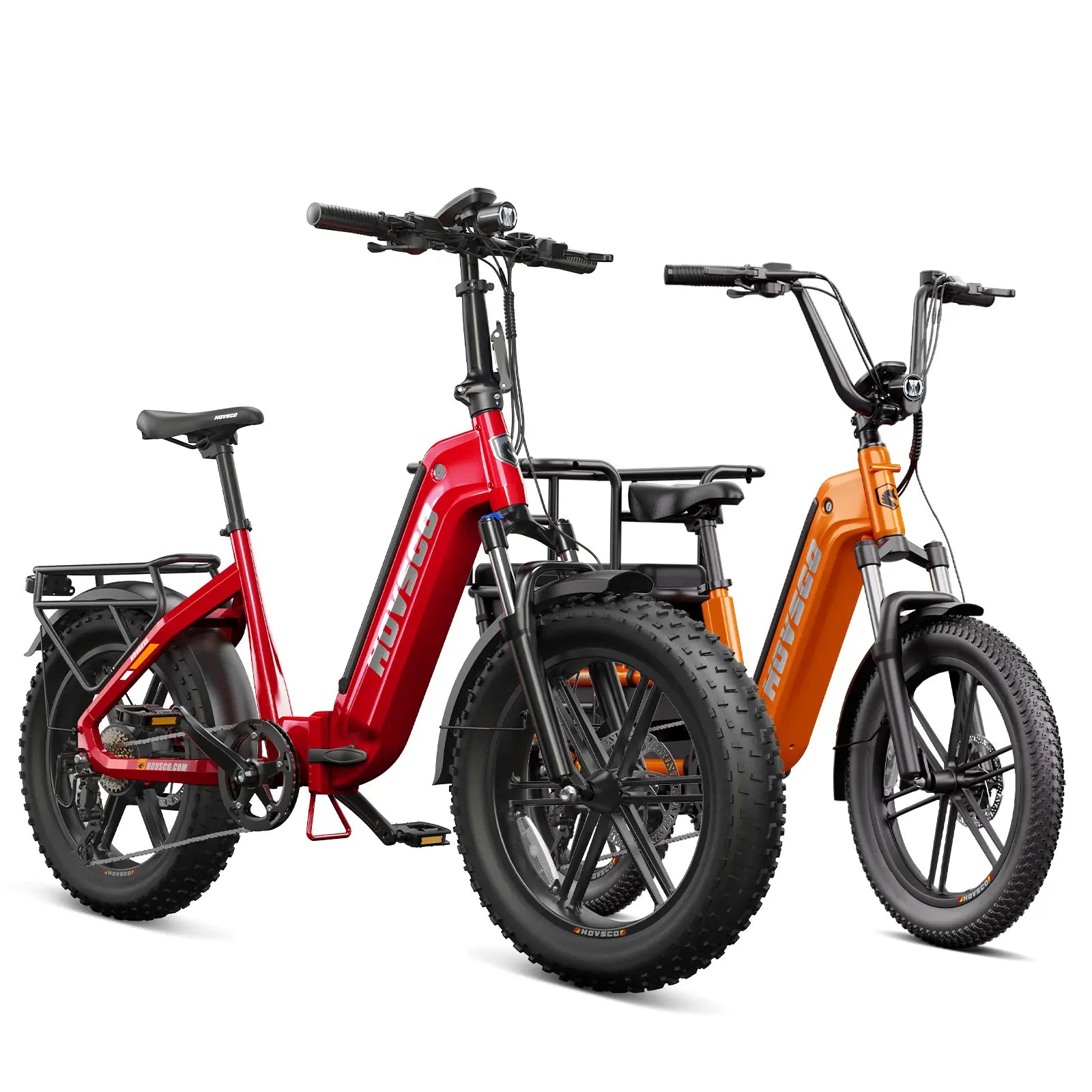
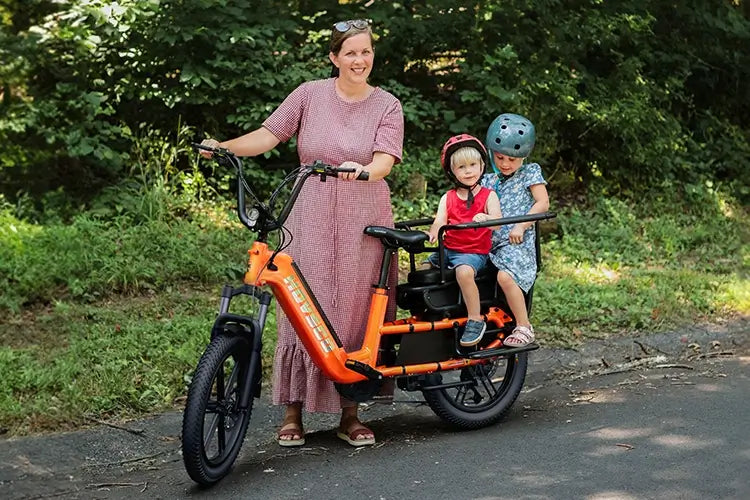
The fleet matches the routes: a cargo platform like the HovCart carries the boxes and bags of local delivery, with rated payload and stable low-speed handling, while lighter routes may use cargo-rated commuters. The last mile delivery ebike choice is payload and range per route.
The fleet also needs spares and consistency: identical bikes simplify parts, training, and maintenance. The commercial cargo bike fleet that works is the one matched to the route map, not bought one-off.
The route math is stops, payload, and range: each stop's load, the bike's rated payload, and the battery range for the full route with margin.
Delivery metrics that drive ROI
| Metric | Why it matters |
|---|---|
| Deliveries per hour | Sets the revenue ceiling per rider |
| Parking and loading time | The biggest per-stop variable |
| Cargo volume per trip | Caps stops before a reload |
| Route density | Stops per mile decide e-bike vs van |
| Fleet spare ratio | Protects uptime when a bike is down |
| Downtime cost | Stops lost per maintenance hour |
| Commercial insurance | A required operating line |
| Rider cost | The largest recurring expense |
The cargo bike delivery plan is built backward from the stops.
Route planning software for cycling and fixed delivery zones make the math repeatable. The last mile delivery ebike operation runs on planned routes, not improvisation.
A delivery fleet lives on uptime, so maintenance is a schedule: tire and brake checks weekly, drivetrain care on a rhythm, and battery care daily. The cargo bike business plan includes the maintenance line and the spare parts.
Downtime costs stops, so the plan includes backups: spare batteries, a spare bike or two, and a service partner. The commercial cargo bike fleet that meets its commitments is the one maintained on schedule.
Commercial delivery changes the rules: business insurance, commercial use classification, and local delivery regulations can all apply where personal riding would not. The cargo bike delivery business plan must verify each layer.
Check with the insurer and the local authority — some cities regulate commercial cargo bikes, delivery equipment, and rider requirements. The cargo bike business that skips this layer risks the whole operation.
The ROI model is simple: compare the cargo e-bike's purchase, running, and maintenance costs against the van's fuel, parking, insurance, and driver time for the same stops. The fill-in formula: e-bike cost per stop = (purchase + running + maintenance) ÷ total stops over the planning period; van cost per stop = (fuel + parking + insurance + driver time) ÷ stops. Replace every input with your own route data. The B2B inputs go beyond the van comparison: deliveries per hour, parking and loading time, cargo volume per trip, route density, fleet spare ratio, downtime cost, commercial insurance, and rider cost all belong in the model. On dense short routes, the e-bike's per-stop cost commonly lands well below the van's.
Delivery cost model (illustrative)
| Line | Van | Cargo e-bike |
|---|---|---|
| Purchase | Tens of thousands | A few thousand |
| Fuel or energy per mile | Dollars | Cents |
| Parking and access | Fees and congestion | Curbside ease |
| Maintenance | Higher | Lower, scheduled |
The illustrative case — a small local delivery operation replacing a van on short routes — shows the gap widening with fuel prices and stop density. The cargo bike delivery ROI is real, but it is route-specific: run the model with your own stops before the fleet order.
Plan the fleet around the route — the HovCart cargo e-bike, the electric cargo bikes collection, and fleet inquiries via the dealer page.
In cargo and fleet work, the delivery questions are route and uptime: what the route carries, and whether the fleet is maintained to deliver it daily. The cargo bike delivery case is strongest on dense short routes, and the plan is built on payload math, scheduled maintenance, and verified commercial rules. Run the ROI with your own stops, and the last mile delivery ebike decision follows the numbers.
— HOVSCO Cargo & Fleet Team
Cargo bike delivery is a route-and-ROI decision: match the fleet to the stops, plan payload and range per route, maintain on a schedule, and verify the insurance and commercial rules. On dense short routes, the last mile delivery ebike per-stop cost can beat the van — and the ROI model shows it with your numbers.
Dense, short routes are where cargo bike delivery wins on cost and speed.
Match fleet bikes to route payload and range — consistency simplifies service.
Plan routes backward from stops: payload, range, and margin.
Maintenance is a schedule — downtime costs stops.
Commercial use changes insurance and regulations — verify before launch.
What is my route density and average stop distance?
What payload does the average route carry per bike?
What does the van actually cost per stop today?
What maintenance and spare-bike plan keeps the fleet running?
What insurance and commercial rules apply to delivery in my city?
Is cargo bike delivery cheaper than vans?
On dense short routes, yes — the commercial cargo bike costs cents per mile, avoids parking and congestion, and lowers the per-stop cost below a van's. The gap depends on route density, fuel, and driver time.
How much can a cargo e-bike carry for delivery?
It depends on the platform — a rated cargo e-bike like the HovCart carries a substantial payload within its rating. The last mile delivery ebike route math keeps rider, cargo, and bike inside the rated payload with margin.
What maintenance does a delivery e-bike fleet need?
Weekly tire and brake checks, drivetrain care on a rhythm, and daily battery care — plus spare batteries and a backup bike to protect uptime. The cargo bike business plan budgets the maintenance line.
Do I need special insurance for cargo bike delivery?
Yes — commercial delivery changes the insurance and regulatory picture: business coverage, commercial use classification, and local delivery rules can all apply. Verify with your insurer and the local authority before launch.
How do I calculate ROI for a cargo e-bike fleet?
Compare the e-bike's purchase, running, and maintenance costs against the van's fuel, parking, insurance, and driver time for the same stops. The cargo bike delivery ROI is route-specific — model it with your own numbers.
Share:
Cargo E-Bike Safety After the CPSC Warning
How Do You Choose a High-Payload Electric Bike?