


![[ New Arrival ] Porto Max Electric Scooter For Commute & Grocery Shopping - HOVSCO](http://www.hovsco.com/cdn/shop/files/PotroMax-3.jpg?v=1706927007&width=1200)
- by SteveJames
Cargo E-Bike Safety After the CPSC Warning
- by SteveJames
E-Bikes
Accessories
 Free Shipping
 15-Day Returns
 2-Year Warranty
Free Shipping
15-Day Returns
2-Year Warranty
2-Year Warranty
Free Shipping
15-Day Returns
2-Year Warranty
This guide explains cargo e-bike safety after the CPSC warning — what it covered, how quality bikes mitigate risk, and a family safety checklist. For cargo fundamentals, see our cargo e-bike guide.
Cargo e-bike safety deserves extra scrutiny because cargo bikes carry the load that matters most: a family. The CPSC e-bike warning focused attention on low-cost e-bikes and lithium-ion batteries, and the lesson for cargo buyers is to verify the system — frame, brakes, battery, and stability — rather than the price. This guide covers what the warning covered, how quality cargo bikes mitigate risk, and the family cargo bike safety checklist that applies to every brand.
Cargo Safety at a Glance
Verify the system: rated payload, loaded brakes, battery documentation, and stability under load. Ask the brand for its test reports before buying a family cargo bike.
In recent years, the U.S. Consumer Product Safety Commission (CPSC) raised concerns about low-cost e-bikes and lithium-ion batteries, issuing warnings and prompting recalls around uncertified packs and batteries that failed during charging. The CPSC e-bike warning is not about e-bikes as a category — it is about specific risk factors: unknown battery quality, incompatible chargers, and builds that skip the safety work. Check current CPSC announcements for the latest guidance, and treat the CPSC e-bike warning as a buyer's checklist rather than a category verdict.
For cargo bikes carrying families, the battery lesson matters most: a cargo e-bike runs longer and harder, so the battery and charger system should be documented, not assumed.
Quality cargo bikes mitigate the risks the warning highlights. The frame is engineered for the rated load; the brakes are sized and tested loaded; and the battery and charger are tested together as a system. When you evaluate a family cargo bike, ask the brand what it documents: loaded braking tests, frame validation, and battery test reports. The cargo e-bike safety difference between a budget import and a quality build shows up in exactly these three systems.
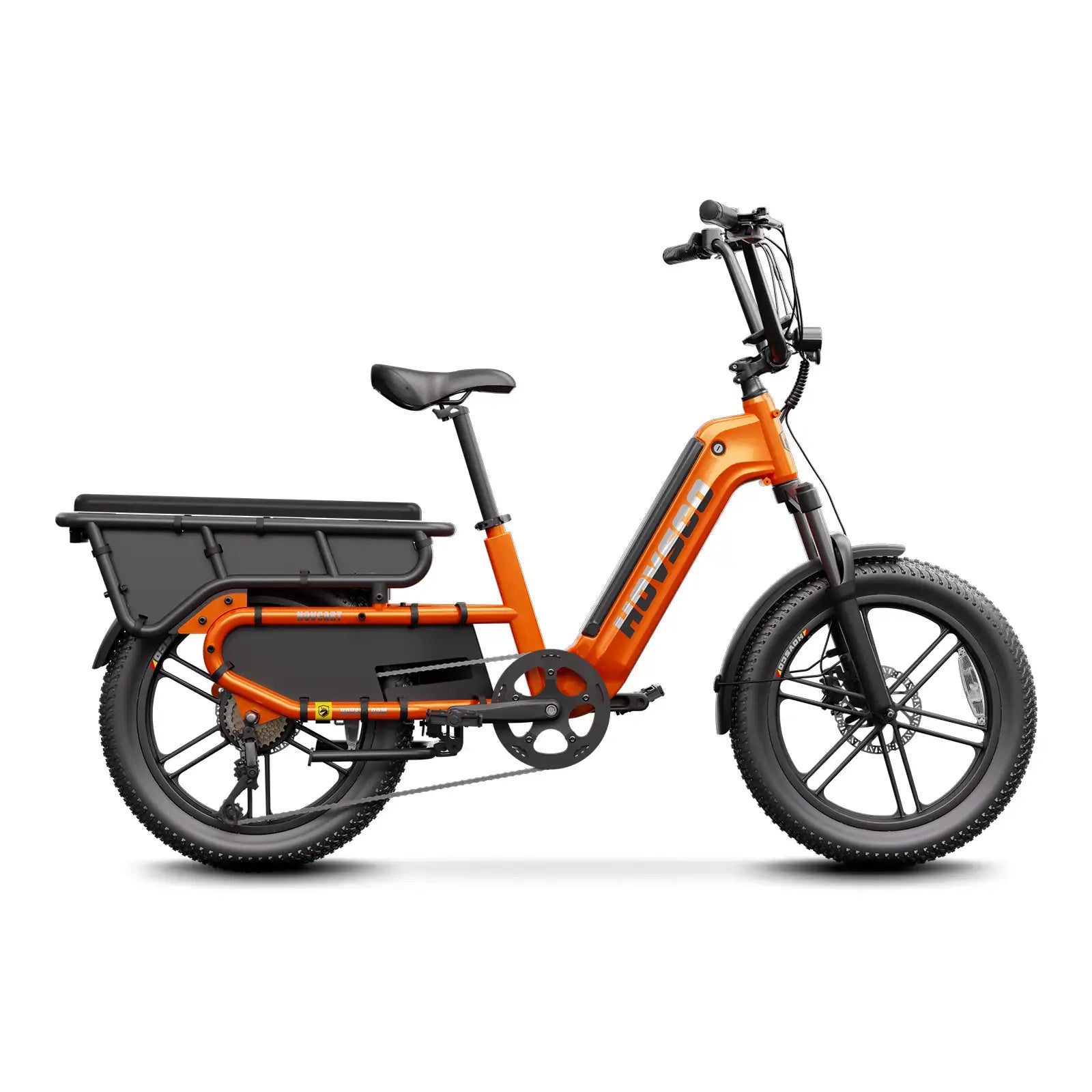
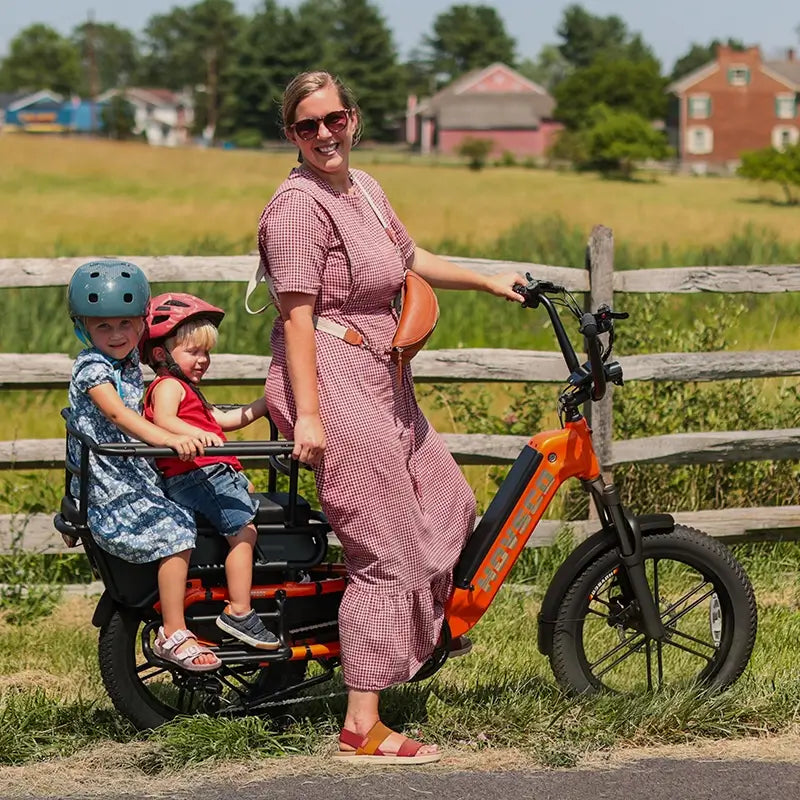
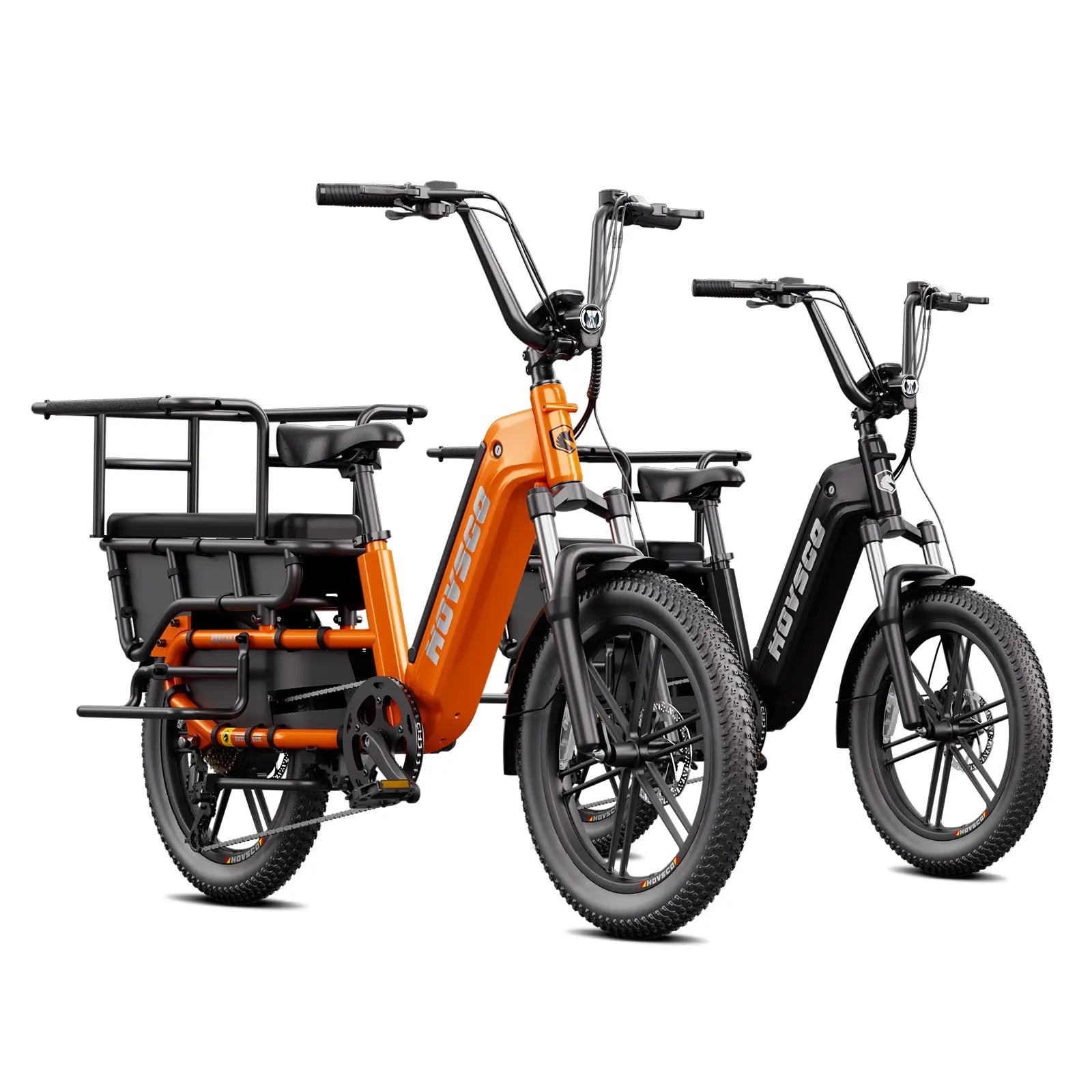
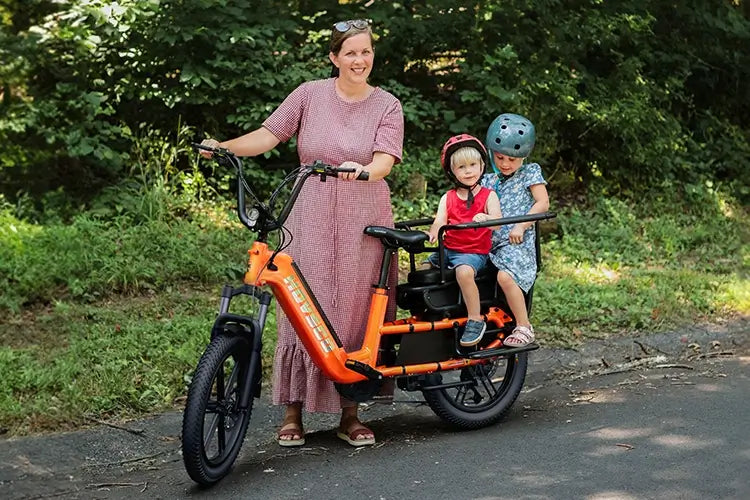
Weight distribution is the cargo ebike stability core. Keep heavy items low and centered, secure the load so it cannot shift, and never exceed the rated payload. A cargo bike with a low center of gravity — like the HovCart's 20-inch wheel platform — stays stable at walking speed and under load, which is where cargo ebike stability matters most. Test the handling loaded before regular family rides.
Load rules for cargo e-bikes
| Rule | Why it matters |
|---|---|
| Heaviest items lowest | Lowers the center of gravity |
| Secure the load | Prevents shifting in turns |
| Stay inside the payload | Keeps the rating with margin |
| Test loaded | Confirms stability and braking |
The family cargo bike safety rule is load discipline: a stable bike is a safe bike, and stability starts with the load.
Before any family ride, run the baseline checks. Brakes: stop from riding speed with the bike loaded, and confirm hydraulic or reliable brakes sized for the load. Tires: correct pressure for the load and surface, with no wear or damage. Stability: test slow-speed turns and stops with the load aboard, and check the kickstand holds the loaded bike. These checks are the cargo e-bike safety baseline that every brand's bike should pass.
Choosing a safer cargo e-bike means asking for evidence. Ask what frame and loaded-braking tests the brand documents, what battery and charger testing it can share, and what support exists after the sale. Rather than rely on certification names alone, ask for the test reports and the documentation that ships with the bike. A brand that shares its evidence — like HOVSCO does — makes the choice transparent; a brand that cannot should not carry your family.
Family cargo e-bike checklist
| Check | What to confirm |
|---|---|
| Payload with margin | Rider + kids + gear inside the rating |
| Loaded brakes | Confident stop with the full load |
| Battery documentation | Test reports and the supplied charger |
| Stability | Low-speed turns and stops under load |
| Child seat | Rated, mounted per instructions |
Work through the checklist at purchase and again after setup — the family cargo bike safety job is never done after the first ride.
Build the family setup on the HovCart cargo e-bike and its child seat in the electric cargo bikes collection — and ask HOVSCO for its test documentation before ordering.
In cargo engineering, the warning-era lesson is to verify the system, not the price. We document loaded braking, frame validation, and battery testing because a family cargo bike has to behave under the load it will actually carry. The family cargo bike safety difference is evidence — ask for it, check it, and ride within the rating.
— HOVSCO Cargo Engineering Team
Cargo e-bike safety after the CPSC warning is a verification exercise: check the frame, brakes, battery, and stability, and ask for the brand's test reports. Use the family safety checklist at purchase and before every school run, and keep the load inside the rating with margin.
The CPSC e-bike warning targeted low-cost bikes and uncertified batteries, not the category.
Quality cargo bikes mitigate risk through tested frames, brakes, and battery systems.
Load low and secure — cargo ebike stability starts with the load.
Run the braking, tire, and stability baseline before family rides.
Ask the brand for test reports; a family cargo bike should have evidence.
What loaded-braking and frame tests does the brand document?
What battery and charger testing can the brand share?
Does the payload cover my family with margin?
How does the bike handle loaded at low speed and stops?
What support exists after the sale?
Is a cargo e-bike safe for a family?
Yes when the system is verified: a rated payload with margin, loaded brakes, documented battery testing, and a correctly mounted child seat. Family cargo bike safety is a checklist, not a category claim.
What did the CPSC e-bike warning say?
The CPSC e-bike warning raised concerns about low-cost e-bikes and lithium-ion batteries, prompting recalls and warnings around uncertified packs and chargers. Check current CPSC announcements for the latest guidance.
What makes a cargo bike stable?
A low center of gravity, a secure load kept low and centered, and a payload kept inside the rating. Cargo ebike stability is tested loaded, at low speed, and at stops.
How do I know my cargo e-bike battery is safe?
Ask the brand for its battery and charger test reports, use the supplied charger, inspect the pack before charging, and follow the charging and storage safety rules.
Should I buy a cheap cargo e-bike?
For a family bike, verify the system first: brakes, battery documentation, payload, and support. A lower price is not worth a bike that cannot stop loaded or document its battery.
Share:
HOVSCO HovCart Review: Specs, Range, Payload and Fit
Cargo Bikes for Local Delivery: A Business Guide