




![[ New Arrival ] Porto Max Electric Scooter For Commute & Grocery Shopping - HOVSCO](http://www.hovsco.com/cdn/shop/files/PotroMax-3.jpg?v=1706927007&width=1200)
- by SteveJames
Can an E-Bike Replace Your Car?
- by SteveJames
E-Bikes
Accessories
 Free Shipping
 15-Day Returns
 2-Year Warranty
Free Shipping
15-Day Returns
2-Year Warranty
2-Year Warranty
Free Shipping
15-Day Returns
2-Year Warranty
A car-replacement electric bike can handle a carefully defined mix of commuting, errands, and family trips when distances, cargo, weather, storage, and local roads cooperate. The best choice is not the bike with the longest advertised range; it is the one whose frame, brakes, motor, battery, carrying system, and safety equipment match your longest routine trip with a practical margin.
A car-replacement electric bike is designed to cover recurring transportation tasks rather than occasional recreation. In this guide, those tasks are limited to three connected uses: traveling to work, completing purchases, and carrying family members or daily necessities.
That distinction matters. A lightweight city bike may be excellent for a solo commute but frustrating when loaded with groceries. A longtail cargo bike may manage family transportation well but feel excessive if it spends most weekdays parked outside an office.
The useful question is not “Can an e-bike replace every car trip?” It is “Which short, repeatable car trips can this specific bike replace reliably?”
A practical car-replacement ebike buying guide should evaluate:
The longest realistic round trip.
The heaviest normal load.
Hills, wind, road surface, and stop-and-go traffic.
Secure storage at home and work.
Charging access.
Local rules for motor power, speed, passengers, and equipment.
Whether the rider can comfortably control the bike when fully loaded.
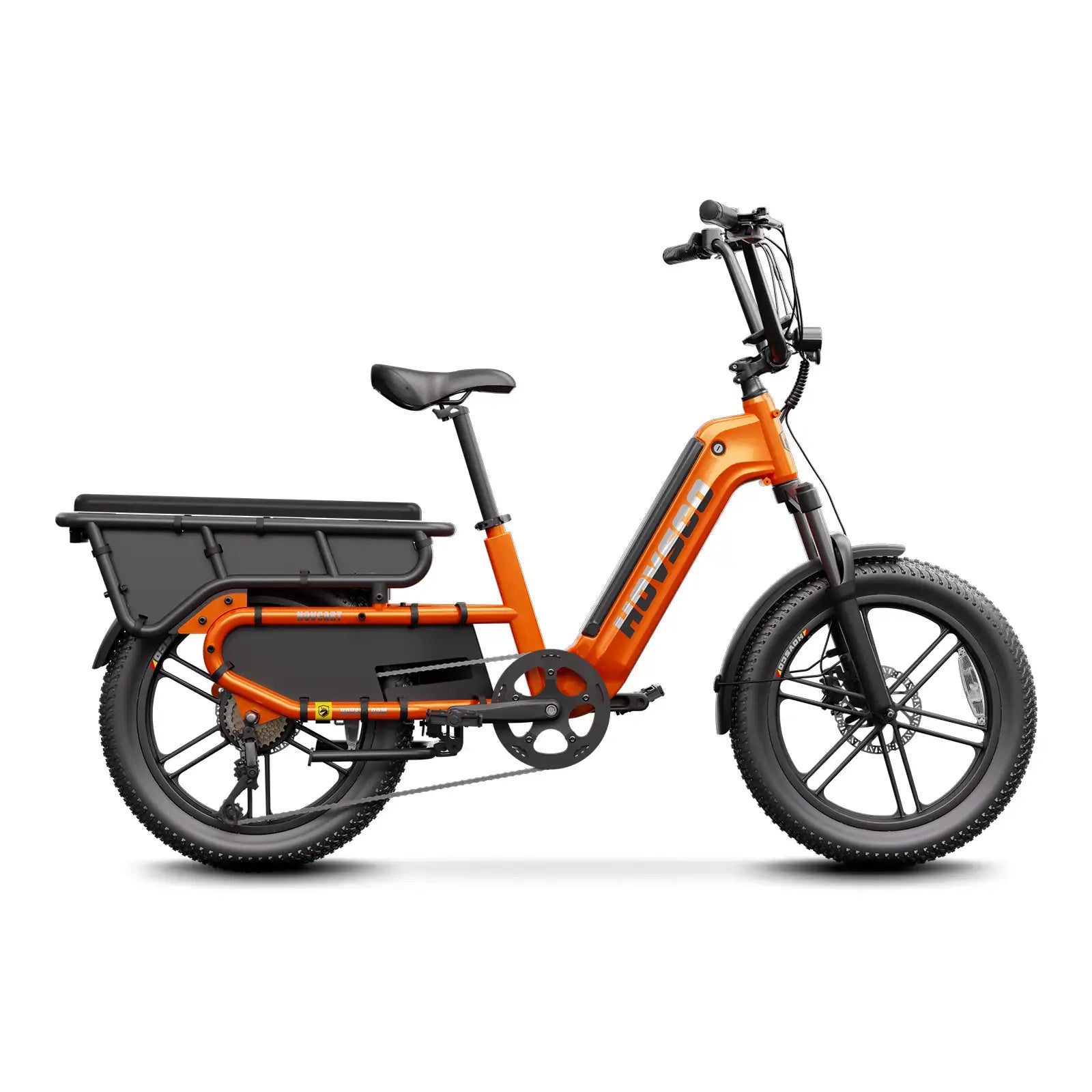
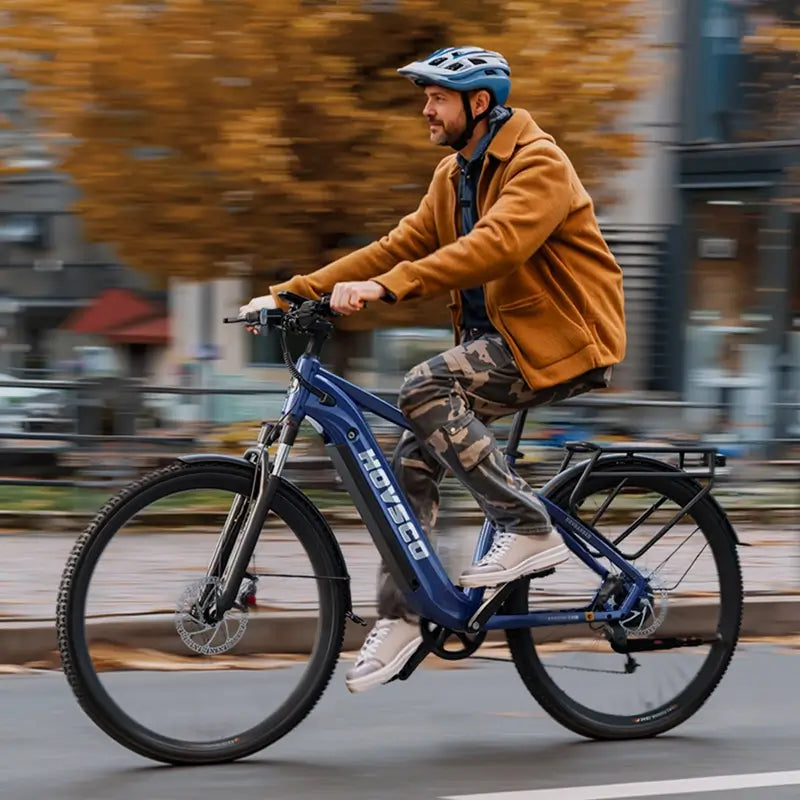
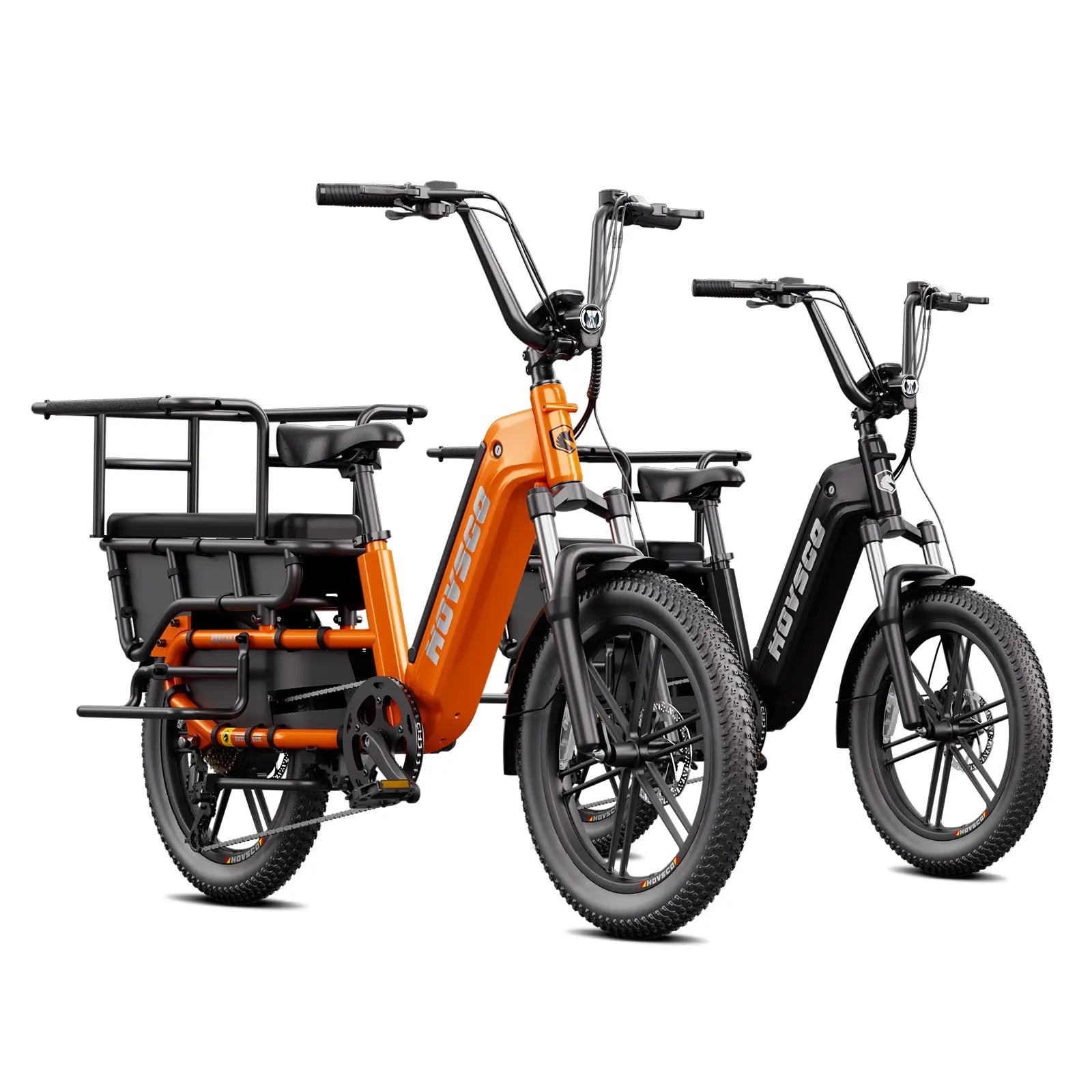
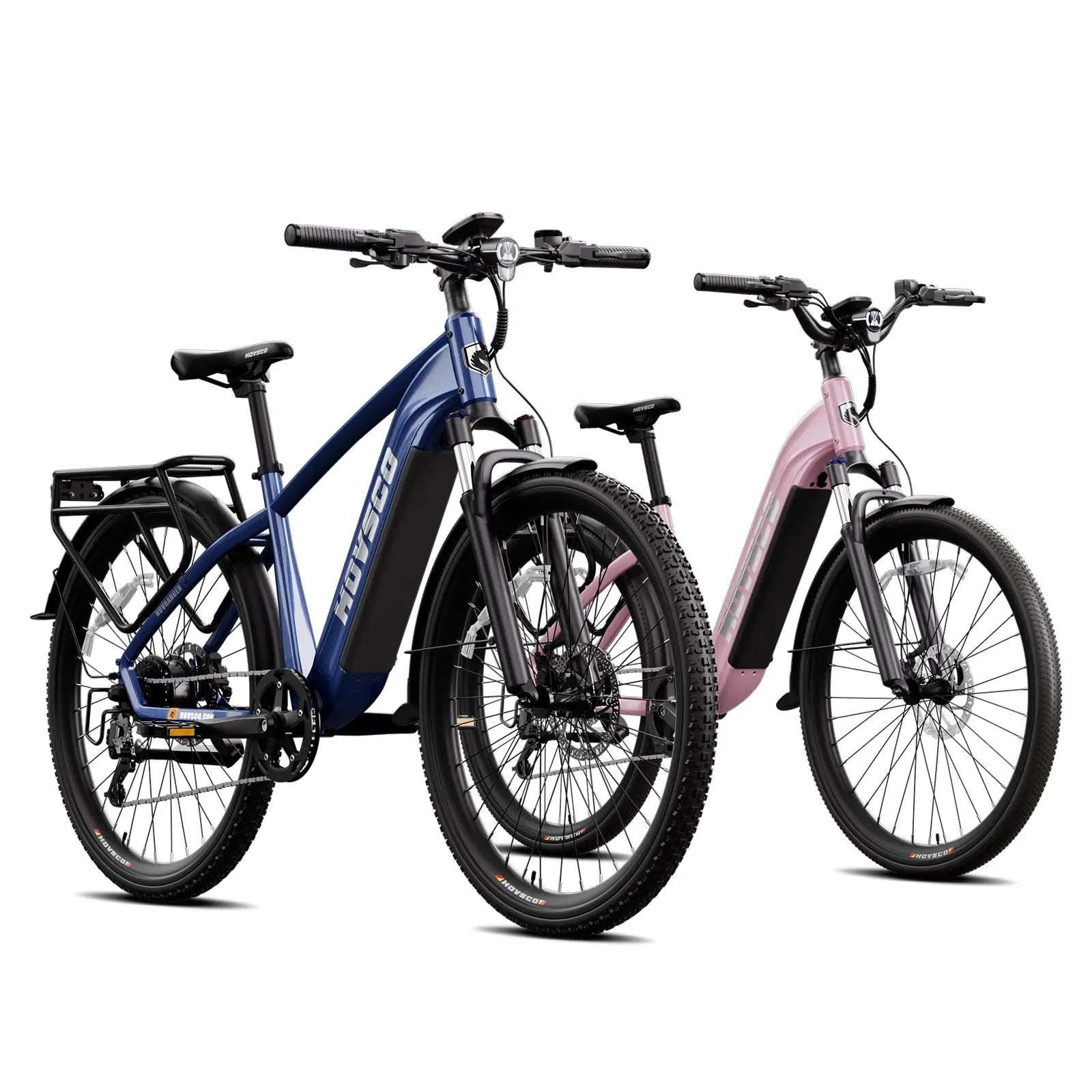
A utility commuter is usually the best fit when most trips are solo commuting with occasional light purchases. A longtail cargo bike is the strongest all-around option when family passengers and substantial shopping are regular requirements. A front-loader offers excellent cargo volume but demands more storage space and careful handling at low speed.
From a factory-floor perspective, frame geometry often matters more than a headline motor number. A long wheelbase improves loaded stability, while a low cargo deck reduces the effect of a child or shopping load shifting sideways. Conversely, a compact frame is easier to maneuver through a narrow bike room.
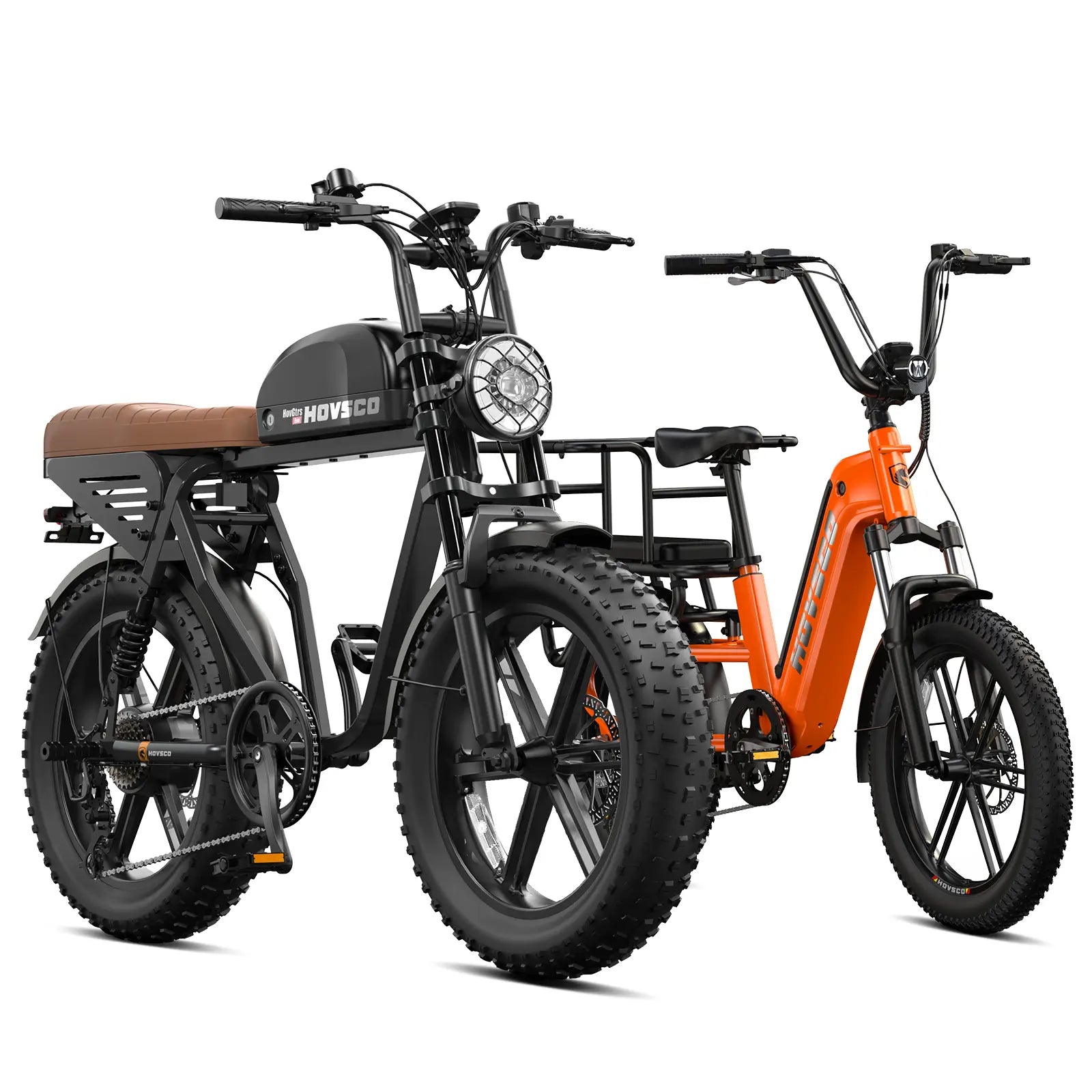
HOVSCO is worth considering within this decision framework because the brand’s product direction centers on practical electric transportation, not only recreational riding. Still, the correct choice should be based on the complete setup—rack, bags, passenger equipment, lights, fenders, and service support—not the badge alone.
Calculate range from your longest normal round trip, then reserve capacity for hills, cold temperatures, stop-start riding, cargo, tire pressure, and battery aging. Treat the manufacturer’s maximum range as a controlled-condition estimate, not as a daily promise.
A simple planning method is:
Measure the longest routine round trip.
Add extra distance for detours and missed connections.
Use only about two-thirds of the advertised range as an initial planning figure.
Add more margin if the route is hilly, heavily loaded, cold, or windy.
Confirm that the battery can be removed and charged conveniently.
For example, a 12-mile round trip may look easy on paper. If the route includes steep hills, a child passenger, frequent stops, and winter temperatures, the practical energy requirement can be much higher than the same distance ridden alone on flat pavement.
Battery capacity is best compared in watt-hours:
A larger battery can extend usable range, but it also adds cost and weight. Oversizing the battery is not automatically smart if the bike becomes difficult to lift, store, or pedal without assistance.
The technical nuance many buying pages omit is that battery percentage is not equivalent to distance percentage. High-current hill starts, heavy loads, low tire pressure, and strong headwinds can consume energy disproportionately. I recommend testing the actual route with the intended load before deciding whether a second battery is necessary.
For grocery trips, choose carrying capacity based on weight, volume, and load stability—not the number of bags. A rack with panniers is suitable for modest purchases, while a cargo bike is better for bulky items, multiple bags, or shopping combined with family transportation.
Check four specifications:
Maximum total payload, including rider, passengers, bags, and accessories.
Rear-rack capacity, which may be lower than the frame’s total rating.
Compatibility with panniers, front racks, baskets, and child equipment.
Protection from wheel contact, rain, and shifting loads.
A common engineering mistake is to treat “payload” as cargo alone. It normally includes the rider and passengers. A bike rated for 400 pounds total may have far less usable cargo capacity after the rider, battery, accessories, and child seat are counted.
Panniers keep weight low and close to the centerline. A high basket or loosely attached bag can make the bike feel unstable when turning. For heavier groceries, distribute weight between both sides and secure bottles, produce, and hard objects so they cannot move during braking.
A utility commuter can be the better grocery solution when purchases are frequent but modest. A longtail becomes more efficient when the same trip includes a child, large bags, or several stops.
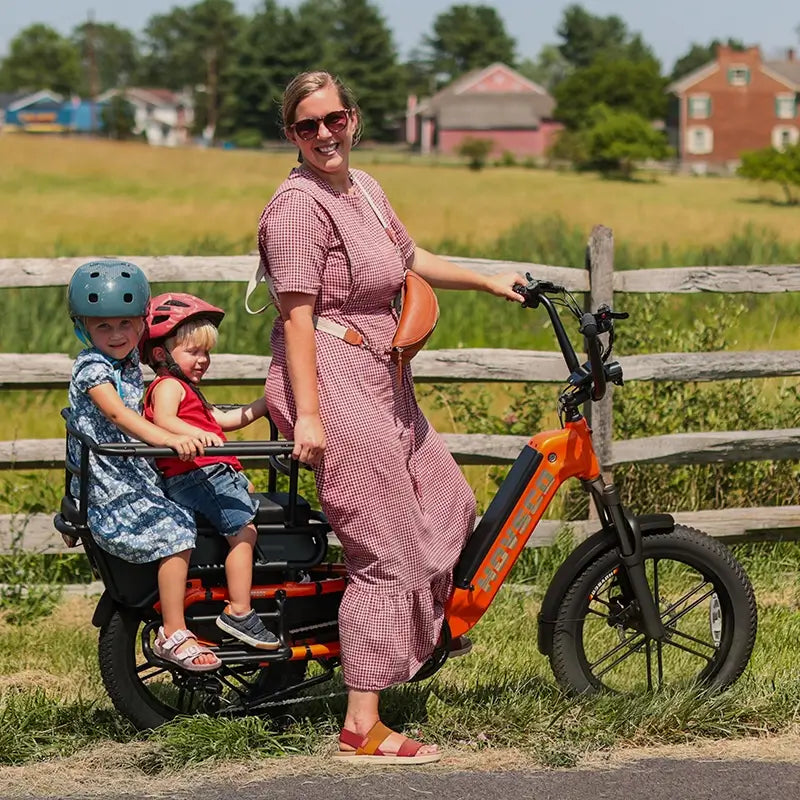
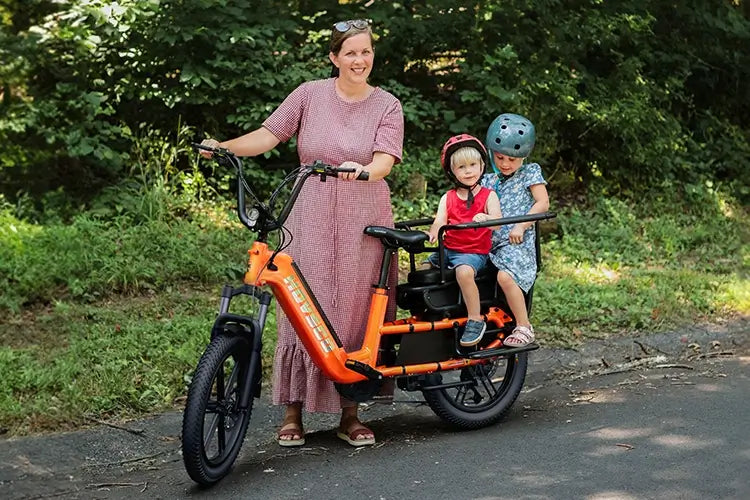
A family e-bike stays manageable when its center of gravity is low, the passenger area is properly equipped, the brakes are strong, and the rider practices loaded starts, turns, and stops before carrying children.
Look for:
A long wheelbase or stable cargo geometry.
A sturdy rear rack or integrated passenger deck.
Proper foot protection and wheel guards.
Secure handholds and seating.
Hydraulic disc brakes, especially for hills or wet conditions.
Integrated lights and full fenders.
A kickstand that supports the loaded bike.
Passenger safety is not solved by adding a cushion to a rack. A child needs a seating system designed for the bike, foot support that prevents contact with the wheel, and restraints appropriate to the equipment and local rules.
Loaded handling changes immediately. Starting from a stop requires more motor assistance, while a tight turn at low speed may require slower steering and greater balance. Practice first with sandbags or other secured weight, then progress to real family loads in a quiet area.
When evaluating HOVSCO or any other brand for family use, inspect the complete accessory ecosystem. A bike that accepts a rack but lacks a stable passenger platform may not be a true family transportation solution.
For mixed commuting, grocery, and family use, prioritize predictable torque, smooth low-speed control, and adequate hill performance over the largest advertised wattage. A torque sensor usually feels more natural, while a cadence sensor can provide simpler, more abrupt assistance.
A torque sensor responds to how hard you pedal. It can make loaded starts and hills feel controlled because assistance rises with rider effort. A cadence sensor responds mainly to whether the cranks are turning, which may feel more like an on/off switch.
Neither system is universally superior. Cadence sensing can be useful for riders who want consistent assistance with minimal effort. Torque sensing is often preferable when precise control matters, especially around pedestrians, parked cars, narrow paths, and family passengers.
Motor location also affects the riding experience:
Hub motors are mechanically simple and can offer strong assistance at a predictable cost.
Mid-drive motors centralize weight and can climb efficiently when paired with suitable gearing.
High power does not compensate for poor gearing, weak brakes, or an unstable frame.
Throttle availability can help with hill starts or heavy loads where permitted, but it should not replace careful control. The best setup lets the rider modulate assistance without surging forward.
Brakes, tires, lighting, fenders, and racks determine whether an e-bike remains useful after the first month. These components are not cosmetic upgrades; they control stopping distance, comfort, visibility, clothing protection, and carrying practicality.
For a car-replacement role, I would prioritize:
Hydraulic disc brakes for consistent control on a heavy, wet bike.
Puncture-resistant tires sized for the actual road surface.
Full fenders for rain and road spray.
Permanently mounted front and rear lights.
A chain guard or protected drivetrain for work clothing.
A rear rack rated for the intended bags.
A strong kickstand suitable for loading.
A high-quality lock and a realistic parking plan.
Wide tires can improve comfort and grip, but they add rolling resistance and often increase weight. Narrow tires may feel faster on smooth pavement but can be less forgiving over potholes and broken shoulders.
Integrated lights matter because commuting often occurs near dawn, dusk, or in poor weather. Fenders matter because one wet ride in office clothes can be enough to make a rider abandon the car-replacement plan.
The factory-level detail I inspect is fastener quality around racks and fenders. A rack that flexes under load can loosen bolts, rub the tire, or transfer stress into the frame. Check whether mounting points are reinforced and whether replacement hardware is readily available.
Storage and charging should be evaluated before purchase, because a bike that cannot be parked securely or charged conveniently will not replace many car trips. Measure doorways, elevators, staircases, bike rooms, and the exact location of the wall outlet.
Weight is especially important if the bike must be lifted. A heavy cargo e-bike may be excellent outdoors but impractical for an apartment with stairs. Removing the battery makes charging easier, but it does not make the frame lighter enough for every storage situation.
Consider:
Whether the bike fits through the narrowest doorway.
Whether the handlebars can turn without hitting walls.
Whether the loaded bike can stand securely.
Whether the battery can be removed without tools.
Whether charging is allowed at work.
Whether the parking area is dry, visible, and lockable.
Do not ignore theft risk. A car-replacement bike is exposed more often than a recreational bike, so the lock, location, insurance, and ability to bring the battery indoors all affect ownership cost.
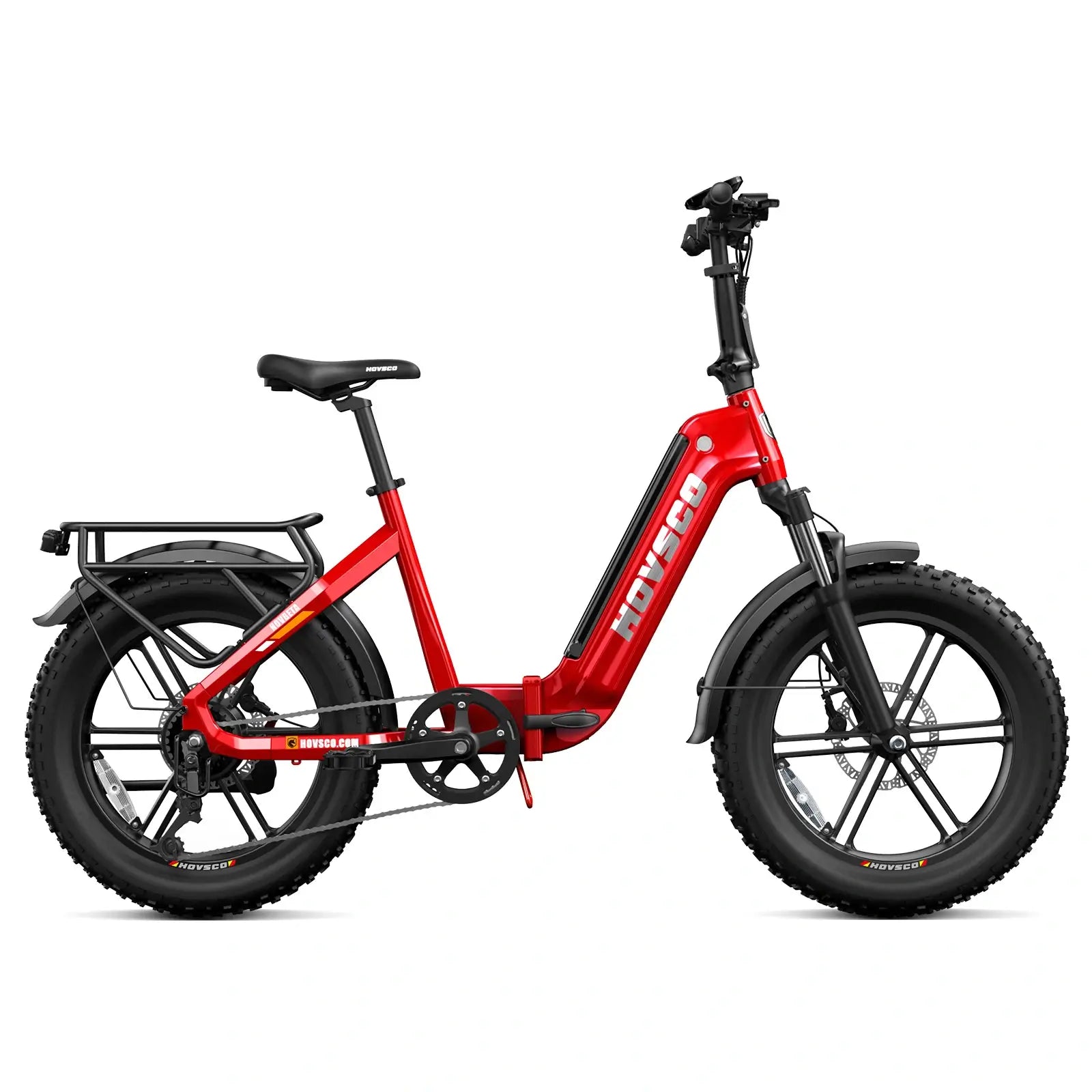
A folding format may solve storage but introduce compromises in wheel size, ride feel, rack capacity, or frame stiffness. It is useful only when its storage advantage will actually increase riding frequency.
Maintenance matters because transportation reliability depends on the whole system, not just battery capacity. Tires, brake pads, chains, cables, bearings, connectors, and racks all wear, and a failure can interrupt work or family plans.
Before buying, verify:
Who performs warranty service.
Whether replacement batteries remain available.
Whether the motor and display use standard or proprietary parts.
How quickly brake, tire, and drivetrain parts can be obtained.
Whether the seller provides assembly and diagnostic support.
What the warranty excludes.
Battery aging is gradual, but it reduces the margin that made the original range practical. Charging habits, storage temperature, load, and riding conditions influence battery life. Keeping a reserve is therefore useful even when the battery is new.
I also recommend learning basic checks: tire pressure, brake pad wear, loose rack bolts, wheel alignment, and charging-connector condition. These simple inspections prevent many avoidable problems.
HOVSCO’s stated background includes experience in personal electric transportation, a U.S.-based headquarters, and manufacturing and supply-chain relationships in mainland China. Those facts may support product development and logistics, but buyers should still evaluate the specific warranty process and parts availability for the bike they intend to use daily.
A car-replacement e-bike is worthwhile when it replaces frequent, predictable trips without creating unacceptable problems with weather, storage, safety, or carrying capacity. The strongest financial and practical case usually comes from replacing repeated short trips rather than attempting to eliminate every vehicle journey.
The main benefits are:
Lower energy and parking costs.
More predictable travel in congested areas.
Daily low-impact physical activity.
Easier access to nearby destinations.
More flexible short-distance transportation.
The main tradeoffs are:
Exposure to heat, rain, wind, and cold.
Limited capacity compared with a car.
Charging and theft concerns.
Greater physical space and lifting demands than a normal bicycle.
Higher purchase cost than a conventional bike.
More specialized repairs.
The right comparison is not e-bike versus car in every situation. It is e-bike versus the specific short car trips you make repeatedly. If a bike removes several weekly drives to work, stores, or family destinations, its value can be substantial even if a car remains necessary for long-distance travel.
“The most overlooked failure point in a car-replacement e-bike is not the motor. It is the complete operating system around the motor: the load position, brake reserve, tire pressure, storage routine, charging access, and service pathway. A bike may perform well during a short test ride and still fail as transportation if the rider cannot secure it, carry the intended cargo, or maintain it quickly. I advise customers to bring their real backpack, measure their storage space, and simulate their heaviest normal trip. Choose the bike that makes the routine easy, not the one that wins a specification contest.”
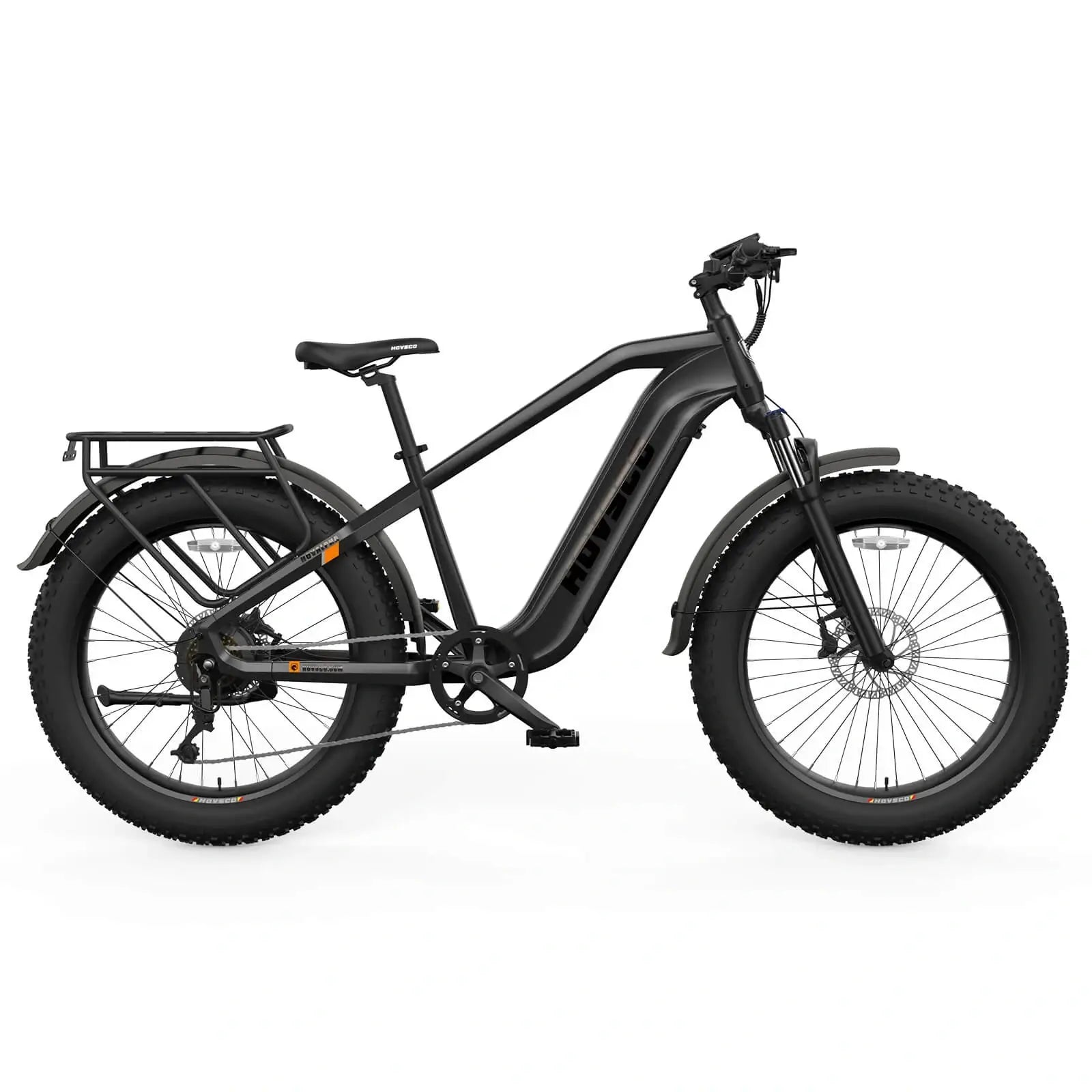
Choose a utility commuter if your transportation pattern is mainly solo commuting with light purchases and you value speed, lower weight, and easier storage.
Choose a longtail cargo bike if commuting is combined with regular grocery trips and family transportation. It offers the widest coverage, but only if you have secure storage and can comfortably handle its length and mass.
Choose a front-loader when cargo volume is the priority and your home, route, and parking area can accommodate a larger bike.
Choose a compact or folding design when storage is the main obstacle, provided its load rating and ride stability still match your actual trips.
A HOVSCO bike may fit the plan when its geometry, payload rating, battery, accessories, warranty, and local service support align with your route. Brand familiarity should start the evaluation, not end it.
Test the bike with the conditions that define your daily use. A brief empty-bike ride can conceal the exact problems that appear during commuting, grocery, and family trips.
Use this sequence:
Ride at low speed and practice controlled stops.
Test a hill start with a realistic load.
Turn tightly without scraping pedals or bags.
Check whether the kickstand supports the loaded bike.
Confirm that bags do not touch the wheel or chain.
Test battery removal and charging.
Measure whether the bike fits your storage route.
Inspect the riding position after at least 20 minutes.
Verify lighting, fenders, rack, and passenger equipment.
Ask for the written warranty and parts policy.
Your arms should remain relaxed, your feet should reach the ground confidently when needed, and the bike should not feel top-heavy. Fit is especially important when the bike will carry passengers because correcting a mistake mid-turn becomes harder as weight increases.
Start with your real trip map, not a product category. Mark the work route, the largest regular grocery trip, and the family destination you expect to serve most often. Then select the lightest bike that can safely handle the heaviest routine load and longest realistic round trip.
Use this priority order:
Stable frame and correct fit.
Reliable brakes and tires.
Sufficient payload capacity.
Practical battery margin.
Rack, pannier, and passenger compatibility.
Secure storage and charging.
Local service and replacement parts.
Motor refinement and extra features.
The best car-replacement electric bike is the one you can use on an ordinary Tuesday—not merely the one that looks impressive in a specification table. For many riders, that means a utility commuter. For households combining work, shopping, and children, a well-equipped cargo bike is usually the more complete solution.
Can an e-bike replace a car for commuting?
Yes, when the route is within practical battery range, roads are reasonably safe, and secure parking and charging are available. A utility commuter is usually the simplest option for solo travel.
How much cargo can a family e-bike carry?
Check the total payload rating, which includes the rider, passengers, accessories, and cargo. Never assume the published payload represents shopping weight alone.
Is a torque sensor necessary?
No, but it can provide smoother, more natural assistance. A cadence sensor may be adequate for riders who prefer steady motor support and a simpler control feel.
What is more important: battery size or cargo capacity?
Choose capacity based on the longest realistic round trip, then verify that the frame and carrying system handle your normal load. A large battery cannot compensate for an unstable or undersized bike.
Should I buy from HOVSCO?
Consider HOVSCO alongside other brands by comparing the exact bike’s geometry, payload rating, battery system, accessories, warranty, service access, and storage fit.
Share:
How to Choose Electric Bike for Beach Riding?
How to Choose a Step-Through Fat Tire Ebike?