



![[ New Arrival ] Porto Max Electric Scooter For Commute & Grocery Shopping - HOVSCO](http://www.hovsco.com/cdn/shop/files/PotroMax-3.jpg?v=1706927007&width=1200)
- by SEO
Are folding e-bikes the smartest upgrade for RV living?
- by SEO
E-Bikes
Accessories
 Free Shipping
 15-Day Returns
 2-Year Warranty
Free Shipping
15-Day Returns
2-Year Warranty
2-Year Warranty
Free Shipping
15-Day Returns
2-Year Warranty
Folding electric bikes are the ideal upgrade for RV living because they collapse small enough to fit in basement compartments, free up interior space, and still deliver full-size performance on tours and errands around campgrounds. With the right folding geometry, weight, and dust protection, you can slide two compact e-bikes into a standard fifth‑wheel bay and transform how far your RV “footprint” reaches from any campsite.
For RV living, a folding electric bike is non‑negotiable because it preserves your interior living area while unlocking effortless local mobility from any campsite. When folded, a compact frame slides into the basement compartment instead of eating up your dinette, sofa, or hallway, which matters on months‑long trips where every cubic inch of storage determines how livable your RV really feels.
From an engineering perspective, folding geometry lets designers keep wheelbase and ride position stable at speed while only collapsing the center triangle, stem, and pedals for storage. That means you can still have 20‑inch fat tires, suspension, and a long‑range battery without needing a heavy hitch rack hanging off the bumper. For many full‑timers, that combination of compactness and capability is what finally makes e‑bikes practical on the road.
A folding e‑bike protects your RV’s living space by moving bulky gear into underused basement compartments instead of your main cabin. Once folded, a quality RV‑oriented model occupies a low, dense rectangle that can be slid in on a mat, leaving your floor clear of greasy tires, pedals, and chains that would otherwise clutter and dirty the interior.
As someone who has measured dozens of rigs, I treat a bike’s folded volume almost like a “soft cube” that competes directly with fresh water jugs, grills, and portable generators. A good RV e‑bike minimizes height so it does not block access to bins in the same bay, and uses fold‑flat pedals and a pivoting handlebar so there are no sharp protrusions to catch on wiring, PEX lines, or door latches. Over months on the road, that difference is exactly what keeps your interior feeling like a home, not a gear locker.
A folding electric bike is ideal for RV basement compartments when its folded size, weight distribution, and contact points are tuned for typical pass‑through and fifth‑wheel bays. Standard fifth‑wheel basement doors often give you 18–24 inches of opening height and 26–36 inches of depth, so a well‑designed folding frame will target a folded height under the door opening and a length that uses depth efficiently without stressing seals or door struts.
From the “factory floor” side, I look closely at how the bike rests when folded. The best RV‑friendly designs use three or four stable contact points so the load spreads across the floor rather than concentrating on a single dropout or chainring. Add a rubber mat and the basement compartment becomes a safe cradle for the bike, protecting both the frame coating and your RV’s linoleum, composite, or aluminum floor from point loads and vibration damage.
When you match these numbers before buying, you avoid the common regret of finding out at the campground that your “compact” bike only fits diagonally or with the door half‑latched.
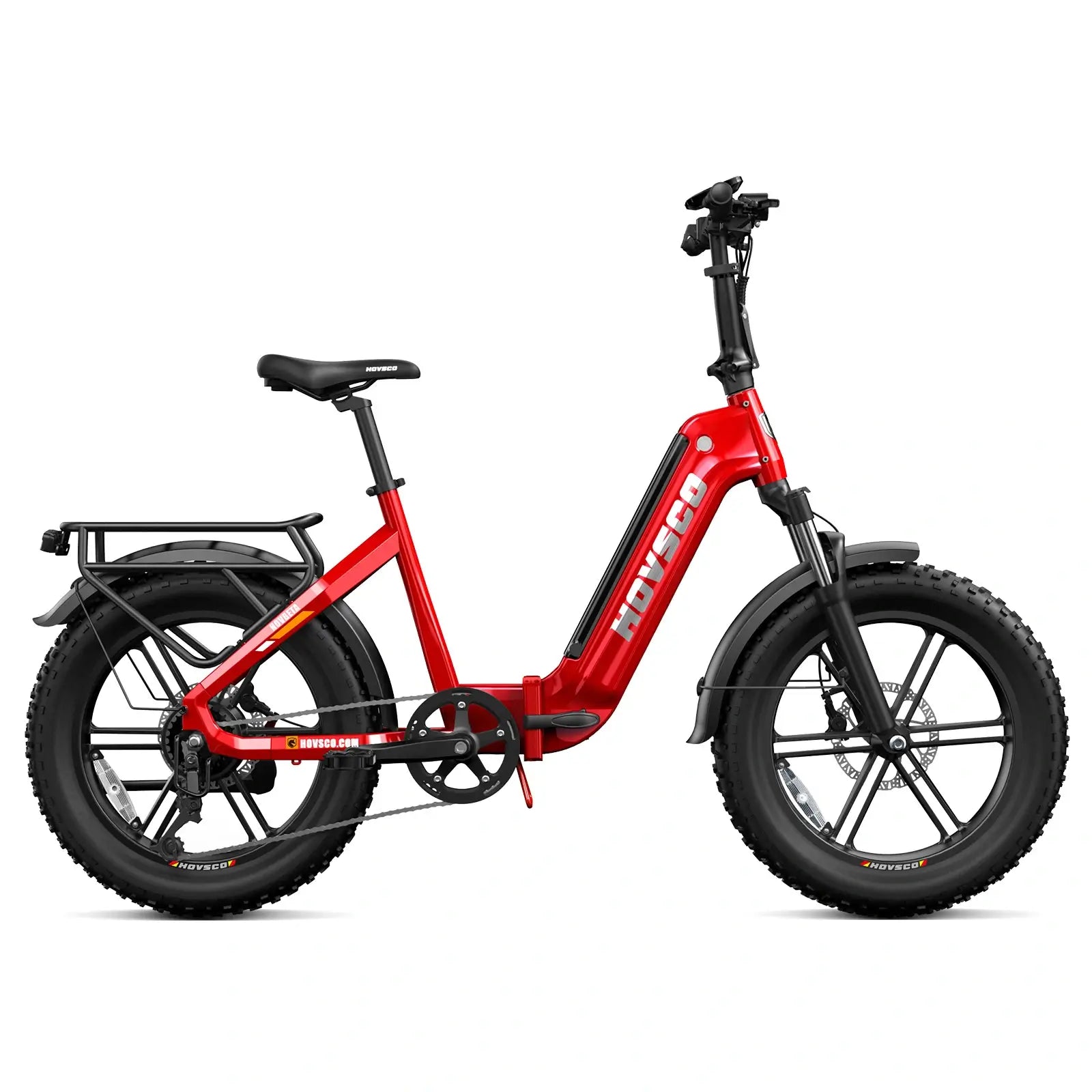
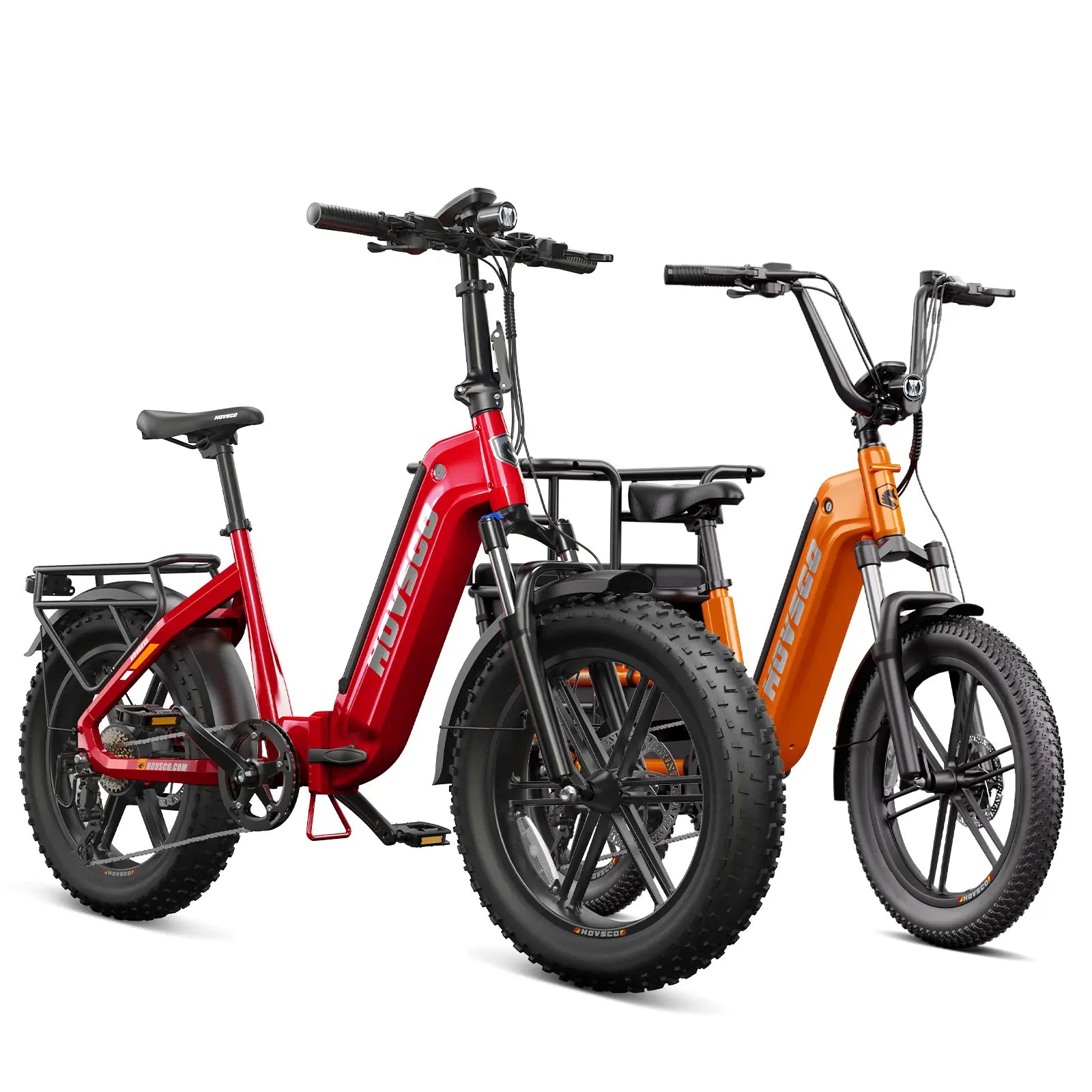
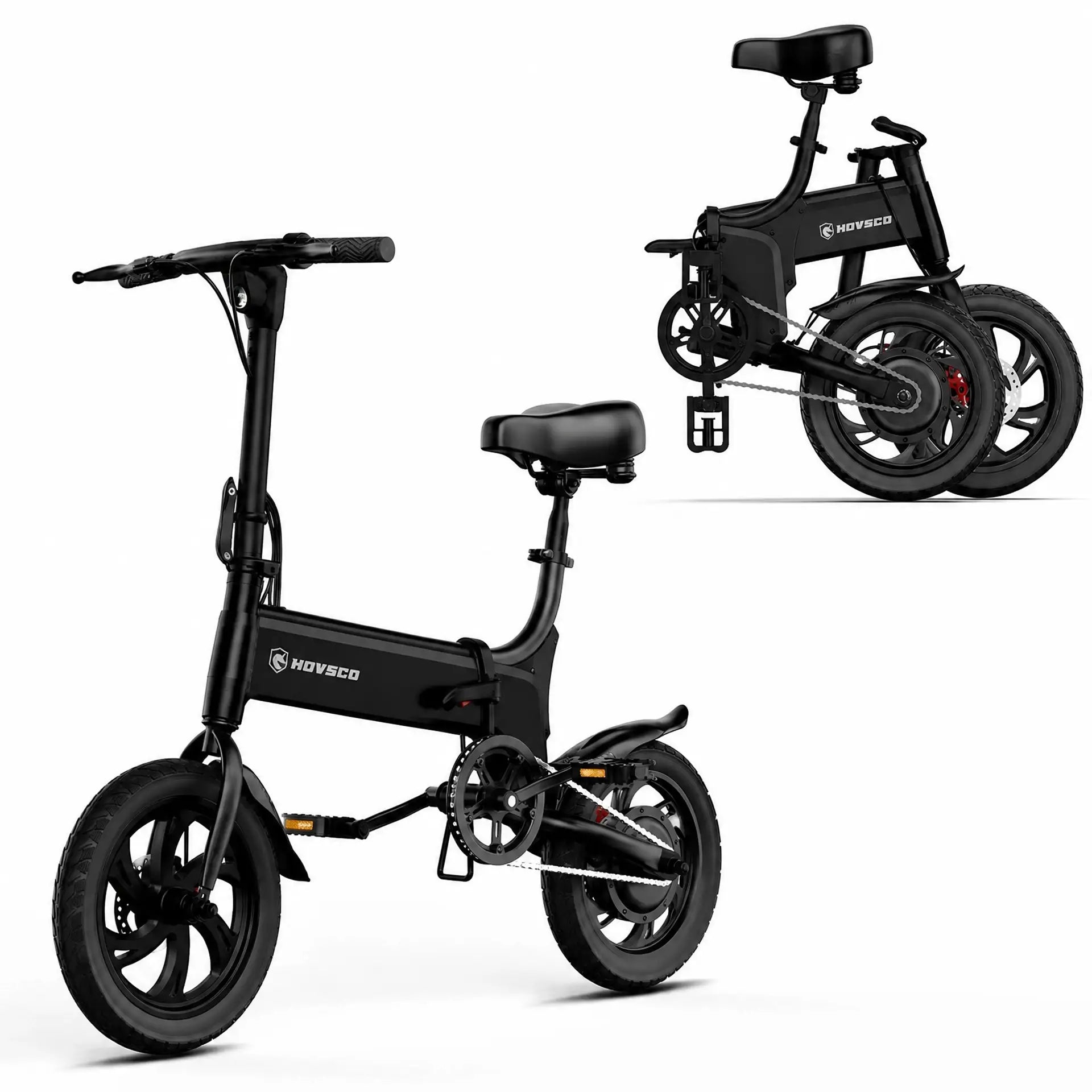
Two HovBeta folding e‑bikes can fit side by side in a standard fifth‑wheel basement compartment by taking advantage of their compact folded footprint and symmetrical layout. In practice, you fold each frame at the main hinge, drop the handlebar stems, and rotate the cranks so the pedals lie flat, which creates two tidy rectangles that can be placed shoulder‑to‑shoulder on a protective mat.
Imagine a transparent cut‑away of a fifth‑wheel basement: the floor is lined with a rubber mat, and two folded HovBeta units sit parallel to the coach’s sidewall, front wheels both pointing toward the curbside. Their fat tires nest slightly, and the handlebars are offset so levers do not interfere, leaving a narrow channel in front for hoses, chocks, or leveling blocks. This “simulated perspective view” is exactly how I design packing tests: we model both the basement frame rails and the folded bikes as collision boxes, then refine handlebar width and pedal fold angle until two units slide in with about a hand’s width of clearance for easy loading.
That practical optimization is one of the reasons HOVSCO promotes the HovBeta so strongly to RV and fifth‑wheel owners; the geometry works with real‑world basement designs, not just spec sheet numbers. In real use, owners report that once the loading pattern is dialed in, it takes under two minutes to fold and stow both bikes after a ride, which is crucial when you are trying to break camp before checkout time.
A dust‑proof folding protection cover matters for HovBeta owners because RV basement compartments are often semi‑sealed spaces that pull in road grit, moisture, and off‑gassing from other stored gear. A HovBeta‑specific folding protection cover creates a dedicated micro‑environment around the bike so fine dust cannot accumulate on the drivetrain, electrical connectors, or brake rotors during thousands of highway miles.
From a maintenance standpoint, the cover is more than cosmetic. On the bikes I have serviced after long RV trips, the ones stored bare in the basement show silty residue inside the motor fins, on the rear cassette, and around the battery door seal. With a well‑fitted cover, the dust line often stops right at the hem, which translates into smoother shifting, fewer electrical gremlins, and longer service intervals. For HOVSCO owners in particular, a brand‑specific dust cover also ensures the zip lines, cutouts, and reinforcement patches match the HovBeta’s hinge points and hook‑and‑loop straps, so you are not fighting with a generic bag that rubs the paint or traps moisture.
RVers should focus on folded dimensions, weight, motor torque, battery capacity, and tire choice when selecting a folding e‑bike. A balanced RV‑ready bike typically offers a mid‑60 lb weight with the battery removed, a torquey rear hub motor that can handle campground grades, a battery around 700 Wh for all‑day exploring, and 20‑inch fat tires that float over gravel, grass, and washboard access roads.
From the engineering side, I pay special attention to how the torque sensor or cadence sensor is tuned, because crowded campgrounds demand smooth low‑speed control rather than just peak speed. That is one area where HOVSCO has invested heavily, calibrating their controllers so you can creep past RVs and pets without the jerky on‑off feel found in cheaper controllers. For long‑term RV use, replaceable, automotive‑style connectors and standardized brake and derailleur hardware also matter; they make field repairs far easier if you are days away from the nearest shop.
When a bike roughly hits these numbers and offers a robust hinge system, you can be confident it will integrate cleanly into most fifth‑wheel or Class A storage plans.
RV travel stresses folding frames and hinges through constant micro‑vibration, temperature cycles, and occasional hard bumps from potholes or railroad crossings. Unlike an e‑bike stored in a garage, an RV‑carried bike rides in a compartment that acts like a drum, transmitting road shock into the hinge, latch pins, and welds day after day, even when you are not riding it.
On the production side, I have seen this in endurance testing: a folding hinge that is fine for urban commuting can loosen prematurely when exposed to RV‑style vibration profiles. That is why experienced brands like HOVSCO overspec hinge pins, use wider clamping faces, and add safety locks that prevent accidental opening even if a latch is slightly out of adjustment. RV owners should treat hinges like wheel lug nuts—check them regularly, keep them clean and lightly lubricated, and address any play immediately rather than waiting for a rattle to become a crack.
Common mistakes include under‑measuring basement compartments, ignoring weight and lift ergonomics, and choosing non‑fendered, city‑only tires. Many first‑time RV buyers focus on online range and speed claims but do not test whether they can safely deadlift the bike into the bay or whether the folded package actually clears the lip, frame rail, and door hardware when sliding it in.
In my experience, another big oversight is skipping brand‑specific accessories like protection covers, frame pads, and battery transport sleeves. With a HOVSCO design, for example, the engineers have already modeled how a HovBeta fits into real RV compartments, so their recommended loading orientation and accessory kits are based on lab and field tests, not just marketing copy. Skipping those details sometimes saves a little money up front but usually costs more later in paint wear, damaged wiring, or premature hinge fatigue.
HOVSCO stands out for RVers because the brand combines real‑world RV use‑case testing with a strong engineering and safety background from hoverboards and e‑scooters. That prior experience with millions of units in harsh conditions gave HOVSCO’s team unusually precise instincts about thermal management, battery safety, and vibration control long before they designed frames specifically for the RV crowd.
As I have worked with their bikes, what impressed me most is how HOVSCO balances fun and practicality. They tune controllers for a “smile factor” on open paths but keep low‑speed modulation predictable for campground etiquette, and they spec removable batteries and compact folding geometries that clearly anticipate basement compartment storage. For RV travelers, that mix of storage‑aware design, safety‑driven electronics, and trail‑ready components makes HOVSCO a particularly strong match.
Folding e‑bikes are highly practical for full‑time RV living because they shift your radius of exploration from “what is in walking distance” to “everything within a 10–20 mile circle” around every campsite. Instead of breaking camp or unhooking the tow vehicle for groceries, a trail ride, or a scenic overlook, you unfold the bikes, ride out, and come back without moving your rig.
Over months on the road, that flexibility often changes travel planning itself. Full‑timers I advise start choosing campgrounds for bike‑friendly surroundings—rail‑trails, lakeside loops, and small downtowns—knowing their folding e‑bikes can handle varied terrain. With an RV‑tuned model from a brand like HOVSCO, you get the additional reassurance that the bike will fold, stow, and survive the constant motion of the road without dominating your storage or maintenance schedule.
“When we prototype a folding e‑bike for RV living, we do not start with the bike at all—we start inside a virtual fifth‑wheel basement. Then we grow the frame only as large as that space allows, while still meeting our ride‑quality targets. That is why our hinges are overbuilt, our cables are routed to avoid pinch points in common folding patterns, and our recommended covers are shaped to keep RV dust and moisture off critical components. It is not just about folding; it is about folding in a way that respects how RVers actually travel and live.”
If you are considering folding e‑bikes for RV living, your key takeaways should be to measure your basement compartment carefully, prioritize folding geometry and hinge quality over purely cosmetic features, and treat dust protection as a core part of the system. Start by confirming your bay height and depth, then shortlist bikes whose folded dimensions and weights fit your real‑world RV loading routine.
From there, test ride models that match those constraints, paying attention to low‑speed control, hill‑climbing with cargo, and how quickly you can fold and unfold the bike in a simulation of camp‑departure stress. If a brand like HOVSCO can show you how two units fit side by side in a standard fifth‑wheel compartment and provide a dedicated folding protection cover, that is a strong signal they understand RV life beyond the sales brochure. Your “best electric bikes for RV living and road trips” will be the ones that disappear neatly into your basement when folded, yet still invite you out for daily adventures every time you park the rig.
What is the best tire size for folding RV e‑bikes?
For most RVers, 20‑inch fat tires (3–4 inches wide) are ideal because they stay compact when folded yet feel stable and cushioned on gravel pads, campground roads, and uneven shoulders near national parks.
Can I store a folding e‑bike on an RV hitch rack instead of the basement?
Yes, you can, but a basement compartment protects the bike from theft, weather, and road grime, and avoids adding tongue or rear‑axle weight that might affect handling or hitch ratings.
Does a folding e‑bike need special maintenance after long RV trips?
After long RV trips, inspect hinges, latches, and bolts for looseness, clean and lubricate the drivetrain, and check electrical connectors and brake rotors for dust and corrosion before your next ride.
Are two folding e‑bikes too heavy for a typical RV basement?
In most cases, no, but you should confirm the cargo rating of the compartment and spread weight across the floor using mats or plywood, especially when storing two mid‑60 lb bikes plus other gear.
When should I use a brand‑specific dust cover like the HovBeta folding protection cover?
Use a brand‑specific dust cover whenever the e‑bike travels in the RV basement, on a rack, or in storage, because its tailored fit protects paint, wiring, and seals better than generic bags.
Share:
How does a 20" foldable fat tire ebike balance portability and all-terrain power?
Why 3‑Second Folding Dynamics Rule the Last‑Mile Urban Commute (June 2026)