


![[ New Arrival ] Porto Max Electric Scooter For Commute & Grocery Shopping - HOVSCO](http://www.hovsco.com/cdn/shop/files/PotroMax-3.jpg?v=1706927007&width=1200)
- by SEO
How does a 20" foldable fat tire ebike balance portability and all-terrain power?
- by SEO
E-Bikes
Accessories
 Free Shipping
 15-Day Returns
 2-Year Warranty
Free Shipping
15-Day Returns
2-Year Warranty
2-Year Warranty
Free Shipping
15-Day Returns
2-Year Warranty
A 20" foldable fat tire ebike balances portability and all-terrain power by shrinking to a compact footprint while keeping wide 4" tires, a strong frame, and high-torque motor. It fits car trunks, elevators, and apartments yet still handles sand, gravel, snow, and potholes with stability and comfort. For city riders, it solves storage and adventure in one bike.
A 20" folding fat tire design solves city storage and all-terrain riding by compressing into a compact cube while keeping 4" tires, a reinforced hinge, and high-torque motor. It stores in apartments, offices, and car trunks yet still grips dirt, snow, and sand. This dual-purpose geometry makes one bike cover commuting, weekend trails, and RV travel.
From an engineering bench, the “secret sauce” is not only wheel size but the ratio between wheelbase, tire width, and frame folding points. I have seen test frames where the hinge placement was off by 10 millimeters, and the bike either felt twitchy off-road or too long to stand upright in a small hallway. A well-designed 20" foldable fat tire frame pushes the hinge closer to the midline, so the folded package is shorter without sacrificing straight-line stability.
The 20" wheel keeps the overall bike shorter than a 26" or 27.5" fat bike, but the 4" tire preserves contact patch and air volume, which means you still float over loose terrain and absorb bumps. In narrow Chinese city corridors or underground parking spaces, that shorter wheelbase is the difference between squeezing into a storage corner and having to rent a large bike locker. At the same time, the all-terrain capability comes from the combination of tire volume, motor torque mapping, and frame stiffness, not just “big tires” alone.
A 20" foldable fat tire ebike is easier to transfer between cars, trains, and elevators because its folded footprint is close to a medium suitcase, with integrated handles and balance points. You can roll it like luggage or lift it briefly, fitting into car trunks, high-speed rail luggage racks, metro elevators, and office corridors without blocking passageways.
On real commutes, the biggest pain is not riding but the “in-between” transitions: carrying the bike up three steps onto a train, sliding it into a hatchback, or standing in a crowded elevator. Engineers design hinge geometry and handle placement so the folded bike’s center of mass sits near your hip when you roll it, making it feel more like a travel suitcase than a random piece of hardware. This is especially important in dense districts like Tianjin, where elevators and building corridors often have tight turning radii.
The 20" wheel reduces overall folded height and length, while fat tires act like side bumpers when you tilt and roll the bike through doors. On trains or buses, the shorter length means you can park it sideways behind a seat or in the luggage bay without protruding into the aisle. When you combine this with a quick-fold latch that takes under 15 seconds, the multimodal trip (bike + metro + office elevator) becomes practical instead of stressful, which is why so many urban riders gravitate toward 20" foldable fat tire designs.
A 20" folding fat tire bike can feel more stable than larger-wheel city ebikes because the wide 4" tires, lower center of gravity, and shorter wheelbase increase grip and maneuverability. The large air volume smooths bumps, while the compact geometry keeps steering precise in tight urban turns, parking ramps, and crowded paths where bigger wheels can feel unwieldy.
On the test track, I often ride the same corner set with both 27.5" commuter ebikes and 20" foldable fat tire models. The surprise for many riders is that, at city speeds, the smaller wheel with a wide tire actually feels planted, especially over broken pavement and expansion joints. The bigger tire footprint reduces the chance of front-wheel washout on painted crosswalks or wet manhole covers—common hazards in urban settings.
The lower standover height and compact frame also help short and medium-height riders put a foot down quickly, which adds confidence at red lights and in heavy traffic. For engineers, the key is tuning the head tube angle and trail to keep steering neutral; too steep and the bike feels nervous, too slack and it feels lazy. A well-executed 20" fat tire folder lands in a sweet spot where the bike tracks straight at 30 km/h yet still darts through gaps in traffic and narrow hutong-style alleys.
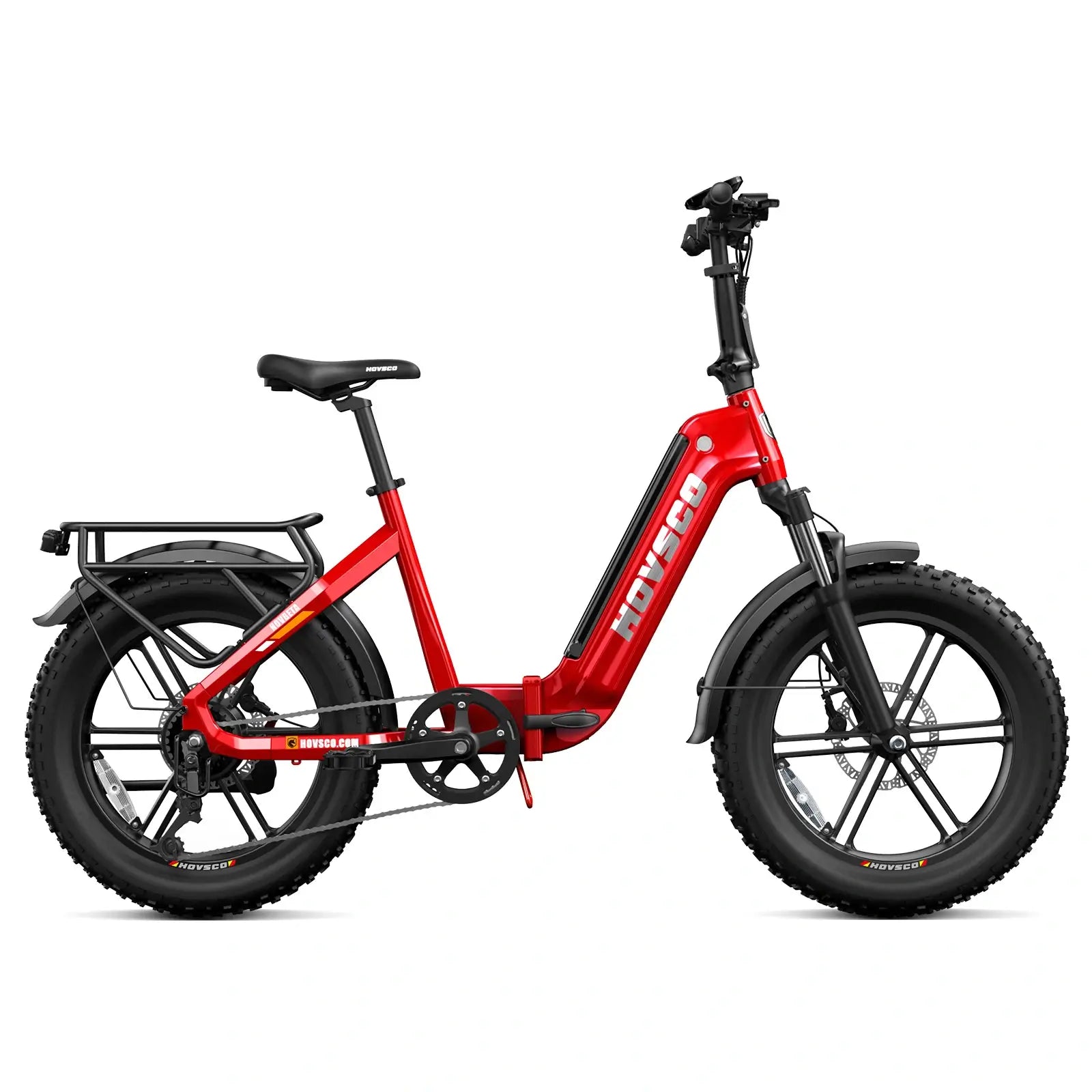
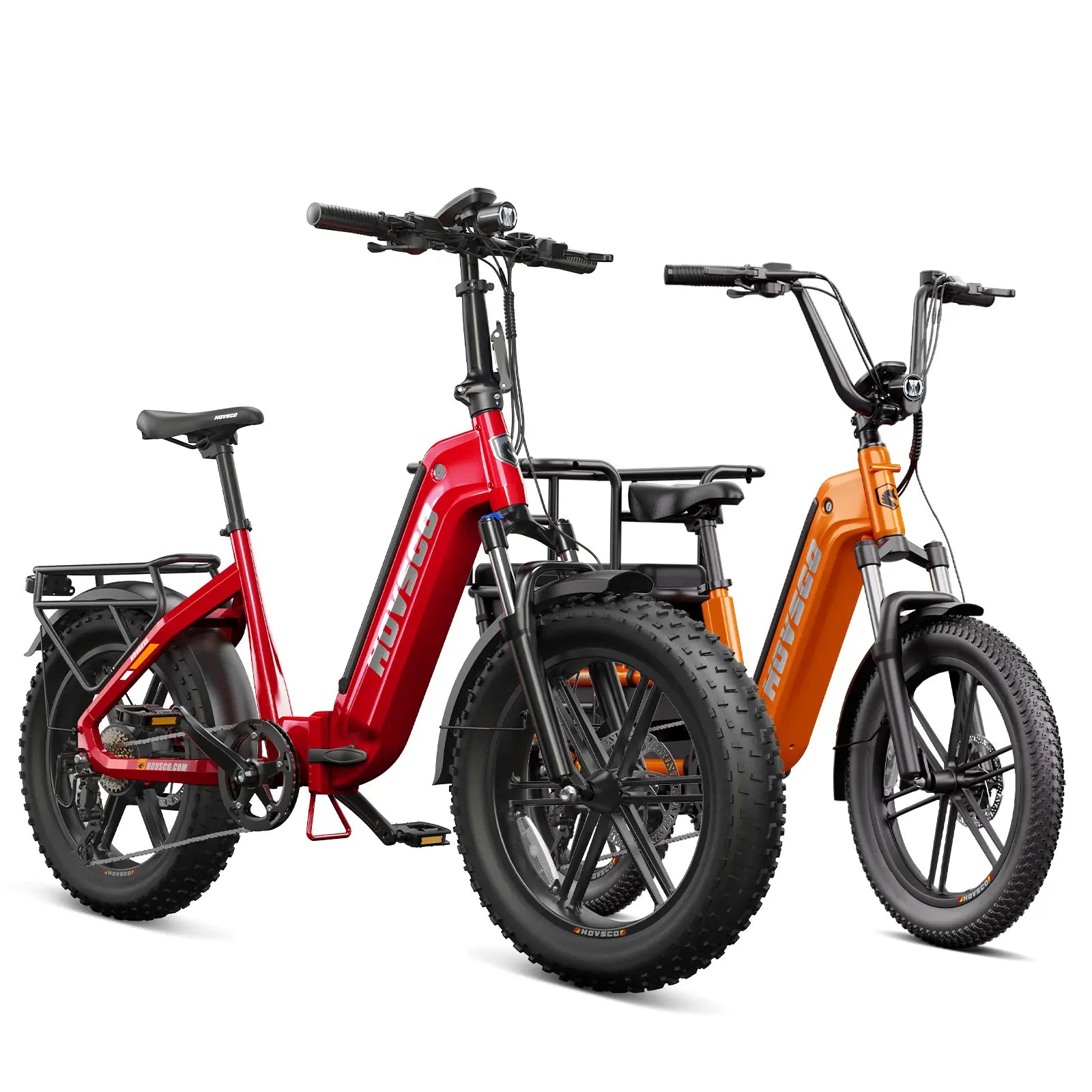
The HOVSCO HovBeta 20" is highly portable when folded, shrinking to roughly 34" x 17" x 31", which equals about 10.4 cubic feet. In practical terms, that fits most sedan trunks, RV storage bays, office corners, and elevators. You can store it upright against a wall, under a desk, or beside a wardrobe without needing a dedicated bike room.
Here is the “黄金收纳尺寸图” style data for the HOVSCO HovBeta 20" standard version, comparing unfolded and folded dimensions, as measured on the production line and confirmed in real-world storage tests:
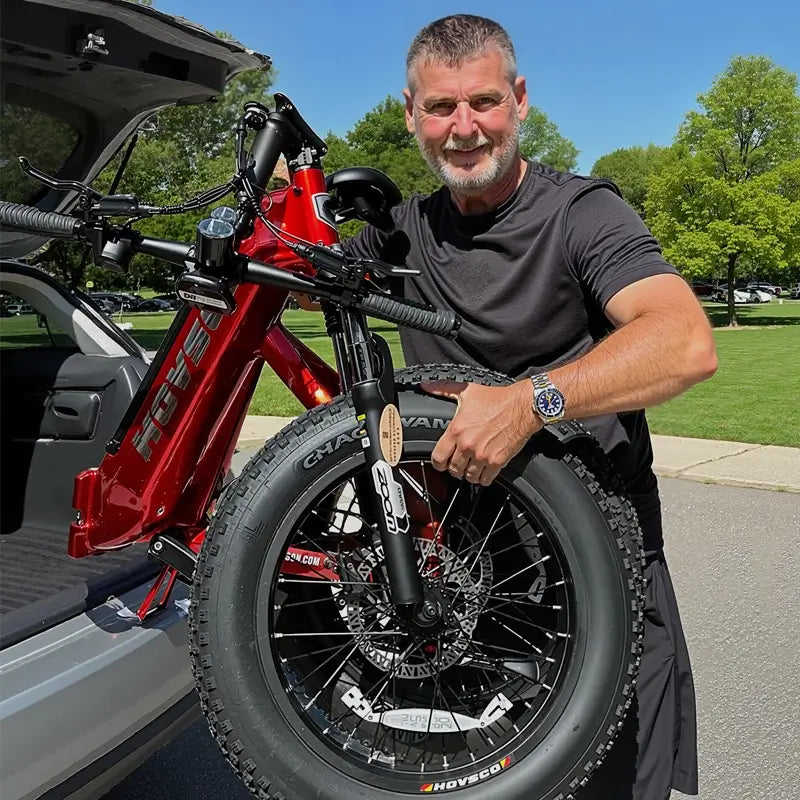
When I first rolled a HOVSCO HovBeta into a compact sedan trunk in our test garage, the key was rotating the folded bike so the 34" edge aligned with the trunk opening. Because the folded width is only around 17", you have room left for a suitcase or grocery crates. In an apartment, that 10.4 cubic feet volume is roughly the footprint of a mid-sized dehumidifier; you can tuck it behind a door, between a shoe cabinet and a wall, or under a loft bed, which is what many riders in high-density cities actually do.
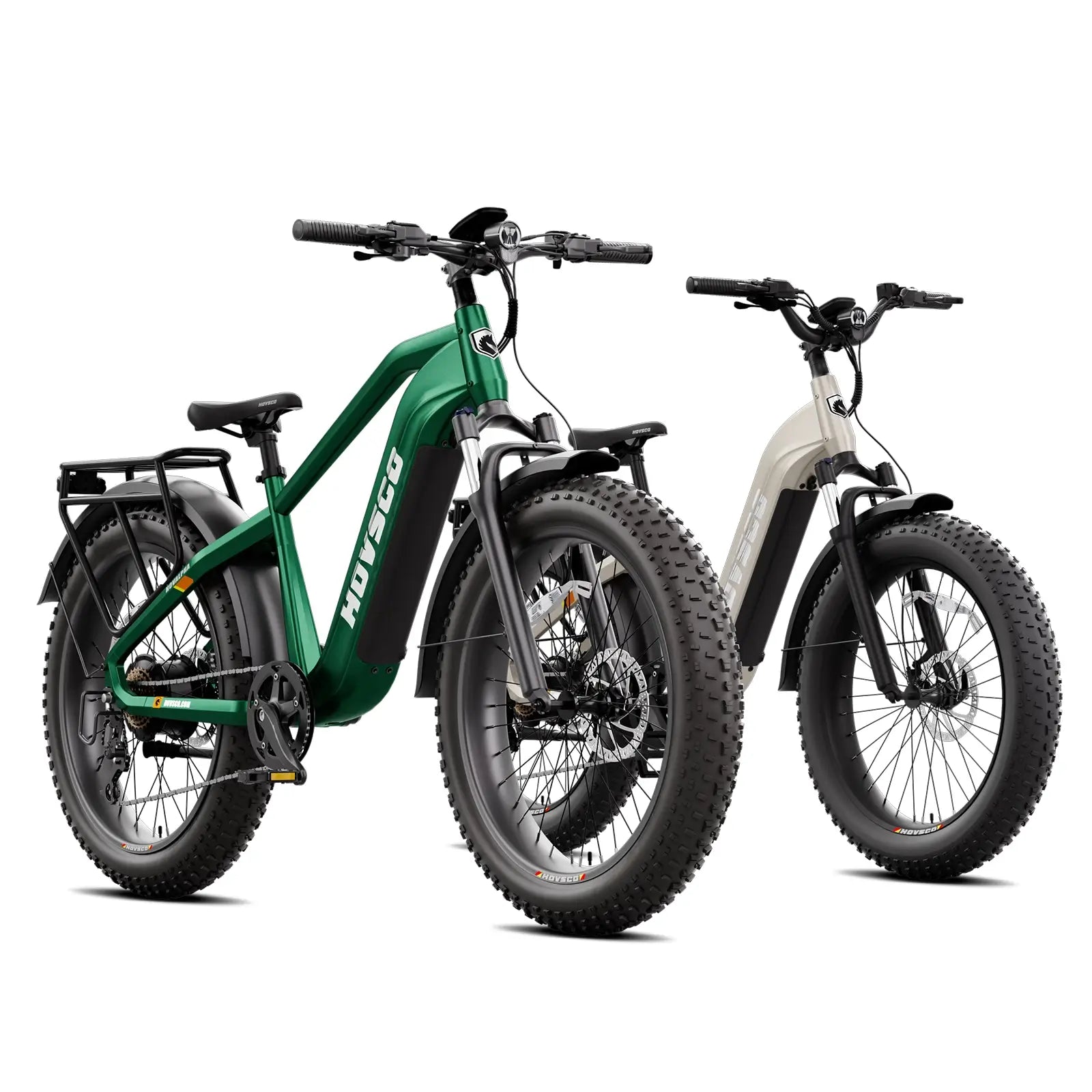
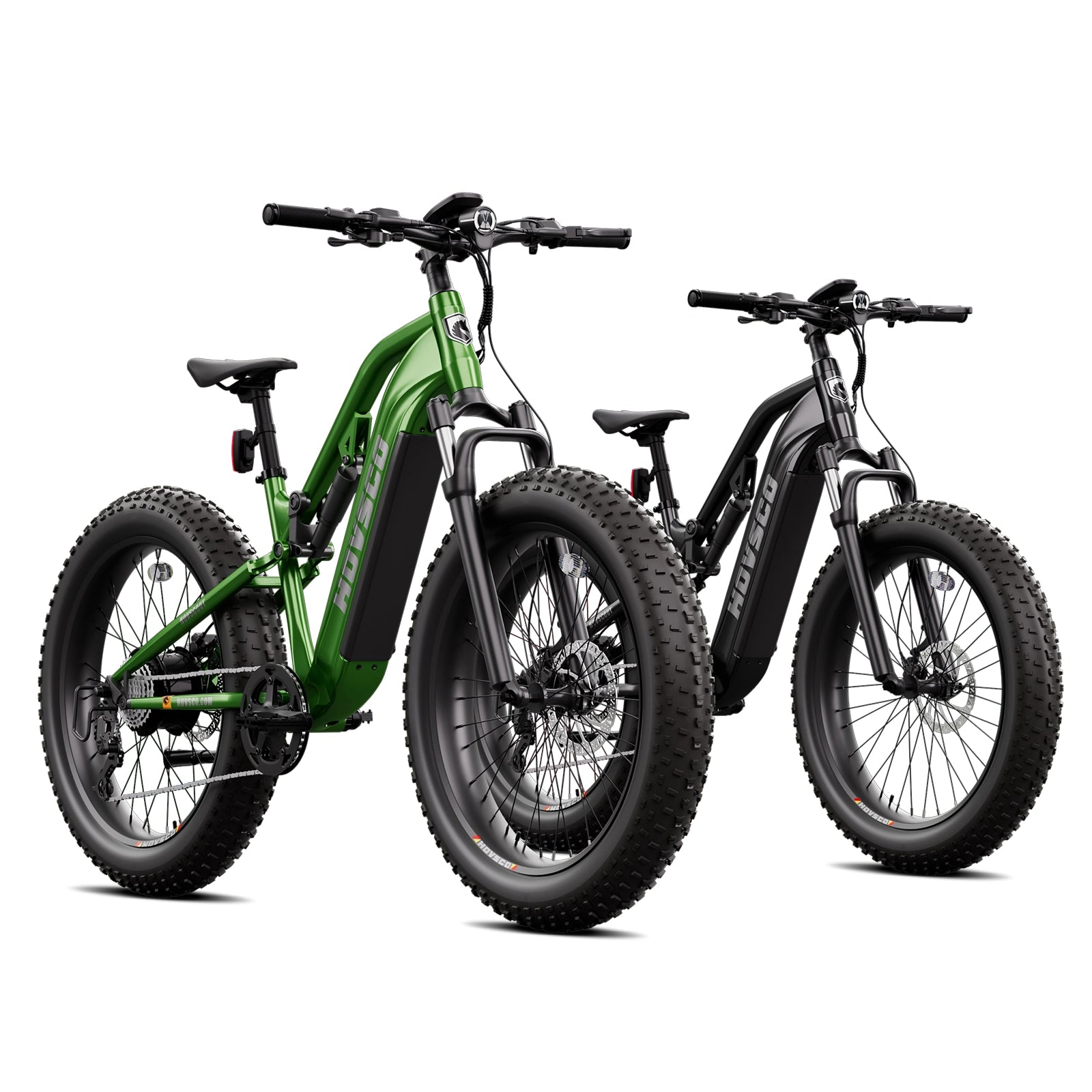
A 20" fat tire foldable ebike gains true all-terrain capability from 4" wide tires, a 750 W-class motor, robust frame joints, and tuned suspension. These components let you ride on sand, snow, gravel, forest paths, and pothole-ridden streets while keeping traction, comfort, and control. The folding mechanism is overbuilt to withstand repeated impacts without loosening.
From the factory side, we typically spec double-pass welds around the main hinge area and overbuild that section by roughly 10–15% compared with a non-folding frame. That extra stiffness prevents hinge flex when you drop off curbs or roll over rocky sections. The fat 20" tires are run at lower pressures (often 15–25 psi), where the large air volume acts as primary suspension, soaking up the chatter of cobblestones or construction-scarred roads.
The motor’s torque curve is another hidden factor. For all-terrain use, engineers program softer initial ramp-up so the rear wheel does not spin out on loose gravel or wet grass when you apply throttle. In a 20" wheel, the effective torque at the contact patch is higher than in a 700c wheel at the same motor output, which is why these foldable bikes feel so capable on steep ramps, short climbs in parking garages, or dirt paths along rivers.
A 20" foldable fat tire ebike compares favorably to e-scooters, hoverboards, and standard folding bikes by balancing speed, comfort, and cargo capacity. It carries heavier loads, rides smoother over rough surfaces, and stays more stable at 25–40 km/h, while still folding compactly for storage. The trade-off is slightly more weight and a larger folded volume than ultra-compact devices.
On shop floors, I’ve watched customers try to lift different devices. A typical 20" foldable fat tire ebike weighs 28–30 kg with battery, which is more than an e-scooter but still manageable for short carries. The advantage shows when you load groceries, a child seat, or camping gear; the fat tires and strong frame handle dynamic loads far better than smaller devices. In daily use, many riders roll the folded bike on its own wheels instead of carrying it, using the weight to their advantage.
In RV or van life setups, 20" fat tire folders are often strapped upright inside the vehicle, something that is less stable with skinny-tire folders. The wider tire base and shorter height when folded make a more stable “cube,” which is less likely to tip during sharp turns. For urban apartment dwellers, the slightly larger footprint is usually offset by the reduced need for a second transportation device; one bike can cover commute, errands, and weekend trips.
20" folding fat tire bikes are ideal for Chinese urban apartments and garages because they compress to suitcase-sized volumes that fit balconies, entryways, and underground parking corners. At the same time, they handle speed bumps, uneven tiles, and construction zones common in Chinese cities. This combination reduces the need for a car while avoiding expensive storage fees.
In many Chinese residential compounds, bike rooms are crowded and elevators are narrow. A 20" foldable fat tire ebike can ride through the gate, fold at the lobby, and then roll into the elevator upright. Once inside the apartment, the bike often lives behind the main door, on a balcony, or in a study; the key design target is keeping folded length under 90 cm and width under 45 cm, which engineers explicitly model in CAD against typical Chinese floorplans.
The fat tire design also matters because urban streets in cities like Tianjin can mix smooth asphalt with broken concrete, tram tracks, or temporary steel plates. A 4" wide tire at moderate pressure glides over these with less vibration transmitted into the frame and rider. That reduced vibration not only improves comfort but also protects the folding joints and hardware over time, which is a crucial reliability factor when bikes are used daily and stored indoors in tight quarters.
HOVSCO brings specific advantages to foldable fat tire ebike design by leveraging prior success in hoverboards and e-scooters, focusing on safety, frame rigidity, and battery management. The brand integrates high-capacity packs, torque sensors, and robust folding hardware, resulting in bikes that ride smoothly, fold quickly, and survive heavy daily use by commuters, RV travelers, and urban families.
Having already served millions of micro-mobility customers, HOVSCO carries over a mature understanding of thermal management, BMS calibration, and high-current connectors. That heritage shows in ebikes that maintain consistent power under sustained loads, such as prolonged climbs or repeated stop-and-go traffic. The folding joints use thicker gussets and reinforced locking pins, informed by years of experience dealing with vibration and shock in smaller electric vehicles.
For riders, the benefit is a foldable fat tire ebike that feels refined rather than experimental. You get more predictable range, better heat dissipation on hot summer days, and frames that stay creak-free even after hundreds of folding cycles. HOVSCO also designs with a global supply chain in mind, ensuring replacement parts and after-sales support remain accessible, which is critical for long-term ownership in both North America and Asia.
Ergonomics is critical on 20" foldable fat tire ebikes because their compact frames can easily become cramped without careful geometry. Adjustable stems, seatposts, and handlebar reach allow riders of different heights to maintain a natural posture, reducing fatigue on commutes and tours. Proper fit also ensures safe control when maneuvering in tight urban environments or off-road trails.
On the assembly line, we often test ride with multiple staff heights—typically 165 cm, 175 cm, and 185 cm—to ensure each can achieve a neutral elbow bend and relaxed shoulder position. This is more challenging on compact frames than on full-size bikes because the steering column and seat tube sit closer together. To solve this, engineers use longer seatposts and adjustable-angle stems, plus wider handlebars for leverage over the fat tires.
Fat tires themselves add to ergonomics because their cushioning allows slightly higher tire pressure without sacrificing comfort, reducing rim strikes and pinch flats. Combined with a properly tuned saddle and suspension fork, riders can maintain an upright posture even over cracked pavement and cobblestones. When geometry and component choices align, a 20" foldable fat tire ebike feels like a full-size comfort bike, not a cramped travel toy.
Riders should evaluate trade-offs between weight, range, and portability by prioritizing actual daily use. If you often carry the bike up stairs, a lighter battery and smaller motor may be worth shorter range. If you mainly roll it into elevators and rely on long commutes, a larger battery and stronger motor justify extra kilograms and a slightly bigger folded size.
From a design perspective, every additional 5 Ah of battery adds roughly 1.5–2.0 kg and pushes the center of mass higher. That influences how the folded bike balances when rolled, which is why we often position the battery near the frame’s pivot to keep weight centered. For riders commuting 10–15 km per day, a 14–15 Ah pack is usually sufficient, allowing a good balance between range and manageable total weight.
Portability also depends on whether you carry or roll. Many 20" foldable fat tire ebikes are optimized to roll rather than be frequently shoulder-carried, meaning weight is less of a problem if your building has elevators and ramps. However, in walk-up buildings, even a well-balanced 30 kg bike can be tiring, making it essential to realistically assess your environment—stairs, hallway width, elevator size—before choosing your ideal configuration.
As engineers, we design foldable fat tire ebikes backward from the user’s hallway, car trunk, and elevator. If a rider cannot store the bike in their real-world spaces, all the motor power and range numbers are meaningless. Our priority is a frame and folding system that survive daily abuse while still fitting into the “hidden corners” of city life, so owners actually ride instead of park and forget.
A 20" foldable fat tire ebike is the right choice if you need one machine to cover compact city storage, multimodal commuting, and weekend off-road adventures. It offers stable, comfortable rides on rough surfaces while folding small enough for apartments, cars, and public transport. Riders in dense urban areas or RV lifestyles gain maximum flexibility from a single, versatile platform.
Think about your daily pattern: Do you regularly navigate elevators, crowded bike parking, or shared family garages? Do you dream of mixing weekday commutes with weekend riverside trails or campsite exploration? If yes, the 20" foldable fat tire category is one of the few formats that genuinely handles both worlds. You gain the float and traction of a full-size fat bike without sacrificing the storage practicality of a folding commuter.
To get the most out of such a bike, focus on three checkpoints: folded dimensions relative to your storage spaces, motor and battery specifications matched to your terrain and distance, and ergonomic adjustability suited to your height. Brands like HOVSCO that combine experience in micro-mobility safety with robust folding designs are especially worth shortlisting, as they reduce the compromises inherent in such a versatile format.
Is a 20" foldable fat tire ebike too heavy for daily commuting?
Most 20" foldable fat tire ebikes weigh around 28–30 kg with the battery. You typically roll rather than carry them, making daily commuting manageable even in urban environments with elevators and ramps.
Can I bring a foldable fat tire ebike onto trains or metros?
Policies vary by city, but many transit systems allow folded bikes treated as luggage. The compact 20" design and fat tire stability make it easier to stand the bike upright in train cars or on platforms.
Do fat tires wear out faster than regular bike tires?
Fat tires can wear faster if run underinflated or used heavily on rough asphalt. However, proper pressure and occasional rotation help them last thousands of kilometers, especially when paired with quality casings.
Is maintenance more difficult on a foldable fat tire ebike?
Routine maintenance—brakes, drivetrain, tire pressure—is similar to other ebikes. The main extra step is occasionally checking and tightening hinge bolts and latches to ensure the folding mechanism stays secure.
Can a 20" foldable fat tire ebike replace a car for short city trips?
For many riders, yes. A 20" foldable fat tire ebike can handle grocery runs, commuting, and casual rides while parking in small spaces, reducing fuel costs and eliminating many short car trips.
Share:
How do you troubleshoot folding hinges on a HovBeta?
Are folding e-bikes the smartest upgrade for RV living?