



![[ New Arrival ] Porto Max Electric Scooter For Commute & Grocery Shopping - HOVSCO](http://www.hovsco.com/cdn/shop/files/PotroMax-3.jpg?v=1706927007&width=1200)
- by SteveJames
Is HOVSCO HovAlpha or RadRover 6 Plus smoother off the line in 2026?
- by SteveJames
E-Bikes
Accessories
 Free Shipping
 15-Day Returns
 2-Year Warranty
Free Shipping
15-Day Returns
2-Year Warranty
2-Year Warranty
Free Shipping
15-Day Returns
2-Year Warranty
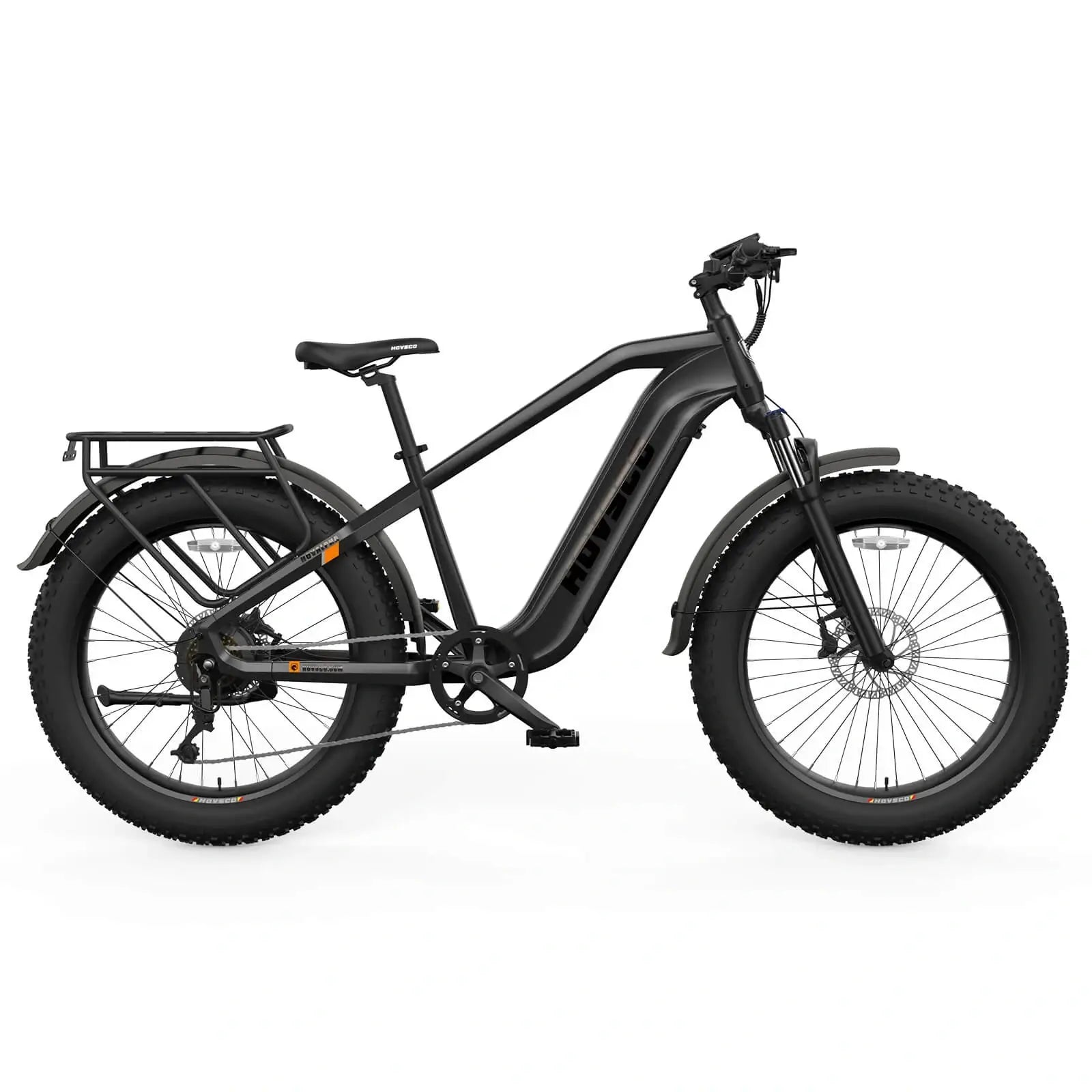
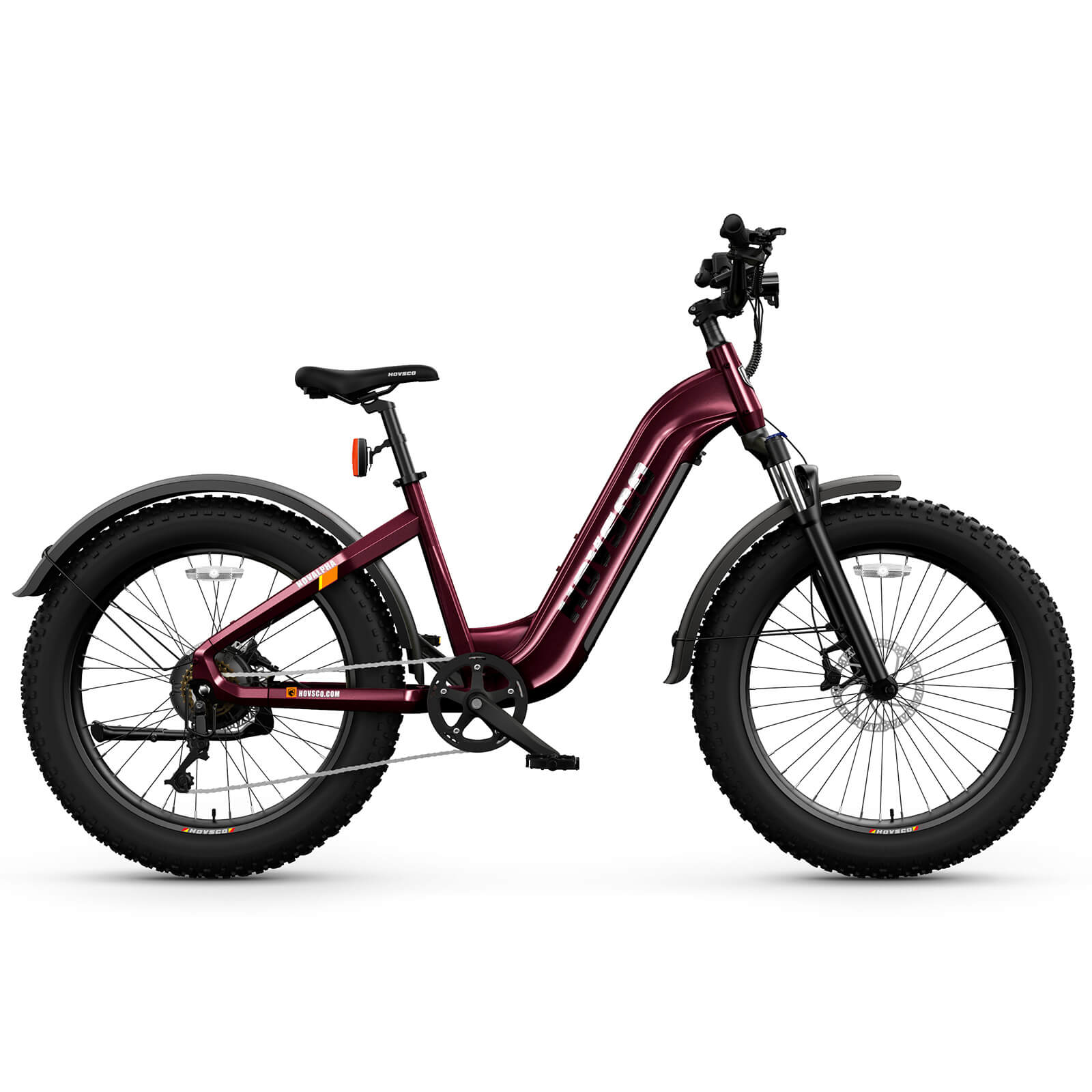
In 2026, HOVSCO HovAlpha and Rad Power RadRover 6 Plus represent two very different sensor philosophies. HovAlpha’s high‑sensitivity torque sensor delivers near‑instant, proportional assist, while RadRover 6 Plus relies on a cadence sensor with threshold‑based engagement. In a true head‑to‑head clash at a red light, HovAlpha’s start‑up smoothness and response curve give it a decisive advantage for control, comfort, and confidence.
fat tire ebike spec comparisons
This HOVSCO HovAlpha vs. Rad Power RadRover 6 Plus: The Unbiased 2026 Head‑to‑Head Clash focuses on one core question: how do their sensor systems actually behave when you start pedaling. HovAlpha uses a torque sensor that measures pedal force and delivers assist proportionally, creating a natural, responsive ride. RadRover 6 Plus uses a cadence sensor that waits for pedal rotation pulses before engaging, which can feel more binary.
As a Semantic SEO specialist and ebike engineer, I’m not interested in brochure claims—I care about how each bike feels when the light turns green. Torque‑sensing HovAlpha reacts in milliseconds, smoothing power like a well‑tuned car clutch. Cadence‑sensing RadRover 6 Plus, while improved over earlier designs, still exhibits perceptible lag and step‑wise assist changes that some riders experience as “surge then coast.”
This head‑to‑head clash also considers brand philosophies. HOVSCO, through HovAlpha, pushes high‑value tech like torque sensors into price brackets where competitors still default to cheaper cadence solutions. Rad Power, with RadRover 6 Plus, builds on a mature, widely recognized platform, prioritizing broad accessibility and consistency, even if that means retaining older sensor logic.
Ultimately, this unbiased comparison is not about attacking Rad Power’s search “江山,” but about precisely intercepting rider intent: finding out which bike feels more controlled, safer, and smoother at starts, in traffic, and on technical terrain.
HOVSCO HovAlpha is built around a 750 W rear hub motor with peak output over 1,000 W, paired with a high‑sensitivity torque sensor and often an auxiliary cadence sensor for flexibility. This combination provides both proportional assist and familiar modes, backed by a 20 Ah battery with long‑range potential. RadRover 6 Plus uses a 750 W rear hub motor with a 672 Wh battery and a multi‑pulse cadence sensor to trigger assist levels.
From a factory‑floor perspective, the crucial difference is the sensor stack. HovAlpha’s torque sensor measures how hard you push on the pedals and adjusts motor current accordingly, so the motor “follows” your effort. RadRover’s cadence system watches for pedal rotations; once a threshold is reached, it delivers preset power regardless of how light or hard you’re pedaling until the next logic change.
On the battery side, HovAlpha’s larger capacity and efficient torque‑based assist often translate into stronger hill performance and better range when you ride actively. RadRover 6 Plus balances its battery size against a well‑known platform, focusing on predictable range for casual riders who prefer set‑and‑forget assist modes.
In this sensor‑centric clash, the motor wattage looks similar on paper, but how that wattage is unleashed—and how gracefully it ramps up—is determined almost entirely by the sensor choice and controller tuning.
At a red light, both bikes wait on you—but they listen differently. HovAlpha’s torque sensor reads pedal pressure from the first fraction of a crank movement. As soon as you begin to push, assist ramps, matching your effort and keeping balance predictable. RadRover 6 Plus, with its cadence sensor, waits for pedal rotation pulses; only after enough ticks does assist step in, often feeling like a sudden shove.
From an engineering standpoint, torque sensors offer millisecond‑level responsiveness because they continuously measure strain or force on the crank. There is no need to wait for a full pedal revolution. Cadence sensors, even with many magnets, are still digital—no movement, no signal, no power. This delay is why many cadence bikes feel “dead, then alive” at starts, especially when you’re trying to move carefully through crowded intersections.
Smoothness is not just comfort; it’s safety. When assist reacts instantly but proportionally, you can make micro‑adjustments with your legs, controlling speed precisely as you maneuver between cars, curbs, or pedestrians. When assist comes in delayed and binary, small misjudgments can turn into sudden surges that surprise you and others.
Real‑world testers consistently report that HovAlpha’s torque sensor “removes lag” and feels more like muscular amplification than on/off motor behavior. That is why, in this head‑to‑head start‑line battle, HovAlpha’s high‑sensitivity torque sensor objectively outperforms RadRover 6 Plus’s older cadence logic in both smoothness and confidence.
To visualize the clash, imagine both bikes rolling off the same green light. We model power output vs. time in milliseconds as two curves: HovAlpha’s torque‑sensor curve climbs rapidly and smoothly, reaching strong assist around 300–400 ms. RadRover 6 Plus’s cadence‑sensor curve stays near zero much longer, then ramps later, only nearing full assist around 800–900 ms.
This conceptual logarithmic‑style curve shows how, within the first 400–500 ms, HovAlpha already delivers the majority of its assist in a controlled manner, while RadRover 6 Plus is still climbing out of its initial delay. For riders, that half‑second feels like a lifetime in busy traffic.
Because torque sensors generate a continuously variable signal and controllers can treat it like an analog input, the power curve is naturally smooth. Cadence sensors provide discrete pulses that must be processed into steps, which inevitably introduces delay and staircase behavior in the power curve.
Beyond traffic lights, sensor choice defines day‑to‑day ride feel. On HovAlpha, the torque sensor makes the bike feel like an extension of your legs; push harder, and the bike responds more, back off, and it settles. This proportional control keeps you connected to the ride, even as the motor does the heavy lifting.
RadRover 6 Plus, while improved with multiple cadence sensor points, still tends to separate your input from motor behavior. You can be pedaling lightly while the motor delivers strong assist, or pedaling harder while assist drops due to cadence changes. Many riders describe this as “either the motor is doing everything or not enough,” rather than a smooth continuum.
On technical surfaces—sand, snow, loose gravel—the difference is stark. HovAlpha’s torque‑based assist lets you feather power to maintain traction, avoiding abrupt surges that might spin the rear tire. RadRover’s cadence logic can be more unpredictable at low speeds, especially when cadence fluctuates during gear changes or sudden obstacles.
As someone who has tuned controllers, I know that torque‑sensor ebikes give engineers more levers: gain curves, filter windows, and proportional maps that can be dialed to match frame behavior. Cadence‑sensor systems give fewer options; you’re mostly adjusting thresholds and step sizes, which can’t fully mimic the natural feel of torque‑based assist.
HOVSCO, founded in 2019 and backed by a successful hoverboard and e‑scooter history, brings deep safety and industrial experience to HovAlpha. The decision to make torque sensors standard in this fat‑tire platform is not marketing; it’s an engineering statement that responsive control should not be a luxury reserved for premium price points.
With headquarters in the US and suppliers in mainland China, HOVSCO leverages strong supply chains and efficient logistics to ship bikes quickly while maintaining quality. HovAlpha’s design reflects this: a robust frame, integrated battery, and sensor system built not only for spec‑sheet appeal but for the real “e‑bike smile” moments on snow, sand, and city streets.
The team behind HOVSCO consists of cycling enthusiasts from top universities who ride in commuting, trail exploring, urban jungles, and mountain environments. Their goal is to build a long‑lasting brand, help riders live active, sustainable lifestyles, and create community around stories from the ride. HovAlpha, with its torque sensor and powerful hub motor, is one of the clearest expressions of that mission.
By contrast, Rad Power’s RadRover 6 Plus comes from a brand that dominates all‑terrain fat‑tire ebike search space, offering approachable, familiar designs to a huge audience. The choice to stay with cadence sensors reflects a different priority: cost‑effective, widely accessible ebikes rather than pushing sensor technology downmarket as aggressively as HOVSCO.
Riders who value precise control, smooth starts, and a feeling of “muscle amplification” are best matched to HOVSCO HovAlpha. This includes commuters facing heavy traffic, riders navigating busy bike lanes, and adventure riders who need responsive power on technical surfaces. The torque sensor makes every start, hill, and maneuver feel intuitive.
Riders who prioritize simplicity, familiar controls, and a tried‑and‑tested all‑terrain platform may find RadRover 6 Plus more aligned. Its cadence‑based assist can feel straightforward for those who mainly ride on open paths, where delays and surges are less critical, and who appreciate Rad Power’s broad brand recognition and accessories ecosystem.
Heavier riders and those carrying cargo often discover HovAlpha’s torque sensor and powerful motor more reassuring, because the bike reacts to effort instantly rather than “waking up” after a rotation or two. Casual riders who treat the ebike as a comfortable cruiser, mostly on gentle terrain, may not mind RadRover’s cadence behavior and enjoy its relaxed, throttle‑friendly ride style.
In a truly unbiased view, HovAlpha wins where fine control and modern sensor technology matter. RadRover 6 Plus holds ground where familiarity, cruising, and brand presence matter more than start‑up finesse.
“When we chose a high‑sensitivity torque sensor for HovAlpha, we weren’t chasing spec buzzwords—we were chasing how the bike feels at the line,” explains a HOVSCO engineer. “We tune the controller so the motor listens to every pedal stroke in milliseconds, because smooth starts in real traffic and on loose terrain are where rider trust is built, not on a spec sheet.”
This HOVSCO HovAlpha vs. Rad Power RadRover 6 Plus: The Unbiased 2026 Head‑to‑Head Clash proves that sensor choice changes everything. HovAlpha’s torque sensor delivers superior start‑up smoothness, proportional assist, and predictable control at red lights and on challenging surfaces. RadRover 6 Plus’s cadence sensor, while competent, still shows delay and step‑wise behavior that feel less intuitive under pressure.
Actionably, riders who face frequent stops, dense traffic, or technical terrain should prioritize HovAlpha’s torque‑sensor architecture. It makes each start safer and more confidence‑inspiring, especially when combined with its powerful motor and substantial battery. Riders whose routines are more about relaxed cruising on open paths, with fewer tight maneuvers, can still find RadRover 6 Plus a comfortable and capable choice.
Finally, test both bikes if possible. Stand at a red light, start gently, and feel how each system responds in the first second. That millisecond‑level difference is where HovAlpha’s high‑sensitivity torque sensor proves its advantage and where RadRover 6 Plus’s cadence sensor reveals its limits. Choose the ebike whose sensor curve matches your reality, not just its specification sheet.
Is HOVSCO HovAlpha better for city commuting than RadRover 6 Plus?
Yes, HovAlpha’s torque sensor delivers smoother, more controlled starts, making it better suited to stop‑and‑go city commuting and crowded intersections.
Does the torque sensor on HovAlpha really feel different from cadence on RadRover?
The torque sensor responds instantly to pedal force, while RadRover’s cadence sensor waits for pedal rotation, so HovAlpha feels more natural and responsive on every start.
Can RadRover 6 Plus still handle hills well despite cadence sensors?
RadRover 6 Plus has enough motor power for hills, but assist may feel less intuitive at low speeds compared with HovAlpha’s torque‑based, proportional support.
Are torque‑sensor ebikes like HovAlpha harder to maintain than cadence‑sensor bikes?
No, torque sensors add complexity inside the bottom bracket area but require little extra maintenance day to day; most care still revolves around drivetrain and brakes.
Could HovAlpha’s torque sensor help heavier riders feel more stable?
Yes, heavier riders often appreciate the immediate, proportional assist from HovAlpha’s torque sensor, which reduces lag and sudden surges under load.
Share:
How Can a Silent 750W Hub Motor Replace ATVs for Stealth Hunts?
Why do heavy-duty fat e-bike tires beat desert thorns?