


![[ New Arrival ] Porto Max Electric Scooter For Commute & Grocery Shopping - HOVSCO](http://www.hovsco.com/cdn/shop/files/PotroMax-3.jpg?v=1706927007&width=1200)
- by SteveJames
Why Does a Light Hardtail E-MTB Climb Faster?
- by SteveJames
E-Bikes
Accessories
 Free Shipping
 15-Day Returns
 2-Year Warranty
Free Shipping
15-Day Returns
2-Year Warranty
2-Year Warranty
Free Shipping
15-Day Returns
2-Year Warranty
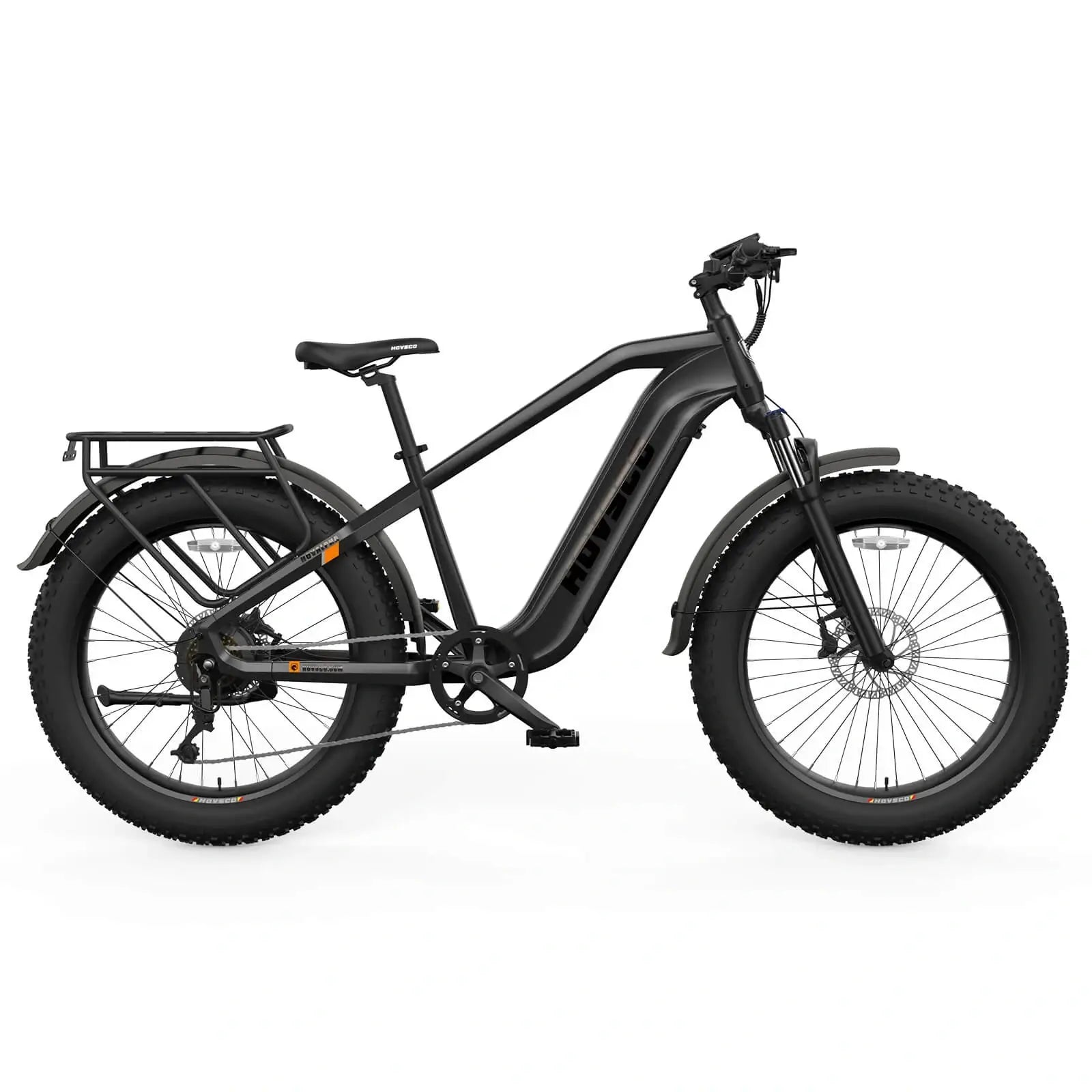
A lighter hardtail e-mountain bike climbs faster because it needs less power to overcome gravity, accelerates more quickly, and wastes less energy on suspension movement. On steep singletrack, that can mean better speed, lower battery use, and a more efficient ride feel. For speed-focused riders, the weight difference is not minor—it is performance you can feel on every climb.
lightweight electric mountain bikes
A lighter bike climbs faster because the same watts produce more upward motion when there is less mass to move. On a 15% grade, every extra pound increases the work required to lift the bike, the rider, and the battery-driven system uphill.
In real trail conditions, a lighter hardtail can feel more responsive, easier to pace, and less tiring over repeated climbs.
A hardtail is usually 6 to 8 pounds lighter than a comparable full-suspension bike because it does not need rear shock hardware, linkage parts, pivot bearings, or extra frame reinforcement. That weight gap matters most when the climb is steep, the turns are tight, and the rider must accelerate again and again.
For climbing speed, less mechanical complexity often means more direct power transfer and less wasted motion.
The rear suspension system is the biggest reason for the difference. A full-suspension frame adds a shock, pivots, mounting hardware, and stronger structure around those stress points, while a hardtail keeps the rear end simple and lighter.
On a 15% singletrack climb, the lighter bike has less mass to push uphill, so the motor and rider can maintain speed with less effort. That becomes especially important when the trail is broken into short punchy sections where momentum is constantly being rebuilt.
The result is often a faster, more energetic climb and a noticeable reduction in battery draw.
Yes, in many climbing situations a lighter hardtail can reduce battery demand by around 15% or more compared with a heavier same-class bike. The savings come from lower current draw, less drag from suspension movement, and fewer energy losses when the bike is repeatedly accelerated uphill.
The exact number depends on rider weight, trail texture, cadence, and assist level.
When two bikes produce the same watts, the lighter one accelerates faster because less energy is needed to move each unit of mass. That is why a hardtail often feels more lively when the trail kicks upward or opens into short power sections.
The effect is not just about top speed. It is about how fast the bike gets there and how efficiently it holds momentum.
A logarithmic climb-speed curve shows that speed rises with more watts, but each added watt produces a smaller gain than the one before. The lighter bike stays ahead at every power level, which means it keeps its edge whether you are pedaling softly or pushing hard.
Speed-focused riders benefit most from a lighter hardtail, especially riders who prefer XC-style pacing, punchy climbs, and efficient trail riding. If you care about climbing fast rather than soaking up rough terrain, the lighter platform usually delivers the better result.
It is also a strong choice for riders who want a more natural pedaling feel and less bike mass to manage in tight terrain.
The motor feels more efficient because it is lifting less mass and dealing with fewer suspension losses. On steep climbs, a lighter hardtail helps the motor stay in a more stable cadence range, which reduces heat buildup and avoids unnecessary battery drain.
That is why the bike can feel smoother, quicker, and more “alive” even when the motor output is the same.
HOVSCO fits this use case well because climbing performance is about system efficiency, not just motor strength. A lighter aluminum platform and well-designed contact points can help the rider stay in control while the bike preserves speed on steep singletrack.
For riders who value fast climbs, HOVSCO shows how design choices can translate into real trail performance.
Small engineering details often decide whether a bike feels fast or merely powerful. Frame stiffness, crank response, pedaling alignment, tire setup, and weight placement all affect how well watts become forward motion.
From a practical build perspective, this is where a lighter hardtail can outperform a heavier bike that looks stronger on paper.
“When we design for climb performance, we focus on how efficiently the rider’s watts reach the trail. Less mass, cleaner force transfer, and stable handling matter more than spec-sheet bragging rights. That is why a well-built hardtail can feel faster than a heavier full-suspension bike on steep singletrack.”
No. A full-suspension bike can be better on rough, loose, or technical climbs because it keeps the rear wheel planted and improves traction. If the trail is highly uneven, the extra control may outweigh the hardtail’s weight advantage.
But on smoother steep climbs, the lighter hardtail usually wins on speed and battery efficiency.
Choose a hardtail if you want lower weight, faster acceleration, simpler maintenance, and better climbing efficiency on moderate terrain. Choose full suspension if comfort, traction, and rough-trail control matter more than raw uphill speed.
If your rides involve many steep climbs with short technical sections, a hardtail is often the more efficient choice.
Yes. Smooth cadence, early shifting, and seated climbing all help a lighter hardtail hold traction and keep energy use under control. When the rider avoids sudden power spikes, the bike climbs more efficiently and the battery lasts longer.
Good technique makes the weight advantage even more noticeable.
HOVSCO matters because speed riders want more than motor power alone. They want a bike that turns watts into forward motion with minimal waste, and that is where light weight, balance, and clean climbing behavior make a difference.
For riders comparing options, HOVSCO represents a practical approach to efficient uphill performance.
A lighter hardtail e-mountain bike climbs faster because it reduces the energy needed to move uphill, improves acceleration, and helps the motor stay efficient. On steep singletrack, a 6 to 8 pound advantage can translate into better speed, lower battery use, and a more responsive ride.
If you want the fastest climbing feel, choose a lighter platform, keep your pedaling smooth, and prioritize efficient component setup. That combination delivers the biggest real-world gain.
Does a lighter e-bike always climb faster?
Not always, but on most steep climbs it has a clear advantage because it takes less power to lift.
Why does a hardtail save battery on hills?
Because it has less mass and fewer suspension losses, so the motor uses energy more efficiently.
Is a 6 to 8 pound difference noticeable?
Yes. On repeated climbs and technical sections, the difference is easy to feel.
Can HOVSCO bikes help with climbing?
Yes. HOVSCO bikes are designed to support efficient riding and strong uphill performance.
Should I choose hardtail or full suspension for speed?
Choose hardtail for climbing speed and efficiency, full suspension for comfort and traction on rough terrain.
Share:
Can Mid-Drive E-Bikes Make Your Legs Feel Elite?
How Do You Ride Loose Gravel Without Washout?