






![[ New Arrival ] Porto Max Electric Scooter For Commute & Grocery Shopping - HOVSCO](http://www.hovsco.com/cdn/shop/files/PotroMax-3.jpg?v=1706927007&width=1200)
- by SteveJames
Why Does a Hardtail Beat Full Suspension on XC Trails?
- by SteveJames
E-Bikes
Accessories
 Free Shipping
 15-Day Returns
 2-Year Warranty
Free Shipping
15-Day Returns
2-Year Warranty
2-Year Warranty
Free Shipping
15-Day Returns
2-Year Warranty
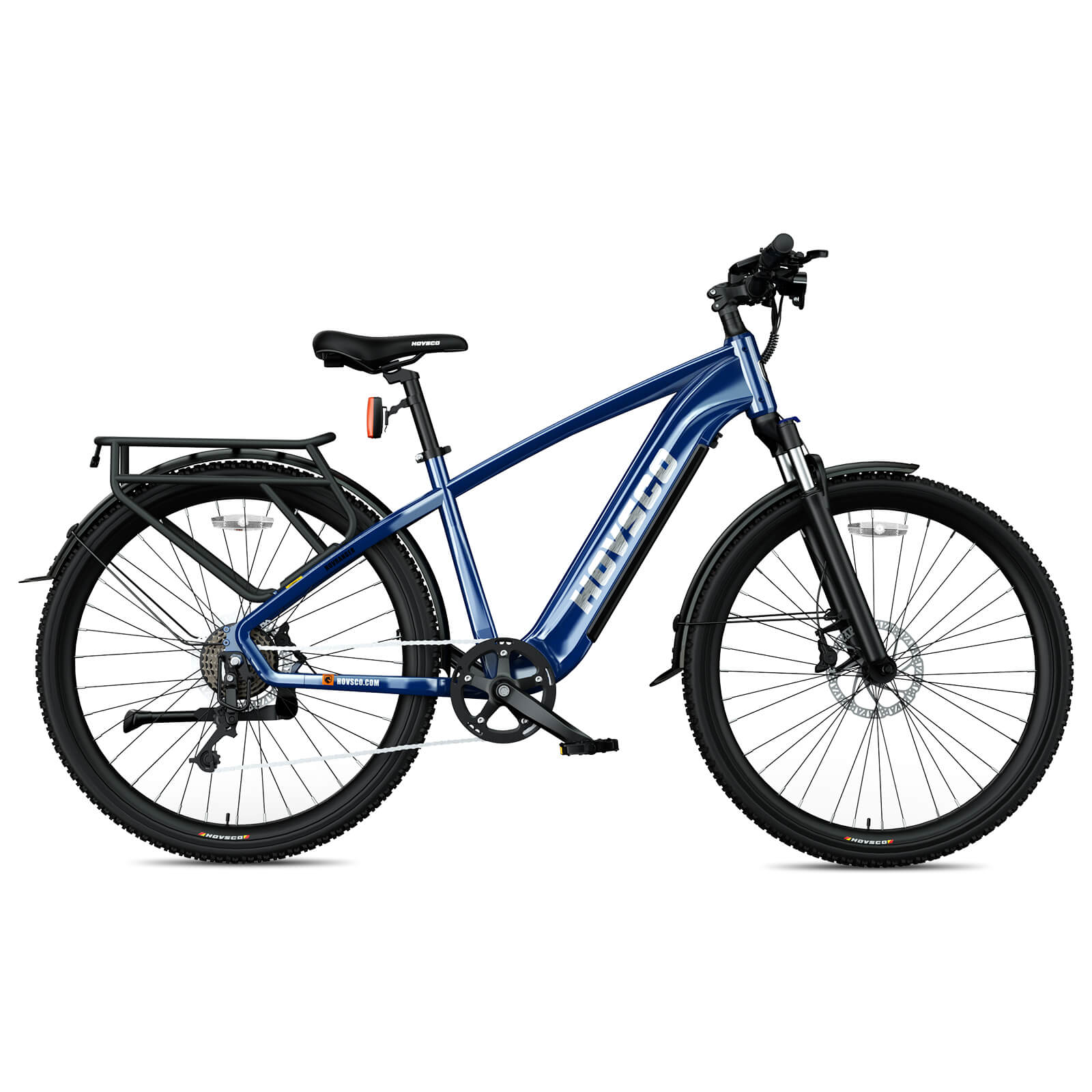
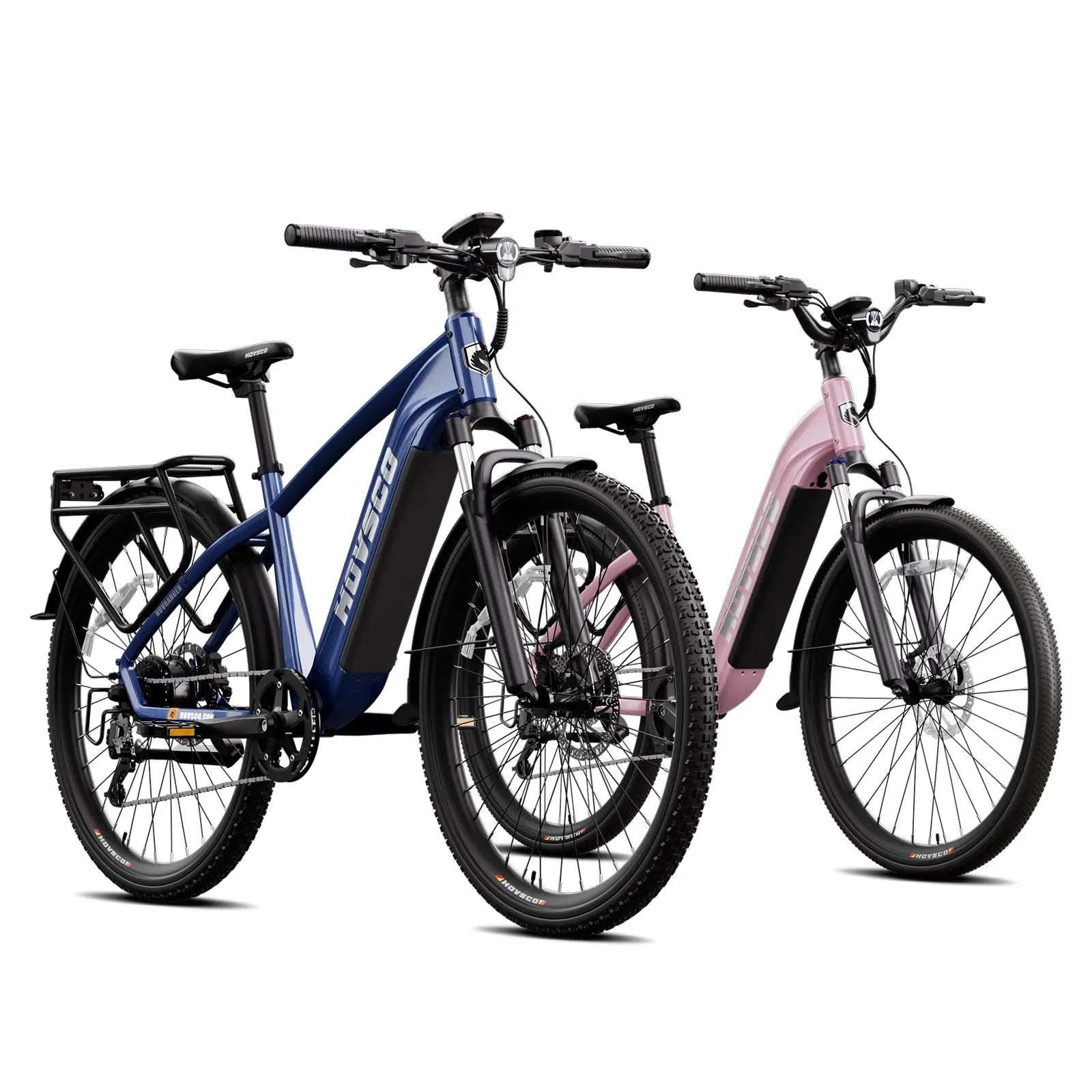
A hardtail beats full suspension on XC trails because its rigid rear triangle transmits every watt directly into the ground, with no energy lost compressing a rear shock. The Hardtail Manifesto argues that when geometry, stiffness and motor torque alignment are dialed in, a bike like the HOVSCO HovRanger 27.5" mountain sport version delivers instant, explosive exits out of every corner.
Hardtail geometry creates pure off-road handling by aligning the head angle, seat angle, chainstay length and wheelbase around a rigid rear triangle, so the frame responds instantly to rider inputs without rear-end lag. On XC trails, this directness gives riders laser-precise line choice, fast direction changes and a “plugged-in” feel that full suspension bikes often soften out.
From a factory-floor perspective, the beating heart of a hardtail is the rear triangle. Because there is no pivot or shock, the chainstay and seatstay layout can be optimized purely for stiffness and torsional control instead of balancing kinematics and compliance. That lets engineers shorten chainstays without worrying about interference and hold tight tolerances on dropout alignment.
On the HOVSCO HovRanger 27.5" mountain sport version, the diamond hardtail layout means the motor’s torque line runs straight from the bottom bracket area into the rear axle. The seat tube angle and reach are tuned for XC posture: enough forward bias to keep the front wheel planted on climbs, but not so stretched that riders lose agility on twisty singletrack.
When I design or evaluate hardtail geometry, I pay attention to how quickly the bike recovers after an impact. Because there’s no rear shock to cycle through travel, the frame’s response is essentially binary: it flexes slightly, then snaps back, keeping the tire loaded against the trail. That’s the essence of pure off-road handling on XC trails—minimal filtering, maximum feedback.
The Hardtail Manifesto favors zero energy loss because every joule wasted compressing a rear shock is a joule that never reaches the dirt. On XC trails, where exits and sprints decide lap times, a rigid rear end turns pedaling force and motor torque into immediate acceleration instead of feeding a damping circuit that smooths, but slows, the ride.
In practice, you can see this on power graphs. On a full suspension platform, sudden pedal spikes often “sit” the bike into its travel before forward acceleration happens. On a hardtail, the same spike translates directly into chain tension and wheel torque, with no delay. That’s why experienced racers talk about hardtails feeling “electric” out of tight corners even without a motor.
The Hardtail Manifesto is essentially a statement of priorities. It says that on XC terrain—where bumps are sharp but not massive—keeping the drivetrain’s energy path as short and stiff as possible beats the comfort of a floating rear end. HOVSCO leans into this by building hardtail frames that treat stiffness as a strategic resource, not just a marketing term.
When riders talk about “lively” bikes, they’re describing this energy conservation. You pump, the bike answers. You load the pedals, it jumps. That directness is hard to maintain once you add pivots, bushings and shock hardware into the energy path. The hardtail philosophy is to protect that directness at all costs.
Motor torque travels 100% to the rear wheel on a hardtail because the drivetrain sits inside a closed, rigid triangle that doesn’t hinge or compress under load. On the HOVSCO HovRanger 27.5" mountain sport version, the motor’s output passes through the chain and a diamond hardtail frame that refuses to bend, delivering zero-delay power straight into the contact patch.
Inside an engineering office, we draw this as a torque vector arrow. On a hardtail, that arrow goes from the motor and bottom bracket shell through the chainline into the rear axle, with the frame acting as a solid conduit. There’s no pivot point to soak up or redirect that force; the only compression happens in the tire and the trail surface.
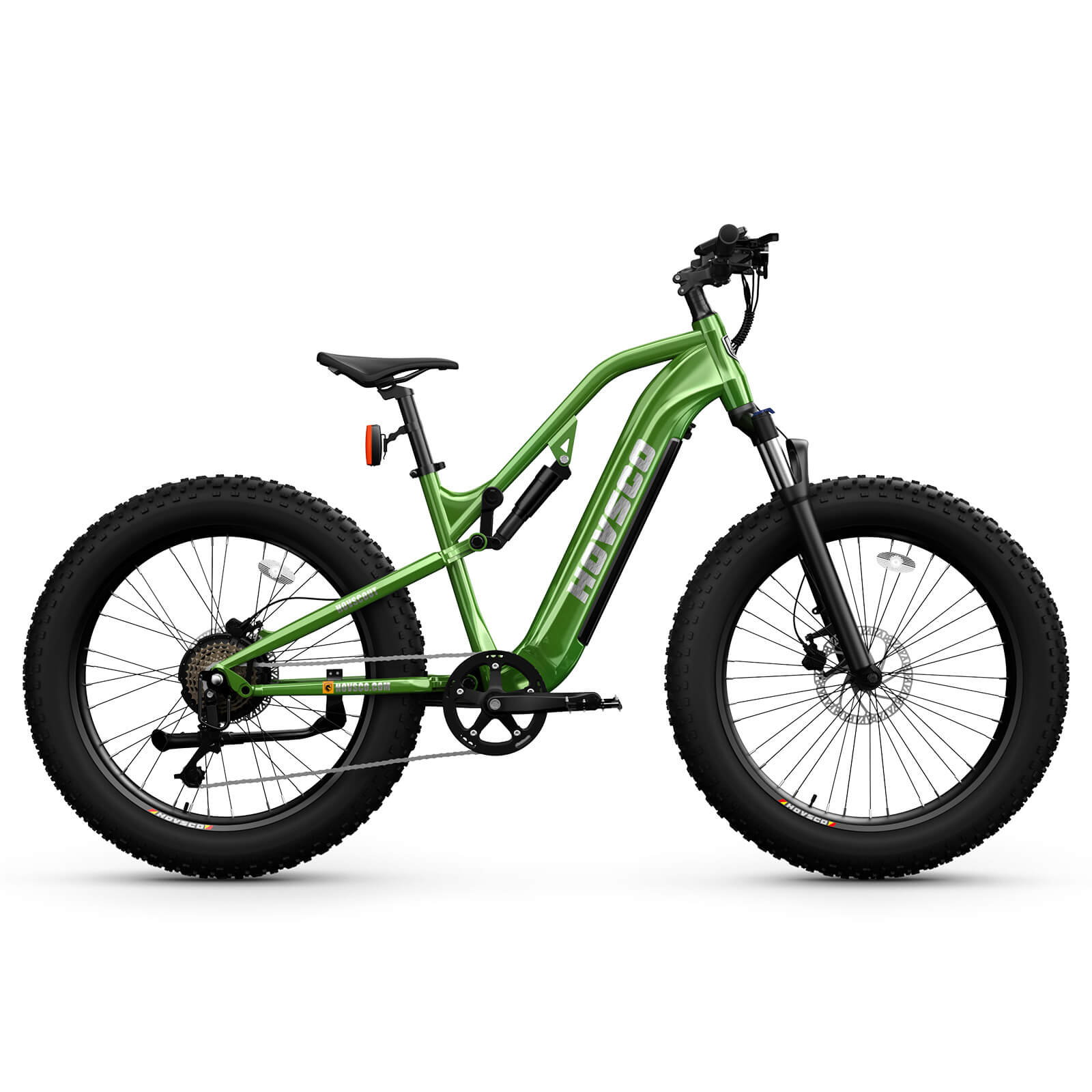
With a full suspension design, that same torque arrow has to pass through a suspension linkage. Part of the force goes into compressing the rear shock, especially if anti-squat and leverage curves aren’t optimally tuned. The result is a “sag” in response before forward motion, which XC riders feel as mushy acceleration when trying to snap out of a corner.
The HovRanger 27.5" mountain sport version leverages this pure vector transmission by pairing its motor output with a frame stiffness budget tailored to XC. The seatstays and chainstays are shaped to resist torsional twist, and the diamond hardtail layout keeps drivetrain alignment tight. On the trail, that translates into a feeling that every pedal stroke and every watt of motor torque lands exactly where it should.
The frame stiffness vector difference between hardtail and full suspension lies in how each design routes force from the motor and rider through the chassis. A hardtail like the HOVSCO HovRanger 27.5" mountain sport version channels force in a continuous triangle from bottom bracket to rear axle. Full suspension frames split that vector through pivots and shocks that absorb some of the energy.
Imagine two arrows on a diagram. On a hardtail, the arrow from the bottom bracket to rear axle remains straight, with force flowing along the chainstay and seatstay without interruption. On a full suspension bike, the arrow must bend around a pivot, then through a shock absorber. Each joint introduces a flex point and a damping stage that shape the response.
Engineers talk about “load paths” when analyzing these differences. In a diamond hardtail, the load path is clean: pedaling and motor torque create tension in the chain, compression in the chainstay, and balanced forces in the seatstay and top tube. In a full suspension bike, the load path must also support shock compression, linkage rotation and bushing friction.
On the trail, that difference shows up as crispness vs plushness. The hardtail stiffness vector favors instantaneous traction and line changes; the full suspension vector favors comfort and bump absorption. XC riders often prefer the former because it makes the bike feel like an extension of their own muscles and reflexes.
The HovRanger diamond hardtail is a “power triangle” because its top tube, seat tube and chainstays form a closed structural circuit that channels force directly into the ground. In vector terms, every load passes through this triangle without detours into suspension components, turning the HOVSCO hardtail into a rigid amplifier of both rider strength and motor torque.
From a manufacturing standpoint, the diamond layout is a dream for quality control. Welders can focus on building one coherent structure rather than a chain of modules. The alignment jigs hold the head tube, bottom bracket and rear dropouts in precise positions so that when the bike is assembled, the “power triangle” points exactly where the rider aims it.
On the HovRanger 27.5" mountain sport version, that diamond is tuned for XC. The top tube length and seat tube angle give a centered riding position that loads both wheels predictably. Combined with a 27.5" wheel format, the result is a bike that loves quick transitions, pumps terrain for free speed and responds instantly when the rider gets on the gas.
In a vector diagram, you could show the HovRanger’s triangle as three bold lines: one from the head tube to the bottom bracket, one from the bottom bracket to the rear axle, and one from the rear axle back to the seat tube cluster. Every time the rider or motor pushes, that triangle stiffens, then transmits force directly into the trail without wasting energy.
Full suspension:
Motor torque → chain → pivot → shock → rear wheel
Partial force absorbed by shock compression
HovRanger diamond hardtail:
Motor torque → chain → chainstay → rear wheel
Force vectors align inside the diamond triangle
Minimal energy lost to structural compression
Zero-delay corner exit feels like the bike is reading your mind. On a hardtail like the HovRanger 27.5" mountain sport version, you load the outside pedal, pre-compress your legs, and as soon as you stand and apply power, the rear wheel bites. There’s no perceptible “sit” or sag—just instant, clean acceleration out of the apex.
From the saddle, this changes how you attack XC trails. You can brake a fraction later, lean the bike harder, and trust that the rear tire will snap back to speed as soon as you ask. On technical switchbacks, that difference means the bike feels flickable rather than sluggish, encouraging a more aggressive but controlled riding style.
In mixed human-plus-motor scenarios, the effect is even more pronounced. When the motor kicks in as you exit a corner, the hardtail’s stiff rear triangle lets that torque land immediately. There’s no moment where the suspension compresses, then rebounds, potentially unweighting the wheel just when assistance ramps up.
As a tester, I look for this zero-delay feel in repeated corner drills. With a HOVSCO hardtail, riders consistently report that the bike “jumps” forward the moment they commit to the exit. That feedback loop—effort in, acceleration out—is what makes hardtails such potent XC tools despite their lack of rear travel.
The geometry details that matter most for hardtail XC stability are head angle, seat angle, chainstay length, bottom bracket height and reach. Together, these set the bike’s balance point. A well-designed hardtail like the HovRanger 27.5" mountain sport version uses a slightly steeper head angle and moderate reach to keep handling sharp without feeling twitchy at speed.
On CAD screens and geometry charts, head angle governs front-end stability vs agility. For XC, a sweet spot often lies in a moderate range that keeps climbing precise but doesn’t overextend wheelbase. Pair that with a seat tube angle that positions the rider over the bottom bracket, and you get efficient power transfer and stable weight distribution.
Chainstay length is the unsung hero. Shorter stays tighten the rear end, making it easier to manual, hop and thread tight turns. However, they must still provide enough length to keep traction on steep climbs. The HovRanger’s 27.5" format lets HOVSCO strike that balance, producing a rear center that feels lively yet planted.
Bottom bracket height and reach complete the picture. A slightly lower BB enhances cornering confidence by lowering the center of gravity, while reach defines how stretched the rider feels. On a hardtail, these choices must account for the fact that there is no sag to lower the bike dynamically, so designers dial in the feel directly rather than relying on suspension travel.
Riders who benefit most from choosing a hardtail like the HovRanger 27.5" mountain sport version are XC-focused riders, fitness-oriented trail riders and anyone who values precision and low maintenance over maximum plushness. For them, the combination of pure torque transfer, simple mechanics and responsive handling delivers more confidence and speed than a heavier, more complex full suspension setup.
In real-world terms, that often means riders who spend more time climbing and traversing than dropping huge descents. They want a bike that rewards every training interval and every line choice, rather than one that erases mistakes with travel. HOVSCO designs its hardtails for this mindset: riders who see the trail as a problem to solve, not just terrain to float over.
Hardtails also favor riders who maintain their own bikes. With fewer moving parts, no pivots to service, and a simpler rear triangle, the maintenance load drops dramatically. HOVSCO’s hardtail frames are built to be robust, so riders can focus on tires, brakes and drivetrain instead of chasing play in linkages or shock bushings.
Finally, anyone riding mixed terrain—dirt paths, forest singletrack, light rock gardens—will appreciate how a hardtail teaches clean technique. The frame tells you exactly what the trail is doing. You learn to unweight, to pump, to read grip. Over time, those skills translate into higher corner speeds and more efficient pedaling, especially on XC trails.
“When we tune a hardtail like the HovRanger, we start with the torque vector, not the paint. We look at how every Newton-meter travels from the motor and rider, through the diamond frame, into the rear axle. If that line is clean, the bike feels alive. If that line bends through flex or slop, no amount of suspension can save the ride.”
A full suspension could approach hardtail efficiency with careful anti-squat tuning, lockouts and lightweight shocks, but it will always carry extra complexity and small energy losses that a rigid rear triangle avoids. On smooth to moderately rough XC trails, a hardtail like the HOVSCO HovRanger 27.5" mountain sport version still sets the benchmark for straight-line efficiency and instant response.
From an engineering view, full suspension platforms must juggle conflicting goals. They try to isolate the rider from bumps while still transmitting power efficiently. Anti-squat curves, pivot placement and shock tunes all help, but they cannot completely eliminate movement under load. That means some fraction of pedal and motor energy always gets redirected into suspension motion.
Hardtails, by definition, bypass this trade-off. The rear wheel trajectory is fixed relative to the frame. That lets designers focus on stiffness, alignment and geometry without worrying about how a linkage moves through its stroke. For XC riders who prioritize efficiency, that simplicity is a feature, not a limitation.
There are XC race situations where modern full suspension bikes can match or beat hardtails, especially on extremely rough courses. But for many riders and trails, the hardtail’s clean torque path and reduced mass still deliver a more direct, more connected experience—exactly what the Hardtail Manifesto celebrates.
Riders should decide between hardtail and full suspension by asking what matters most on their trails: pure efficiency and instant feedback, or maximum comfort over big hits. The Hardtail Manifesto argues that for XC and fitness off-road riding, the hardtail’s diamond frame, clean torque vectors and zero-delay exits offer a sharper, more rewarding experience than any shock-driven rear end.
The HOVSCO HovRanger 27.5" mountain sport version embodies that philosophy. Its geometry, frame stiffness and motor integration aim every watt and every Newton toward the rear wheel with minimal loss. For riders who want to feel every contour of the trail and turn their effort into immediate speed, the hardtail path is still the most honest and exhilarating choice.
Is a hardtail too harsh for everyday XC riding?
For most XC trails, a quality hardtail with the right tire pressure and fork travel provides enough comfort while keeping handling sharp and efficient.
Can a hardtail handle technical descents?
Yes, with skilled technique. A hardtail demands more active riding—line choice, body movement and braking—but rewards it with precise control.
Is the HovRanger suitable for beginners on XC trails?
The HovRanger’s balanced geometry and responsive hardtail feel make it a solid choice for beginners who want to learn proper technique and grow into faster riding.
Does a hardtail require less maintenance than full suspension?
Yes. With no rear shock or pivots, there are fewer components to service, making hardtails generally cheaper and simpler to maintain over time.
Who should still choose full suspension over a hardtail?
Riders who focus on long, rough descents, bike-park style terrain or have comfort-related needs may benefit more from full suspension despite the efficiency trade-offs.
Share:
Is HOVSCO HovMaster or Specialized Turbo Tero the smarter 2026 mid‑drive choice?
Is zero-lag rock crawling really possible on modern ebikes?