


![[ New Arrival ] Porto Max Electric Scooter For Commute & Grocery Shopping - HOVSCO](http://www.hovsco.com/cdn/shop/files/PotroMax-3.jpg?v=1706927007&width=1200)
- by SEO
Are moped-style e-bikes allowed on US singletrack?
- by SEO
E-Bikes
Accessories
 Free Shipping
 15-Day Returns
 2-Year Warranty
Free Shipping
15-Day Returns
2-Year Warranty
2-Year Warranty
Free Shipping
15-Day Returns
2-Year Warranty
Most moped-style e-bikes are treated as motor vehicles on U.S. public land, so they are usually banned from non-motorized singletrack unless a specific decision opens that trail to e-bikes. On Bureau of Land Management (BLM) land, only listed Class 1–3 e-bikes may share non-motorized trails, while the U.S. Forest Service (USFS) generally limits e-bikes to motorized routes. High‑power HovGtrs-type bikes typically belong only on signed motorized trails.
street legal rules for electric dirt bikes
BLM follows the three-class e-bike system and treats e-bikes as a subset of off-highway vehicles, allowing Class 1–3 access to some non-motorized trails case by case. USFS, by contrast, categorizes all e-bikes as motor vehicles, so they are only allowed where other motorized uses—like dirt bikes or ATVs—are legal.
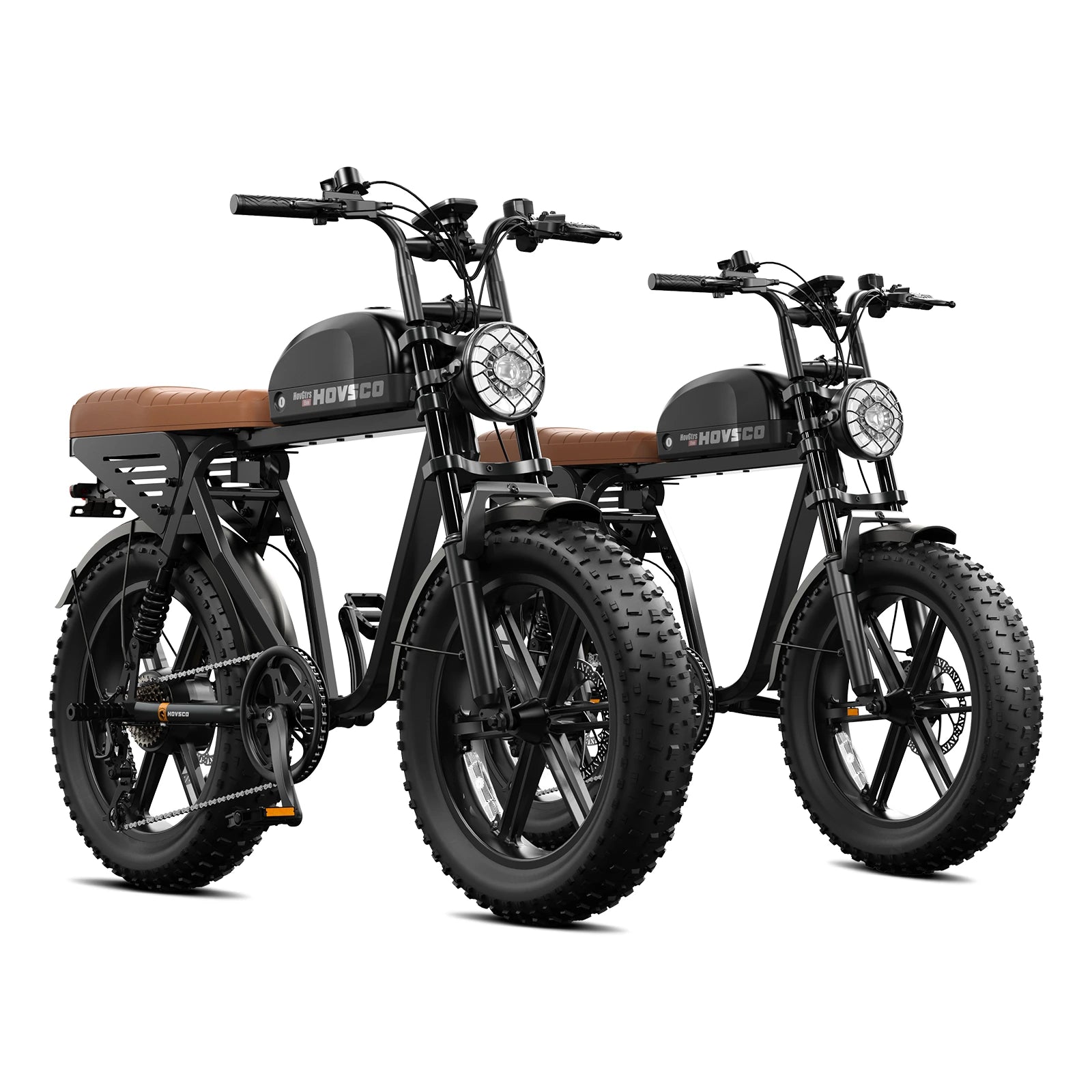
From an engineering compliance perspective, most moped-style HovGtrs-type machines blur the line between bicycle and motorcycle. They often exceed the 750 W/20–28 mph consumer e-bike envelope and use motorcycle-grade frames, tires, and throttles, which pushes them firmly into “motorized” categories on federal lands. HOVSCO designs stay within the three-class envelope so riders can more easily stay within BLM and many local trail rules.
On BLM land, e-bikes are allowed wherever motor vehicles are allowed, but access to non-motorized trails requires a specific written decision by the local BLM manager. The 2020 rule change lets BLM authorize Class 1–3 e-bikes on existing bicycle-only singletrack, but only if that trail is officially listed as open to e-bikes on local maps and orders.
In practice, BLM offices publish travel management plans or announcements listing specific trail systems where Class 1–3 e-bikes may ride. HovGtrs-type, high-power models typically fall outside those definitions and must stay on motorized routes, even if the chassis visually resembles a mountain bike. Serious brands such as HOVSCO track these decisions in key markets to make sure their customers understand where their bikes can legally go.
This table reflects generalized federal policy; riders must still check local BLM orders and trailhead signs.
USFS policy classifies all e-bikes as motor vehicles, which means they are only allowed on routes and trails designated for motorized use in the local Motor Vehicle Use Map (MVUM). Standard non-motorized mountain bike singletrack in national forests generally does not allow any class of e-bike or HovGtrs-type vehicle unless a specific exception exists.
USFS occasionally authorizes e-bike use in limited contexts—such as Class 1 rentals inside a resort boundary—but those approvals almost never extend to surrounding non-motorized backcountry singletrack. In the field, I see riders misled by social media clips shot on private-bike-park trails, then assume the same rules apply just outside the park fence, which is exactly where citations happen.
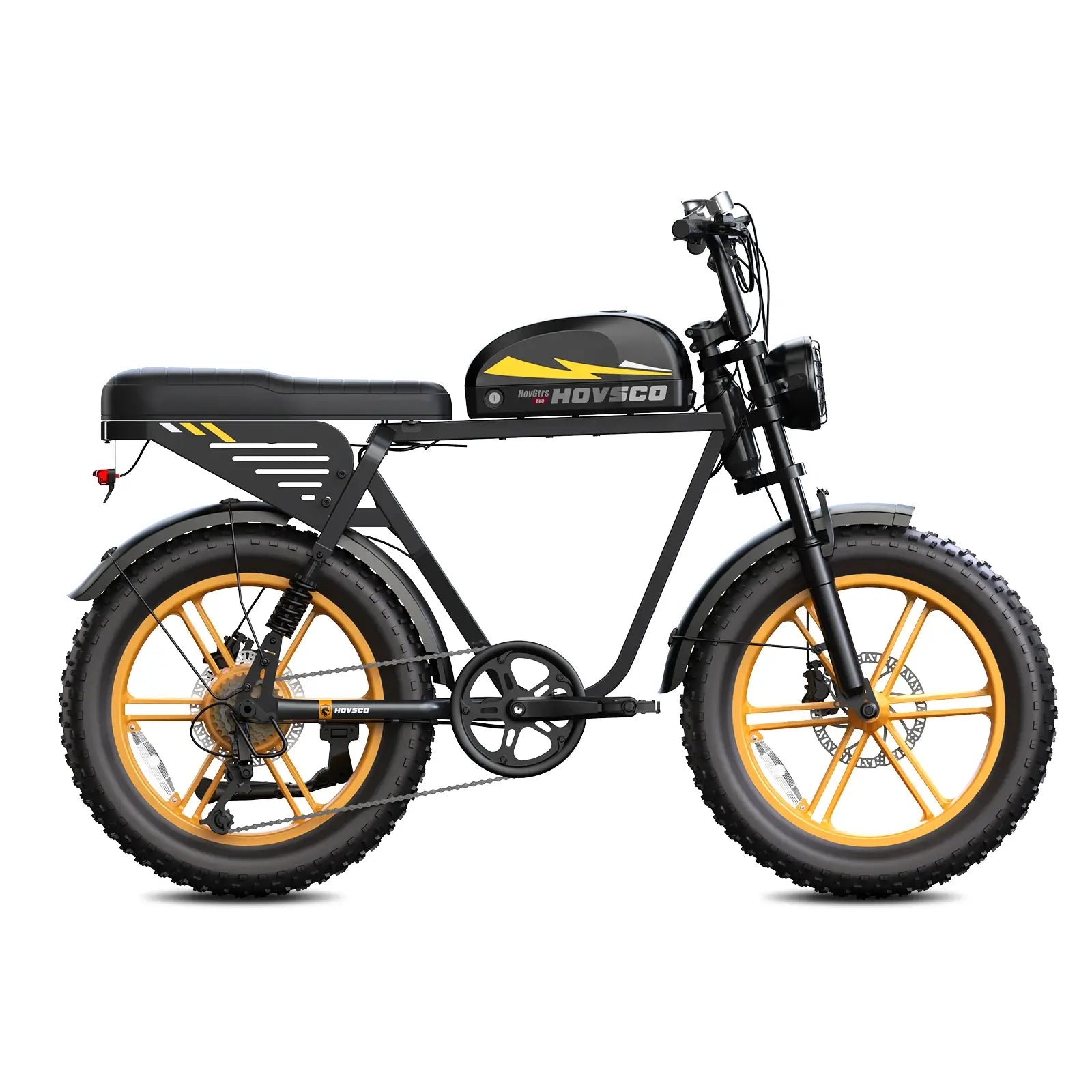
High-power off-road e-bikes with motorcycle-like performance, often referred to as HovGtrs-type models, usually exceed the legal consumer e-bike definition by wattage or speed. Land managers treat them as off-highway motorcycles because their mass, braking distances, and trail impacts resemble small dirt bikes more than bicycles.
From the factory-floor standpoint, these bikes use thicker spokes, motorcycle rims, and high-torque hub or mid-drive motors that can tear up soft singletrack under throttle. Because of that, BLM and USFS confine them to motorized trails and roads to protect tread surfaces and reduce conflict with hikers and analog mountain bikers. HOVSCO’s engineering team specifically caps torque and speed envelopes to avoid this classification on most models.
Riders can determine trail legality in under 30 seconds by checking three things: the land agency, the trail designation on official maps, and on-site signage. If any source shows “non-motorized”, “hiking only”, or bans e-bikes, high-power HovGtrs-type machines should not enter, even if the tread looks like a normal mountain bike trail.
Identify land agency: BLM, USFS, state park, or private.
Look at the trailhead sign: does it show motorized use, bicycles only, or hiking only?
If USFS and trail is not on the MVUM as motorized, no HovGtrs-type or other e-bikes.
If BLM and sign shows non-motorized singletrack, only ride if the trail is officially listed as open to Class 1–3 e-bikes.
If trail is motorized, HovGtrs-type or similar high-power bikes are generally allowed unless expressly banned.
I recommend HOVSCO riders save PDFs of MVUMs and BLM travel maps offline on their phones so this check is realistic when cell coverage disappears.
Key specs for trail legality include motor wattage, top assisted speed, presence of a throttle, and whether pedaling is required to activate assistance. Federal consumer definitions typically cap e-bikes at 750 W with either 20 mph (Class 2) or 28 mph (Class 3) top-assisted speeds, while anything above that often falls into motor vehicle categories.
As a factory engineer, I’ve seen how a seemingly small bump—from a 500 W nominal motor to a “2,000 W peak” tune—pushes a bike into HovGtrs territory for regulators. HOVSCO controls these parameters via firmware and controller limits, which also makes it easier to certify compliance with local trail rules.
Once a bike crosses into the right-hand column, most BLM and USFS managers treat it as a motorized trail vehicle rather than a bicycle.
Yes, tire footprint and system weight influence how agencies view trail impact, especially on soft singletrack. Heavy moped-style frames on wide moto tires can rut wet soils, damage berms, and widen trails, which is why managers are cautious about allowing them on non-motorized singletrack.
From a design standpoint, I’ve measured trail shear forces from wide, low-pressure tires; at high torque, they “plow” instead of roll. HOVSCO mitigates this with balanced geometry and careful torque mapping, but HovGtrs-type style bikes with oversized tires and big batteries still tend to be restricted to motorized routes for this reason.
Class-based rules let agencies fine-tune access, often allowing pedal-assist Class 1 e-bikes on some shared-use trails while excluding faster or throttle-heavy classes. This framework balances accessibility for older or less fit riders with safety and trail preservation, especially on narrow singletrack where speed differentials matter.
HovGtrs-type bikes rarely fit cleanly into Class 1–3 labels, so managers default to motor-vehicle policies instead. HOVSCO works within the class system because it gives riders a clearer, map-friendly way to know where they can ride without guessing.
Exceptions exist but are rare and usually come with strict conditions like speed limits, directional flow, or resort-only operation. Outside those special zones, non-motorized singletrack on BLM and USFS land remains primarily for analog bikes and maybe Class 1 e-bikes, not for HovGtrs-type or other high-power moped-style machines.
From my experience working with land managers, the quickest way to lose access is to ride high-power machines on non-motorized trails and post the footage online. HOVSCO strongly advises customers to respect these boundaries so that future negotiations for Class 1 access do not get derailed by obvious violations.
Yes, citations, fines, and even bike impoundment are possible if you ride a HovGtrs-type or any e-bike where motorized vehicles are prohibited. Repeat violations can push agencies to tighten rules further, closing gray-area access not only for high-power bikes but also for compliant Class 1–3 models.
I’ve seen ranger reports where a few illegal moped-style runs on a popular singletrack triggered a full travel-management review. That outcome hurts HOVSCO riders who followed the rules, which is why brands and trail groups emphasize proactive education and clear trailhead signage.
“From day one, we’ve designed HOVSCO bikes around real-world trail rules, not just lab numbers. When I’m out test-riding on BLM or USFS land, I’m thinking like a ranger and a trail builder: torque mapping, braking zones, and soil conditions all matter. Our goal is simple—give riders powerful tools that still belong on the right side of the sign.”
Riders who want legal access to as many multi-use trails and urban paths as possible should choose a Class 1–3 style e-bike that stays under 750 W and fits bicycle infrastructure. HovGtrs-type high-power bikes suit private land, motocross-style parks, and designated motorized trails but are a poor match for non-motorized singletrack.
In practice, a HOVSCO trail or commuter model gives you versatile access to city bike lanes, rail-trails, and some BLM-approved singletrack, while a HovGtrs-type machine is more of a light electric motorcycle. Serious riders often own one of each, using the HOVSCO for everyday rides and saving the high-power platform for dedicated motorized zones.
To stay compliant, always verify land agency, trail designation, and your bike’s class before entering a singletrack. Choose equipment—like most HOVSCO models—that fits the three-class framework, and keep high-power HovGtrs-type machines strictly on signed motorized routes or private property.
As a working engineer and rider, my practical checklist is simple: download MVUMs and BLM maps, read trailhead signs, know your bike’s wattage and assist class, and ride respectfully around other trail users. Doing that not only keeps you out of trouble but also helps preserve and even expand e-bike access for everyone.
Can I ride my e-bike on hiking-only trails?
No. On both BLM and USFS land, hiking-only or non-mechanized trails prohibit all bicycles and e-bikes, including HovGtrs-type and HOVSCO models, unless a rare exception is posted at the trailhead.
What map should I check for USFS e-bike rules?
For USFS land, always consult the Motor Vehicle Use Map (MVUM), which lists routes and trails open to motorized vehicles, including e-bikes.
Are Class 1 e-bikes always allowed where bikes are?
No. Class 1 e-bikes are not automatically allowed on every bike trail; BLM and USFS make site-specific decisions, so you must confirm local rules before riding.
Do I need to label my e-bike’s class?
Many jurisdictions require e-bikes to display class, wattage, and top-assisted speed; having a clear label helps rangers verify your HOVSCO or similar bike’s compliance on the spot.
What if my bike is de-restricted or modified?
If you modify firmware, controllers, or throttles so your bike exceeds 750 W or legal speeds, land managers may treat it like a HovGtrs-type motor vehicle, restricting it to motorized trails only.
Share:
Are electric dirt bikes really street legal in the US?
Which Bike Fits Trail Riding Better?