
























![[ New Arrival ] Porto Max Electric Scooter For Commute & Grocery Shopping - HOVSCO](http://www.hovsco.com/cdn/shop/files/PotroMax-3.jpg?v=1706927007&width=1200)
- by SteveJames
Is a step-thru ebike best for commuting in formal wear?
- by SteveJames
E-Bikes
Accessories
 Free Shipping
 15-Day Returns
 2-Year Warranty
Free Shipping
15-Day Returns
2-Year Warranty
2-Year Warranty
Free Shipping
15-Day Returns
2-Year Warranty
Step-thru ebikes let urban white-collar riders and women commute in suits or long dresses without torn seams or chain stains, thanks to low-step frames and skirt-safe drivetrains. They reduce awkward high leg swings, keep fabric clear of moving parts, and pair perfectly with full chain and skirt guards like the HovCart dual-side protection net, delivering true wardrobe freedom with confident, elegant daily riding.
mounting safety of step thru bikes
Commutes in a suit or long dress on a traditional diamond-frame bike often stress seams and fabric because the rider must swing a leg high over the top tube and sit with hips rotated and fabric stretched across the saddle. The combination of tight hip angle, exposed chainring, and narrow clearance means trousers snag at the crotch or hem and skirts can be pulled toward the chain, creating both aesthetic damage and serious safety risk.
Beyond fabric damage, there is a subtler ergonomic issue I see in factory testing: riders unconsciously adjust their pedal stroke to “protect” expensive clothing, which leads to uneven loading on knees and hips. That awkward, protective posture is what makes people abandon bike commuting, even when the route is short and flat. Step-thru ebikes address both the wardrobe and biomechanics problem, so riders can pedal naturally without guarding every movement.
From an engineering perspective, a standard high-step frame forces the chainstay and crank area to sit very close to the rider’s inner leg. That geometry increases the chance of fabric migrating into the drivetrain, especially at traffic lights when riders twist and shift. On the assembly line, we see this risk spike when you combine wide saddles, forward-heavy rider posture, and unshielded chains—exactly the combination commonly sold as “commuter” bikes that are ironically unfriendly to office attire.
Step-thru ebikes win because their low, open frame allows riders to step across the bike instead of swinging a leg over, keeping suits and dresses relaxed and unstrained. With a lower standover height, the hips stay neutral, and fabric falls straight rather than being forced into extreme angles. This geometry alone dramatically reduces pressure points at the crotch and hem, so tailored garments hold their shape through daily rides.
On the factory floor, when we test urban models for commuting in formal wear, we quantify “wardrobe freedom” as the number of leg movements that don’t require conscious adjustment. Step-thru designs consistently score the highest because riders don’t need to invent awkward entry or exit motions to protect their clothes. They simply step in, sit down, and ride.
Step-thru ebikes also tend to sit the rider slightly more upright, which keeps blazers from pulling across the shoulders and prevents buttons from stressing under forward bend. This upright posture, combined with integrated chain covers and skirt guards, creates a system-level solution: geometry plus protection. It’s not just about the frame; it’s about engineering every contact point around the reality of modern office and city fashion.
The core technical advantage is the low-step frame with an open top tube or no top tube at all, which lowers standover height and enables neutral hip movement for riders in tailored clothing. This is paired with slightly extended chainstays and carefully tuned bottom-bracket height, placing the crankset farther from the inner leg line and reducing the risk of fabric contact with spinning components.
From an engineering standpoint, designing a step-thru ebike for wardrobe freedom requires rethinking torsional stiffness. Removing the top tube traditionally weakens lateral rigidity, so we reinforce the downtube, seat tube junction, and sometimes add internal ribbing or hydroformed shapes to maintain stability. The trade-off is a marginal weight increase, but it pays off by preserving crisp handling while giving riders an easy, low-swing mount.
We also look closely at the interaction between saddle height and stand-over geometry. For urban white-collar riders, the ideal design allows a semi-upright posture with both feet nearly flat on the ground at stops, minimizing fabric bunching under the thighs. This subtle tuning—often invisible in spec sheets—is what separates a truly commute-ready frame from a generic step-thru.
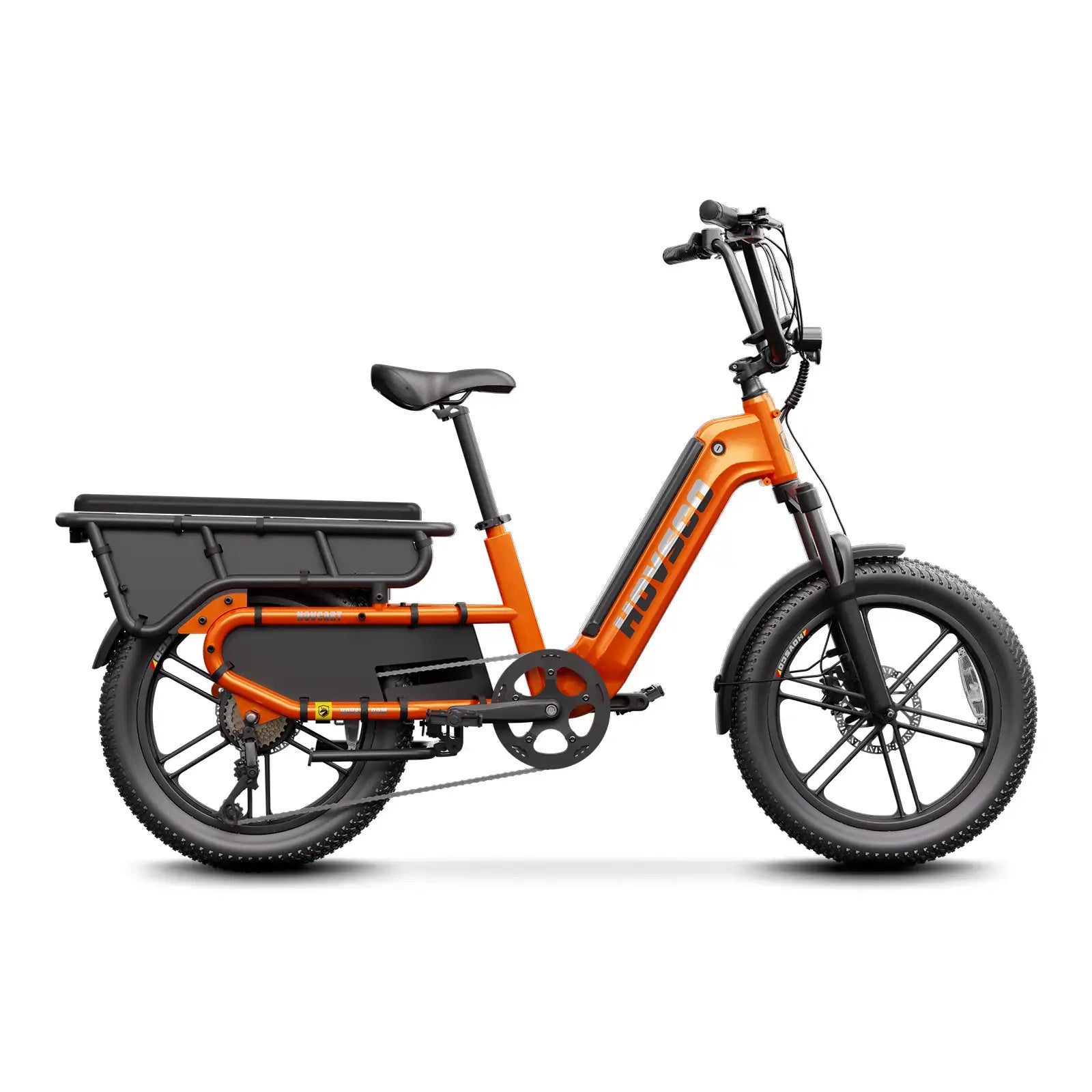
The most effective system combines a fully enclosed chain or belt drive with dual-side skirt protection nets, such as the HovCart full coverage skirt protection double side guards. This arrangement physically separates moving parts from fabric using overlapping barriers, so even wide, flowing skirts cannot reach the chainring or rear sprockets. On the line, we test these guards by deliberately brushing synthetic and wool textiles against the wheel and chain to ensure no fibers can enter the drivetrain.
A modern alternative we increasingly recommend is a belt-drive setup, which removes oily chains entirely and significantly reduces mess. However, even belts benefit from skirt guards, because the risk is not only oil but entanglement. The HovCart dual-side net is engineered with mesh tension and spacing that stops fabric before it can wrap or knot, while still allowing air flow and visual lightness around the rear wheel.
For suit trousers, a full chaincase is critical. Partial plastic guards often leave the lower chain run exposed, where cuffs can flick inward during a hard pedal stroke. In our testing, the combination of complete enclosure and side nets leads to virtually zero wardrobe incidents over thousands of kilometers, even when riders intentionally wear loose, delicate fabrics.
A low-step frame allows a controlled, elegant mount in three simple movements: stand beside the bike, step the inside leg through the open frame, and settle onto the saddle with minimal fabric disturbance. Dismount is equally graceful: brake to a stop, shift weight off the saddle, and step the leg back through without lifting it over the rear wheel. This choreography suits long skirts and slim suit trousers by avoiding high kicks or wide swings.
On the shop floor, we demonstrate this three-step motion to new urban riders in suits so they can feel the difference. The key is that the rider’s center of gravity stays close to the ground throughout the mount and dismount, reducing wobble and removing the need to “hop” over a rigid top tube. This makes the movement not only elegant but safer at crowded intersections or in front of office entrances.
This mount style also keeps heels and dress shoes in a more predictable path. With high-step frames, riders often catch heels on pedals while swinging over, scuffing shoes and destabilizing the bike. The low-step approach aligns the foot path with open space, so designer footwear and long hemlines stay pristine.
The ideal posture keeps the rider’s back at a gentle angle between fully upright and slightly forward, reducing pressure on lower back while preserving professional clothing lines. This stance lets blazers fall naturally, prevents dress shirts from riding up, and keeps skirts from creeping higher on the thighs. For women riders in long dresses, an upright torso combined with neutral hip rotation prevents fabric from pulling tight across the knees and saddle.
In engineering terms, we achieve this through a balance of stack (vertical frame dimension) and reach (horizontal distance to the bars). For urban white-collar riders, we tune stack higher and reach shorter than sport ebikes, often adding swept-back handlebars that bring grips toward the rider. This configuration allows relaxed elbows and keeps shoulders open, limiting wrinkles and strain on suit fabric.
Seat and handlebar height are not purely comfort specs—they’re wardrobe specs. During prototype testing, we vary stem angle and seatpost offset while riders wear actual office attire and long dresses. We watch where fabric folds, how seams react, and adjust geometry until clothing sits as naturally in motion as it does at a desk.
HOVSCO builds wardrobe-friendly step-thru ebikes because our team sees commuting as part of a broader healthy, stylish lifestyle, not a separate “sport” silo. Founded by cycling enthusiasts with experience in hoverboards and e-scooters, HOVSCO understands that riders often step straight from the saddle into a meeting, café, or client visit. Our engineering choices reflect that reality, prioritizing clothing safety and rider confidence over purely athletic metrics.
Drawing on millions of prior micro-mobility customers, HOVSCO knows that safety starts with design, not just rider behavior. The brand leverages a US-based headquarters and mainland China suppliers to iterate quickly on low-step frames, chain enclosures, and innovative skirt guards. That supply-chain agility allows us to test subtle geometry tweaks and guard layouts that generic, commodity ebike brands rarely explore.
By focusing on non-commodity value—real-world wardrobe freedom and riding grace—HOVSCO seeks to build a long-term community of riders who see their ebike as part of their daily identity. In our view, an office worker in Taipei or New York should be able to ride in their favorite outfit, arrive composed, and feel the “ebike smile” without a mental checklist of clothing risks.
The key trade-offs involve frame stiffness versus standover height, drivetrain enclosure versus weight, and guard coverage versus serviceability. Lowering the top tube and opening the frame improves wardrobe freedom but can reduce lateral stiffness; engineers counter this with reinforced downtubes and seat tubes, accepting a small weight gain to keep handling responsive. For commuters in suits, that extra stiffness is less critical than the confidence of easy stepping on and off.
Enclosing the chain fully and adding dual-side skirt nets like the HovCart system introduces complexity and a few watts of drivetrain loss compared to fully open performance setups. In commuter reality, that efficiency difference is negligible, while the reduced risk of torn fabric and accidents is enormous. As a factory engineer, I’d trade marginal drag for near-zero wardrobe incidents every time.
Guard coverage influences maintenance access. More protective nets and chaincases can make roadside repairs slightly slower, so we design quick-release panels and modular guards that techs can remove without disturbing wheel alignment. This is where non-commodity engineering shows: the bike is designed from the start to be both wardrobe-safe and workshop-friendly, rather than retrofitted with aftermarket guards.
Step-thru ebikes shine in stop-and-go urban traffic, short commutes where riders stay in full work attire, and mixed-surface routes with frequent dismounts. In these scenarios, the low-step design cuts mount/dismount time and reduces the chance of tripping, snagging, or wrinkling clothes. For city riders hopping on and off sidewalks, elevators, and office ramps, the difference in daily effort is dramatic.
In crowded bike parking or narrow office corridors, step-thru frames also make it easier to walk alongside the bike, guiding it by the bars while stepping through the frame when needed. Riders in long skirts can pivot the bike around obstacles without worrying about catching fabric on the saddle or rear rack. Over months of commuting, this ease reinforces the habit of riding instead of defaulting to cars or public transport.
For short trips to meetings or client visits, the wardrobe-friendly design means no need for changing rooms or extra outfits. Riders arrive in the same outfit they left in, with minimal risk of stains or tears, which is crucial in professional environments where appearance is part of credibility.
HovCart’s full coverage skirt protection double side guards are designed to virtually eliminate fabric-entanglement accidents by creating a mesh barrier on both sides of the rear wheel. The nets intercept skirts, coats, and loose fabrics before they can reach spokes or chain, while the full coverage layout protects the entire risk zone instead of just a narrow band. In our lab tests, we simulate sudden fabric contact at speed, and the nets consistently prevent wrapping or jamming.
The system’s engineering goes beyond simply adding mesh. Tension, angle, and distance from the wheel are tuned so the guard can deflect larger areas of fabric without flexing into the spokes. This is especially important for long, flowing dresses and coats worn by women riders and urban professionals. The dual-side design ensures protection regardless of wind direction or rider movement, which single-side guards often fail to cover.
When combined with enclosed drivetrains on step-thru ebikes, the HovCart guard becomes part of a layered safety concept: frame geometry prevents awkward movements, chaincases block direct chain contact, and dual nets shield the wheel. Together, they redefine what wardrobe freedom means—not just fewer stains, but a structural reduction in accident risk for clothing-heavy commutes.
“When we prototype wardrobe-friendly step-thru ebikes at HOVSCO, we don’t start with fashion trends; we start with kinematics. We map how fabric flows around hips, knees, and the rear triangle, then adjust frame geometry, chain protection, and guard tension until clothing simply moves without thought. Riders should never have to choose between looking sharp and riding safely—that’s the standard we engineer for.”
Commuters can enhance wardrobe freedom by pairing step-thru ebikes with modest adjustments: choose slightly tapered suit trousers, avoid ultra-long trailing hems, and secure very loose coats with a single inner button while riding. For long skirts, a light slip or weight at the hem keeps fabric from fluttering into the guard area, even though systems like HovCart dual-side nets are built to handle such movement.
Regularly checking guard tension and chaincase integrity is also critical. Even the best-designed skirt protection system performs best when its mesh is taut and panels are seated correctly. Riders should treat these components as safety features, not decorative accessories, and include them in routine maintenance.
Finally, commuters can refine their mount/dismount routine into the three-step low-step choreography described earlier. Practiced once or twice in a parking lot, it becomes muscle memory, turning every arrival and departure into a smooth, elegant action that respects both bike engineering and wardrobe investment.
Step-thru ebikes redefine commuting for urban white-collar and women riders by solving the chronic tension between wardrobe and mobility. Low-step frames, upright geometry, and engineered drivetrain protection systems like the HovCart full coverage dual-side skirt guards turn suits and long dresses from liabilities into normal riding attire. HOVSCO’s focus on non-commodity engineering, backed by micro-mobility experience and a global supply chain, delivers ebikes that respect both human movement and fabric behavior.
For city professionals, the key takeaway is simple: wardrobe freedom is a design problem, not a personal compromise. Choosing a well-engineered step-thru ebike with complete chain protection and dual-side skirt nets means you can leave home dressed for the day, ride confidently through traffic, and arrive looking the way you planned. In the long run, that confidence is what builds a sustainable, joyful commuting habit—and a community of riders who enjoy the ride without sacrificing style.
Do step-thru ebikes feel less stable than traditional frames?
Modern step-thru ebikes use reinforced tubes and optimized geometry to maintain stiffness, so most riders won’t notice instability. For city commuting, the added ease of mounting typically outweighs any minor performance differences.
Will skirt guards and chaincases make maintenance harder?
They add steps, but well-designed systems are modular. Panels and nets can usually be removed quickly for servicing, and many shops are familiar with these components on commuter ebikes.
Can I ride in high heels or dress shoes on a step-thru ebike?
Yes, if you keep pedal surfaces grippy and avoid extreme sprinting. Step-thru frames and the three-step mount reduce awkward leg swings, making it easier to ride without scuffing or slipping.
Is a step-thru ebike suitable for men in business suits?
Absolutely. The geometry favors any rider in formal wear, regardless of gender. Men in tailored suits benefit from reduced crotch strain and easier, more dignified mounting and dismounting.
Do I still need trouser clips or straps with a wardrobe-safe step-thru ebike?
With full chaincases and systems like HovCart dual-side guards, trouser clips are usually optional. However, some riders still prefer them for very loose, wide-leg trousers.
Share:
Is a step-through ebike the safest way to mount and ride in comfort?
How Does Flat-Foot Safety Reduce E‑Bike Falls?